Athletic Footwear Market Research Report: Forecast (2026-2032)
By Type of Footwear (Aerobic Shoes, Running Shoes, Walking Shoes, Trekking & Hiking Shoes, Sports Shoes), By End User (Men, Women, Children), By Sales Channel (Supermarkets & Hyper ... markets, Brand Outlets, Specialty Stores, Online Channels), and others Read more
- FMCG
- Aug 2026
- Pages 345
- Report Format: PDF, Excel, PPT
Athletic Footwear Market
Projected 5.08% CAGR from 2026 to 2032
Study Period
2026-2032
Market Size (2026)
USD 139 Billion
Market Size (2032)
USD 187 Billion
Largest Region
Asia Pacific
Projected CAGR
5.08%
Leading Segments
By Type: Aerobic Shoes
Athletic Footwear Market Key Takeaways
- The athletic footwear market size was valued at USD 131 billion in 2025 and is projected to grow from USD 139 billion in 2026 to USD 187 billion by 2032.
- The market is projected to register a CAGR of 5.08% during 2026–2032.
- By type of footwear, running shoes accounted for 42% of the market share in 2026.
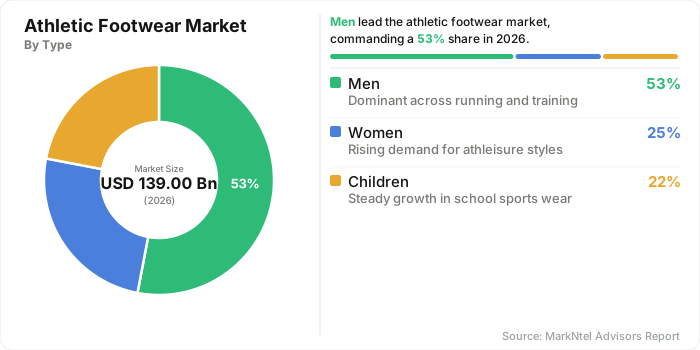
- By end user, men held a 53% share in the market in 2026.
- By geography, Asia Pacific held a leading share of about 55% of the market size in 2026.
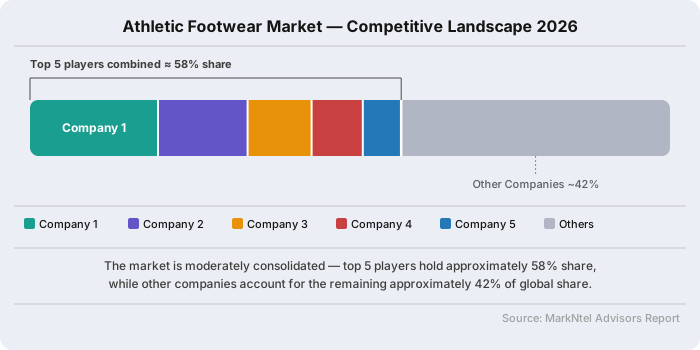
- The industry is moderately consolidated, with the top five players collectively accounting for approximately 58% of the market share in 2026.
Athletic Footwear Market Size and Outlook
The athletic footwear industry was valued at USD 131 billion in 2025 and is currently valued at USD 139 billion in 2026. The industry is projected to grow to USD 187 billion by 2032, showcasing a CAGR of around 5.08% during the forecast period, i.e., 2026–32.
The market is witnessing steady expansion as demand extends beyond traditional sports participation toward fitness, lifestyle wear, and performance-driven product innovation. Manufacturers are simultaneously strengthening international footprints, investing in research capabilities, and expanding into newer consumer markets, while governments increasingly view the sports economy as a strategic growth sector. Together, these developments are expanding consumer reach, accelerating product innovation, and creating favourable conditions for sustained demand across both mature and emerging regions.
Companies are also expanding into emerging demand centers, with Puma strengthening its presence in the Middle East through a long-term partnership with Saudi Arabia's Al Hilal FC, supporting rising interest in football and performance footwear across the region. Government initiatives across major economies are further supporting long-term demand and production capacity. China approved the national fitness plan in July 2026 following its 2025 strategy targeting a sports sector exceeding USD 975 billion by 2030, strengthening participation in organized sports and fitness activities.
Similarly, India is reinforcing footwear manufacturing through the Indian footwear and leather development programme until March 2026, while the India United Kingdom free trade agreement, effective July 2026, supports export expansion as the government targets footwear and leather exports of USD 15 billion within the next five to six years. In Europe, the Ecodesign for sustainable products regulation entered full application in July 2026, encouraging manufacturers to accelerate circular product design and sustainable footwear production.
Athletic Footwear Market Key Indicators
- According to the World Athletics, more than 250 million people participate in athletics and running activities worldwide each year. The expanding global running community directly increases demand for performance running shoes with advanced cushioning, stability, and energy-return technologies, thereby supporting growth in the athletic footwear market.
- As per the International Health, Racquet & Sportsclub Association, the global health and fitness club industry serves over 200 million members across 210,000+ fitness clubs. Rising gym memberships and structured fitness participation encourage consumers to purchase specialized training, cross-training, and gym footwear, driving demand for athletic footwear.
- According to the World Tourism Organization, international tourist arrivals reached approximately 1.47 billion in 2025, reflecting the continued recovery of global travel. Higher participation in outdoor recreation, trekking, hiking, and sports tourism increases demand for athletic and outdoor performance footwear, contributing to overall market growth.
- According to the International Olympic Committee, more than 10,500 athletes participate in each Summer Olympic Games across 32 sports, while thousands more compete in regional and national sporting events annually. Growing participation in competitive sports encourages demand for high-performance footwear designed for specific athletic disciplines, positively influencing market expansion.
- The global marathon ecosystem continues to expand, with more than 800 marathon events organized annually worldwide and millions of runners participating each year. Increasing endurance sports participation boosts replacement cycles for running shoes, as athletes typically replace footwear after 500–800 kilometers of use, supporting recurring demand within the athletic footwear market.
- According to the FIFA, there are approximately 5 billion football fans globally, while football remains the world's most played sport with hundreds of millions of active participants. Continuous participation in football at professional and amateur levels sustains strong demand for football boots and turf shoes, contributing significantly to athletic footwear sales.
- As per the International Cycling Union, more than 190 national federations are affiliated globally, reflecting the continued expansion of cycling as both a competitive sport and recreational activity. Rising cycling participation supports demand for specialized cycling footwear, reinforcing growth opportunities within the athletic footwear market.
- The World Health Organization stated that, nearly 1.8 billion adults do not meet recommended physical activity levels. Governments and health organizations continue promoting active lifestyles through fitness initiatives and awareness campaigns, encouraging greater participation in sports and exercise, which increases demand for athletic footwear across multiple consumer segments.
Import & Export Data Trend: Global Athletic Footwear Imports Rebound to USD 22 Billion in 2025 Amid Strengthening Consumer Demand
Global imports of athletic footwear (HS 640411) increased to USD 22 billion in 2025, recovering from USD 19 billion in 2024, following a temporary slowdown after reaching USD 23 billion in 2022. The rebound reflects renewed consumer spending on sports and athleisure products, supported by easing inflationary pressures, higher participation in fitness activities, and continued expansion of omnichannel retail. The United States remained the world's largest importer at USD 4.3 billion, followed by Germany (USD 2.0 billion), France (USD 1.4 billion), and Belgium (USD 1.3 billion). Collectively, these four countries accounted for nearly 41% of global athletic footwear imports, highlighting North America and Europe as the largest consumption markets. Their high import dependence also reflects the continued outsourcing of footwear production to Asia despite the presence of globally recognized footwear brands.
On the export side, global athletic footwear exports stood at USD 12 billion in 2025, with Belgium emerging as the largest exporter at USD 2.7 billion, followed by Indonesia (USD 2.4 billion), Germany (USD 1.2 billion), and China (USD 897 million). Belgium's leadership reflects its role as a major European distribution and re-export hub, while Indonesia continues strengthening its position as a preferred manufacturing base for global brands due to competitive labor costs and diversified production capabilities. In contrast, China's exports have gradually declined from USD 1.1 billion in 2022 to USD 897 million in 2025, indicating an ongoing shift in manufacturing toward Southeast Asian economies.
The evolving trade pattern highlights a geographically diversified supply chain in which manufacturing is increasingly concentrated in Southeast Asia while demand remains strongest in developed economies. Rising imports across the US and Europe, coupled with expanding exports from Indonesia and regional distribution hubs such as Belgium, indicate sustained global demand for performance footwear, athleisure products, and sportswear. This trend is expected to support continued growth of the global athletic footwear market as brands expand sourcing networks, strengthen cross-border distribution, and capitalize on rising sports participation and health-conscious consumer lifestyles.
Athletic Footwear Market Scope
| Category | Segments |
|---|---|
| By Type of Footwear | Aerobic Shoes, Running Shoes, Walking Shoes, Trekking & Hiking Shoes, Sports Shoes |
| By End User | Men, Women, Children |
| By Sales Channel | Supermarkets & Hypermarkets, Brand Outlets, Specialty Stores, Online Channels |
| By Region | North America, South America, Europe, The Middle East & Africa, Asia-Pacific |
Athletic Footwear Market Growth Drivers
Rising Global Participation in Running and Endurance Sports
The rapid rise in participation across running, marathons, and recreational fitness activities is becoming one of the strongest demand generators for the market. As more consumers adopt active lifestyles, demand is increasing for performance footwear designed for comfort, durability, and injury prevention. This expanding consumer base is encouraging brands to introduce specialized running shoes across different price segments while strengthening product portfolios to cater to both professional athletes and first time fitness enthusiasts.
The trend is evident across major running events during 2026. The TCS London marathon received a record 1.13 million ballot applications, while Sport England reported that 6.5 million adults now run regularly in the United Kingdom. In the United States, more than 240,000 runners applied for the 2026 New York City marathon, while the 2025 Chicago marathon generated approximately USD 756 million in economic impact, highlighting the growing commercial significance of endurance sports. Australia also recorded 123,000 applications for the 2026 Sydney marathon after it became the seventh Abbott World Marathon Major.
The participation boom extends beyond individual events into broader fitness communities. Strava's 2025 Year in Sport report, based on data from more than 180 million users across over 185 countries, identified running as the platform's most logged activity while reporting a 3.5 times increase in newly created running clubs. The continued expansion of organized races, community running groups, and everyday fitness participation is increasing replacement purchases and first-time footwear adoption, creating sustained demand for athletic footwear across global markets
Recent Trends
AI-Powered Foot Scanning and 3D-Printed Performance Footwear
Artificial intelligence is reshaping the industry by enabling brands to design products around individual biomechanics rather than conventional sizing standards. Manufacturers are increasingly combining athlete movement data, digital foot measurements, and advanced manufacturing technologies to develop footwear with improved fit, comfort, and performance. This shift is also helping companies shorten product development cycles, reduce fit-related product returns, strengthen premium product positioning, and deliver more personalized consumer experiences across both physical and digital retail channels.
The trend gained significant momentum during 2026 through several commercial launches and technology partnerships. Adidas introduced the BB.01, its first commercially available 3D printed basketball shoe, under Project R.A.P., using a lattice midsole structure developed from 17 years of athlete gait data. At the same time, Volumental expanded its artificial intelligence powered foot scanning platform to more than 3,000 retail stores across over 60 countries, supported by a database of more than 66 million foot scans, while extending the technology to consumers through a smartphone based scanning application.
The ecosystem is also becoming more interconnected as footwear design, retail, and manufacturing adopt shared digital technologies. During 2026, Zellerfeld partnered with Volumental to integrate precise foot scan geometry directly into its 3D printing production process, enabling footwear tailored to individual foot contours. Fleet Feet also combined dynamic pressure mapping with Volumental's fit ID scanners to deliver personalized insole recommendations, while Under Armour supported wider deployment of self-service AI foot scanners. These developments are accelerating the transition toward data-driven customization across the athletic footwear industry.
Athletic Footwear Market Challenges and Opportunities
Rising Counterfeiting Risks Creating Opportunities for Brand-Controlled Retail
The increasing circulation of counterfeit athletic footwear and sports merchandise is creating a significant challenge for global brands by affecting revenue, brand reputation, and consumer trust. With the growing popularity of international sporting events and online retail channels, counterfeit networks are becoming more sophisticated, forcing manufacturers and enforcement agencies to strengthen monitoring and intellectual property protection efforts. As a result, companies are investing more heavily in legal enforcement, supply chain surveillance, and product authentication to safeguard brand value.
The scale of enforcement activity during 2026 highlights the seriousness of the issue. In June 2026, US Customs and Border Protection seized more than 8,400 counterfeit Nike soccer jerseys in Miami. Operation Winner's Circle also intercepted counterfeit FIFA World Cup, Puma, Adidas, and Nike merchandise, while ASICS initiated legal action against manufacturers and sellers of counterfeit Onitsuka Tiger products. Separately, authorities dismantled a counterfeit Nike operation in the United States valued at approximately USD 11.3 million.
In response, brands are increasingly strengthening direct-to-consumer retail networks as a strategic solution to reinforce product authenticity and build stronger consumer trust. Company-owned flagship stores provide greater control over product distribution, pricing, and brand presentation while reducing dependence on third-party retail channels where counterfeit products are more likely to circulate. They also enable manufacturers to showcase product innovation, deliver personalized shopping experiences, and collect valuable consumer insights that support long-term growth.
This strategy is becoming increasingly evident across leading global brands. Puma opened its first European flagship in London during 2025 and expanded its regional presence through its largest factory outlet in Abu Dhabi. Nike strengthened its premium retail network by opening a new SoHo flagship in 2026 after modernizing its Fifth Avenue House of Innovation in 2025. ASICS inaugurated its second Japan flagship in Tokyo during 2026, while Anta Sports established its first North American flagship in Beverly Hills, reflecting the industry's growing focus on brand-controlled retail to enhance authenticity, strengthen customer engagement, and support premium value creation.
Segmentation Insights
Running Shoes Lead the Market Through Expanding Running Participation and Continuous Product Innovation
Running shoes accounted for approximately 42% of the global athletic footwear market in 2026, making them the largest footwear category due to the sustained rise in recreational running, marathon participation, and fitness-focused lifestyles. Consumers increasingly prefer dedicated running footwear for its superior cushioning, stability, energy return, and injury prevention capabilities. The category also benefits from frequent replacement cycles, as performance runners typically replace shoes after extended usage, supporting consistent repeat purchases across both developed and emerging markets.
Manufacturers continue to strengthen this segment through advanced cushioning systems, lightweight materials, artificial intelligence-assisted product design, and personalized fit technologies. Leading brands are expanding premium running portfolios while integrating three-dimensional printing, digital foot scanning, and athlete-driven research into product development to enhance comfort and performance. Based on type of footwear, the market is further bifurcated into:
- Aerobic Shoes
- Running Shoes
- Walking Shoes
- Trekking & Hiking Shoes
- Sports Shoes
Men Dominate the Market Through Higher Participation in Sports and Fitness Activities
Men held approximately 53% share of the global athletic footwear market in 2026, driven by higher participation in organized sports, gym training, running, football, basketball, and outdoor recreational activities. The segment also benefits from strong consumer spending on performance footwear, particularly for specialized sporting applications where durability, comfort, and technical features are key purchasing considerations. This sustained demand enables manufacturers to maintain broad product portfolios catering to diverse athletic and lifestyle requirements.
Leading brands continue to prioritize the men's segment through frequent product launches, athlete collaborations, and performance-focused innovations across running, training, basketball, and football footwear. Increasing adoption of advanced cushioning technologies, lightweight materials, and digitally optimized footwear designs further strengthens consumer interest in premium products. Based on end user, the market is further bifurcated into:
- Men
- Women
- Children
Athletic Footwear Market Geographical Outlook
Holding over 55% of global footwear consumption, Asia Pacific dominates the global athletic footwear market through its unparalleled combination of strong consumer demand, extensive manufacturing capabilities, and supportive sports policies. The region also accounts for nearly 88% of global footwear production, highlighting its critical role in global supply chains. China and India further reinforce this leadership by contributing 18.6% and 13.3% of global footwear consumption, respectively, making the region both the largest consumer and production hub.
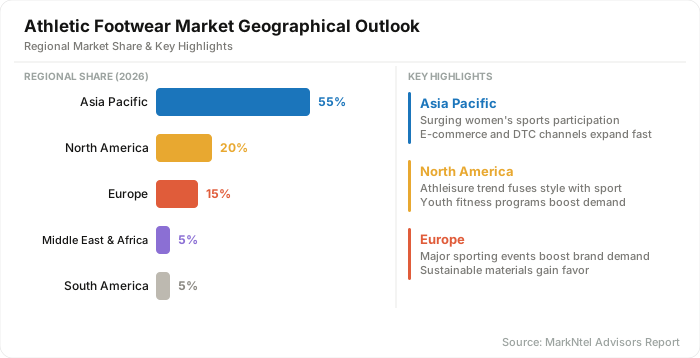
The region's leadership is expected to strengthen further as governments continue promoting sports participation and manufacturers expand regional investments. China approved the National Fitness Plan (2026 to 2030) in July 2026 following its 2025 strategy targeting a sports sector exceeding approximately USD 975 billion by 2030, supporting sustained demand for athletic footwear. Complementing this momentum, ASICS announced in 2026 that it will establish Onitsuka Tiger as an independent subsidiary from January 2027 while continuing flagship investments in Japan, reinforcing Asia Pacific's position as the global center for athletic footwear innovation, manufacturing, and consumption.
Athletic Footwear Market Competitive Analysis
The market is moderately consolidated, with competition led by multinational sportswear manufacturers, performance footwear specialists, and vertically integrated athletic brands. Leading companies are also increasing their focus on running, training, basketball, football, and outdoor footwear categories while expanding premium offerings and sustainable product lines. Major participants include Nike, Inc., Adidas AG, Skechers USA, Inc., Puma SE, and New Balance Athletics, Inc. The top five players collectively account for approximately 58% of the Global Athletic Footwear Market.
Key Companies in the Global Athletic Footwear Market
- Nike, Inc.
- Adidas AG
- Skechers USA, Inc.
- Puma SE
- New Balance Athletics, Inc.
- ASICS Corporation
- Under Armour, Inc.
- Reebok International Ltd.
- Fila Holdings Corp.
- VF Corporation
- Li-Ning Company Limited
- Anta Sports Products Limited
- On Holding AG
- Xtep International Holdings Ltd.
- 361 Degrees International Limited
Athletic Footwear Industry News and Recent Developments
2026: Anta Sports Agrees to Acquire Strategic Stake in Puma SE to Strengthen Global Market Presence
In January 2026, Anta Sports announced an agreement to acquire a 29.06% stake in Puma SE from Groupe Artémis for approximately USD 1.8 billion, making Anta the largest shareholder in Puma. The transaction represents one of the most significant strategic investments in the global athletic footwear industry and is aimed at strengthening Anta's international presence through access to Puma's established global brand, retail network, and performance footwear portfolio. The investment also reflects the growing globalization of leading Asian sportswear companies as they expand their influence across international markets.
Impact Analysis: The transaction is expected to strengthen global competition by enhancing Anta's international footprint and expanding its access to premium athletic footwear markets. It is also likely to accelerate product innovation, brand collaboration, and cross market expansion while encouraging further strategic investments and consolidation among leading sportswear manufacturers, supporting the long term growth of the Global Athletic Footwear Market.
2025: 3G Capital Completes Acquisition of Skechers USA to Support Long Term Expansion
In May 2025, investment firm 3G Capital completed the acquisition of Skechers USA, Inc. in a transaction valued at approximately USD 9.4 billion, taking the company private. The acquisition is intended to provide Skechers with greater operational flexibility to pursue long term strategic investments in product innovation, international expansion, supply chain capabilities, and direct to consumer retail without the pressures associated with public market reporting. The move also reinforces investor confidence in the long term growth potential of the global athletic footwear industry.
Impact Analysis: The acquisition is expected to strengthen Skechers' ability to accelerate global expansion, enhance product development, and increase investments in premium retail and digital commerce initiatives. The additional financial flexibility could improve competitive positioning and encourage similar strategic investments across the industry, supporting innovation, market expansion, and sustained growth in the Global Athletic Footwear Market.
Frequently Asked Questions
- Market Segmentation
- Introduction
- Product Definition
- Research Process
- Assumptions
- Executive Summary
- Athletic Footwear Production Trend 2022-2032
- Athletic Footwear Production Trend by Type
- Aerobic Shoes
- Running Shoes
- Walking Shoes
- Trekking & Hiking Shoes
- Sports Shoes
- Company-Wise Production Plants and Statistics
- Installed Production Capacity
- Actual Production
- Planned Production Target
- Athletic Footwear Production Trend by Type
- Athletic Footwear Pricing Analysis 2022-2032
- Athletic Footwear Pricing Trend 2022-2032
- Athletic Footwear Pricing Trend by Regions 2022-2032
- North America
- South America
- Europe
- Middle East & Africa
- Asia Pacific
- Athletic Footwear Pricing by Type 2022-2032
- Aerobic Shoes
- Running Shoes
- Walking Shoes
- Trekking & Hiking Shoes
- Sports Shoes
- Athletic Footwear Market Policies, Regulations, and Product Standards
- Athletic Footwear Market Import & Export Trend Analysis (2022-25)
- Athletic Footwear Market Trends & Developments
- Athletic Footwear Market Dynamics
- Growth Factors
- Challenges
- Athletic Footwear Market Hotspot & Opportunities
- Athletic Footwear Market Outlook, 2022-2032
- Market Size & Outlook
- By Revenues (USD Million)
- Market Segmentation & Outlook
- By Type of Footwear- Market Size & Forecast 2022-2032, USD Million
- Aerobic Shoes
- Running Shoes
- Walking Shoes
- Trekking & Hiking Shoes
- Sports Shoes
- By End User- Market Size & Forecast 2022-2032, USD Million
- Men
- Women
- Children
- By Sales Channel- Market Size & Forecast 2022-2032, USD Million
- Supermarkets & Hypermarkets
- Brand Outlets
- Specialty Stores
- Online Channels
- By Region
- North America
- South America
- Europe
- The Middle East & Africa
- Asia-Pacific
- By Company
- Competition Characteristics
- Market Share & Analysis
- By Type of Footwear- Market Size & Forecast 2022-2032, USD Million
- Market Size & Outlook
- North America Athletic Footwear Market Outlook, 2022-2032
- Market Size & Outlook
- By Revenues (USD Million)
- Market Segmentation & Outlook
- By Type of Footwear- Market Size & Forecast 2022-2032, USD Million
- By End User- Market Size & Forecast 2022-2032, USD Million
- By Sales Channel- Market Size & Forecast 2022-2032, USD Million
- By Country
- The US
- Canada
- Mexico
- The US Athletic Footwear Market Outlook, 2022-2032
- Market Size & Outlook
- By Revenues (USD Million)
- Market Segmentation & Outlook
- By Type of Footwear- Market Size & Forecast 2022-2032, USD Million
- By End User- Market Size & Forecast 2022-2032, USD Million
- By Sales Channel- Market Size & Forecast 2022-2032, USD Million
- Market Size & Outlook
- Canada Athletic Footwear Market Outlook, 2022-2032
- Market Size & Outlook
- By Revenues (USD Million)
- Market Segmentation & Outlook
- By Type of Footwear- Market Size & Forecast 2022-2032, USD Million
- By End User- Market Size & Forecast 2022-2032, USD Million
- By Sales Channel- Market Size & Forecast 2022-2032, USD Million
- Market Size & Outlook
- Mexico Athletic Footwear Market Outlook, 2022-2032
- Market Size & Outlook
- By Revenues (USD Million)
- Market Segmentation & Outlook
- By Type of Footwear- Market Size & Forecast 2022-2032, USD Million
- By End User- Market Size & Forecast 2022-2032, USD Million
- By Sales Channel- Market Size & Forecast 2022-2032, USD Million
- Market Size & Outlook
- Market Size & Outlook
- South America Athletic Footwear Market Outlook, 2022-2032
- Market Size & Outlook
- By Revenues (USD Million)
- Market Segmentation & Outlook
- By Type of Footwear- Market Size & Forecast 2022-2032, USD Million
- By End User- Market Size & Forecast 2022-2032, USD Million
- By Sales Channel- Market Size & Forecast 2022-2032, USD Million
- By Country
- Brazil
- Argentina
- Chile
- Colombia
- Peru
- Ecuador
- Rest of South America
- Brazil Athletic Footwear Market Outlook, 2022-2032
- Market Size & Outlook
- By Revenues (USD Million)
- Market Segmentation & Outlook
- By Type of Footwear- Market Size & Forecast 2022-2032, USD Million
- By End User- Market Size & Forecast 2022-2032, USD Million
- By Sales Channel- Market Size & Forecast 2022-2032, USD Million
- Market Size & Outlook
- Argentina Athletic Footwear Market Outlook, 2022-2032
- Market Size & Outlook
- By Revenues (USD Million)
- Market Segmentation & Outlook
- By Type of Footwear- Market Size & Forecast 2022-2032, USD Million
- By End User- Market Size & Forecast 2022-2032, USD Million
- By Sales Channel- Market Size & Forecast 2022-2032, USD Million
- Market Size & Outlook
- Chile Athletic Footwear Market Outlook, 2022-2032
- Market Size & Outlook
- By Revenues (USD Million)
- Market Segmentation & Outlook
- By Type of Footwear- Market Size & Forecast 2022-2032, USD Million
- By End User- Market Size & Forecast 2022-2032, USD Million
- By Sales Channel- Market Size & Forecast 2022-2032, USD Million
- Market Size & Outlook
- Colombia Athletic Footwear Market Outlook, 2022-2032
- Market Size & Outlook
- By Revenues (USD Million)
- Market Segmentation & Outlook
- By Type of Footwear- Market Size & Forecast 2022-2032, USD Million
- By End User- Market Size & Forecast 2022-2032, USD Million
- By Sales Channel- Market Size & Forecast 2022-2032, USD Million
- Market Size & Outlook
- Peru Athletic Footwear Market Outlook, 2022-2032
- Market Size & Outlook
- By Revenues (USD Million)
- Market Segmentation & Outlook
- By Type of Footwear- Market Size & Forecast 2022-2032, USD Million
- By End User- Market Size & Forecast 2022-2032, USD Million
- By Sales Channel- Market Size & Forecast 2022-2032, USD Million
- Market Size & Outlook
- Ecuador Athletic Footwear Market Outlook, 2022-2032
- Market Size & Outlook
- By Revenues (USD Million)
- Market Segmentation & Outlook
- By Type of Footwear- Market Size & Forecast 2022-2032, USD Million
- By End User- Market Size & Forecast 2022-2032, USD Million
- By Sales Channel- Market Size & Forecast 2022-2032, USD Million
- Market Size & Outlook
- Market Size & Outlook
- Europe Athletic Footwear Market Outlook, 2022-2032
- Market Size & Outlook
- By Revenues (USD Million)
- Market Segmentation & Outlook
- By Type of Footwear- Market Size & Forecast 2022-2032, USD Million
- By End User- Market Size & Forecast 2022-2032, USD Million
- By Sales Channel- Market Size & Forecast 2022-2032, USD Million
- By Country
- The UK
- Germany
- France
- Italy
- Spain
- Benelux
- Nordic
- Rest of Europe
- The UK Athletic Footwear Market Outlook, 2022-2032
- Market Size & Outlook
- By Revenues (USD Million)
- Market Segmentation & Outlook
- By Type of Footwear- Market Size & Forecast 2022-2032, USD Million
- By End User- Market Size & Forecast 2022-2032, USD Million
- By Sales Channel- Market Size & Forecast 2022-2032, USD Million
- Market Size & Outlook
- Germany Athletic Footwear Market Outlook, 2022-2032
- Market Size & Outlook
- By Revenues (USD Million)
- Market Segmentation & Outlook
- By Type of Footwear- Market Size & Forecast 2022-2032, USD Million
- By End User- Market Size & Forecast 2022-2032, USD Million
- By Sales Channel- Market Size & Forecast 2022-2032, USD Million
- Market Size & Outlook
- France Athletic Footwear Market Outlook, 2022-2032
- Market Size & Outlook
- By Revenues (USD Million)
- Market Segmentation & Outlook
- By Type of Footwear- Market Size & Forecast 2022-2032, USD Million
- By End User- Market Size & Forecast 2022-2032, USD Million
- By Sales Channel- Market Size & Forecast 2022-2032, USD Million
- Market Size & Outlook
- Italy Athletic Footwear Market Outlook, 2022-2032
- Market Size & Outlook
- By Revenues (USD Million)
- Market Segmentation & Outlook
- By Type of Footwear- Market Size & Forecast 2022-2032, USD Million
- By End User- Market Size & Forecast 2022-2032, USD Million
- By Sales Channel- Market Size & Forecast 2022-2032, USD Million
- Market Size & Outlook
- Spain Athletic Footwear Market Outlook, 2022-2032
- Market Size & Outlook
- By Revenues (USD Million)
- Market Segmentation & Outlook
- By Type of Footwear- Market Size & Forecast 2022-2032, USD Million
- By End User- Market Size & Forecast 2022-2032, USD Million
- By Sales Channel- Market Size & Forecast 2022-2032, USD Million
- Market Size & Outlook
- Benelux Athletic Footwear Market Outlook, 2022-2032
- Market Size & Outlook
- By Revenues (USD Million)
- Market Segmentation & Outlook
- By Type of Footwear- Market Size & Forecast 2022-2032, USD Million
- By End User- Market Size & Forecast 2022-2032, USD Million
- By Sales Channel- Market Size & Forecast 2022-2032, USD Million
- Market Size & Outlook
- Nordic Athletic Footwear Market Outlook, 2022-2032
- Market Size & Outlook
- By Revenues (USD Million)
- Market Segmentation & Outlook
- By Type of Footwear- Market Size & Forecast 2022-2032, USD Million
- By End User- Market Size & Forecast 2022-2032, USD Million
- By Sales Channel- Market Size & Forecast 2022-2032, USD Million
- Market Size & Outlook
- Market Size & Outlook
- The Middle East & Africa Athletic Footwear Market Outlook, 2022-2032
- Market Size & Outlook
- By Revenues (USD Million)
- Market Segmentation & Outlook
- By Type of Footwear- Market Size & Forecast 2022-2032, USD Million
- By End User- Market Size & Forecast 2022-2032, USD Million
- By Sales Channel- Market Size & Forecast 2022-2032, USD Million
- By Country
- Saudi Arabia
- The UAE
- South Africa
- Egypt
- Qatar
- Rest of Middle East & Africa
- Saudi Arabia Athletic Footwear Market Outlook, 2022-2032
- Market Size & Outlook
- By Revenues (USD Million)
- Market Segmentation & Outlook
- By Type of Footwear- Market Size & Forecast 2022-2032, USD Million
- By End User- Market Size & Forecast 2022-2032, USD Million
- By Sales Channel- Market Size & Forecast 2022-2032, USD Million
- Market Size & Outlook
- The UAE Athletic Footwear Market Outlook, 2022-2032
- Market Size & Outlook
- By Revenues (USD Million)
- Market Segmentation & Outlook
- By Type of Footwear- Market Size & Forecast 2022-2032, USD Million
- By End User- Market Size & Forecast 2022-2032, USD Million
- By Sales Channel- Market Size & Forecast 2022-2032, USD Million
- Market Size & Outlook
- South Africa Athletic Footwear Market Outlook, 2022-2032
- Market Size & Outlook
- By Revenues (USD Million)
- Market Segmentation & Outlook
- By Type of Footwear- Market Size & Forecast 2022-2032, USD Million
- By End User- Market Size & Forecast 2022-2032, USD Million
- By Sales Channel- Market Size & Forecast 2022-2032, USD Million
- Market Size & Outlook
- Egypt Athletic Footwear Market Outlook, 2022-2032
- Market Size & Outlook
- By Revenues (USD Million)
- Market Segmentation & Outlook
- By Type of Footwear- Market Size & Forecast 2022-2032, USD Million
- By End User- Market Size & Forecast 2022-2032, USD Million
- By Sales Channel- Market Size & Forecast 2022-2032, USD Million
- Market Size & Outlook
- Qatar Athletic Footwear Market Outlook, 2022-2032
- Market Size & Outlook
- By Revenues (USD Million)
- Market Segmentation & Outlook
- By Type of Footwear- Market Size & Forecast 2022-2032, USD Million
- By End User- Market Size & Forecast 2022-2032, USD Million
- By Sales Channel- Market Size & Forecast 2022-2032, USD Million
- Market Size & Outlook
- Market Size & Outlook
- Asia-Pacific Athletic Footwear Market Outlook, 2022-2032
- Market Size & Outlook
- By Revenues (USD Million)
- Market Segmentation & Outlook
- By Type of Footwear- Market Size & Forecast 2022-2032, USD Million
- By End User- Market Size & Forecast 2022-2032, USD Million
- By Sales Channel- Market Size & Forecast 2022-2032, USD Million
- By Country
- China
- Japan
- India
- South Korea
- Australia
- Indonesia
- Thailand
- Singapore
- Vietnam
- Rest of Asia-Pacific
- China Athletic Footwear Market Outlook, 2022-2032
- Market Size & Outlook
- By Revenues (USD Million)
- Market Segmentation & Outlook
- By Type of Footwear- Market Size & Forecast 2022-2032, USD Million
- By End User- Market Size & Forecast 2022-2032, USD Million
- By Sales Channel- Market Size & Forecast 2022-2032, USD Million
- Market Size & Outlook
- Japan Athletic Footwear Market Outlook, 2022-2032
- Market Size & Outlook
- By Revenues (USD Million)
- Market Segmentation & Outlook
- By Type of Footwear- Market Size & Forecast 2022-2032, USD Million
- By End User- Market Size & Forecast 2022-2032, USD Million
- By Sales Channel- Market Size & Forecast 2022-2032, USD Million
- Market Size & Outlook
- India Athletic Footwear Market Outlook, 2022-2032
- Market Size & Outlook
- By Revenues (USD Million)
- Market Segmentation & Outlook
- By Type of Footwear- Market Size & Forecast 2022-2032, USD Million
- By End User- Market Size & Forecast 2022-2032, USD Million
- By Sales Channel- Market Size & Forecast 2022-2032, USD Million
- Market Size & Outlook
- South Korea Athletic Footwear Market Outlook, 2022-2032
- Market Size & Outlook
- By Revenues (USD Million)
- Market Segmentation & Outlook
- By Type of Footwear- Market Size & Forecast 2022-2032, USD Million
- By End User- Market Size & Forecast 2022-2032, USD Million
- By Sales Channel- Market Size & Forecast 2022-2032, USD Million
- Market Size & Outlook
- Australia Athletic Footwear Market Outlook, 2022-2032
- Market Size & Outlook
- By Revenues (USD Million)
- Market Segmentation & Outlook
- By Type of Footwear- Market Size & Forecast 2022-2032, USD Million
- By End User- Market Size & Forecast 2022-2032, USD Million
- By Sales Channel- Market Size & Forecast 2022-2032, USD Million
- Market Size & Outlook
- Indonesia Athletic Footwear Market Outlook, 2022-2032
- Market Size & Outlook
- By Revenues (USD Million)
- Market Segmentation & Outlook
- By Type of Footwear- Market Size & Forecast 2022-2032, USD Million
- By End User- Market Size & Forecast 2022-2032, USD Million
- By Sales Channel- Market Size & Forecast 2022-2032, USD Million
- Market Size & Outlook
- Thailand Athletic Footwear Market Outlook, 2022-2032
- Market Size & Outlook
- By Revenues (USD Million)
- Market Segmentation & Outlook
- By Type of Footwear- Market Size & Forecast 2022-2032, USD Million
- By End User- Market Size & Forecast 2022-2032, USD Million
- By Sales Channel- Market Size & Forecast 2022-2032, USD Million
- Market Size & Outlook
- Singapore Athletic Footwear Market Outlook, 2022-2032
- Market Size & Outlook
- By Revenues (USD Million)
- Market Segmentation & Outlook
- By Type of Footwear- Market Size & Forecast 2022-2032, USD Million
- By End User- Market Size & Forecast 2022-2032, USD Million
- By Sales Channel- Market Size & Forecast 2022-2032, USD Million
- Market Size & Outlook
- Vietnam Athletic Footwear Market Outlook, 2022-2032
- Market Size & Outlook
- By Revenues (USD Million)
- Market Segmentation & Outlook
- By Type of Footwear- Market Size & Forecast 2022-2032, USD Million
- By End User- Market Size & Forecast 2022-2032, USD Million
- By Sales Channel- Market Size & Forecast 2022-2032, USD Million
- Market Size & Outlook
- Market Size & Outlook
- Athletic Footwear Market Key Strategic Imperatives for Success & Growth
- Competitive Outlook
- Company Profiles
- Nike, Inc.
- Business Description
- Product Portfolio
- Collaborations & Alliances
- Recent Developments
- Financial Details
- Others
- Adidas AG
- Business Description
- Product Portfolio
- Collaborations & Alliances
- Recent Developments
- Financial Details
- Others
- Skechers USA, Inc.
- Business Description
- Product Portfolio
- Collaborations & Alliances
- Recent Developments
- Financial Details
- Others
- Puma SE
- Business Description
- Product Portfolio
- Collaborations & Alliances
- Recent Developments
- Financial Details
- Others
- New Balance Athletics, Inc.
- Business Description
- Product Portfolio
- Collaborations & Alliances
- Recent Developments
- Financial Details
- Others
- ASICS Corporation
- Business Description
- Product Portfolio
- Collaborations & Alliances
- Recent Developments
- Financial Details
- Others
- Under Armour, Inc.
- Business Description
- Product Portfolio
- Collaborations & Alliances
- Recent Developments
- Financial Details
- Others
- Reebok International Ltd.
- Business Description
- Product Portfolio
- Collaborations & Alliances
- Recent Developments
- Financial Details
- Others
- Fila Holdings Corp.
- Business Description
- Product Portfolio
- Collaborations & Alliances
- Recent Developments
- Financial Details
- Others
- VF Corporation
- Business Description
- Product Portfolio
- Collaborations & Alliances
- Recent Developments
- Financial Details
- Others
- Li-Ning Company Limited
- Business Description
- Product Portfolio
- Collaborations & Alliances
- Recent Developments
- Financial Details
- Others
- Anta Sports Products Limited
- Business Description
- Product Portfolio
- Collaborations & Alliances
- Recent Developments
- Financial Details
- Others
- On Holding AG
- Business Description
- Product Portfolio
- Collaborations & Alliances
- Recent Developments
- Financial Details
- Others
- Xtep International Holdings Ltd.
- Business Description
- Product Portfolio
- Collaborations & Alliances
- Recent Developments
- Financial Details
- Others
- 361 Degrees International Limited
- Business Description
- Product Portfolio
- Collaborations & Alliances
- Recent Developments
- Financial Details
- Others
- Nike, Inc.
- Company Profiles
- Disclaimer
MarkNtel Advisors follows a robust and iterative research methodology designed to ensure maximum accuracy and minimize deviation in market estimates and forecasts. Our approach combines both bottom-up and top-down techniques to effectively segment and quantify various aspects of the market. A consistent feature across all our research reports is data triangulation, which examines the market from three distinct perspectives to validate findings. Key components of our research process include:
1. Scope & Research Design At the outset, MarkNtel Advisors define the research objectives and formulate pertinent questions. This phase involves determining the type of research—qualitative or quantitative—and designing a methodology that outlines data collection methods, target demographics, and analytical tools. They also establish timelines and budgets to ensure the research aligns with client goals.
2. Sample Selection and Data Collection In this stage, the firm identifies the target audience and determines the appropriate sample size to ensure representativeness. They employ various sampling methods, such as random or stratified sampling, based on the research objectives. Data collection is carried out using tools like surveys, interviews, and observations, ensuring the gathered data is reliable and relevant.
3. Data Analysis and Validation Once data is collected, MarkNtel Advisors undertake a rigorous analysis process. This includes cleaning the data to remove inconsistencies, employing statistical software for quantitative analysis, and thematic analysis for qualitative data. Validation steps are taken to ensure the accuracy and reliability of the findings, minimizing biases and errors.

4. Data Forecast and FinalizationThe final phase involves forecasting future market trends based on the analyzed data. MarkNtel Advisors utilize predictive modeling and time series analysis to anticipate market behaviors. The insights are then compiled into comprehensive reports, featuring visual aids like charts and graphs, and include strategic recommendations to inform client decision-making
We offer flexible licensing options to cater to varying organizational needs. Choose the pricing pack that best suits your requirements:
Buy Now Inquire Before Buying
 Request Customization
 Talk to our Consultant