Poland Plant-Based Dairy Market Research Report Forecast : (2026-2032)
Poland Plant-Based Dairy Market Strategy, Consumer Insights, Industry Analysis, Investment Trends, Growth Opportunities, Market Size and Share, Revenue Insights, Key Segments, Mark ... et Value, Detailed Segmentation, Supply Chain Overview, Future Forecast, Market Restraints, Industry Outlook, Competitive Landscape, Market Drivers, Emerging Trends, Consumer Demand, Pricing Analysis, Strategic Insights, Leading Companies, and Market Challenges Read more
- Food & Beverages
- Aug 2026
- Pages 145
- Report Format: PDF, Excel, PPT
Poland Plant-Based Dairy Market
Projected 13.15% CAGR from 2026 to 2032
Study Period
2026-2032
Market Size (2026)
USD 144.2 Million
Market Size (2032)
USD 302.8 Million
Base Year
2025
Projected CAGR
13.15%
Leading Segments
By Product Type: Plant-Based Milk and Beverages
Poland Plant-Based Dairy Market Key Takeaways
- The market is estimated at USD 139.4 million in 2025, rising to USD 144.2 million in 2026 and USD 302.8 million by 2032 at a 13.15% CAGR.
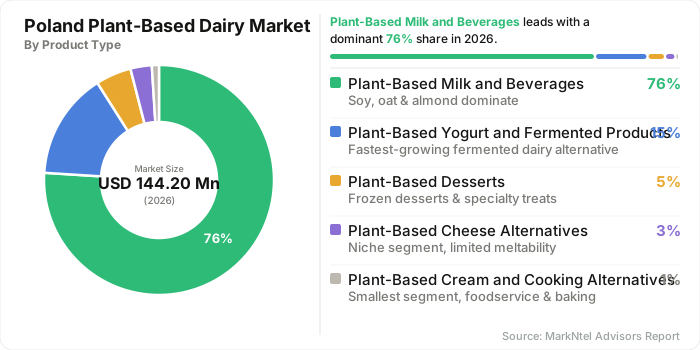
- Plant-based milk and beverages represent the leading product type, with an estimated 76% market share in 2026.
- Discount Stores dominate distribution channels, accounting for an estimated 35% market share in 2026.
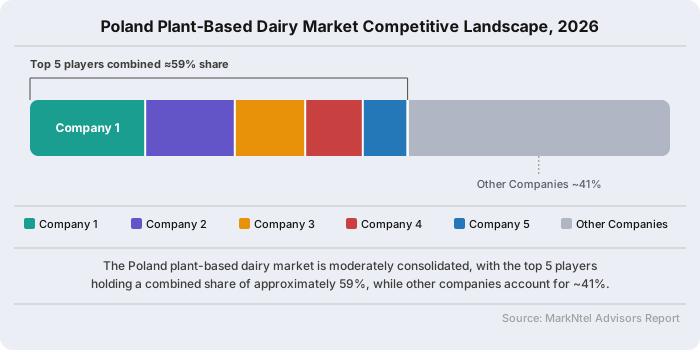
- The market is moderately concentrated, with the top five companies collectively holding an estimated 59% market share in 2026.
Poland Plant-Based Dairy Market Size and Outlook
The plant-based dairy market in Poland was valued at approximately USD 139.4 million in 2025. It is estimated at USD 144.2 million in 2026, reflecting continued category expansion. Revenue is forecast to reach USD 302.8 million by 2032, representing a CAGR of 13.15% throughout the forecast period.
Vegan/vegetarian and lactose-intolerant consumers remain the category’s core audience, supporting regular demand for dairy replacements. In 2025, 6% of Polish consumers identified as vegetarian or vegan. A survey of 292 plant-based beverage consumers aged 18-35 from various regions of Poland found 44% of respondents to be lactose intolerant. However, market demand extends beyond these groups and reaches a substantially broader household customer base. In 2025, more than 41% of Polish households purchased plant-based dairy products, confirming mainstream reach beyond dietary-led consumers. This wider participation enlarges the repeat-purchase pool and supports national distribution beyond specialist retail channels.
Growth through 2032 is expected to depend on improved product performance, stronger availability, and narrower price premiums. Continued formulation investment would improve taste, texture, nutrition, and versatility, strengthening satisfaction across everyday consumption occasions. Retail expansion and foodservice exposure would lower discovery barriers while encouraging trial among previously unengaged consumers. Greater manufacturing scale and private-label participation would reduce costs, supporting affordability and more consistent nationwide access. Premium pricing and inconsistent nutritional value remain the principal restraints on stronger overall demand frequency.
Poland Plant-Based Dairy Market Key Indicators
- Plant-based milk reached nearly 29% of Polish households in 2024, suggesting broad mainstream penetration. Purchasing households bought the category almost seven times and spent an average of over USD 18. These repeat-purchase patterns provide suppliers with an established customer base for portfolio extensions and targeted promotions.
- Poland cultivated more than 0.5 million hectares of oats in 2024 and produced 1.7 million metric tons. Production increased 8% from 2023, strengthening the domestic raw-material base for oat-based dairy alternatives manufacturing. Local availability expands sourcing options, shortens inbound supply chains and reinforces credible Polish-origin positioning for manufacturers.
- Plant-beverage sales across Biedronka’s nationwide network increased 11% between January and July 2025, indicating sustained mainstream demand. Sales of its private-label range expanded 27.5%, substantially outperforming the retailer’s overall plant-beverage category performance. This performance suggests accessible pricing and prominent distribution convert consumer interest into scalable purchasing volumes.
Poland Plant-Based Dairy Market Consumer Preferences and Purchase-Occasion Analysis
Weekly Consumption Reaches 22% Among Young Polish Consumers
The 292 Polish consumer study referenced before also revealed substantial adoption across different dietary identities. 22% consumed plant-based beverages weekly, while another 4% already consumed them several times daily. Daily consumption reached 22% among vegan respondents, compared with 5% among respondents following omnivorous diets. Oat beverages attracted 49% of respondents, while soy beverages followed with 21%, reflecting established familiarity. These patterns show that younger consumers combine regular substitution with selective experimentation across available alternatives.
Consumption occasions extend across breakfast, coffee, snacking, desserts, cooking, and routine household meals throughout each day. Plant-based drinks support cereal preparation, hot beverages, smoothies, baking, and other recurring household uses. Single-serve alternatives address workplace, education, travel, and evening snacking without requiring broader dietary commitments. Coffee shops create accessible trial occasions before consumers incorporate unfamiliar alternatives into routine household purchasing. Frequent, varied consumption contexts expand category relevance beyond complete dairy replacement or dedicated plant-based lifestyles.
Poland Plant-Based Dairy Market Scope
| Category | Segments |
|---|---|
| By Product Type | Plant-Based Milk and Beverages, Plant-Based Yogurt and Fermented Products, Plant-Based Cheese Alternatives, Plant-Based Cream and Cooking Alternatives, Plant-Based Desserts |
| By Ingredient Base | Oat, Soy, Coconut, Almond, Rice, Others |
| By Flavor Profile | Plain and Unflavored, Flavored |
| By Distribution Channel | Discount Stores, Supermarkets and Hypermarkets, Convenience and Traditional Grocery Stores, Drugstores, Health-Food and Specialist Stores, E-commerce, HoReCa and Institutional Channels |
Poland Plant-Based Dairy Market Growth Drivers
Mainstream Retail Integration Expands Availability and Lowers Trial Barriers
Broad grocery availability converts plant-based dairy from a specialist purchase into a routine household choice. Consumers encounter alternatives beside conventional dairy, enabling direct comparisons across price, nutrition, flavor, and functionality. A Polish product audit identified 942 plant-based alternatives across the country’s developing retail assortment in 2024. This assortment breadth increases category visibility while supporting trials among shoppers following mixed diets. Frequent availability also strengthens repeat purchasing by reducing search costs and dependence on specialist outlets. Manufacturers gain wider routes for launches, promotions, and format extensions across established high-traffic consumer locations.
Lidl currently operates more than 1,000 Polish stores, providing extensive national reach for accessible plant-based assortments. Its Polish strategy commits to continuously expanding plant-based products under the retailer’s planetary-diet framework through 2050. The group also targets a 20% increase in plant-based food sales share across markets by 2030. Its current Polish portfolio covers oat, soy, almond, rice and coconut drinks, broadening ingredient and price choices. This scale supports nationwide promotions, private-label development and faster distribution of successful new dairy-alternative formats. Through 2032, sustained mainstream placement is expected to expand volumes and improve portfolio-extension economics for suppliers.
Recent Trends
Barista-Grade and Occasion-Specific Formulations Are Replacing Generic Plant Beverages
Plant-based beverage competition is shifting from basic dairy substitution toward performance tailored for specific consumption occasions. Polish milk-alternative sales increased 39% between 2022–2024 across measured retail channels. This expansion encourages suppliers to differentiate through foaming stability, texture, flavor, fortification and preparation versatility. Barista formats address coffee preparation, where conventional alternatives frequently underperform during steaming and foam retention. Flavored and fortified variants simultaneously create premium options while supporting nutrition-led positioning and household experimentation. The category is therefore developing around use-case performance rather than ingredient source or dairy avoidance alone.
In March 2024, Inka added almond and coconut variants to its established oat-based Barista beverage. The formulations contain no added sugar and include calcium, vitamins, and foam-stability functionality. This extension broadened flavor choice while targeting cappuccino, latte and home-prepared coffee occasions requiring consistent texture. Starbucks’ April 2025 Polish menu also offered oat, almond, soy and coconut substitutions across core beverages. Their availability across hot, iced and blended drinks indicates application-specific plant beverages are entering routine foodservice customization. Through 2032, performance-led variants are expected to support premiumization, stronger retention and additional consumption occasions.
Poland Plant-Based Dairy Market Opportunities and Challenges
Sensory and Value Gaps Constrain Repeat Purchasing While Driving Nutrient-Dense Formulation Innovation
Weak taste, naturalness, and value perceptions constrain repeat purchasing despite strong perceived retail accessibility across Poland. A 2025 nationwide study of 1,220 shoppers rated plant-based dairy taste only 3.66 across seven points. Naturalness scored 3.88, while price reached 4.84 toward the scale's expensive endpoint, weakening perceived value. These perceptions weaken movement from initial purchase into dependable household routines and repeat purchasing volumes. Suppliers face higher reformulation costs when improving flavor, texture, protein density, fortification, and ingredient familiarity simultaneously. Failure to close these gaps leaves promotions carrying demand, reducing pricing power and retailer shelf productivity.
In 2025, a major plant-based cheese manufacturer entered lupin-based slices among ten finalists in a retailer-backed European innovation program. Its portfolio includes Greek-style, parmesan-style, and sliced formats, with products designed for familiar culinary applications. These lupin-based products supply protein and replicate traditional cheese behavior during heating, addressing nutritional and performance skepticism. Locally sourced lupin further supports origin transparency while reducing exposure to imported specialty ingredients and freight. These attributes create licensing, private-label, and foodservice opportunities across slices, spreads, cooking formats, and premium snacking. Through 2032, suppliers combining sensory equivalence with protein, clean labels, and scalable production would command stronger margins.
Segmentation Insights
Plant-Based Milk and Beverages Lead Through Multi-Occasion Versatility, Accounting for an Estimated 76% Market Share in 2026
The category serves breakfast, coffee, cooking, baking, and direct consumption, creating more purchase occasions than specialized alternatives. Shelf-stable packaging supports nationwide distribution, reduces refrigeration requirements, and enables households to maintain routine pantry stocks. Oat, soy, almond, coconut, and rice variants widen taste coverage while supporting lactose-free and dietary positioning. Barista formulations additionally secure foodservice visibility, allowing consumers to trial products before purchasing full retail packages. This usage breadth strengthens stock rotation, assortment depth, and supplier negotiating leverage across mainstream retail accounts.
National retail-panel data placed milk alternatives at USD 133.7 million out of recorded plant-based dairy sales of USD 176.7 million during 2023–2024. This measured concentration directly supports the segment’s leadership status and indicates substantial separation from adjacent categories. Future growth will come from high-protein, reduced-sugar, fortified, and application-specific variants rather than basic availability expansion. Plant-based yogurt and fermented products are expected to grow faster as protein, texture, and convenience improve. Nevertheless, beverages are expected to retain leadership through 2032 because their consumption occasions remain broader and habitual. Based on product type, the market is segmented into:
- Plant-Based Milk and Beverages
- Plant-Based Yogurt and Fermented Products
- Plant-Based Cheese Alternatives
- Plant-Based Cream and Cooking Alternatives
- Plant-Based Desserts
Discount Stores Lead Through Value Pricing and Dense National Coverage, Accounting for an Estimated 35% Market Share in 2026
Frequent grocery visits, broad geographic coverage, and concentrated purchasing make discount stores Poland's primary household shopping channel. Their standardized assortments support rapid stock rotation, while centralized procurement gives suppliers access to nationwide volumes. Private labels and recurring promotions narrow category price premiums, reducing trial barriers for cost-conscious flexitarian households. Placement beside conventional dairy strengthens comparison, visibility, and routine basket integration beyond dedicated vegan shopping missions. For manufacturers, successful listings deliver scale quickly but require competitive pricing, dependable supply, and promotional funding.
An 8,000-household consumer panel found discount stores exceeded 44% of Polish FMCG sales during 2025. More than one-third of purchases occurred under promotions, indicating disciplined price comparison across everyday grocery categories. This environment favors plant-based beverages, yogurts, and desserts because each fits recurring household shopping baskets. E-commerce and HoReCa are expected to grow faster through convenience, assortment breadth, and trial-oriented consumption occasions. However, their fragmented economics limit near-term scale compared with consolidated purchasing and footfall across discount chains. Discount operators are expected to retain leadership through 2032, rewarding suppliers combining affordability with reliable service. Based on distribution channel, the market is segmented into:
- Discount Stores
- Supermarkets and Hypermarkets
- Convenience and Traditional Grocery Stores
- Drugstores, Health-Food and Specialist Stores
- E-commerce
- HoReCa and Institutional Channels
Poland Plant-Based Dairy Market Competitive Landscape
The Poland plant-based dairy industry is moderately concentrated, with the top five companies holding an estimated 59% share in 2026. The top five companies in the market are Danone S.A., Jerónimo Martins, SGPS, SA, Schwarz Group, Oatly Group AB, and Sante Sp. z o.
Key Companies in the Poland Plant-Based Dairy Market
- Danone S.A.
- Jerónimo Martins, SGPS, S.A.
- Sante Sp. z o.o.
- Maspex Group
- Oatly Group AB
- GRANA Sp. z o.o.
- Jogurty Magda Sp. z o.o.
- Flora Food Group B.V.
- Okręgowa Spółdzielnia Mleczarska w Łowiczu
- Schwarz Group
- Others
Poland Plant-Based Dairy Industry News and Recent Developments
March 2026 | Oatly Launches Matcha Oat Drink Across Poland
Oatly introduced its Matcha Oat Drink nationally in March 2026, combining matcha with a subtle vanilla profile. The product entered Polish stores in one-liter household cartons and 250-milliliter single-serve packages for portable consumption. It contains 16 milligrams of caffeine per 100 milliliters and supports hot, cold, or foamed preparation.
Impact analysis: The launch connects plant-based dairy with functional beverages, extending consumption beyond breakfast and conventional coffee occasions. Two pack sizes reduce trial commitment while supporting household stocking and immediate-consumption distribution across multiple retailers.
March 2026 | Danone Launches Alpro Coconut-Soy Based Ready-to-Drink Matcha
Danone launched Alpro Ready-to-Drink Matcha in Biedronka stores across Poland on March 23, 2026, before wider retail distribution. The coconut-soy formulation contains matcha and comes in a portable carton for immediate hot or cold consumption. It contains no colorants or sweeteners and supplies calcium, iodine, riboflavin, folate, and vitamin D.
Impact analysis: Staged distribution combines rapid mass-market exposure with subsequent availability across additional retail networks. The ready-to-drink format removes preparation barriers, expanding plant-based dairy into portable refreshment and functional-beverage purchasing occasions. Coconut-soy differentiation also reduces direct comparability with oat-based matcha products, intensifying formulation-led competition between leading suppliers.
March 2025 | Jogurty Magda Introduces Planton Microbiome Functional Dairy-Alternative Range
Jogurty Magda introduced its Planton Microbiome Novumbiotic range in Poland during March 2025, targeting digestive-wellness occasions. The range included a plant-based Keffir GUT and a high-protein chocolate GUT Dessert for convenient consumption. The kefir carries gluten-free and no-added-sugar positioning, while the dessert provides 15 grams of protein per serving.
Impact analysis: Combining fermentation, protein, and microbiome positioning moves plant-based dairy toward higher-value functional nutrition purchases. The portfolio gives retailers differentiated refrigerated products and enables Magda to compete beyond taste-led yogurt alternatives.
Frequently Asked Questions
- Market Segmentation
- Introduction
- Product Definition
- Research Process
- Assumptions
- Executive Summary
- Poland Plant-Based Dairy Market Consumer Preferences and Purchase-Occasion Analysis
- Poland Plant-Based Dairy Market Pricing Trend Analysis, 2022-2032
- By Product Type (USD/Unit)
- Plant-Based Milk and Beverages
- Plant-Based Yogurt and Fermented Products
- Plant-Based Cheese Alternatives
- Plant-Based Cream and Cooking Alternatives
- Plant-Based Desserts
- Competitor-Wise Price Benchmarking
- Historical Price YoY Increase by Brands
- By Product Type (USD/Unit)
- Poland Plant-Based Dairy Market Policies, Regulations, and Product Standards
- Poland Plant-Based Dairy Market Trends & Developments
- Poland Plant-Based Dairy Market Dynamics
- Growth Factors
- Challenges
- Poland Plant-Based Dairy Market Hotspot & Opportunities
- Poland Plant-Based Dairy Market Outlook, 2022-2032
- Market Size & Outlook
- By Revenues (USD Million)
- By Quantity Sold (Thousand Tons)
- Market Segmentation & Outlook
- By Product Type
- Plant-Based Milk and Beverages
- Plant-Based Yogurt and Fermented Products
- Plant-Based Cheese Alternatives
- Plant-Based Cream and Cooking Alternatives
- Plant-Based Desserts
- By Ingredient Base
- Oat
- Soy
- Coconut
- Almond
- Rice
- Others
- By Flavor Profile
- Plain and Unflavored
- Flavored
- By Distribution Channel
- Discount Stores
- Supermarkets and Hypermarkets
- Convenience and Traditional Grocery Stores
- Drugstores, Health-Food and Specialist Stores
- E-commerce
- HoReCa and Institutional Channels
- By Company
- Competition Characteristics
- Market Share & Analysis
- By Product Type
- Market Size & Outlook
- Poland Plant-Based Milk and Beverages Market Outlook, 2022-2032
- Market Size & Outlook
- By Revenues (USD Million)
- By Quantity Sold (Thousand Tons)
- Market Segmentation & Outlook
- By Ingredient Base
- By Flavor Profile
- By Distribution Channel
- Market Size & Outlook
- Poland Plant-Based Yogurt and Fermented Products Market Outlook, 2022-2032
- Market Size & Outlook
- By Revenues (USD Million)
- By Quantity Sold (Thousand Tons)
- Market Segmentation & Outlook
- By Ingredient Base
- By Flavor Profile
- By Distribution Channel
- Market Size & Outlook
- Poland Plant-Based Cheese Alternatives Market Outlook, 2022-2032
- Market Size & Outlook
- By Revenues (USD Million)
- By Quantity Sold (Thousand Tons)
- Market Segmentation & Outlook
- By Ingredient Base
- By Flavor Profile
- By Distribution Channel
- Market Size & Outlook
- Poland Plant-Based Cream and Cooking Alternatives Market Outlook, 2022-2032
- Market Size & Outlook
- By Revenues (USD Million)
- By Quantity Sold (Thousand Tons)
- Market Segmentation & Outlook
- By Ingredient Base
- By Flavor Profile
- By Distribution Channel
- Market Size & Outlook
- Poland Plant-Based Desserts Market Outlook, 2022-2032
- Market Size & Outlook
- By Revenues (USD Million)
- By Quantity Sold (Thousand Tons)
- Market Segmentation & Outlook
- By Ingredient Base
- By Flavor Profile
- By Distribution Channel
- Market Size & Outlook
- Poland Plant-Based Dairy Market Key Strategic Imperatives for Success & Growth
- Competitive Outlook
- Company Profiles
- Danone S.A.
- Business Description
- Product Portfolio
- Collaborations & Alliances
- Recent Developments
- Financial Details
- Others
- Jerónimo Martins, SGPS, S.A.
- Business Description
- Product Portfolio
- Collaborations & Alliances
- Recent Developments
- Financial Details
- Others
- Sante Sp. z o.o.
- Business Description
- Product Portfolio
- Collaborations & Alliances
- Recent Developments
- Financial Details
- Others
- Maspex Group
- Business Description
- Product Portfolio
- Collaborations & Alliances
- Recent Developments
- Financial Details
- Others
- Oatly Group AB
- Business Description
- Product Portfolio
- Collaborations & Alliances
- Recent Developments
- Financial Details
- Others
- GRANA Sp. z o.o.
- Business Description
- Product Portfolio
- Collaborations & Alliances
- Recent Developments
- Financial Details
- Others
- Jogurty Magda Sp. z o.o.
- Business Description
- Product Portfolio
- Collaborations & Alliances
- Recent Developments
- Financial Details
- Others
- Flora Food Group B.V.
- Business Description
- Product Portfolio
- Collaborations & Alliances
- Recent Developments
- Financial Details
- Others
- Okręgowa Spółdzielnia Mleczarska w Łowiczu
- Business Description
- Product Portfolio
- Collaborations & Alliances
- Recent Developments
- Financial Details
- Others
- Schwarz Group
- Business Description
- Product Portfolio
- Collaborations & Alliances
- Recent Developments
- Financial Details
- Others
- Others
- Danone S.A.
- Company Profiles
- Disclaimer
MarkNtel Advisors follows a robust and iterative research methodology designed to ensure maximum accuracy and minimize deviation in market estimates and forecasts. Our approach combines both bottom-up and top-down techniques to effectively segment and quantify various aspects of the market. A consistent feature across all our research reports is data triangulation, which examines the market from three distinct perspectives to validate findings. Key components of our research process include:
1. Scope & Research Design At the outset, MarkNtel Advisors define the research objectives and formulate pertinent questions. This phase involves determining the type of research—qualitative or quantitative—and designing a methodology that outlines data collection methods, target demographics, and analytical tools. They also establish timelines and budgets to ensure the research aligns with client goals.
2. Sample Selection and Data Collection In this stage, the firm identifies the target audience and determines the appropriate sample size to ensure representativeness. They employ various sampling methods, such as random or stratified sampling, based on the research objectives. Data collection is carried out using tools like surveys, interviews, and observations, ensuring the gathered data is reliable and relevant.
3. Data Analysis and Validation Once data is collected, MarkNtel Advisors undertake a rigorous analysis process. This includes cleaning the data to remove inconsistencies, employing statistical software for quantitative analysis, and thematic analysis for qualitative data. Validation steps are taken to ensure the accuracy and reliability of the findings, minimizing biases and errors.

4. Data Forecast and FinalizationThe final phase involves forecasting future market trends based on the analyzed data. MarkNtel Advisors utilize predictive modeling and time series analysis to anticipate market behaviors. The insights are then compiled into comprehensive reports, featuring visual aids like charts and graphs, and include strategic recommendations to inform client decision-making
We offer flexible licensing options to cater to varying organizational needs. Choose the pricing pack that best suits your requirements:
Buy Now Inquire Before Buying
 Request Customization
 Talk to our Consultant