

India Plant-Based Food Products Market Research Report: Forecast (2026-2032)
By Type (Plant-Based Meat, Plant-Based Dairy, Plant-Based Bakery, Plant-Based Confectionery, Others), By Source (Soy, Almond & Nut, Wheat/Gluten Based, Pea & Legume), By Sales Chan ... nel (Business-to-Consumer (B2C), Business-to-Business (B2B)), and others Read more
- Food & Beverages
- Aug 2026
- Pages 145
- Report Format: PDF, Excel, PPT
India Plant-Based Food Products Market
Projected 13.76% CAGR from 2026 to 2032
Study Period
2026-2032
Market Size (2026)
USD 91 Million
Market Size (2032)
USD 198 Million
Base Year
2025
Projected CAGR
13.76%
Leading Segments
By Type: Plant-Based Meat
India Plant-Based Food Products Market Report Key Takeaways:
- The India plant-based food products market size was valued at around USD 79 million in 2025 and is projected to grow from USD 91 million in 2026 to USD 198 million by 2032.
- The market is exhibiting a CAGR of 13.76% during the forecast period.
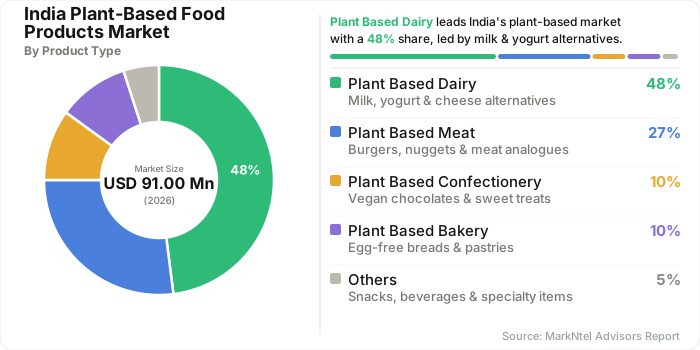
- By product type, plant-based dairy led with 48% revenue share in 2026.
- By ingredient source, soy accounted for 42% of the market in 2026.
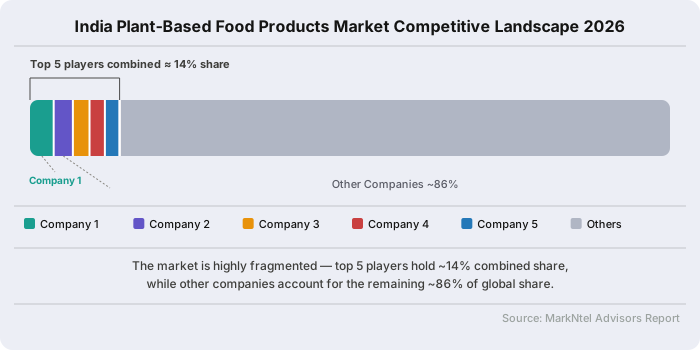
- Leading companies hold a significant market and constitute a market share of 14% in 2026.
India Plant-Based Food Products Market Size & Outlook
The plant-based food products industry in India was valued at USD 79 million in 2025 and is currently standing at USD 91 million in 2026. The industry is projected to grow to USD 198 million by 2032, showcasing a CAGR of around 13.76% during the forecast period, i.e., 2026–32.
The market is transitioning from a niche vegan category into a broader health, protein, and food innovation segment, supported by increasing institutional adoption, biotechnology investments, and a strengthening regulatory framework. Rising commercialization across foodservice, hospitality, and retail channels is expanding consumer exposure beyond specialty stores, while advances in precision fermentation and alternative protein technologies are encouraging product diversification. These developments are gradually positioning plant-based foods as a mainstream dietary option rather than a niche lifestyle choice.
Commercial adoption accelerated during 2025 and 2026 as established foodservice and hospitality brands integrated plant-based offerings into mainstream menus. In September 2025, GoodDot partnered with Haldiram's to introduce soy chaap products across one of India's largest restaurant chains, while Hilton Hotels launched a month-long Veganuary festival across 32 Hilton, DoubleTree, and Hilton Garden Inn properties in January 2026 featuring dedicated plant-based menus, reflecting growing acceptance of functional plant protein products.
International companies are also strengthening India's position as a strategic expansion destination for alternative proteins. Singapore-based Shandi Global entered the market in October 2025 with its chickpea-based Chanza protein range, targeting restaurants, institutional foodservice, and corporate catering before broader retail expansion. The company also announced partnerships with fitness communities, highlighting growing demand beyond traditional vegan consumers. Simultaneously, the BioE3 Policy is supporting biofoundries, precision fermentation, and smart protein development, strengthening the long-term innovation ecosystem despite continued skills gaps in commercialization.
Government initiatives are further improving the operating environment through coordinated fiscal, manufacturing, and regulatory reforms. GST 2.0 reduced the tax on plant-based milk and textured vegetable protein products to 5%, improving affordability, while the USD 1.13 billion production-linked incentive scheme for food processing industries and the USD 677 million Pradhan Mantri Kisan Sampada Yojana continue strengthening food processing infrastructure. Complementing these measures, FSSAI's 2026 Vegan Foods Amendment Regulations introduced standardized vegan labeling, reinforcing consumer confidence and creating a more transparent regulatory framework that supports sustained expansion of India's plant-based food products market.
India Plant-Based Food Products Market Key Indicators
- India's consumer food price index rose 5.32% YoY in June 2026, signalling firmer input and retail-cost pressure across packaged food categories, including plant-based dairy and protein products, which compete on price sensitivity.
- India's FMCG industry grew 7.8% YoY in the October-December 2025 quarter, with nearly 60% of the portfolio affected by GST 2.0 rate revisions, directly benefiting newly 5%-taxed plant-based milk and protein categories.
- India's soybean output is estimated at 127.20 lakh metric tonnes for 2025-26 under the Second Advance Estimates, underpinning domestic feedstock availability for soy-based plant milk, TVP, and meat-analogue manufacturing.
- Gram production is estimated at 117.92 LMT, tur at 34.55 LMT, and lentil at 17.33 LMT for 2025-26, reflecting stable domestic pulse supply that underlies India's protein-isolate and legume-based ingredient base.
India Plant-Based Food Products Market Scope
| Category | Segments |
|---|---|
| By Type | Plant-Based Meat, Plant-Based Dairy, Plant-Based Bakery, Plant-Based Confectionery, Others |
| By Source | Soy, Almond & Nut, Wheat/Gluten Based, Pea & Legume |
| By Sales Channel | Business-to-Consumer (B2C), Business-to-Business (B2B |
India Plant-Based Food Products Market Growth Drivers
Rising Health Consciousness and Protein Focus Driving Plant-Based Food Adoption
Growing health consciousness among Gen Z and younger urban consumers is emerging as a key driver of the industry as dietary preferences increasingly shift toward nutrition-focused and functional food choices. According to GFI's 2026 report, nutrition is among the leading reasons Indian consumers purchase plant-based foods, while plant-based dairy serves as the primary entry point into the category. The report further identifies affordability as the principal barrier to adoption, indicating that future growth will depend more on improving price accessibility than on building consumer awareness.
India's growing focus on dietary protein is further reinforcing this demand. In August 2025, nearly 73% of India's population is estimated to be protein deficient, accelerating consumer interest in protein-rich everyday foods and encouraging manufacturers to expand functional nutrition portfolios. Reflecting this shift, Starbucks India introduced SuperYou Protein Cold Foam in January 2026, allowing consumers to add 11 to 18 grams of fermented protein to beverages.
The launch reflects how food and beverage companies are increasingly incorporating plant based proteins into everyday consumption formats to meet growing demand for convenient and functional nutrition. This shift toward protein focused dietary choices is expected to support sustained demand for innovative plant-based food products across the Indian market.
India Plant-Based Food Products Market Challenges & Opportunities
Balancing Structural Supply Constraints with Emerging Manufacturing and Commercial Opportunities
Despite rising consumer interest, the India plant-based food products market continues to face structural constraints that limit wider adoption. According to GFI's 2026 report, affordability remains one of the largest barriers to consumer adoption, while India imports approximately 90% of its plant protein isolates despite being one of the world's largest pulse producers. This dependence on imported ingredients increases production costs and exposes manufacturers to supply chain disruptions and raw material price volatility.
The category also faces regulatory and distribution related challenges. Fresh refrigerated plant based products remain concentrated in Tier I cities, while shelf-stable products account for broader market penetration. In addition, evolving food labelling regulations and standardized vegan labelling requirements require manufacturers to continuously adapt compliance and product positioning strategies.
These structural challenges are simultaneously creating opportunities for domestic ingredient manufacturing and commercialization. GFI India's May 2026 research identifies indigenous protein crops such as horse gram, moth bean, rice bean, and winged bean as promising alternatives to imported pea and soy protein isolates, supporting the development of a localized protein ingredient ecosystem. Greater utilization of these crops could strengthen supply resilience while reducing dependence on imported protein ingredients.
This opportunity is further reinforced by increasing investments in advanced biomanufacturing. In January 2026, Planetary SA partnered with Dhampur Bio Organics to establish mycoprotein production in India using industrial fermentation, supporting localized manufacturing of alternative proteins. Similarly, Fermenta Biotech received FSSAI approval in July 2026 for India's first plant sourced Vitamin D3 ingredient produced through precision fermentation, highlighting the expanding commercial potential for domestically manufactured functional food ingredients.
Collectively, these developments are expected to accelerate domestic value addition, strengthen supply chain resilience, and position India as an emerging manufacturing hub for next generation plant based food ingredients.
India Plant-Based Food Products Market Survey Insights
Consumer Demographics and Shopping Behaviour
- Early adopters of Plant-Based Food Products in India are primarily urban consumers aged 25 to 44 years, with higher education and income levels. Notably, most purchasers are omnivores seeking healthier dietary options rather than exclusively vegan consumers.
- Nearly 50% of Indian households are familiar with plant based dairy products, compared with around 33% for plant based meat, making dairy alternatives the primary entry point into the broader Plant-Based Food Products category.
- Approximately 82% of plant based dairy consumers and 72% of plant based meat consumers intend to repurchase these products, indicating positive product acceptance and growing confidence among existing buyers.
- Around 60% Indian consumers, purchase Plant-Based Food Products for nutritional benefits, including higher protein intake, improved health, and convenience, highlighting a shift toward preventive nutrition rather than purely ethical or environmental considerations.
- More than 55% Indian consumers purchase plant based products alongside conventional animal based foods rather than as complete substitutes, reflecting a flexitarian consumption pattern that is expanding the addressable consumer base for the category.
Segmentation Analysis
Plant-Based Dairy Leading the Market Through Everyday Consumption and Broad Consumer Acceptance
Plant-based dairy held the largest share of approximately 48% of the India Plant-Based Food Products Market in 2026, supported by its close alignment with traditional household consumption patterns and wider consumer familiarity compared to other plant-based food categories. Products such as plant-based milk, yogurt, cheese, and cream are increasingly being adopted as convenient substitutes for conventional dairy, particularly among lactose-intolerant, health-conscious, and flexitarian consumers. Their versatility across beverages, cooking, and daily meal preparation has further strengthened category penetration.
The segment has also benefited from expanding product innovation, improved taste profiles, and wider retail availability, making plant-based dairy the primary entry point for first-time consumers exploring alternative proteins. According to GFI India's 2026 State of the Industry report, nearly half of Indian households are familiar with plant-based dairy products, significantly higher than awareness of plant-based meat, reinforcing its position as the gateway category for broader plant-based food adoption. Based on type, the market is further bifurcated into:
- Plant-Based Meat
- Plant-Based Dairy
- Plant-Based Confectionery
- Plant-Based Bakery
- Others
Soy Maintaining Market Leadership Through High Protein Content and Established Supply Chains
Soy accounted for approximately 42% of the India plant-based food products market in 2026, primarily due to its high protein concentration, balanced amino acid profile, and long-established use in alternative protein manufacturing. Soy protein offers excellent functional properties, including emulsification, water retention, and texture formation, making it suitable for producing plant-based dairy, meat alternatives, beverages, and processed food products. Its commercial availability and mature processing infrastructure continue to support large-scale manufacturing across the country.
The dominance of soy is further reinforced by its cost competitiveness and widespread acceptance among manufacturers seeking scalable protein ingredients for diverse product formulations. Established domestic processing capabilities and consistent raw material availability have enabled manufacturers to commercialize soy-based products across both retail and foodservice channels while supporting product affordability. As demand for protein-rich functional foods continues to expand, soy is expected to remain the preferred ingredient source for plant-based food manufacturers. Based on source, the market is further bifurcated into:
- Soy
- Almond & Nut
- Wheat/Gluten Based
- Pea & Legume
- Others (Oat, Rice, etc.)
India Plant-Based Food Products Market Competitive Analysis
The India Plant-Based Food Products market is fragmented, with competition distributed among diversified FMCG companies, dedicated plant-based food manufacturers, alternative protein specialists, and plant-based beverage producers. The major participants include Tata Consumer Products Limited (Tata Simply Better), ITC Limited (ITC Master Chef), Hershey India Private Limited (Sofit), GoodDot Enterprises Private Limited (GoodDot), and Vezlay Foods Private Limited (Vezlay). The top five companies collectively accounted for approximately 14% of the India Plant-Based Food Products Market in 2026.
Key Companies in the India Plant-Based Food Products Market
- Tata Consumer Products Limited (Tata Simply Better)
- ITC Limited (ITC Master Chef)
- Hershey India Private Limited (Sofit)
- GoodDot Enterprises Private Limited (GoodDot)
- Vezlay Foods Private Limited (Vezlay)
- Shivanika Foods Private Limited (Blue Tribe Foods)
- Imagine Foods Private Limited (Imagine Meats)
- Veganarke Enterprises Private Limited (One Good, formerly Goodmylk)
- Evo Foodtech Private Limited (Evo Foods)
- Rakyan Beverages Private Limited (Raw Pressery)
India Plant-Based Food Products Market News and Recent Developments
2026: Ota Tofu Expanded Product Portfolio with Launch of Frozen Seasoned Tofu Crumbles
In January 2026, Ota Tofu launched Frozen Seasoned Tofu Crumbles, introducing a ready to cook plant based ingredient designed for convenient everyday meal preparation. The product was developed to offer consumers a versatile protein alternative suitable for multiple culinary applications while reducing preparation time. The launch expands the company's plant based product portfolio and reflects increasing industry focus on convenient, value added food formats that align with evolving consumer preferences for protein rich and easy to prepare meals.
Impact Analysis: The introduction of convenient plant based ingredients is expected to broaden consumer adoption by addressing the growing demand for ready to cook, protein rich food products. Portfolio expansion through versatile product formats enables manufacturers to target a wider consumer base beyond traditional plant based consumers while strengthening product differentiation and supporting greater penetration across modern retail and organized foodservice channels.
2025: THIS and Omami Partnered to Develop Chickpea Based Tofu for Alternative Protein Innovation
In September 2025, United Kingdom based plant based food producer THIS partnered with German food technology startup Omami to develop a chickpea based tofu product, expanding alternatives beyond conventional soy based formulations. The collaboration leverages chickpeas as a sustainable protein source to diversify ingredient options while addressing increasing consumer demand for soy free plant based products. The initiative reflects ongoing innovation in alternative protein development through novel ingredient applications.
Impact Analysis: The partnership highlights the growing emphasis on ingredient diversification within the Plant-Based Food Products industry, creating opportunities to reduce reliance on conventional protein sources such as soy. Continued innovation in alternative plant proteins is expected to expand product offerings, improve consumer choice, and encourage manufacturers to develop differentiated formulations that cater to evolving dietary preferences and allergen related requirements.
Frequently Asked Questions
- Market Segmentation
- Introduction
- Product Definition
- Research Process
- Assumptions
- Executive Summary
- India Plant-Based Food Products Market Production (Thousand Units) Trend 2022-2032
- India Plant-Based Food Products Market Pricing Analysis 2022-2032
- India Plant-Based Food Products Market Policies, Regulations, and Product Standards
- India Plant-Based Food Products Market Supply Chain Analysis
- India Plant-Based Food Products Market Trends & Developments
- India Plant-Based Food Products Market Dynamics
- Growth Factors
- Challenges
- India Plant-Based Food Products Market Hotspot & Opportunities
- India Plant-Based Food Products Market Outlook, 2022-2032
- Market Size & Outlook
- By Revenues (USD Million)
- Market Segmentation & Outlook
- By Type- Market Size & Forecast 2022-2032, USD Million
- Plant-Based Meat
- Burger Patties & Nuggets
- Kebabs, Tikka, Keema, etc.
- Cold Cuts & Sausages
- Textured Vegetable Protein
- Others
- Plant-Based Dairy
- Milk
- Cheese
- Yogurt
- Others (Cream, Condensed milk, etc.)
- Plant-Based Bakery
- Plant-Based Confectionery
- Others
- Plant-Based Meat
- By Source- Market Size & Forecast 2022-2032, USD Million
- Soy
- Almond & Nut
- Wheat/Gluten Based
- Pea & Legume
- Others (Oats, Rice, etc.)
- By Sales Channel- Market Size & Forecast 2022-2032, USD Million
- Business-to-Consumer (B2C)
- Supermarkets & Hypermarkets
- Convenience Stores
- Online Retail
- Business-to-Business (B2B)
- HoReCa
- Institutional (Corporate Caterers, Airlines, Hospitals)
- Business-to-Consumer (B2C)
- By Region- Market Size & Forecast 2022-2032, USD Million
- North
- South
- East
- West
- By Company
- Competition Characteristics
- Market Share & Analysis
- By Type- Market Size & Forecast 2022-2032, USD Million
- Market Size & Outlook
- India Plant-Based Meat Market Outlook, 2022-2032
- Market Size & Outlook
- By Revenues (USD Million)
- Market Segmentation & Outlook
- By Sales Channel- Market Size & Forecast 2022-2032, USD Million
- By Source- Market Size & Forecast 2022-2032, USD Million
- By Region- Market Size & Forecast 2022-2032, USD Million
- Market Size & Outlook
- India Plant-Based Dairy Market Outlook, 2022-2032
- Market Size & Outlook
- By Revenues (USD Million)
- Market Segmentation & Outlook
- By Sales Channel- Market Size & Forecast 2022-2032, USD Million
- By Source- Market Size & Forecast 2022-2032, USD Million
- By Region- Market Size & Forecast 2022-2032, USD Million
- Market Size & Outlook
- India Plant-Based Bakery Market Outlook, 2022-2032
- Market Size & Outlook
- By Revenues (USD Million)
- Market Segmentation & Outlook
- By Sales Channel- Market Size & Forecast 2022-2032, USD Million
- By Source- Market Size & Forecast 2022-2032, USD Million
- By Region- Market Size & Forecast 2022-2032, USD Million
- Market Size & Outlook
- India Plant-Based Confectionery Market Outlook, 2022-2032
- Market Size & Outlook
- By Revenues (USD Million)
- Market Segmentation & Outlook
- By Sales Channel- Market Size & Forecast 2022-2032, USD Million
- By Source- Market Size & Forecast 2022-2032, USD Million
- By Region- Market Size & Forecast 2022-2032, USD Million
- Market Size & Outlook
- India Plant-Based Food Products Market Key Strategic Imperatives for Success & Growth
- Competitive Outlook
- Company Profiles
- Tata Consumer Products Limited (Tata Simply Better)
- Business Description
- Product Portfolio
- Collaborations & Alliances
- Recent Developments
- Financial Details
- Others
- ITC Limited (ITC Master Chef)
- Business Description
- Product Portfolio
- Collaborations & Alliances
- Recent Developments
- Financial Details
- Others
- Hershey India Private Limited (Sofit)
- Business Description
- Product Portfolio
- Collaborations & Alliances
- Recent Developments
- Financial Details
- Others
- Gooddot Enterprises Private Limited (GoodDot)
- Business Description
- Product Portfolio
- Collaborations & Alliances
- Recent Developments
- Financial Details
- Others
- Vezlay Foods Private Limited (Vezlay)
- Business Description
- Product Portfolio
- Collaborations & Alliances
- Recent Developments
- Financial Details
- Others
- Shivanika Foods Private Limited (Blue Tribe Foods)
- Business Description
- Product Portfolio
- Collaborations & Alliances
- Recent Developments
- Financial Details
- Others
- Imagine Foods Private Limited (Imagine Meats)
- Business Description
- Product Portfolio
- Collaborations & Alliances
- Recent Developments
- Financial Details
- Others
- Veganarke Enterprises Private Limited (One Good / formerly Goodmylk)
- Business Description
- Product Portfolio
- Collaborations & Alliances
- Recent Developments
- Financial Details
- Others
- Evo Foodtech Private Limited (Evo Foods)
- Business Description
- Product Portfolio
- Collaborations & Alliances
- Recent Developments
- Financial Details
- Others
- Rakyan Beverages Private Limited (Raw Pressery)
- Business Description
- Product Portfolio
- Collaborations & Alliances
- Recent Developments
- Financial Details
- Others
- Tata Consumer Products Limited (Tata Simply Better)
- Company Profiles
- Disclaimer
MarkNtel Advisors follows a robust and iterative research methodology designed to ensure maximum accuracy and minimize deviation in market estimates and forecasts. Our approach combines both bottom-up and top-down techniques to effectively segment and quantify various aspects of the market. A consistent feature across all our research reports is data triangulation, which examines the market from three distinct perspectives to validate findings. Key components of our research process include:
1. Scope & Research Design At the outset, MarkNtel Advisors define the research objectives and formulate pertinent questions. This phase involves determining the type of research—qualitative or quantitative—and designing a methodology that outlines data collection methods, target demographics, and analytical tools. They also establish timelines and budgets to ensure the research aligns with client goals.
2. Sample Selection and Data Collection In this stage, the firm identifies the target audience and determines the appropriate sample size to ensure representativeness. They employ various sampling methods, such as random or stratified sampling, based on the research objectives. Data collection is carried out using tools like surveys, interviews, and observations, ensuring the gathered data is reliable and relevant.
3. Data Analysis and Validation Once data is collected, MarkNtel Advisors undertake a rigorous analysis process. This includes cleaning the data to remove inconsistencies, employing statistical software for quantitative analysis, and thematic analysis for qualitative data. Validation steps are taken to ensure the accuracy and reliability of the findings, minimizing biases and errors.

4. Data Forecast and FinalizationThe final phase involves forecasting future market trends based on the analyzed data. MarkNtel Advisors utilize predictive modeling and time series analysis to anticipate market behaviors. The insights are then compiled into comprehensive reports, featuring visual aids like charts and graphs, and include strategic recommendations to inform client decision-making
We offer flexible licensing options to cater to varying organizational needs. Choose the pricing pack that best suits your requirements:
Buy Now Inquire Before Buying
 Request Customization
 Talk to our Consultant







