

India Automotive Bearing Market Research Report: Forecast (2026-2032)
By Type (Ball Bearing, Roller Bearing (Cylindrical Roller Bearing, Tapered Roller Bearing, Needle Roller Bearing), Plain Bearing), By Vehicle Type (Two Wheelers, Three Wheeler, Pas ... senger Vehicle, Commercial Vehicle (Light Commercial Vehicles, Medium Commercial Vehicles, Heavy Commercial Vehicles), Off-the-road), By Application (Engine Bearings (Crankshaft Bearings, Camshaft Bearings, Auxiliary System Bearings), Transmission Bearings (Gearbox Bearings, Clutch Release Bearings, Differential Bearings), Wheel & Axle Bearing (Hub Bearings, Axle Bearings), Steering Bearings (Column Bearings, Rack & Pinion System Bearings), Suspension Bearings, Electric Motor Bearing, Others), By Demand (OEM, Replacement), and others Read more
- Automotive
- Jun 2026
- Pages 140
- Report Format: PDF, Excel, PPT
India Automotive Bearing Market
Projected 5.28% CAGR from 2026 to 2032
Study Period
2026-2032
Market Size (2026)
USD 721 Million
Market Size (2032)
USD 982 Million
Base Year
2025
Projected CAGR
5.28%
Leading Segments
By Bearing Type: Ball Bearings
India Automotive Bearing Market Key Takeaways
- The India Automotive Bearing Market was valued at approximately USD 688 million in 2025, USD 721 million in 2026, and is projected to reach nearly USD 982 million by 2032.
- The market is expected to register a CAGR of around 5.28% during 2026–2032.
- By bearing type, Ball Bearings account for the largest market share, estimated at approximately 42% in 2026.
- Based on vehicle type, the Passenger Vehicle segment emerged as the leading contributor, accounting for nearly 52% of total demand in 2026.
- The market is moderately consolidated, with leading players collectively accounting for 37% of a significant share of the organized market.
India Automotive Bearing Market Size and Outlook
The India Automotive Bearing Market was valued at approximately USD 688 million in 2025, USD 721 million in 2026, and is projected to reach nearly USD 982 million by 2032, registering a CAGR of around 5.28% during 2026–2032. The market growth is primarily driven by increasing vehicle production, expansion of automotive manufacturing facilities, growing replacement demand, and rising adoption of electric mobility solutions. India remains one of the world's largest automobile manufacturing hubs, supported by government initiatives.
A major government initiative supporting the market is the PM E-DRIVE Scheme, approved with an outlay of USD 1.31 billion to accelerate electric vehicle adoption and strengthen domestic EV manufacturing. The rapid growth of electric mobility is increasing demand for high-speed and energy-efficient bearings designed specifically for electric motors and powertrain systems. According to SIAM, India produced over 31 million vehicles in FY 2024–25, reinforcing long-term OEM and aftermarket demand for automotive bearings across passenger vehicles, commercial vehicles, and two-wheelers.
Replacement demand is also emerging as a structurally important growth avenue. India's large and aging vehicle fleet, spread across urban centres and increasingly across Tier II and Tier III cities, is generating consistent aftermarket bearing consumption. Organised players are investing in distribution reach and mechanic engagement to capture this demand more effectively.
In conclusion, the automotive bearing industry in India is positioned for steady growth through 2032, supported by expanding automotive production, technological advancements, electrification trends, and increasing aftermarket consumption. Overall, government-backed manufacturing incentives, rising vehicle production, and accelerating EV adoption are expected to support steady growth of the India automotive bearing industry through 2032.
India Automotive Bearing Market Key Indicators
- India's total vehicle production reached approximately 34.7 million units in FY 2025–26, the highest ever recorded by the Indian automotive industry. Rising vehicle production directly increases OEM demand for bearings used in engines, transmissions, wheel hubs, steering systems, and drivetrains.
- India recorded approximately 1.97 million EV registrations in FY 2024–25, reflecting strong growth across passenger vehicles, two-wheelers, and three-wheelers. Rising EV penetration is creating demand for high-speed, low-friction, and energy-efficient bearings designed specifically for electric powertrains.
- India's auto component exports increased to approximately USD 22.9 billion in FY 2024–25, growing by 8% year-on-year. Higher exports encourage capacity expansion, localization, and investment in precision-engineered components such as automotive bearings.
- India exported approximately 5.3 million vehicles in FY 2024–25, reflecting growing global acceptance of India-manufactured automobiles. Increasing vehicle exports boost production volumes and consequently raises demand for OEM automotive bearings across vehicle categories.
- Domestic OEM supplies by the Indian auto component industry reached approximately USD 62.4 billion in FY 2024–25, with EV-related components contributing around 6% of total production. Industry expansion directly supports higher bearing manufacturing volumes and technological advancements.
India Automotive Bearing Market Scope
| Category | Segments |
|---|---|
| By Type | Ball Bearing, Roller Bearing (Cylindrical Roller Bearing, Tapered Roller Bearing, Needle Roller Bearing), Plain Bearing |
| By Vehicle Type | Two Wheelers, Three Wheeler, Passenger Vehicle, Commercial Vehicle (Light Commercial Vehicles, Medium Commercial Vehicles, Heavy Commercial Vehicles), Off-the-road |
| By Application | Engine Bearings (Crankshaft Bearings, Camshaft Bearings, Auxiliary System Bearings), Transmission Bearings (Gearbox Bearings, Clutch Release Bearings, Differential Bearings), Wheel & Axle Bearing (Hub Bearings, Axle Bearings), Steering Bearings (Column Bearings, Rack & Pinion System Bearings), Suspension Bearings, Electric Motor Bearing, Others |
| By Demand | OEM, Replacement |
India Automotive Bearing Market Growth Driver
Export-led Automotive Production Expansion Increasing OEM Bearing Requirements Across Vehicle Categories
India's expanding vehicle production and export activity is creating sustained demand for automotive bearings industry across OEM channels. The country recorded its highest-ever vehicle exports of approximately 6.65 million units in FY 2025–26, reflecting broad-based growth across passenger vehicles, two-wheelers, and commercial vehicles. Rising production volumes directly increase bearing requirements across engines, transmissions, wheel hubs, steering systems, and drivetrains, supporting higher procurement by vehicle manufacturers and component suppliers.
Supporting this production expansion is the government's production-linked incentive scheme for automobiles and auto components, carrying an outlay of approximately USD 3.11 billion and extended until FY 2027–28. The scheme has accelerated investments in domestic manufacturing capabilities and strengthened supply chain localisation. In parallel, India's auto component exports reached approximately USD 22.9 billion in FY 2024–25, highlighting the increasing scale and integration of the country's automotive manufacturing ecosystem.
As India targets a larger share of global vehicle and component trade, production volumes are expected to remain elevated, sustaining long-term OEM bearing requirements across passenger vehicles, commercial vehicles, and two-wheelers through 2032.
Recent Trends
Adoption of NVH optimised bearing due to rising SUV and premium passenger vehicles
India's passenger vehicle market has undergone a structural shift toward SUVs, with utility vehicles accounting for approximately 66% of domestic passenger vehicle sales in 2025. This rapid premiumization is reshaping component specifications across the OEM supply chain, including bearings.
SUV buyers increasingly expect quieter, more refined cabin experiences. To meet these expectations, OEMs are sourcing bearings engineered specifically for noise, vibration, and harshness reduction. NVH optimised bearings achieve acoustic decoupling between vibration-generating components such as shafts and transmissions and the vehicle body, reducing interior noise levels by up to 10 dB(A). Advanced internal geometry and precision cage materials further suppress structure-borne noise at the source.
India's NVH testing market is itself expanding, driven by increasing investment in sound quality validation for premium passenger vehicles. With all companies reporting strong SUV-led sales growth in early 2026, OEM demand for acoustically optimised bearing solutions is expected to strengthen steadily through the forecast period.
India Automotive Bearing Market Opportunities and Challenges
Fragmented Aftermarket Distribution Networks Accelerating the Shift Toward Digital Sales Platforms
India's automotive bearing industry’s aftermarket remains structurally fragmented, particularly across Tier II and Tier III cities. Unorganised players dominate local distribution networks in these geographies, limiting the ability of organised manufacturers to enforce pricing discipline, ensure product authenticity, and maintain service standards.
Compounding this, counterfeit and substandard bearings continue to circulate widely through informal channels, eroding margins and brand trust for genuine manufacturers. Enforcement mechanisms remain weak, with penalties insufficient to deter counterfeit distribution at scale.
The opportunity lies in the accelerating digitisation of aftermarket channels. E-commerce platforms are already improving bearing availability in smaller cities, creating a direct-to-workshop supply model that bypasses traditional fragmented intermediaries. SKF India's initiative in January 2025, deploying mobile van units across 100 cities in 19 states to train over 8,000 two-wheeler mechanics while promoting the SKF Authenticate app for counterfeit detection, illustrates how organised players are combining physical outreach with digital tools to build aftermarket depth.
As smartphone penetration and logistics infrastructure improve across Tier II and Tier III markets, digital distribution is expected to become an increasingly viable and profitable channel for bearing manufacturers through 2032.
Segmentation Insights
Ball Bearings Remain the Dominant Product Segment Owing to Broad Automotive Applications
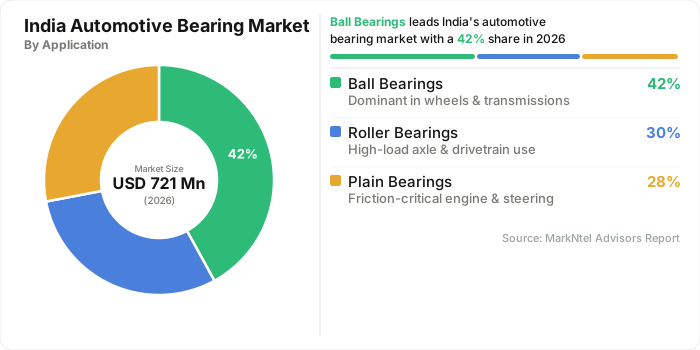
Ball bearings account for approximately 42% of the India Automotive Bearing Market, making them the leading product segment due to their widespread application across wheel hubs, gearboxes, steering systems, electric motors, and transmission assemblies. Their ability to operate at high rotational speeds while maintaining low friction, reduced noise, and longer service life makes them the preferred choice for passenger vehicles, two-wheelers, and light commercial vehicles.
The segment is also benefiting from the growing penetration of fuel-efficient vehicles and increasing integration of electrically powered components, which require compact, high-precision bearings capable of delivering reliable performance under varying operating conditions. Additionally, the large installed vehicle base in India generates sustained replacement demand for ball bearings, particularly in two-wheelers and passenger cars, reinforcing their strong presence across both organized aftermarket networks and independent distribution channels. Based on bearing type, the market has been segmented into:
- Ball Bearings
- Roller Bearings
- Plain Bearings
Passenger Vehicles Lead Demand Owing to Higher Production Volumes
Passenger vehicles account for approximately 52% of the India Automotive Bearing Market, making them the largest vehicle segment due to high production volumes and increasing vehicle ownership across the country. According to the Society of Indian Automobile Manufacturers (SIAM), passenger vehicle production exceeded 5 million units in FY 2025–26, supported by rising disposable incomes, rapid urbanization, easier access to vehicle financing, and growing demand for personal transportation.
Bearings are extensively used in engines, transmissions, wheel hubs, steering systems, and electric motors, resulting in significant bearing consumption per vehicle. The segment is further benefiting from increasing demand for compact SUVs and premium vehicles, which require advanced bearing technologies to enhance performance, fuel efficiency, and driving comfort. In addition, the growing adoption of hybrid and electric passenger vehicles is creating demand for low-friction and high-speed bearing solutions. Based on vehicle type, the market has been segmented into:
- Two Wheelers
- Three Wheeler
- Passenger Vehicle
- Commercial Vehicle
- Off-the-Road Vehicle
India Automotive Bearing Market Competitive Analysis
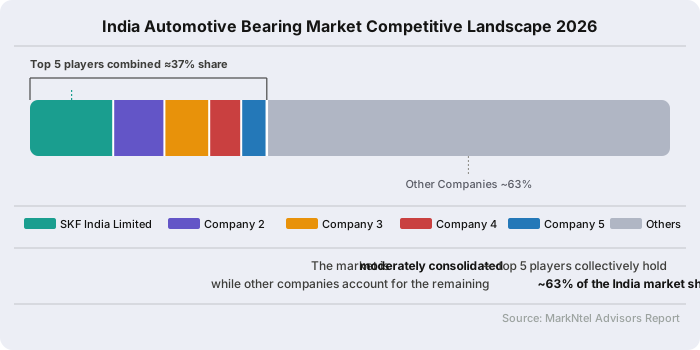
The India Automotive Bearing Market is moderately consolidated, with multinational and domestic manufacturers competing through product innovation, localization strategies, and OEM partnerships. Major players including SKF India, Schaeffler India and Timken India collectively accounts for 37% of a significant share of the organized market, focusing on expanding manufacturing capacity, developing EV-specific bearing solutions, and strengthening aftermarket distribution networks.
Key Companies in the India Automotive Bearing Market
- SKF India Limited
- National Engineering Industries Limited (NEI)
- Timken India Limited
- NRB Bearings Limited
- Tata Bearings Pvt Ltd
- Bimetal Bearings Ltd.
- ISB Industries Private Limited
- JTEKT India Limited
- Menon Bearings Limited
- NTN Bearing India Private Limited
India Automotive Bearing Market News and Recent Developments
May 2025:NTN Introduces High-Load Capacity HA-C Bearings for EV Applications
NTN Corporation launched its new HA-C Bearing series for electric and hybrid vehicle applications. The technology enables up to 55% weight reduction while maintaining high load capacity and durability for e-Axles, EV motors, and transmission systems.
Impact Analysis: The product launch supports the industry's shift toward lightweight and energy-efficient mobility solutions. Improved load capacity and reduced weight help OEMs enhance EV efficiency, driving demand for next-generation bearing technologies.
Frequently Asked Questions
- Market Segmentation
- Introduction
- Product Definition
- Research Process
- Assumptions
- Executive Summary
- India Automotive Bearing Market Policies, Regulations, and Product Standards
- India Automotive Bearing Production (Thousand Units) Trend 2022-2032
- India Automotive Bearing Production (Thousand Units) Trend by Type
- Ball Bearing
- Roller Bearing
- Plain Bearing
- India Automotive Bearing Production (Thousand Units) Trend by Type
- India Automotive Bearing Pricing Analysis 2022-2032
- India Automotive Bearing Pricing Trend 2022-2032
- India Automotive Bearing Pricing Trend by Type 2022-2032
- Ball Bearing
- Roller Bearing
- Plain Bearing
- India Automotive Bearing Market Trends & Developments
- India Automotive Bearing Market Dynamics
- Growth Factors
- Challenges
- India Automotive Bearing Market Hotspot & Opportunities
- India Automotive Bearing Market Outlook, 2022-2032F
- Market Size & Outlook
- By Revenues (USD Million)
- By Quantity Sold (Thousand Units)
- Market Share & Outlook
- By Type- Market Size & Forecast 2022-2032, USD Million & Thousand Units
- Ball Bearing
- Roller Bearing
- Cylindrical Roller Bearing
- Tapered Roller Bearing
- Needle Roller Bearing
- Plain Bearing
- By Vehicle Type- Market Size & Forecast 2022-2032, USD Million & Thousand Units
- Two Wheelers
- Three Wheeler
- Passenger Vehicle
- Commercial Vehicle
- Light Commercial Vehicles
- Medium Commercial Vehicles
- Heavy Commercial Vehicles
- Off-the-road
- By Application- Market Size & Forecast 2022-2032, USD Million & Thousand Units
- Engine Bearings
- Crankshaft Bearings
- Camshaft Bearings
- Auxiliary System Bearings
- Transmission Bearings
- Gearbox Bearings
- Clutch Release Bearings
- Differential Bearings
- Wheel & Axle Bearing
- Hub Bearings
- Axle Bearings
- Steering Bearings
- Column Bearings
- Rack & Pinion System Bearings
- Suspension Bearings
- Electric Motor Bearing
- Others
- Engine Bearings
- By Demand- Market Size & Forecast 2022-2032, USD Million & Thousand Units
- OEM
- Replacement
- By Region- Market Size & Forecast 2022-2032, USD Million & Thousand Units
- North
- South
- West
- East
- By Company
- Competition Characteristics
- Market Share & Analysis
- By Type- Market Size & Forecast 2022-2032, USD Million & Thousand Units
- Market Size & Outlook
- India Ball Bearing Market Outlook, 2022-2032
- Market Size & Outlook
- By Revenues (USD Million)
- By Quantity Sold (Thousand Units)
- Market Share & Outlook
- By Vehicle Type- Market Size & Forecast 2022-2032, USD Million & Thousand Units
- By Application- Market Size & Forecast 2022-2032, USD Million & Thousand Units
- By Demand- Market Size & Forecast 2022-2032, USD Million & Thousand Units
- By End User- Market Size & Forecast 2022-2032, USD Million & Thousand Units
- By Region- Market Size & Forecast 2022-2032, USD Million & Thousand Units
- Market Size & Outlook
- India Roller Bearing Market Outlook, 2022-2032
- Market Size & Outlook
- By Revenues (USD Million)
- By Quantity Sold (Thousand Units)
- Market Share & Outlook
- By Vehicle Type- Market Size & Forecast 2022-2032, USD Million & Thousand Units
- By Application- Market Size & Forecast 2022-2032, USD Million & Thousand Units
- By Demand- Market Size & Forecast 2022-2032, USD Million & Thousand Units
- By End User- Market Size & Forecast 2022-2032, USD Million & Thousand Units
- By Region- Market Size & Forecast 2022-2032, USD Million & Thousand Units
- Market Size & Outlook
- India Plain Bearing Market Outlook, 2022-2032
- Market Size & Outlook
- By Revenues (USD Million)
- By Quantity Sold (Thousand Units)
- Market Share & Outlook
- By Vehicle Type- Market Size & Forecast 2022-2032, USD Million & Thousand Units
- By Application- Market Size & Forecast 2022-2032, USD Million & Thousand Units
- By Demand- Market Size & Forecast 2022-2032, USD Million & Thousand Units
- By End User- Market Size & Forecast 2022-2032, USD Million & Thousand Units
- By Region- Market Size & Forecast 2022-2032, USD Million & Thousand Units
- Market Size & Outlook
- India Automotive Bearing Market Key Strategic Imperatives for Success & Growth
- Competitive Outlook
- Company Profiles
- SKF India Limited
- Business Description
- Product Portfolio
- Collaborations & Alliances
- Recent Developments
- Financial Details
- Others
- National Engineering Industries Limited (NEI)
- Business Description
- Product Portfolio
- Collaborations & Alliances
- Recent Developments
- Financial Details
- Others
- Timken India Limited
- Business Description
- Product Portfolio
- Collaborations & Alliances
- Recent Developments
- Financial Details
- Others
- NRB Bearings Limited
- Business Description
- Product Portfolio
- Collaborations & Alliances
- Recent Developments
- Financial Details
- Others
- Tata Bearings Pvt Ltd
- Business Description
- Product Portfolio
- Collaborations & Alliances
- Recent Developments
- Financial Details
- Others
- Bimetal Bearings Ltd.
- Business Description
- Product Portfolio
- Collaborations & Alliances
- Recent Developments
- Financial Details
- Others
- ISB Industries Private Limited
- Business Description
- Product Portfolio
- Collaborations & Alliances
- Recent Developments
- Financial Details
- Others
- JTEKT India Limited
- Business Description
- Product Portfolio
- Collaborations & Alliances
- Recent Developments
- Financial Details
- Others
- Menon Bearings Limited
- Business Description
- Product Portfolio
- Collaborations & Alliances
- Recent Developments
- Financial Details
- Others
- NTN Bearing India Private Limited
- Business Description
- Product Portfolio
- Collaborations & Alliances
- Recent Developments
- Financial Details
- Others
- SKF India Limited
- Company Profiles
- Disclaimer
MarkNtel Advisors follows a robust and iterative research methodology designed to ensure maximum accuracy and minimize deviation in market estimates and forecasts. Our approach combines both bottom-up and top-down techniques to effectively segment and quantify various aspects of the market. A consistent feature across all our research reports is data triangulation, which examines the market from three distinct perspectives to validate findings. Key components of our research process include:
1. Scope & Research Design At the outset, MarkNtel Advisors define the research objectives and formulate pertinent questions. This phase involves determining the type of research—qualitative or quantitative—and designing a methodology that outlines data collection methods, target demographics, and analytical tools. They also establish timelines and budgets to ensure the research aligns with client goals.
2. Sample Selection and Data Collection In this stage, the firm identifies the target audience and determines the appropriate sample size to ensure representativeness. They employ various sampling methods, such as random or stratified sampling, based on the research objectives. Data collection is carried out using tools like surveys, interviews, and observations, ensuring the gathered data is reliable and relevant.
3. Data Analysis and Validation Once data is collected, MarkNtel Advisors undertake a rigorous analysis process. This includes cleaning the data to remove inconsistencies, employing statistical software for quantitative analysis, and thematic analysis for qualitative data. Validation steps are taken to ensure the accuracy and reliability of the findings, minimizing biases and errors.

4. Data Forecast and FinalizationThe final phase involves forecasting future market trends based on the analyzed data. MarkNtel Advisors utilize predictive modeling and time series analysis to anticipate market behaviors. The insights are then compiled into comprehensive reports, featuring visual aids like charts and graphs, and include strategic recommendations to inform client decision-making
We offer flexible licensing options to cater to varying organizational needs. Choose the pricing pack that best suits your requirements:
Buy Now Inquire Before Buying
 Request Customization
 Talk to our Consultant







