

Halal Food Market Research Report: Forecast (2026-2032)
By Product Type (Meat Products (Poultry (Chicken, Turkey, Others (Goose, Duck, etc.)), Beef, Mutton, Seafood), Dairy Products (Milk, Others (Cheese, Butter, etc.)), Fruits & Vegeta ... bles, Cereals & Grains, Plant-based & Vegan Products, Others (Confectionary, Oils, Fats, etc.)), By Distribution Channel (Offline (Supermarkets & Hypermarkets, Convenience Stores, Specialty Stores), Online), and others Read more
- Food & Beverages
- Aug 2026
- Pages 343
- Report Format: PDF, Excel, PPT
Halal Food Market
Projected 10.54% CAGR from 2026 to 2032
Study Period
2026-2032
Market Size (2026)
USD 3.99 Trillion
Market Size (2032)
USD 7.28 Trillion
Largest Region
Asia-Pacific
Projected CAGR
10.54%
Leading Segments
By Type: Meat Products
Halal Food Market Key Takeaways
- The global halal food market size was valued at USD 3.11 trillion in 2025 and is projected to grow from USD 3.99 trillion in 2026 to USD 7.28 trillion by 2032.
- The industry is projected to reflect sustain growth at a steady CAGR of 10.54% during 2026-2032.
- Asia Pacific holds the largest share of about 45% in 2026.
- By type, meat products hold a significant share of about 60% in 2026.
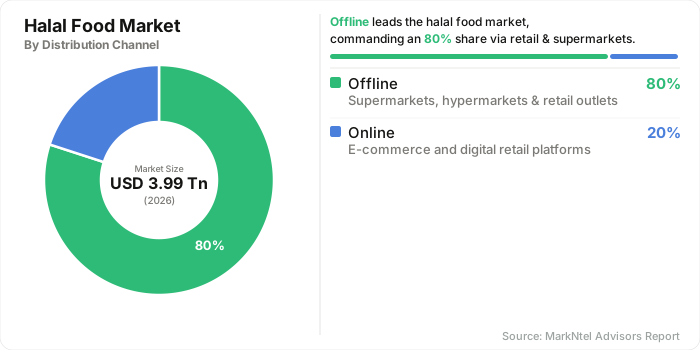
- By distribution channel, offline seized a significant share of about 80% in 2026.
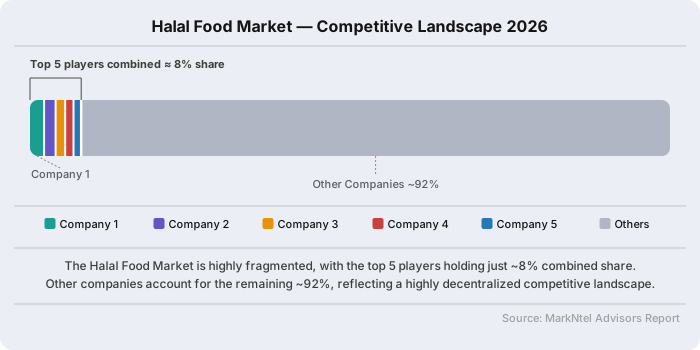
- The industry is highly fragmented. However, the top five players collectively account for nearly 8% share.
Halal Food Market Size and Outlook
The global halal food market size was valued at USD 3.11 trillion in 2025 and is projected to grow from USD 3.99 trillion in 2026 to USD 7.28 trillion by 2032. Along with this, the market is estimated to grow at a CAGR of around 10.54% during the forecast period, i.e., 2026-32.
The demand for halal food is driven by rising demand for certified, safe, and traceable food, supported by a large Muslim consumer base and expanding consumption of processed foods, meat, dairy, and convenience products. Policy support is strengthening market development through harmonized halal standards, certification, accreditation, and traceability frameworks under OIC/SMIIC.
Future opportunities include halal-certified packaged foods, plant-based products, digital halal verification, international trade, and expansion across emerging markets. Increasing adoption of standardized certification and growing investment in halal manufacturing and supply-chain infrastructure are expected to improve cross-border market access. Overall, the market has a positive long-term outlook, supported by demographic demand, regulatory formalization, product diversification, and increasing integration of halal requirements into global food supply chains.
Halal Food Market Key Indicators
- Indonesia’s BPJPH has confirmed that mandatory halal certification will take effect on October 18, 2026, with food and beverage MSMEs, imported products, slaughtered products, and related services among the categories covered. The policy is expected to expand the volume of certified products in Indonesia, while strengthening consumer assurance and supporting the country’s role in the global halal food industry.
- Brazil’s position as the world’s largest halal chicken exporter highlights the strength of international demand for halal animal protein. According to ABPA, Brazil ships more than 2 million tonnes of halal chicken annually and has exported nearly 100 million tonnes of chicken to over 150 countries during five decades. In 2024, total chicken exports generated nearly USD 10 billion, reinforcing Brazil’s importance in global halal food supply.
- Pakistan’s approval of a National Halal Meat Export Policy in December 2025 signals stronger institutional support for expanding the country’s halal food exports. The policy establishes a three-year action plan targeting Muslim and global markets, supported by annual halal meat production of nearly 6 million metric tons and export earnings exceeding USD 500 million. The UAE remains a key destination, while Pakistan and Malaysia agreed on a USD 200 million halal meat trade quota, strengthening international market opportunities.
Halal Food Market Scope
| Category | Segments |
|---|---|
| By Product Type | Meat Products (Poultry (Chicken, Turkey, Others (Goose, Duck, etc.)), Beef, Mutton, Seafood), Dairy Products (Milk, Others (Cheese, Butter, etc.)), Fruits & Vegetables, Cereals & Grains, Plant-based & Vegan Products, Others (Confectionary, Oils, Fats, etc. |
| By Distribution Channel | Offline (Supermarkets & Hypermarkets, Convenience Stores, Specialty Stores), Online |
Halal Food Market Growth Drivers
Expansion of Halal-Certified Restaurant Chains Driving Global Halal Food Demand
The expansion of halal foodservice and restaurant chains is a key driver of the global halal food industry because it increases the availability of halal meals and creates more frequent consumption occasions outside the home. The growth of quick-service restaurants (QSRs), casual dining outlets, hotels, catering businesses, and food courts is consequently generating additional demand for halal-certified meat, poultry, sauces, bakery products, beverages, and other food ingredients.
Jollibee provides a relevant example of this trend in Malaysia. When the company opened its first restaurant in West Malaysia at Sunway Pyramid, it specifically stated that all ingredients used were sourced from halal-certified vendors, enabling the international QSR brand to cater to the country's halal-conscious consumer base. Jollibee has subsequently continued expanding across Southeast Asia, opening 51 new stores in the region during 2024, including outlets in Malaysia, Singapore, Vietnam, and Brunei. By the end of 2025, Jollibee operated 1,658 stores across Southeast Asia, demonstrating the increasing scale of organized QSR networks in markets with significant Muslim consumer populations.
Another example is McDonald's Malaysia, which is halal-certified by JAKIM and announced a USD 246 million investment over five years in 2026 to expand and modernize its nationwide restaurant network. These developments expand halal dining accessibility, strengthen demand for certified food inputs, and encourage restaurant operators and suppliers to participate in the broader halal ecosystem, thereby supporting growth of the global halal food market.
Recent Trends
Growth of Halal Plant-Based and Alternative-Protein Products
The growth of halal plant-based and alternative-protein products is emerging as a notable trend as manufacturers respond to increasing interest in sustainable, health-oriented, and meat-alternative foods while maintaining access to Muslim consumers. Halal certification is particularly important because plant-based products may still contain non-halal additives, processing ingredients, or be manufactured alongside non-halal products. JAKIM’s certification framework evaluates halal status across raw materials and production processes, supporting greater confidence in certified alternatives.
A strong example is Malaysia, where Agrocorp International and Megmilk Snow Brand established Agro Snow, a plant-protein venture designed to produce 6,000 metric tonnes of pulse-protein isolates annually. The facility specifically combines alternative-protein production with halal certification, sustainability, and functional-food applications, targeting food manufacturers across Asia.
This convergence of halal compliance, plant-based nutrition, sustainability, and protein diversification is encouraging manufacturers to develop products that can serve both Muslim consumers and the broader flexitarian and health-conscious population, expanding the addressable market for halal food.
Halal Food Market Opportunities and Challenges
Complex Halal Supply Chains Creating Demand for Digital Traceability Solutions
The difficulty of maintaining halal integrity across complex global food supply chains is a key challenge because halal compliance must be preserved from raw-material sourcing and processing through packaging, transportation, storage, distribution, and retail. International sourcing increases the difficulty of verifying ingredient origins and preventing contamination or mixing with non-halal materials. This is particularly challenging for processed foods containing gelatin, enzymes, emulsifiers, flavorings, and other complex ingredients. Indonesia’s LPPOM MUI has identified supply-chain complexity as a major reason for developing a Halal Food Traceability System (HFTS) capable of tracking products from raw-material origins through slaughtering, processing, packaging, storage, and distribution.
The challenge is simultaneously creating an opportunity for digital halal traceability and supply-chain solutions. QR-code certification, digital certificates, blockchain-based records, and digital supply-chain platforms can improve transparency, reduce verification difficulties, and strengthen consumer confidence. Singapore provides a practical example: MUIS introduced digital halal certificates with QR codes from October 2025, allowing consumers to instantly access updated certification information and verify whether a halal certificate is valid.
MUIS also enhanced its foreign halal certification framework specifically to address the growing complexity of global halal supply chains. LPPOM MUI has also highlighted blockchain-based halal assurance systems covering business processes and logistics within the supply chain. These developments create opportunities for technology providers, certification bodies, logistics companies, and food manufacturers while supporting greater transparency and growth of the global halal food market.
Segmentation Insights
Meat Products Account for Approximately 60% Share of Global Demand
Meat products account for approximately 60% of the global halal food industry, making them the dominant product category. This leadership is primarily driven by the central role of halal slaughter and meat consumption in Islamic dietary practices, creating consistent demand for halal-certified poultry, beef, mutton, and other animal proteins. Poultry, particularly chicken, represents a major contributor because of its affordability, widespread consumption, shorter production cycles, and extensive availability through halal-certified processing facilities. Rising urbanization, population growth, and increasing disposable incomes across Muslim-majority countries are further supporting meat consumption.
Saudi Arabia, Indonesia, Malaysia, and the Gulf countries are important demand centers, while Brazil has emerged as a major supplier of halal poultry and beef to international markets. In addition, expanding halal certification, cold-chain infrastructure, processed meat production, supermarkets, and foodservice channels are improving the availability of certified meat products. The growing international trade of halal meat is also enabling producers to serve consumers beyond Muslim-majority markets, reinforcing meat products as the largest segment of the global halal food industry. Based on type, the scope has been segmented into
- Meat Products
- Dairy Products
- Fruits & Vegetables
- Cereals & Grains
- Plant-based & Vegan Products
- Others (Confectionary, Oils, Fats, etc.)
Offline Retail Holds the Leading Position with an 80% Share
Offline channels represent the largest distribution segment in the global halal food market, accounting for approximately 80% of total sales. The segment includes supermarkets, hypermarkets, traditional grocery stores, specialty halal retailers, butcher shops, convenience stores, and foodservice outlets. Its dominance is supported by consumers’ preference for physical verification of halal certification, product freshness, ingredients, and packaging, particularly for meat, poultry, dairy, and fresh food products.
Supermarkets and hypermarkets are especially important because they provide dedicated halal sections and offer a broad range of certified products under one roof. Saudi Arabia, Indonesia, Malaysia, and the Gulf countries have extensive physical retail networks serving halal consumers. Meanwhile, online channels are expanding rapidly through e-commerce and food-delivery platforms, but they remain comparatively smaller. The continued expansion of modern grocery retail, specialty halal stores, and organized foodservice, combined with strong consumer trust in physical purchasing, is expected to sustain the leading position of offline distribution throughout the forecast period. By distribution channel, the scope has been classified into
- Offline
- Online
Halal Food Market Geographical Outlook
Asia Pacific Leads with Approximately 45% Share of Global Demand
Asia Pacific accounts for approximately 45% of global halal food demand, making it the leading regional market. The region benefits from its large Muslim consumer base, expanding food-processing industry, and strengthening halal regulatory infrastructure. Indonesia provides a significant example of this regulatory development. According to Indonesia’s Halal Product Assurance Agency (BPJPH), the mandatory halal-certification requirement for food, beverages, slaughtered products, and slaughtering services began on October 18, 2024, following the completion of the transition period for medium and large businesses.
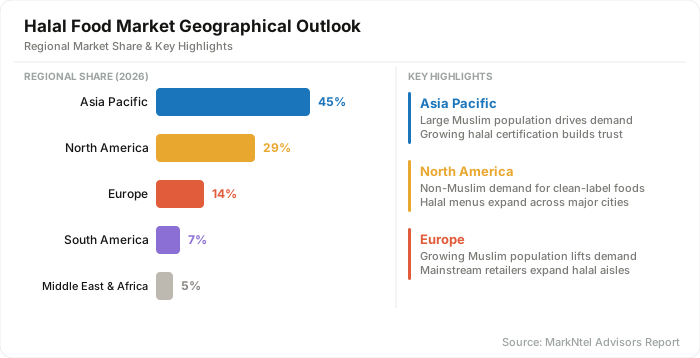
For micro and small enterprises, the transition period continues until October 17, 2026. BPJPH also states that halal-certification requirements for relevant foreign products will be determined by the government no later than October 17, 2026, considering mutual-recognition arrangements for halal certificates. These regulatory developments, combined with strong domestic consumption and Malaysia's established halal ecosystem, reinforce Asia Pacific's leading position in the global halal food market.
Top Five Manufacturers Capture an Estimated 8% Share Through Strong Global Presence
The global halal food market is highly fragmented, with leading companies such as Cargill Inc., BRF S.A., Mondelez International, Del Monte Foods, Inc., Unilever PLC collectively accounting for an estimated 8% of the global market share
Key Players in Global Halal Food market
- Cargill Inc.
- BRF S.A.
- Mondelez International
- Del Monte Foods, Inc.
- Unilever PLC
- Nestlé (Malaysia) Berhad
- Tyson Foods Inc.
- Al Islami Foods
- Saffron Road
- QL Resources Berhad
- Garudafood
- Haoyue Group
- Kawan Food Manufacturing Sdn Bhd
- American Foods Group LLC
- Tahira Foods Ltd.
- Others
Halal Food Industry News and Recent Developments
May 2026: Nestlé Malaysia Strengthens Halal Ecosystem with JAKIM
In May 2026, Nestlé Malaysia and JAKIM showcased a strengthened partnership focused on developing Malaysia's halal ecosystem. Nestlé highlighted its halal supply-chain capabilities and the Halal@STEM initiative launched in 2025 with Universiti Putra Malaysia. The development reinforces Nestlé Malaysia's role as the group's largest halal manufacturing hub and supports continued innovation in halal food production.
Impact Analysis: The partnership between Nestlé Malaysia and JAKIM is expected to strengthen halal compliance, innovation, and supply-chain capabilities across Malaysia’s food industry. By promoting halal education, technical expertise, and industry-academia collaboration through Halal@STEM, the initiative can support product development and skilled talent. It also reinforces Malaysia’s position as a global halal manufacturing and export hub, encouraging broader industry adoption of standardized halal practices.
2025: Paris Baguette Opens Halal-Certified Production Hub in Malaysia
South Korea's SPC Group opened a halal-certified bakery production facility for Paris Baguette in Johor, Malaysia, in February 2025. The facility is intended to supply Southeast Asian and Middle Eastern markets with halal-certified bakery products. The investment strengthens Malaysia's role as a regional halal manufacturing hub while providing Korean food brands with greater access to expanding international halal markets.
Impact Analysis: Paris Baguette’s halal food hub strengthens Malaysia’s position as a strategic base for international halal bakery production. The facility enables SPC Group to expand halal-certified bakery offerings across Southeast Asia and Middle Eastern markets while improving regional supply-chain efficiency. Its establishment also demonstrates growing interest from international food brands in Malaysia’s halal ecosystem, supporting manufacturing investment, export opportunities, and diversification of the global halal food market
Frequently Asked Questions
- Market Segmentation
- Introduction
- Market Definition
- Research Process
- Assumptions
- Halal Food Market Policies, Regulations, Product Standards
- Halal Food Market, Consumer Survey, 2023
- Frequency of Buying
- Factors Affecting Purchase Decision
- Certification Awareness
- Brand Awareness & Preferences
- Others
- Halal Food Market Supply Chain Analysis
- Halal Food Market Trends & Insight
- Halal Food Market Dynamics
- Growth Drivers
- Challenges
- Halal Food Market Hotspots & Opportunities
- Halal Food Market Outlook, 2020-2032
- Market Size & Analysis
- By Revenues (USD Million)
- Market Share & Analysis
- By Product Type
- Meat Products- Market Size & Forecast 2020-2032, (USD Million)
- Poultry- Market Size & Forecast 2020-2032, (USD Million)
- Chicken- Market Size & Forecast 2020-2032, (USD Million)
- Turkey- Market Size & Forecast 2020-2032, (USD Million)
- Others (Goose, Duck, etc.) - Market Size & Forecast 2020-2032, (USD Million)
- Beef- Market Size & Forecast 2020-2032, (USD Million)
- Mutton- Market Size & Forecast 2020-2032, (USD Million)
- Seafood- Market Size & Forecast 2020-2032, (USD Million)
- Poultry- Market Size & Forecast 2020-2032, (USD Million)
- Dairy Products- Market Size & Forecast 2020-2032, (USD Million)
- Milk- Market Size & Forecast 2020-2032, (USD Million)
- Others (Cheese, Butter, etc.) - Market Size & Forecast 2020-2032, (USD Million)
- Fruits & Vegetables- Market Size & Forecast 2020-2032, (USD Million)
- Cereals & Grains- Market Size & Forecast 2020-2032, (USD Million)
- Plant-based & Vegan Products- Market Size & Forecast 2020-2032, (USD Million)
- Others (Confectionary, Oils, Fats, etc.) - Market Size & Forecast 2020-2032, (USD Million)
- Meat Products- Market Size & Forecast 2020-2032, (USD Million)
- By Distribution Channel
- Offline- Market Size & Forecast 2020-2032, (USD Million)
- Supermarkets & Hypermarkets- Market Size & Forecast 2020-2032, (USD Million)
- Convenience Stores- Market Size & Forecast 2020-2032, (USD Million)
- Specialty Stores- Market Size & Forecast 2020-2032, (USD Million)
- Online- Market Size & Forecast 2020-2032, (USD Million)
- Offline- Market Size & Forecast 2020-2032, (USD Million)
- By Region
- North America
- South America
- Europe
- The Middle East & Africa
- Asia-Pacific
- By Company
- Competition Characteristics
- Market Share of Leading Companies, By Revenues
- By Product Type
- Market Size & Analysis
- North America Halal Food Market Outlook, 2020-2032
- Market Size & Analysis
- By Revenues (USD Million)
- Market Share & Analysis
- By Product Type - Market Size & Forecast 2020-2032, (USD Million)
- By Distribution Channel - Market Size & Forecast 2020-2032, (USD Million)
- By Country
- The US
- Canada
- Mexico
- The US Halal Food Market Outlook, 2020-2032
- Market Size & Analysis
- By Revenues (USD Million)
- Market Share & Analysis
- By Product Type - Market Size & Forecast 2020-2032, (USD Million)
- By Distribution Channel - Market Size & Forecast 2020-2032, (USD Million)
- Market Size & Analysis
- Canada Halal Food Market Outlook, 2020-2032
- Market Size & Analysis
- By Revenues (USD Million)
- Market Share & Analysis
- By Product Type - Market Size & Forecast 2020-2032, (USD Million)
- By Distribution Channel - Market Size & Forecast 2020-2032, (USD Million)
- Market Size & Analysis
- Mexico Halal Food Market Outlook, 2020-2032
- Market Size & Analysis
- By Revenues (USD Million)
- Market Share & Analysis
- By Product Type - Market Size & Forecast 2020-2032, (USD Million)
- By Distribution Channel - Market Size & Forecast 2020-2032, (USD Million)
- Market Size & Analysis
- Market Size & Analysis
- South America Halal Food Market Outlook, 2020-2032
- Market Size & Analysis
- By Revenues (USD Million)
- Market Share & Analysis
- By Product Type - Market Size & Forecast 2020-2032, (USD Million)
- By Distribution Channel - Market Size & Forecast 2020-2032, (USD Million)
- By Country
- Brazil
- Argentina
- Rest of South America
- Market Size & Analysis
- Brazil Halal Food Market Outlook, 2020-2032
- Market Size & Analysis
- By Revenues (USD Million)
- Market Share & Analysis
- By Product Type - Market Size & Forecast 2020-2032, (USD Million)
- By Distribution Channel - Market Size & Forecast 2020-2032, (USD Million)
- Market Size & Analysis
- Argentina Halal Food Market Outlook, 2020-2032
- Market Size & Analysis
- By Revenues (USD Million)
- Market Share & Analysis
- By Product Type - Market Size & Forecast 2020-2032, (USD Million)
- By Distribution Channel - Market Size & Forecast 2020-2032, (USD Million)
- Market Size & Analysis
- Europe Halal Food Market Outlook, 2020-2032
- Market Size & Analysis
- By Revenues (USD Million)
- Market Share & Analysis
- By Product Type - Market Size & Forecast 2020-2032, (USD Million)
- By Distribution Channel - Market Size & Forecast 2020-2032, (USD Million)
- By Country
- Germany
- The UK
- France
- Italy
- Spain
- Rest of Europe
- Market Size & Analysis
- Germany Halal Food Market Outlook, 2020-2032
- Market Size & Analysis
- By Revenues (USD Million)
- Market Share & Analysis
- By Product Type - Market Size & Forecast 2020-2032, (USD Million)
- By Distribution Channel - Market Size & Forecast 2020-2032, (USD Million)
- Market Size & Analysis
- The UK Halal Food Market Outlook, 2020-2032
- Market Size & Analysis
- By Revenues (USD Million)
- Market Share & Analysis
- By Product Type - Market Size & Forecast 2020-2032, (USD Million)
- By Distribution Channel - Market Size & Forecast 2020-2032, (USD Million)
- Market Size & Analysis
- France Halal Food Market Outlook, 2020-2032
- Market Size & Analysis
- By Revenues (USD Million)
- Market Share & Analysis
- By Product Type - Market Size & Forecast 2020-2032, (USD Million)
- By Distribution Channel - Market Size & Forecast 2020-2032, (USD Million)
- Market Size & Analysis
- Italy Halal Food Market Outlook, 2020-2032
- Market Size & Analysis
- By Revenues (USD Million)
- Market Share & Analysis
- By Product Type - Market Size & Forecast 2020-2032, (USD Million)
- By Distribution Channel - Market Size & Forecast 2020-2032, (USD Million)
- Market Size & Analysis
- Spain Halal Food Market Outlook, 2020-2032
- Market Size & Analysis
- By Revenues (USD Million)
- Market Share & Analysis
- By Product Type - Market Size & Forecast 2020-2032, (USD Million)
- By Distribution Channel - Market Size & Forecast 2020-2032, (USD Million)
- Market Size & Analysis
- The Middle East & Africa Halal Food Market Outlook, 2020-2032
- Market Size & Analysis
- By Revenues (USD Million)
- Market Share & Analysis
- By Product Type - Market Size & Forecast 2020-2032, (USD Million)
- By Distribution Channel - Market Size & Forecast 2020-2032, (USD Million)
- By Country
- South Africa
- The UAE
- Saudi Arabia
- Qatar
- Egypt
- Rest of The Middle East & Africa
- Market Size & Analysis
- South Africa Halal Food Market Outlook, 2020-2032
- Market Size & Analysis
- By Revenues (USD Million)
- Market Share & Analysis
- By Product Type - Market Size & Forecast 2020-2032, (USD Million)
- By Distribution Channel - Market Size & Forecast 2020-2032, (USD Million)
- Market Size & Analysis
- The UAE Halal Food Market Outlook, 2020-2032
- Market Size & Analysis
- By Revenues (USD Million)
- Market Share & Analysis
- By Product Type - Market Size & Forecast 2020-2032, (USD Million)
- By Distribution Channel - Market Size & Forecast 2020-2032, (USD Million)
- Market Size & Analysis
- Saudi Arabia Halal Food Market Outlook, 2020-2032
- Market Size & Analysis
- By Revenues (USD Million)
- Market Share & Analysis
- By Product Type - Market Size & Forecast 2020-2032, (USD Million)
- By Distribution Channel - Market Size & Forecast 2020-2032, (USD Million)
- Market Size & Analysis
- Qatar Halal Food Market Outlook, 2020-2032
- Market Size & Analysis
- By Revenues (USD Million)
- Market Share & Analysis
- By Product Type - Market Size & Forecast 2020-2032, (USD Million)
- By Distribution Channel - Market Size & Forecast 2020-2032, (USD Million)
- Market Size & Analysis
- Egypt Halal Food Market Outlook, 2020-2032
- Market Size & Analysis
- By Revenues (USD Million)
- Market Share & Analysis
- By Product Type - Market Size & Forecast 2020-2032, (USD Million)
- By Distribution Channel - Market Size & Forecast 2020-2032, (USD Million)
- Market Size & Analysis
- Asia-Pacific Halal Food Market Outlook, 2020-2032
- Market Size & Analysis
- By Revenues (USD Million)
- Market Share & Analysis
- By Product Type - Market Size & Forecast 2020-2032, (USD Million)
- By Distribution Channel - Market Size & Forecast 2020-2032, (USD Million)
- By Country
- China
- Japan
- Australia
- India
- South Korea
- Malaysia
- Indonesia
- Rest of Asia-Pacific
- Market Size & Analysis
- China Halal Food Market Outlook, 2020-2032
- Market Size & Analysis
- By Revenues (USD Million)
- Market Share & Analysis
- By Product Type - Market Size & Forecast 2020-2032, (USD Million)
- By Distribution Channel - Market Size & Forecast 2020-2032, (USD Million)
- Market Size & Analysis
- Japan Halal Food Market Outlook, 2020-2032
- Market Size & Analysis
- By Product Type - Market Size & Forecast 2020-2032, (USD Million)
- By Distribution Channel - Market Size & Forecast 2020-2032, (USD Million)
- Market Size & Analysis
- Australia Halal Food Market Outlook, 2020-2032
- Market Size & Analysis
- By Revenues (USD Million)
- Market Share & Analysis
- By Product Type - Market Size & Forecast 2020-2032, (USD Million)
- By Distribution Channel - Market Size & Forecast 2020-2032, (USD Million)
- Market Size & Analysis
- India Halal Food Market Outlook, 2020-2032
- Market Size & Analysis
- By Revenues (USD Million)
- Market Share & Analysis
- By Product Type - Market Size & Forecast 2020-2032, (USD Million)
- By Distribution Channel - Market Size & Forecast 2020-2032, (USD Million)
- Market Size & Analysis
- South Korea Halal Food Market Outlook, 2020-2032
- Market Size & Analysis
- By Revenues (USD Million)
- Market Share & Analysis
- By Product Type - Market Size & Forecast 2020-2032, (USD Million)
- By Distribution Channel - Market Size & Forecast 2020-2032, (USD Million)
- Market Size & Analysis
- Malaysia Halal Food Market Outlook, 2020-2032
- Market Size & Analysis
- By Revenues (USD Million)
- Market Share & Analysis
- By Product Type - Market Size & Forecast 2020-2032, (USD Million)
- By Distribution Channel - Market Size & Forecast 2020-2032, (USD Million)
- Market Size & Analysis
- Indonesia Halal Food Market Outlook, 2020-2032
- Market Size & Analysis
- By Revenues (USD Million)
- Market Share & Analysis
- By Product Type - Market Size & Forecast 2020-2032, (USD Million)
- By Distribution Channel - Market Size & Forecast 2020-2032, (USD Million)
- Market Size & Analysis
- Competitive Outlook
- Company Profiles
- Cargill Inc.
- Business Description
- Product Portfolio
- Strategic Alliances or Partnerships
- Recent Developments
- Financial Details
- Others
- BRF
- Business Description
- Product Portfolio
- Strategic Alliances or Partnerships
- Recent Developments
- Financial Details
- Others
- Mondelez International
- Business Description
- Product Portfolio
- Strategic Alliances or Partnerships
- Recent Developments
- Financial Details
- Others
- Del Monte Llc
- Business Description
- Product Portfolio
- Strategic Alliances or Partnerships
- Recent Developments
- Financial Details
- Others
- Unilever Plc
- Business Description
- Product Portfolio
- Strategic Alliances or Partnerships
- Recent Developments
- Financial Details
- Others
- Nestlé (Malaysia) Berhad
- Business Description
- Product Portfolio
- Strategic Alliances or Partnerships
- Recent Developments
- Financial Details
- Others
- Tyson Foods Inc.
- Business Description
- Product Portfolio
- Strategic Alliances or Partnerships
- Recent Developments
- Financial Details
- Others
- Al Islami Foods
- Business Description
- Product Portfolio
- Strategic Alliances or Partnerships
- Recent Developments
- Financial Details
- Others
- Saffron Road
- Business Description
- Product Portfolio
- Strategic Alliances or Partnerships
- Recent Developments
- Financial Details
- Others
- QL Resources Berhed
- Business Description
- Product Portfolio
- Strategic Alliances or Partnerships
- Recent Developments
- Financial Details
- Others
- Garuda Foods
- Business Description
- Product Portfolio
- Strategic Alliances or Partnerships
- Recent Developments
- Financial Details
- Others
- Haoyue Group
- Business Description
- Product Portfolio
- Strategic Alliances or Partnerships
- Recent Developments
- Financial Details
- Others
- Kawan Food Manufacturing Sdn Bhd
- Business Description
- Product Portfolio
- Strategic Alliances or Partnerships
- Recent Developments
- Financial Details
- Others
- American Foods Group LLC
- Business Description
- Product Portfolio
- Strategic Alliances or Partnerships
- Recent Developments
- Financial Details
- Others
- Tahira Foods Ltd.
- Business Description
- Product Portfolio
- Strategic Alliances or Partnerships
- Recent Developments
- Financial Details
- Others
- Others
- Cargill Inc.
- Company Profiles
- Disclaimer
MarkNtel Advisors follows a robust and iterative research methodology designed to ensure maximum accuracy and minimize deviation in market estimates and forecasts. Our approach combines both bottom-up and top-down techniques to effectively segment and quantify various aspects of the market. A consistent feature across all our research reports is data triangulation, which examines the market from three distinct perspectives to validate findings. Key components of our research process include:
1. Scope & Research Design At the outset, MarkNtel Advisors define the research objectives and formulate pertinent questions. This phase involves determining the type of research—qualitative or quantitative—and designing a methodology that outlines data collection methods, target demographics, and analytical tools. They also establish timelines and budgets to ensure the research aligns with client goals.
2. Sample Selection and Data Collection In this stage, the firm identifies the target audience and determines the appropriate sample size to ensure representativeness. They employ various sampling methods, such as random or stratified sampling, based on the research objectives. Data collection is carried out using tools like surveys, interviews, and observations, ensuring the gathered data is reliable and relevant.
3. Data Analysis and Validation Once data is collected, MarkNtel Advisors undertake a rigorous analysis process. This includes cleaning the data to remove inconsistencies, employing statistical software for quantitative analysis, and thematic analysis for qualitative data. Validation steps are taken to ensure the accuracy and reliability of the findings, minimizing biases and errors.

4. Data Forecast and FinalizationThe final phase involves forecasting future market trends based on the analyzed data. MarkNtel Advisors utilize predictive modeling and time series analysis to anticipate market behaviors. The insights are then compiled into comprehensive reports, featuring visual aids like charts and graphs, and include strategic recommendations to inform client decision-making
We offer flexible licensing options to cater to varying organizational needs. Choose the pricing pack that best suits your requirements:
Buy Now Inquire Before Buying
 Request Customization
 Talk to our Consultant







