

GCC Digital Transformation Market Research Report: Forecast (2026-2032)
By Technology (Artificial Intelligence, Internet of Things, Blockchain, Cybersecurity, Others (Robotics, Extended Reality, etc.)), By Deployment (On-Premise, Cloud), By Services (C ... onsulting Services, Planning & Designing, Engineering & Re-Engineering Services, Network & Infrastructure Management, Application Development, Others), By Enterprise Size (Small and Medium, Large), By End User (Banking, Financial Services and Insurance (BFSI), Healthcare, Retail, Government Sector, Energy, Telecommunication, Manufacturing, Others (Education, Transportation, etc.)), By Function (Finance & Control, Marketing & Sales, Human Resource Management, Production, Operations & Logistics , Customer Service & Support, Others), and others Read more
- ICT & Electronics
- Jun 2026
- Pages 238
- Report Format: PDF, Excel, PPT
GCC Digital Transformation Market
Projected 9.06% CAGR from 2026 to 2032
Study Period
2026-2032
Market Size (2026)
USD 20.38 Billion
Market Size (2032)
USD 34.29 Billion
Base Year
2025
Projected CAGR
9.06%
Leading Segments
By Deployment: Cloud Computing
GCC Digital Transformation Market Key Takeaways
- The GCC Digital Transformation Market was valued at approximately USD18.19 Billion in 2025, USD 20.38 Billion in 2026, and is projected to reach nearly USD 34.29 Billion by 2032.
- The market is anticipated to grow at a CAGR of around 9.06% during 2026–2032.
- Saudi Arabia emerged as the largest market in 2025, accounting for approximately 42% of regional demand.
- By deployment, the cloud computing segment dominated the market with nearly 38% share in 2026.
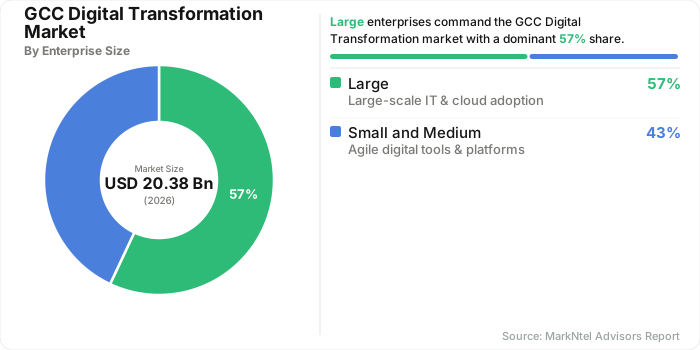
- Based on enterprise size, the large enterprises represent the largest segment of the market, accounting for approximately 57% of the total market share
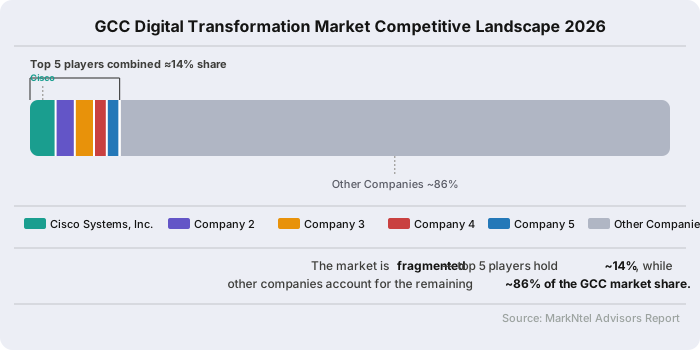
- The market remains moderately consolidated, with leading companies collectively accounting for approximately 14% of organized market revenues across the GCC region.
GCC Digital Transformation Market Size and Outlook
The Digital Transformation Market in GCC was valued at approximately USD18.19 Billion in 2025, USD 20.38 Billion in 2026, and is projected to reach nearly USD 34.29 Billion by 2032. It is expected to witness robust growth through 2032, supported by government-led digitalization initiatives, increasing adoption of artificial intelligence (AI), cloud computing, and smart city development projects.
The GCC region is advancing digital transformation through major initiatives such as Saudi Arabia’s Vision 2030 Digital Government Program, which aims to fully digitize public services and enhance efficiency through integrated e-government platforms and digital identity systems. In terms of technological advancement, the UAE’s National AI Strategy 2031 is a key example, focusing on embedding AI in healthcare, transportation, education, and government services to improve decision-making and service delivery.
For smart cities development, Saudi Arabia’s NEOM project stands out as a flagship initiative, building a USD 500 billion AI-powered city integrating IoT, robotics, and sustainable infrastructure to redefine urban living and economic diversification. The Kingdom has successfully digitized approximately 98% of government services and aims to become one of the world's leading digital governments by 2030. The strategy focuses on expanding cloud adoption, artificial intelligence integration, digital identity systems, and seamless citizen services, creating substantial demand for digital transformation solutions across both public and private sectors.
Companies such as Amazon Web Services, Oracle, and Microsoft announced investments in cloud infrastructure, AI platforms, and data center development across Saudi Arabia and the UAE. These investments are expected to strengthen regional digital capabilities and accelerate enterprise digital transformation. Looking ahead, as governments continue prioritizing digital economy development, the GCC Digital Transformation industry is poised to remain one of the fastest-growing technology markets globally.
GCC Digital Transformation Market Key Indicators
- GCC ICT spending exceeded USD 75 billion in 2025, driven by investments in cloud computing, AI platforms, cybersecurity, digital government services, and smart city projects. Saudi Arabia and the UAE account for the majority of regional digital spending as governments accelerate economic diversification and digital economy initiatives.
- The GCC has over USD 150–200 billion worth of smart city projects in development, including NEOM (Saudi Arabia), Smart Dubai, Lusail City (Qatar), and Kuwait Smart City initiatives. These projects integrate AI, IoT, digital twins, and autonomous systems.
- ICT expenditure accounts for approximately 4.8% of GCC GDP in 2025, reflecting increasing investments in digital infrastructure, enterprise software, cloud adoption, and government modernization programs. The share is expected to rise further as AI and digital transformation initiatives expand across industries.
- Digital infrastructure investments across the GCC exceeded USD 22 billion in 2025, including 5G networks, fiber-optic expansion, hyperscale data centers, and cloud infrastructure projects. Regional 5G coverage now exceeds 90% in major urban areas, supporting digital transformation initiatives.
- Approximately 52% of large enterprises across the GCC have integrated AI into at least one business function in 2025. AI adoption is strongest in banking, government, healthcare, retail, and telecommunications sectors, supported by national AI strategies and cloud investments.
GCC Digital Transformation Market Scope
| Category | Segments |
|---|---|
| By Technology | Artificial Intelligence, Internet of Things, Blockchain, Cybersecurity, Others (Robotics, Extended Reality, etc. |
| By Deployment | On-Premise, Cloud |
| By Services | Consulting Services, Planning & Designing, Engineering & Re-Engineering Services, Network & Infrastructure Management, Application Development, Others |
| By Enterprise Size | Small and Medium, Large |
| By End User | Banking, Financial Services and Insurance (BFSI), Healthcare, Retail, Government Sector, Energy, Telecommunication, Manufacturing, Others (Education, Transportation, etc. |
| By Function | Finance & Control, Marketing & Sales, Human Resource Management, Production, Operations & Logistics , Customer Service & Support, Others |
GCC Digital Transformation Market Growth Drivers
Government-Led Digital Transformation Initiatives
Government-driven digital transformation programs continue to be the strongest growth driver for the GCC Digital Transformation Market. Across the region, governments are investing heavily in digital infrastructure, artificial intelligence (AI), cloud computing, smart cities, and e-government services as part of broader economic diversification strategies. According to the International Monetary Fund (IMF), GCC countries have embedded digital transformation into their national development agendas, resulting in significant progress in digital infrastructure, GovTech maturity, fintech adoption, and public-sector digitalization.
The IMF further notes that GCC economies have largely closed the digital access gap with many advanced economies, particularly in infrastructure and affordability. Saudi Arabia’s Vision 2030 is accelerating demand for digital technologies through large-scale projects such as NEOM and nationwide digital government initiatives. The Kingdom’s digital government performance indicators improved from 69.39% in 2021 to 87.14% in 2024, serving more than 36 million people.
Similarly, the United Arab Emirates has advanced its digital governance agenda through the UAE Digital Government Strategy and paperless government initiatives. More than 95% of government transactions are now conducted digitally, supported by digital identity platforms and AI-enabled public services. These initiatives are accelerating enterprise adoption of cloud platforms, cybersecurity solutions, data analytics and AI technologies, creating substantial opportunities for digital transformation vendors across the GCC region.
Recent Trends
Rapid Adoption of Generative AI and Sovereign Cloud Infrastructure
One of the most significant trends shaping the GCC Digital Transformation Market is the rapid adoption of generative AI and sovereign digital infrastructure. Governments and enterprises across the GCC are moving beyond traditional digitalization toward AI-driven operations, automated decision-making, and intelligent public services. In Saudi Arabia and the UAE, more than 70% of large organizations have launched Generative AI initiatives, ranging from pilot projects to enterprise-wide deployments. AI is increasingly being used for citizen services, predictive analytics, policy simulation, customer engagement, and process automation.
Further accelerating this trend, Saudi Arabia’s government has committed approximately USD 40 billion toward AI development and infrastructure, while the Digital Government Authority reported that government entities achieved 74.69% readiness in emerging technology adoption in 2025, up from 60.35% in 2023. GCC countries are investing heavily in local data centers, cloud platforms, and AI computing infrastructure to improve data security, regulatory compliance, and digital resilience. According to recent data, 84% of GCC organizations now use AI in at least one business function, compared with 62% in 2023, demonstrating the region's accelerating digital maturity.
GCC Digital Transformation Market Opportunities and Challenges
Rising Data Privacy Concerns Driving Demand for Cybersecurity and Digital Trust Solutions
The increasing frequency of cyberattacks and growing concerns over data privacy represent a significant challenge for organizations undergoing digital transformation across the GCC. As enterprises and government agencies accelerate the adoption of cloud computing, artificial intelligence (AI), Internet of Things (IoT), and digital government platforms, the volume of sensitive data being generated and exchanged continues to expand.
According to IBM’s 2024 Cost of a Data Breach Report, the global average cost of a data breach reached USD 4.88 million, the highest level ever recorded and a 10% increase compared to 2023. Organizations are therefore facing mounting pressure to strengthen cybersecurity frameworks, comply with evolving data protection regulations, and secure increasingly complex digital environments.
However, this challenge is simultaneously creating a major industry opportunity. Rising cyber risks are driving substantial investments in cybersecurity technologies, including cloud security, identity and access management, and managed security services. Governments across the GCC are also expanding national cybersecurity programs and regulatory frameworks to protect critical digital infrastructure.
Therefore, cybersecurity has become one of the fastest-growing segments within the GCC digital transformation ecosystem, creating significant opportunities for technology vendors, cloud providers, and security solution developers.
Segmentation Insights
Cloud Segment Accounts for the Largest Market Share Owing to Scalable IT Infrastructure
Cloud deployment is emerging as the dominant segment, capturing 38% of total market share, supported by increasing demand for scalable, flexible, and cost-efficient IT infrastructure across enterprises and government organizations. Businesses in banking, healthcare, retail, and the public sector are rapidly migrating from traditional systems to cloud-based platforms to improve operational efficiency, enhance data accessibility, and support real-time decision-making. Government-led initiatives such as Saudi Vision 2030 and the UAE Digital Government Strategy are further accelerating cloud adoption through investments in hyperscale data centers, national cloud platforms, and secure digital ecosystems.
In contrast, on-premise deployment continues to hold relevance, particularly among organizations with strict data security, regulatory compliance, and sovereignty requirements. Sectors such as defense, oil & gas, and certain financial institutions still prefer on-premise infrastructure to maintain full control over sensitive data and critical operations. However, the share of on-premise deployment is gradually declining as hybrid and cloud-first strategies gain momentum across the region. Overall, while on-premise systems remain important for specific use cases, cloud deployment is expected to dominate the GCC digital transformation landscape through 2032, driven by rapid digitalization, AI integration, and large-scale enterprise modernization initiatives. Based on deployment, the Market has been segmented into:
- On- Premises
- Cloud
Large Enterprises Account for the Largest Market Share, driven by Significant Investments
Large enterprises represent the largest segment of the digital transformation market in GCC, holding 57% shares, driven by significant investments in cloud infrastructure, artificial intelligence (AI), and business process automation. Organizations in sectors such as banking, telecommunications, energy, healthcare, retail, and government are accelerating digital transformation initiatives to improve operational efficiency, enhance customer experiences, and support data-driven decision-making. These enterprises possess the financial resources and technical capabilities required to implement complex digital ecosystems, including multi-cloud environments, AI-powered analytics platforms, and enterprise-wide automation solutions.
Government-led initiatives such as Saudi Vision 2030 and the UAE Digital Government Strategy further encourage large-scale technology adoption across major organizations. Meanwhile, Small and Medium Enterprises (SMEs) are witnessing strong growth as cloud-based and subscription-driven digital solutions reduce implementation costs and technical barriers. Regional governments are actively promoting SME digitalization through funding programs, innovation hubs, and digital transformation initiatives to improve competitiveness and business agility. Based on enterprise size, the market has been segmented into:
- Small and Medium
- Large
GCC Digital Transformation Market Regional Outlook
Saudi Arabia dominates the GCC Digital Transformation Industry with a 42% market share and is expected to maintain its leadership position throughout the forecast period. The Kingdom’s dominance is primarily driven by the ambitious Saudi Vision 2030 program, which has accelerated investments in digital infrastructure, artificial intelligence (AI), cloud computing, cybersecurity, and smart city development.
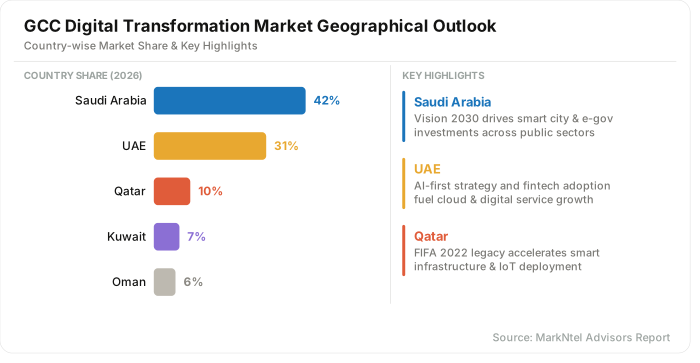
The country has established itself as the largest information and communications technology (ICT) market in the Middle East, with the ICT sector exceeding USD 48 billion in value. Additionally, Saudi Arabia’s digital economy contributed approximately 15% of the national GDP in 2024, reflecting the increasing integration of digital technologies across public and private sectors. Large-scale initiatives such as NEOM, The Line, and extensive e-government transformation programs continue to stimulate demand for advanced digital solutions.
The government’s commitment to enhancing digital public services, expanding cloud and data center infrastructure, and promoting AI adoption across industries has further strengthened the country’s leadership position. These ongoing investments, coupled with a supportive regulatory environment and strong enterprise digitalization efforts, continue to position Saudi Arabia as the primary growth engine of the GCC Digital Transformation Market.
GCC Digital Transformation Market Competitive Analysis
The GCC Digital Transformation Industry is moderately consolidated, with global technology companies competing through AI innovation, cloud services, cybersecurity capabilities, and digital consulting expertise. Leading companies, including Microsoft, IBM, Oracle, SAP, and Accenture, collectively account for approximately 14% of organized industry revenues across the GCC region.
Key Companies in the GCC Digital Transformation Industry
- Accenture
- Adobe
- Broadcom Inc.
- Cisco Systems, Inc.
- Google LLC
- Hewlett Packard Enterprise Development LP (HPE)
- Microsoft Corporation
- Salesforce, Inc.
- SAP SE
- Others
GCC Digital Transformation Industry News and Recent Developments
February 2026: Microsoft Confirms Saudi Arabia Cloud Region Launch to Accelerate Vision 2030 Digital Transformation
Microsoft announced that customers will be able to run cloud workloads from its Saudi Arabia East datacenter region beginning in Q4 2026. The new cloud infrastructure is expected to support government digital services, AI adoption, data localization requirements, and enterprise cloud migration initiatives aligned with Vision 2030.
Impact Analysis: The development is expected to strengthen Saudi Arabia's cloud ecosystem by improving access to low-latency cloud and AI services while supporting public-sector digital transformation and enterprise modernization initiatives. Increased local cloud capacity is also likely to accelerate adoption of AI, cybersecurity, and advanced digital technologies across key industries.
Frequently Asked Questions
- Market Segmentation
- Introduction
- Product Definition
- Research Process
- Assumptions
- Executive Summary
- GCC Digital Transformation Market Top Business Cases, By Sector
- Banking & Financial Services
- Complete Overhaul and Digitalization of the Operations of a Mega Bank in the UAE
- Integration of Gamification by a Saudi Arabia-Based Bank to Attract Gen Z
- A Leading Financial Institution in Kuwait Upgraded Entire Digital Solutions to Accommodate Disruptive Technologies
- Healthcare
- A Leading Healthcare Group in Saudi Arabia Opted for Digital Solutions to Reduce Cost and Manage the Records Efficiently
- A Prominent Healthcare Group Opted for Digital Transformation to Move Towards Sustainability
- Retail
- A Global Brick and Mortar Retail Giant Launched Online Grocery Store
- A Regional Giant with Operations Spread Across GCC Adopted Best in Class Digital Solution to FastTrack its operations, enhance customer experience, etc.
- Government
- Digital Transformation Strategies, Goals and Future Targets, By Country
- UAE
- Saudi Arabia
- Oman
- Bahrain
- Qatar
- Kuwait
- Energy
- Saudi Arabia based Energy Giant Leveraging Industry 4.0 Technologies to Transform its Business
- A Regional Electricity Generation and Distribution Company Optimized its Operations
- Manufacturing
- A Regional Chemical Manufacturer Deployed Digital Technology to Reduce Wastage and Safe Transfer of Chemicals
- Construction
- A Regional Construction Powerhouse Using Digital Techniques to Design Project Blueprints and Landscaping
- For Construction Asset Optimization, Labor Productivity, Cross-Departmental Process Automation
- Banking & Financial Services
- GCC Digital Transformation Market Policies, Regulations, and Product Standards
- GCC Digital Transformation Market Trends & Developments
- GCC Digital Transformation Market Dynamics
- Growth Factors
- Challenges
- GCC Digital Transformation Market Hotspot & Opportunities
- GCC Digital Transformation Market Outlook, 2022-2032F
- Market Size & Outlook
- By Revenues (USD Million)
- Market Share & Analysis
- By Technology- Market Size & Forecast 2022-2032, USD Million
- Artificial Intelligence
- Internet of Things
- Blockchain
- Cybersecurity
- Others (Robotics, Extended Reality, etc.)
- By Deployment- Market Size & Forecast 2022-2032, USD Million
- On-Premise
- Cloud
- By Services- Market Size & Forecast 2022-2032, USD Million
- Consulting Services
- Planning & Designing
- Engineering & Re-Engineering Services
- Network & Infrastructure Management
- Application Development
- Others
- By Enterprise Size- Market Size & Forecast 2022-2032, USD Million
- Small and Medium
- Large
- By End User- Market Size & Forecast 2022-2032, USD Million
- Banking, Financial Services and Insurance (BFSI)
- Healthcare
- Retail
- Government Sector
- Energy
- Telecommunication
- Manufacturing
- Others (Education, Transportation, etc.)
- By Function- Market Size & Forecast 2022-2032, USD Million
- Finance & Control
- Marketing & Sales
- Human Resource Management
- Production
- Operations & Logistics
- Customer Service & Support
- Others
- By Country
- The UAE
- Saudi Arabia
- Qatar
- Kuwait
- Oman
- Bahrain
- By Company
- Competition Characteristics
- Market Share & Analysis
- By Technology- Market Size & Forecast 2022-2032, USD Million
- Market Size & Outlook
- The UAE Digital Transformation Market Outlook, 2022-2032F
- Market Size & Outlook
- By Revenues (USD Million)
- Market Share & Analysis
- By Technology- Market Size & Forecast 2022-2032, USD Million
- By Deployment- Market Size & Forecast 2022-2032, USD Million
- By Services- Market Size & Forecast 2022-2032, USD Million
- By Enterprise Size- Market Size & Forecast 2022-2032, USD Million
- By End User- Market Size & Forecast 2022-2032, USD Million
- By Function- Market Size & Forecast 2022-2032, USD Million
- Market Size & Outlook
- Saudi Arabia Digital Transformation Market Outlook, 2022-2032F
- Market Size & Outlook
- By Revenues (USD Million)
- Market Share & Analysis
- By Technology- Market Size & Forecast 2022-2032, USD Million
- By Deployment- Market Size & Forecast 2022-2032, USD Million
- By Services- Market Size & Forecast 2022-2032, USD Million
- By Enterprise Size- Market Size & Forecast 2022-2032, USD Million
- By End User- Market Size & Forecast 2022-2032, USD Million
- By Function- Market Size & Forecast 2022-2032, USD Million
- Market Size & Outlook
- Qatar Digital Transformation Market Outlook, 2022-2032F
- Market Size & Outlook
- By Revenues (USD Million)
- Market Share & Analysis
- By Technology- Market Size & Forecast 2022-2032, USD Million
- By Deployment- Market Size & Forecast 2022-2032, USD Million
- By Services- Market Size & Forecast 2022-2032, USD Million
- By Enterprise Size- Market Size & Forecast 2022-2032, USD Million
- By End User- Market Size & Forecast 2022-2032, USD Million
- By Function- Market Size & Forecast 2022-2032, USD Million
- Market Size & Outlook
- Kuwait Digital Transformation Market Outlook, 2022-2032F
- Market Size & Outlook
- By Revenues (USD Million)
- Market Share & Analysis
- By Technology- Market Size & Forecast 2022-2032, USD Million
- By Deployment- Market Size & Forecast 2022-2032, USD Million
- By Services- Market Size & Forecast 2022-2032, USD Million
- By Enterprise Size- Market Size & Forecast 2022-2032, USD Million
- By End User- Market Size & Forecast 2022-2032, USD Million
- By Function- Market Size & Forecast 2022-2032, USD Million
- Market Size & Outlook
- Oman Digital Transformation Market Outlook, 2022-2032F
- Market Size & Outlook
- By Revenues (USD Million)
- Market Share & Analysis
- By Technology- Market Size & Forecast 2022-2032, USD Million
- By Deployment- Market Size & Forecast 2022-2032, USD Million
- By Services- Market Size & Forecast 2022-2032, USD Million
- By Enterprise Size- Market Size & Forecast 2022-2032, USD Million
- By End User- Market Size & Forecast 2022-2032, USD Million
- By Function- Market Size & Forecast 2022-2032, USD Million
- Market Size & Outlook
- GCC Digital Transformation Market Key Strategic Imperatives for Success & Growth
- Competitive Outlook
- Company Profiles
- Accenture
- Business Description
- Product Portfolio
- Collaborations & Alliances
- Recent Developments
- Financial Details
- Others
- Adobe
- Business Description
- Product Portfolio
- Collaborations & Alliances
- Recent Developments
- Financial Details
- Others
- Broadcom Inc.
- Business Description
- Product Portfolio
- Collaborations & Alliances
- Recent Developments
- Financial Details
- Others
- Cisco Systems, Inc.
- Business Description
- Product Portfolio
- Collaborations & Alliances
- Recent Developments
- Financial Details
- Others
- Google LLC.
- Business Description
- Product Portfolio
- Collaborations & Alliances
- Recent Developments
- Financial Details
- Others
- Hewlett Packard Enterprise Development LP
- Business Description
- Product Portfolio
- Collaborations & Alliances
- Recent Developments
- Financial Details
- Others
- Microsoft Corporation
- Business Description
- Product Portfolio
- Collaborations & Alliances
- Recent Developments
- Financial Details
- Others
- Salesforce, Inc.
- Business Description
- Product Portfolio
- Collaborations & Alliances
- Recent Developments
- Financial Details
- Others
- SAP SE
- Business Description
- Product Portfolio
- Collaborations & Alliances
- Recent Developments
- Financial Details
- Others
- Others
- Business Description
- Product Portfolio
- Collaborations & Alliances
- Recent Developments
- Financial Details
- Others
- Accenture
- Company Profiles
- Disclaimer
MarkNtel Advisors follows a robust and iterative research methodology designed to ensure maximum accuracy and minimize deviation in market estimates and forecasts. Our approach combines both bottom-up and top-down techniques to effectively segment and quantify various aspects of the market. A consistent feature across all our research reports is data triangulation, which examines the market from three distinct perspectives to validate findings. Key components of our research process include:
1. Scope & Research Design At the outset, MarkNtel Advisors define the research objectives and formulate pertinent questions. This phase involves determining the type of research—qualitative or quantitative—and designing a methodology that outlines data collection methods, target demographics, and analytical tools. They also establish timelines and budgets to ensure the research aligns with client goals.
2. Sample Selection and Data Collection In this stage, the firm identifies the target audience and determines the appropriate sample size to ensure representativeness. They employ various sampling methods, such as random or stratified sampling, based on the research objectives. Data collection is carried out using tools like surveys, interviews, and observations, ensuring the gathered data is reliable and relevant.
3. Data Analysis and Validation Once data is collected, MarkNtel Advisors undertake a rigorous analysis process. This includes cleaning the data to remove inconsistencies, employing statistical software for quantitative analysis, and thematic analysis for qualitative data. Validation steps are taken to ensure the accuracy and reliability of the findings, minimizing biases and errors.

4. Data Forecast and FinalizationThe final phase involves forecasting future market trends based on the analyzed data. MarkNtel Advisors utilize predictive modeling and time series analysis to anticipate market behaviors. The insights are then compiled into comprehensive reports, featuring visual aids like charts and graphs, and include strategic recommendations to inform client decision-making
We offer flexible licensing options to cater to varying organizational needs. Choose the pricing pack that best suits your requirements:
Buy Now Inquire Before Buying
 Request Customization
 Talk to our Consultant







