

Fuel Cell Powertrain Market Research Report: Growth Drivers & Forecast (2026-2032)
By Component (Fuel Cell System (Stack + Balance of Plant), Hydrogen Storage System, Electric Drive Unit, Battery System, Power Electronics & Control Unit), By Vehicle Type (Passeng ... er Cars, Commercial Vehicles (Light Commercial Vehicles (LCVs), Heavy Commercial Vehicles (HCVs))), By Power Output (Less than 150 kW, 150–250 kW, Above 250 kW), and others Read more
- Automotive
- Jul 2026
- Pages 340
- Report Format: PDF, Excel, PPT
Fuel Cell Powertrain Market
Projected 5.11% CAGR from 2026 to 2032
Study Period
2026-2032
Market Size (2026)
USD 688 Million
Market Size (2032)
USD 928 Million
Largest Region
Europe
Projected CAGR
5.11%
Leading Segments
By Component: Fuel Cell System (Stack + Balance of Plant)
Fuel Cell Powertrain Market Key Takeaways
- Fuel Cell Powertrain market size was valued at around USD 619 million in 2025 and is projected to grow from USD 688 million in 2026 to USD 928 million by 2032, exhibiting a CAGR of 5.11% during 2026-2032.
- Europe accounted for approximately 45% of the global market revenue in 2026.
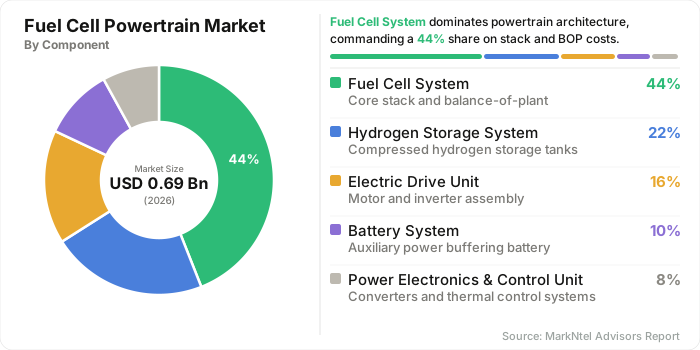
- By Component, the Fuel Cell System (Stack + Balance of Plant) segment held approximately 44% market share in 2026.
- By Vehicle Type, Commercial Vehicles accounted for nearly 64% of the global market revenue in 2026.
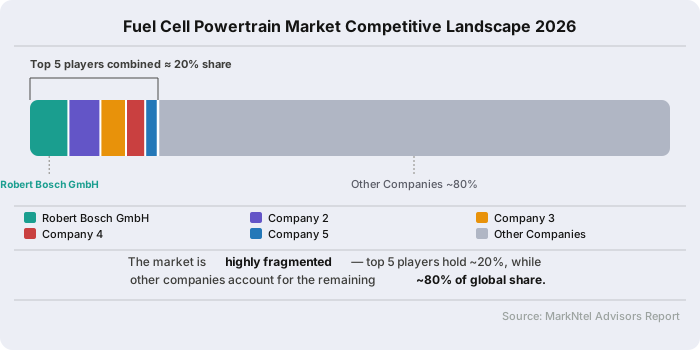
- The industry is moderately consolidated, with numerous international and regional providers competing worldwide. However, the top five players collectively account for approximately 20% market share.
Fuel Cell Powertrain Market Size and Outlook
Valued at USD 619 million in 2025, the fuel cell powertrain market is forecast to grow substantially, reaching USD 928 million by 2032 from USD 688 million in 2026. This growth reflects a projected CAGR of approximately 5.11% throughout the 2026–2032 forecast period.
The accelerating transition toward low-carbon transportation has strengthened the adoption of fuel cell powertrains across the automotive industry. Hydrogen is increasingly recognized as an effective solution for reducing emissions in long-haul transportation, offering longer driving ranges and faster refueling than battery-electric alternatives in heavy-duty applications. According to the International Energy Agency, heavy trucks remain the fastest-growing fuel cell vehicle application, with China accounting for nearly 95% of the global fuel cell commercial vehicle fleet in 2024, highlighting the growing role of commercial transportation in hydrogen mobility. The adoption of hydrogen mobility powertrain technologies continues to support long-term industry growth.
This favorable industry environment has been further reinforced by government policy initiatives introduced during 2025 and 2026. The European Union's Alternative Fuels Infrastructure Regulation (AFIR) mandates hydrogen refueling stations along the Trans-European Transport Network, while Japan continues implementing its revised Basic Hydrogen Strategy to expand hydrogen production and fuel cell mobility. China has also maintained support for hydrogen fuel cell vehicle demonstration city clusters, encouraging commercial vehicle deployment and hydrogen infrastructure development.
Supported by these policy measures, manufacturers are expanding production capacity and accelerating technology development to meet rising demand. During 2025, several automotive and fuel cell technology developers announced manufacturing expansions for commercial transportation applications. Their investments focus on improving fuel cell stack efficiency, extending system durability, localizing production, and advancing fuel cell electric powertrain technologies that lower operating costs and improve vehicle performance. These developments are supporting wider adoption across buses, heavy-duty trucks, rail, and construction equipment.
As hydrogen infrastructure continues to expand, the outlook for the fuel cell powertrain industry remains positive. Commercial logistics operators, municipal transit agencies, mining companies, ports, and industrial fleet owners are expected to remain the primary demand drivers because fuel cell powertrains offer extended range, high payload capacity, and rapid refueling. Continued investments in green hydrogen production, refueling infrastructure, and next-generation fuel cell technologies are expected to improve cost competitiveness, supporting broader adoption across commercial transportation and creating additional opportunities for passenger fuel cell vehicles.
Fuel Cell Powertrain Market Key Indicators
- The International Energy Agency reported that the global fuel cell electric vehicle (FCEV) fleet reached approximately 93,000 vehicles by mid-2024, with heavy-duty trucks emerging as the fastest-growing application. Rising deployment of commercial fuel cell vehicles is driving demand for fuel cell powertrains and supporting market growth.
- The International Energy Agency reported that global electrolyser manufacturing capacity could exceed 40 GW per year in 2024, reflecting rapid expansion of the hydrogen value chain. Increasing electrolyser capacity is expected to strengthen green hydrogen production and support long-term deployment of fuel cell powertrains.
- India's Ministry of New and Renewable Energy sanctioned five hydrogen mobility pilot projects involving 37 hydrogen-powered buses and trucks, including 15 fuel cell vehicles and nine hydrogen refueling stations, under the USD 2.3 billion National Green Hydrogen Mission. These pilot projects are expected to accelerate the commercialization of hydrogen mobility and strengthen demand for fuel cell powertrains.
Fuel Cell Powertrain Market Scope
| Category | Segments |
|---|---|
| By Component | Fuel Cell System (Stack + Balance of Plant), Hydrogen Storage System, Electric Drive Unit, Battery System, Power Electronics & Control Unit |
| By Vehicle Type | Passenger Cars, Commercial Vehicles (Light Commercial Vehicles (LCVs), Heavy Commercial Vehicles (HCVs |
| By Power Output | Less than 150 kW, 150–250 kW, Above 250 kW |
Fuel Cell Powertrain Market Growth Drivers
Expanding Hydrogen Infrastructure Investments Accelerating Commercial Adoption of Fuel Cell Powertrains
The expansion of hydrogen production and refueling infrastructure is creating favorable conditions for fuel cell-powered transportation. Although fuel cell technology offers long driving ranges and rapid refueling, commercialization has been limited by hydrogen availability. Governments and private investors are strengthening the hydrogen value chain through investments in production, storage, transportation, and refueling infrastructure. As hydrogen accessibility improves, manufacturers and fleet operators are increasing investments in hydrogen-powered electric drivetrains, directly supporting demand for integrated fuel cell powertrain systems.
Supporting this transition, governments continue investing in large-scale hydrogen projects. In 2025, the European Commission selected 15 renewable hydrogen production projects under the European Hydrogen Bank, allocating nearly USD 1.13 billion to accelerate renewable hydrogen deployment across Europe. Meanwhile, the U.S. Department of Energy continues supporting Regional Clean Hydrogen Hubs that integrate hydrogen production, storage, distribution, and transportation applications. These initiatives are improving hydrogen availability and strengthening the commercial viability of fuel cell powertrains.
As infrastructure continues to expand, manufacturers are increasing investments in hydrogen-powered commercial vehicles. Fleet operators increasingly view fuel cell propulsion systems as a practical zero-emission solution for applications requiring long operating hours, high payload capacity, and rapid refueling. The continued expansion of hydrogen production and refueling networks is reducing operational barriers while creating sustained demand for integrated fuel cell powertrain systems over the forecast period.
Recent Trends
Integration of Fuel Cell Powertrains into Off-Highway and Industrial Mobility Applications
Fuel cell powertrains are increasingly being deployed beyond passenger vehicles and heavy-duty trucks into off-highway equipment, airport ground support equipment, rail transportation, and marine applications. These sectors require continuous operation and rapid refueling, making hydrogen technologies well-suited for demanding industrial environments. As industries accelerate decarbonization, manufacturers are developing application-specific fuel cell powertrains to meet diverse operational requirements.
This shift is reflected in recent industry developments. JCB has been conducting real-world testing of hydrogen-powered construction equipment, including backhoe loaders and Loadall telehandlers powered by its hydrogen combustion engine. Meanwhile, Daimler Truck and Linde Engineering introduced sLH₂ (subcooled liquid hydrogen) refueling technology, enabling faster refueling and longer driving ranges for heavy-duty fuel cell trucks. These advancements are strengthening the hydrogen mobility ecosystem and supporting broader commercial deployment.
As hydrogen mobility continues to expand, manufacturers are developing scalable fuel cell systems for a wider range of transportation applications. Growing adoption across industrial and commercial mobility is increasing demand for fuel cell stacks, hydrogen storage systems, and electric drive units while broadening the commercial scope of hydrogen vehicle powertrain solutions. This trend is expected to strengthen long-term demand for fuel cell powertrain systems while expanding their adoption across diverse industrial mobility applications.
Fuel Cell Powertrain Market Opportunities and Challenges
High Dependence on Platinum Catalysts Leading to the Development of Alternative Fuel Cell Catalyst Technologies
The widespread reliance on platinum catalysts in proton exchange membrane (PEM) fuel cells remains a major challenge for the commercialization of fuel cell powertrains. Platinum is one of the most expensive materials used in fuel cell stacks, increasing manufacturing costs and limiting the affordability of fuel cell-powered vehicles. In addition, dependence on a limited number of platinum-producing regions exposes manufacturers to raw material price volatility and supply chain risks. As demand for hydrogen-powered mobility grows, reducing platinum dependency has become essential for improving the commercial competitiveness of fuel cell powertrains.
Addressing this challenge is accelerating innovation in alternative fuel cell catalyst technologies. In 2025, Chinese researchers developed a PEM fuel cell catalyst layer that reduced platinum loading by nearly 80% while maintaining high power density, demonstrating the potential to lower fuel cell stack costs without compromising performance. Such advancements are driving the development of fuel cell stack technologies and improved membrane electrode assembly (MEA) designs that maximize catalyst utilization. As these innovations mature, they are expected to reduce manufacturing costs, improve commercial viability, and accelerate the adoption of fuel cell powertrains across multiple transportation applications.
Segmentation Insights
Superior Energy Conversion Efficiency and System Integration Supporting Fuel Cell System Leadership
The Fuel Cell System (Stack + Balance of Plant) segment accounted for approximately 44% of the global market in 2026, as it serves as the core energy conversion unit that generates electricity from hydrogen. Every fuel cell vehicle relies on the stack together with supporting subsystems, including compressors, humidifiers, thermal management systems, air supply modules, and control units, to ensure efficient and reliable operation. As these components directly determine vehicle performance, efficiency, durability, and driving range, they account for the largest share of total powertrain value.
The segment's leadership is further reinforced by continuous advancements in fuel cell technologies. Manufacturers are prioritizing higher power density, improved membrane durability, and longer system life to reduce total ownership costs, particularly for commercial fleet applications. At the same time, modular fuel cell platforms are enabling standardized deployment across trucks, buses, rail vehicles, and industrial equipment, strengthening demand for advanced fuel cell systems. Based on component, the market is segmented into:
- Fuel Cell System (Stack + Balance of Plant)
- Hydrogen Storage System
- Electric Drive Unit
- Battery System
- Power Electronics & Control Unit
Long Operating Range and High Vehicle Utilization Position Commercial Vehicles as the Largest Vehicle Segment
Commercial Vehicles accounted for nearly 64% of the fuel cell powertrain market in 2026, driven by demanding operational requirements and increasing efforts to reduce transportation emissions. Heavy-duty trucks, transit buses, distribution vehicles, and specialized fleets typically operate for extended hours while carrying heavier payloads, making fast refueling and long driving range essential. Fuel cell powertrains effectively address these requirements, particularly for long-distance transportation where minimizing vehicle downtime is critical.
These operational advantages are further reinforced by stricter emission regulations and fleet decarbonization initiatives across major economies. Fleet operators are increasingly adopting hydrogen-powered vehicles to achieve sustainability targets without compromising operational flexibility. As hydrogen refueling infrastructure expands and fuel cell system costs continue to decline, these factors are expected to strengthen commercial vehicle adoption, enabling the segment to maintain its market leadership. Based on vehicle type, the market is segmented into:
- Passenger Cars
- Commercial Vehicles
Fuel Cell Powertrain Market Geographical Outlook
Europe maintained a commanding position in 2026, contributing approximately 45% of total global revenue. Its leadership is driven by a well-established hydrogen ecosystem, robust regulatory support, and advanced industrial capabilities that continue to accelerate hydrogen mobility. Initiatives such as the Alternative Fuels Infrastructure Regulation (AFIR) and the Hydrogen and Decarbonised Gas Market Package are expanding hydrogen refueling infrastructure and encouraging the deployment of fuel cell-powered transportation across the region. Backed by a mature automotive supply chain and extensive expertise in fuel cell technologies, Europe continues to commercialize hydrogen-powered trucks, buses, and other commercial vehicles more rapidly than most other regions.
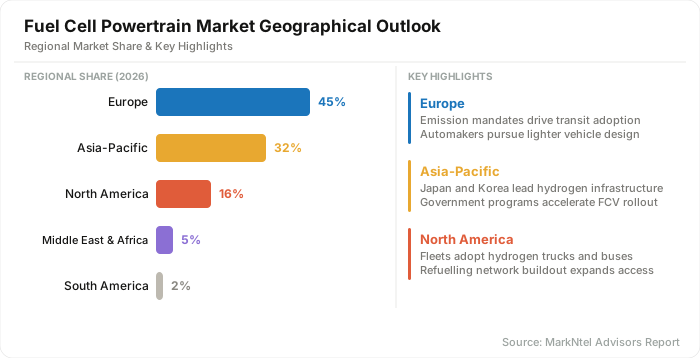
Complementing these advantages, coordinated investments and cross-border industrial collaboration continue to strengthen the region's competitive position. Through Important Projects of Common European Interest (IPCEI), member states are advancing hydrogen production, storage, distribution, and mobility infrastructure while reinforcing regional supply chains and accelerating technology commercialization. Coupled with the expansion of Trans-European hydrogen refueling corridors and increasing deployment of zero-emission commercial vehicles, these initiatives continue to strengthen Europe's long-term leadership in hydrogen-powered transportation.
Fuel Cell Powertrain Market Competitive Analysis
The Fuel Cell Powertrain industry is moderately consolidated, with competition driven by established automotive manufacturers, fuel cell technology developers, and integrated powertrain solution providers. Leading companies, including Robert Bosch GmbH, Cummins Inc., Ballard Power Systems Inc., Toyota Motor Corporation, and Hyundai Motor Company, collectively account for approximately 20% of the global market.
Key Companies in the Fuel Cell Powertrain Market
- Robert Bosch GmbH
- Cummins Inc.
- Ballard Power Systems Inc.
- Toyota Motor Corporation
- Hyundai Motor Company
- Honda Motor Co., Ltd.
- General Motors Company
- AB Volvo
- Daimler Truck AG
- Cellcentric GmbH & Co. KG
- Symbio SAS
- PowerCell Sweden AB
- Doosan Fuel Cell Co., Ltd.
- Horizon Fuel Cell Technologies Pte. Ltd.
- Weichai Power Co., Ltd.
- Others
Fuel Cell Powertrain Industry News and Recent Developments
March 2025: Ballard Expands Commercial Fuel Cell Engine Supply Commitments
Ballard Power Systems continued executing commercial supply agreements for hydrogen fuel cell engines across bus and rail applications in Europe, supporting the deployment of zero-emission public transportation. The deliveries strengthen Ballard's presence in heavy-duty mobility while expanding the adoption of fuel cell technologies across commercial transportation.
Impact Analysis: The continued execution of commercial supply contracts reflects growing confidence in hydrogen-powered public transportation. Expanding deployments of fuel cell engines across buses and rail are expected to increase demand for advanced fuel cell powertrains while accelerating the commercialization of zero-emission heavy-duty mobility solutions.
June 2025: Honda Unveils Next-Generation Fuel Cell Module
Honda introduced its next-generation fuel cell module featuring higher power density, improved durability, and lower production costs than the previous generation. The company also announced plans to expand hydrogen applications into commercial vehicles, stationary power generation, and construction equipment, broadening the potential deployment of fuel cell technologies.
Impact Analysis: The introduction of a more efficient and cost-effective fuel cell module demonstrates the industry's focus on improving powertrain performance while reducing manufacturing costs. The expansion into multiple end-use applications is expected to strengthen demand for advanced fuel cell powertrains and support broader commercialization across transportation and industrial sectors.
Frequently Asked Questions
- Market Segmentation
- Introduction
- Product Definition
- Research Process
- Assumptions
- Executive Summary
- Fuel Cell Powertrain Market Policies, Regulations, and Product Standards
- Fuel Cell Powertrain Market Trends & Developments
- Fuel Cell Powertrain Market Dynamics
- Growth Factors
- Challenges
- Fuel Cell Powertrain Market Hotspot & Opportunities
- Fuel Cell Powertrain Market Outlook, 2022-2032F
- Market Size & Outlook
- By Revenues (USD Million)
- Market Segmentation & Outlook
- By Component- Market Size & Forecast 2022-2032, USD Million
- Fuel Cell System (Stack + Balance of Plant)
- Hydrogen Storage System
- Electric Drive Unit
- Battery System
- Power Electronics & Control Unit
- By Vehicle Type- Market Size & Forecast 2022-2032, USD Million
- Passenger Cars
- Commercial Vehicles
- Light Commercial Vehicles (LCVs)
- Heavy Commercial Vehicles (HCVs)
- By Power Output- Market Size & Forecast 2022-2032, USD Million
- Less than 150 kW
- 150–250 kW
- Above 250 kW
- By Region
- North America
- South America
- Europe
- Middle East and Africa
- Asia Pacific
- By Company
- Competition Characteristics
- Market Share & Analysis
- By Component- Market Size & Forecast 2022-2032, USD Million
- Market Size & Outlook
- North America Fuel Cell Powertrain Market Outlook, 2022-2032F
- Market Size & Outlook
- By Revenues (USD Million)
- Market Segmentation & Outlook
- By Component- Market Size & Forecast 2022-2032, USD Million
- By Vehicle Type- Market Size & Forecast 2022-2032, USD Million
- By Power Output- Market Size & Forecast 2022-2032, USD Million
- By Country
- The US
- Canada
- Mexico
- The US Fuel Cell Powertrain Market Outlook, 2022-2032F
- Market Size & Outlook
- By Revenues (USD Million)
- Market Segmentation & Outlook
- By Component- Market Size & Forecast 2022-2032, USD Million
- By Vehicle Type- Market Size & Forecast 2022-2032, USD Million
- By Power Output- Market Size & Forecast 2022-2032, USD Million
- Market Size & Outlook
- Canada Fuel Cell Powertrain Market Outlook, 2022-2032F
- Market Size & Outlook
- By Revenues (USD Million)
- Market Segmentation & Outlook
- By Component- Market Size & Forecast 2022-2032, USD Million
- By Vehicle Type- Market Size & Forecast 2022-2032, USD Million
- By Power Output- Market Size & Forecast 2022-2032, USD Million
- Market Size & Outlook
- Mexico Fuel Cell Powertrain Market Outlook, 2022-2032F
- Market Size & Outlook
- By Revenues (USD Million)
- Market Segmentation & Outlook
- By Component- Market Size & Forecast 2022-2032, USD Million
- By Vehicle Type- Market Size & Forecast 2022-2032, USD Million
- By Power Output- Market Size & Forecast 2022-2032, USD Million
- Market Size & Outlook
- Market Size & Outlook
- South America Fuel Cell Powertrain Market Outlook, 2022-2032F
- Market Size & Outlook
- By Revenues (USD Million)
- Market Segmentation & Outlook
- By Component- Market Size & Forecast 2022-2032, USD Million
- By Vehicle Type- Market Size & Forecast 2022-2032, USD Million
- By Power Output- Market Size & Forecast 2022-2032, USD Million
- By Country
- Brazil
- Argentina
- Chile
- Colombia
- Peru
- Ecuador
- Rest of South America
- Brazil Fuel Cell Powertrain Market Outlook, 2022-2032F
- Market Size & Outlook
- By Revenues (USD Million)
- Market Segmentation & Outlook
- By Component- Market Size & Forecast 2022-2032, USD Million
- By Vehicle Type- Market Size & Forecast 2022-2032, USD Million
- By Power Output- Market Size & Forecast 2022-2032, USD Million
- Market Size & Outlook
- Argentina Fuel Cell Powertrain Market Outlook, 2022-2032F
- Market Size & Outlook
- By Revenues (USD Million)
- Market Segmentation & Outlook
- By Component- Market Size & Forecast 2022-2032, USD Million
- By Vehicle Type- Market Size & Forecast 2022-2032, USD Million
- By Power Output- Market Size & Forecast 2022-2032, USD Million
- Market Size & Outlook
- Chile Fuel Cell Powertrain Market Outlook, 2022-2032F
- Market Size & Outlook
- By Revenues (USD Million)
- Market Segmentation & Outlook
- By Component- Market Size & Forecast 2022-2032, USD Million
- By Vehicle Type- Market Size & Forecast 2022-2032, USD Million
- By Power Output- Market Size & Forecast 2022-2032, USD Million
- Market Size & Outlook
- Colombia Fuel Cell Powertrain Market Outlook, 2022-2032F
- Market Size & Outlook
- By Revenues (USD Million)
- Market Segmentation & Outlook
- By Component- Market Size & Forecast 2022-2032, USD Million
- By Vehicle Type- Market Size & Forecast 2022-2032, USD Million
- By Power Output- Market Size & Forecast 2022-2032, USD Million
- Market Size & Outlook
- Peru Fuel Cell Powertrain Market Outlook, 2022-2032F
- Market Size & Outlook
- By Revenues (USD Million)
- Market Segmentation & Outlook
- By Component- Market Size & Forecast 2022-2032, USD Million
- By Vehicle Type- Market Size & Forecast 2022-2032, USD Million
- By Power Output- Market Size & Forecast 2022-2032, USD Million
- Market Size & Outlook
- Ecuador Fuel Cell Powertrain Market Outlook, 2022-2032F
- Market Size & Outlook
- By Revenues (USD Million)
- Market Segmentation & Outlook
- By Component- Market Size & Forecast 2022-2032, USD Million
- By Vehicle Type- Market Size & Forecast 2022-2032, USD Million
- By Power Output- Market Size & Forecast 2022-2032, USD Million
- Market Size & Outlook
- Market Size & Outlook
- Europe Fuel Cell Powertrain Market Outlook, 2022-2032F
- Market Size & Outlook
- By Revenues (USD Million)
- Market Segmentation & Outlook
- By Component- Market Size & Forecast 2022-2032, USD Million
- By Vehicle Type- Market Size & Forecast 2022-2032, USD Million
- By Power Output- Market Size & Forecast 2022-2032, USD Million
- By Country
- The UK
- Germany
- France
- Italy
- Spain
- Russia
- Nordic
- Benelux
- Rest of Europe
- The UK Fuel Cell Powertrain Market Outlook, 2022-2032F
- Market Size & Outlook
- By Revenues (USD Million)
- Market Segmentation & Outlook
- By Component- Market Size & Forecast 2022-2032, USD Million
- By Vehicle Type- Market Size & Forecast 2022-2032, USD Million
- By Power Output- Market Size & Forecast 2022-2032, USD Million
- Market Size & Outlook
- Germany Fuel Cell Powertrain Market Outlook, 2022-2032F
- Market Size & Outlook
- By Revenues (USD Million)
- Market Segmentation & Outlook
- By Component- Market Size & Forecast 2022-2032, USD Million
- By Vehicle Type- Market Size & Forecast 2022-2032, USD Million
- By Power Output- Market Size & Forecast 2022-2032, USD Million
- Market Size & Outlook
- France Fuel Cell Powertrain Market Outlook, 2022-2032F
- Market Size & Outlook
- By Revenues (USD Million)
- Market Segmentation & Outlook
- By Component- Market Size & Forecast 2022-2032, USD Million
- By Vehicle Type- Market Size & Forecast 2022-2032, USD Million
- By Power Output- Market Size & Forecast 2022-2032, USD Million
- Market Size & Outlook
- Italy Fuel Cell Powertrain Market Outlook, 2022-2032F
- Market Size & Outlook
- By Revenues (USD Million)
- Market Segmentation & Outlook
- By Component- Market Size & Forecast 2022-2032, USD Million
- By Vehicle Type- Market Size & Forecast 2022-2032, USD Million
- By Power Output- Market Size & Forecast 2022-2032, USD Million
- Market Size & Outlook
- Spain Fuel Cell Powertrain Market Outlook, 2022-2032F
- Market Size & Outlook
- By Revenues (USD Million)
- Market Segmentation & Outlook
- By Component- Market Size & Forecast 2022-2032, USD Million
- By Vehicle Type- Market Size & Forecast 2022-2032, USD Million
- By Power Output- Market Size & Forecast 2022-2032, USD Million
- Market Size & Outlook
- Russia Fuel Cell Powertrain Market Outlook, 2022-2032F
- Market Size & Outlook
- By Revenues (USD Million)
- Market Segmentation & Outlook
- By Component- Market Size & Forecast 2022-2032, USD Million
- By Vehicle Type- Market Size & Forecast 2022-2032, USD Million
- By Power Output- Market Size & Forecast 2022-2032, USD Million
- Market Size & Outlook
- Nordic Fuel Cell Powertrain Market Outlook, 2022-2032F
- Market Size & Outlook
- By Revenues (USD Million)
- Market Segmentation & Outlook
- By Component- Market Size & Forecast 2022-2032, USD Million
- By Vehicle Type- Market Size & Forecast 2022-2032, USD Million
- By Power Output- Market Size & Forecast 2022-2032, USD Million
- Market Size & Outlook
- Benelux Fuel Cell Powertrain Market Outlook, 2022-2032F
- Market Size & Outlook
- By Revenues (USD Million)
- Market Segmentation & Outlook
- By Component- Market Size & Forecast 2022-2032, USD Million
- By Vehicle Type- Market Size & Forecast 2022-2032, USD Million
- By Power Output- Market Size & Forecast 2022-2032, USD Million
- Market Size & Outlook
- Market Size & Outlook
- Middle East and Africa Fuel Cell Powertrain Market Outlook, 2022-2032F
- Market Size & Outlook
- By Revenues (USD Million)
- Market Segmentation & Outlook
- By Component- Market Size & Forecast 2022-2032, USD Million
- By Vehicle Type- Market Size & Forecast 2022-2032, USD Million
- By Power Output- Market Size & Forecast 2022-2032, USD Million
- By Country
- Saudi Arabia
- The UAE
- Egypt
- Qatar
- Kuwait
- Oman
- South Africa
- Nigeria
- Saudi Arabia Fuel Cell Powertrain Market Outlook, 2022-2032F
- Market Size & Outlook
- By Revenues (USD Million)
- Market Segmentation & Outlook
- By Component- Market Size & Forecast 2022-2032, USD Million
- By Vehicle Type- Market Size & Forecast 2022-2032, USD Million
- By Power Output- Market Size & Forecast 2022-2032, USD Million
- Market Size & Outlook
- The UAE Fuel Cell Powertrain Market Outlook, 2022-2032F
- Market Size & Outlook
- By Revenues (USD Million)
- Market Segmentation & Outlook
- By Component- Market Size & Forecast 2022-2032, USD Million
- By Vehicle Type- Market Size & Forecast 2022-2032, USD Million
- By Power Output- Market Size & Forecast 2022-2032, USD Million
- Market Size & Outlook
- Egypt Fuel Cell Powertrain Market Outlook, 2022-2032F
- Market Size & Outlook
- By Revenues (USD Million)
- Market Segmentation & Outlook
- By Component- Market Size & Forecast 2022-2032, USD Million
- By Vehicle Type- Market Size & Forecast 2022-2032, USD Million
- By Power Output- Market Size & Forecast 2022-2032, USD Million
- Market Size & Outlook
- Qatar Fuel Cell Powertrain Market Outlook, 2022-2032F
- Market Size & Outlook
- By Revenues (USD Million)
- Market Segmentation & Outlook
- By Component- Market Size & Forecast 2022-2032, USD Million
- By Vehicle Type- Market Size & Forecast 2022-2032, USD Million
- By Power Output- Market Size & Forecast 2022-2032, USD Million
- Market Size & Outlook
- Kuwait Fuel Cell Powertrain Market Outlook, 2022-2032F
- Market Size & Outlook
- By Revenues (USD Million)
- Market Segmentation & Outlook
- By Component- Market Size & Forecast 2022-2032, USD Million
- By Vehicle Type- Market Size & Forecast 2022-2032, USD Million
- By Power Output- Market Size & Forecast 2022-2032, USD Million
- Market Size & Outlook
- Oman Fuel Cell Powertrain Market Outlook, 2022-2032F
- Market Size & Outlook
- By Revenues (USD Million)
- Market Segmentation & Outlook
- By Component- Market Size & Forecast 2022-2032, USD Million
- By Vehicle Type- Market Size & Forecast 2022-2032, USD Million
- By Power Output- Market Size & Forecast 2022-2032, USD Million
- Market Size & Outlook
- South Africa Fuel Cell Powertrain Market Outlook, 2022-2032F
- Market Size & Outlook
- By Revenues (USD Million)
- Market Segmentation & Outlook
- By Component- Market Size & Forecast 2022-2032, USD Million
- By Vehicle Type- Market Size & Forecast 2022-2032, USD Million
- By Power Output- Market Size & Forecast 2022-2032, USD Million
- Market Size & Outlook
- Market Size & Outlook
- Asia Pacific Fuel Cell Powertrain Market Outlook, 2022-2032F
- Market Size & Outlook
- By Revenues (USD Million)
- Market Segmentation & Outlook
- By Component- Market Size & Forecast 2022-2032, USD Million
- By Vehicle Type- Market Size & Forecast 2022-2032, USD Million
- By Power Output- Market Size & Forecast 2022-2032, USD Million
- By Country
- China
- Japan
- India
- South Korea
- Australia & New Zealand
- Indonesia
- Thailand
- Vietnam
- Rest of Asia-Pacific
- China Fuel Cell Powertrain Market Outlook, 2022-2032F
- Market Size & Outlook
- By Revenues (USD Million)
- Market Segmentation & Outlook
- By Component- Market Size & Forecast 2022-2032, USD Million
- By Vehicle Type- Market Size & Forecast 2022-2032, USD Million
- By Power Output- Market Size & Forecast 2022-2032, USD Million
- Market Size & Outlook
- Japan Fuel Cell Powertrain Market Outlook, 2022-2032F
- Market Size & Outlook
- By Revenues (USD Million)
- Market Segmentation & Outlook
- By Component- Market Size & Forecast 2022-2032, USD Million
- By Vehicle Type- Market Size & Forecast 2022-2032, USD Million
- By Power Output- Market Size & Forecast 2022-2032, USD Million
- Market Size & Outlook
- India Fuel Cell Powertrain Market Outlook, 2022-2032F
- Market Size & Outlook
- By Revenues (USD Million)
- Market Segmentation & Outlook
- By Component- Market Size & Forecast 2022-2032, USD Million
- By Vehicle Type- Market Size & Forecast 2022-2032, USD Million
- By Power Output- Market Size & Forecast 2022-2032, USD Million
- Market Size & Outlook
- South Korea Fuel Cell Powertrain Market Outlook, 2022-2032F
- Market Size & Outlook
- By Revenues (USD Million)
- Market Segmentation & Outlook
- By Component- Market Size & Forecast 2022-2032, USD Million
- By Vehicle Type- Market Size & Forecast 2022-2032, USD Million
- By Power Output- Market Size & Forecast 2022-2032, USD Million
- Market Size & Outlook
- Australia & New Zealand Fuel Cell Powertrain Market Outlook, 2022-2032F
- Market Size & Outlook
- By Revenues (USD Million)
- Market Segmentation & Outlook
- By Component- Market Size & Forecast 2022-2032, USD Million
- By Vehicle Type- Market Size & Forecast 2022-2032, USD Million
- By Power Output- Market Size & Forecast 2022-2032, USD Million
- Market Size & Outlook
- Indonesia Fuel Cell Powertrain Market Outlook, 2022-2032F
- Market Size & Outlook
- By Revenues (USD Million)
- Market Segmentation & Outlook
- By Component- Market Size & Forecast 2022-2032, USD Million
- By Vehicle Type- Market Size & Forecast 2022-2032, USD Million
- By Power Output- Market Size & Forecast 2022-2032, USD Million
- Market Size & Outlook
- Thailand Fuel Cell Powertrain Market Outlook, 2022-2032F
- Market Size & Outlook
- By Revenues (USD Million)
- Market Segmentation & Outlook
- By Component- Market Size & Forecast 2022-2032, USD Million
- By Vehicle Type- Market Size & Forecast 2022-2032, USD Million
- By Power Output- Market Size & Forecast 2022-2032, USD Million
- Market Size & Outlook
- Vietnam Fuel Cell Powertrain Market Outlook, 2022-2032F
- Market Size & Outlook
- By Revenues (USD Million)
- Market Segmentation & Outlook
- By Component- Market Size & Forecast 2022-2032, USD Million
- By Vehicle Type- Market Size & Forecast 2022-2032, USD Million
- By Power Output- Market Size & Forecast 2022-2032, USD Million
- Market Size & Outlook
- Market Size & Outlook
- Fuel Cell Powertrain Market Key Strategic Imperatives for Success & Growth
- Competitive Outlook
- Company Profiles
- Robert Bosch GmbH
- Business Description
- Product Portfolio
- Collaborations & Alliances
- Recent Developments
- Financial Details
- Others
- Cummins Inc.
- Business Description
- Product Portfolio
- Collaborations & Alliances
- Recent Developments
- Financial Details
- Others
- Ballard Power Systems Inc.
- Business Description
- Product Portfolio
- Collaborations & Alliances
- Recent Developments
- Financial Details
- Others
- Toyota Motor Corporation
- Business Description
- Product Portfolio
- Collaborations & Alliances
- Recent Developments
- Financial Details
- Others
- Hyundai Motor Company
- Business Description
- Product Portfolio
- Collaborations & Alliances
- Recent Developments
- Financial Details
- Others
- Honda Motor Co., Ltd.
- Business Description
- Product Portfolio
- Collaborations & Alliances
- Recent Developments
- Financial Details
- Others
- General Motors Company
- Business Description
- Product Portfolio
- Collaborations & Alliances
- Recent Developments
- Financial Details
- Others
- AB Volvo
- Business Description
- Product Portfolio
- Collaborations & Alliances
- Recent Developments
- Financial Details
- Others
- Daimler Truck AG
- Business Description
- Product Portfolio
- Collaborations & Alliances
- Recent Developments
- Financial Details
- Others
- Cellcentric GmbH & Co. KG
- Business Description
- Product Portfolio
- Collaborations & Alliances
- Recent Developments
- Financial Details
- Others
- Symbio SAS
- Business Description
- Product Portfolio
- Collaborations & Alliances
- Recent Developments
- Financial Details
- Others
- PowerCell Sweden AB
- Business Description
- Product Portfolio
- Collaborations & Alliances
- Recent Developments
- Financial Details
- Others
- Doosan Fuel Cell Co., Ltd.
- Business Description
- Product Portfolio
- Collaborations & Alliances
- Recent Developments
- Financial Details
- Others
- Horizon Fuel Cell Technologies Pte. Ltd.
- Business Description
- Product Portfolio
- Collaborations & Alliances
- Recent Developments
- Financial Details
- Others
- Weichai Power Co., Ltd.
- Business Description
- Product Portfolio
- Collaborations & Alliances
- Recent Developments
- Financial Details
- Others
- Robert Bosch GmbH
- Company Profiles
- Disclaimer
MarkNtel Advisors follows a robust and iterative research methodology designed to ensure maximum accuracy and minimize deviation in market estimates and forecasts. Our approach combines both bottom-up and top-down techniques to effectively segment and quantify various aspects of the market. A consistent feature across all our research reports is data triangulation, which examines the market from three distinct perspectives to validate findings. Key components of our research process include:
1. Scope & Research Design At the outset, MarkNtel Advisors define the research objectives and formulate pertinent questions. This phase involves determining the type of research—qualitative or quantitative—and designing a methodology that outlines data collection methods, target demographics, and analytical tools. They also establish timelines and budgets to ensure the research aligns with client goals.
2. Sample Selection and Data Collection In this stage, the firm identifies the target audience and determines the appropriate sample size to ensure representativeness. They employ various sampling methods, such as random or stratified sampling, based on the research objectives. Data collection is carried out using tools like surveys, interviews, and observations, ensuring the gathered data is reliable and relevant.
3. Data Analysis and Validation Once data is collected, MarkNtel Advisors undertake a rigorous analysis process. This includes cleaning the data to remove inconsistencies, employing statistical software for quantitative analysis, and thematic analysis for qualitative data. Validation steps are taken to ensure the accuracy and reliability of the findings, minimizing biases and errors.

4. Data Forecast and FinalizationThe final phase involves forecasting future market trends based on the analyzed data. MarkNtel Advisors utilize predictive modeling and time series analysis to anticipate market behaviors. The insights are then compiled into comprehensive reports, featuring visual aids like charts and graphs, and include strategic recommendations to inform client decision-making
We offer flexible licensing options to cater to varying organizational needs. Choose the pricing pack that best suits your requirements:
Buy Now Inquire Before Buying
 Request Customization
 Talk to our Consultant







