

Global B2C E-commerce Market Research Report: Forecast (2026-2032)
By Type (B2C Retail, Classifieds, Digital Commerce Services, Online Travel & Ticketing, Others), By Application (Fashion & Apparel (Clothing & Footwear), Consumer Electronics, Beau ... ty & Personal Care, Home & Furniture, Books, Stationery & Media, Grocery & Food, Sports & Leisure, Automotive Parts & Accessories, Healthcare & Pharmaceuticals, Travel & Tourism, Others), By Device (Desktop/Laptop, Mobile Commerce (M-Commerce), Tablet), By Payment Method (Optional) (Credit/Debit Cards, Digital Wallets, Bank Transfers, Buy Now Pay Later (BNPL), Cash on Delivery, Others), and others Read more
- ICT & Electronics
- Jun 2026
- Pages 340
- Report Format: PDF, Excel, PPT
Global B2C E-commerce Market
Projected 7.04% CAGR from 2026 to 2032
Study Period
2026-2032
Market Size (2026)
USD 8.41 Trillion
Market Size (2032)
USD 12.65 Trillion
Largest Region
Asia Pacific
Projected CAGR
7.04%
Leading Segments
By Type: B2C Retail
B2C E-commerce Market Key Takeaways
- Global B2C E-commerce market size was valued at USD 7.44 trillion in 2025 and is projected to grow from USD 8.41 trillion in 2026 to USD 12.65 trillion by 2032.
- The industry is projected to reflect sustained growth at a steady CAGR of 7.04% during 2026-2032.
- Asia Pacific holds the largest share of about 42% in 2026.
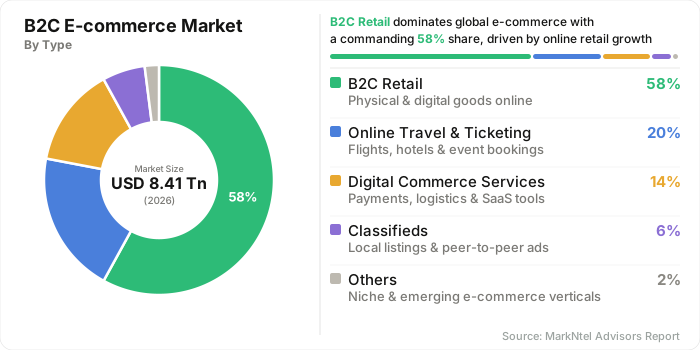
- By type, B2C retail holds a significant share of about 58% in 2026.
- By application, Fashion & Apparel (Clothing & Footwear) seized a significant share of about 24% in 2026.
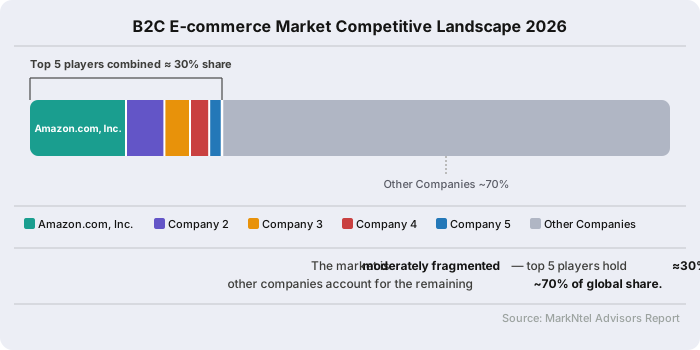
- The industry is highly fragmented. However, the top five players collectively account for nearly 30% share.
B2C E-commerce Market Size and Outlook
The Global B2C E-commerce market size was valued at USD 7.44 trillion in 2025 and is projected to grow from USD 8.41 trillion in 2026 to USD 12.65 trillion by 2032, expanding at a CAGR of around 7.04% during the forecast period, i.e., 2026-32.
The market is evolving into a technology-driven retail ecosystem, fueled by expanding internet connectivity, digital payments, and AI-enabled customer experiences. According to SellersCommerce, approximately 2.86 billion people are expected to shop online globally in 2026, representing about 33% of the world’s population. The platform also estimates that global e-commerce sales will surpass USD 7.4 trillion in 2026, highlighting the continued expansion of digital commerce driven by increasing internet penetration, mobile adoption, and consumer preference for online shopping.
Innovation by leading retailers is accelerating this transformation. For example, Amazon continues to expand AI-powered shopping tools, automated fulfillment technologies, and same-day delivery capabilities, while Alibaba Group has strengthened cross-border digital trade and cloud-enabled commerce services, demonstrating how advanced technologies are reshaping customer engagement and operational efficiency. At the same time, cross-border shopping is becoming increasingly mainstream; a 2025 DHL survey found that 59% of global consumers purchase from retailers outside their home country, highlighting growing demand for international e-commerce and seamless logistics.
Moreover, wider smartphone adoption, secure payment ecosystems, cloud computing, and AI-driven personalization are expected to sustain market expansion. Governments and international organizations are also enhancing digital trade frameworks and statistical measurement, supporting a more transparent and resilient ecosystem. As businesses continue investing in automation, data analytics, and fulfillment infrastructure, the global B2C e-commerce market is well-positioned for long-term, innovation-led growth across both developed and emerging economies.
Looking ahead, the convergence of cloud computing, advanced payment technologies, mobile-first shopping, and data-driven retail strategies is expected to redefine competitive dynamics in the industry. As businesses continue to innovate and invest in resilient digital infrastructure, the global B2C e-commerce market is well-positioned for sustained, inclusive, and technology-led growth across both mature and emerging economies.
B2C E-commerce Market Key Indicators
- The proliferation of digital storefronts allows businesses of all sizes to reach consumers directly, increasing competition and product availability. According to industry analyses based on website tracking databases, more than 30 million e-commerce websites were active globally in 2024–2025, with thousands of new online stores being launched each day. This rapid growth reflects increasing business digitalization, low barriers to online entry, and rising consumer demand for digital shopping experiences
- A healthy start-up ecosystem drives innovation in online marketplaces, logistics technology, embedded finance, and quick commerce. UNCTAD reported that business e-commerce sales across 43 economies reached nearly USD 27 trillion in 2022, representing almost 60% growth from 2016, creating substantial opportunities for technology entrepreneurs and investors. Continued funding into digital commerce solutions accelerates innovation, improves customer convenience, and strengthens the competitive landscape across global B2C e-commerce.
- The expansion of mobile commerce has transformed consumer shopping behavior by enabling purchases anytime and anywhere. The Global System for Mobile Communications Association (GSMA) reported that 5.6 billion people subscribed to mobile services globally by the end of 2023, including 4.7 billion mobile internet users. This widespread mobile connectivity supports app-based shopping, digital payments, and personalized retail experiences, making smartphones a primary channel for e-commerce transactions and a critical driver of market growth.
- Influencer marketing has become an important growth driver for the global B2C e-commerce market by increasing product discovery, consumer trust, and purchase intent. Creator-led campaigns help brands reach targeted audiences and drive traffic directly to online stores through affiliate links, live shopping, and sponsored content. According to the World Federation of Advertisers (WFA), 54% of multinational brand marketers planned to increase influencer marketing spending in 2025, while 61% believe influencer marketing will become more important in the future. This trend highlights the growing role of influencers in boosting online retail sales and customer engagement.
B2C E-commerce Market Scope
| Category | Segments |
|---|---|
| By Type | B2C Retail, Classifieds, Digital Commerce Services, Online Travel & Ticketing, Others |
| By Application | Fashion & Apparel (Clothing & Footwear), Consumer Electronics, Beauty & Personal Care, Home & Furniture, Books, Stationery & Media, Grocery & Food, Sports & Leisure, Automotive Parts & Accessories, Healthcare & Pharmaceuticals, Travel & Tourism, Others |
| By Device | Desktop/Laptop, Mobile Commerce (M-Commerce), Tablet |
| By Payment Method | Optional) (Credit/Debit Cards, Digital Wallets, Bank Transfers, Buy Now Pay Later (BNPL), Cash on Delivery, Others |
B2C E-commerce Market Growth Drivers
Rising Internet and Smartphone Adoption Driving B2C E-Commerce Growth
The rapid expansion of internet connectivity and smartphone adoption is a primary driver of the global B2C e-commerce industry because it continuously enlarges the pool of digital shoppers. According to the International Telecommunication Union (ITU), 5.5 billion people, 68% of the global population, were using the internet in 2024, up by 227 million users from the previous year. This growing online population directly increases the number of consumers able to browse, compare, and purchase products digitally.
Mobile connectivity is accelerating this trend. The Global System for Mobile Communications Association reported that 4.6 billion people used mobile internet by the end of 2023, while global mobile internet users reached 4.7 billion in 2024, representing 58% of the world’s population. Since smartphones are the primary internet access device in many developing economies, their adoption has made online shopping accessible to millions of first-time consumers.
Looking ahead, investments in digital infrastructure and device accessibility are expected to sustain growth. The GSMA projects mobile internet users will reach 5.5 billion by 2030, while a global coalition involving the ITU, World Bank Group, and telecom operators is working to improve smartphone affordability in underserved regions, particularly South Asia and Sub-Saharan Africa.
Consequently, as internet access and smartphone ownership continue to expand, more consumers will participate in online retail ecosystems. This widening digital consumer base will significantly accelerate global B2C e-commerce transaction volumes, customer acquisition, and market expansion in the coming years.
Recent Trends
AI-Based Product Recommendations Transforming Online Consumer Engagement
Artificial intelligence is emerging as a transformative trend in the global B2C e-commerce industry by enabling personalized shopping experiences and conversational product discovery. AI-powered recommendation engines, chatbots, and virtual assistants help consumers identify relevant products faster, improving engagement and conversion rates. During the 2024 holiday shopping season, AI-influenced online sales reached USD 229 billion globally, highlighting the growing role of AI in digital purchasing decisions.
Retailers are rapidly integrating generative AI into their platforms to streamline customer interactions and enhance shopping experiences. A notable example is the 2025 partnership between OpenAI and Walmart, which enables consumers to discover and purchase products directly through ChatGPT, creating a seamless “chat-and-buy” experience and advancing conversational commerce. At the same time, Adobe Analytics reported a sharp increase in AI-driven traffic to retail websites during major shopping events, demonstrating growing consumer reliance on AI-powered shopping interfaces.
Investment momentum is also strengthening. According to UN Trade and Development (UNCTAD), the global AI market is projected to expand from USD 189 billion in 2023 to USD 4.8 trillion by 2033, encouraging retailers to deploy more intelligent recommendation systems and virtual shopping assistants. Consequently, AI-powered commerce is expected to enhance customer acquisition, improve conversion rates, and drive long-term growth.
Consequently, AI-powered personalization and conversational commerce are reshaping how consumers discover and purchase products online. As retailers invest in intelligent shopping experiences, this trend will boost customer acquisition, increase conversion rates, and accelerate the long-term growth of the global B2C e-commerce market.
B2C E-commerce Market Opportunities and Challenges
Cybersecurity Threats and Payment Fraud Create Challenges While Driving Security Innovation
Cybersecurity threats and online payment fraud have become significant challenges for the global B2C e-commerce industry as retailers increasingly process large volumes of sensitive customer and financial data. Cybercriminals exploit digital platforms through phishing, account takeovers, identity theft, ransomware, and payment fraud, resulting in financial losses and reduced consumer trust. According to the FBI’s Internet Crime Complaint Center (IC3), reported cybercrime losses reached USD 16.6 billion in 2024, underscoring the growing risks facing online businesses and consumers.
The increasing sophistication of cyberattacks also raises compliance costs and operational complexity for e-commerce companies. Failure to adequately protect customer information can lead to reputational damage, legal liabilities, and reduced customer retention, creating barriers to sustained market expansion
At the same time, these challenges are creating significant opportunities that can accelerate market growth. Retailers and payment providers are investing in AI-powered fraud detection, biometric authentication, tokenization, and advanced cybersecurity platforms to secure online transactions and enhance customer trust. According to the International Data Corporation, worldwide security spending is projected to reach USD 377 billion by 2028, reflecting sustained investment in digital protection technologies. Stronger security infrastructure encourages greater consumer confidence, supports higher online transaction volumes, and enables businesses to expand digital commerce safely.
Consequently, stronger cybersecurity capabilities are expected to become a competitive differentiator for online retailers. As secure payment ecosystems reduce fraud risks and improve consumer trust, they will encourage greater adoption of digital shopping, increase transaction volumes, and support the long-term growth of the global B2C e-commerce market.
Segmentation Insights
B2C Retail Emerges as the Leading Type Segment
B2C Retail accounts for approximately 58% of the Global B2C E-commerce industry, making it the largest type segment. Its dominance is primarily driven by the rapid shift toward online shopping for everyday consumer goods, including apparel, electronics, groceries, beauty products, home furnishings, and personal care items. The widespread adoption of smartphones, expanding internet access, secure digital payment systems, and faster delivery networks has made online retail more convenient and accessible for consumers worldwide.
In addition, omnichannel strategies, personalized recommendations powered by artificial intelligence, and frequent promotional campaigns have increased customer engagement and purchase frequency. The rise of direct-to-consumer brands and social commerce has further strengthened the segment by enabling businesses to reach buyers without traditional retail intermediaries. Growing consumer confidence in online transactions and the increasing availability of cross-border shopping options continue to support sustained expansion, reinforcing B2C Retail’s position as the leading segment within the global B2C e-commerce industry. Based on type, the scope has been segmented into
- B2C Retail
- Classifieds
- Digital Commerce Services
- Online Travel & Ticketing
- Others
Fashion & Apparel (Clothing & Footwear) Dominates the Application Segment
Fashion & Apparel (Clothing & Footwear) represents the largest application segment in the Global B2C E-commerce industry, accounting for approximately 24% of total demand. The segment’s dominance is supported by increasing consumer preference for convenient online shopping, extensive product variety, and the rapid pace of fashion trends that encourage frequent purchases. E-commerce platforms provide access to global and local brands, competitive pricing, personalized recommendations, and flexible return policies, making online fashion purchases more attractive. The growth of mobile commerce and social media marketing has further accelerated demand by enabling brands to engage consumers through influencers, live shopping, and targeted promotions.
Additionally, advancements in digital payment systems and faster delivery services have improved the overall customer experience. Direct-to-consumer brands and fast-fashion retailers continue to expand their online presence, while cross-border e-commerce allows shoppers to access a wider range of products. These factors collectively reinforce Fashion & Apparel’s position as the leading application segment in the global B2C e-commerce industry. By application, the scope has been classified into
- Fashion & Apparel (Clothing & Footwear)
- Consumer Electronics
- Beauty & Personal Care
- Home & Furniture
- Books, Stationery & Media
- Grocery & Food
- Sports & Leisure
- Automotive Parts & Accessories
- Healthcare & Pharmaceuticals
- Travel & Tourism
- Others
B2C E-commerce Market Geographical Outlook
Asia Pacific accounts for approximately 42% of global B2C e-commerce demand, making it the leading regional industry. This leadership is supported by a vast consumer base, high internet and smartphone penetration, rapid digital payment adoption, and well-established logistics infrastructure. Governments across the region have also promoted digital transformation, encouraging businesses and consumers to embrace online retail channels.
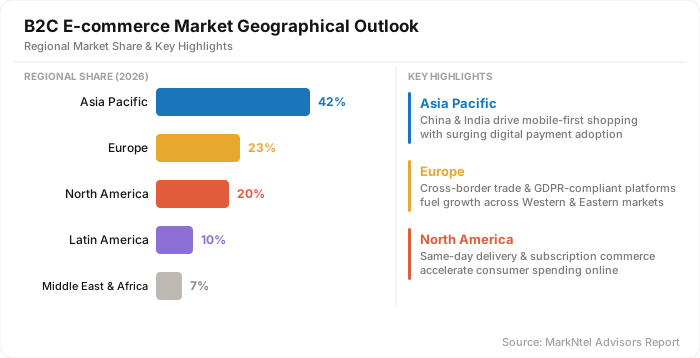
A key example is China, which remains the world’s largest e-commerce market. According to the China Internet Network Information Center (CNNIC), China had over 974 million online shopping users by the end of 2024, reflecting the country’s extensive digital retail ecosystem. The widespread use of mobile payments, efficient fulfillment networks, and large-scale online marketplaces has strengthened consumer participation and transaction volumes. Together with the fast-growing markets of India and Southeast Asia, these factors continue to reinforce Asia Pacific’s position as the leading contributor to the global B2C e-commerce industry.
B2C E-commerce Market Competitive Analysis
The Global B2C E-commerce Market is highly fragmented, with intense competition among leading marketplace operators and digital retail platforms. Companies such as Amazon.com, Inc., Alibaba Group Holding Limited, JD.com, Inc., Walmart Inc., and PDD Holdings Inc. collectively account for an estimated 30% of the global industry, supported by their extensive product portfolios, advanced technology capabilities, integrated logistics networks, and strong customer ecosystems spanning multiple geographic regions.
Key Players in Global B2C E-commerce market
- Amazon.com, Inc.
- Alibaba Group Holding Limited
- JD.com, Inc.
- Walmart Inc.
- eBay Inc.
- MercadoLibre, Inc.
- Shopify Inc.
- Rakuten Group, Inc.
- Coupang, Inc.
- Sea Limited (operator of Shopee)
- PDD Holdings Inc.
- Etsy, Inc.
- Zalando SE
- Wayfair Inc.
- Flipkart Internet Private Limited
- Others
B2C E-commerce Industry News and Recent Developments
2026: Amazon.com, Inc. launches “Alexa for Shopping” AI assistant
Amazon introduced “Alexa for Shopping,” an AI-powered assistant that combines conversational search, product comparisons, price tracking, and automated purchasing features. The enhancement is designed to deliver more personalized shopping experiences and improve customer engagement across its digital commerce ecosystem, reflecting the industry's increasing focus on AI-driven retail innovation.
Impact Analysis: The launch of Alexa for Shopping strengthens the adoption of conversational AI in B2C e-commerce by enabling faster product discovery, personalized recommendations, and streamlined purchasing. It is expected to increase customer engagement and conversion rates while encouraging competitors to invest in similar AI-driven capabilities. The development also accelerates the shift toward intelligent shopping assistants that reduce search friction and enhance the overall online retail experience.
2026: Walmart Inc. expands AI-powered shopping with Google Gemini
Walmart partnered with Google to integrate its shopping experience into Gemini, allowing customers to discover products, build carts, and complete purchases directly through conversational AI. The initiative aims to simplify online shopping and accelerate AI-driven commerce across Walmart’s digital ecosystem.
Impact Analysis: Walmart’s integration with Google Gemini demonstrates the growing convergence of generative AI and digital commerce. By allowing customers to search, compare, and purchase products through natural language interactions, the initiative improves shopping convenience and user experience. It is likely to boost online sales efficiency, strengthen customer loyalty, and encourage broader adoption of AI-enabled retail platforms across the global B2C e-commerce market.
2025: Shopify Inc. unveils agentic storefronts for AI commerce
Shopify launched agentic storefront capabilities that enable merchants to integrate more seamlessly with AI platforms such as ChatGPT and Microsoft Copilot. The solution helps brands manage AI visibility, improve product discovery, and monitor AI-driven customer interactions, strengthening merchants’ ability to participate in next-generation conversational commerce.
Impact Analysis: Shopify’s agentic storefronts enable merchants to optimize product visibility and engagement across AI-powered platforms, positioning them for the next generation of digital commerce. The launch enhances personalized shopping and conversational product discovery while helping businesses adapt to AI-driven consumer behavior. This innovation is expected to improve merchant competitiveness, increase conversion rates, and accelerate the integration of AI into mainstream B2C e-commerce operations.
Frequently Asked Questions
- Market Segmentation
- Introduction
- Product Definition
- Research Process
- Assumptions
- Executive Summary
- Global B2C E-commerce Market Policies, Regulations, and Product Standards
- Global B2C E-commerce Market Start-Up Ecosystem, 2022-2032F
- Entrepreneurial Activity
- Year-on-Year Funding Received
- Funding Received by Top Companies
- Key Investors Active in the Market
- Series Wise Funding Received
- Seed Funding
- Angel Investing
- Venture Capitalists (VC) Funding
- Others
- Global B2C E-commerce Market Trends & Developments
- Global B2C E-commerce Market Dynamics
- Growth Factors
- Challenges
- Global B2C E-commerce Market Hotspot & Opportunities
- Global B2C E-commerce Market Outlook, 2022-2032F
- Market Size & Outlook
- By Revenues (USD Million)
- Market Segmentation & Outlook
- By Type- Market Size & Forecast 2022-2032, USD Million
- B2C Retail
- Classifieds
- Digital Commerce Services
- Online Travel & Ticketing
- Others
- By Application- Market Size & Forecast 2022-2032, USD Million
- Fashion & Apparel (Clothing & Footwear)
- Consumer Electronics
- Beauty & Personal Care
- Home & Furniture
- Books, Stationery & Media
- Grocery & Food
- Sports & Leisure
- Automotive Parts & Accessories
- Healthcare & Pharmaceuticals
- Travel & Tourism
- Others
- By Device- Market Size & Forecast 2022-2032, USD Million
- Desktop/Laptop
- Mobile Commerce (M-Commerce)
- Tablet
- By Payment Method (Optional)- Market Size & Forecast 2022-2032, USD Million
- Credit/Debit Cards
- Digital Wallets
- Bank Transfers
- Buy Now Pay Later (BNPL)
- Cash on Delivery
- Others
- By Region
- North America
- South America
- Europe
- Middle East & Africa
- Asia-Pacific
- By Company
- Competition Characteristics
- Market Segmentation & Outlook
- By Type- Market Size & Forecast 2022-2032, USD Million
- Market Size & Outlook
- North America B2C E-commerce Market Outlook, 2022-2032F
- Market Size & Outlook
- By Revenues (USD Million)
- Market Segmentation & Outlook
- By Type- Market Size & Forecast 2022-2032, USD Million
- By Application- Market Size & Forecast 2022-2032, USD Million
- By Device- Market Size & Forecast 2022-2032, USD Million
- By Payment Method (Optional)- Market Size & Forecast 2022-2032, USD Million
- By Country
- The US
- Canada
- Mexico
- The US B2C E-commerce Market Outlook, 2022-2032F
- Market Size & Outlook
- By Revenues (USD Million)
- Market Segmentation & Outlook
- By Type- Market Size & Forecast 2022-2032, USD Million
- By Application- Market Size & Forecast 2022-2032, USD Million
- By Device- Market Size & Forecast 2022-2032, USD Million
- By Payment Method (Optional)- Market Size & Forecast 2022-2032, USD Million
- Market Size & Outlook
- Canada B2C E-commerce Market Outlook, 2022-2032F
- Market Size & Outlook
- By Revenues (USD Million)
- Market Segmentation & Outlook
- By Type- Market Size & Forecast 2022-2032, USD Million
- By Application- Market Size & Forecast 2022-2032, USD Million
- By Device- Market Size & Forecast 2022-2032, USD Million
- By Payment Method (Optional)- Market Size & Forecast 2022-2032, USD Million
- Market Size & Outlook
- Mexico B2C E-commerce Market Outlook, 2022-2032F
- Market Size & Outlook
- By Revenues (USD Million)
- Market Segmentation & Outlook
- By Type- Market Size & Forecast 2022-2032, USD Million
- By Application- Market Size & Forecast 2022-2032, USD Million
- By Device- Market Size & Forecast 2022-2032, USD Million
- By Payment Method (Optional)- Market Size & Forecast 2022-2032, USD Million
- Market Size & Outlook
- Market Size & Outlook
- South America B2C E-commerce Market Outlook, 2022-2032F
- Market Size & Outlook
- By Revenues (USD Million)
- Market Segmentation & Outlook
- By Type- Market Size & Forecast 2022-2032, USD Million
- By Application- Market Size & Forecast 2022-2032, USD Million
- By Device- Market Size & Forecast 2022-2032, USD Million
- By Payment Method (Optional)- Market Size & Forecast 2022-2032, USD Million
- By Country
- Brazil
- Argentina
- Chile
- Colombia
- Rest of South America
- Brazil B2C E-commerce Market Outlook, 2022-2032F
- Market Size & Outlook
- By Revenues (USD Million)
- Market Segmentation & Outlook
- By Type- Market Size & Forecast 2022-2032, USD Million
- By Application- Market Size & Forecast 2022-2032, USD Million
- By Device- Market Size & Forecast 2022-2032, USD Million
- By Payment Method (Optional)- Market Size & Forecast 2022-2032, USD Million
- Market Size & Outlook
- Argentina B2C E-commerce Market Outlook, 2022-2032F
- Market Size & Outlook
- By Revenues (USD Million)
- Market Segmentation & Outlook
- By Type- Market Size & Forecast 2022-2032, USD Million
- By Application- Market Size & Forecast 2022-2032, USD Million
- By Device- Market Size & Forecast 2022-2032, USD Million
- By Payment Method (Optional)- Market Size & Forecast 2022-2032, USD Million
- Market Size & Outlook
- Chile B2C E-commerce Market Outlook, 2022-2032F
- Market Size & Outlook
- By Revenues (USD Million)
- Market Segmentation & Outlook
- By Type- Market Size & Forecast 2022-2032, USD Million
- By Application- Market Size & Forecast 2022-2032, USD Million
- By Device- Market Size & Forecast 2022-2032, USD Million
- By Payment Method (Optional)- Market Size & Forecast 2022-2032, USD Million
- Market Size & Outlook
- Colombia B2C E-commerce Market Outlook, 2022-2032F
- Market Size & Outlook
- By Revenues (USD Million)
- Market Segmentation & Outlook
- By Type- Market Size & Forecast 2022-2032, USD Million
- By Application- Market Size & Forecast 2022-2032, USD Million
- By Device- Market Size & Forecast 2022-2032, USD Million
- By Payment Method (Optional)- Market Size & Forecast 2022-2032, USD Million
- Market Size & Outlook
- Market Size & Outlook
- Europe B2C E-commerce Market Outlook, 2022-2032F
- Market Size & Outlook
- By Revenues (USD Million)
- Market Segmentation & Outlook
- By Type- Market Size & Forecast 2022-2032, USD Million
- By Application- Market Size & Forecast 2022-2032, USD Million
- By Device- Market Size & Forecast 2022-2032, USD Million
- By Payment Method (Optional)- Market Size & Forecast 2022-2032, USD Million
- By Country
- The UK
- Germany
- France
- Italy
- Spain
- Netherlands
- Belgium
- Rest of Europe
- The UK B2C E-commerce Market Outlook, 2022-2032F
- Market Size & Outlook
- By Revenues (USD Million)
- Market Segmentation & Outlook
- By Type- Market Size & Forecast 2022-2032, USD Million
- By Application- Market Size & Forecast 2022-2032, USD Million
- By Device- Market Size & Forecast 2022-2032, USD Million
- By Payment Method (Optional)- Market Size & Forecast 2022-2032, USD Million
- Market Size & Outlook
- Germany B2C E-commerce Market Outlook, 2022-2032F
- Market Size & Outlook
- By Revenues (USD Million)
- Market Segmentation & Outlook
- By Type- Market Size & Forecast 2022-2032, USD Million
- By Application- Market Size & Forecast 2022-2032, USD Million
- By Device- Market Size & Forecast 2022-2032, USD Million
- By Payment Method (Optional)- Market Size & Forecast 2022-2032, USD Million
- Market Size & Outlook
- France B2C E-commerce Market Outlook, 2022-2032F
- Market Size & Outlook
- By Revenues (USD Million)
- Market Segmentation & Outlook
- By Type- Market Size & Forecast 2022-2032, USD Million
- By Application- Market Size & Forecast 2022-2032, USD Million
- By Device- Market Size & Forecast 2022-2032, USD Million
- By Payment Method (Optional)- Market Size & Forecast 2022-2032, USD Million
- Market Size & Outlook
- Italy B2C E-commerce Market Outlook, 2022-2032F
- Market Size & Outlook
- By Revenues (USD Million)
- Market Segmentation & Outlook
- By Type- Market Size & Forecast 2022-2032, USD Million
- By Application- Market Size & Forecast 2022-2032, USD Million
- By Device- Market Size & Forecast 2022-2032, USD Million
- By Payment Method (Optional)- Market Size & Forecast 2022-2032, USD Million
- Market Size & Outlook
- Spain B2C E-commerce Market Outlook, 2022-2032F
- Market Size & Outlook
- By Revenues (USD Million)
- Market Segmentation & Outlook
- By Type- Market Size & Forecast 2022-2032, USD Million
- By Application- Market Size & Forecast 2022-2032, USD Million
- By Device- Market Size & Forecast 2022-2032, USD Million
- By Payment Method (Optional)- Market Size & Forecast 2022-2032, USD Million
- Market Size & Outlook
- Netherlands B2C E-commerce Market Outlook, 2022-2032F
- Market Size & Outlook
- By Revenues (USD Million)
- Market Segmentation & Outlook
- By Type- Market Size & Forecast 2022-2032, USD Million
- By Application- Market Size & Forecast 2022-2032, USD Million
- By Device- Market Size & Forecast 2022-2032, USD Million
- By Payment Method (Optional)- Market Size & Forecast 2022-2032, USD Million
- Market Size & Outlook
- Belgium B2C E-commerce Market Outlook, 2022-2032F
- Market Size & Outlook
- By Revenues (USD Million)
- Market Segmentation & Outlook
- By Type- Market Size & Forecast 2022-2032, USD Million
- By Application- Market Size & Forecast 2022-2032, USD Million
- By Device- Market Size & Forecast 2022-2032, USD Million
- By Payment Method (Optional)- Market Size & Forecast 2022-2032, USD Million
- Market Size & Outlook
- Market Size & Outlook
- Middle East & Africa B2C E-commerce Market Outlook, 2022-2032F
- Market Size & Outlook
- By Revenues (USD Million)
- Market Segmentation & Outlook
- By Type- Market Size & Forecast 2022-2032, USD Million
- By Application- Market Size & Forecast 2022-2032, USD Million
- By Device- Market Size & Forecast 2022-2032, USD Million
- By Payment Method (Optional)- Market Size & Forecast 2022-2032, USD Million
- By Country
- Saudi Arabia
- The UAE
- South Africa
- Egypt
- Qatar
- Rest of Middle East & Africa
- Saudi Arabia B2C E-commerce Market Outlook, 2022-2032F
- Market Size & Outlook
- By Revenues (USD Million)
- Market Segmentation & Outlook
- By Type- Market Size & Forecast 2022-2032, USD Million
- By Application- Market Size & Forecast 2022-2032, USD Million
- By Device- Market Size & Forecast 2022-2032, USD Million
- By Payment Method (Optional)- Market Size & Forecast 2022-2032, USD Million
- Market Size & Outlook
- The UAE B2C E-commerce Market Outlook, 2022-2032F
- Market Size & Outlook
- By Revenues (USD Million)
- Market Segmentation & Outlook
- By Type- Market Size & Forecast 2022-2032, USD Million
- By Application- Market Size & Forecast 2022-2032, USD Million
- By Device- Market Size & Forecast 2022-2032, USD Million
- By Payment Method (Optional)- Market Size & Forecast 2022-2032, USD Million
- Market Size & Outlook
- South Africa B2C E-commerce Market Outlook, 2022-2032F
- Market Size & Outlook
- By Revenues (USD Million)
- Market Segmentation & Outlook
- By Type- Market Size & Forecast 2022-2032, USD Million
- By Application- Market Size & Forecast 2022-2032, USD Million
- By Device- Market Size & Forecast 2022-2032, USD Million
- By Payment Method (Optional)- Market Size & Forecast 2022-2032, USD Million
- Market Size & Outlook
- Egypt B2C E-commerce Market Outlook, 2022-2032F
- Market Size & Outlook
- By Revenues (USD Million)
- Market Segmentation & Outlook
- By Type- Market Size & Forecast 2022-2032, USD Million
- By Application- Market Size & Forecast 2022-2032, USD Million
- By Device- Market Size & Forecast 2022-2032, USD Million
- By Payment Method (Optional)- Market Size & Forecast 2022-2032, USD Million
- Market Size & Outlook
- Qatar B2C E-commerce Market Outlook, 2022-2032F
- Market Size & Outlook
- By Revenues (USD Million)
- Market Segmentation & Outlook
- By Type- Market Size & Forecast 2022-2032, USD Million
- By Application- Market Size & Forecast 2022-2032, USD Million
- By Device- Market Size & Forecast 2022-2032, USD Million
- By Payment Method (Optional)- Market Size & Forecast 2022-2032, USD Million
- Market Size & Outlook
- Market Size & Outlook
- Asia-Pacific B2C E-commerce Market Outlook, 2022-2032F
- Market Size & Outlook
- By Revenues (USD Million)
- Market Segmentation & Outlook
- By Type- Market Size & Forecast 2022-2032, USD Million
- By Application- Market Size & Forecast 2022-2032, USD Million
- By Device- Market Size & Forecast 2022-2032, USD Million
- By Payment Method (Optional)- Market Size & Forecast 2022-2032, USD Million
- By Country
- China
- Japan
- India
- South Korea
- Australia
- Indonesia
- Thailand
- Vietnam
- Philippines
- New Zealand
- Rest of Asia-Pacific
- China B2C E-commerce Market Outlook, 2022-2032F
- Market Size & Outlook
- By Revenues (USD Million)
- Market Segmentation & Outlook
- By Type- Market Size & Forecast 2022-2032, USD Million
- By Application- Market Size & Forecast 2022-2032, USD Million
- By Device- Market Size & Forecast 2022-2032, USD Million
- By Payment Method (Optional)- Market Size & Forecast 2022-2032, USD Million
- Market Size & Outlook
- Japan B2C E-commerce Market Outlook, 2022-2032F
- Market Size & Outlook
- By Revenues (USD Million)
- Market Segmentation & Outlook
- By Type- Market Size & Forecast 2022-2032, USD Million
- By Application- Market Size & Forecast 2022-2032, USD Million
- By Device- Market Size & Forecast 2022-2032, USD Million
- By Payment Method (Optional)- Market Size & Forecast 2022-2032, USD Million
- Market Size & Outlook
- India B2C E-commerce Market Outlook, 2022-2032F
- Market Size & Outlook
- By Revenues (USD Million)
- Market Segmentation & Outlook
- By Type- Market Size & Forecast 2022-2032, USD Million
- By Application- Market Size & Forecast 2022-2032, USD Million
- By Device- Market Size & Forecast 2022-2032, USD Million
- By Payment Method (Optional)- Market Size & Forecast 2022-2032, USD Million
- Market Size & Outlook
- South Korea B2C E-commerce Market Outlook, 2022-2032F
- Market Size & Outlook
- By Revenues (USD Million)
- Market Segmentation & Outlook
- By Type- Market Size & Forecast 2022-2032, USD Million
- By Application- Market Size & Forecast 2022-2032, USD Million
- By Device- Market Size & Forecast 2022-2032, USD Million
- By Payment Method (Optional)- Market Size & Forecast 2022-2032, USD Million
- Market Size & Outlook
- Australia B2C E-commerce Market Outlook, 2022-2032F
- Market Size & Outlook
- By Revenues (USD Million)
- Market Segmentation & Outlook
- By Type- Market Size & Forecast 2022-2032, USD Million
- By Application- Market Size & Forecast 2022-2032, USD Million
- By Device- Market Size & Forecast 2022-2032, USD Million
- By Payment Method (Optional)- Market Size & Forecast 2022-2032, USD Million
- Market Size & Outlook
- Indonesia B2C E-commerce Market Outlook, 2022-2032F
- Market Size & Outlook
- By Revenues (USD Million)
- Market Segmentation & Outlook
- By Type- Market Size & Forecast 2022-2032, USD Million
- By Application- Market Size & Forecast 2022-2032, USD Million
- By Device- Market Size & Forecast 2022-2032, USD Million
- By Payment Method (Optional)- Market Size & Forecast 2022-2032, USD Million
- Market Size & Outlook
- Thailand B2C E-commerce Market Outlook, 2022-2032F
- Market Size & Outlook
- By Revenues (USD Million)
- Market Segmentation & Outlook
- By Type- Market Size & Forecast 2022-2032, USD Million
- By Application- Market Size & Forecast 2022-2032, USD Million
- By Device- Market Size & Forecast 2022-2032, USD Million
- By Payment Method (Optional)- Market Size & Forecast 2022-2032, USD Million
- Market Size & Outlook
- Vietnam B2C E-commerce Market Outlook, 2022-2032F
- Market Size & Outlook
- By Revenues (USD Million)
- Market Segmentation & Outlook
- By Type- Market Size & Forecast 2022-2032, USD Million
- By Application- Market Size & Forecast 2022-2032, USD Million
- By Device- Market Size & Forecast 2022-2032, USD Million
- By Payment Method (Optional)- Market Size & Forecast 2022-2032, USD Million
- Market Size & Outlook
- Philippines B2C E-commerce Market Outlook, 2022-2032F
- Market Size & Outlook
- By Revenues (USD Million)
- Market Segmentation & Outlook
- By Type- Market Size & Forecast 2022-2032, USD Million
- By Application- Market Size & Forecast 2022-2032, USD Million
- By Device- Market Size & Forecast 2022-2032, USD Million
- By Payment Method (Optional)- Market Size & Forecast 2022-2032, USD Million
- Market Size & Outlook
- New Zealand B2C E-commerce Market Outlook, 2022-2032F
- Market Size & Outlook
- By Revenues (USD Million)
- Market Segmentation & Outlook
- By Type- Market Size & Forecast 2022-2032, USD Million
- By Application- Market Size & Forecast 2022-2032, USD Million
- By Device- Market Size & Forecast 2022-2032, USD Million
- By Payment Method (Optional)- Market Size & Forecast 2022-2032, USD Million
- Market Size & Outlook
- Market Size & Outlook
- Global B2C E-commerce Market Key Strategic Imperatives for Success & Growth
- Competitive Outlook
- Company Profiles
- Amazon.com, Inc.
- Business Description
- Product Portfolio
- Collaborations & Alliances
- Recent Developments
- Financial Details
- Others
- Alibaba Group Holding Limited
- Business Description
- Product Portfolio
- Collaborations & Alliances
- Recent Developments
- Financial Details
- Others
- eBay Inc.
- Business Description
- Product Portfolio
- Collaborations & Alliances
- Recent Developments
- Financial Details
- Others
- JD.com, Inc.
- Business Description
- Product Portfolio
- Collaborations & Alliances
- Recent Developments
- Financial Details
- Others
- Rakuten Group, Inc.
- Business Description
- Product Portfolio
- Collaborations & Alliances
- Recent Developments
- Financial Details
- Others
- MercadoLibre, Inc.
- Business Description
- Product Portfolio
- Collaborations & Alliances
- Recent Developments
- Financial Details
- Others
- Walmart Inc.
- Business Description
- Product Portfolio
- Collaborations & Alliances
- Recent Developments
- Financial Details
- Others
- PDD Holdings Inc.
- Business Description
- Product Portfolio
- Collaborations & Alliances
- Recent Developments
- Financial Details
- Others
- Flipkart Internet Private Limited
- Business Description
- Product Portfolio
- Collaborations & Alliances
- Recent Developments
- Financial Details
- Others
- Coupang, Inc.
- Business Description
- Product Portfolio
- Collaborations & Alliances
- Recent Developments
- Financial Details
- Others
- Sea Limited
- Business Description
- Product Portfolio
- Collaborations & Alliances
- Recent Developments
- Financial Details
- Others
- Zalando SE
- Business Description
- Product Portfolio
- Collaborations & Alliances
- Recent Developments
- Financial Details
- Others
- Etsy, Inc.
- Business Description
- Product Portfolio
- Collaborations & Alliances
- Recent Developments
- Financial Details
- Others
- Target Corporation
- Business Description
- Product Portfolio
- Collaborations & Alliances
- Recent Developments
- Financial Details
- Others
- Otto (GmbH & Co KG)
- Business Description
- Product Portfolio
- Collaborations & Alliances
- Recent Developments
- Financial Details
- Others
- Others
- Amazon.com, Inc.
- Company Profiles
- Disclaimer
MarkNtel Advisors follows a robust and iterative research methodology designed to ensure maximum accuracy and minimize deviation in market estimates and forecasts. Our approach combines both bottom-up and top-down techniques to effectively segment and quantify various aspects of the market. A consistent feature across all our research reports is data triangulation, which examines the market from three distinct perspectives to validate findings. Key components of our research process include:
1. Scope & Research Design At the outset, MarkNtel Advisors define the research objectives and formulate pertinent questions. This phase involves determining the type of research—qualitative or quantitative—and designing a methodology that outlines data collection methods, target demographics, and analytical tools. They also establish timelines and budgets to ensure the research aligns with client goals.
2. Sample Selection and Data Collection In this stage, the firm identifies the target audience and determines the appropriate sample size to ensure representativeness. They employ various sampling methods, such as random or stratified sampling, based on the research objectives. Data collection is carried out using tools like surveys, interviews, and observations, ensuring the gathered data is reliable and relevant.
3. Data Analysis and Validation Once data is collected, MarkNtel Advisors undertake a rigorous analysis process. This includes cleaning the data to remove inconsistencies, employing statistical software for quantitative analysis, and thematic analysis for qualitative data. Validation steps are taken to ensure the accuracy and reliability of the findings, minimizing biases and errors.

4. Data Forecast and FinalizationThe final phase involves forecasting future market trends based on the analyzed data. MarkNtel Advisors utilize predictive modeling and time series analysis to anticipate market behaviors. The insights are then compiled into comprehensive reports, featuring visual aids like charts and graphs, and include strategic recommendations to inform client decision-making
We offer flexible licensing options to cater to varying organizational needs. Choose the pricing pack that best suits your requirements:
Buy Now Inquire Before Buying
 Request Customization
 Talk to our Consultant







