

India Apparel & Footwear Market Research Report: Forecast (2026-2032)
By Category (Apparel, Footwear), By End User (Kids, Men, Women), By Distribution Channel (Store-based Retailing (Grocery Retailers, Non-Grocery Specialists, Mixed Retailers), Non- ... store Retailing (Direct Selling, Home shopping, E-commerce, Vending)), By Price segment (Mass/Economy, Mid-Premium/Premium, Luxury), and others Read more
- FMCG
- Jul 2026
- Pages 140
- Report Format: PDF, Excel, PPT
India Apparel & Footwear Market
Projected 8.4% CAGR from 2026 to 2032
Study Period
2026-2032
Market Size (2026)
USD 69 Billion
Market Size (2032)
USD 112 Billion
Base Year
2025
Projected CAGR
8.4%
Leading Segments
By Category: Apparel
India Apparel & Footwear Market Key Takeaways
- The India apparel & footwear market size was valued at USD 64 billion in 2025 and is projected to grow from USD 69 billion in 2026 to USD 112 billion by 2032.
- The market is projected to register a CAGR of 8.4% during 2026–2032.
- By category, apparel leads the market with around 72% market share in 2026.
- By distribution channel, store-based retailing is dominant with around 84% market share in 2026.
- The industry is fragmented, with the top five players collectively accounting for approximately 5% of the market share in 2026.
India Apparel & Footwear Market Size and Outlook
The India apparel & footwear industry was valued at USD 64 billion in 2025 and is currently standing at USD 69 billion in 2026. The industry is projected to grow to USD 112 billion by 2032, showcasing a CAGR of around 8.4% during the forecast period, i.e., 2026–32.
The industry is witnessing sustained expansion, supported by strong domestic consumption, rising export competitiveness, and favourable government initiatives that continue to strengthen the country's manufacturing and retail ecosystem. As of 2025, India's textile and apparel sector contributes approximately 2.3% to the national GDP, 13% to industrial production, and 12% of the country's total exports.
During FY 2023–24, India exported USD 34.4 billion worth of textile products, while the sector remained the second-largest employer after agriculture, providing direct employment to more than 45 million people. Furthermore, the continued expansion of organized retail, increasing penetration of branded apparel and footwear across Tier II, Tier III, and Tier IV cities, and the growing adoption of omnichannel retail strategies are expected to support long-term demand across the apparel and footwear market.
Policy reforms introduced during 2025 and 2026 are further improving the operating environment for manufacturers and retailers. Under the GST 2.0 reforms implemented from September 2025, apparel and footwear continue to attract a concessional tax, while manmade fibre and yarn also moved to the same rate, reducing input tax disparities across the textile value chain. These measures are expected to improve affordability, support production efficiencies, and encourage higher formal sector participation across the industry.
India's export outlook has strengthened considerably following a series of trade agreements signed during 2026. The India European Union free trade agreement provides zero duty access for textiles, apparel, leather, and footwear, while the India United Kingdom Comprehensive Economic and Trade Agreement eliminates duties on nearly all eligible exports, including leather and footwear. The interim trade agreement with the United States has also reduced reciprocal tariffs, improving export competitiveness and creating fresh opportunities for domestic manufacturers.
Collectively, these policy reforms, expanding manufacturing capabilities, and improving market access are strengthening India's position as a leading apparel and footwear production and consumption hub. Supported by rising domestic demand, a favourable trade environment, and continued investments across the textile and leather value chains, the market is expected to witness sustained long term growth while enhancing its competitiveness in both domestic and international markets.
India Apparel & Footwear Market Key Indicators
- As of 2025-26 season, the government increased the minimum support price for long staple cotton to USD 85 per quintal, representing a 7% year on year increase. The revision aims to support cotton cultivation while ensuring stable raw material availability for textile manufacturers.
- Bata India crossed 700 franchise stores by March 2026 and announced plans to expand its network to approximately 3,000 outlets over the next three to five years, reflecting the continued expansion of organized apparel and footwear retail across smaller Indian cities.
- Infrastructure works have commenced across all seven PM MITRA mega textile parks, supported by government investment of approximately USD 523 million through 2027-28. The integrated parks are expected to strengthen large scale textile manufacturing, improve logistics efficiency, and attract additional private investment across the textile value chain.
- India's textile exports, including handicrafts, increased from approximately USD 36.45 billion in FY2024-25 to USD 37.22 billion in FY2025-26, registering 2.1% growth. Ready-made garment exports also increased by 2.9%, reflecting sustained global demand for Indian apparel products.
India Apparel & Footwear Market Scope
| Category | Segments |
|---|---|
| By Category | Apparel, Footwear |
| By End User | Kids, Men, Women |
| By Distribution Channel | Store-based Retailing (Grocery Retailers, Non-Grocery Specialists, Mixed Retailers), Non-store Retailing (Direct Selling, Home shopping, E-commerce, Vending |
| By Price segment | Mass/Economy, Mid-Premium/Premium, Luxury |
India Apparel & Footwear Market Growth Drivers
Rising Disposable Incomes and Premiumization Driving Value Led Consumption
Rising disposable incomes, evolving fashion preferences, and increasing consumer inclination toward premium products are driving the growth of the India apparel & footwear market. Consumers are increasingly spending on branded apparel, athleisure, premium footwear, and fashion-oriented collections, while improving affordability and greater organized retail penetration across Tier II, Tier III, and Tier IV cities are expanding the addressable customer base. This shift is encouraging manufacturers and retailers to broaden their product portfolios across premium and value segments, supported by continuous product innovation and brand differentiation.
The growing preference for branded products is reflected in recent industry performance. In February 2026, Bata India reported a 13% year-on-year increase in quarterly profit, driven by strong festive demand, while Metro Brands and Campus Activewear also recorded healthy earnings growth during the same period. On the supply side, government initiatives are further strengthening domestic manufacturing capabilities. By April 2026, 74 companies had been approved under the Production Linked Incentive (PLI) Scheme for Textiles, while the Indian Footwear and Leather Development Programme (IFLDP) allocated approximately USD 178 million for infrastructure development and technology upgradation through March 2026. These developments are enhancing manufacturing competitiveness and supporting sustained growth across India's apparel and footwear industry.
Recent Trends
AI-Driven Manufacturing Improving Production Efficiency
The market is witnessing increasing adoption of artificial intelligence, smart manufacturing, and digital production technologies to improve operational efficiency, product quality, and export competitiveness. Rather than focusing solely on capacity expansion, manufacturers are integrating AI-enabled production planning, IoT-based factory monitoring, and data-driven quality control to optimize resource utilization and reduce production lead times. This technological transition is becoming particularly important as global buyers increasingly prioritize speed, consistency, and flexible manufacturing capabilities.
The trend is most evident in Tiruppur, India's largest knitwear manufacturing cluster, which contributed nearly 60% of the country's knitwear exports during FY26. The cluster generated exports worth about USD 481.54 million during FY26 and has set a long-term target of reaching USD 12 billion by 2030. In March 2026, the Tiruppur exporters' association highlighted the growing adoption of AI, IoT, and smart manufacturing technologies under the government's Samarth scheme to enhance workforce capabilities and production efficiency.
Further reinforcing this transition, the Union Textiles Minister announced in June 2026 that the central government would support the adoption of modern manufacturing technologies alongside investments in industrial clusters and worker infrastructure. These initiatives are expected to strengthen productivity, improve manufacturing precision, and enable Indian apparel and footwear producers to respond more effectively to evolving domestic demand and international sourcing requirements.
India Apparel & Footwear Market Challenges and Opportunities
Balancing Unorganised Market Dominance with GST-Led Formalisation Opportunities
The fragmented structure of the Indian apparel and footwear industry continues to limit the pace of formal sector expansion. A significant number of manufacturers and retailers operate through unorganised channels, resulting in uneven tax compliance, fragmented supply chains, and inconsistent product standardisation. This creates an uneven competitive environment for organized brands and reduces the overall efficiency and transparency of the value chain.
The high dependence on small enterprises further amplifies this challenge. MSMEs account for 35.4% of India's manufacturing output, 48.58% of exports, and 31.1% of GDP, making their transition into the formal economy essential for improving supply chain efficiency and long-term sector competitiveness.
Addressing these structural challenges, recent GST reforms are creating a stronger pathway for formalisation across apparel, textiles, leather, and footwear manufacturing. In September 2025, the Government reduced GST on leather, footwear, textiles, and related job work from 12% to 5% for eligible categories to lower compliance costs, reduce production expenses, and improve MSME margins. These measures are expected to encourage greater participation in the formal economy while enhancing competitiveness for smaller manufacturers.
As more enterprises transition toward formal operations, the sector is likely to benefit from improved access to institutional finance, technology adoption, organized retail networks, and export opportunities. Lower tax burdens and simplified compliance can also support investment in capacity expansion and quality improvements, enabling MSMEs to integrate more effectively into domestic and global value chains while strengthening the long term competitiveness of the apparel and footwear industry in India.
Segmentation Insights
Apparel Dominating the Market Through Broad Consumer Demand and High Purchase Frequency
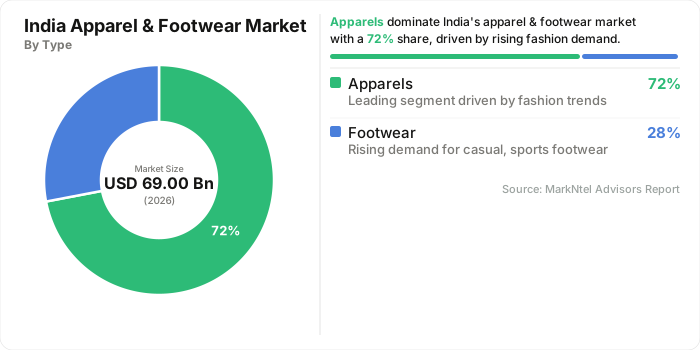
Apparels dominates the market, accounting for around 72% of the total market share in 2026. The segment benefits from a broad product portfolio spanning western wear, ethnic wear, fusion apparel, and innerwear, catering to consumers across all age groups and income categories. Rising disposable incomes, evolving fashion preferences, increasing urbanization, and sustained demand during festive, wedding, and seasonal shopping periods continue to strengthen apparel consumption across both metropolitan and emerging cities.
The segment also benefits from India's strong domestic manufacturing ecosystem and expanding organized retail presence. Apparel purchases typically occur more frequently than footwear replacements, resulting in higher transaction volumes throughout the year. Based on category, the market is further bifurcated into:
- Apparel
- Footwear
Store Based Retailing Maintaining Leadership Through Extensive Physical Reach and Consumer Preference
Store based retailing accounts for approximately 84% of the India apparel and footwear industry in 2026, making it the dominant distribution channel. Consumers continue to prefer physical stores for evaluating product quality, fit, comfort, and style before purchase, particularly for apparel and footwear. The widespread presence of exclusive brand outlets, value fashion chains, department stores, and traditional retailers ensures broad accessibility across urban, semi urban, and rural markets.
The segment is further supported by the rapid expansion of organized retailers into Tier II, Tier III, and Tier IV cities while unorganized neighbourhood stores continue to maintain strong local customer relationships. Retailers are also enhancing in store experiences through digital payment solutions, loyalty programs, and omnichannel services such as click and collect. Based on distribution channel, the market is further bifurcated into:
- Store-Based Retailing
- Grocery Retailers
- Non-Grocery Specialists
- Mixed Retailers
- Non-Store Retailing
- Direct Selling
- Homeshopping
- E-Commerce
- Vending
India Apparel & Footwear Market Competitive Analysis
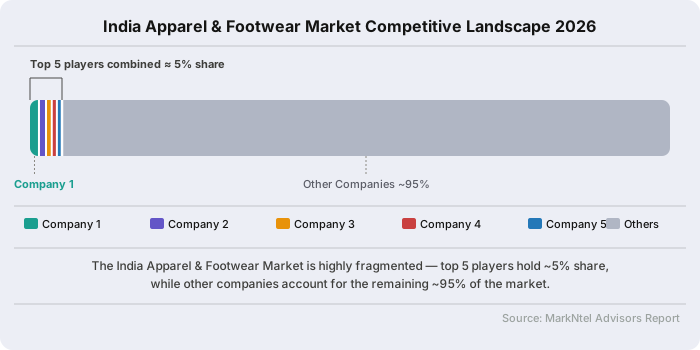
The India Apparel & Footwear market is fragmented, with competition distributed among diversified retail conglomerates, branded apparel manufacturers, footwear specialists, ethnic wear companies, innerwear brands, and omnichannel fashion retailers. Major participants include Reliance Industries Limited, Aditya Birla Group, Tata Group, Bata Corporation, and Metro Brands Limited. The top five players collectively account for approximately 5% of the India apparel & footwear market.
Key Companies in the India Apparel & Footwear Market
- Reliance Industries Limited
- Aditya Birla Group
- Tata Group
- Page Industries Limited
- Raymond Group
- Bata Corporation
- Metro Brands Limited
- Relaxo Footwears Limited
- Vedant Fashions Limited
- Brainbees Solutions Limited
India Apparel & Footwear Industry News and Recent Developments
2025: Aditya Birla Fashion and Retail Completes Demerger to Create Dedicated Lifestyle Business
Aditya Birla Fashion and Retail Limited completed the demerger of its Madura Fashion business into Aditya Birla Lifestyle Brands Limited during 2025, creating a dedicated listed entity for its portfolio of lifestyle brands, including Louis Philippe, Van Heusen, Allen Solly, and Peter England. The restructuring was undertaken to sharpen business focus, improve capital allocation, and provide greater operational flexibility for expanding its premium apparel portfolio. The move enables the company to pursue independent growth strategies while strengthening brand development, retail expansion, and consumer engagement across India's organized fashion market.
Impact Analysis: The demerger strengthens the competitive landscape of the India apparel and footwear market by enabling greater strategic focus and faster decision making within one of the country's largest fashion groups. Enhanced capital allocation and operational independence are expected to support product innovation, retail network expansion, and premium brand growth, encouraging other organized retailers to pursue similar restructuring strategies for long term value creation.
2026: Fila Holdings Acquires Controlling Stake in Seven to Expand Presence in India's Sportswear Market
Fila Holdings completed the acquisition of a 51% controlling stake in Indian sportswear brand Seven in January 2026, strengthening its presence in one of the world's fastest growing athleisure markets. Founded by Mahendra Singh Dhoni, Seven has established a strong domestic brand presence across apparel, footwear, and accessories. The acquisition combines Fila's global product development and brand management capabilities with Seven's local market recognition and retail network, creating opportunities for portfolio expansion and broader consumer reach across India.
Impact Analysis: The acquisition reflects growing international investment interest in India's organized apparel and footwear market, particularly within the sportswear and athleisure segment. It is expected to intensify competition through increased investments in product innovation, marketing, and retail expansion while encouraging additional cross border partnerships and strategic acquisitions as global brands seek stronger positions in the Indian fashion industry.
Frequently Asked Questions
- Market Segmentation
- Introduction
- Product Definition
- Research Process
- Assumptions
- Executive Summary
- India Apparel & Footwear Market Policies, Regulations, and Product Standards
- India Apparel & Footwear Market Trends & Developments
- India Apparel & Footwear Market Dynamics
- Growth Factors
- Challenges
- India Apparel & Footwear Market Hotspot & Opportunities
- India Apparel & Footwear Market Outlook, 2022-2032
- Market Size & Outlook
- By Revenues (USD Million)
- Market Segmentation & Outlook
- By Category - Market Size & Forecast 2022-2032, USD Million
- Apparel
- Footwear
- By End User- Market Size & Forecast 2022-2032, USD Million
- Kids
- Men
- Women
- By Distribution Channel- Market Size & Forecast 2022-2032, USD Million
- Store-based Retailing
- Grocery Retailers
- Non-Grocery Specialists
- Mixed Retailers
- Non-store Retailing
- Direct Selling
- Home shopping
- E-commerce
- Vending
- Store-based Retailing
- By Price segment- Market Size & Forecast 2022-2032, USD Million
- Mass/Economy
- Mid-Premium/Premium
- Luxury
- By Region- Market Size & Forecast 2022-2032, USD Million
- East
- West
- North
- South
- By Company
- Competition Characteristics
- Market Share & Analysis
- By Category - Market Size & Forecast 2022-2032, USD Million
- Market Size & Outlook
- India Apparel Market Outlook, 2022-2032
- Market Size & Outlook
- By Revenues (USD Million)
- Market Segmentation & Outlook
- By End User- Market Size & Forecast 2022-2032, USD Million
- By Distribution Channel- Market Size & Forecast 2022-2032, USD Million
- By Price segment- Market Size & Forecast 2022-2032, USD Million
- By Region- Market Size & Forecast 2022-2032, USD Million
- Market Size & Outlook
- India Footwear Market Outlook, 2022-2032
- Market Size & Outlook
- By Revenues (USD Million)
- By Quantity Sold (Thousand Units)
- Market Segmentation & Outlook
- By End User- Market Size & Forecast 2022-2032, USD Million
- By Distribution Channel- Market Size & Forecast 2022-2032, USD Million
- By Price segment- Market Size & Forecast 2022-2032, USD Million
- By Region- Market Size & Forecast 2022-2032, USD Million
- Market Size & Outlook
- India Apparel & Footwear Market Key Strategic Imperatives for Success & Growth
- Competitive Outlook
- Company Profiles
- Reliance Industries Limited
- Business Description
- Product Portfolio
- Collaborations & Alliances
- Recent Developments
- Financial Details
- Others
- Aditya Birla Group
- Business Description
- Product Portfolio
- Collaborations & Alliances
- Recent Developments
- Financial Details
- Others
- Tata Group
- Business Description
- Product Portfolio
- Collaborations & Alliances
- Recent Developments
- Financial Details
- Others
- Page Industries Limited
- Business Description
- Product Portfolio
- Collaborations & Alliances
- Recent Developments
- Financial Details
- Others
- Raymond Group
- Business Description
- Product Portfolio
- Collaborations & Alliances
- Recent Developments
- Financial Details
- Others
- Bata Corporation
- Business Description
- Product Portfolio
- Collaborations & Alliances
- Recent Developments
- Financial Details
- Others
- Metro Brands Limited
- Business Description
- Product Portfolio
- Collaborations & Alliances
- Recent Developments
- Financial Details
- Others
- Relaxo Footwears Limited
- Business Description
- Product Portfolio
- Collaborations & Alliances
- Recent Developments
- Financial Details
- Others
- Vedant Fashions Limited
- Business Description
- Product Portfolio
- Collaborations & Alliances
- Recent Developments
- Financial Details
- Others
- Brainbees Solutions Limited
- Business Description
- Product Portfolio
- Collaborations & Alliances
- Recent Developments
- Financial Details
- Others
- Reliance Industries Limited
- Company Profiles
- Disclaimer
MarkNtel Advisors follows a robust and iterative research methodology designed to ensure maximum accuracy and minimize deviation in market estimates and forecasts. Our approach combines both bottom-up and top-down techniques to effectively segment and quantify various aspects of the market. A consistent feature across all our research reports is data triangulation, which examines the market from three distinct perspectives to validate findings. Key components of our research process include:
1. Scope & Research Design At the outset, MarkNtel Advisors define the research objectives and formulate pertinent questions. This phase involves determining the type of research—qualitative or quantitative—and designing a methodology that outlines data collection methods, target demographics, and analytical tools. They also establish timelines and budgets to ensure the research aligns with client goals.
2. Sample Selection and Data Collection In this stage, the firm identifies the target audience and determines the appropriate sample size to ensure representativeness. They employ various sampling methods, such as random or stratified sampling, based on the research objectives. Data collection is carried out using tools like surveys, interviews, and observations, ensuring the gathered data is reliable and relevant.
3. Data Analysis and Validation Once data is collected, MarkNtel Advisors undertake a rigorous analysis process. This includes cleaning the data to remove inconsistencies, employing statistical software for quantitative analysis, and thematic analysis for qualitative data. Validation steps are taken to ensure the accuracy and reliability of the findings, minimizing biases and errors.

4. Data Forecast and FinalizationThe final phase involves forecasting future market trends based on the analyzed data. MarkNtel Advisors utilize predictive modeling and time series analysis to anticipate market behaviors. The insights are then compiled into comprehensive reports, featuring visual aids like charts and graphs, and include strategic recommendations to inform client decision-making
We offer flexible licensing options to cater to varying organizational needs. Choose the pricing pack that best suits your requirements:
Buy Now Inquire Before Buying
 Request Customization
 Talk to our Consultant







