

Global ATM Market Research Report: Forecast (2026-2032)
By Deployment (Onsite ATM, Offsite ATM, Worksite ATM, Mobile ATM), By Type (Brown ATMs, White ATMs, Cash dispenser ATMs, Smart ATMs, Conventional/banks ATMs), By Application (Cash ... Withdrawal, Cash Deposit, Money Transfer, Others (PIN Change, Balance Inquiry, Bill Payments, etc.)), By End-user (Banking and Financial Institutions, Retail and Convenience Stores, Transportation Hubs, Hospitality and Leisure, Other Commercial Sites), By Service Model (Deployment Solutions, Managed ATM Services), and others Read more
- FinTech
- Jun 2026
- Pages 320
- Report Format: PDF, Excel, PPT
Global ATM Market
Projected 2.87% CAGR from 2026 to 2032
Study Period
2026-2032
Market Size (2026)
USD 25.47 Billion
Market Size (2032)
USD 30.19 Billion
Largest Region
Asia Pacific
Projected CAGR
2.87%
Leading Segments
By Type: Brown ATMs
ATM Market Key Takeaways
- The Global ATM Market was valued at approximately USD 25.47 billion in 2026 and is projected to reach nearly USD 30.19 billion by 2032.
- The industry is projected to witness steady growth at a CAGR of around 2.87% during 2026-2032.
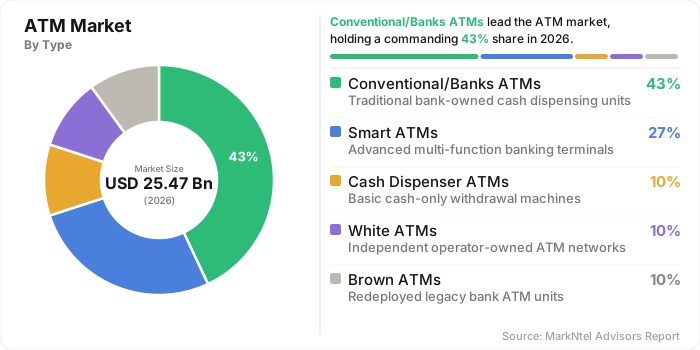
- Conventional/bank ATMs retain the largest share at approximately 43% of global revenues in 2026.
- In 2026, cash withdrawal remains the dominant ATM application globally, driven by persistent cash dependency
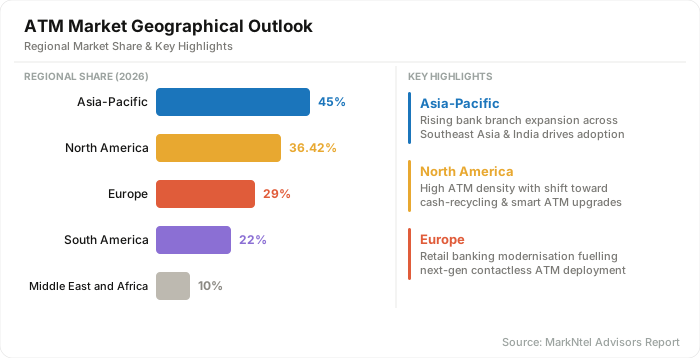
- Asia Pacific retained the largest regional share of around 45% of the Global ATM Industry.
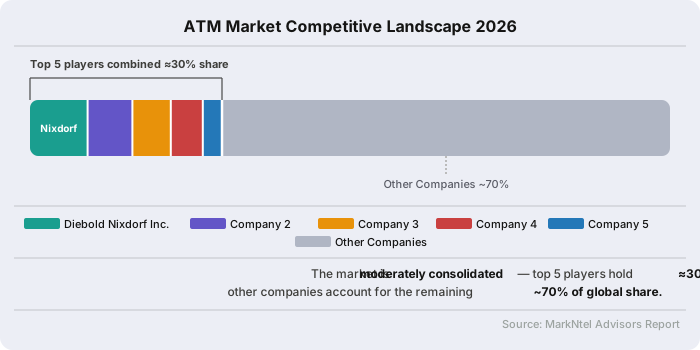
- The market remains moderately fragmented, with the top 5 companies collectively accounting for approximately 30% of the global market share.
ATM Market Size and Outlook
The Global ATM Market, valued at approximately USD 24.88 billion in 2025, is projected to grow to USD 25.47 billion in 2026 and reach nearly USD 30.19 billion by 2032, expanding at a CAGR of around 2.87% during the forecast period. While sustained demand for cash access across emerging economies continues to support baseline deployment volumes, the market is simultaneously evolving toward software-defined, multifunctional banking infrastructure capable of handling cash withdrawals, deposits, fund transfers, biometric authentication, and contactless transactions.
A key growth driver remains the continued emphasis on financial inclusion by governments worldwide. Large-scale initiatives aimed at expanding access to formal banking services are driving ATM deployment across underserved and rural regions. In India, the Pradhan Mantri Jan Dhan Yojana (PMJDY) has enrolled more than 58.3 crore beneficiaries as of 2025, with each account holder receiving a RuPay debit card that enables ATM access. Similar efforts are underway across Southeast Asia, where countries such as Indonesia and the Philippines are expanding banking infrastructure to improve financial accessibility. Notably, rural ATM installations in the Philippines have increased by approximately 40%, reflecting a broader regional commitment to branch-independent cash access.
Alongside deployment expansion, regulatory developments are accelerating ATM modernization. The full enforcement of PCI DSS v4.0 from March 31, 2025, requires enhanced encryption standards, multi-factor authentication protocols, and continuous security monitoring across ATM networks. As financial institutions work toward compliance, banks and ATM operators are increasing investments in both hardware and software upgrades, creating sustained demand for next-generation ATM solutions across North America, Europe, and Asia-Pacific.
At the same time, banks are optimizing operating costs by rationalizing physical branch networks while maintaining customer accessibility through 24/7 self-service banking channels. This shift is driving the adoption of advanced ATM deployments and managed-service partnerships. The continued growth of the cards and payments ecosystem, supported by rising debit and credit card issuance and increasing demand for convenient cash-access and account-management services, is further reinforcing the strategic importance of ATM networks within the broader banking infrastructure.
ATM-as-a-Service (ATMaaS) models are gaining traction as banks increasingly outsource ATM management to specialized operators, enabling greater operational efficiency while allowing OEMs and service providers to generate recurring revenue streams beyond terminal sales. Additionally, modern ATMs are evolving into integrated payment touchpoints capable of supporting cardless withdrawals, contactless card transactions, digital wallet authentication, and other payment-related services, strengthening their role within the rapidly evolving global cards and payments landscape.
Furthermore, the growing adoption of the brown ATM model is reducing deployment and operational costs, particularly across emerging economies. Under this model, banks retain customer-facing branding while outsourcing ATM operations and maintenance to third-party providers. The approach is gaining significant traction across urban and semi-urban markets, enabling faster network expansion with lower capital expenditure requirements.
Collectively, the convergence of financial inclusion initiatives, evolving regulatory requirements, branch transformation strategies, and innovative ATM operating models is supporting the long-term modernization of ATM infrastructure worldwide and is expected to sustain market growth through 2032.
ATM Market Key Indicators
- According to industry associations and ATM deployment statistics, more than 3 million ATMs are installed worldwide, making ATMs one of the largest self-service banking infrastructures globally. The extensive installed base creates continuous demand for ATM replacement, software upgrades, cash recycling systems, biometric authentication, and managed services, directly supporting market growth.
- The World Bank's Global Findex database estimates that approximately 1.4 billion adults worldwide remain unbanked, despite global account ownership reaching 76% in 2021. Financial inclusion initiatives across Asia, Africa, and Latin America continue to require expansion of banking access points, including ATMs.
- Worldwide financial account ownership increased from 51% in 2011 to 76% in 2021, representing one of the largest expansions of banking access in history. More account holders translate into greater demand for banking touchpoints, including ATM services.
- Worldwide remittance flows have surpassed USD 900 billion annually, making remittances one of the largest international financial flows to developing economies. Many recipients rely on ATMs to access transferred funds.
ATM Market Scope
| Category | Segments |
|---|---|
| By Deployment | Onsite ATM, Offsite ATM, Worksite ATM, Mobile ATM |
| By Type | Brown ATMs, White ATMs, Cash dispenser ATMs, Smart ATMs, Conventional/banks ATMs |
| By Application | Cash Withdrawal, Cash Deposit, Money Transfer, Others (PIN Change, Balance Inquiry, Bill Payments, etc. |
| By End-user | Banking and Financial Institutions, Retail and Convenience Stores, Transportation Hubs, Hospitality and Leisure, Other Commercial Sites |
| By Service Model | Deployment Solutions, Managed ATM Services |
ATM Market Growth Drivers
Biometric Authentication and Contactless Technology Accelerating ATM Functional Modernisation
The integration of biometric authentication and contactless payment capability into ATM hardware is fundamentally expanding the functional scope of terminal deployments globally. Fingerprint recognition and facial authentication are increasingly embedded into new ATM installations as financial institutions prioritise identity verification at the point of transaction, reducing fraud exposure while streamlining the user experience. Near Field Communication technology enables card less and tap-based transactions, aligning ATM interactions with the broader contactless payment behaviours consumers have adopted across retail and transit environments.
This functional evolution is generating measurable replacement demand as legacy terminals incapable of supporting these technologies are phased out. Banks and independent deployers are investing in next-generation hardware that consolidates biometric readers, NFC modules, and advanced encryption into unified terminal architectures, reducing the need for separate authentication infrastructure. The commercial case for these upgrades is reinforced by compliance requirements under PCI DSS v4.0, which mandates multi-factor authentication across ATM fleets globally. As financial institutions seek to maintain relevance in an environment shaped by mobile banking adoption and rising security expectations, biometric and contactless-enabled ATMs are transitioning from premium deployments to standard fleet requirements, sustaining hardware investment and driving demand growth through the forecast period
ATM Market Recent Trends
AI-Powered Predictive Cash Management and IoT Monitoring Redefining ATM Network Operations
Legacy ATM monitoring frameworks reliant on manual interventions and siloed data systems are giving way to integrated ecosystems powered by artificial intelligence, predictive analytics, and IoT connectivity. This transition is reshaping how banks and independent deployers manage their fleets, reducing downtime, lowering operational costs, and improving cash availability for end users globally.
IoT-enabled sensors embedded across ATM hardware continuously track component health, cash levels, and environmental conditions, transmitting data in real time to centralised management platforms. These systems enable predictive maintenance by identifying potential hardware failures in card readers, dispensers, and other components before they cause service disruptions. Brink's advanced AI systems, deployed across its managed ATM networks, use machine learning to analyse historical transaction volumes, local events, and seasonal patterns to forecast cash demand at individual terminals, optimising replenishment scheduling and reducing cash-in-transit frequency.
Diebold Nixdorf's DN All Connect Data Engine aggregates real-time IoT sensor data from over 240,000 ATMs globally, applying machine learning to predict failures in advance, with deployments recording up to 50% reductions in downtime. In March 2026, NCR Atleos reported delivering 5.8 million additional hours of ATM availability to its customers in 2025, attributed to AI-enabled diagnostics and a continuous quality improvement programme focused on reducing service revisits and retrips.
As banks globally seek to reduce branch operational costs while maintaining cash service quality, AI and IoT integration is transitioning from an emerging differentiator to an operational standard for competitive ATM network management.
ATM Market Opportunities and Challenges
ATM Cybercrimes and Terminal Fraud Creating Security Upgrade Imperatives
ATM networks globally face a rising tide of terminal-related fraud and cyberattacks. According to the European Association for Secure Transactions (EAST), terminal-related frauds surged by approximately 96% from 3,021 incidents in the first half of 2023 to 5,913 incidents in 2024, with a 164% rise in card trapping incidents alone, resulting in losses of approximately USD 80.24 million across European nations. Similar patterns are observed across Asia-Pacific, Latin America, and the Middle East, where the combination of expanding ATM networks and evolving attack methods continues to challenge operators and financial institutions.
This challenge is directly catalysing a global security upgrade cycle that represents a substantial market opportunity for ATM hardware manufacturers, software providers, and managed service operators. The mandatory implementation of PCI DSS v4.0 by March 2025 introduced 54 new enforceable requirements around encryption, multi-factor authentication, and real-time monitoring, compelling widespread fleet upgrades globally. Technologies including face recognition, iris scanning, fingerprint authentication, and end-to-end PIN encryption are being integrated into ATM deployments at scale. CaixaBank has deployed over 100 face-recognition ATMs across Spain, while more than 500 biometric ATMs are now operational in Argentina. These developments underscore a market where security-driven reinvestment is actively generating demand for next-generation ATM hardware and software globally.
Segmentation Analysis
Conventional ATMs Lead on Trust, Scale, and Integration
Conventional and bank-branded ATMs hold the largest share of the ATM Market, accounting for approximately 43% of total market revenues. Their dominance stems from deep-rooted consumer trust developed over decades of widespread deployment, extensive banking network connectivity, and cost efficiencies associated with maintaining an existing installed base rather than replacing it with advanced ATM types. Consumers across both developed and developing markets demonstrate a consistent preference for bank ATMs due to their reliability, card compatibility, and proximity.
The high deployment density of conventional ATMs across North America, Europe, and Asia-Pacific, combined with the cost-prohibitive nature of migrating entirely to smart or brown ATMs at scale, reinforces their continued market leadership. The alignment of these machines with core banking systems and their integration into existing branch networks further sustains their dominant position through the forecast period. Based on type, the market is bifurcated into:
- Brown ATMs
- White ATMs
- Cash dispenser ATMs
- Smart ATMs
- Conventional/bank ATMs
Cash Withdrawal Anchors Transaction Volumes Across Emerging and Developed Markets
Cash withdrawal remains the most widely utilised ATM application globally, representing the largest share of total ATM transaction volumes. Despite the growth of digital payment platforms, cash continues to be the primary mode of everyday transactions for billions of consumers across Asia-Pacific, sub-Saharan Africa, Latin America, and parts of the Middle East and Europe. The structural reliance on cash in economies where digital payment infrastructure remains uneven, combined with habitual usage patterns among older demographics and rural populations, sustains the dominance of cash withdrawal as the foremost ATM application.
Government-issued debit cards distributed under financial inclusion programmes, such as India's RuPay cards under PMJDY and similar instruments across Southeast Asia, are predominantly used for ATM cash withdrawals, reinforcing transaction volume growth in this segment. The functional ubiquity of cash withdrawal ensures its continued leadership across the forecast period. Based on application, the market is bifurcated into:
- Cash Withdrawal
- Cash Deposit
- Money Transfer
- Others (PIN Change, Balance Inquiry, Bill Payments, etc.)
ATM Market Geographical Outlook
Asia-Pacific holds the 45% share of the global ATM market, driven by its vast population, extensive banking infrastructure, and continued reliance on cash transactions across several major economies. The region is home to more than 4.8 billion people, representing nearly 60% of the global population, which creates substantial demand for cash-access points and banking services. According to the People's Bank of China, China operates over 800,000 ATMs, while the Reserve Bank of India (RBI) reports more than 220,000 ATMs and Cash Recycler Machines (CRMs) across India, making them among the world's largest ATM networks.
Despite rapid digital payment adoption, cash remains an essential payment medium in many Asia-Pacific economies. For instance, India's currency in circulation exceeds INR 35 trillion, while Japan's currency in circulation accounts for more than 20% of GDP, among the highest globally. Furthermore, countries such as Indonesia, Vietnam, Bangladesh, and the Philippines continue to exhibit high levels of cash-based transactions, particularly in rural and semi-urban regions.
Financial inclusion initiatives are further supporting ATM deployment. India's Pradhan Mantri Jan Dhan Yojana (PMJDY) has facilitated the opening of over 550 million bank accounts, increasing demand for ATM-based cash access. Simultaneously, banks across China, India, Japan, and Southeast Asia are upgrading networks with cash recyclers, biometric authentication, and smart ATMs, reinforcing the region's leadership in the global ATM market.
ATM Market Competitive Analysis
The Global ATM Market is moderately consolidated, with established hardware manufacturers, managed service operators, and independent deployers competing across full-stack, services-led, and hardware-only models. Major participants include Diebold Nixdorf, NCR Atleos, Nautilus Hyosung Corporation, GRG Banking Equipment Co. Ltd., and Fujitsu Ltd. The top five collectively account for approximately 30% of the global market.
Key Companies in the ATM Market
- Diebold Nixdorf Inc.
- Wincor Nixdorf Aktiengesellschaft
- NCR Atleos Corporation
- Triton Systems of Delaware LLC
- Hitachi-Omron Terminal Solutions Corp.
- GRG Banking Equipment Co. Ltd.
- OKI Electric Industry Co. Ltd.
- Hyosung TNS Inc.
- HESS Cash Systems GmbH & Co KG
- Fujitsu Ltd.
- Euronet Worldwide Inc.
- The Brink's Company
- Guangzhou Yuyin Technology Co., Ltd.
ATM Market News and Recent Developments
2026: Diebold Nixdorf – VyStar Credit Union Selects Branch Automation Solutions for 200+ ATM Fleet Modernisation
In May 2026, VyStar Credit Union announced the expansion of its partnership with Diebold Nixdorf by adopting the company's Branch Automation Solutions, an end-to-end software-enabled managed services suite. VyStar is upgrading its self-service network of more than 200 ATMs with DN Series devices equipped with cash recycling capability, contactless functionality, and multi-layered security architecture. The partnership integrates real-time AI and advanced analytics to aggregate ATM data, enabling earlier fault identification and prioritised issue resolution to support higher machine availability.
Impact Analysis: The VyStar agreement reflects an accelerating trend among North American credit unions to modernise self-service infrastructure through managed services and AI-enabled fleet management. Centralising ATM operations under an end-to-end managed suite allows institutions to reduce operational overheads, strengthen compliance under PCI DSS v4.0, and deploy cash recycling capabilities that lower replenishment costs. This signals growing institutional preference for software-driven ATM management over in-house fleet operations, reinforcing managed services demand within the global ATM market through 2032F.
2026: NCR Atleos – Epirus Bank Selects ATMaaS Model for Nationwide ATM Network Modernisation in Greece
In January 2026, NCR Atleos announced a strategic collaboration with Epirus Bank to modernise and expand the bank's ATM network across Greece under the ATMaaS model, leveraging Cashzone network resources to provide a branded retail ATM network. Deployment commenced in November 2025, with phased completion targeted within approximately three months. NCR Atleos manages the full ATM network lifecycle including location selection, installation, maintenance, and operational support, enabling Epirus Bank to reduce operating costs and expand its national footprint.
Impact Analysis: The Epirus Bank partnership underscores the growing traction of ATMaaS as a preferred deployment strategy for European banks seeking to expand access while outsourcing operational complexity. Transferring ATM lifecycle management to a specialist operator reduces capital exposure, ensures compliance continuity, and broadens geographic reach without direct infrastructure investment. Its adoption in a European banking context signals scalability beyond emerging markets and its potential to drive managed services revenue growth across the competitive landscape through the forecast period.
Frequently Asked Questions
- Market Segmentation
- Introduction
- Product Definition
- Research Process
- Assumptions
- Executive Summary
- Global ATM Market Policies, Regulations, and Product Standards
- Global ATM Market Trends & Developments
- Global ATM Market Dynamics
- Growth Factors
- Challenges
- Global ATM Market Hotspot & Opportunities
- Global ATM Market Outlook, 2022-2032F
- Market Size & Outlook
- By Revenues (USD Million)
- Market Share & Analysis
- By Deployment- Market Size & Forecast 2022-2032, USD Million
- Onsite ATM
- Offsite ATM
- Worksite ATM
- Mobile ATM
- By Type- Market Size & Forecast 2022-2032, USD Million
- Brown ATMs
- White ATMs
- Cash dispenser ATMs
- Smart ATMs
- Conventional/banks ATMs
- By Application- Market Size & Forecast 2022-2032, USD Million
- Cash Withdrawal
- Cash Deposit
- Money Transfer
- Others (PIN Change, Balance Inquiry, Bill Payments, etc.)
- By End-user- Market Size & Forecast 2022-2032, USD Million
- Banking and Financial Institutions
- Retail and Convenience Stores
- Transportation Hubs
- Hospitality and Leisure
- Other Commercial Sites
- By Service Model- Market Size & Forecast 2022-2032, USD Million
- Deployment Solutions
- Managed ATM Services
- By Region
- North America
- South America
- Europe
- The Middle East & Africa
- Asia-Pacific
- By Company
- Competition Characteristics
- Market Share & Analysis
- By Deployment- Market Size & Forecast 2022-2032, USD Million
- Market Size & Outlook
- North America ATM Market Outlook, 2022-2032F
- Market Size & Outlook
- By Revenues (USD Million)
- Market Share & Analysis
- By Deployment- Market Size & Forecast 2022-2032, USD Million
- By Type- Market Size & Forecast 2022-2032, USD Million
- By Application- Market Size & Forecast 2022-2032, USD Million
- By End-user- Market Size & Forecast 2022-2032, USD Million
- By Service Model- Market Size & Forecast 2022-2032, USD Million
- By Country
- The US
- Canada
- Mexico
- The US ATM Market Outlook, 2022-2032F
- Market Size & Outlook
- By Revenues (USD Million)
- Market Share & Analysis
- By Deployment- Market Size & Forecast 2022-2032, USD Million
- By Type- Market Size & Forecast 2022-2032, USD Million
- By Application- Market Size & Forecast 2022-2032, USD Million
- By End-user- Market Size & Forecast 2022-2032, USD Million
- By Service Model- Market Size & Forecast 2022-2032, USD Million
- Market Size & Outlook
- Canada ATM Market Outlook, 2022-2032F
- Market Size & Outlook
- By Revenues (USD Million)
- Market Share & Analysis
- By Deployment- Market Size & Forecast 2022-2032, USD Million
- By Type- Market Size & Forecast 2022-2032, USD Million
- By Application- Market Size & Forecast 2022-2032, USD Million
- By End-user- Market Size & Forecast 2022-2032, USD Million
- By Service Model- Market Size & Forecast 2022-2032, USD Million
- Market Size & Outlook
- Mexico ATM Market Outlook, 2022-2032F
- Market Size & Outlook
- By Revenues (USD Million)
- Market Share & Analysis
- By Deployment- Market Size & Forecast 2022-2032, USD Million
- By Type- Market Size & Forecast 2022-2032, USD Million
- By Application- Market Size & Forecast 2022-2032, USD Million
- By End-user- Market Size & Forecast 2022-2032, USD Million
- By Service Model- Market Size & Forecast 2022-2032, USD Million
- Market Size & Outlook
- Market Size & Outlook
- South America ATM Market Outlook, 2022-2032F
- Market Size & Outlook
- By Revenues (USD Million)
- Market Share & Analysis
- By Deployment- Market Size & Forecast 2022-2032, USD Million
- By Type- Market Size & Forecast 2022-2032, USD Million
- By Application- Market Size & Forecast 2022-2032, USD Million
- By End-user- Market Size & Forecast 2022-2032, USD Million
- By Service Model- Market Size & Forecast 2022-2032, USD Million
- By Country
- Brazil
- Argentina
- Rest of South America
- Brazil ATM Market Outlook, 2022-2032F
- Market Size & Outlook
- By Revenues (USD Million)
- Market Share & Analysis
- By Deployment- Market Size & Forecast 2022-2032, USD Million
- By Type- Market Size & Forecast 2022-2032, USD Million
- By Application- Market Size & Forecast 2022-2032, USD Million
- By End-user- Market Size & Forecast 2022-2032, USD Million
- By Service Model- Market Size & Forecast 2022-2032, USD Million
- Market Size & Outlook
- Argentina ATM Market Outlook, 2022-2032F
- Market Size & Outlook
- By Revenues (USD Million)
- Market Share & Analysis
- By Deployment- Market Size & Forecast 2022-2032, USD Million
- By Type- Market Size & Forecast 2022-2032, USD Million
- By Application- Market Size & Forecast 2022-2032, USD Million
- By End-user- Market Size & Forecast 2022-2032, USD Million
- By Service Model- Market Size & Forecast 2022-2032, USD Million
- Market Size & Outlook
- Market Size & Outlook
- Europe ATM Market Outlook, 2022-2032F
- Market Size & Outlook
- By Revenues (USD Million)
- Market Share & Analysis
- By Deployment- Market Size & Forecast 2022-2032, USD Million
- By Type- Market Size & Forecast 2022-2032, USD Million
- By Application- Market Size & Forecast 2022-2032, USD Million
- By End-user- Market Size & Forecast 2022-2032, USD Million
- By Service Model- Market Size & Forecast 2022-2032, USD Million
- By Country
- The UK
- Germany
- France
- Italy
- Spain
- Rest of Europe
- The UK ATM Market Outlook, 2022-2032F
- Market Size & Outlook
- By Revenues (USD Million)
- Market Share & Analysis
- By Deployment- Market Size & Forecast 2022-2032, USD Million
- By Type- Market Size & Forecast 2022-2032, USD Million
- By Application- Market Size & Forecast 2022-2032, USD Million
- By End-user- Market Size & Forecast 2022-2032, USD Million
- By Service Model- Market Size & Forecast 2022-2032, USD Million
- Market Size & Outlook
- Germany ATM Market Outlook, 2022-2032F
- Market Size & Outlook
- By Revenues (USD Million)
- Market Share & Analysis
- By Deployment- Market Size & Forecast 2022-2032, USD Million
- By Type- Market Size & Forecast 2022-2032, USD Million
- By Application- Market Size & Forecast 2022-2032, USD Million
- By End-user- Market Size & Forecast 2022-2032, USD Million
- By Service Model- Market Size & Forecast 2022-2032, USD Million
- Market Size & Outlook
- France ATM Market Outlook, 2022-2032F
- Market Size & Outlook
- By Revenues (USD Million)
- Market Share & Analysis
- By Deployment- Market Size & Forecast 2022-2032, USD Million
- By Type- Market Size & Forecast 2022-2032, USD Million
- By Application- Market Size & Forecast 2022-2032, USD Million
- By End-user- Market Size & Forecast 2022-2032, USD Million
- By Service Model- Market Size & Forecast 2022-2032, USD Million
- Market Size & Outlook
- Italy ATM Market Outlook, 2022-2032F
- Market Size & Outlook
- By Revenues (USD Million)
- Market Share & Analysis
- By Deployment- Market Size & Forecast 2022-2032, USD Million
- By Type- Market Size & Forecast 2022-2032, USD Million
- By Application- Market Size & Forecast 2022-2032, USD Million
- By End-user- Market Size & Forecast 2022-2032, USD Million
- By Service Model- Market Size & Forecast 2022-2032, USD Million
- Market Size & Outlook
- Spain ATM Market Outlook, 2022-2032F
- Market Size & Outlook
- By Revenues (USD Million)
- Market Share & Analysis
- By Deployment- Market Size & Forecast 2022-2032, USD Million
- By Type- Market Size & Forecast 2022-2032, USD Million
- By Application- Market Size & Forecast 2022-2032, USD Million
- By End-user- Market Size & Forecast 2022-2032, USD Million
- By Service Model- Market Size & Forecast 2022-2032, USD Million
- Market Size & Outlook
- Market Size & Outlook
- The Middle East & Africa ATM Market Outlook, 2022-2032F
- Market Size & Outlook
- By Revenues (USD Million)
- Market Share & Analysis
- By Deployment- Market Size & Forecast 2022-2032, USD Million
- By Type- Market Size & Forecast 2022-2032, USD Million
- By Application- Market Size & Forecast 2022-2032, USD Million
- By End-user- Market Size & Forecast 2022-2032, USD Million
- By Service Model- Market Size & Forecast 2022-2032, USD Million
- By Country
- Saudi Arabia
- The UAE
- South Africa
- Rest of Middle East & Africa
- Saudi Arabia ATM Market Outlook, 2022-2032F
- Market Size & Outlook
- By Revenues (USD Million)
- Market Share & Analysis
- By Deployment- Market Size & Forecast 2022-2032, USD Million
- By Type- Market Size & Forecast 2022-2032, USD Million
- By Application- Market Size & Forecast 2022-2032, USD Million
- By End-user- Market Size & Forecast 2022-2032, USD Million
- By Service Model- Market Size & Forecast 2022-2032, USD Million
- Market Size & Outlook
- The UAE ATM Market Outlook, 2022-2032F
- Market Size & Outlook
- By Revenues (USD Million)
- Market Share & Analysis
- By Deployment- Market Size & Forecast 2022-2032, USD Million
- By Type- Market Size & Forecast 2022-2032, USD Million
- By Application- Market Size & Forecast 2022-2032, USD Million
- By End-user- Market Size & Forecast 2022-2032, USD Million
- By Service Model- Market Size & Forecast 2022-2032, USD Million
- Market Size & Outlook
- South Africa ATM Market Outlook, 2022-2032F
- Market Size & Outlook
- By Revenues (USD Million)
- Market Share & Analysis
- By Deployment- Market Size & Forecast 2022-2032, USD Million
- By Type- Market Size & Forecast 2022-2032, USD Million
- By Application- Market Size & Forecast 2022-2032, USD Million
- By End-user- Market Size & Forecast 2022-2032, USD Million
- By Service Model- Market Size & Forecast 2022-2032, USD Million
- Market Size & Outlook
- Market Size & Outlook
- Asia-Pacific ATM Market Outlook, 2022-2032F
- Market Size & Outlook
- By Revenues (USD Million)
- Market Share & Analysis
- By Deployment- Market Size & Forecast 2022-2032, USD Million
- By Type- Market Size & Forecast 2022-2032, USD Million
- By Application- Market Size & Forecast 2022-2032, USD Million
- By End-user- Market Size & Forecast 2022-2032, USD Million
- By Service Model- Market Size & Forecast 2022-2032, USD Million
- By Country
- China
- Japan
- India
- South Korea
- Australia
- Rest of Asia-Pacific
- China ATM Market Outlook, 2022-2032F
- Market Size & Outlook
- By Revenues (USD Million)
- Market Share & Analysis
- By Deployment- Market Size & Forecast 2022-2032, USD Million
- By Type- Market Size & Forecast 2022-2032, USD Million
- By Application- Market Size & Forecast 2022-2032, USD Million
- By End-user- Market Size & Forecast 2022-2032, USD Million
- By Service Model- Market Size & Forecast 2022-2032, USD Million
- Market Size & Outlook
- Japan ATM Market Outlook, 2022-2032F
- Market Size & Outlook
- By Revenues (USD Million)
- Market Share & Analysis
- By Deployment- Market Size & Forecast 2022-2032, USD Million
- By Type- Market Size & Forecast 2022-2032, USD Million
- By Application- Market Size & Forecast 2022-2032, USD Million
- By End-user- Market Size & Forecast 2022-2032, USD Million
- By Service Model- Market Size & Forecast 2022-2032, USD Million
- Market Size & Outlook
- India ATM Market Outlook, 2022-2032F
- Market Size & Outlook
- By Revenues (USD Million)
- Market Share & Analysis
- By Deployment- Market Size & Forecast 2022-2032, USD Million
- By Type- Market Size & Forecast 2022-2032, USD Million
- By Application- Market Size & Forecast 2022-2032, USD Million
- By End-user- Market Size & Forecast 2022-2032, USD Million
- By Service Model- Market Size & Forecast 2022-2032, USD Million
- Market Size & Outlook
- South Korea ATM Market Outlook, 2022-2032F
- Market Size & Outlook
- By Revenues (USD Million)
- Market Share & Analysis
- By Deployment- Market Size & Forecast 2022-2032, USD Million
- By Type- Market Size & Forecast 2022-2032, USD Million
- By Application- Market Size & Forecast 2022-2032, USD Million
- By End-user- Market Size & Forecast 2022-2032, USD Million
- By Service Model- Market Size & Forecast 2022-2032, USD Million
- Market Size & Outlook
- Australia ATM Market Outlook, 2022-2032F
- Market Size & Outlook
- By Revenues (USD Million)
- Market Share & Analysis
- By Deployment- Market Size & Forecast 2022-2032, USD Million
- By Type- Market Size & Forecast 2022-2032, USD Million
- By Application- Market Size & Forecast 2022-2032, USD Million
- By End-user- Market Size & Forecast 2022-2032, USD Million
- By Service Model- Market Size & Forecast 2022-2032, USD Million
- Market Size & Outlook
- Market Size & Outlook
- Global ATM Market Key Strategic Imperatives for Success & Growth
- Competitive Outlook
- Company Profiles
- Diebold Nixdorf, Inc.
- Business Description
- Product Portfolio
- Collaborations & Alliances
- Recent Developments
- Financial Details
- Others
- Wincor Nixdorf Aktiengesellschaft
- Business Description
- Product Portfolio
- Collaborations & Alliances
- Recent Developments
- Financial Details
- Others
- NCR Atleos Corporation
- Business Description
- Product Portfolio
- Collaborations & Alliances
- Recent Developments
- Financial Details
- Others
- Triton Systems of Delaware LLC
- Business Description
- Product Portfolio
- Collaborations & Alliances
- Recent Developments
- Financial Details
- Others
- Hitachi Channel Solutions, Corp.
- Business Description
- Product Portfolio
- Collaborations & Alliances
- Recent Developments
- Financial Details
- Others
- GRG Banking Equipment Co. Ltd.
- Business Description
- Product Portfolio
- Collaborations & Alliances
- Recent Developments
- Financial Details
- Others
- OKI Electric Industry Co. Ltd.
- Business Description
- Product Portfolio
- Collaborations & Alliances
- Recent Developments
- Financial Details
- Others
- Hyosung TNS Inc.
- Business Description
- Product Portfolio
- Collaborations & Alliances
- Recent Developments
- Financial Details
- Others
- HESS Cash Systems GmbH & Co KG
- Business Description
- Product Portfolio
- Collaborations & Alliances
- Recent Developments
- Financial Details
- Others
- Fujitsu Ltd.
- Business Description
- Product Portfolio
- Collaborations & Alliances
- Recent Developments
- Financial Details
- Others
- Euronet Worldwide Inc.
- Business Description
- Product Portfolio
- Collaborations & Alliances
- Recent Developments
- Financial Details
- Others
- The Brink's Company
- Business Description
- Product Portfolio
- Collaborations & Alliances
- Recent Developments
- Financial Details
- Others
- Guangzhou Yuyin Technology Co., Ltd.
- Business Description
- Product Portfolio
- Collaborations & Alliances
- Recent Developments
- Financial Details
- Others
- Diebold Nixdorf, Inc.
- Company Profiles
- Disclaimer
MarkNtel Advisors follows a robust and iterative research methodology designed to ensure maximum accuracy and minimize deviation in market estimates and forecasts. Our approach combines both bottom-up and top-down techniques to effectively segment and quantify various aspects of the market. A consistent feature across all our research reports is data triangulation, which examines the market from three distinct perspectives to validate findings. Key components of our research process include:
1. Scope & Research Design At the outset, MarkNtel Advisors define the research objectives and formulate pertinent questions. This phase involves determining the type of research—qualitative or quantitative—and designing a methodology that outlines data collection methods, target demographics, and analytical tools. They also establish timelines and budgets to ensure the research aligns with client goals.
2. Sample Selection and Data Collection In this stage, the firm identifies the target audience and determines the appropriate sample size to ensure representativeness. They employ various sampling methods, such as random or stratified sampling, based on the research objectives. Data collection is carried out using tools like surveys, interviews, and observations, ensuring the gathered data is reliable and relevant.
3. Data Analysis and Validation Once data is collected, MarkNtel Advisors undertake a rigorous analysis process. This includes cleaning the data to remove inconsistencies, employing statistical software for quantitative analysis, and thematic analysis for qualitative data. Validation steps are taken to ensure the accuracy and reliability of the findings, minimizing biases and errors.

4. Data Forecast and FinalizationThe final phase involves forecasting future market trends based on the analyzed data. MarkNtel Advisors utilize predictive modeling and time series analysis to anticipate market behaviors. The insights are then compiled into comprehensive reports, featuring visual aids like charts and graphs, and include strategic recommendations to inform client decision-making
We offer flexible licensing options to cater to varying organizational needs. Choose the pricing pack that best suits your requirements:
Buy Now Inquire Before Buying
 Request Customization
 Talk to our Consultant







