Global Agricultural Robots Market Research Report: Trends & Forecast (2026-2032)
By Robot Type (Unmanned Aerial Vehicles (UAVs)/Drones, Milking Robots, Driverless Tractors, Automated Harvesting Robots, Robotic Weeders, Automated Cultivation Systems, Livestock F ... arming Robots, Material Handling Robots, Others), By Application (Harvest Management, Field Mapping & Crop Monitoring, Spraying Management, Planting & Seeding Management, Soil & Irrigation Management, Weather Tracking & Forecasting, Inventory & Supply Chain Management, Others), By Offering (Hardware, Software, Services), By Farming Environment (Indoor, Outdoor), By Farm Size (Small-Sized Farms, Mid-Sized Farms, Large-Sized Farms), and others Read more
- Environment
- May 2026
- Pages 460
- Report Format: PDF, Excel, PPT
Global Agricultural Robots Market
Projected 19.87% CAGR from 2026 to 2032
Study Period
2026-2032
Market Size (2026)
USD 21 Billion
Market Size (2032)
USD 64 Billion
Largest Region
North America
Projected CAGR
19.87%
Leading Segments
By Offering: Hardware
Global Agricultural Robots Market Report Key Takeaways
- The Global Agricultural Robots Market was valued at approximately USD 18 billion in 2025 and is projected to grow from USD 21 billion in 2026 to USD 64 billion by 2032, registering a CAGR of 19.87% during 2026–2032.
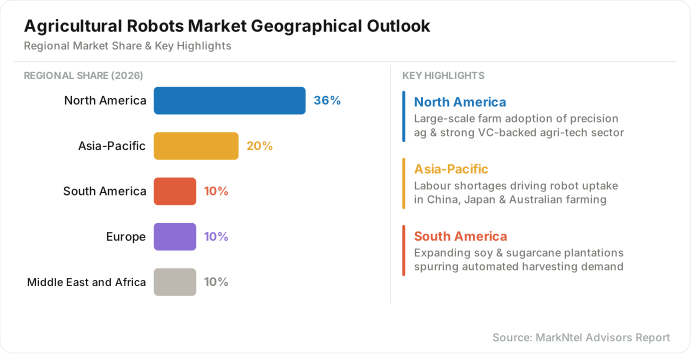
- North America holds a leading market share of approximately 36% in 2026, supported by high precision agriculture readiness, the presence of large commercial farming operations, and strong adoption of farm automation technologies.
- By robot type, the Unmanned Aerial Vehicles (UAVs)/Drones segment accounts for a significant share of nearly 36%, driven by increasing use cases in crop monitoring, precision spraying, field mapping, and data-driven farm management.
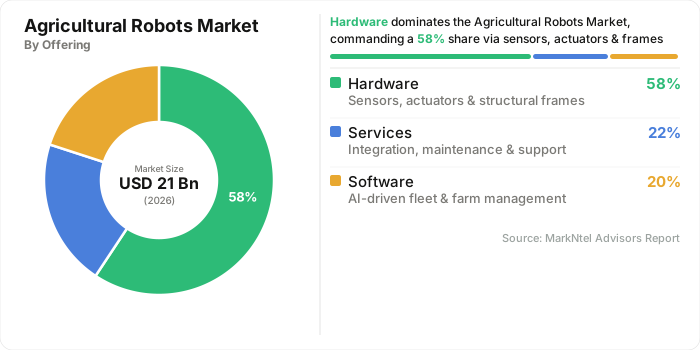
- By offering, the hardware segment holds a substantial market share of approximately 58% in 2026, supported by rising deployment of robotic systems, sensors, autonomous machinery, and navigation technologies across agricultural operations.
- The market remains moderately consolidated, with the top five companies collectively accounting for an estimated 35% market share, reflecting the strong presence of established agricultural technology and automation providers.
Global Agricultural Robots Market Size & Outlook
The Global Agricultural Robots Market is expected to register a CAGR of 19.87% during 2026–2032, driven by increasing adoption of precision agriculture technologies, rising labor shortages in farming operations, growing demand for automated crop monitoring and harvesting solutions, and expanding use of AI, robotics, drones, and autonomous machinery across modern agricultural practices. The growing focus on farm productivity, operational efficiency, and data-driven agriculture is further supporting market expansion globally.
Adoption of agricultural drones increasingly demonstrates how farm robotics is transitioning from limited pilot deployments to routine field operations across modern agriculture. According to DJI, by the end of 2025, more than 600,000 agricultural drones will be operated globally by over 600,000 trained operators, highlighting the growing installed base of agricultural robotic systems supported by expanding operator training programs, service networks, and field-level technology integration.
In parallel, policy-backed farm automation initiatives are further supporting market demand. According to Agriculture and Agri-Food Canada, the B.C. On-Farm Technology Adoption Program supports farm technologies aimed at addressing labor shortages and improving labor-intensive agricultural tasks. Since its launch in 2023, the program has supported 134 farm projects across British Columbia adopting advanced agricultural technologies.
Overall, the Global Agricultural Robots Market outlook continues to be shaped by increasing demand for task-specific automation, precision field operations, and robotic systems designed to reduce manual intervention in repetitive farming activities. The market is projected to grow from USD 21 billion in 2026 to USD 64 billion by 2032, with market participants expected to compete through advancements in autonomy reliability, AI-enabled perception systems, payload efficiency, operator training, dealer support, remote diagnostics, software integration, and compliance-ready deployment models.
Global Agricultural Robots Market Key Indicators
- According to USDA ERS, guidance autosteering systems on tractors, harvesters, and other equipment were used by 52% of midsize U.S. crop-producing farms and 70% of large-scale crop-producing farms in 2023. This supports agricultural robot adoption because autosteering creates the digital guidance base needed for higher levels of autonomous farm machinery.
- According to XAG, the P100 Pro agricultural drone specifies a 22 L per minute maximum flow rate, 19 hectares per hour open-field crop protection efficiency, and a 50 kg payload. These operating specifications show how drone robotics procurement is increasingly tied to payload, application rate, and field coverage capability
- According to DeLaval, its 2025 VMS V300 robotic milking model includes Flow-Responsive Milking, which can reduce milking time by 20 to 40 seconds per milking. This supports dairy robotics demand by improving robotic milking throughput and equipment utilization.
- According to Carbon Robotics, its LaserWeeder platform uses 30 diode lasers, 42 high-resolution cameras , and AI deep-learning crop models. This indicates the hardware and vision-system intensity of agricultural field robots designed for precision weed control.
Global Agricultural Robots Market Scope
| Category | Segments |
|---|---|
| By Robot Type | Unmanned Aerial Vehicles (UAVs)/Drones, Milking Robots, Driverless Tractors, Automated Harvesting Robots, Robotic Weeders, Automated Cultivation Systems, Livestock Farming Robots, Material Handling Robots, Others |
| By Application | Harvest Management, Field Mapping & Crop Monitoring, Spraying Management, Planting & Seeding Management, Soil & Irrigation Management, Weather Tracking & Forecasting, Inventory & Supply Chain Management, Others |
| By Offering | Hardware, Software, Services |
| By Farming Environment | Indoor, Outdoor |
| By Farm Size | Small-Sized Farms, Mid-Sized Farms, Large-Sized Farms |
Global Agricultural Robots Market Growth Drivers
Farm Labor Constraints Are Strengthening Automation Procurement
Labor availability remains a major driver because many farm operations are time-sensitive, repetitive, and difficult to delay. Spraying, weeding, milking, mowing, harvesting support, and orchard operations often require consistent execution across short operating windows. Agricultural robots help farms maintain operational continuity when labor availability is constrained.
More than one-quarter of people working in agriculture across OECD member countries are over 55 years old. Moreover, the agriculture faces larger skills and human-capital co nstraints than other parts of the economy, despite the productivity potential of digital and innovative technologies. This directly supports demand across agricultural robotics procurement.
This labor constraint supports demand for autonomous tractors, robotic milkers, agricultural drones, AI weeders, and specialty crop robots. These systems reduce dependence on manual task execution while improving repeatability, traceability, and operating consistency across crop and livestock environments.
The procurement landscape in the Global Agricultural Robots Market is increasingly shifting from experimental adoption toward operational efficiency and measurable field performance. Farms and agricultural service providers are evaluating robotic systems based on factors such as equipment uptime, labor substitution capability, field precision, safety compliance, operator training requirements, and task-specific performance outcomes. This trend is strengthening procurement demand for agricultural robots that address clearly defined operational challenges and deliver practical, scalable automation solutions across farming activities.
Recent Trends
Plant-level AI Is Moving Agricultural Robots Toward Decision-capable Field Systems
A major trend is the shift from mechanically automated equipment to perception-led robotic systems. Agricultural robots are increasingly using computer vision, AI models, sensors, and field data to identify plants, weeds, terrain, and operational conditions before executing tasks.
For instance, in 2026, Carbon Robotics launched its Large Plant Model, a foundational AI system trained on 150 million labeled plants . The company states that the model enables farmers to start laser weeding in any field or crop in minutes and can be adapted through Plant Profiles for unique field conditions. This strengthens the Global Agricultural Robots Industry by making field robots more adaptive across variable crops and environments.
The adoption is increasing the importance of data quality, crop recognition accuracy, and real-world field learning. Robots are becoming adaptive platforms rather than fixed-function machines, which improves their relevance across variable crop types, soil conditions, weed pressure, and field layouts.
The market impact is becoming clear through stronger technology differentiation. Companies with stronger plant datasets, AI perception systems, remote updates, and fleet learning capabilities are positioned to command stronger adoption among farms seeking precision weed control, lower input dependency, and better field-level decision support.
Global Agricultural Robots Market Opportunities & Challenges
Regulatory Complexity Creates Opportunity for Compliance-ready Drone Robotics Platforms
A major challenge is regulatory complexity around agricultural spray drones. Drone-based spraying involves aircraft rules, payload limits, chemical application requirements, pilot certification, and operating exemptions. These requirements can slow adoption, especially for farms and service providers without in-house regulatory expertise.
This challenge creates an opportunity within the agricultural robots industry for drone manufacturers, distributors, training providers, and farm robotics service companies to offer compliance-ready deployment models. Certification support, operator training, documentation packages, maintenance programs, flight planning tools, and application-record systems can reduce adoption friction and improve procurement confidence.
The 14 CFR Part 137 governs the use of aircraft, including drones, to dispense or spray substances. Additionally, the requirements for drones below 55 pounds and drones weighing 55 pounds or more. This creates demand for robotics suppliers that can align hardware, payload configuration, and operator support with regulatory requirements.
Segmentation Insights
Unmanned Aerial Vehicles (UAVs)/Drones Lead Based on Robot Type
The Unmanned Aerial Vehicles (UAVs)/Drones segment accounts for a leading share of approximately 36% in the Global Agricultural Robots Market, primarily due to its broader near-term deployment flexibility compared to many ground-based robotic systems. Agricultural drones are widely used for spraying, spreading, seeding, crop scouting, field mapping, pest monitoring, and field applications across difficult terrain, making them highly suitable for farms seeking faster operational coverage without relying on heavy ground machinery.
The growing adoption of agricultural drones is further reinforcing the segment’s market leadership. According to DJI, by the end of 2024, approximately 400,000 DJI agricultural drones were estimated to be operating globally, supporting nearly 300 crop types across more than 100 countries. This highlights the transition of agricultural drones from emerging technologies to an established robotics category with practical deployment across diverse crop systems and farm sizes.
In addition, market demand is increasingly extending beyond drone hardware toward the broader ecosystem required for reliable field deployment. Higher-payload drones, advanced battery systems, precision spraying technologies, smart nozzles, obstacle sensing capabilities, mapping software, operator training programs, and field service networks are becoming key procurement priorities. Furthermore, drones are increasingly supporting agricultural service providers that offer technology-enabled spraying, monitoring, and scouting services, enabling farms to access advanced automation capabilities without requiring full equipment ownership. Based on Robot Type, the market is segmented into:
- Unmanned Aerial Vehicles (UAVs)/Drones
- Milking Robots
- Driverless Tractors
- Automated Harvesting Robots
- Others
Hardware Segment Dominates Due to Expanding Robotic System Installations
The hardware segment accounts for a leading share of approximately 58% in the Global Agricultural Robots Market, primarily because agricultural robotics remains highly equipment-intensive. Agricultural robotic systems require a wide range of physical components, including frames, propulsion systems, batteries, motors, pumps, cameras, LiDAR, radar systems, robotic arms, spraying modules, milking modules, laser technologies, sensors, charging systems, and ruggedized control units. These components collectively represent the core value of field-ready and barn-ready automation systems used across modern farming operations.
The expansion of dairy automation is further reinforcing hardware-led market growth across agricultural robotics. For instance, the DairyRobot R9500 is designed as an automated voluntary milking system featuring both single-box and multi-box configurations, automated milking operations, and integrated herd-management support. Such equipment highlights the continued importance of advanced robotic hardware across both crop cultivation and livestock management applications.
In addition, hardware leadership is strengthening demand for maintenance services, replacement parts, component upgrades, retrofit kits, battery systems, sensor packages, and dealer support networks. As farms continue transitioning from conventional mechanization toward autonomous operations, hardware suppliers remain central to procurement decisions, as overall system performance depends heavily on field durability, operational reliability, precision, and long-term serviceability. Based on Offering, the market is segmented into:
- Hardware
- Software
- Services
Global Agricultural Robots Market Geographical Outlook
North America holds 36% share, supported by large commercial farms, advanced precision agriculture adoption, high labor dependency in specialty crops, and strong equipment dealer infrastructure. The region is also an important testing and deployment base for autonomous tractors, agricultural drones, robotic milkers, and field robotics.
According to USDA ERS, wages, salaries, and contract labor represented 42% of production expenses for U.S. greenhouse and nursery operations and 40% for fruit and tree nut operations, compared with 12% for all U.S. farms. This labor intensity strengthens the business case for agricultural robots in high-value crop systems where repetitive field, greenhouse, and harvest-adjacent tasks are difficult to staff consistently.
North America’s growth prospects are strongest where labor-intensive production intersects with precision agriculture readiness. Specialty crops, dairy farms, broadacre farms, orchards, vineyards, and controlled-environment agriculture are expected to remain important adoption areas for robotics suppliers.
Global Agricultural Robots Market Competitive Analysis
The Global Agricultural Robots Market is moderately consolidated, with the top five companies accounting for a combined market share of 35%. The competitive structure includes large agricultural machinery OEMs, agricultural drone manufacturers, dairy robotics suppliers, and specialized field robotics companies.
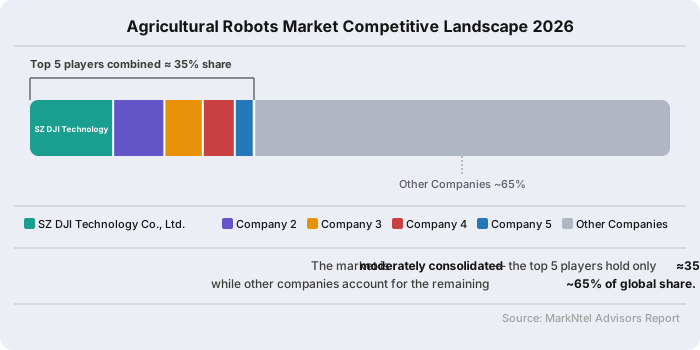
Deere & Company, CNH Industrial, Kubota Corporation, and Yanmar Holdings compete through machinery platforms, autonomy development, dealer reach, and field support. SZ DJI Technology Co., Ltd. and XAG Co., Ltd. are positioned strongly in agricultural drones. Lely Group, DeLaval, GEA Group AG, BouMatic Robotics, and Fullwood JOZ compete in dairy automation, while Carbon Robotics, Ecorobotix SA, Solinftec, and Naïo Technologies focus on precision field robotics, weeding, spraying, monitoring, and specialty crop automation across the agricultural robotics industry.
Key Companies in the Global Agricultural Robots Market
- Deere & Company
- SZ DJI Technology Co., Ltd.
- Lely Group
- DeLaval
- CNH Industrial
- GEA Group AG
- Kubota Corporation
- XAG Co., Ltd.
- Yanmar Holdings Co., Ltd.
- Solinftec
- Carbon Robotics
- Ecorobotix SA
- BouMatic Robotics
- Fullwood JOZ
- Naïo Technologies
Global Agricultural Robots Market Industry News and Recent Developments
November 2025: New Holland Introduced the Autonomous R4 Robot Series
New Holland introduced its autonomous R4 Robot Series for vineyard and orchard applications. The series includes electric and hybrid versions, with the electric model using a 40 kWh battery pack and the hybrid model using an HVO-compatible diesel engine with a 44 kW diesel-electric generator pack, making it directly relevant to specialty-crop automation.
Impact Analysis: This development expands agricultural robotics into specialty crop environments where mowing, tillage, and spraying require repeated field passes. It strengthens competition in autonomous ground robots by targeting vineyards and orchards with crop-specific platforms.
November 2025: DJI Agriculture Unveiled Agras T100, T70P, and T25P at Agritechnica
DJI Agriculture unveiled the Agras T100, T70P, and T25P agricultural drones at Agritechnica 2025. The Agras T100 is designed for large-scale commercial growers and can carry 100 L for spraying, 150 L for spreading, or 80 kg for lifting, with LiDAR, millimeter-wave radar, and a Penta-Vision system, strengthening high-payload drone options in the Global Agricultural Robots Market.
Impact Analysis: The launch strengthens the agricultural drone segment by improving payload flexibility and operational safety features. It supports adoption among farms and service providers seeking one robotic platform for spraying, spreading, and lifting tasks.
June 2025: Lely Launched Astronaut A5 Next, Astronaut Max, and Lely Hub
Lely launched Astronaut A5 Next, Astronaut Max, and Lely Hub in June 2025. Astronaut Max can connect up to 18 Astronaut milking robots in one control room and is suitable for farms with 500 to 1,100 cows, supporting scalable dairy automation within the Global Agricultural Robots Industry.
Impact Analysis: This development strengthens dairy robotics by supporting larger robotic milking installations and improving digital resilience on farms. It also increases competitive pressure in automated milking systems as dairy operators look for scalable robot architectures and centralized control.
Frequently Asked Questions
- Market Segmentation
- Introduction
- Product Definition
- Research Process
- Assumptions
- Executive Summary
- Global Agricultural Robots Market Policies, Regulations, and Product Standards
- Global Agricultural Robots Production Trend 2022-2032
- Global Agricultural Robots Trend by Type
-
- Unmanned Aerial Vehicles (UAVs)/Drones
- Milking Robots
- Driverless Tractors
- Automated Harvesting Robots
- Robotic Weeders
- Automated Cultivation Systems
- Livestock Farming Robots
- Material Handling Robots
- Others
-
- Company Wise Production Plants and Statistics
- Installed Production Capacity
- Actual Production
- Planned Production Target
- Global Agricultural Robots Trend by Type
- Global Agricultural Robots Pricing Analysis 2022-2032
- Global Agricultural Robots Pricing Trend by Regions 2022-2032
- North America
- South America
- Europe
- Middle East & Africa
- Asia Pacific
- Global Agricultural Robots Pricing Trend by Type 2022-2032
-
- Unmanned Aerial Vehicles (UAVs)/Drones
- Milking Robots
- Driverless Tractors
- Automated Harvesting Robots
- Robotic Weeders
- Automated Cultivation Systems
- Livestock Farming Robots
- Material Handling Robots
- Others
-
- Global Agricultural Robots Pricing Trend by Regions 2022-2032
- Global Agricultural Robots Market Trends & Developments
- Global Agricultural Robots Market Dynamics
- Growth Factors
- Challenges
- Global Agricultural Robots Market Hotspot & Opportunities
- Global Agricultural Robots Market Outlook, 2022-2032F
- Market Size & Outlook
- By Revenues (USD Million)
- Market Share & Analysis
- By Robot Type
- Unmanned Aerial Vehicles (UAVs)/Drones
- Milking Robots
- Driverless Tractors
- Automated Harvesting Robots
- Robotic Weeders
- Automated Cultivation Systems
- Livestock Farming Robots
- Material Handling Robots
- Others
- By Application
- Harvest Management
- Field Mapping & Crop Monitoring
- Spraying Management
- Planting & Seeding Management
- Soil & Irrigation Management
- Weather Tracking & Forecasting
- Inventory & Supply Chain Management
- Others
- By Offering
- Hardware
- Software
- Services
- By Farming Environment
- Indoor
- Outdoor
- By Farm Size
- Small-Sized Farms
- Mid-Sized Farms
- Large-Sized Farms
- By Region
- North America
- South America
- Europe
- Middle East & Africa
- By Company
- Competition Characteristics
- Market Share & Analysis
- By Robot Type
- Market Size & Outlook
- North America Agricultural Robots Market Outlook, 2022-2032F
- Market Size & Outlook
- By Revenues (USD Million)
- Market Share & Analysis
- By Robot Type
- By Application
- By Offering
- By Farming Environment
- By Farm Size
- By Country
- The US
- Canada
- Mexico
- Cuba
- The US Agricultural Robots Market Outlook, 2022-2032F
- Market Size & Outlook
- By Revenues (USD Million)
- Market Share & Analysis
- By Robot Type
- By Application
- By Offering
- By Farming Environment
- By Farm Size
- Market Size & Outlook
- Canada Agricultural Robots Market Outlook, 2022-2032F
- Market Size & Outlook
- By Revenues (USD Million)
- Market Share & Analysis
- By Robot Type
- By Application
- By Offering
- By Farming Environment
- By Farm Size
- Market Size & Outlook
- Mexico Agricultural Robots Market Outlook, 2022-2032F
- Market Size & Outlook
- By Revenues (USD Million)
- Market Share & Analysis
- By Robot Type
- By Application
- By Offering
- By Farming Environment
- By Farm Size
- Market Size & Outlook
- Cuba Agricultural Robots Market Outlook, 2022-2032F
- Market Size & Outlook
- By Revenues (USD Million)
- Market Share & Analysis
- By Robot Type
- By Application
- By Offering
- By Farming Environment
- By Farm Size
- Market Size & Outlook
- Market Size & Outlook
- South America Agricultural Robots Market Outlook, 2022-2032F
- Market Size & Outlook
- By Revenues (USD Million)
- Market Share & Analysis
- By Robot Type
- By Application
- By Offering
- By Farming Environment
- By Farm Size
- By Country
- Brazil
- Argentina
- Chile
- Colombia
- Peru
- Ecuador
- Uruguay
- Rest of South America
- Brazil Agricultural Robots Market Outlook, 2022-2032F
- Market Size & Outlook
- By Revenues (USD Million)
- Market Share & Analysis
- By Robot Type
- By Application
- By Offering
- By Farming Environment
- By Farm Size
- Market Size & Outlook
- Argentina Agricultural Robots Market Outlook, 2022-2032F
- Market Size & Outlook
- By Revenues (USD Million)
- Market Share & Analysis
- By Robot Type
- By Application
- By Offering
- By Farming Environment
- By Farm Size
- Market Size & Outlook
- Chile Agricultural Robots Market Outlook, 2022-2032F
- Market Size & Outlook
- By Revenues (USD Million)
- Market Share & Analysis
- By Robot Type
- By Application
- By Offering
- By Farming Environment
- By Farm Size
- Market Size & Outlook
- Colombia Agricultural Robots Market Outlook, 2022-2032F
- Market Size & Outlook
- By Revenues (USD Million)
- Market Share & Analysis
- By Robot Type
- By Application
- By Offering
- By Farming Environment
- By Farm Size
- Market Size & Outlook
- Peru Agricultural Robots Market Outlook, 2022-2032F
- Market Size & Outlook
- By Revenues (USD Million)
- Market Share & Analysis
- By Robot Type
- By Application
- By Offering
- By Farming Environment
- By Farm Size
- Market Size & Outlook
- Ecuador Agricultural Robots Market Outlook, 2022-2032F
- Market Size & Outlook
- By Revenues (USD Million)
- Market Share & Analysis
- By Robot Type
- By Application
- By Offering
- By Farming Environment
- By Farm Size
- Market Size & Outlook
- Uruguay Agricultural Robots Market Outlook, 2022-2032F
- Market Size & Outlook
- By Revenues (USD Million)
- Market Share & Analysis
- By Robot Type
- By Application
- By Offering
- By Farming Environment
- By Farm Size
- Market Size & Outlook
- Market Size & Outlook
- Europe Agricultural Robots Market Outlook, 2022-2032F
- Market Size & Outlook
- By Revenues (USD Million)
- Market Share & Analysis
- By Robot Type
- By Application
- By Offering
- By Farming Environment
- By Farm Size
- By Country
- The UK
- Germany
- France
- Italy
- Spain
- Netherlands
- Switzerland
- Sweden
- Belgium
- Poland
- Norway
- Austria
- Denmark
- Ireland
- Portugal
- Rest of Europe
- The UK Agricultural Robots Market Outlook, 2022-2032F
- Market Size & Outlook
- By Revenues (USD Million)
- Market Share & Analysis
- By Robot Type
- By Application
- By Offering
- By Farming Environment
- By Farm Size
- Market Size & Outlook
- Germany Agricultural Robots Market Outlook, 2022-2032F
- Market Size & Outlook
- By Revenues (USD Million)
- Market Share & Analysis
- By Robot Type
- By Application
- By Offering
- By Farming Environment
- By Farm Size
- Market Size & Outlook
- France Agricultural Robots Market Outlook, 2022-2032F
- Market Size & Outlook
- By Revenues (USD Million)
- Market Share & Analysis
- By Robot Type
- By Application
- By Offering
- By Farming Environment
- By Farm Size
- Market Size & Outlook
- Italy Agricultural Robots Market Outlook, 2022-2032F
- Market Size & Outlook
- By Revenues (USD Million)
- Market Share & Analysis
- By Robot Type
- By Application
- By Offering
- By Farming Environment
- By Farm Size
- Market Size & Outlook
- Spain Agricultural Robots Market Outlook, 2022-2032F
- Market Size & Outlook
- By Revenues (USD Million)
- Market Share & Analysis
- By Robot Type
- By Application
- By Offering
- By Farming Environment
- By Farm Size
- Market Size & Outlook
- Netherlands Agricultural Robots Market Outlook, 2022-2032F
- Market Size & Outlook
- By Revenues (USD Million)
- Market Share & Analysis
- By Robot Type
- By Application
- By Offering
- By Farming Environment
- By Farm Size
- Market Size & Outlook
- Switzerland Agricultural Robots Market Outlook, 2022-2032F
- Market Size & Outlook
- By Revenues (USD Million)
- Market Share & Analysis
- By Robot Type
- By Application
- By Offering
- By Farming Environment
- By Farm Size
- Market Size & Outlook
- Sweden Agricultural Robots Market Outlook, 2022-2032F
- Market Size & Outlook
- By Revenues (USD Million)
- Market Share & Analysis
- By Robot Type
- By Application
- By Offering
- By Farming Environment
- By Farm Size
- Market Size & Outlook
- Belgium Agricultural Robots Market Outlook, 2022-2032F
- Market Size & Outlook
- By Revenues (USD Million)
- Market Share & Analysis
- By Robot Type
- By Application
- By Offering
- By Farming Environment
- By Farm Size
- Market Size & Outlook
- Poland Agricultural Robots Market Outlook, 2022-2032F
- Market Size & Outlook
- By Revenues (USD Million)
- Market Share & Analysis
- By Robot Type
- By Application
- By Offering
- By Farming Environment
- By Farm Size
- Market Size & Outlook
- Norway Agricultural Robots Market Outlook, 2022-2032F
- Market Size & Outlook
- By Revenues (USD Million)
- Market Share & Analysis
- By Robot Type
- By Application
- By Offering
- By Farming Environment
- By Farm Size
- Market Size & Outlook
- Austria Agricultural Robots Market Outlook, 2022-2032F
- Market Size & Outlook
- By Revenues (USD Million)
- Market Share & Analysis
- By Robot Type
- By Application
- By Offering
- By Farming Environment
- By Farm Size
- Market Size & Outlook
- Denmark Agricultural Robots Market Outlook, 2022-2032F
- Market Size & Outlook
- By Revenues (USD Million)
- Market Share & Analysis
- By Robot Type
- By Application
- By Offering
- By Farming Environment
- By Farm Size
- Market Size & Outlook
- Ireland Agricultural Robots Market Outlook, 2022-2032F
- Market Size & Outlook
- By Revenues (USD Million)
- Market Share & Analysis
- By Robot Type
- By Application
- By Offering
- By Farming Environment
- By Farm Size
- Market Size & Outlook
- Portugal Agricultural Robots Market Outlook, 2022-2032F
- Market Size & Outlook
- By Revenues (USD Million)
- Market Share & Analysis
- By Robot Type
- By Application
- By Offering
- By Farming Environment
- By Farm Size
- Market Size & Outlook
- Market Size & Outlook
- Middle East & Africa Agricultural Robots Market Outlook, 2022-2032F
- Market Size & Outlook
- By Revenues (USD Million)
- Market Share & Analysis
- By Robot Type
- By Application
- By Offering
- By Farming Environment
- By Farm Size
- By Country
- Saudi Arabia
- The UAE
- South Africa
- Egypt
- Qatar
- Kuwait
- Oman
- Bahrain
- Morocco
- Algeria
- Ghana
- Ethiopia
- Rest of Middle East & Africa
- Saudi Arabia Agricultural Robots Market Outlook, 2022-2032F
- Market Size & Outlook
- By Revenues (USD Million)
- Market Share & Analysis
- By Robot Type
- By Application
- By Offering
- By Farming Environment
- By Farm Size
- Market Size & Outlook
- The UAE Agricultural Robots Market Outlook, 2022-2032F
- Market Size & Outlook
- By Revenues (USD Million)
- Market Share & Analysis
- By Robot Type
- By Application
- By Offering
- By Farming Environment
- By Farm Size
- Market Size & Outlook
- South Africa Agricultural Robots Market Outlook, 2022-2032F
- Market Size & Outlook
- By Revenues (USD Million)
- Market Share & Analysis
- By Robot Type
- By Application
- By Offering
- By Farming Environment
- By Farm Size
- Market Size & Outlook
- Egypt Agricultural Robots Market Outlook, 2022-2032F
- Market Size & Outlook
- By Revenues (USD Million)
- Market Share & Analysis
- By Robot Type
- By Application
- By Offering
- By Farming Environment
- By Farm Size
- Market Size & Outlook
- Qatar Agricultural Robots Market Outlook, 2022-2032F
- Market Size & Outlook
- By Revenues (USD Million)
- Market Share & Analysis
- By Robot Type
- By Application
- By Offering
- By Farming Environment
- By Farm Size
- Market Size & Outlook
- Kuwait Agricultural Robots Market Outlook, 2022-2032F
- Market Size & Outlook
- By Revenues (USD Million)
- Market Share & Analysis
- By Robot Type
- By Application
- By Offering
- By Farming Environment
- By Farm Size
- Market Size & Outlook
- Oman Agricultural Robots Market Outlook, 2022-2032F
- Market Size & Outlook
- By Revenues (USD Million)
- Market Share & Analysis
- By Robot Type
- By Application
- By Offering
- By Farming Environment
- By Farm Size
- Market Size & Outlook
- Bahrain Agricultural Robots Market Outlook, 2022-2032F
- Market Size & Outlook
- By Revenues (USD Million)
- Market Share & Analysis
- By Robot Type
- By Application
- By Offering
- By Farming Environment
- By Farm Size
- Market Size & Outlook
- Morocco Agricultural Robots Market Outlook, 2022-2032F
- Market Size & Outlook
- By Revenues (USD Million)
- Market Share & Analysis
- By Robot Type
- By Application
- By Offering
- By Farming Environment
- By Farm Size
- Market Size & Outlook
- Algeria Agricultural Robots Market Outlook, 2022-2032F
- Market Size & Outlook
- By Revenues (USD Million)
- Market Share & Analysis
- By Robot Type
- By Application
- By Offering
- By Farming Environment
- By Farm Size
- Market Size & Outlook
- Ghana Agricultural Robots Market Outlook, 2022-2032F
- Market Size & Outlook
- By Revenues (USD Million)
- Market Share & Analysis
- By Robot Type
- By Application
- By Offering
- By Farming Environment
- By Farm Size
- Market Size & Outlook
- Ethiopia Agricultural Robots Market Outlook, 2022-2032F
- Market Size & Outlook
- By Revenues (USD Million)
- Market Share & Analysis
- By Robot Type
- By Application
- By Offering
- By Farming Environment
- By Farm Size
- Market Size & Outlook
- Market Size & Outlook
- Global Agricultural Robots Market Key Strategic Imperatives for Success & Growth
- Competitive Outlook
- Company Profiles
- Deere & Company
- Business Description
- Product Portfolio
- Collaborations & Alliances
- Recent Developments
- Financial Details
- Others
- SZ DJI Technology Co., Ltd.
- Business Description
- Product Portfolio
- Collaborations & Alliances
- Recent Developments
- Financial Details
- Others
- Lely Group
- Business Description
- Product Portfolio
- Collaborations & Alliances
- Recent Developments
- Financial Details
- Others
- DeLaval
- Business Description
- Product Portfolio
- Collaborations & Alliances
- Recent Developments
- Financial Details
- Others
- CNH Industrial
- Business Description
- Product Portfolio
- Collaborations & Alliances
- Recent Developments
- Financial Details
- Others
- GEA Group AG
- Business Description
- Product Portfolio
- Collaborations & Alliances
- Recent Developments
- Financial Details
- Others
- Kubota Corporation
- Business Description
- Product Portfolio
- Collaborations & Alliances
- Recent Developments
- Financial Details
- Others
- XAG Co., Ltd.
- Business Description
- Product Portfolio
- Collaborations & Alliances
- Recent Developments
- Financial Details
- Others
- Yanmar Holdings Co., Ltd.
- Business Description
- Product Portfolio
- Collaborations & Alliances
- Recent Developments
- Financial Details
- Others
- Solinftec
- Business Description
- Product Portfolio
- Collaborations & Alliances
- Recent Developments
- Financial Details
- Others
- Carbon Robotics
- Business Description
- Product Portfolio
- Collaborations & Alliances
- Recent Developments
- Financial Details
- Others
- Ecorobotix SA
- Business Description
- Product Portfolio
- Collaborations & Alliances
- Recent Developments
- Financial Details
- Others
- BouMatic Robotics
- Business Description
- Product Portfolio
- Collaborations & Alliances
- Recent Developments
- Financial Details
- Others
- Fullwood JOZ
- Business Description
- Product Portfolio
- Collaborations & Alliances
- Recent Developments
- Financial Details
- Others
- Naïo Technologies
- Business Description
- Product Portfolio
- Collaborations & Alliances
- Recent Developments
- Financial Details
- Others
- Deere & Company
- Company Profiles
- Disclaimer
MarkNtel Advisors follows a robust and iterative research methodology designed to ensure maximum accuracy and minimize deviation in market estimates and forecasts. Our approach combines both bottom-up and top-down techniques to effectively segment and quantify various aspects of the market. A consistent feature across all our research reports is data triangulation, which examines the market from three distinct perspectives to validate findings. Key components of our research process include:
1. Scope & Research Design At the outset, MarkNtel Advisors define the research objectives and formulate pertinent questions. This phase involves determining the type of research—qualitative or quantitative—and designing a methodology that outlines data collection methods, target demographics, and analytical tools. They also establish timelines and budgets to ensure the research aligns with client goals.
2. Sample Selection and Data Collection In this stage, the firm identifies the target audience and determines the appropriate sample size to ensure representativeness. They employ various sampling methods, such as random or stratified sampling, based on the research objectives. Data collection is carried out using tools like surveys, interviews, and observations, ensuring the gathered data is reliable and relevant.
3. Data Analysis and Validation Once data is collected, MarkNtel Advisors undertake a rigorous analysis process. This includes cleaning the data to remove inconsistencies, employing statistical software for quantitative analysis, and thematic analysis for qualitative data. Validation steps are taken to ensure the accuracy and reliability of the findings, minimizing biases and errors.

4. Data Forecast and FinalizationThe final phase involves forecasting future market trends based on the analyzed data. MarkNtel Advisors utilize predictive modeling and time series analysis to anticipate market behaviors. The insights are then compiled into comprehensive reports, featuring visual aids like charts and graphs, and include strategic recommendations to inform client decision-making
We offer flexible licensing options to cater to varying organizational needs. Choose the pricing pack that best suits your requirements:
Buy Now Inquire Before Buying
 Request Customization
 Talk to our Consultant