

By Industry Type (Accommodation (Hotels (Luxury Hotels, Upper Mid-scale Hotels, Mid-scale Hotels, Economy/Budget Hotels), Resorts (Beach Resorts, Hill/Mountain Resorts, Wellness Resorts), Alternative... ... sorts), Alternative Lodging (Vacation Rentals, Homestays, Serviced Apartments, Branded Residences), Hostels & Shared Accommodation), Food & Beverage (F&B) (Full-Service Restaurants, Quick Service Restaurants (QSR), Cafés & Coffee Chains, Bars, Lounges & Nightlife, Cloud Kitchens / Delivery-only kitchens, Catering Services), Travel & Tourism Services (Travel Agencies (Online & Offline), Tour Operators, Destination Management Companies (DMCs), Cruise Lines, Airline Hospitality (in-flight services, lounges), Rail & Luxury Train Hospitality), Entertainment & Leisure (Theme Parks & Amusement Parks, Casinos & Gaming, Events & Exhibitions (MICE), Nightclubs & Social Venues, Cultural & Experiential Attractions)), By Service Level (Economy, Mid-scale, Upper Mid-scale, Luxury, Ultra-Luxury), By Ownership (Chain / Branded Hospitality, Independent Operators, Franchise Model, Management Contract Model, Asset-Light Model), By Booking Channel (Online Travel Agencies (OTAs), Direct Booking (Websites & Apps), Corporate Booking Platforms, Offline Travel Agents), By Traveler Type (Domestic Travelers, International Travelers, Group Travelers, Solo Travelers), By Purpose of Travel (Leisure Travel, Business Travel, Religious Tourism, Adventure & Eco-Tourism, Wellness Tourism, Education Tourism), By End User (Individual Consumers, Corporate Clients, Government & Institutional Clients, Event Organizers), and others Read more
- FMCG
- Apr 2026
- 130
- PDF, Excel, PPT
Philippines Hospitality Market Key Takeaways
- Philippines Hospitality Market size was valued at USD 7.80 billion in 2025 and is projected to grow from USD 8.39 billion in 2026 to USD 12.8 billion by 2032, exhibiting a CAGR of 7.29% during 2026-2032.
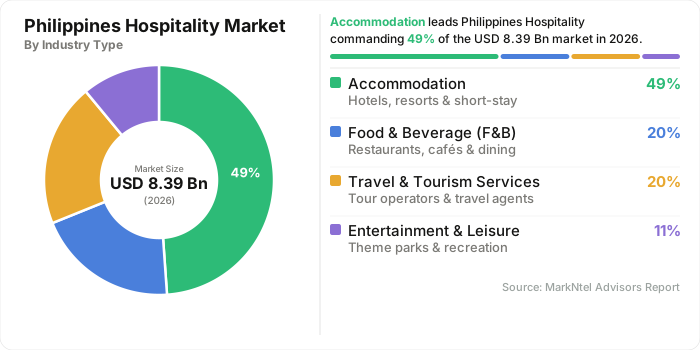
- In 2026, by industry type, the accommodation holds a significant share of about 49%
- By end user, the individual consumers segment seized a significant share of about 70% in 2026.
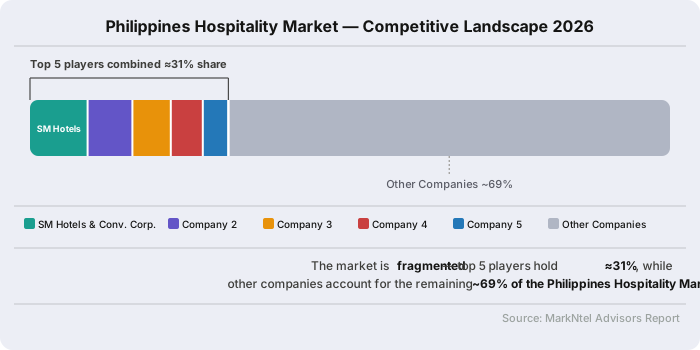
- The market is fragmented, with the top five players collectively accounting for approximately 31% of the total market share.
Philippines Hospitality Market Size and Outlook
The Philippines hospitality market was valued at USD 7.80 billion in 2025 and is projected to grow from USD 8.39 billion in 2026 to USD 12.8 billion by 2032. Along with this, the market is estimated to grow at a CAGR of around 7.29% during the forecast period, i.e., 2026-32.
The hospitality sector in the Philippines is expected to witness sustained expansion over the forecast period, supported by strong tourism recovery, rising domestic mobility, and increasing international arrivals. Additionally, the significant growth is being reinforced by improving air connectivity, government-led infrastructure programs, and rising consumer spending on travel and accommodation services across key destinations.
Regional tourism performance indicates broad-based expansion across the country. Western Visayas, which includes Boracay, recorded over 5.9 million tourist arrivals in 2024, generating approximately USD 1.3 billion in tourism revenue, reflecting strong leisure-driven demand in established island destinations . Similarly, Mindanao is emerging as a high-growth tourism region, with the Davao region registering more than 4.1 million tourist arrivals in 2024, increasing significantly from around 3 million, highlighting accelerating regional diversification of the Philippines tourism and accommodation sector .
Despite rising demand, structural supply constraints negatively impact the industry. The country currently has approximately 335,592 hotel rooms nationwide, however demand projections indicate a potential shortfall of over 120,000 rooms by 2028, signaling strong investment opportunities in hotel development, resort expansion, and serviced accommodation. This imbalance between demand and supply is expected to support occupancy growth and strengthen pricing power across both urban and leisure markets.
A key structural trend shaping the Philippines hospitality industry is the rapid digitalization of booking systems and guest experience. Hotels are increasingly adopting mobile check-ins, AI-enabled services, and contactless operational models to enhance efficiency and customer satisfaction. For instance, Okada Manila has integrated smart hotel systems, in-room digital controls, and AI-supported operations, earning recognition for its technology-driven and sustainable hospitality model in 2025 .
Government initiatives are further strengthening long-term growth prospects. Under the National Tourism Development Plan (NTDP) 2023–2028, the Philippines is prioritizing tourism infrastructure development, connectivity enhancement, and destination expansion. In 2025, the Department of Tourism supported 21 tourism infrastructure projects worth approximately USD 7.1 million, while also launching 19 new international flight routes to improve accessibility. The government aims to reach 12 million international tourist arrivals by 2028, reflecting strong policy support for sector expansion.
Overall, the Philippines hospitality market outlook remains positive, driven by rising tourism demand, regional diversification, infrastructure expansion, and digital transformation. However, supply gaps in accommodation and infrastructure present significant investment opportunities, positioning the sector for sustained long-term growth.
Philippines Hospitality Market Key Indicators
- According to the Philippine Statistics Authority (PSA) in April 2024 Labour Force Survey, tourism plays a major role in the economy, accounting for 16.4 million jobs or 34.11% of total employment in the Philippines. This includes both direct and indirect roles linked to hospitality, travel services, and tourism-related supply chains supporting domestic and international visitors .
- According to the World Travel and Tourism Council (WTTC), domestic tourism spending in the Philippines reached approximately USD 63.4 billion in 2024 and is projected to increase to around USD 70.8 billion in 2025. This reflects strong growth in local travel demand, supporting the Philippines hospitality and tourism sector through rising hotel occupancy and service consumption .
- The Philippine hospitality market reflects strong investment momentum, with the hotel industry projected to attract approximately USD 4.3 billion in new developments and adding around 40,000 new room keys nationwide. This expansion highlights rising investor confidence in the Philippines hotel and tourism market, driven by increasing tourism demand, infrastructure development, and growing interest in both urban and resort-based hospitality segments across the country .
Philippines Hospitality Market Scope
| Category | Segments |
|---|---|
| By Industry Type | (Accommodation (Hotels (Luxury Hotels, Upper Mid-scale Hotels, Mid-scale Hotels, Economy/Budget Hotels), Resorts (Beach Resorts, Hill/Mountain Resorts, Wellness Resorts), Alternative Lodging (Vacation Rentals, Homestays, Serviced Apartments, Branded Residences), Hostels & Shared Accommodation), Food & Beverage (F&B) (Full-Service Restaurants, Quick Service Restaurants (QSR), Cafés & Coffee Chains, Bars, Lounges & Nightlife, Cloud Kitchens / Delivery-only kitchens, Catering Services), Travel & Tourism Services (Travel Agencies (Online & Offline), Tour Operators, Destination Management Companies (DMCs), Cruise Lines, Airline Hospitality (in-flight services, lounges), Rail & Luxury Train Hospitality), Entertainment & Leisure (Theme Parks & Amusement Parks, Casinos & Gaming, Events & Exhibitions (MICE), Nightclubs & Social Venues, Cultural & Experiential Attractions)), |
| By Service Level | (Economy, Mid-scale, Upper Mid-scale, Luxury, Ultra-Luxury), |
| By Ownership | (Chain / Branded Hospitality, Independent Operators, Franchise Model, Management Contract Model, Asset-Light Model), |
| By Booking Channel | (Online Travel Agencies (OTAs), Direct Booking (Websites & Apps), Corporate Booking Platforms, Offline Travel Agents), |
| By Traveler Type | (Domestic Travelers, International Travelers, Group Travelers, Solo Travelers), |
| By Purpose of Travel | (Leisure Travel, Business Travel, Religious Tourism, Adventure & Eco-Tourism, Wellness Tourism, Education Tourism), |
| By End User | (Individual Consumers, Corporate Clients, Government & Institutional Clients, Event Organizers), |
Philippines Hospitality Market Growth Drivers
Tourism Expansion and Rising Visitor Spending
The recovery of tourism in the Philippines is a key driver of the Philippines hospitality industry, supported by strong growth in visitor volumes and spending. According to the Bureau of Immigration, international arrivals reached 14.73 million in 2024, indicating a near return to pre-pandemic levels and reinforcing demand across the hotel and tourism landscape. The Department of Tourism reported 5.95 million foreign tourist arrivals in 2024, reflecting a 9.15% year-on-year increase, while tourism receipts reached USD13.6 billion, exceeding pre-pandemic levels and highlighting improved visitor spending capacity .
Regionally, demand recovery is evenly distributed across major geographies, reflecting stable market normalization. Luzon remains the primary gateway, with CALABARZON recording over 10.86 million overnight travelers in 2024, driven largely by domestic tourism and proximity to Metro Manila . In contrast, the Visayas continues to lead leisure-driven growth, with Central Visayas registering 7.51 million tourist arrivals, marking a 37.03% increase, supported by strong inflows to destinations such as Cebu and Bohol .
This combination of rising international arrivals and robust domestic travel is increasing hotel occupancy levels, supporting pricing power, and encouraging new developments across both urban and resort markets.
Overall, sustained tourism recovery, coupled with higher spending and regional expansion, is expected to drive continued demand for hospitality infrastructure, accelerating market growth in the coming years.
Recent Trends
Digitalization of Booking and Guest Experience
A key trend shaping the Philippines hospitality industry is the rapid digitalization of booking systems and guest experience, driven by the adoption of contactless services, mobile platforms, and IoT-enabled hotel operations. Hotels in major urban centers such as Manila are increasingly shifting toward integrated digital ecosystems to enhance service efficiency and customer convenience within the Philippines hotel and tourism market.
Leading hospitality operators such as Sheraton Manila (Marriott Group) have introduced digital check-in systems and service-request platforms, enabling guests to manage their stay in real time through mobile applications. This reduces dependency on front-desk operations, improves service responsiveness, and strengthens contactless engagement across high-traffic urban hotels .
In parallel, broader technological adoption is being observed across Metro Manila’s hospitality ecosystem. Research on IoT-enabled hotel systems indicates that properties integrating smart technologies, such as automated check-in and check-out systems, app-based room controls, and connected service platforms, are achieving higher operational efficiency and improved guest satisfaction. These innovations are improving operational efficiency, enabling faster service delivery, and supporting more personalized guest experiences through real-time data-driven management. This transformation is particularly evident in business hotels and serviced apartments across Metro Manila and Cebu, where demand for seamless digital experiences is increasing alongside rising domestic and international travel.
The transition toward digital check-in systems, IoT-enabled operations, and mobile-first guest engagement is redefining the Philippine travel and hospitality industry, improving efficiency, enhancing personalization, and strengthening competitiveness across both luxury and mid-scale hospitality segments.
Philippines Hospitality Market Opportunities and Challenges
Infrastructure Constraints Shaping Eco-Tourism and Sustainable Hospitality Growth
The Philippines hospitality market continues to face structural challenges due to uneven infrastructure development across primary and secondary destinations. Limitations in airport connectivity, inefficient inter-island transport systems, and inconsistent utility services restrict the expansion of hotel infrastructure, particularly in emerging and high-potential tourism regions. As a result, large-scale resort developments remain concentrated in established hubs such as Metro Manila and Central Visayas (Cebu), creating regional supply imbalances. According to the ASEAN+3 Macroeconomic Research Office (AMRO), the Philippines recorded approximately 5.95 million international arrivals in 2024, remaining about 28% below pre-pandemic levels. This underscores a relatively slower recovery in the country’s travel and hospitality sector compared to regional peers, partly due to infrastructure-related constraints that limit accessibility and capacity expansion.
AMRO further highlights that tourism activity is highly concentrated, with over 60% of foreign overnight stays occurring in Metro Manila and Cebu. Meanwhile, several secondary destinations—despite strong natural tourism potential, remain underdeveloped, resulting in a supply-demand mismatch and untapped market opportunities.
However, these infrastructure limitations are simultaneously fostering the emergence of sustainable and eco-tourism-driven hospitality models. With restricted capacity for mass tourism, operators and policymakers are increasingly focusing on controlled, high-value tourism development that prioritizes environmental conservation and long-term viability.
A notable example is the Tubbataha Reefs Natural Park, which generated approximately USD 330,000 in conservation fees during the 2024 dive season. These revenues covered around 35% of total management costs and fully supported daily park operations, demonstrating the effectiveness of user-fee-based tourism models in balancing revenue generation with ecological preservation.
Overall, while infrastructure gaps present a significant constraint on large-scale hospitality expansion, they are simultaneously driving a shift toward sustainable, high-value tourism models. This dual dynamic is expected to shape the long-term evolution of the Philippines hospitality market, balancing growth with environmental and operational sustainability.
Segmentation Insights
Accommodation Leads Hospitality Market Share in the Philippines
The Accommodation segment, accounting for approximately 49% share of the Philippines hospitality industry, is the dominant category due to its direct linkage with both international and domestic tourism demand. It covers hotels, resorts, serviced apartments, and alternative lodging, which collectively form the core revenue base of the tourism and accommodation sector. Additionally, the considerable growth in this segment is supported by consistent tourist inflows into major destinations such as Manila, Cebu, Boracay, and Palawan, where hotel occupancy rates remain consistently high. The expansion of branded hotel chains, increasing resort developments, and rising demand for mid-scale and budget accommodations further strengthen this segment. Additionally, the growth of eco-tourism and island-based hospitality has boosted resort occupancy and average daily rates. Government initiatives supporting tourism infrastructure and private investments in hotel development projects continue to enhance capacity, making accommodation the most revenue-generating and fastest-expanding segment in the Philippines hospitality market. Based on industry type, the scope has been segmented into
- Accommodation
- Food & Beverage (F&B)
- Travel & Tourism Services
- Entertainment & Leisure
Individual Consumers Dominate End-User Demand
The Individual Consumers segment, contributing around 70% of total demand, is the primary driver of the Philippines hospitality market supported by strong domestic tourism and rising international leisure travel. This segment includes solo travelers, families, and group tourists who significantly influence hotel bookings, resort stays, and short-term accommodations.
Market growth is further supported by increasing disposable income, improved connectivity, and the rise of online travel platforms that simplify booking processes. Leisure tourism remains the dominant purpose of travel, especially in destinations like Boracay and Cebu, where beach resorts and experiential tourism are highly popular. Additionally, the expansion of affordable accommodations and serviced apartments has made travel more accessible to a wider population. Seasonal holidays, weekend travel trends, and the recovery of inbound tourism further reinforce demand from individual consumers, making them the most influential customer base in the Philippines hospitality industry. The key end users mapped in the study involve:
- Individual Consumers
- Corporate Clients
- Government & Institutional Clients
- Event Organizers
Philippines Hospitality Market Competitive Analysis
The Philippines hospitality market is fragmented, with a mix of domestic conglomerates and international hotel operators competing across accommodation, resorts, and serviced apartment segments. The top five companies, including SM Hotels and Conventions Corp., Robinsons Hotels & Resorts, AyalaLand Hotels & Resorts Corp., Megaworld Hotels & Resorts, and DoubleDragon, collectively account for approximately 31% of the total market share, reflecting a competitive landscape characterized by strong domestic expansion, integrated real estate-hospitality models, and the parallel presence of global hotel chains.
Major Key Players in the Philippines Hospitality Market
- SM Hotels and Conventions Corp.
- Robinsons Hotels & Resorts
- AyalaLand Hotels & Resorts Corp.
- Megaworld Hotels & Resorts
- DoubleDragon
- Marriott International
- Accor Group
- Hilton Worldwide
- Shangri-La Group
- Ascott Limited
- Others
Philippines Hospitality Industry News and Recent Developments:
2025: SM Hotels to Invest USD 268 Billion for Nationwide Hospitality Expansion
SM Hotels and Conventions Corp. (SMHCC), the hospitality arm of SM Prime Holdings, announced a USD 268 million investment plan to expand its hotel and convention portfolio across the Philippines. The five-year program includes the development of eight new hotels and two convention centers, adding more than 1,500 rooms in key tourism and business destinations, strengthening its footprint in the Philippines hospitality industry.
Impact Analysis: This expansion strengthens the Philippines hotel and tourism market by increasing room inventory in high-demand destinations and improving MICE (Meetings, Incentives, Conferences, Exhibitions) infrastructure. It is expected to boost hotel supply in both urban and leisure hubs, intensify competition among domestic and international hotel operators, and support rising tourist inflows. Additionally, it reinforces investor confidence in the Philippine travel and hospitality industry, driving long-term sector scalability and revenue diversification.
2025: Ayala Land Acquires New World Hotel Makati to Strengthen Hospitality Portfolio
Ayala Land Inc. has acquired the New World Makati Hotel as part of its strategy to strengthen its presence in the Philippine hospitality sector. The property will be integrated into AyalaLand Hotels and Resorts Corp., supporting the company’s expansion in Metro Manila’s premium hotel market and reinforcing its focus on business and leisure accommodation growth.
Impact Analysis: This acquisition strengthens Ayala Land’s position in the Philippines hospitality industry, particularly in the high-demand Makati commercial hub. It increases room inventory in a supply-constrained urban market and enhances competitiveness in the upscale hotel segment. The move also supports rising business travel demand and MICE activity in Metro Manila. Additionally, it reinforces investor confidence in the Philippine travel and hospitality industry, encouraging further hotel consolidation and expansion strategies.
- Market Segmentation
- Introduction
- Product Definition
- Research Process
- Assumptions
- Executive Summary
- Philippines Hospitality Market Policies, Regulations, and Product Standards
- Philippines Hospitality Market Trends & Developments
- Philippines Hospitality Market Dynamics
- Growth Factors
- Challenges
- Philippines Hospitality Market Hotspot & Opportunities
- Philippines Hospitality Market Outlook, 2022-2032F
- Market Size & Outlook
- By Revenues (USD Million)
- Market Share & Outlook
- By Industry Type- Market Size & Forecast 2022-2032, USD Million
- Accommodation
- Hotels
- Luxury Hotels
- Upper Mid-scale Hotels
- Mid-scale Hotels
- Economy/Budget Hotels
- Resorts
- Beach Resorts
- Hill/Mountain Resorts
- Wellness Resorts
- Alternative Lodging
- Vacation Rentals
- Homestays
- Serviced Apartments
- Branded Residences
- Hostels & Shared Accommodation
- Hotels
- Food & Beverage (F&B)
- Full-Service Restaurants
- Quick Service Restaurants (QSR)
- Cafés & Coffee Chains
- Bars, Lounges & Nightlife
- Cloud Kitchens / Delivery-only kitchens
- Catering Services
- Travel & Tourism Services
- Travel Agencies (Online & Offline)
- Tour Operators
- Destination Management Companies (DMCs)
- Cruise Lines
- Airline Hospitality (in-flight services, lounges)
- Rail & Luxury Train Hospitality
- Entertainment & Leisure
- Theme Parks & Amusement Parks
- Casinos & Gaming
- Events & Exhibitions (MICE)
- Nightclubs & Social Venues
- Cultural & Experiential Attractions
- Accommodation
- By Service Level - Market Size & Forecast 2022-2032, USD Million
- Economy
- Mid-scale
- Upper Mid-scale
- Luxury
- Ultra-Luxury
- By Ownership- Market Size & Forecast 2022-2032, USD Million
- Chain / Branded Hospitality
- Independent Operators
- Franchise Model
- Management Contract Model
- Asset-Light Model
- By Booking Channel - Market Size & Forecast 2022-2032, USD Million
- Online Travel Agencies (OTAs)
- Direct Booking (Websites & Apps)
- Corporate Booking Platforms
- Offline Travel Agents
- By Traveler Type- Market Size & Forecast 2022-2032, USD Million
- Domestic Travelers
- International Travelers
- Group Travelers
- Solo Travelers
- By Purpose of Travel- Market Size & Forecast 2022-2032, USD Million
- Leisure Travel
- Business Travel
- Religious Tourism
- Adventure & Eco-Tourism
- Wellness Tourism
- Education Tourism
- By End User- Market Size & Forecast 2022-2032, USD Million
- Individual Consumers
- Corporate Clients
- Government & Institutional Clients
- Event Organizers
- By Region- Market Size & Forecast 2022-2032, USD Million
- Luzon
- Visayas
- Mindanao
- By Company
- Competition Characteristics
- Market Share & Analysis
- By Industry Type- Market Size & Forecast 2022-2032, USD Million
- Market Size & Outlook
- Philippines Accommodation Market Outlook, 2022-2032
- Market Size & Outlook
- By Revenues (USD Million)
- Market Share & Outlook
- By Service Level - Market Size & Forecast 2022-2032, USD Million
- By Ownership- Market Size & Forecast 2022-2032, USD Million
- By Booking Channel - Market Size & Forecast 2022-2032, USD Million
- By Traveler Type- Market Size & Forecast 2022-2032, USD Million
- By Purpose of Travel- Market Size & Forecast 2022-2032, USD Million
- By End User- Market Size & Forecast 2022-2032, USD Million
- By Region- Market Size & Forecast 2022-2032, USD Million
- Market Size & Outlook
- Philippines Food & Beverage (F&B) Market Outlook, 2022-2032
- Market Size & Outlook
- By Revenues (USD Million)
- Market Share & Outlook
- By Service Level - Market Size & Forecast 2022-2032, USD Million
- By Ownership- Market Size & Forecast 2022-2032, USD Million
- By Booking Channel - Market Size & Forecast 2022-2032, USD Million
- By Traveler Type- Market Size & Forecast 2022-2032, USD Million
- By Purpose of Travel- Market Size & Forecast 2022-2032, USD Million
- By End User- Market Size & Forecast 2022-2032, USD Million
- By Region- Market Size & Forecast 2022-2032, USD Million
- Market Size & Outlook
- Philippines Travel & Tourism Services Market Outlook, 2022-2032
- Market Size & Outlook
- By Revenues (USD Million)
- Market Share & Outlook
- By Service Level - Market Size & Forecast 2022-2032, USD Million
- By Ownership- Market Size & Forecast 2022-2032, USD Million
- By Booking Channel - Market Size & Forecast 2022-2032, USD Million
- By Traveler Type- Market Size & Forecast 2022-2032, USD Million
- By Purpose of Travel- Market Size & Forecast 2022-2032, USD Million
- By End User- Market Size & Forecast 2022-2032, USD Million
- By Region- Market Size & Forecast 2022-2032, USD Million
- Market Size & Outlook
- Philippines Entertainment & Leisure Market Outlook, 2022-2032
- Market Size & Outlook
- By Revenues (USD Million)
- Market Share & Outlook
- By Service Level - Market Size & Forecast 2022-2032, USD Million
- By Ownership- Market Size & Forecast 2022-2032, USD Million
- By Booking Channel - Market Size & Forecast 2022-2032, USD Million
- By Traveler Type- Market Size & Forecast 2022-2032, USD Million
- By Purpose of Travel- Market Size & Forecast 2022-2032, USD Million
- By End User- Market Size & Forecast 2022-2032, USD Million
- By Region- Market Size & Forecast 2022-2032, USD Million
- Market Size & Outlook
- Philippines Hospitality Market Key Strategic Imperatives for Success & Growth
- Competitive Outlook
- Company Profiles
- SM Hotels and Conventions Corp.
- Business Description
- Product Portfolio
- Collaborations & Alliances
- Recent Developments
- Financial Details
- Others
- Robinsons Hotels & Resorts
- Business Description
- Product Portfolio
- Collaborations & Alliances
- Recent Developments
- Financial Details
- Others
- AyalaLand Hotels & Resorts Corp.
- Business Description
- Product Portfolio
- Collaborations & Alliances
- Recent Developments
- Financial Details
- Others
- Megaworld Hotels & Resorts
- Business Description
- Product Portfolio
- Collaborations & Alliances
- Recent Developments
- Financial Details
- Others
- DoubleDragon
- Business Description
- Product Portfolio
- Collaborations & Alliances
- Recent Developments
- Financial Details
- Others
- Marriott International
- Business Description
- Product Portfolio
- Collaborations & Alliances
- Recent Developments
- Financial Details
- Others
- Accor Group
- Business Description
- Product Portfolio
- Collaborations & Alliances
- Recent Developments
- Financial Details
- Others
- Hilton Worldwide
- Business Description
- Product Portfolio
- Collaborations & Alliances
- Recent Developments
- Financial Details
- Others
- Shangri-La Group
- Business Description
- Product Portfolio
- Collaborations & Alliances
- Recent Developments
- Financial Details
- Others
- Ascott Limited
- Business Description
- Product Portfolio
- Collaborations & Alliances
- Recent Developments
- Financial Details
- Others
- Others
- Business Description
- Product Portfolio
- Collaborations & Alliances
- Recent Developments
- Financial Details
- Others
- SM Hotels and Conventions Corp.
- Company Profiles
- Disclaimer

MarkNtel Advisors follows a robust and iterative research methodology designed to ensure maximum accuracy and minimize deviation in market estimates and forecasts. Our approach combines both bottom-up and top-down techniques to effectively segment and quantify various aspects of the market. A consistent feature across all our research reports is data triangulation, which examines the market from three distinct perspectives to validate findings. Key components of our research process include:
1. Scope & Research Design At the outset, MarkNtel Advisors define the research objectives and formulate pertinent questions. This phase involves determining the type of research—qualitative or quantitative—and designing a methodology that outlines data collection methods, target demographics, and analytical tools. They also establish timelines and budgets to ensure the research aligns with client goals.
2. Sample Selection and Data Collection In this stage, the firm identifies the target audience and determines the appropriate sample size to ensure representativeness. They employ various sampling methods, such as random or stratified sampling, based on the research objectives. Data collection is carried out using tools like surveys, interviews, and observations, ensuring the gathered data is reliable and relevant.
3. Data Analysis and Validation Once data is collected, MarkNtel Advisors undertake a rigorous analysis process. This includes cleaning the data to remove inconsistencies, employing statistical software for quantitative analysis, and thematic analysis for qualitative data. Validation steps are taken to ensure the accuracy and reliability of the findings, minimizing biases and errors.

4. Data Forecast and FinalizationThe final phase involves forecasting future market trends based on the analyzed data. MarkNtel Advisors utilize predictive modeling and time series analysis to anticipate market behaviors. The insights are then compiled into comprehensive reports, featuring visual aids like charts and graphs, and include strategic recommendations to inform client decision-making
We offer flexible licensing options to cater to varying organizational needs. Choose the pricing pack that best suits your requirements:
Buy Now Inquire Before Buying
 Request Customization