

By Battery Type (Lithium-Ion, Sealed Lead Acid, Nickel-Metal Hydride, Sodium-Ion), By Battery Technology (Removable, Non-Removable), By Voltage Type (Below 48V, 48–60V, 61–72V, 73–96V, Above 96V), By... ... 73–96V, Above 96V), By Motor Type (Hub Motor, Mid-Drive Motor, Chassis Mounted Motor), By Travel Range (Below 75 Miles, 75–100 Miles, Above 100 Miles), and others Read more
- Automotive
- Aug 2026
- 144
- PDF, Excel, PPT
India Electric Motorcycle Market Key Takeaways
- The India electric motorcycle market size was valued at USD 1.54 billion in 2025 and is projected to grow from USD 1.98 billion in 2026 to USD 5.48 billion by 2032.
- The industry is projected to sustain growth at a steady CAGR of 18.49% during 2026-2032.
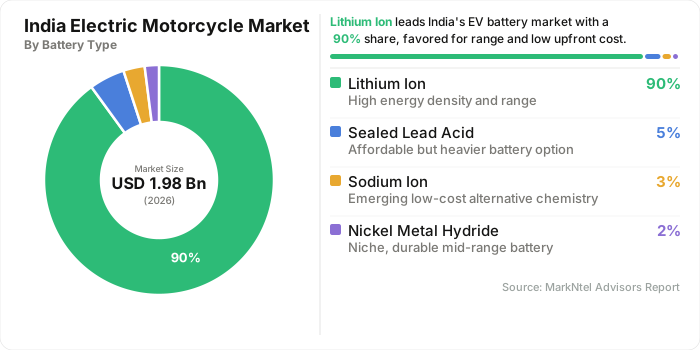
- By battery type, lithium-ion holds a significant share of about 90% in 2026.
- By voltage type, 48-60V seized a significant share of about 40% in 2026.
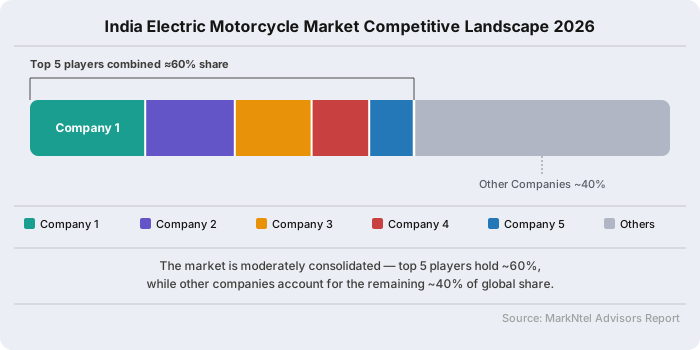
- The industry is moderately consolidated. However, the top five players collectively account for nearly 60% share.
India Electric Motorcycle Market Size and Outlook
The electric motorcycle market size in India was valued at USD 1.54 billion in 2025 and is projected to grow from USD 1.98 billion in 2026 to USD 5.48 billion by 2032. Along with this, the market is estimated to grow at a CAGR of around 18.49% during the forecast period, i.e., 2026-32.
The demand for E-motorcycles in India is gaining momentum as consumers increasingly seek lower running costs, fuel savings, and technologically advanced mobility, while manufacturers expand dedicated electric motorcycle portfolios. The broader two-wheeler market recorded 5.63 million domestic sales in Q1 FY2026–27, up 20.3% year-on-year, indicating a strong demand base for electrification. Government support through PM E-DRIVE, charging-infrastructure investment, and domestic electric vehicle manufacturing initiatives continues to improve affordability and ecosystem readiness.
The market also benefits from longer-range batteries, connected features, faster charging, and battery-swapping solutions. With electric two-wheelers still representing a relatively small share of India's enormous motorcycle fleet, substantial headroom exists for penetration. Over the long term, falling battery costs, expanding charging infrastructure, broader model availability, and stronger policy support are expected to drive sustained electric motorcycle adoption across urban, semi-urban, and commercial applications.
India Electric Motorcycle Market Key Indicators
- India recorded 1.149 million electric two-wheeler retail sales in FY2024–25, compared with 948,518 units in FY2023–24, representing growth of approximately 21.2%. FADA data shows that Ola Electric sold 344,009 units, TVS Motor 237,576, Bajaj Auto 230,806, and Ather Energy 130,944 during FY2025. The increase demonstrates expanding consumer adoption and provides a measurable demand indicator for the electric motorcycle segment.
- Higher petrol costs strengthen the economic appeal of electric motorcycles by increasing the operating-cost advantage of electric mobility. Under PM E-DRIVE, supported EV adoption was estimated to save approximately 30.02 million liters of fuel per day, with cumulative savings reaching 1.21 billion liters as of July 29, 2026. Consequently, fuel savings can encourage consumers to shift toward electric motorcycles for daily commuting.
- PM E-DRIVE proposes deployment of 48,400 fast chargers for electric two-wheelers and three-wheelers, alongside 22,100 fast chargers for electric four-wheelers and 1,800 fast chargers for electric buses. The dedicated allocation for e-2W/e-3W fast charging is particularly relevant to electric motorcycle adoption because charging speed directly affects vehicle utilization and ownership convenience. The infrastructure target therefore represents an important ecosystem indicator for the segment.
- Electric two-wheeler registrations provide a direct indicator of consumer adoption. PM E-DRIVE recorded 2.239 million registered electric two-wheelers by July 27, 2026, against a scheme target of 2.479 million units. This represents approximately 90% achievement of the targeted registrations, demonstrating strong uptake under the incentive-supported program and continued expansion of electric two-wheelers within India’s mobility ecosystem.
India Electric Motorcycle Charging Readiness: 52,718 Public EV Stations and 48,400 Planned Fast Chargers for e-2W/e-3W Support Network Expansion
Rapid expansion of the national charging network: India had 52,718 public EV charging stations as of July 2026, compared with 29,277 stations in August 2025, representing an increase of approximately 80% in less than one year. While the overall network serves multiple EV categories, its expansion improves the broader energy-replenishment ecosystem available to electric motorcycles.
Two-wheeler-specific charging capacity is being built into the next infrastructure layer: Under PM E-DRIVE, the government has proposed support for 48,400 public fast chargers specifically for e-2W/e-3W applications, using LECCS/LEVDC charging configurations. This is particularly relevant to electric motorcycles because it provides a dedicated infrastructure pathway rather than relying exclusively on charging systems designed for passenger cars.
Government funding is accelerating deployment: PM E-DRIVE has allocated ₹2,000 crore for public EV charging infrastructure. As of July 1, 2026, ₹689 crore had been approved for deployment of 6,562 chargers across three oil marketing companies and nine states. The broader scheme has a total outlay of ₹10,900 crore and supports EV adoption, charging infrastructure, and domestic EV manufacturing.
Charging infrastructure is increasingly complemented by battery swapping: India's 2024 charging-infrastructure guidelines and subsequent framework explicitly incorporate battery-swapping and battery-charging stations. This model is particularly relevant to electric motorcycles used for commercial or high-utilization applications because battery exchange can reduce vehicle downtime compared with conventional plug-in charging.
Infrastructure expansion is aligned with electric two-wheeler adoption: PM E-DRIVE had incentivized 2.06 million electric two-wheelers by July 22, 2026, with ₹1,505.3 crore reimbursed to OEMs. The scheme's e-2W incentive was available at ₹2,500/kWh, capped at ₹5,000 per vehicle, through July 31, 2026, providing additional support for market adoption.
Overall infrastructure readiness: India's charging ecosystem is moving rapidly toward broader EV coverage, but motorcycle-specific infrastructure remains less mature than the overall charging network suggests. The planned 48,400 e-2W/e-3W fast chargers and inclusion of battery swapping create a significant infrastructure opportunity for electric motorcycles. However, the large gap between general EV charging availability and motorcycle-specific fast-charging deployment indicates that dedicated two-wheeler charging density, interoperability, and convenient urban access will remain important determinants of future electric-motorcycle adoption.
India Electric Motorcycle Market Scope
| Category | Segments |
|---|---|
| By Battery Type | Lithium-Ion, Sealed Lead Acid, Nickel-Metal Hydride, Sodium-Ion |
| By Battery Technology | Removable, Non-Removable |
| By Voltage Type | Below 48V, 48–60V, 61–72V, 73–96V, Above 96V |
| By Motor Type | Hub Motor, Mid-Drive Motor, Chassis Mounted Motor |
| By Travel Range | Below 75 Miles, 75–100 Miles, Above 100 Miles |
India Electric Motorcycle Market Growth Drivers
Government Incentives and Subsidies Accelerating Electric Motorcycle Adoption
Government incentives are a major growth driver for India’s electric motorcycle industry because they reduce the upfront price gap between electric and conventional petrol motorcycles, improving affordability for price-sensitive consumers. Under the PM Electric Drive Revolution in Innovative Vehicle Enhancement (PM E-DRIVE) scheme, the Ministry of Heavy Industries allocated approximately USD 211 million to support 2.479 million electric two-wheelers registered between April 2024 and March 2026. By December 21, 2025, around 1.819 million electric two-wheelers had been sold under the scheme, representing approximately 73% of the targeted volume, demonstrating strong consumer response to subsidized EV purchases.
The government had also released incentives for approximately 1.275 million vehicles, indicating substantial utilization of the allocated support. By February 5, 2026, approximately USD 141 million had been reimbursed to OEMs for incentives covering 1.439 million electric two-wheelers. In addition, PM E-DRIVE allocated approximately USD 238 million for EV charging infrastructure, supporting the development of charging facilities and reducing range-related concerns. The combination of direct purchase incentives and infrastructure investment improves electric motorcycles’ economic attractiveness, encourages manufacturers to expand their product portfolios, and accelerates consumer adoption across urban and emerging Indian markets.
Recent Trends
Shift Toward Connected and Software-Defined Electric Motorcycles
The integration of connected and software-defined features is becoming a key trend in India’s electric motorcycle market as manufacturers increasingly differentiate EVs through software, connectivity, personalization, and digital services rather than hardware alone. Electric motorcycles can integrate vehicle functions with mobile applications and continuously improve through over-the-air (OTA) software updates, creating a more interactive ownership experience. A strong example is Ola Electric’s Roadster, which features a 7-inch TFT touchscreen, group navigation, cruise control, advanced regenerative braking, customizable riding modes through DIY Mode, and theft, tow, and tamper detection. The motorcycle also supports OTA updates, allowing software improvements without requiring a physical service visit.
Ola's Roadster further demonstrates how connected technology is being integrated into everyday motorcycle functions. Riders can access charging statistics, locate charging points, monitor riding data, view rider profiles, submit service requests, and receive software updates through the connected ecosystem. Ola's broader MoveOS platform also supports features such as live location sharing, SOS alerts, vehicle statistics, road-trip planning, and smartphone/smartwatch integration.
This trend is transforming electric motorcycles into software-defined mobility platforms, enabling manufacturers to introduce new features after purchase, improve vehicle performance and safety through software, strengthen customer engagement, and create opportunities for differentiated digital services.
India Electric Motorcycle Market Opportunities and Challenges
Charging Times of Up to 6.5 Hours and Range Anxiety Restrain Adoption, Driving Fast-Charging and Battery-Swapping Innovation
Range anxiety and long charging times remain significant challenges for India’s electric motorcycle market, particularly for daily commuters and commercial riders who depend on high vehicle availability. Unlike petrol motorcycles, which can be refueled within minutes, electric motorcycles can require several hours for conventional charging. For example, Revolt’s RV400 uses a 3.24 kWh lithium-ion battery and requires around 3 hours 30 minutes to charge from 0% to 80% using its standard charger, while a full 0–100% charge takes approximately 4 hours 45 minutes. Similarly, Ather’s industry data shows that its 2.9 kWh Rizta S requires approximately 6 hours 30 minutes for a 0–80% charge, despite offering an ARAI-certified range of 123 km
This challenge is creating opportunities for battery-swapping networks, higher-capacity batteries, and faster-charging technologies. For instance, Reliance New Energy is preparing battery-swapping services for electric two-wheelers targeting the logistics and delivery sector. The company has secured ARAI certification for four battery variants and three two-wheeler platforms, with pilot testing planned before a wider commercial rollout. This model can reduce charging downtime for high-utilization fleets and support greater EV adoption. Similarly, Ultraviolette’s X47 Crossover demonstrates the opportunity for extended-range electric motorcycles, offering 211 km and 323 km IDC range through its two battery configurations. The model also received more than 3,000 bookings within 24 hours of launch, indicating consumer interest in higher-range electric motorcycles.
Together, these developments can reduce range anxiety, improve vehicle utilization, and expand electric motorcycles from short-distance urban commuting into longer-distance and commercial applications.
Segmentation Insights
Lithium-Ion Batteries Lead with Nearly 90% Share, Supported by Higher Energy Density
Lithium-ion batteries hold nearly 90% of India’s electric motorcycle market, making them the dominant battery technology. Their leadership is driven by higher energy density, lower weight, longer usable range, strong power output, and compatibility with faster charging compared with conventional lead-acid batteries. For instance, Ola Electric’s Roadster X+ uses a 9.1 kWh battery and delivers a claimed up to 500 km IDC range, demonstrating the ability of lithium-ion technology to support long-range electric motorcycles.
Similarly, the Rorr EVO demonstrates how lithium-ion technology can support performance-oriented motorcycles with extended range and fast charging. These characteristics make lithium-ion batteries better suited to motorcycles requiring higher acceleration, performance, and range. Consequently, manufacturers are increasingly investing in advanced lithium-ion cells and domestic battery production, reinforcing their dominance in India’s electric motorcycle market. Based on battery type, the scope has been segmented into:
- Lithium-Ion
- Sealed Lead Acid
- Nickel Metal Hydride
- Sodium-Ion
48–60V Voltage Range Leads with 40% Share, Driven by Affordability and Urban Commuting Demand
The 48–60V segment holds the dominant position, accounting for an estimated 40% of India’s electric motorcycle market, primarily due to its balance between performance, affordability, energy efficiency, and battery requirements. This voltage range is well suited to commuter-focused electric motorcycles, which represent a significant portion of two-wheeler demand in India. Models operating within this range can provide adequate acceleration, practical riding range, and sufficient power for urban and suburban travel without requiring the larger and more expensive battery systems associated with higher-voltage motorcycles.
The segment also benefits from comparatively lower component and battery-system costs, helping manufacturers offer competitively priced motorcycles to price-sensitive Indian consumers. In addition, 48–60V systems generally support efficient operation of motors used for everyday commuting while keeping vehicle weight and charging requirements manageable. Growing demand for affordable electric mobility, increasing fuel prices, expanding charging infrastructure, and government support for vehicle electrification are further encouraging manufacturers to focus on this voltage category, strengthening its market leadership. By voltage type, the market is categorized into:
- Below 48V
- 48–60V
- 61–72V
- 73–96V
- Above 96V
India Electric Motorcycle Market Competitive Analysis
The India electric motorcycle market is moderately consolidated, with the top five manufacturers collectively accounting for approximately 60% of the market by value in 2026. Key participants include Ola Electric Mobility Limited, Revolt Intellicorp Private Limited, Ultraviolette Automotive Private Limited, Oben Rides International Private Limited, and Kabira Mobility Private Limited.
Major Companies in India Electric Motorcycle Industry
- Ola Electric Mobility Limited
- Revolt Intellicorp Private Limited
- Ultraviolette Automotive Private Limited
- Oben Rides International Private Limited
- Kabira Mobility Private Limited
- Matter Motor Works Private Limited
- Raptee Energy Private Limited
- Simple Energy Private Limited
- HOP Electric Mobility Private Limited
- Siravu Motors Private Limited
- Others
India Electric Motorcycle Industry News and Recent Developments
May 2026: Ultraviolette Introduces Lower-Priced X47 Variant
In May 2026, Ultraviolette introduced a new entry-level X47 Crossover variant at approximately USD 2,990, expanding the model range to six variants. The move is aimed at making its premium electric adventure motorcycle accessible to a wider customer base. The launch reflects an emerging market trend in which manufacturers are broadening product portfolios and introducing lower-priced variants to accelerate electric motorcycle adoption beyond the premium segment.
Impact Analysis: The lower-priced X47 variant could broaden Ultraviolette’s customer base by reducing the entry barrier to premium electric motorcycles. Expanding the lineup to six variants gives consumers greater price and specification flexibility, potentially increasing demand beyond high-income early adopters. The move also intensifies competition among premium manufacturers and encourages other electric motorcycle brands to introduce competitively priced variants, supporting broader market penetration across India.
April 2026: Royal Enfield Enters India’s Electric Motorcycle Market with Flying Flea C6
Royal Enfield entered India’s electric motorcycle segment with the Flying Flea C6 in April 2026. The motorcycle was launched at approximately USD 3,030, while its Battery-as-a-Service option reduced the effective vehicle price to around USD 2,160. Bookings and test rides opened on April 10 through Royal Enfield’s first dedicated Flying Flea store in Bengaluru. The launch marks a significant expansion of electric motorcycles into the premium segment, bringing an established conventional motorcycle manufacturer into India’s growing electric mobility market.
Impact Analysis: Royal Enfield’s entry could significantly strengthen consumer confidence in India’s electric motorcycle segment by bringing an established motorcycle brand into the category. Its Battery-as-a-Service model also introduces an alternative ownership structure that can lower initial vehicle costs. The launch may accelerate premium electric motorcycle adoption, encourage traditional motorcycle manufacturers to electrify their portfolios, and increase competition in India’s rapidly developing electric mobility market.
April 2026: Oben Electric Launches Rorr EVO with 180-km Range
Oben Electric launched the Rorr EVO in April 2026, strengthening its motorcycle-focused electric vehicle portfolio. The model delivers a claimed 180-km range and supports 0–80% fast charging in 90 minutes. The introductory price was approximately USD 1,087 for the first 1,000 customers, subsequently increasing to around USD 1,359. The launch highlights manufacturers’ efforts to combine competitive pricing, extended range and faster charging to make electric motorcycles more attractive to mainstream Indian consumers.
Impact Analysis: The Rorr EVO strengthens competition in India’s electric motorcycle market by combining a relatively accessible price with a 180-km claimed range and 90-minute 0–80% fast charging. These specifications directly address affordability, range and charging concerns that limit adoption. Its launch could encourage manufacturers to improve performance and charging capabilities while expanding electric motorcycles toward mainstream commuter and performance-oriented consumer segments.
- Market Segmentation
- Introduction
- Product Definition
- Research Process
- Assumptions
- Executive Summary
- India Electric Motorcycle Production (Thousand Units) Trend 2022-2032
- India Electric Motorcycle Production (Thousand Units) By Battery Type 2022-2032
- Lithium-Ion
- Sealed Lead Acid
- Nickel Metal Hydride
- Sodium-Ion
- Company-Wise Production Plants and Statistics
- Installed Production Capacity
- Actual Production
- Planned Production Target
- India Electric Motorcycle Production (Thousand Units) By Battery Type 2022-2032
- India Electric Motorcycle Pricing Analysis 2022-2032
- India Electric Motorcycle Pricing Trend (USD/Units) 2022-2032
- India Electric Motorcycle Pricing Trend (USD/Units) By Regions 2022-2032
- North
- South
- East
- West
- India Electric Motorcycle Market Pricing Trend (USD/Units) By Battery Type 2022-2032
- Lithium-Ion
- Sealed Lead Acid
- Nickel-Metal Hydride
- Sodium-Ion
- India Electric Motorcycle Market Supply Chain Analysis 2022-2032
- India Electric Motorcycle Market Import & Export Data Analysis 2022-2032
- India Electric Motorcycle Market Policies, Regulations, and Product Standards
- India Electric Motorcycle Market Trends & Developments
- India Electric Motorcycle Market Dynamics
- Growth Factors
- Challenges
- India Electric Motorcycle Market Hotspot & Opportunities
- India Electric Motorcycle Market Outlook, 2022-2032
- Market Size & Outlook
- By Revenues (USD Million)
- By Units Sold (Thousand Units)
- Market Segmentation & Outlook
- By Battery Type- Market Size & Forecast 2022-2032, USD Million & Thousand Units
- Lithium-Ion
- Sealed Lead Acid
- Nickel-Metal Hydride
- Sodium-Ion
- By Battery Technology- Market Size & Forecast 2022-2032, USD Million & Thousand Units
- Removable
- Non-Removable
- By Voltage Type- Market Size & Forecast 2022-2032, USD Million & Thousand Units
- Below 48V
- 48–60V
- 61–72V
- 73–96V
- Above 96V
- By Motor Type- Market Size & Forecast 2022-2032, USD Million & Thousand Units
- Hub Motor
- Mid-Drive Motor
- Chassis Mounted Motor
- By Travel Range- Market Size & Forecast 2022-2032, USD Million & Thousand Units
- Below 75 Miles
- 75–100 Miles
- Above 100 Miles
- By Region
- North
- South
- East
- West
- By Company
- Competition Characteristics
- Market Share & Analysis
- By Battery Type- Market Size & Forecast 2022-2032, USD Million & Thousand Units
- Market Size & Outlook
- India Lithium-Ion Electric Motorcycle Market Outlook, 2022-2032
- Market Size & Outlook
- By Revenues (USD Million)
- By Units Sold (Thousand Units)
- Market Segmentation & Outlook
- By Battery Type- Market Size & Forecast 2022-2032, USD Million & Thousand Units
- By Battery Technology- Market Size & Forecast 2022-2032, USD Million & Thousand Units
- By Voltage Type- Market Size & Forecast 2022-2032, USD Million & Thousand Units
- By Motor Type- Market Size & Forecast 2022-2032, USD Million & Thousand Units
- By Travel Range- Market Size & Forecast 2022-2032, USD Million & Thousand Units
- Market Size & Outlook
- India Sealed Lead Acid Electric Motorcycle Market Outlook, 2022-2032
- Market Size & Outlook
- By Revenues (USD Million)
- By Units Sold (Thousand Units)
- Market Segmentation & Outlook
- By Battery Type- Market Size & Forecast 2022-2032, USD Million & Thousand Units
- By Battery Technology - Market Size & Forecast 2022-2032, USD Million & Thousand Units
- By Voltage Type- Market Size & Forecast 2022-2032, USD Million & Thousand Units
- By Motor Type- Market Size & Forecast 2022-2032, USD Million & Thousand Units
- By Travel Range- Market Size & Forecast 2022-2032, USD Million & Thousand Units
- Market Size & Outlook
- India Nickel Metal Hydride Electric Motorcycle Market Outlook, 2022-2032
- Market Size & Outlook
- By Revenues (USD Million)
- By Units Sold (Thousand Units)
- Market Segmentation & Outlook
- By Battery Type- Market Size & Forecast 2022-2032, USD Million & Thousand Units
- By Battery Technology - Market Size & Forecast 2022-2032, USD Million & Thousand Units
- By Voltage Type - Market Size & Forecast 2022-2032, USD Million & Thousand Units
- By Motor Type - Market Size & Forecast 2022-2032, USD Million & Thousand Units
- By Travel Range - Market Size & Forecast 2022-2032, USD Million & Thousand Units
- Market Size & Outlook
- India Sodium-Ion Electric Motorcycle Market Outlook, 2022-2032
- Market Size & Outlook
- By Revenues (USD Million)
- By Units Sold (Thousand Units)
- Market Segmentation & Outlook
- By Battery Type - Market Size & Forecast 2022-2032, USD Million & Thousand Units
- By Battery Technology - Market Size & Forecast 2022-2032, USD Million & Thousand Units
- By Voltage Type - Market Size & Forecast 2022-2032, USD Million & Thousand Units
- By Motor Type - Market Size & Forecast 2022-2032, USD Million & Thousand Units
- By Travel Range - Market Size & Forecast 2022-2032, USD Million & Thousand Units
- Market Size & Outlook
- India Electric Motorcycle Market Key Strategic Imperatives for Success & Growth
- Competitive Outlook
- Company Profiles
- Ola Electric Mobility Limited
- Business Description
- Product Portfolio
- Collaborations & Alliances
- Recent Developments
- Financial Details
- Others
- Revolt Intellicorp Private Limited
- Business Description
- Product Portfolio
- Collaborations & Alliances
- Recent Developments
- Financial Details
- Others
- Ultraviolette Automotive Private Limited
- Business Description
- Product Portfolio
- Collaborations & Alliances
- Recent Developments
- Financial Details
- Others
- Oben Rides International Private Limited
- Business Description
- Product Portfolio
- Collaborations & Alliances
- Recent Developments
- Financial Details
- Others
- Kabira Mobility Private Limited
- Business Description
- Product Portfolio
- Collaborations & Alliances
- Recent Developments
- Financial Details
- Others
- Matter Motor Works Private Limited
- Business Description
- Product Portfolio
- Collaborations & Alliances
- Recent Developments
- Financial Details
- Others
- Raptee Energy Private Limited
- Business Description
- Product Portfolio
- Collaborations & Alliances
- Recent Developments
- Financial Details
- Others
- Simple Energy Private Limited
- Business Description
- Product Portfolio
- Collaborations & Alliances
- Recent Developments
- Financial Details
- Others
- HOP Electric Mobility Private Limited
- Business Description
- Product Portfolio
- Collaborations & Alliances
- Recent Developments
- Financial Details
- Others
- Siravu Motors Private Limited
- Business Description
- Product Portfolio
- Collaborations & Alliances
- Recent Developments
- Financial Details
- Others
- Others
- Ola Electric Mobility Limited
- Company Profiles

MarkNtel Advisors follows a robust and iterative research methodology designed to ensure maximum accuracy and minimize deviation in market estimates and forecasts. Our approach combines both bottom-up and top-down techniques to effectively segment and quantify various aspects of the market. A consistent feature across all our research reports is data triangulation, which examines the market from three distinct perspectives to validate findings. Key components of our research process include:
1. Scope & Research Design At the outset, MarkNtel Advisors define the research objectives and formulate pertinent questions. This phase involves determining the type of research—qualitative or quantitative—and designing a methodology that outlines data collection methods, target demographics, and analytical tools. They also establish timelines and budgets to ensure the research aligns with client goals.
2. Sample Selection and Data Collection In this stage, the firm identifies the target audience and determines the appropriate sample size to ensure representativeness. They employ various sampling methods, such as random or stratified sampling, based on the research objectives. Data collection is carried out using tools like surveys, interviews, and observations, ensuring the gathered data is reliable and relevant.
3. Data Analysis and Validation Once data is collected, MarkNtel Advisors undertake a rigorous analysis process. This includes cleaning the data to remove inconsistencies, employing statistical software for quantitative analysis, and thematic analysis for qualitative data. Validation steps are taken to ensure the accuracy and reliability of the findings, minimizing biases and errors.

4. Data Forecast and FinalizationThe final phase involves forecasting future market trends based on the analyzed data. MarkNtel Advisors utilize predictive modeling and time series analysis to anticipate market behaviors. The insights are then compiled into comprehensive reports, featuring visual aids like charts and graphs, and include strategic recommendations to inform client decision-making
We offer flexible licensing options to cater to varying organizational needs. Choose the pricing pack that best suits your requirements:
Buy Now Inquire Before Buying
 Request Customization