

By Treatment Type (Hormonal Therapy (Hormone Replacement Therapy (HRT), Estrogen-based drugs, Progestin-based drugs, Combination drugs, Others), Non-Hormonal Therapy (SSRIs (Selective Serotonin Reupta... ... ive Serotonin Reuptake Inhibitors), SNRIs (Serotonin-Norepinephrine Reuptake Inhibitors), Neurokinin 3 (NK3) Receptor Antagonists, Gabapentinoids, Others), Dietary & Nutraceutical Supplements (Herbal Supplements, Vitamins & Minerals, Phytoestrogens, Omega-3 Fatty Acids, Probiotics, Others), Others), By Form (Creams, Tablets, Pessaries, Patches, Injections, Others), By Route of Administration (Oral, Topical, Injectable, Vaginal, Others), By Stage of Menopause (Pre-Menopause, Perimenopause, Menopause, Post-Menopause), By Symptoms (Hot Flashes, Night Sweats, Mood Swings, Sleep Disturbances, Dryness & Skin Barrier Issues, Others), By Distribution Channel (Hospital Pharmacies, Retail Pharmacies, Online Pharmacies), and others Read more
- Healthcare
- May 2026
- 200
- PDF, Excel, PPT
GCC Menopause Care Market Report Key Takeaways
- The GCC menopause care market is on a strong growth trajectory, increasing from USD 168 million in 2025 to USD 192 million in 2026, and is projected to reach USD 308 million by 2032. The market is expected to register a CAGR of 8.20% during 2026–2032, driven by rising awareness, improving diagnosis rates, and deeper integration of menopause care within regional healthcare systems.
- In 2026, Saudi Arabia dominates the regional market with an estimated 45% share, supported by its large female population, expanding healthcare infrastructure, and increasing focus on preventive healthcare and midlife women’s wellness programs.
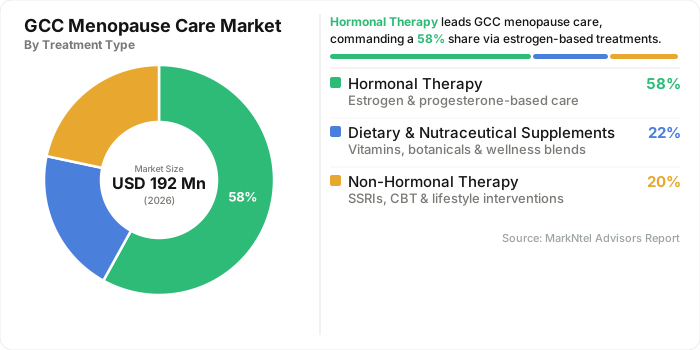
- Hormonal therapy remains the leading treatment segment, accounting for approximately 58% of the market share in 2026, reflecting its continued importance in the clinical management of menopause symptoms across GCC healthcare systems.
- By menopause stage, the perimenopause segment accounts for nearly 35% of market demand n 2026, driven by growing awareness and increasing preference for early symptom management before the onset of full menopause.
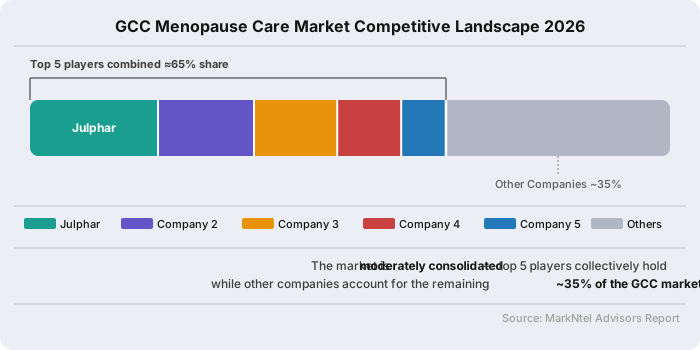
- The market remains moderately consolidated. The top five companies collectively account for an estimated 65% share, reflecting the strong presence of established pharmaceutical and healthcare players across the region.
GCC Menopause Care Market Size and Outlook
The GCC menopause care market is expected to register a CAGR of 8.20% during 2026–2032, supported by rising awareness of menopause-related health conditions, expanding access to specialized women’s healthcare services, increasing adoption of hormonal and non-hormonal treatment options, and stronger integration of menopause care within regional healthcare systems.
Regional awareness initiatives and healthcare summits have accelerated public discourse, with events such as the GCC Menopause Summit 2025 highlighting institutional commitment to education and clinical advancement. This shift is strongly supported by hospital-led programs in the UAE and Saudi Arabia, where specialty clinics are integrating menopause-focused consultations into broader women’s health departments. Over time, rising life expectancy and increasing urban female workforce participation have expanded the patient base requiring long-term hormonal and non-hormonal therapies.
Current market conditions reflect growing system-level support through structured advocacy and healthcare collaboration platforms across the GCC region. Organizations working in the Middle East emphasize the need for specialized menopause care access, workplace inclusion policies, and evidence-based treatment pathways across healthcare systems. At the same time, healthcare providers are expanding integrated service models combining gynecology, endocrinology, and mental wellness support within hospital networks. Telehealth adoption in Gulf countries is also improving consultation access, particularly for working women in urban commercial hubs.
Demand dynamics are increasingly influenced by end-user structures, where institutional healthcare providers such as hospitals and specialty clinics dominate service delivery.
Workplace-linked healthcare benefits in the government and private sectors are gradually improving consultation uptake among commercial employees, especially in the UAE and Qatar.
In parallel, outpatient care centers are becoming key access points for women seeking long-term symptom management rather than acute intervention. Industrial workforce populations, particularly expatriate women, are also contributing to the rising demand for affordable and flexible menopause care services.
Looking forward, the GCC menopause care market is projected to grow from USD 192 million in 2026 to USD 308 million by 2032, supported by national health transformation agendas and the integration of preventive women’s healthcare strategies. Advocacy-led initiatives promoting workplace policy reform and improved healthcare accessibility are strengthening long-term system readiness across the region. In addition, expanding digital health ecosystems and hospital partnerships are expected to enhance early diagnosis rates, treatment access, and continuity of care among aging female populations.
GCC Menopause Care Key Indicators
- The GCC Statistical Center recorded a total female population of approximately 22.9 million in 2024, a 15.8% increase between 2019 and 2024, with women of working age (15–64 years) numbering around 15.9 million; as female life expectancy rises and GCC native populations age, a progressively larger cohort of women is entering the perimenopausal window of 45–55 years, directly widening the addressable patient base for menopause diagnostics, hormonal therapies, and specialist care.
- According to WHO Regional Office for the Eastern Mediterranean (WHO/EMRO) data published in 2024, obesity prevalence among adult women in the Eastern Mediterranean Region reaches 50.1%, with GCC country-specific rates including Kuwait at 38%, Saudi Arabia at 35%, Qatar at 35%, and the UAE at 32%; obesity amplifies menopausal symptom severity — particularly vasomotor events , metabolic disruption, and joint complications — increasing clinical complexity and expanding demand for multi-modal menopause treatment protocols.
- The UAE Cabinet announced in March 2024 that mandatory health insurance would extend to all private-sector and domestic workers across all seven emirates, effective January 1, 2025; this policy expansion increases the pool of women with funded access to specialist gynecological consultations and prescription menopause therapies, removing a primary financial barrier that had suppressed treatment uptake in lower-income female worker segments.
- Saudi Arabia's Vision 2030 Healthcare Transformation Program mandates free breast cancer screening for all women over the age of 40; this government-mandated clinical touchpoint systematically draws perimenopausal women into routine healthcare interactions, creating referral pathways for concurrent menopa use evaluation and generating a structured pipeline of patients entering the formal menopause care system.
GCC Menopause Care Market Scope
| Category | Segments |
|---|---|
| By Treatment Type | Hormonal Therapy (Hormone Replacement Therapy (HRT), Estrogen-based drugs, Progestin-based drugs, Combination drugs, Others), Non-Hormonal Therapy (SSRIs (Selective Serotonin Reuptake Inhibitors), SNRIs (Serotonin-Norepinephrine Reuptake Inhibitors), Neurokinin 3 (NK3) Receptor Antagonists, Gabapentinoids, Others), Dietary & Nutraceutical Supplements (Herbal Supplements, Vitamins & Minerals, Phytoestrogens, Omega-3 Fatty Acids, Probiotics, Others), Others |
| By Form | Creams, Tablets, Pessaries, Patches, Injections, Others |
| By Route of Administration | Oral, Topical, Injectable, Vaginal, Others |
| By Stage of Menopause | Pre-Menopause, Perimenopause, Menopause, Post-Menopause |
| By Symptoms | Hot Flashes, Night Sweats, Mood Swings, Sleep Disturbances, Dryness & Skin Barrier Issues, Others |
| By Distribution Channel | Hospital Pharmacies, Retail Pharmacies, Online Pharmacies |
GCC Menopause Care Market Growth Drivers
Aging Population & Higher Life Expectancy Expanding Post-Menopausal Demand Base in GCC
A key structural driver of the GCC menopause care market is the steady rise in life expectancy combined with a rapidly aging female population. Improvements in healthcare access, chronic disease management, and living standards have significantly extended lifespan across GCC countries over the past decades. As a result, women are now spending a longer proportion of their lives in the post-menopausal phase, expanding long-term care needs. According to regional demographic projections, the population aged over 50 in the GCC is expected to reach 18.5% by 2025, up from 14.2% in 2020.
This demographic shift is translating directly into measurable demand expansion across healthcare systems in Saudi Arabia, the UAE, and neighboring GCC states. Higher shares of older women are increasing patient volumes for osteoporosis management, hormone therapy, cardiovascular monitoring, and preventive screening services. Life expectancy in GCC countries has improved to around 75–80 years due to healthcare investments and reduced mortality, strengthening chronic care demand pipelines. This expansion is visible in rising outpatient consultations and long-term treatment continuity across public and private healthcare facilities.
Unlike short-term adoption trends, this driver structurally increases market volume by expanding the absolute number of eligible patients requiring menopause-related care.
Government health transformation programs, including Saudi Vision 2030 and UAE healthcare modernization strategies, are improving access to specialized women’s health services.
Therefore, rising longevity and demographic ageing are creating a permanent and compounding expansion in menopause care demand across the GCC region.
Recent Trends
Rapid Rise in Dietary Supplements and Wellness Products
The GCC menopause care market is increasingly driven by rising consumption of dietary supplements and preventive wellness products focused on bone strength, hormonal balance, and healthy aging among midlife women. This trend accelerated as women experiencing menopause commonly use supplements such as calcium, vitamin D, magnesium, omega-3, collagen, probiotics, and plant-based protein products to address bone density loss, fatigue, hormonal imbalance, weight management, and cardiovascular risks. GCC countries report high rates of vitamin D deficiency and osteoporosis among women, which has increased healthcare focus on preventive nutrition and supplementation. Saudi Arabia’s Ministry of Health expanded women’s wellness awareness initiatives during 2025. Major regional pharmacy chains and wellness retailers now actively promote calcium, collagen, omega-3, magnesium, and vitamin D supplements tailored to women above forty.
The trend is structurally changing GCC healthcare distribution channels by shifting menopause management toward retail wellness ecosystems, e-commerce platforms, and subscription-based nutrition services. Regional healthcare events such as Arab Health 2025, highlighted increased investment in nutraceuticals, personalized nutrition, and healthy-aging solutions for women across GCC countries. For instance, Scoop wholefoods UAE participated in the GCC Menopause Summit 2025, showcasing organic wellness products, wholefoods, and natural nutrition solutions targeted at women’s long-term wellbeing and menopause support.
Retailers are also increasing the availability of halal-certified, botanical, and clean-label supplements as consumers increasingly prefer natural and culturally aligned menopause wellness products.
The trend is expected to persist because GCC governments continue prioritizing preventive healthcare spending, digital pharmacy expansion, and chronic disease reduction under long-term national transformation programs. Saudi Vision 2030 and UAE healthcare modernization policies continue encouraging healthier lifestyles, early intervention, and stronger private-sector participation in preventive healthcare services. Growing digital health adoption and rising female health awareness are also increasing recurring demand for supplements integrated with teleconsultation, wellness subscriptions, and online pharmacy ecosystems. Consequently, menopause care in the GCC is evolving from episodic pharmaceutical treatment toward continuous nutrition-led wellness management supported by scalable retail and digital healthcare infrastructure.
Opportunities and Challenges
Workplace Support Gap in GCC Menopause Care Market Challenge Turning into Corporate Opportunity
A key challenge in the GCC menopause care market is the lack of structured workplace support for women experiencing menopause during their peak career years. Most organizations do not have formal policies or accommodations for symptoms such as fatigue, anxiety, sleep disruption, and reduced concentration, even though these directly impact productivity and performance. As a result, many women continue working without support or gradually disengage from active roles, leading to presenteeism, stress, and potential loss of experienced talent. Cultural hesitation around discussing menopause further limits open dialogue and delays the introduction of workplace solutions.
At the same time, this gap is creating a strong opportunity for corporate wellness programs and advisory services in the GCC. Companies are beginning to recognize the need for menopause awareness sessions, manager training, and employee wellbeing initiatives that normalize the conversation and reduce stigma. HR consultancy services are also gaining relevance by helping organizations design menopause-inclusive policies such as flex ible work arrangements, improved healthcare benefits, and structured employee assistance programs focused on midlife women’s health needs.
Over time, this shift is expected to deliver measurable business benefits, including higher employee retention, improved productivity, and stronger employer branding. Organizations that adopt menopause-friendly workplace strategies will be better positioned to retain skilled female professionals and align with broader ESG and diversity goals. This is gradually turning a current structural gap into a developing opportunity space within corporate wellness and HR transformation services in the GCC.
Segmentation Analysis
Dominance of Hormonal Therapy in GCC Menopause Care Market
menopause care market with an estimated 58% share, primarily due to its clinical effectiveness in addressing the underlying hormonal changes associated with menopause. By directly supplementing declining estrogen and progesterone levels, hormonal therapy remains one of the most widely adopted treatment approaches for managing menopausal symptoms across the region. Clinical endocrinology guidelines consistently position menopausal hormone therapy (MHT) as the most effective option for moderate to severe vasomotor symptoms such as hot flashes and sleep disturbance, especially in healthy women under 60. This strong clinical consensus makes it the default first-line prescription across specialist gynecology practices in GCC hospitals.
In terms of industry adoption, major pharmaceutical companies supply standardized estrogen and combination therapies that are widely used in hospital formularies and women’s health clinics. Bayer AG provides estrogen-based and combination hormone products used in menopause management . These products are embedded in structured prescribing pathways followed by endocrinologists and gynecologists across UAE and Saudi Arabia, supporting consistent usage across public and private healthcare systems.
The market impact is significant because hormonal therapy delivers rapid symptom relief, high patient adherence, and predictable clinical outcomes, reducing repeated outpatient consultations for unmanaged menopausal symptoms. It also shapes pharmaceutical investment patterns, pushing companies toward safer delivery systems such as transdermal patches and lower-dose bioidentical formulations, which improve safety perception among patients and physicians. As a result, hormonal therapy remains structurally dominant in GCC menopause care due to its clinical effectiveness, institutional trust, and integration into standardized women’s health treatment protocols. By Treatment type, the market is further segmented into the following categories:
- Hormonal Therapy
- Non-Hormonal Therapy
- Dietary & Nutraceutical Supplements
Perimenopause Treatment Adoption Expands Across GCC Healthcare Systems
Perimenopause leads the GCC menopause care market with a share of 35% because it is the first and most symptomatic transition stage, where hormonal fluctuations begin while reproductive function is still active. Women in this phase often experience irregular cycles, mood changes, and sleep disruption, prompting earlier clinical visits compared to post-menopause. GCC healthcare systems are increasingly identifying this stage through structured women’s health screening programs in hospitals and specialty clinics. For example, UAE hospitals now run dedicated perimenopause clinics offering early hormonal evaluation and multidisciplinary care pathways for women aged 40–50.
A clear industry example is the establishment of specialised perimenopause clinics in leading UAE hospitals, which provide structured diagnostic and treatment pathways combining gynecology, endocrinology, and lifestyle medicine. Sheikh Shakhbout Medical City launched a dedicated perimenopause clinic offering multidisciplinary evaluation, including hormonal testing, nutrition support, and psychological care.
Medcare Women & Children Hospital also provides advanced hormonal evaluation and personalized perimenopause management protocols. These structured systems ensure early-stage patients are actively captured into long-term care cycles. The market impact is significant because perimenopause creates the longest treatment duration window in menopause care, driving sustained demand for hormonal and non-hormonal therapies. Early diagnosis increases lifetime treatment adherence and expands pharmaceutical utilization across GCC women’s health programs.
Hospital-led screening initiatives such as Aster Clinics’ “Care for Her” program further institutionalize early -stage detection and structured follow-ups across UAE healthcare networks. Aster Clinics. This shift reduces late-stage complications and increases preventive care penetration, making perimenopause the most commercially and clinically important stage in the GCC menopause care pathway. By stage of menopause, the market is further segmented into the following categories:
- Pre-Menopause
- Perimenopause
- Menopause
- Post-Menopause
Geographical Analysis
Saudi Arabia leads the GCC menopause care market with 45% shares, due to its largest population base, highest healthcare infrastructure investment, and fastest-expanding women’s health ecosystem under Vision 2030. The country accounts for the largest share of GCC healthcare spending and has achieved near-universal healthcare access expansion, with above 97% population coverage. This large-scale system naturally generates higher diagnosis and treatment volumes for menopause-related conditions compared to other GCC countries.
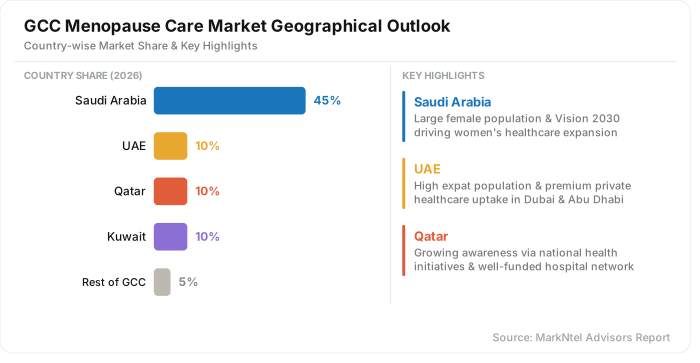
The dominance is strongly supported by government-led healthcare transformation programs under Vision 2030, which prioritize preventive care, chronic disease management, and women’s health specialization. The Health Sector Transformation Program has significantly expanded digital health, early screening, and specialist clinics across the Kingdom. These reforms directly improve early detection of perimenopause and menopause conditions, increasing treatment penetration and structured care pathways.
From an industry perspective, Saudi Arabia attracts the highest pharmaceutical and healthcare investment in the GCC, with global companies supplying hormone therapies and menopause-related treatments through hospital systems. Large healthcare groups and tertiary hospitals standardize treatment protocols, ensuring consistent adoption of hormonal and non-hormonal therapies. Combined with strong policy backing and high patient volume, this creates a self-reinforcing ecosystem that positions Saudi Arabia as the clear leader in the GCC menopause care market.
GCC Menopause Care Market Competitive Landscape
- The GCC menopause care market remains moderately consolidated, dominated by a mix of local manufacturers and multinational pharmaceutical leaders. Local players mainly support generics, distribution, and regional supply stability, while global firms dominate hormonal therapy, SSRIs/SNRIs, and specialty menopause treatments. Overall, the top 5 companies, such as, Julphar (Gulf Pharmaceutical Industries), Neopharma, Pharmax Pharmaceuticals – UAE, KSPICO (Kuwait Saudi Pharmaceutical Industries), and Bahrain Pharma collectively hold an estimated 65% combined share in branded hormonal and menopause-related therapeutics across the region.
Major Companies in the GCC Menopause Care Market
- Julphar (Gulf Pharmaceutical Industries)
- Neopharma
- Pharmax Pharmaceuticals – UAE
- KSPICO (Kuwait Saudi Pharmaceutical Industries)
- Bahrain Pharma
- National Pharmaceutical Industries (NPI) Oman
- Oman Pharmaceutical Products (OPP)
- Qatar Pharmaceutical Industries (QPI)
- QLife Pharma
- Tabuk Pharmaceuticals
- SPIMACO (Saudi Pharmaceutical Industries)
- Jamjoom Pharmaceuticals
- AstraZeneca
- GlaxoSmithKline (GSK)
- Eli Lilly
- Organon
- Merck & Co. (MSD)
- Theramex
- Besins Healthcare
- Viatris
GCC Menopause Care Market News and Recent Developments
2026: Mubadala Bio Expands Women’s Health Portfolio with Hormone Therapy
Mubadala Bio has expanded its women’s health portfolio by launching a new hormone therapy.
The product focuses on addressing hormonal imbalance conditions commonly linked to midlife women’s health. It strengthens the company’s presence in reproductive and endocrine-related therapeutics. The move signals growing pharmaceutical focus on women-specific hormonal care in the UAE.
Impact analysis: This strengthens the clinical foundation of menopause and perimenopause treatment in the GCC. It supports local availability of hormone therapies, reducing reliance on imported solutions. It encourages more pharma companies to invest in women’s midlife health pipelines. Overall, it accelerates the shift toward structured, medicalized menopause care in the region.
2025: M42’s Danat Al Emarat Hospital Partners for Advanced Women’s Health Services
Danat Al Emarat Hospital, under M42, has partnered with Profam to enhance women’s health services. The collaboration focuses on advanced reproductive and maternal healthcare solutions.
It aims to improve access to specialized diagnostics and treatment pathways for women.
The initiative strengthens integrated healthcare delivery for female patients in Abu Dhabi.
Impact Analysis: This builds a stronger hospital infrastructure that can extend into menopause care services. It enhances continuity of care across reproductive, perimenopause, and postmenopause stages. It signals increasing institutional focus on specialized women’s health ecosystems in the GCC.
Overall, it lays the groundwork for hospital-led menopause clinics and integrated hormonal care pathways.
2025: Aspen Pharma–Viramal Women’s Health Licensing Agreement
Aspen Pharma has signed an exclusive licensing agreement with Viramal for a women’s health portfolio. The agreement covers the commercialization of multiple therapies across Europe, the Middle East, and other regions, including GCC. The portfolio includes treatments targeting hormonal health, vaginal health, and menopausal conditions. It strengthens Aspen’s strategic focus on expanding women’s lifecycle healthcare products.
Impact analysis: This directly strengthens the pharmaceutical backbone of menopause care in the GCC region. It increases the availability of hormone-based and menopausal symptom therapies through licensed global pipelines. It signals rising cross-border pharma partnerships targeting women’s midlife health. Overall, it accelerates commercialization of specialized menopause treatment options in GCC healthcare systems.
- Market Segmentation
- Introduction
- Product Definition
- Research Process
- Assumptions
- Executive Summary
- GCC Menopause Care Market Policies, Regulations, and Product Standards
- GCC Menopause Care Market Trends & Developments
- GCC Menopause Care Market Dynamics
- Growth Factors
- Challenges
- GCC Menopause Care Market Hotspot & Opportunities
- GCC Menopause Care Market Outlook, 2022-2032F
- Market Size & Outlook
- By Revenues (USD Million)
- Market Share & Analysis
- By Treatment Type- Market Size & Forecast 2022-2032, USD Million
- Hormonal Therapy
- Hormone Replacement Therapy (HRT)
- Estrogen-based drugs
- Progestin-based drugs
- Combination drugs
- Others
- Non-Hormonal Therapy
- SSRIs (Selective Serotonin Reuptake Inhibitors)
- SNRIs (Serotonin-Norepinephrine Reuptake Inhibitors)
- Neurokinin 3 (NK3) Receptor Antagonists
- Gabapentinoids
- Others
- Dietary & Nutraceutical Supplements
- Herbal Supplements
- Vitamins & Minerals
- Phytoestrogens
- Omega-3 Fatty Acids
- Probiotics
- Others
- Others
- Hormonal Therapy
- By Form- Market Size & Forecast 2022-2032, USD Million
- Creams
- Tablets
- Pessaries
- Patches
- Injections
- Others
- By Route of Administration- Market Size & Forecast 2022-2032, USD Million
- Oral
- Topical
- Injectable
- Vaginal
- Others
- By Stage of Menopause- Market Size & Forecast 2022-2032, USD Million
- Pre-Menopause
- Perimenopause
- Menopause
- Post-Menopause
- By Symptoms- Market Size & Forecast 2022-2032, USD Million
- Hot Flashes
- Night Sweats
- Mood Swings
- Sleep Disturbances
- Dryness & Skin Barrier Issues
- Others
- By Distribution Channel- Market Size & Forecast 2022-2032, USD Million
- Hospital Pharmacies
- Retail Pharmacies
- Online Pharmacies
- By Country
- Bahrain
- Kuwait
- Oman
- Qatar
- Saudi Arabia
- United Arab Emirates
- By Company
- Competition Characteristics
- Market Share & Analysis
- By Treatment Type- Market Size & Forecast 2022-2032, USD Million
- Market Size & Outlook
- Bahrain Menopause Care Market Outlook, 2022-2032F
- Market Size & Outlook
- By Revenues (USD Million)
- Market Share & Analysis
- By Treatment Type- Market Size & Forecast 2022-2032, USD Million
- By Form- Market Size & Forecast 2022-2032, USD Million
- By Route of Administration- Market Size & Forecast 2022-2032, USD Million
- By Stage of Menopause- Market Size & Forecast 2022-2032, USD Million
- By Symptoms- Market Size & Forecast 2022-2032, USD Million
- By Distribution Channel- Market Size & Forecast 2022-2032, USD Million
- Market Size & Outlook
- Kuwait Menopause Care Market Outlook, 2022-2032F
- Market Size & Outlook
- By Revenues (USD Million)
- Market Share & Analysis
- By Treatment Type- Market Size & Forecast 2022-2032, USD Million
- By Form- Market Size & Forecast 2022-2032, USD Million
- By Route of Administration- Market Size & Forecast 2022-2032, USD Million
- By Stage of Menopause- Market Size & Forecast 2022-2032, USD Million
- By Symptoms- Market Size & Forecast 2022-2032, USD Million
- By Distribution Channel- Market Size & Forecast 2022-2032, USD Million
- Market Size & Outlook
- Oman Menopause Care Market Outlook, 2022-2032F
- Market Size & Outlook
- By Revenues (USD Million)
- Market Share & Analysis
- By Treatment Type- Market Size & Forecast 2022-2032, USD Million
- By Form- Market Size & Forecast 2022-2032, USD Million
- By Route of Administration- Market Size & Forecast 2022-2032, USD Million
- By Stage of Menopause- Market Size & Forecast 2022-2032, USD Million
- By Symptoms- Market Size & Forecast 2022-2032, USD Million
- By Distribution Channel- Market Size & Forecast 2022-2032, USD Million
- Market Size & Outlook
- Qatar Menopause Care Market Outlook, 2022-2032F
- Market Size & Outlook
- By Revenues (USD Million)
- Market Share & Analysis
- By Treatment Type- Market Size & Forecast 2022-2032, USD Million
- By Form- Market Size & Forecast 2022-2032, USD Million
- By Route of Administration- Market Size & Forecast 2022-2032, USD Million
- By Stage of Menopause- Market Size & Forecast 2022-2032, USD Million
- By Symptoms- Market Size & Forecast 2022-2032, USD Million
- By Distribution Channel- Market Size & Forecast 2022-2032, USD Million
- Market Size & Outlook
- Saudi Arabia Menopause Care Market Outlook, 2022-2032F
- Market Size & Outlook
- By Revenues (USD Million)
- Market Share & Analysis
- By Treatment Type- Market Size & Forecast 2022-2032, USD Million
- By Form- Market Size & Forecast 2022-2032, USD Million
- By Route of Administration- Market Size & Forecast 2022-2032, USD Million
- By Stage of Menopause- Market Size & Forecast 2022-2032, USD Million
- By Symptoms- Market Size & Forecast 2022-2032, USD Million
- By Distribution Channel- Market Size & Forecast 2022-2032, USD Million
- Market Size & Outlook
- GCC Menopause Care Market Key Strategic Imperatives for Success & Growth
- Competitive Outlook
- Company Profiles
- Julphar (Gulf Pharmaceutical Industries)
- Business Description
- Product Portfolio
- Collaborations & Alliances
- Recent Developments
- Financial Details
- Others
- Neopharma
- Business Description
- Product Portfolio
- Collaborations & Alliances
- Recent Developments
- Financial Details
- Others
- Pharmax Pharmaceuticals – UAE
- Business Description
- Product Portfolio
- Collaborations & Alliances
- Recent Developments
- Financial Details
- Others
- KSPICO (Kuwait Saudi Pharmaceutical Industries)
- Business Description
- Product Portfolio
- Collaborations & Alliances
- Recent Developments
- Financial Details
- Others
- Bahrain Pharma
- Business Description
- Product Portfolio
- Collaborations & Alliances
- Recent Developments
- Financial Details
- Others
- National Pharmaceutical Industries (NPI) Oman
- Business Description
- Product Portfolio
- Collaborations & Alliances
- Recent Developments
- Financial Details
- Others
- Oman Pharmaceutical Products (OPP)
- Business Description
- Product Portfolio
- Collaborations & Alliances
- Recent Developments
- Financial Details
- Others
- Qatar Pharmaceutical Industries (QPI)
- Business Description
- Product Portfolio
- Collaborations & Alliances
- Recent Developments
- Financial Details
- Others
- QLife Pharma
- Business Description
- Product Portfolio
- Collaborations & Alliances
- Recent Developments
- Financial Details
- Others
- Tabuk Pharmaceuticals
- Business Description
- Product Portfolio
- Collaborations & Alliances
- Recent Developments
- Financial Details
- Others
- SPIMACO (Saudi Pharmaceutical Industries)
- Business Description
- Product Portfolio
- Collaborations & Alliances
- Recent Developments
- Financial Details
- Others
- Jamjoom Pharmaceuticals
- Business Description
- Product Portfolio
- Collaborations & Alliances
- Recent Developments
- Financial Details
- Others
- AstraZeneca
- Business Description
- Product Portfolio
- Collaborations & Alliances
- Recent Developments
- Financial Details
- Others
- GlaxoSmithKline (GSK)
- Business Description
- Product Portfolio
- Collaborations & Alliances
- Recent Developments
- Financial Details
- Others
- Eli Lilly
- Business Description
- Product Portfolio
- Collaborations & Alliances
- Recent Developments
- Financial Details
- Others
- Organon
- Business Description
- Product Portfolio
- Collaborations & Alliances
- Recent Developments
- Financial Details
- Others
- Julphar (Gulf Pharmaceutical Industries)
- Company Profiles
- Disclaimer

MarkNtel Advisors follows a robust and iterative research methodology designed to ensure maximum accuracy and minimize deviation in market estimates and forecasts. Our approach combines both bottom-up and top-down techniques to effectively segment and quantify various aspects of the market. A consistent feature across all our research reports is data triangulation, which examines the market from three distinct perspectives to validate findings. Key components of our research process include:
1. Scope & Research Design At the outset, MarkNtel Advisors define the research objectives and formulate pertinent questions. This phase involves determining the type of research—qualitative or quantitative—and designing a methodology that outlines data collection methods, target demographics, and analytical tools. They also establish timelines and budgets to ensure the research aligns with client goals.
2. Sample Selection and Data Collection In this stage, the firm identifies the target audience and determines the appropriate sample size to ensure representativeness. They employ various sampling methods, such as random or stratified sampling, based on the research objectives. Data collection is carried out using tools like surveys, interviews, and observations, ensuring the gathered data is reliable and relevant.
3. Data Analysis and Validation Once data is collected, MarkNtel Advisors undertake a rigorous analysis process. This includes cleaning the data to remove inconsistencies, employing statistical software for quantitative analysis, and thematic analysis for qualitative data. Validation steps are taken to ensure the accuracy and reliability of the findings, minimizing biases and errors.

4. Data Forecast and FinalizationThe final phase involves forecasting future market trends based on the analyzed data. MarkNtel Advisors utilize predictive modeling and time series analysis to anticipate market behaviors. The insights are then compiled into comprehensive reports, featuring visual aids like charts and graphs, and include strategic recommendations to inform client decision-making
We offer flexible licensing options to cater to varying organizational needs. Choose the pricing pack that best suits your requirements:
Buy Now Inquire Before Buying
 Request Customization