

By Product Type (Hydrating Toners, Exfoliating Toners, Treatment Toners, Astringent Toners, Skin Fresheners/Bracers), By Format (Liquid Toners, Mist Toners, Gel Toners, Toner Pads), By Ingredient Type... ... , By Ingredient Type (Natural -Based, Synthetic/Chemical-Based, Hybrid (Natural + Active Ingredients)), By Skin Type (Oily Skin, Dry Skin, Combination Skin, Sensitive Skin, Normal Skin), By Gender (Men, Women, Unisex), By Price Range (Mass, Mid-Range, Premium), By Application (Hydration, Cleansing & Residue Removal, Skin Preparation, Oil Control, Brightening, Anti-Aging Care, Skin Soothing/Calming), By Distribution Channel (Offline (Supermarkets/Hypermarkets, Specialty Stores, Pharmacies/Drug Stores, Department Stores), Online (E-commerce Marketplaces, Brand Websites (DTC))), By Packaging Type (Bottles, Spray Containers, Pump Dispensers, Sachets Packs, Jars/Pad Containers), By End User (Consumers, /Institutional (Salons & Spas, Beauty Clinics, Dermatology Centers, Makeup Artists)), and others Read more
- FMCG
- May 2026
- 135
- PDF, Excel, PPT
China Skin Toner Market Key Takeaways
- The China Skin Toner Market reached USD 123 million in 2026 from USD 110 million in 2025, projected to hit USD 198 million by 2032 at 8.26% CAGR.
- In 2026, hydrating toners lead product demand in the industry with nearly 45% share.
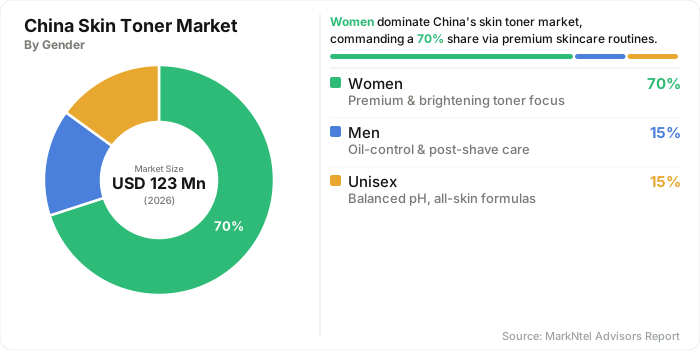
- By gender category, women dominated the sector with around 70% share in 2026.
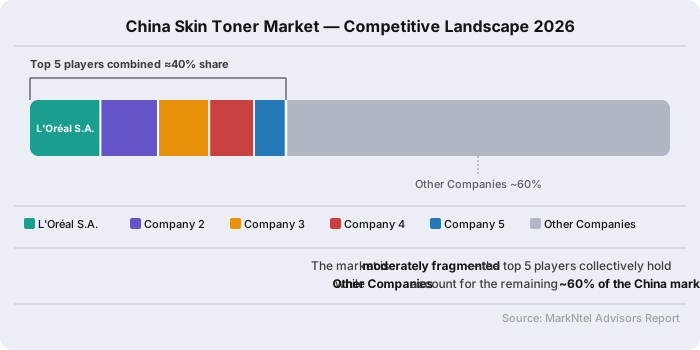
- The industry is moderately fragmented, with the top five players collectively accounting for approximately 40% share, reflecting strong competition across global and domestic brands.
China Skin Toner Market Size and Outlook
The China skin toner market is projected to register a CAGR of approximately 8.26% during the forecast period i.e., 2026-32. This growth is driven by evolving consumer preferences, supported by digital commerce expansion and continuous product innovation. Increasing online accessibility and brand visibility are strengthening demand across urban and semi-urban regions, while improved distribution networks are enabling wider penetration of premium skincare offerings across diverse income segments nationwide.
China’s cosmetics ecosystem further reinforces this outlook, with transaction volumes exceeding USD 151.22 billion in 2024 and supported by more than 20,000 enterprises operating across the value chain, as the disposable income, which reached approximately USD 5,747 per capita in 2024, is accelerating premium skincare demand in China and encouraging consumers to shift toward high-efficacy formulations. Simultaneously, cosmetics retail sales reached nearly USD 58 billion, reflecting consistent growth in consumption and increasing product adoption across the country.
Moreover, urban consumption growth and changing lifestyle patterns are contributing to greater awareness of skincare routines, particularly among younger demographics. The emergence of derma-cosmetic innovation, supported by scientific validation and dermatological positioning, is enabling brands to target specific skin concerns effectively. This is enhancing consumer confidence and supporting higher spending on advanced toner formulations within competitive product segments across urban markets and evolving consumer groups with rising purchasing power.
Taken together, regulatory advancement and consumption expansion are functioning as complementary forces, elevating product standards, strengthening consumer trust, and sustaining long-term growth potential within the China skin toner industry, which is projected to grow from USD 123 million in 2026 to USD 198 million by 2032. These dynamics are encouraging premium product development, fostering innovation in formulation technologies, and enabling brands to capture higher-value consumer segments while reinforcing long-term competitiveness across both domestic and international skincare markets through continuous innovation and strategic brand positioning efforts.
China Skin Toner Market Key Indicators
- China’s urbanization rate reached 67% in 2024, reflecting steady migration toward cities and expanding access to organized retail infrastructure . This transition is significantly enhancing exposure to dermatology awareness, premium beauty retail formats, and structured skincare routines. As urban consumers increasingly adopt multi-step regimens, demand for toner products is rising, strengthening long-term consumption patterns within the China skin toner market through evolving urban skincare adoption dynamics.
- Douyin is redefining product discovery by integrating content, commerce, and advertising into a closed-loop ecosystem. With over 760 million daily active users and a strong digital advertising share, the platform accelerates purchasing decisions through livestream demonstrations and influencer-driven education . This model is particularly impactful among younger demographics, enhancing conversion efficiency and driving toner demand through highly interactive and immersive livestream commerce ecosystems.
- China’s working-age population, totaling approximately 857.98 million individuals aged 16–59, represents a substantial consumer base with rising disposable income and grooming awareness . This demographic is increasingly prioritizing personal care and preventive skincare, contributing to consistent demand for daily-use products. The scale and spending potential of this group are reinforcing sustained market expansion, supported by evolving lifestyle trends and increasing focus on youth-driven skincare demand.
China Skin Toner Market Scope
| Category | Segments |
|---|---|
| By Product Type | Hydrating Toners, Exfoliating Toners, Treatment Toners, Astringent Toners, Skin Fresheners/Bracers |
| By Format | Liquid Toners, Mist Toners, Gel Toners, Toner Pads |
| By Ingredient Type | Natural -Based, Synthetic/Chemical-Based, Hybrid (Natural + Active Ingredients |
| By Skin Type | Oily Skin, Dry Skin, Combination Skin, Sensitive Skin, Normal Skin |
| By Gender | Men, Women, Unisex |
| By Price Range | Mass, Mid-Range, Premium |
| By Application | Hydration, Cleansing & Residue Removal, Skin Preparation, Oil Control, Brightening, Anti-Aging Care, Skin Soothing/Calming |
| By Distribution Channel | Offline (Supermarkets/Hypermarkets, Specialty Stores, Pharmacies/Drug Stores, Department Stores), Online (E-commerce Marketplaces, Brand Websites (DTC, |
| By Packaging Type | Bottles, Spray Containers, Pump Dispensers, Sachets Packs, Jars/Pad Containers |
| By End User | Consumers, /Institutional (Salons & Spas, Beauty Clinics, Dermatology Centers, Makeup Artists |
China Skin Toner Market Growth Drivers
Rising E-commerce and Livestream Ecosystems
China’s expanding digital beauty commerce ecosystem is significantly accelerating skincare consumption, supported by the country’s robust e-commerce infrastructure and rising digital adoption. According to official statistics, online retail sales reached approximately USD 2.22 trillion, growing 8.6% year-on-year, with physical goods contributing 26.1% of total retail sales. This reflects deepening online skincare penetration and a sustained shift toward digitally enabled consumer purchasing behavior nationwide.
The rapid rise of livestream shopping conversion is further transforming how consumers discover and purchase skincare products. Live-streaming e-commerce retail sales reached approximately USD 598 billion, contributing nearly 80% of incremental growth within the e-commerce sector. Major platforms, including WeChat Channels, Xiaohongshu, Taobao, Douyin, and Kuaishou, are strengthening social commerce engagement through influencer-led promotions, real-time demonstrations, and seamless purchase integration across diverse consumer touchpoints.
Simultaneously, advancements in omnichannel retail integration and direct-to-consumer skincare models are enabling brands to enhance personalization, improve demand forecasting, and streamline distribution efficiencies. These capabilities are becoming critical where competitive differentiation increasingly depends on data-driven consumer insights and agile digital marketing strategies across platforms. The convergence of scalable e-commerce ecosystems and immersive livestream formats is amplifying product visibility and sustaining long-term demand expansion in the China skin toner market.
Recent Trends
Rise of TCM-Inspired and Bioactive Toner Formulations
Traditional Chinese Medicine (TCM)-inspired skincare is reshaping toner innovation as consumers increasingly prefer herbal skincare formulations, fermented ingredient toners, and microbiome-friendly skincare solutions linked to long-term skin wellness. Government initiatives are accelerating this shift, with plans to establish 180 domestic and 30 international TCM standards by 2026, strengthening regulatory consistency, product validation, and scientific integration across evolving formulation ecosystems nationwide effectively.
This policy support is enhancing consumer trust while encouraging brands to combine traditional botanical knowledge with modern dermatological science. Consequently, toners enriched with plant extracts, fermentation-derived actives, and skin-balancing compounds are gaining traction, supported by rising demand for natural active ingredients and skin barrier strengthening solutions that deliver measurable efficacy across diverse consumer demographics and evolving skincare preferences.
Product innovation further reinforces this trajectory, illustrated by Hanyul’s “Young Mugwort Moisture Soothing” toner line, which utilizes medicinal herbs and proprietary fermentation technologies to deliver hydration and calming benefits. Such developments highlight the convergence of heritage-driven formulations and advanced skincare science, strengthening premiumization trends and supporting sustained product differentiation in the China skin toner market.
China Skin Toner Market Opportunities and Challenges
Regulatory Compliance Amid Expanding Male Skincare Potential
China’s evolving cosmetic compliance framework in China is creating significant challenges for toner manufacturers, particularly following the NMPA’s 2024 safety assessment measures. These regulations intensify requirements around ingredient safety substantiation, toxicological validation, and risk-based documentation, increasing development costs and extending product approval timelines. As brands innovate with microbiome and bioactive formulations, regulatory scrutiny is becoming a critical barrier within the China skin toner industry.
The heightened compliance burden is particularly impactful for companies developing advanced functional formulations, where validation and documentation complexity are substantially higher. This environment is accelerating the need for regulatory testing capabilities and clinical efficacy validation, forcing both domestic and international brands to invest in R&D infrastructure and compliance expertise to sustain innovation, ensure product safety, and maintain competitive positioning across skincare ecosystems.
Conversely, strong macroeconomic tailwinds are creating new growth avenues, supported by China’s long-term consumption expansion and urbanization strategies. Rising disposable incomes and shifting grooming habits are driving the emergence of the China male skincare market , where demand for premium toner products remains underpenetrated. Taken together, these factors are unlocking diversified growth opportunities within the China skin toner market.
Segmentation Insights
Hydrating Toners Lead with Strong Consumer Adoption
Hydrating Toners account for nearly 45% of total demand, driven by rising consumer preference for daily-use products that support moisture barrier repair, long-lasting hydration, and overall skin health maintenance. Increasing exposure to urban pollution, climate variability, and indoor air conditioning has intensified concerns around skin dehydration, positioning hydrating toners as essential components within multi-step skincare routines across diverse consumer segments in China.
The segment’s dominance is further supported by widespread adoption of hyaluronic acid toners, glycerin-based solutions, and botanical hydration blends that deliver immediate and sustained moisture retention benefits. These formulations align with evolving consumer demand for skin hydration solutions that are lightweight, fast-absorbing, and compatible with layered skincare regimens, particularly among younger demographics and urban professionals seeking preventive skincare approaches.
Additionally, strong product accessibility across mass and premium price tiers, combined with digital marketing and influencer-led education, is reinforcing usage frequency and brand loyalty. Hydrating toners also enhance absorption of subsequent products, strengthening their indispensable role in skincare routines and sustaining their leadership within the China skin toner Industry. Based on product type, the scope has been bifurcated into:
- Hydrating Toners
- Exfoliating Toners
- Treatment Toners
- Astringent Toners
- Skin Fresheners/Bracers
Women Lead Demand with Consistent Skincare Adoption Patterns
Women account for approximately 70% of total demand, reflecting strong and consistent female skincare consumption patterns across urban and semi-urban regions. Higher product awareness, early adoption of preventive skincare, and greater willingness to invest in multi-step routines have positioned women as the primary consumer base, driving sustained demand across both mass and premium toner categories in China.
This dominance is further reinforced by rising anti-aging skincare demand, as women increasingly prioritize hydration, skin barrier protection, and long-term skin health. The growing influence of dermatological awareness, coupled with exposure to digital beauty content, is accelerating the adoption of targeted toner formulations designed to address concerns such as fine lines, uneven texture, and sensitivity across different age groups.
Additionally, the prevalence of multi-step beauty routines among female consumers significantly boosts toner usage frequency, as toners are viewed as essential preparatory steps that enhance the absorption of serums and creams. Strong product availability, influencer-led marketing, and continuous innovation tailored to women’s evolving skincare needs are further consolidating segment leadership within the China skin toner industry. The analysis includes the following gender-based consumer segments:
- Men
- Women
- Unisex
China Skin Toner Market Competitive Analysis
The China skin toner industry is moderately fragmented, with a mix of global skincare conglomerates and rapidly growing domestic brands competing across premium, mass, and dermocosmetic segments. The presence of multiple product categories, alongside diverse formulation approaches, contributes to a highly competitive and innovation-driven landscape. The top five companies, including L'Oréal S.A., The Estée Lauder Companies Inc., Shiseido Company, Limited, Procter & Gamble Company, and Proya Cosmetics Co., Ltd., collectively account for approximately 40% of the total market share.
Key players in the China Skin Toner Industry
- L'Oréal S.A.
- The Estée Lauder Companies Inc.
- Shiseido Company, Limited
- Procter & Gamble Company
- Proya Cosmetics Co., Ltd.
- JALA Group Co., Ltd.
- Shanghai Jahwa United Co., Ltd.
- Yunnan Botanee Bio-Technology Group Co., Ltd.
- Bloomage Biotechnology Corporation Limited
- Shanghai Pehchaolin Daily Chemical Co., Ltd.
- Others
China Skin Toner Industry News and Recent Developments
October 2025: Florasis Expands into Toner-Based Skincare Line
Florasis (Huaxizi), a leading Chinese beauty brand, expanded its portfolio by launching a dedicated skincare range that includes toners, essences, creams, and lotions. The expansion reflects the brand’s strategic shift from makeup-led offerings to functional skincare, driven by increasing demand for hydration-focused and sensitive-skin solutions in China’s rapidly growing beauty market.
Impact Analysis: This development highlights the accelerating premiumization and functional shift within China skincare industry. By integrating toners into a broader skincare system, Florasis is responding to rising consumer preference for multi-step hydration and barrier-repair routines. The move is expected to boost the adoption of toner-essence hybrid systems, particularly among urban Gen Z consumers who prioritize skin health, simplicity, and visible efficacy in daily skincare routines.
February 2025: The Ordinary Enters China via Sephora with Functional Toner Expansion
The Ordinary (Deciem / Estée Lauder Companies) officially entered mainland China through Sephora China, introducing a curated range of 24 products, including glycolic acid-based toning solutions adapted for regulatory and local skin needs.
Impact Analysis: This launch reflects the acceleration of “function-first toner” positioning in China, where toners are increasingly treated as treatment steps rather than basic hydration. The Ordinary’s introduction of acid-based toners and barrier-friendly formulations strengthens the shift toward clinical, transparent, and sensitive-skin-compatible toning products, especially among younger consumers prioritizing results over layered luxury skincare narratives.
- Market Segmentation
- Introduction
- Product Definition
- Research Process
- Assumptions
- Executive Summary
- China Skin Toner Market Policies, Regulations, and Product Standards
- China Skin Toner Production Trend 2022-2032
- China Skin Toner Trend by Type of Product Type
- Hydrating Toners
- Exfoliating Toners
- Treatment Toners
- Astringent Toners
- Skin Fresheners/Bracers
- Company-Wise Production Plants and Statistics
- Installed Production Capacity
- Actual Production
- Planned Production Target
- China Skin Toner Trend by Type of Product Type
- China Skin Toner Pricing Analysis 2022-2032
- China Skin Toner Pricing Trend 2022-2032
- China Skin Toner Pricing Trend by Product Type 2022-2032
- Hydrating Toners
- Exfoliating Toners
- Treatment Toners
- Astringent Toners
- Skin Fresheners/Bracers
- China Skin Toner Market Dynamics
- Growth Factors
- Challenges
- China Skin Toner Market Hotspot & Opportunities
- China Skin Toner Market Outlook, 2022-2032F
- Market Size & Outlook
- By Revenues (USD Million)
- Market Share & Outlook
- By Product Type- Market Size & Forecast 2022-2032, USD Million
- Hydrating Toners
- Exfoliating Toners
- Treatment Toners
- Astringent Toners
- Skin Fresheners/Bracers
- By Format- Market Size & Forecast 2022-2032, USD Million
- Liquid Toners
- Mist Toners
- Gel Toners
- Toner Pads
- By Ingredient Type- Market Size & Forecast 2022-2032, USD Million
- Natural -Based
- Synthetic/Chemical-Based
- Hybrid (Natural + Active Ingredients)
- By Skin Type- Market Size & Forecast 2022-2032, USD Million
- Oily Skin
- Dry Skin
- Combination Skin
- Sensitive Skin
- Normal Skin
- By Gender- Market Size & Forecast 2022-2032, USD Million
- Men
- Women
- Unisex
- By Price Range- Market Size & Forecast 2022-2032, USD Million
- Mass
- Mid-Range
- Premium
- By Application- Market Size & Forecast 2022-2032, USD Million
- Hydration
- Cleansing & Residue Removal
- Skin Preparation
- Oil Control
- Brightening
- Anti-Aging Care
- Skin Soothing/Calming
- By Distribution Channel- Market Size & Forecast 2022-2032, USD Million
- Offline
- Supermarkets/Hypermarkets
- Specialty Stores
- Pharmacies/Drug Stores
- Department Stores
- Online
- E-commerce Marketplaces
- Brand Websites (DTC)
- Offline
- By Packaging Type- Market Size & Forecast 2022-2032, USD Million
- Bottles
- Spray Containers
- Pump Dispensers
- Sachets Packs
- Jars/Pad Containers
- By End User- Market Size & Forecast 2022-2032, USD Million
- Individual Consumers
- Professional /Institutional
- Salons & Spas
- Beauty Clinics
- Dermatology Centers
- Makeup Artists
- By Region - Market Size & Forecast 2022-2032, USD Million
- East China
- North China
- South China
- Central China
- Southwest China
- Northwest China
- Northeast China
- By Company
- Competition Characteristics
- Market Share & Analysis
- By Product Type- Market Size & Forecast 2022-2032, USD Million
- Market Size & Outlook
- China Hydrating Toners Market Outlook, 2022-2032
- Market Size & Outlook
- By Revenues (USD Million)
- Market Share & Outlook
- By Format- Market Size & Forecast 2022-2032, USD Million
- By Ingredient Type- Market Size & Forecast 2022-2032, USD Million
- By Skin Type- Market Size & Forecast 2022-2032, USD Million
- By Gender- Market Size & Forecast 2022-2032, USD Million
- By Price Range- Market Size & Forecast 2022-2032, USD Million
- By Application- Market Size & Forecast 2022-2032, USD Million
- By Distribution Channel- Market Size & Forecast 2022-2032, USD Million
- By Packaging Type- Market Size & Forecast 2022-2032, USD Million
- By End User- Market Size & Forecast 2022-2032, USD Million
- By Region - Market Size & Forecast 2022-2032, USD Million
- Market Size & Outlook
- China Exfoliating Toners Market Outlook, 2022-2032
- Market Size & Outlook
- By Revenues (USD Million)
- Market Share & Outlook
- By Format- Market Size & Forecast 2022-2032, USD Million
- By Ingredient Type- Market Size & Forecast 2022-2032, USD Million
- By Skin Type- Market Size & Forecast 2022-2032, USD Million
- By Gender- Market Size & Forecast 2022-2032, USD Million
- By Price Range- Market Size & Forecast 2022-2032, USD Million
- By Application- Market Size & Forecast 2022-2032, USD Million
- By Distribution Channel- Market Size & Forecast 2022-2032, USD Million
- By Packaging Type- Market Size & Forecast 2022-2032, USD Million
- By End User- Market Size & Forecast 2022-2032, USD Million
- By Region - Market Size & Forecast 2022-2032, USD Million
- Market Size & Outlook
- China Treatment Toners Market Outlook, 2022-2032
- Market Size & Outlook
- By Revenues (USD Million)
- Market Share & Outlook
- By Format- Market Size & Forecast 2022-2032, USD Million
- By Ingredient Type- Market Size & Forecast 2022-2032, USD Million
- By Skin Type- Market Size & Forecast 2022-2032, USD Million
- By Gender- Market Size & Forecast 2022-2032, USD Million
- By Price Range- Market Size & Forecast 2022-2032, USD Million
- By Application- Market Size & Forecast 2022-2032, USD Million
- By Distribution Channel- Market Size & Forecast 2022-2032, USD Million
- By Packaging Type- Market Size & Forecast 2022-2032, USD Million
- By End User- Market Size & Forecast 2022-2032, USD Million
- By Region - Market Size & Forecast 2022-2032, USD Million
- Market Size & Outlook
- China Astringent Toners Market Outlook, 2022-2032
- Market Size & Outlook
- By Revenues (USD Million)
- Market Share & Outlook
- By Format- Market Size & Forecast 2022-2032, USD Million
- By Ingredient Type- Market Size & Forecast 2022-2032, USD Million
- By Skin Type- Market Size & Forecast 2022-2032, USD Million
- By Gender- Market Size & Forecast 2022-2032, USD Million
- By Price Range- Market Size & Forecast 2022-2032, USD Million
- By Application- Market Size & Forecast 2022-2032, USD Million
- By Distribution Channel- Market Size & Forecast 2022-2032, USD Million
- By Packaging Type- Market Size & Forecast 2022-2032, USD Million
- By End User- Market Size & Forecast 2022-2032, USD Million
- By Region - Market Size & Forecast 2022-2032, USD Million
- Market Size & Outlook
- China Skin Fresheners/Bracers Market Outlook, 2022-2032
- Market Size & Outlook
- By Revenues (USD Million)
- Market Share & Outlook
- By Format- Market Size & Forecast 2022-2032, USD Million
- By Ingredient Type- Market Size & Forecast 2022-2032, USD Million
- By Skin Type- Market Size & Forecast 2022-2032, USD Million
- By Gender- Market Size & Forecast 2022-2032, USD Million
- By Price Range- Market Size & Forecast 2022-2032, USD Million
- By Application- Market Size & Forecast 2022-2032, USD Million
- By Distribution Channel- Market Size & Forecast 2022-2032, USD Million
- By Packaging Type- Market Size & Forecast 2022-2032, USD Million
- By End User- Market Size & Forecast 2022-2032, USD Million
- By Region - Market Size & Forecast 2022-2032, USD Million
- Market Size & Outlook
- China Skin Toner Market Key Strategic Imperatives for Success & Growth
- Competitive Outlook
- Company Profiles
- L'Oréal S.A.
- Business Description
- Product Portfolio
- Collaborations & Alliances
- Recent Developments
- Financial Details
- Others
- The Estée Lauder Companies Inc.
- Business Description
- Product Portfolio
- Collaborations & Alliances
- Recent Developments
- Financial Details
- Others
- Shiseido Company, Limited
- Business Description
- Product Portfolio
- Collaborations & Alliances
- Recent Developments
- Financial Details
- Others
- Procter & Gamble Company
- Business Description
- Product Portfolio
- Collaborations & Alliances
- Recent Developments
- Financial Details
- Others
- Proya Cosmetics Co., Ltd.
- Business Description
- Product Portfolio
- Collaborations & Alliances
- Recent Developments
- Financial Details
- Others
- JALA Group Co., Ltd.
- Business Description
- Product Portfolio
- Collaborations & Alliances
- Recent Developments
- Financial Details
- Others
- Shanghai Jahwa United Co., Ltd.
- Business Description
- Product Portfolio
- Collaborations & Alliances
- Recent Developments
- Financial Details
- Others
- Yunnan Botanee Bio-Technology Group Co., Ltd.
- Business Description
- Product Portfolio
- Collaborations & Alliances
- Recent Developments
- Financial Details
- Others
- Bloomage Biotechnology Corporation Limited
- Business Description
- Product Portfolio
- Collaborations & Alliances
- Recent Developments
- Financial Details
- Others
- Shanghai Pehchaolin Daily Chemical Co., Ltd.
- Business Description
- Product Portfolio
- Collaborations & Alliances
- Recent Developments
- Financial Details
- Others
- Others
- L'Oréal S.A.
- Company Profiles
- Disclaimer

MarkNtel Advisors follows a robust and iterative research methodology designed to ensure maximum accuracy and minimize deviation in market estimates and forecasts. Our approach combines both bottom-up and top-down techniques to effectively segment and quantify various aspects of the market. A consistent feature across all our research reports is data triangulation, which examines the market from three distinct perspectives to validate findings. Key components of our research process include:
1. Scope & Research Design At the outset, MarkNtel Advisors define the research objectives and formulate pertinent questions. This phase involves determining the type of research—qualitative or quantitative—and designing a methodology that outlines data collection methods, target demographics, and analytical tools. They also establish timelines and budgets to ensure the research aligns with client goals.
2. Sample Selection and Data Collection In this stage, the firm identifies the target audience and determines the appropriate sample size to ensure representativeness. They employ various sampling methods, such as random or stratified sampling, based on the research objectives. Data collection is carried out using tools like surveys, interviews, and observations, ensuring the gathered data is reliable and relevant.
3. Data Analysis and Validation Once data is collected, MarkNtel Advisors undertake a rigorous analysis process. This includes cleaning the data to remove inconsistencies, employing statistical software for quantitative analysis, and thematic analysis for qualitative data. Validation steps are taken to ensure the accuracy and reliability of the findings, minimizing biases and errors.

4. Data Forecast and FinalizationThe final phase involves forecasting future market trends based on the analyzed data. MarkNtel Advisors utilize predictive modeling and time series analysis to anticipate market behaviors. The insights are then compiled into comprehensive reports, featuring visual aids like charts and graphs, and include strategic recommendations to inform client decision-making
We offer flexible licensing options to cater to varying organizational needs. Choose the pricing pack that best suits your requirements:
Buy Now Inquire Before Buying
 Request Customization