

By Product Type (Moisturizing Body Lotion, Brightening/Whitening Lotion, Treatment Lotion (Anti-aging, firming, medicated), Sun Protection Lotion, Others), By Skin Type (Dry Skin,......Oily Skin, Normal Skin, Sensitive Skin, Combination Skin), By Ingredient Type (Conventional, Natural& Organic, Vegan & Cruelty-Free), By End User (Male, Female, Babies & Children), By Packaging Type (Bottles, Tubes, Jars/Tubs, Sachets & Travel Packs), By Price Range (Economy, Mid-Range, Premium, Luxury), By Distribution Channel (Supermarkets & Hypermarkets, Convenience Stores, Pharmacies & Drug Stores, Specialty Beauty Stores, Online Retail/E-Commerce, Direct-to-Consumer (DTC) Brands, Others), and others Read more
- FMCG
- Jun 2026
- 160
- PDF, Excel, PPT
US Body Lotion Market Key Takeaways
- The US body lotion market reached USD 6.84 billion in 2025, increasing to USD 6.99 billion in 2026, and is forecast to hit USD 8.29 billion by 2032.
- The industry is projected to witness steady growth at a CAGR of 2.88% during the forecast period.
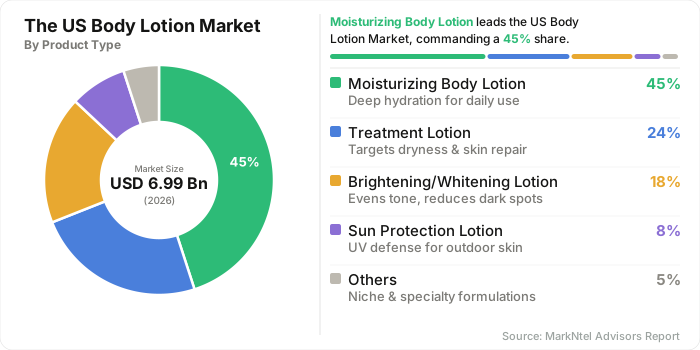
- Moisturizing body lotions lead the product category, contributing approximately 45% of total revenue.
- Female consumers represent the dominant end-user segment, accounting for nearly 63% share in 2026.
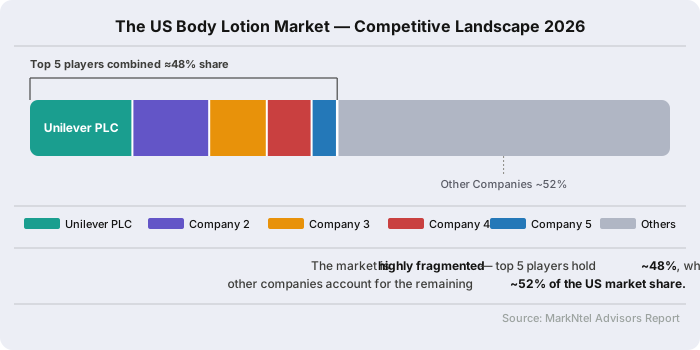
- The industry exhibits a moderately fragmented structure, with the top five players collectively holding close to a 48% share, reflecting a balance between global leaders and emerging niche brands.
The US Body Lotion Market Size and Outlook
The US body lotion market size was valued at USD 6.84 billion in 2025 and is projected to grow from USD 6.99 billion in 2026 to USD 8.29 billion by 2032, registering a CAGR of 2.88%. Growth remains steady, supported by expanding demand for moisturizing body lotions and treatment-based skincare products. Increasing awareness of skin health and the shift toward hydration-focused skincare routines are strengthening long-term consumption patterns across diverse consumer segments nationwide today.
The industry is supported by demographic expansion, as the United States population surpassed 340 million in 2024, growing nearly 1.0% year-over-year. This increase broadens the addressable consumer base for personal care consumption, reinforcing consistent usage patterns nationwide. Rising urbanization and improved accessibility to products continue to sustain volume demand, while evolving preferences for daily-use skincare essentials further support growth across both mass-market and premium product segments nationwide.
Aging demographics further strengthen demand fundamentals, as the median age in the United States reached 39.1 years in 2024, indicating a maturing population requiring enhanced skincare support. Older consumers increasingly rely on specialized solutions to address dryness and sensitivity concerns effectively. This shift is encouraging manufacturers to expand portfolios toward anti-aging body care solutions that target uneven tone, dryness, and skin barrier concerns across aging consumer groups more widely.
Digital transformation is reshaping the industry landscape, with e-commerce accounting for 16.9% of total U.S. retail sales in Q1 2026. The rise of online purchasing channels is enhancing accessibility and engagement among consumers across regions. Subscription models, targeted digital marketing, and personalized recommendations are enabling brands to expand reach and strengthen loyalty, while increasing adoption of direct-to-consumer skincare channels continues to drive sustained growth of the US body lotion industry.
The US Body Lotion Market Key Indicators
- The U.S. population of adults aged 18 and over reached nearly 267 million in 2024, equal to 78.5% of all residents, according to the U.S. Census Bureau ; this vast adult base underpins routine, repeat purchasing of daily-use body lotion, converting a large population into a high-frequency consumption category.
- The U.S. Census Bureau recorded 73.1 million children aged 0 to 17 in 2024, a cohort that directly anchors the babies and children segment ; infant and toddler skin demands gentle, hypoallergenic moisturization, driving consistent demand for pediatric and fragrance-free body lotions among caregivers who prioritize dermatologically tested, mild formulations for sensitive young skin.
- Personal care products and services accounted for 1.2% of the average U.S. household's USD 78,535 in annual expenditures in 2024, per the U.S. Bureau of Labor Statistics; this stable allocation, even amid broader inflationary pressure, signals resilient discretionary spending on skincare and grooming products, ensuring body lotion retains a defended position within household budgets.
- The U.S. Bureau of Labor Statistics recorded a 2.5% rise in the personal care index over the 12 months ending September 2024, reflecting sustained pricing power across grooming categories; this moderate inflation supports premium body lotion value growth, allowing manufacturers to pass through higher ingredient and packaging costs while consumers continue trading up to efficacy-driven, sensorial formulations.
US Body Lotion Market Scope
| Category | Segments |
|---|---|
| By Product Type | Moisturizing Body Lotion, Brightening/Whitening Lotion, Treatment Lotion (Anti-aging, firming, medicated), Sun Protection Lotion, Others |
| By Skin Type | Dry Skin, Oily Skin, Normal Skin, Sensitive Skin, Combination Skin |
| By Ingredient Type | Conventional, Natural& Organic, Vegan & Cruelty-Free |
| By End User | Male, Female, Babies & Children |
| By Packaging Type | Bottles, Tubes, Jars/Tubs, Sachets & Travel Packs |
| By Price Range | Economy, Mid-Range, Premium, Luxury |
| By Distribution Channel | Supermarkets & Hypermarkets, Convenience Stores, Pharmacies & Drug Stores, Specialty Beauty Stores, Online Retail/E-Commerce, Direct-to-Consumer (DTC) Brands, Others |
The US Body Lotion Market Growth Drivers
Rising Geriatric Population Driving Demand for Therapeutic Body Lotions
The aging demographic in the United States is a structural growth driver for the US body lotion market, as declining sebum production and reduced skin elasticity increase dependence on moisturizing body lotions and barrier-repair solutions. According to the Administration for Community Living, the population aged 65+ is projected to reach 78.3 million by 2040, up from 57.8 million, representing nearly 22% of the population.
Demand intensity is significantly higher among older cohorts, particularly individuals aged 85+, whose population is expected to increase from 6.5 million in 2022 to 13.7 million by 2040, reflecting a 111% rise . This segment experiences elevated rates of xerosis, sensitivity, and skin fragility, thereby accelerating adoption of treatment body lotions and clinically approved solutions. As a result, skincare products for aging skin are witnessing sustained demand.
This demographic expansion is reshaping innovation priorities within the US body lotion industry, with brands focusing on clinically validated formulations containing ceramides, hyaluronic acid, and lipid-replenishing complexes. The shift toward fragrance-free and hypoallergenic moisturizing body lotions reflects rising demand for safe, therapeutic solutions. As aging remains a long-term, non-cyclical trend, it ensures stable volume growth while reinforcing premiumization across various treatment and specialized skincare sector.
Recent Trends
Skinification of Body Care Driving Adoption of Active-Ingredient Body Lotions
The skinification of body care represents a key structural trend in the US body lotion industry, as formulations increasingly incorporate facial-skincare ingredients such as niacinamide, ceramides, and hyaluronic acid. This transition reflects rising consumer preference for efficacy-driven solutions over basic hydration. As a result, active-ingredient body lotions and dermatological skincare products are gaining traction, redefining product positioning toward treatment-oriented benefits and clinically validated performance across mass and premium segments.
This trend is reinforced by strong performance across dermocosmetic portfolios, where efficacy-led innovation is driving sustained growth. Companies are expanding science-backed skincare formulations and barrier-repair body lotions to address concerns such as dryness, pigmentation, and sensitivity. The increasing integration of clinically proven actives is enabling brands to command premium pricing while enhancing consumer trust. Consequently, innovation pipelines are shifting toward multifunctional formulations that deliver both hydration and targeted treatment outcomes.
The trend is further evidenced by recent product innovation within the US body lotion market. In 2024, CeraVe introduced Intensive Moisturizing Lotion in the U.S., formulated with hyaluronic acid, three essential ceramides, and Hydro-Urea technology to support skin-barrier repair and long-lasting hydration . This launch highlights the rise of skin barrier repair products and clinical body care solutions, reinforcing the broader shift toward efficacy-led body care.
The US Body Lotion Market Opportunities and Challenges
PFAS Ingredient Restrictions Driving the Rise of Clean-Label Body Lotions
Tightening regulations on per- and polyfluoroalkyl substances (PFAS) are intensifying compliance pressures within the US body lotion market, as manufacturers face rising reformulation complexity. California Assembly Bill 2771 prohibits cosmetics containing intentionally added PFAS from January 1, 2025, compelling a shift toward safer formulations. The scale of California amplifies its influence, accelerating the adoption of clean-label body lotions and non-toxic ingredient strategies.
The regulatory burden is expanding with Colorado and Washington implementing similar PFAS bans effective in 2025, alongside additional states introducing phased restrictions through 2032. This evolving framework increases supply chain audits, testing requirements, and reformulation costs. Consequently, manufacturers must realign sourcing strategies and upgrade body lotions, extending product development cycles and impacting operational margins.
Simultaneously, regulatory pressure is unlocking commercial opportunity by accelerating demand for clean-label body lotions centered on safety and transparency. Nécessaire’s The Body Lotion has gained traction in 2024 through fragrance-free positioning and barrier-support ingredients, aligning with consumer preference for minimalist formulations . Such launches highlight how ingredient transparency, dermatological validation, and sensitive-skin positioning are reshaping competitive differentiation.
Further reinforcing this shift, L'Oréal has committed to transitioning toward PFAS-free formulations by 2024, demonstrating how regulatory compliance can evolve into a strategic advantage. Brands advancing plant-based, hypoallergenic solutions can command premium positioning and strengthen consumer trust. Collectively, regulatory-driven innovation is transforming the US body lotion industry, where clean formulation standards and safety-led branding are emerging.
Segmentation Insights
Moisturizing Body Lotions Leading with Strong Daily-Use Demand
Moisturizing body lotion dominates the US body lotion industry, contributing approximately 45% of total revenue, driven by its universal applicability across daily skincare routines and varying climatic conditions. These products address fundamental hydration needs while supporting skin barrier function. Rising consumer inclination toward daily hydration, skincare, and skin barrier protection products further reinforces segment leadership, particularly as consistent usage patterns expand across both dry and humid regions.
The segment’s dominance is further supported by the increasing prevalence of skin conditions, with the National Institute of Allergy and Infectious Diseases reporting eczema affects 10% to 30% of children and 2% to 10% of adults in the United States . This drives demand for dermatological moisturizing solutions and sensitive skin body lotions designed to alleviate dryness, irritation, and inflammation, strengthening the role of clinically formulated products within the overall category.
Other product types are gaining traction as consumers seek targeted skincare benefits beyond hydration. Treatment body lotions addressing anti-aging, firming, and pigmentation concerns are expanding steadily, supported by innovation in active ingredients. Meanwhile, sun protection body lotions and multifunctional formulations are witnessing increased adoption, reflecting the growing preference for multi-benefit skincare products that combine protection, correction, and hydration in a single application. Based on product type, the scope has been classified into:
- Moisturizing Body Lotion
- Brightening/Whitening Lotion
- Treatment Lotion (Anti-aging, firming, medicated)
- Sun Protection Lotion
- Others
Female Consumer Dominance with Adoption of Personal Grooming Routines
The female segment dominates the US body lotion market, accounting for approximately 63% of total revenue, driven by higher product usage frequency and broader skincare routines. Women are more inclined toward personal grooming products and daily skincare regimens, supporting consistent consumption across categories. The emphasis on hydration, anti-aging, and skin-brightening solutions further strengthens demand, positioning female consumers as the primary revenue contributor.
This dominance is reinforced by increasing awareness of skin health, beauty standards, and preventive care practices among female consumers. Demand for anti-aging body care solutions and skin tone-enhancing products continues to rise, supported by growing adoption of ingredient-led formulations. Additionally, social media influence and dermatologist recommendations are encouraging women to adopt comprehensive routines, extending facial skincare practices to body care and driving sustained engagement.
While male and baby care segments are expanding, their contribution remains comparatively smaller. The male segment is gradually adopting men’s grooming products and basic hydration solutions, whereas the baby and children category focuses on gentle skincare formulations and safety-led products. However, female consumers continue to lead demand across both mass and premium categories, reinforcing their dominant position and shaping innovation trends. The study categorizes key end-user segments as follows:
- Male
- Female
- Babies & Children
The US Body Lotion Market Competitive Analysis
The US body lotion industry is led by five key players, Unilever PLC, L'Oréal S.A., Johnson & Johnson Services, Inc., Beiersdorf AG, and The Procter & Gamble Company, which collectively account for an estimated 48% of total market share. Despite the presence of these dominant multinationals, the market remains moderately fragmented due to strong competition from niche, dermatologist-led, and direct-to-consumer brands. Collectively, the landscape reflects a hybrid structure where large players dominate scale-driven segments, while smaller brands capture premium, clean-label, and specialized skincare niches through innovation and targeted positioning strategies.
Key Players in the US Body Lotion Market
- Unilever PLC
- L'Oréal S.A.
- Johnson & Johnson Services, Inc.
- Beiersdorf AG
- The Procter & Gamble Company
- Kao Corporation
- Galderma S.A.
- Bath & Body Works, Inc.
- Colgate-Palmolive Company
- Coty Inc.
- Others
The US Body Lotion Industry News and Recent Developments:
May 2025: Sol de Janeiro Launches Body Badalada™ Vitamin-Infused Lotion
Sol de Janeiro launched Body Badalada™ Vitamin-Infused Lotion, its first dedicated body lotion, as a Sephora global exclusive. The product was developed specifically for Gen Z consumers and features Brazilian sugarcane, a seven-hyaluronic-acid complex, and Brazil nut oil, delivering 24-hour hydration through a lightweight, fast-absorbing format. Retailing at USD 32, the launch expanded the brand beyond its traditional body butter segment and marked a strategic entry into the broader body lotion category.
Impact Analysis: The launch highlights the growing premiumization and skinification, where consumers increasingly seek active-ingredient formulations that combine hydration, sensory appeal, and skincare benefits. By incorporating hyaluronic acid technology and targeting Gen Z through Sephora's extensive distribution network, Sol de Janeiro strengthened competition within the premium body lotion segment. The development also reflects increasing demand for lightweight, efficacy-driven body lotions that bridge the gap between traditional moisturizers and facial-skincare-inspired body care products.
- Market Segmentation
- Introduction
- Product Definition
- Research Process
- Assumptions
- Executive Summary
- The US Body Lotion Market Value Chain Analysis
- The US Body Lotion Market Import & Export Analysis
- The US Body Lotion Market Policies, Regulations, and Product Standards
- The US Body Lotion Production Trend 2022-2032
- The US Body Lotion Trend by Type of Product Type
- Moisturizing Body Lotion
- Brightening/Whitening Lotion
- Treatment Lotion (Anti-aging, firming, medicated)
- Sun Protection Lotion
- Others
- Company Wise Production Plants and Statistics
- Installed Production Capacity
- Actual Production
- Planned Production Target
- The US Body Lotion Trend by Type of Product Type
- The US Body Lotion Pricing Analysis 2022-2032
- The US Body Lotion Pricing Trend 2022-2032
- The US Body Lotion Pricing Trend by Product Type 2022-2032
- Moisturizing Body Lotion
- Brightening/Whitening Lotion
- Treatment Lotion (Anti-aging, firming, medicated)
- Sun Protection Lotion
- Others
- The US Body Lotion Market Dynamics
- Growth Factors
- Challenges
- The US Body Lotion Market Hotspot & Opportunities
- The US Body Lotion Market Outlook, 2022-2032F
- Market Size & Outlook
- By Revenues (USD Million)
- By Quantity Sold (Tons)
- Market Share & Outlook
- By Product Type- Market Size & Forecast 2022-2032, USD Million & Tons
- Moisturizing Body Lotion
- Brightening/Whitening Lotion
- Treatment Lotion (Anti-aging, firming, medicated)
- Sun Protection Lotion
- Others
- By Skin Type- Market Size & Forecast 2022-2032, USD Million & Tons
- Dry Skin
- Oily Skin
- Normal Skin
- Sensitive Skin
- Combination Skin
- By Ingredient Type- Market Size & Forecast 2022-2032, USD Million & Tons
- Conventional
- Natural& Organic
- Vegan & Cruelty-Free
- By End User- Market Size & Forecast 2022-2032, USD Million & Tons
- Male
- Female
- Babies & Children
- By Packaging Type- Market Size & Forecast 2022-2032, USD Million & Tons
- Bottles
- Tubes
- Jars/Tubs
- Sachets & Travel Packs
- By Price Range- Market Size & Forecast 2022-2032, USD Million & Tons
- Economy
- Mid-Range
- Premium
- Luxury
- By Distribution Channel- Market Size & Forecast 2022-2032, USD Million & Tons
- Supermarkets & Hypermarkets
- Convenience Stores
- Pharmacies & Drug Stores
- Specialty Beauty Stores
- Online Retail/E-Commerce
- Direct-to-Consumer (DTC) Brands
- Others
- By Region- Market Size & Forecast 2022-2032, USD Million & Tons
- Northeast
- Midwest
- South
- West
- By Company
- Competition Characteristics
- Market Share & Analysis
- By Product Type- Market Size & Forecast 2022-2032, USD Million & Tons
- Market Size & Outlook
- The US Moisturizing Body Lotion Market Outlook, 2022-2032
- Market Size & Outlook
- By Revenues (USD Million)
- By Quantity Sold (Tons)
- Market Segmentation & Outlook
- By Skin Type- Market Size & Forecast 2022-2032, USD Million & Tons
- By Ingredient Type- Market Size & Forecast 2022-2032, USD Million & Tons
- By End User- Market Size & Forecast 2022-2032, USD Million & Tons
- By Packaging Type- Market Size & Forecast 2022-2032, USD Million & Tons
- By Price Range- Market Size & Forecast 2022-2032, USD Million & Tons
- By Distribution Channel- Market Size & Forecast 2022-2032, USD Million & Tons
- By Region- Market Size & Forecast 2022-2032, USD Million & Tons
- Market Size & Outlook
- The US Brightening/Whitening Body Lotion Market Outlook, 2022-2032
- Market Size & Outlook
- By Revenues (USD Million)
- By Quantity Sold (Tons)
- Market Segmentation & Outlook
- By Skin Type- Market Size & Forecast 2022-2032, USD Million & Tons
- By Ingredient Type- Market Size & Forecast 2022-2032, USD Million & Tons
- By End User- Market Size & Forecast 2022-2032, USD Million & Tons
- By Packaging Type- Market Size & Forecast 2022-2032, USD Million & Tons
- By Price Range- Market Size & Forecast 2022-2032, USD Million & Tons
- By Distribution Channel- Market Size & Forecast 2022-2032, USD Million & Tons
- By Region- Market Size & Forecast 2022-2032, USD Million & Tons
- Market Size & Outlook
- The US Treatment Body Lotion (Anti-aging, firming, medicated) Market Outlook, 2022-2032
- Market Size & Outlook
- By Revenues (USD Million)
- By Quantity Sold (Tons)
- Market Segmentation & Outlook
- By Skin Type- Market Size & Forecast 2022-2032, USD Million & Tons
- By Ingredient Type- Market Size & Forecast 2022-2032, USD Million & Tons
- By End User- Market Size & Forecast 2022-2032, USD Million & Tons
- By Packaging Type- Market Size & Forecast 2022-2032, USD Million & Tons
- By Price Range- Market Size & Forecast 2022-2032, USD Million & Tons
- By Distribution Channel- Market Size & Forecast 2022-2032, USD Million & Tons
- By Region- Market Size & Forecast 2022-2032, USD Million & Tons
- Market Size & Outlook
- The US Sun Protection Body Lotion Market Outlook, 2022-2032
- Market Size & Outlook
- By Revenues (USD Million)
- By Quantity Sold (Tons)
- Market Segmentation & Outlook
- By Skin Type- Market Size & Forecast 2022-2032, USD Million & Tons
- By Ingredient Type- Market Size & Forecast 2022-2032, USD Million& Tons
- By End User- Market Size & Forecast 2022-2032, USD Million & Tons
- By Packaging Type- Market Size & Forecast 2022-2032, USD Million & Tons
- By Price Range- Market Size & Forecast 2022-2032, USD Million & Tons
- By Distribution Channel- Market Size & Forecast 2022-2032, USD Million & Tons
- By Region- Market Size & Forecast 2022-2032, USD Million & Tons
- Market Size & Outlook
- The US Body Lotion Market Key Strategic Imperatives for Success & Growth
- Competitive Outlook
- Company Profiles
- Unilever PLC
- Business Description
- Product Portfolio
- Collaborations & Alliances
- Recent Developments
- Financial Details
- Others
- L'Oréal S.A.
- Business Description
- Product Portfolio
- Collaborations & Alliances
- Recent Developments
- Financial Details
- Others
- Johnson & Johnson Services, Inc.
- Business Description
- Product Portfolio
- Collaborations & Alliances
- Recent Developments
- Financial Details
- Others
- Beiersdorf AG
- Business Description
- Product Portfolio
- Collaborations & Alliances
- Recent Developments
- Financial Details
- Others
- The Procter & Gamble Company
- Business Description
- Product Portfolio
- Collaborations & Alliances
- Recent Developments
- Financial Details
- Others
- Kao Corporation
- Business Description
- Product Portfolio
- Collaborations & Alliances
- Recent Developments
- Financial Details
- Others
- Galderma S.A.
- Business Description
- Product Portfolio
- Collaborations & Alliances
- Recent Developments
- Financial Details
- Others
- Bath & Body Works, Inc.
- Business Description
- Product Portfolio
- Collaborations & Alliances
- Recent Developments
- Financial Details
- Others
- Colgate-Palmolive Company
- Business Description
- Product Portfolio
- Collaborations & Alliances
- Recent Developments
- Financial Details
- Others
- Coty Inc
- Business Description
- Product Portfolio
- Collaborations & Alliances
- Recent Developments
- Financial Details
- Others
- Others
- Unilever PLC
- Company Profiles
- Disclaimer

MarkNtel Advisors follows a robust and iterative research methodology designed to ensure maximum accuracy and minimize deviation in market estimates and forecasts. Our approach combines both bottom-up and top-down techniques to effectively segment and quantify various aspects of the market. A consistent feature across all our research reports is data triangulation, which examines the market from three distinct perspectives to validate findings. Key components of our research process include:
1. Scope & Research Design At the outset, MarkNtel Advisors define the research objectives and formulate pertinent questions. This phase involves determining the type of research—qualitative or quantitative—and designing a methodology that outlines data collection methods, target demographics, and analytical tools. They also establish timelines and budgets to ensure the research aligns with client goals.
2. Sample Selection and Data Collection In this stage, the firm identifies the target audience and determines the appropriate sample size to ensure representativeness. They employ various sampling methods, such as random or stratified sampling, based on the research objectives. Data collection is carried out using tools like surveys, interviews, and observations, ensuring the gathered data is reliable and relevant.
3. Data Analysis and Validation Once data is collected, MarkNtel Advisors undertake a rigorous analysis process. This includes cleaning the data to remove inconsistencies, employing statistical software for quantitative analysis, and thematic analysis for qualitative data. Validation steps are taken to ensure the accuracy and reliability of the findings, minimizing biases and errors.

4. Data Forecast and FinalizationThe final phase involves forecasting future market trends based on the analyzed data. MarkNtel Advisors utilize predictive modeling and time series analysis to anticipate market behaviors. The insights are then compiled into comprehensive reports, featuring visual aids like charts and graphs, and include strategic recommendations to inform client decision-making
FILL THE FORM TO GET THE FREE SAMPLE PAGES
We offer flexible licensing options to cater to varying organizational needs. Choose the pricing pack that best suits your requirements:
Buy Now Inquire Before Buying
 Talk to our Consultant
 Request Customization