

By Product Type (Elevators (By Type (Traction Elevators, Hydraulic Elevators, Machine Room-Less (MRL) Elevators), By Types of Building Installation (Low Rise, High Rise)), Escalato......rs (By Type (Moving Walkways/Travelators, Moving Stairs), By Speed (1 m/s to 2.5 m/s, 3 m/s to 3.5 m/s, 4 m/s & Above))), By Service Type (New Installation, Aftersales (Maintenance & Repair, Modernization)), By End Users (Residential, Industrial, Commercial (Retail & Shopping Centers, Hospitality, Offices, Government & Transportation (Government Buildings, Airports, Metro, Others), Others), Educational Institutions, Healthcare, Others), and others Read more
- Buildings, Construction, Metals & Mining
- Jun 2026
- 200
- PDF, Excel, PPT
GCC Elevator and Escalator Market Key Takeaways
- The GCC Elevator and Escalator Market was valued at around USD 2.28 billion in 2025 and is anticipated to expand from USD 2.32 billion in 2026 to USD 3.87 billion by 2032, reflecting a CAGR of 8.90% over the forecast period.
- Saudi Arabia dominated the market with approximately 43% share in 2026.
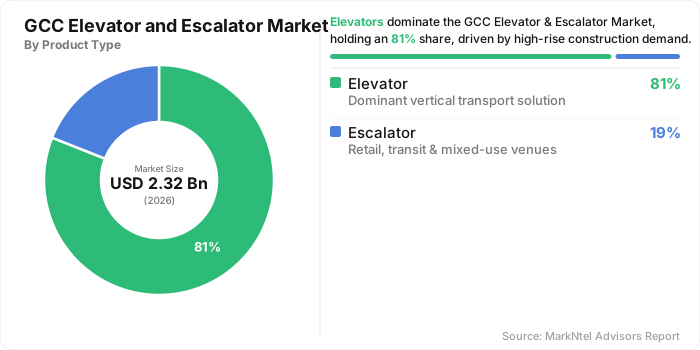
- In 2026, Elevators accounted for nearly 81% share of the GCC market.
- By End User, Residential buildings held approximately 38% share in 2026.
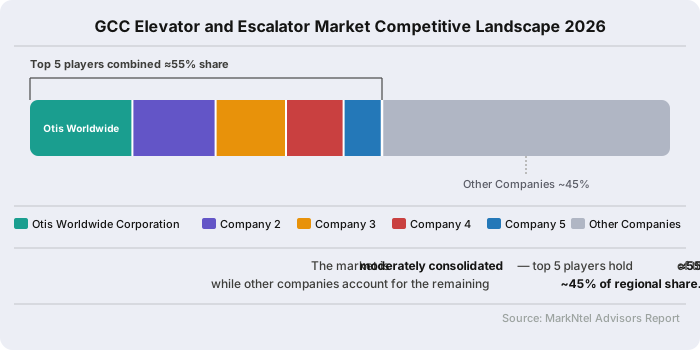
- The industry is moderately consolidated, with the top five leading players accounting for approximately 55% of the total market share.
GCC Elevator and Escalator Market Size and Outlook
The elevator and escalator market in the GCC is projected to grow at a steady CAGR of 8.9% during the forecast period, i.e., 2026-32.
A robust pipeline of construction and infrastructure projects continues to support the lucrative demand for elevators and escalators in the GCC. Governments across Saudi Arabia, the UAE, Qatar, and other GCC countries are investing heavily in residential developments, commercial complexes, transportation hubs, and smart-city initiatives. Programs such as Saudi Vision 2030 have accelerated large-scale projects, including NEOM, Diriyah Gate, and airport expansions, increasing the need for efficient vertical transportation systems. As urban skylines continue to evolve, elevators and escalators remain essential components of modern building infrastructure.
Demand growth is being reinforced by the rising importance of residential and commercial end users throughout the region. Expanding urban populations and government-backed housing initiatives are driving the construction of apartment complexes and high-rise residential buildings that require advanced mobility solutions. Commercial activity is also contributing significantly, supported by investments in healthcare facilities, office towers, retail centers, and hospitality projects. According to the World Travel & Tourism Council, Saudi Arabia’s travel and tourism sector generated approximately USD 178 billion in economic contribution during 2025, encouraging further development of hotels, airports, entertainment venues, and mixed-use destinations .
Supporting these demand fundamentals, governments are implementing policies that promote building safety, accessibility, and energy efficiency. Regulatory frameworks across the GCC increasingly encourage the use of modern vertical transportation technologies that improve operational performance while reducing energy consumption. These initiatives are accelerating smart elevator adoption in GCC, driving demand for systems equipped with intelligent controls, predictive maintenance capabilities, and enhanced safety features. At the same time, the continued expansion of metro networks, railway stations, and airports is creating additional installation opportunities across public infrastructure applications.
The market is also benefiting from increasing efforts to strengthen regional manufacturing capabilities and reduce reliance on imported equipment. In 2025, TK Elevator GmbH partnered with Alat to establish elevator and escalator manufacturing and technology operations in Saudi Arabia, supporting industrial localization objectives and supply-chain resilience .
Combined with ongoing infrastructure spending, tourism expansion, and economic diversification initiatives, these developments are expected to provide sustained momentum for long-term market growth across the GCC region, with the market projected to expand from USD 2.32 billion in 2026 to USD 3.87 billion by 2032.
GCC Elevator and Escalator Market Key Indicators
- Saudi Arabia continues to advance major Vision 2030 developments including NEOM, Diriyah, and Red Sea Global projects. These large-scale urban, tourism, residential, and commercial developments require extensive deployment of elevators, escalators, and moving walkways across hotels, residential towers, retail destinations, and transportation facilities, thereby supporting sustained demand for vertical transportation systems throughout the Kingdom .
- The Riyadh Metro spans approximately 176 kilometers across six lines and 85 stations. Such large-scale metro infrastructure requires extensive installation of elevators and escalators to enhance passenger accessibility and mobility, thereby supporting demand for vertical transportation systems across Saudi Arabia .
- Qatar’s Grand Cruise Terminal at Doha Port welcomed more than 378,000 visitors and 73 cruise ships during the 2023–24 cruise season, representing a 38% increase in passenger traffic compared with the previous season. The growth in cruise tourism is driving investments in port infrastructure, passenger terminals, hospitality facilities, and transportation systems, thereby supporting demand for elevators, escalators, and moving walkways across tourism and public infrastructure projects.
- Saudi Arabia aims to attract 150 million visits by 2030 under its National Tourism Strategy and Vision 2030 objectives. Achieving this target requires substantial investment in hotels, resorts, entertainment destinations, airports, and mixed-use developments, thereby increasing demand for elevators, escalators, and moving walkways across hospitality and tourism infrastructure projects
GCC Elevator and Escalator Market Scope
| Category | Segments |
|---|---|
| By Product Type | Elevators |
| By Type | Traction Elevators, Hydraulic Elevators, Machine Room-Less (MRL) Elevators |
| By Types of Building Installation | Low Rise, High Rise)), Escalators |
| By Type | Moving Walkways/Travelators, Moving Stairs |
| By Speed | 1 m/s to 2.5 m/s, 3 m/s to 3.5 m/s, 4 m/s & Above |
| By Service Type | New Installation, Aftersales (Maintenance & Repair, Modernization |
| By End Users | Residential, Industrial, Commercial (Retail & Shopping Centers, Hospitality, Offices, Government & Transportation (Government Buildings, Airports, Metro, Others), Others), Educational Institutions, Healthcare, Others |
GCC Elevator and Escalator Market Growth Drivers
Rising Large-Scale Urban Development Projects
The rapid expansion of urban infrastructure and mega development projects across GCC countries is creating strong demand for elevators and escalators. Governments throughout the region are investing heavily in smart cities, transportation networks, residential communities, commercial districts, and tourism destinations to support economic diversification and accommodate growing urban populations. As construction activity accelerates and buildings become increasingly vertical, elevators and escalators are becoming essential components of modern infrastructure development.
This trend is particularly evident in Saudi Arabia, where Vision 2030 continues to drive large-scale construction activity. Major developments such as NEOM and THE LINE are being designed to support future urban living and economic diversification , while the Kingdom’s Housing Program aims to increase homeownership to 70% by 2030. Together, these initiatives are generating strong demand for high-rise building elevators in GCC, as well as escalators and moving walkways across residential, commercial, hospitality, and public infrastructure applications.
Beyond supporting new installations, the growing construction pipeline is also creating opportunities for maintenance, modernization, and technology upgrades. As governments continue prioritizing urban expansion, housing development, and infrastructure investment, demand for advanced vertical transportation systems is expected to remain strong, supporting long-term market growth across the GCC region.
Recent Trends
Growing Adoption of Smart and AI-Enabled Elevator Technologies
Building owners and developers across the GCC are increasingly adopting smart elevator technologies to improve operational efficiency, passenger experience, and maintenance performance. The integration of IoT, cloud connectivity, artificial intelligence, destination dispatch systems, and real-time monitoring is transforming conventional elevators into intelligent mobility solutions. These technologies help reduce downtime, optimize energy consumption, improve traffic flow, and enhance building management capabilities, making them particularly attractive for high-rise and mixed-use developments.
This growing preference for connected mobility solutions is encouraging manufacturers to expand their digital service offerings across the region. Otis Worldwide Corporation launched the Otis ONE IoT digital service solution across the Middle East, including Saudi Arabia, the UAE, Qatar, Kuwait, and Bahrain . The platform enables smart elevator functionality through real-time monitoring, predictive maintenance, remote diagnostics, and cloud-based connectivity, helping building operators improve equipment reliability and operational performance.
As smart-city initiatives and connected building infrastructure continue to expand, demand for intelligent vertical transportation systems is expected to increase steadily. The growing emphasis on sustainability, operational efficiency, and enhanced user experience is encouraging wider adoption of elevators equipped with advanced analytics, AI-driven insights, and digital monitoring capabilities, thereby supporting the long-term evolution of the GCC elevator and escalator market.
GCC Elevator and Escalator Market Opportunities and Challenges
Rising Sustainability Requirements Driving Demand for Energy-Efficient Elevator Modernization Solutions
Increasing focus on sustainability, energy efficiency, and green building compliance is creating challenges for older elevator infrastructure across GCC countries. Many existing buildings continue to operate aging systems that consume higher levels of energy and lack advanced monitoring capabilities. As governments strengthen sustainability objectives and building owners seek to improve operational efficiency, the need to modernize existing vertical transportation systems is becoming increasingly important. This trend is encouraging greater investment in retrofit projects designed to improve performance while reducing energy consumption.
The growing emphasis on sustainable building operations is creating significant opportunities for elevator manufacturers and service providers offering modernization solutions. Building owners are increasingly adopting energy-efficient motors, regenerative drives, intelligent traffic management systems, and digital monitoring technologies to support environmental objectives and improve reliability. Reflecting this shift, KONE Corporation has expanded its portfolio of energy-efficient vertical transportation solutions for sustainable high-rise developments . As modernization activity accelerates across aging building stock, demand for energy-efficient upgrades and digital retrofits is expected to increase steadily across the GCC market.
Segmentation Insights
High-Rise Construction and Urban Densification Support Dominance of the Elevators Segment
Strong construction activity across residential towers, office buildings, hotels, and mixed-use developments continues to reinforce the dominance of the elevator segment, which represented approximately 81% of market revenue in 2026. The segment benefits from widespread deployment across residential, commercial, healthcare, hospitality, and public infrastructure projects throughout the GCC. As urban populations continue to grow and cities increasingly adopt vertical development models, demand for passenger elevators, machine-room-less systems, and high-speed mobility solutions remains strong.
This trend is particularly evident in major urban centers such as Riyadh, Dubai, Abu Dhabi, and Doha, where developers continue prioritizing taller structures to optimize land utilization and accommodate rising population density. The increasing focus on premium building experiences is encouraging adoption of advanced elevator technologies featuring touchless controls, destination dispatch systems, and energy-efficient operations. Together with ongoing investments in smart cities and commercial real estate, these factors are expected to sustain demand for elevator installations, modernization projects, and maintenance services across the region. Based on product type, the market has been segmented into:
- Elevators
- Escalator
Government Housing Initiatives and Urban Population Growth Strengthen Residential Sector Leadership
The residential segment accounted for approximately 38% of total market demand in 2026, making it the leading end-user category within the GCC elevator and escalator market. Population growth, urbanization, and rising housing demand continue to support the construction of apartment complexes, residential towers, gated communities, and affordable housing developments across the region. Since elevators are an essential component of modern multi-story residential buildings, expanding housing construction activity continues to generate significant demand for vertical transportation systems and related maintenance services.
Contributing to this expansion, governments across the GCC are investing heavily in residential infrastructure to accommodate growing urban populations and rising housing requirements. Saudi Arabia, the UAE, and Oman continue advancing large-scale housing and community development projects that are contributing to sustained residential construction activity. Rising expectations for accessibility, convenience, and smart building features are further encouraging adoption of advanced elevator systems, strengthening the residential elevators market in GCC and reinforcing the residential segment’s leadership position across the market. Based on end user, the market is categorized into:
- Residential
- Industrial
- Commercial
- Educational Institutions
- Healthcare
- Others
GCC Elevator and Escalator Market Geographical Outlook
Representing approximately 46% of total regional demand in 2026, Saudi Arabia emerged as the largest contributor to the elevator and escalator market across the GCC, supported by extensive construction activity and infrastructure development across the Kingdom. The country continues to lead the region in residential, commercial, tourism, and public infrastructure projects, creating substantial demand for elevators, escalators, and moving walkways. Major developments such as NEOM, THE LINE, Diriyah, Red Sea Global, and Masar in Makkah require extensive deployment of vertical transportation systems. The scale of this demand is evident in the Masar development project, where Schindler secured an order to supply 150 elevators and escalators for the large mixed-use destination in Makkah, highlighting the volume of vertical transportation systems required across the Kingdom’s major developments.
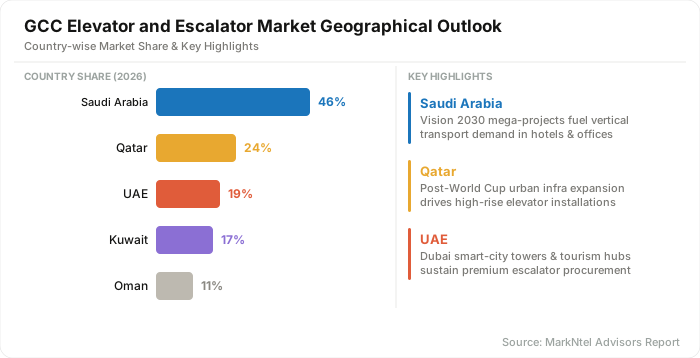
This leadership is further reinforced by sustained investments in housing, transportation infrastructure, smart cities, and economic diversification initiatives. Saudi Arabia continues expanding residential communities, commercial districts, healthcare facilities, hospitality assets, airports, and metro networks, generating demand across multiple elevator and escalator categories. The Kingdom also benefits from the largest population base and one of the most active construction sectors in the GCC, creating a diversified demand profile across residential, commercial, and public infrastructure applications. As large-scale development projects continue advancing, Saudi Arabia is expected to maintain its leadership position within the regional market.
GCC Elevator and Escalator Market Competitive Analysis
Market competition across the GCC elevator and escalator industry remains moderately consolidated, with leading manufacturers including Otis Worldwide Corporation, KONE Corporation, Schindler Holding Ltd., TK Elevator GmbH, and Mitsubishi Electric Corporation collectively accounting for approximately 55% of total market revenue.
Key Players of Elevator and Escalator in GCC
- Otis Worldwide Corporation
- KONE Corporation
- Schindler Holding Ltd.
- TK Elevator GmbH
- Mitsubishi Electric Corporation
- Hitachi, Ltd.
- Fujitec Co., Ltd.
- Hyundai Elevator Co., Ltd.
- Orona, S. Coop.
- Toshiba Elevator and Building Systems Corporation
- Sigma Elevator Company
- Gulf Elevator and Escalator Company Ltd.
- Others
GCC Elevator and Escalator Industry News and Recent Developments
July 2025: Al Arabia Elevators Unveils First Sigma Elevator Showroom in the Middle East
Al Arabia Elevators & Moving Systems inaugurated the first Sigma Elevator showroom in the Middle East in Dubai, UAE. The facility showcases Sigma Elevator's range of elevator technologies, cabin designs, control systems, and mobility solutions, providing developers, consultants, and contractors with direct access to the company's latest vertical transportation offerings while strengthening its commercial presence across the GCC region.
Impact Analysis: The showroom launch reflects increasing competition among elevator manufacturers seeking to expand their visibility and market presence across GCC construction and real estate sectors. Growing investment in customer engagement centers and technology demonstration facilities is expected to support product awareness, strengthen relationships with project stakeholders, and create additional opportunities for elevator manufacturers participating in large-scale residential, commercial, hospitality, and infrastructure developments throughout the region.
- Market Segmentation
- Introduction
- Product Definition
- Research Process
- Assumptions
- Executive Summary
- GCC Elevators & Escalators Market Policies, Regulations, and Product Standards
- GCC Elevators & Escalators Market Trends & Developments
- GCC Elevators & Escalators Market Dynamics
- Growth Factors
- Challenges
- GCC Elevators & Escalators Market Hotspot & Opportunities
- GCC Elevators & Escalators Market Outlook, 2022-2032F
- Market Size & Outlook
- By Revenues (USD Million)
- By Quantity Sold (Million Units)
- Market Share & Analysis
- By Product Type- Market Size & Forecast 2022-2032, USD Million & Million Units
- Elevators- Market Size & Forecast 2022-2032, USD Million & Million Units
- By Type
- Traction Elevators
- Hydraulic Elevators
- Machine Room-Less (MRL) Elevators
- By Types of Building Installation
- Low Rise
- High Rise
- By Type
- Escalators- Market Size & Forecast 2022-2032, USD Million & Million Units
- By Type
- Moving Walkways/Travelators
- Moving Stairs
- By Speed
- 1 m/s to 2.5 m/s
- 3 m/s to 3.5 m/s
- 4 m/s & Above
- By Type
- Elevators- Market Size & Forecast 2022-2032, USD Million & Million Units
- By Service Type- Market Size & Forecast 2022-2032, USD Million & Million Units
- New Installation
- Aftersales
- Maintenance & Repair
- Modernization
- By End Users- Market Size & Forecast 2022-2032, USD Million & Million Units
- Residential
- Industrial
- Commercial
- Retail & Shopping Centers
- Hospitality
- Offices
- Government & Transportation
- Government Buildings
- Airports
- Metro
- Others
- Others
- Educational Institutions
- Healthcare
- Others
- By Country
- The UAE
- Saudi Arabia
- Qatar
- Kuwait
- Oman
- Bahrain
- By Company
- Competition Characteristics
- Market Share & Analysis
- By Product Type- Market Size & Forecast 2022-2032, USD Million & Million Units
- Market Size & Outlook
- The UAE Elevators & Escalators Market Outlook, 2022-2032F
- Market Size & Outlook
- By Revenues (USD Million)
- By Quantity Sold (Million Units)
- Market Share & Analysis
- By Product Type- Market Size & Forecast 2022-2032, USD Million & Million Units
- By Service Type- Market Size & Forecast 2022-2032, USD Million & Million Units
- By End Users- Market Size & Forecast 2022-2032, USD Million & Million Units
- Market Size & Outlook
- Saudi Arabia Elevators & Escalators Market Outlook, 2022-2032F
- Market Size & Outlook
- By Revenues (USD Million)
- By Quantity Sold (Million Units)
- Market Share & Analysis
- By Product Type- Market Size & Forecast 2022-2032, USD Million & Million Units
- By Service Type- Market Size & Forecast 2022-2032, USD Million & Million Units
- By End Users- Market Size & Forecast 2022-2032, USD Million & Million Units
- Market Size & Outlook
- Qatar Elevators & Escalators Market Outlook, 2022-2032F
- Market Size & Outlook
- By Revenues (USD Million)
- By Quantity Sold (Million Units)
- Market Share & Analysis
- By Product Type- Market Size & Forecast 2022-2032, USD Million & Million Units
- By Service Type- Market Size & Forecast 2022-2032, USD Million & Million Units
- By End Users- Market Size & Forecast 2022-2032, USD Million & Million Units
- Market Size & Outlook
- Kuwait Elevators & Escalators Market Outlook, 2022-2032F
- Market Size & Outlook
- By Revenues (USD Million)
- By Quantity Sold (Million Units)
- Market Share & Analysis
- By Product Type- Market Size & Forecast 2022-2032, USD Million & Million Units
- By Service Type- Market Size & Forecast 2022-2032, USD Million & Million Units
- By End Users- Market Size & Forecast 2022-2032, USD Million & Million Units
- Market Size & Outlook
- Oman Elevators & Escalators Market Outlook, 2022-2032F
- Market Size & Outlook
- By Revenues (USD Million)
- By Quantity Sold (Million Units)
- Market Share & Analysis
- By Product Type- Market Size & Forecast 2022-2032, USD Million & Million Units
- By Service Type- Market Size & Forecast 2022-2032, USD Million & Million Units
- By End Users- Market Size & Forecast 2022-2032, USD Million & Million Units
- Market Size & Outlook
- GCC Elevators & Escalators Market Key Strategic Imperatives for Success & Growth
- Competitive Outlook
- Company Profiles
- Otis Worldwide Corporation
- Business Description
- Product Portfolio
- Collaborations & Alliances
- Recent Developments
- Financial Details
- Others
- KONE Corporation
- Business Description
- Product Portfolio
- Collaborations & Alliances
- Recent Developments
- Financial Details
- Others
- Schindler Holding Ltd.
- Business Description
- Product Portfolio
- Collaborations & Alliances
- Recent Developments
- Financial Details
- Others
- TK Elevator GmbH
- Business Description
- Product Portfolio
- Collaborations & Alliances
- Recent Developments
- Financial Details
- Others
- Mitsubishi Electric Corporation
- Business Description
- Product Portfolio
- Collaborations & Alliances
- Recent Developments
- Financial Details
- Others
- Hitachi, Ltd.
- Business Description
- Product Portfolio
- Collaborations & Alliances
- Recent Developments
- Financial Details
- Others
- Fujitec Co., Ltd.
- Business Description
- Product Portfolio
- Collaborations & Alliances
- Recent Developments
- Financial Details
- Others
- Hyundai Elevator Co., Ltd.
- Business Description
- Product Portfolio
- Collaborations & Alliances
- Recent Developments
- Financial Details
- Others
- Orona, S. Coop.
- Business Description
- Product Portfolio
- Collaborations & Alliances
- Recent Developments
- Financial Details
- Others
- Toshiba Elevator and Building Systems Corporation
- Business Description
- Product Portfolio
- Collaborations & Alliances
- Recent Developments
- Financial Details
- Others
- Sigma Elevator Company
- Business Description
- Product Portfolio
- Collaborations & Alliances
- Recent Developments
- Financial Details
- Others
- Gulf Elevators & Escalators Company Ltd.
- Business Description
- Product Portfolio
- Collaborations & Alliances
- Recent Developments
- Financial Details
- Others
- Otis Worldwide Corporation
- Company Profiles
- Disclaimer

MarkNtel Advisors follows a robust and iterative research methodology designed to ensure maximum accuracy and minimize deviation in market estimates and forecasts. Our approach combines both bottom-up and top-down techniques to effectively segment and quantify various aspects of the market. A consistent feature across all our research reports is data triangulation, which examines the market from three distinct perspectives to validate findings. Key components of our research process include:
1. Scope & Research Design At the outset, MarkNtel Advisors define the research objectives and formulate pertinent questions. This phase involves determining the type of research—qualitative or quantitative—and designing a methodology that outlines data collection methods, target demographics, and analytical tools. They also establish timelines and budgets to ensure the research aligns with client goals.
2. Sample Selection and Data Collection In this stage, the firm identifies the target audience and determines the appropriate sample size to ensure representativeness. They employ various sampling methods, such as random or stratified sampling, based on the research objectives. Data collection is carried out using tools like surveys, interviews, and observations, ensuring the gathered data is reliable and relevant.
3. Data Analysis and Validation Once data is collected, MarkNtel Advisors undertake a rigorous analysis process. This includes cleaning the data to remove inconsistencies, employing statistical software for quantitative analysis, and thematic analysis for qualitative data. Validation steps are taken to ensure the accuracy and reliability of the findings, minimizing biases and errors.

4. Data Forecast and FinalizationThe final phase involves forecasting future market trends based on the analyzed data. MarkNtel Advisors utilize predictive modeling and time series analysis to anticipate market behaviors. The insights are then compiled into comprehensive reports, featuring visual aids like charts and graphs, and include strategic recommendations to inform client decision-making
FILL THE FORM TO GET THE FREE SAMPLE PAGES
We offer flexible licensing options to cater to varying organizational needs. Choose the pricing pack that best suits your requirements:
Buy Now Inquire Before Buying
 Talk to our Consultant
 Request Customization