

By Compressor Type (Air Compressors, Gas Compressors), By Technology (Reciprocating Compressors, Rotary Screw Compressors, Rotary Scroll Compressors, Centrifugal Compressors), By P......ortability (Stationary, Portable), By Lubrication (Oil-Lubricated, Oil-Free), By End User (Oil & Gas, Chemicals & Petrochemicals, Construction, Manufacturing, Power & Utilities, Mining, Food & Beverage, Pharmaceuticals, Textiles, Others), By Pressure Rating (Low (Upto 20 bar), Medium (21 to 100 bar), High (101 to 300 bar), Ultra-High (Above 300 bar)), and others Read more
- Buildings, Construction, Metals & Mining
- Aug 2026
- 300
- PDF, Excel, PPT
Europe Compressor Market Key Takeaways
- The Europe compressor market was valued at USD 9.52 billion in 2025, reached USD 10.07 billion in 2026, and is projected to attain USD 15.81 billion by 2032.
- The industry is projected to witness steady growth at a CAGR of 5.80% during the forecast period.
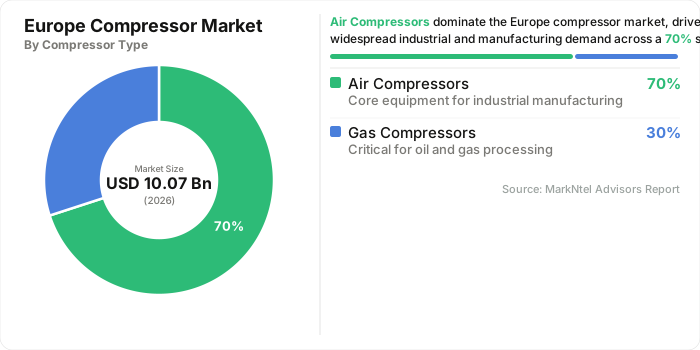
- Air compressors dominate the market by compressor type, accounting for approximately 70% of the total market revenue.
- The manufacturing segment is the largest end-user, contributing nearly 30% of the market.
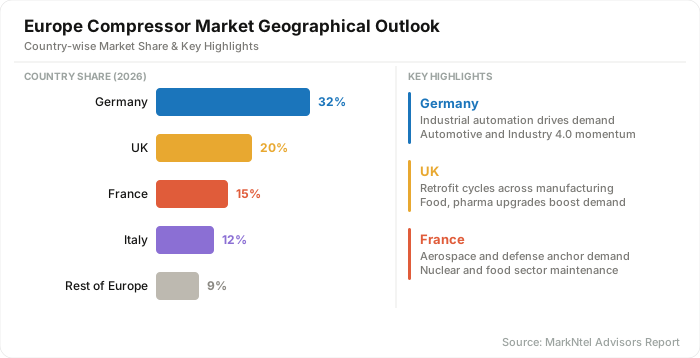
- Germany leads the industry, accounting for approximately 32% of the regional market.
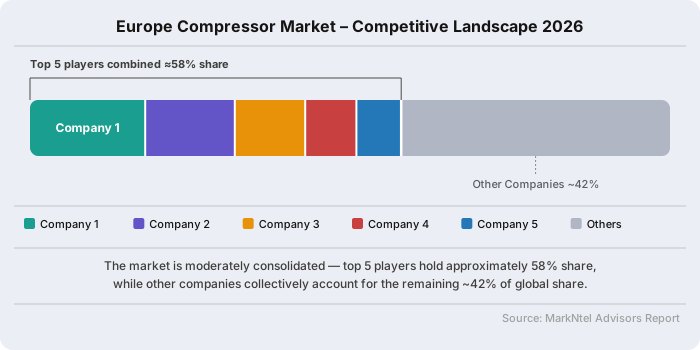
- The market is moderately consolidated, with the top five players collectively holding around 58% of the total market share.
Europe Compressor Market Size and Outlook
The compressor market in Europe was valued at USD 9.52 billion in 2025, reached USD 10.07 billion in 2026, and is projected to attain USD 15.81 billion by 2032, registering a CAGR of 5.80% during the forecast period. The market is supported by the essential role of compressors across industrial operations, where they supply compressed air for manufacturing processes, plant utilities, and equipment operation. Demand is further supported by stricter industrial energy-efficiency requirements, replacement of aging compressor systems with high-efficiency equipment, increasing adoption of automation and digital monitoring, and continued investment in manufacturing modernization. In addition, Europe's decarbonization initiatives and emphasis on reducing industrial energy consumption are encouraging industries to adopt energy-efficient compressor technologies, supporting sustained market growth over the forecast period.
Europe Compressor Market Key Indicators
- Eurostat reported that the EU’s annual average industrial production index increased 1.5% in 2025 compared with 2024. The recovery in manufacturing activity across automotive, chemicals, and machinery industries is increasing utilization of compressed air systems, supporting higher operating demand and encouraging capacity expansion and equipment upgrades.
- Eurostat reported that EU final energy consumption reached 900 Mtoe in 2024, remaining 18.0% above the 2030 energy efficiency target compared with 17.2% above the target a year earlier. This widening gap is increasing pressure on industries to reduce energy usage, accelerating investments in energy-efficient compressor systems.
- The European Commission allocated over USD 1.15 billion to nine hydrogen production projects across seven EEA countries, supporting nearly 1.1 GW of electrolyser capacity under the third European Hydrogen Bank auction. As renewable hydrogen production expands, compressors are required for hydrogen compression, storage, and pipeline injection, creating demand for high-pressure compressor systems.
- The European Environment Agency reported that heat pumps accounted for 8% of EU renewable energy consumption in 2024, recording a 7% year-on-year increase. As heat pump adoption expands across Europe, each additional installation requires a refrigerant compressor to enable heat transfer, directly linking electrified heating growth with increasing compressor demand.
Europe Compressor Market Scope
| Category | Segments |
|---|---|
| By Compressor Type | Air Compressors, Gas Compressors |
| By Technology | Reciprocating Compressors, Rotary Screw Compressors, Rotary Scroll Compressors, Centrifugal Compressors |
| By Portability | Stationary, Portable |
| By Lubrication | Oil-Lubricated, Oil-Free |
| By End User | Oil & Gas, Chemicals & Petrochemicals, Construction, Manufacturing, Power & Utilities, Mining, Food & Beverage, Pharmaceuticals, Textiles, Others |
| By Pressure Rating | Low (Upto 20 bar), Medium (21 to 100 bar), High (101 to 300 bar), Ultra-High (Above 300 bar |
Europe Compressor Market Growth Drivers
Accelerating Heat Pump Deployment Under the EU Energy Performance of Buildings Directive Drives Compressor Adoption
The Europe compressor market is benefiting from the rapid adoption of heat pumps, as every heat pump requires a compressor to compress refrigerant and enable efficient heating and cooling. According to the European Heat Pump Association, Europe's installed heat pump base reached 29.3 million units by the end of 2025, making heat pump deployment a major source of compressor demand across the region.
This transition is being supported by Article 17(15) of the recast Energy Performance of Buildings Directive (EU) 2024/1275, which prohibits Member States from providing financial incentives for the installation of stand-alone fossil fuel boilers from 1 January 2025. As a result, national subsidy programs are increasingly encouraging the adoption of electrically driven heating systems, particularly heat pumps. Further strengthening this, the European Commission's Electrification Action Plan, published on 17 July 2026, targets approximately 4 million heat pump installations annually by 2030, compared with 2.4 million installations in 2025.
Western Europe remains the largest heat pump market, with France operating around 7 million installed units and Italy nearly 5 million, creating strong demand for both new and replacement compressor. In anticipation of this growth, Copeland and Daikin expanded their European joint venture in December 2025 to supply inverter swing rotary compressor, power electronics, and controls across the European Economic Area, the United Kingdom, and Switzerland from 2026, strengthening regional supply capacity to meet rising demand.
Recent Trends
Shift Toward Variable-Speed and Oil-Free Compressor Based on Lifecycle Efficiency
The Europe compressor industry is witnessing a shift from traditional fixed-speed lubricated compressor toward variable-speed and oil-free compressor technologies, as customers increasingly evaluate equipment based on total cost of ownership (TCO) rather than initial purchase price. European buyers are prioritizing systems that reduce energy consumption, improve operational reliability, and lower maintenance requirements throughout the equipment lifecycle. Supporting this trend, Atlas Copco launched its ZS 4 (VSD) oil-free screw blower range in June 2026, covering a 37–90 kW power range and offering up to 35% higher energy efficiency compared with conventional lobe blowers used in aeration applications.
The product also carries ISO 8573-1 Class 0 certification and a screw-element warranty of up to five years or 60,000 operating hours, highlighting the growing importance of reliability and long-term performance guarantees in purchasing decisions. This efficiency-driven approach is also expanding into refrigeration applications, with BITZER showcasing compressor solutions for data centre cooling and high-temperature heat pumps at Mostra Convegno Expocomfort in Milan in March 2026. As energy efficiency standards and operating cost concerns increase, European customers are increasingly selecting compressors based on part-load performance, oil-free operation, and lifecycle value, encouraging manufacturers to develop advanced, application-specific solutions.
Europe Compressor Market Opportunities and Challenges
Shrinking HFC Refrigerant Quotas Under the EU F-Gas Regulation Create Replacement Demand for Low-GWP and Natural Refrigerant Compressors
The phase-down of high-GWP refrigerants under the EU F-Gas Regulation is creating challenges for operators using existing refrigeration, air-conditioning, and heat pump systems. Many installed compressor systems were designed around hydrofluorocarbon (HFC) refrigerants, but their availability is declining due to stricter regulatory controls.
Regulation (EU) 2024/573 prohibits the use of fluorinated greenhouse gases with a global warming potential (GWP) of 2,500 or higher for the maintenance and servicing of refrigeration equipment from 1 January 2025, while Article 17(5) introduces a mandatory quota price of EUR 3 per tonne of CO₂ equivalent for allocated hydrofluorocarbons from 2026.
The European Commission reported that EU HFC supply declined by 45% between 2015 and 2024, while HFC use in refrigeration, air-conditioning, and heat pump equipment decreased by 10% in 2024, increasing refrigerant costs and reducing the long-term viability of existing systems.
This regulatory pressure is simultaneously creating an opportunity for compressor manufacturers offering low-GWP and natural refrigerant-compatible solutions. European companies are expanding their capabilities to capture this replacement demand, with Danfoss acquiring Italy-based Palladio Compressors in October 2025 to strengthen its portfolio of screw compressors for natural and low-GWP refrigerants and high-lift heat pump applications.
In parallel, the SKILLSAFE-EU initiative, supported by the European Commission’s LIFE Programme, is improving adoption through R290 safety guidelines and installer training across Europe. These developments are accelerating the transition toward certified propane and CO₂ compressor platforms, creating long-term replacement demand across European refrigeration and heating applications.
Segmentation Insights
Air Compressors Account for 70% Share Driven by Broad Industrial Applications
Air compressors maintain the leading position due to their widespread adoption across diverse industries, including manufacturing, automotive, food & beverage, pharmaceuticals, electronics, and industrial automation. Their ability to support multiple operations such as pneumatic systems, production equipment, instrumentation, and process automation creates a broader demand base compared with gas compressors, which are generally limited to specialized applications involving specific process gases. Increasing focus on energy efficiency, operational reliability, and contamination-free compressed air solutions is further encouraging industries to upgrade existing systems and adopt advanced compressor technologies.
Manufacturers are strengthening their position through technology development and portfolio expansion. BOGE introduced its oil-free High Speed Turbo air compressors in 2025, focusing on improved energy efficiency, reduced material usage, and sustainable operation for industrial applications. The company also showcased compressed air and nitrogen solutions with INMATEC at Productronica Munich 2025, targeting electronics manufacturers requiring high-purity compressed air.
Similarly, AERZEN expanded its compressed air capabilities by retaining ACI’s multi-stage oil-free compressor operations in Germany and strengthening its EMEA compressed air sales organization. These developments reflect continued investment in advanced air compression technologies and support the segment’s sustained adoption across European industries. By Compressor type the market is further segmented into the following sub-categories:
- Air Compressors
- Gas Compressors
Manufacturing Leads with 30% Share Supported by Europe's Advanced Industrial and High-Tech Manufacturing Base
Driven by the region's highly developed industrial ecosystem and continued investment in advanced manufacturing. Europe is home to some of the world's largest automotive, machinery, semiconductor, pharmaceutical, and food processing industries, all of which depend on compressed air for precision machining, robotic assembly, material handling, packaging, and automated production
This segment is particularly evident in Europe's growing semiconductor manufacturing industry. ESMC began construction of its semiconductor fabrication facility in Dresden, Germany, in August 2024, with planned investments exceeding EUR 10 billion and an expected production capacity of 40,000 300 mm wafers per month. Semiconductor fabrication requires continuous supplies of oil-free compressed air to maintain cleanroom environments and operate highly sensitive production equipment.
Building on this momentum, Infineon inaugurated its USD 5.76 billion Smart Power Fab in Dresden in July 2026, doubling manufacturing capacity at the site and creating 1,000 direct jobs. As Europe continues to expand high-value manufacturing under industrial and technology initiatives, compressor demand remains closely aligned with new factory construction and production capacity additions, reinforcing manufacturing as the region's largest end-user segment. By end user the market is further segmented into the following sub-categories:
- Oil & Gas
- Chemicals & Petrochemicals
- Construction
- Manufacturing
- Power & Utilities
- Mining
- Food & Beverage
- Pharmaceuticals
- Textiles
- Others
Europe Compressor Market Geographical Analysis
Germany accounts for approximately 32% of the European compressor market, the largest national share in the region, supported by continuous investments in industrial manufacturing and expansion of production capacity. Every new factory and production line requires dedicated compressed air systems for pneumatic tooling, equipment actuation, testing, and automated manufacturing processes, creating sustained demand for industrial compressors.
Reflecting this trend, Siemens Energy is investing approximately USD 253.12 million to expand its transformer factory in Nuremberg, adding around 16,000 square metres of production space and increasing production capacity by approximately 50%. The project, supported by up to USD 23.0 million in funding from the Free State of Bavaria, is expected to bring the new production areas into operation by 2028, creating additional demand for compressed air infrastructure.
Germany's leadership is further reinforced by its strong domestic compressor manufacturing base. In March 2025, EWE awarded NEUMAN & ESSER a contract to supply two four-crank horizontal piston compressors for the Hun torf hydrogen storage cavern, followed by an additional order in May 2025 for three dry-running, five-stage compressors for the 320 MW Emden electrolyser. These projects demonstrate the growing deployment of German-engineered compressors in large-scale hydrogen infrastructure.
As Germany continues to expand advanced manufacturing and industrial infrastructure, demand for industrial compressor systems is expected to remain robust, strengthening the country's leading position in the European market over the forecast period.
Europe Compressor Market Competitive Landscape
The Europe compressor market is moderately consolidated, with the top five players accounting for approximately 58% of the total market revenue. Leading companies, including Atlas Copco, Ingersoll Rand Plc, Kaeser Kompressoren SE, Siemens Energy, and Gardner Denver, maintain their competitive positions through extensive product portfolios, strong aftermarket service networks, continuous investments in energy-efficient compressor technologies, digital monitoring solutions, and a well-established distribution presence across Europe.
Major players in the Europe Compressor Market
- Ingersoll Rand Plc
- Atlas Copco
- Kaeser Kompressoren SE
- BOGE Kompressoren
- Gardner Denver
- CompAir
- Siemens Energy
- ELGi Equipments
- Sullair
- Alup Kompressoren
- FS-Elliott
- Hitachi Global Air Power
Europe Compressor Market News and Recent Developments
2026: Airengy Signs Partnership with Nobian to Develop a 2.5 GWh Compressed Air Energy Power Plant in Denmark
Airengy signed an agreement on 14 July 2026 with Nobian to explore long-duration compressed air energy storage in a Nobian-operated salt cavern in Denmark, sized at 2.5 GWh (2,500 megawatt-hours) with output in the range of 3 to 10 megawatts. Nobian will carry out the cavern works, regulatory and permitting processes and related infrastructure and will remain licence holder and operator, while Airengy takes responsibility for AirBattery system design, air compression and electricity generation. The agreement is Airengy's fourth power-plant partnership across Europe, following projects in England with KISTOS, Romania with Hagag Europe and Germany with SEFE. The partners cite Denmark's renewable electricity share of 79.7% in 2024 as the driver for long-duration storage.
Impact Analysis: Grid-scale compressed air storage constitutes a compressor duty class separate from plant air, calling for multi-megawatt machines rated for cavern pressures and repeated charge-discharge cycling. A fourth European site moves the application from single-project demonstration toward a repeatable specification, expanding addressable demand for large compression trains and raising entry barriers for suppliers without cavern-pressure qualification.
2026: Danfoss Presents the Oil-Free Turbocor TNS385 Isobutane Compressor at Mostra Convegno Expocomfort in Milan
Danfoss showed an isobutane (R600a) Turbocor compressor at the 2026 Mostra Convegno Expocomfort in March. The TNS385, named for a maximum cooling capacity of 385 kW (109 TR), has been under development since 2023 and is currently being evaluated in a larger chiller system used in a space-cooling application in Europe, with Danfoss targeting commercial availability in the fourth quarter of 2027. The unit extends oil-free magnetic-bearing centrifugal technology to a hydrocarbon refrigerant, a pairing previously constrained by charge limits and ignition-protection requirements.
Impact Analysis: Oil-free centrifugal architecture running on a hydrocarbon refrigerant opens the large-chiller class to natural refrigerants without the lubricant management that limits screw machines in the same duty. Publishing a fourth-quarter 2027 availability date gives European chiller OEMs a fixed procurement reference for replacement platforms and shifts competitive positioning toward suppliers holding both magnetic-bearing and flammable-refrigerant qualification.
2025: Ingersoll Rand Acquires Termomeccanica Industrial Compressors and Adicomp to Expand Air and Gas Compression in Italy
Ingersoll Rand completed the acquisition of Termomeccanica Industrial Compressors S.p.A. and its subsidiary Adicomp S.p.A. on 1 July 2025 for cash consideration of USD 193.7 million. TMIC designs and produces air and gas compressors, while Adicomp supplies engineered-to-order solutions for the renewable natural gas industry. Both businesses were placed within the Industrial Technologies and Services segment. The combination brings oil-injected screw compressor design and biomethane packaging capability under one owner
Impact Analysis: Consolidating air compression with engineered gas packaging under a single supplier compresses the vendor count for operators running both utility air and process gas duties on one site. The transaction strengthens competitive positioning in biomethane compression, where engineered-to-order scope has historically been fragmented across regional specialists, and lifts entry barriers for standalone packagers lacking an air compressor installed base to sell alongside.
- Market Segmentation
- Introduction
- Product Definition
- Research Process
- Assumptions
- Executive Summary
- Europe Compressor Supply Chain Analysis
- Europe Compressor Import-Export Analysis, By Country
- Europe Compressor Market Trends & Developments
- Europe Compressor Market Dynamics
- Growth Drivers
- Challenges
- Europe Compressor Market Hotspot & Opportunities
- Europe Compressor Market Porter’s Five Forces Analysis, 2026
- Europe Compressor Market Policies & Regulations
- Europe Compressor Market Outlook, 2022-32
- Market Size & Analysis
- By Revenues (USD Million)
- By Unit Sold (Thousand)
- Market Segmentation & Analysis
- By Compressor Type- Market Size & Forecast 2022-2032, USD Million & Thousand Units
- Air Compressors
- Gas Compressors
- By Technology- Market Size & Forecast 2022-2032, USD Million & Thousand Units
- Reciprocating Compressors
- Rotary Screw Compressors
- Rotary Scroll Compressors
- Centrifugal Compressors
- By Portability- Market Size & Forecast 2022-2032, USD Million & Thousand Units
- Stationary
- Portable
- By Lubrication- Market Size & Forecast 2022-2032, USD Million & Thousand Units
- Oil-Lubricated
- Oil-Free
- By End User- Market Size & Forecast 2022-2032, USD Million & Thousand Units
- Oil & Gas
- Chemicals & Petrochemicals
- Construction
- Manufacturing
- Power & Utilities
- Mining
- Food & Beverage
- Pharmaceuticals
- Textiles
- Others
- By Pressure Rating- Market Size & Forecast 2022-2032, USD Million & Thousand Units
- Low (Upto 20 bar)
- Medium (21 to 100 bar)
- High (101 to 300 bar)
- Ultra-High (Above 300 bar)
- By Country
- Germany
- France
- The UK
- Italy
- Spain
- Netherlands
- Sweden
- Poland
- Belgium
- Rest of Europe
- By Competition
- Competition Characteristics
- Market Share & Analysis
- By Compressor Type- Market Size & Forecast 2022-2032, USD Million & Thousand Units
- Market Size & Analysis
- Germany Compressor Market Outlook, 2022-32
- Market Size & Analysis
- By Revenues (USD Million)
- By Unit Sold (Thousand)
- Market Segmentation & Analysis
- By Compressor Type- Market Size & Forecast 2022-2032, USD Million & Thousand Units
- By Technology- Market Size & Forecast 2022-2032, USD Million & Thousand Units
- By Portability- Market Size & Forecast 2022-2032, USD Million & Thousand Units
- By Lubrication- Market Size & Forecast 2022-2032, USD Million & Thousand Units
- By End User- Market Size & Forecast 2022-2032, USD Million & Thousand Units
- By Pressure Rating- Market Size & Forecast 2022-2032, USD Million & Thousand Units
- Market Size & Analysis
- France Compressor Market Outlook, 2022-32
- Market Size & Analysis
- By Revenues (USD Million)
- By Unit Sold (Thousand)
- Market Segmentation & Analysis
- By Compressor Type- Market Size & Forecast 2022-2032, USD Million & Thousand Units
- By Technology- Market Size & Forecast 2022-2032, USD Million & Thousand Units
- By Portability- Market Size & Forecast 2022-2032, USD Million & Thousand Units
- By Lubrication- Market Size & Forecast 2022-2032, USD Million & Thousand Units
- By End User- Market Size & Forecast 2022-2032, USD Million & Thousand Units
- By Pressure Rating- Market Size & Forecast 2022-2032, USD Million & Thousand Units
- Market Size & Analysis
- The UK Compressor Market Outlook, 2022-32
- Market Size & Analysis
- By Revenues (USD Million)
- By Unit Sold (Thousand)
- Market Segmentation & Analysis
- By Compressor Type- Market Size & Forecast 2022-2032, USD Million & Thousand Units
- By Technology- Market Size & Forecast 2022-2032, USD Million & Thousand Units
- By Portability- Market Size & Forecast 2022-2032, USD Million & Thousand Units
- By Lubrication- Market Size & Forecast 2022-2032, USD Million & Thousand Units
- By End User- Market Size & Forecast 2022-2032, USD Million & Thousand Units
- By Pressure Rating- Market Size & Forecast 2022-2032, USD Million & Thousand Units
- Market Size & Analysis
- Italy Compressor Market Outlook, 2022-32
- Market Size & Analysis
- By Revenues (USD Million)
- By Unit Sold (Thousand)
- Market Segmentation & Analysis
- By Compressor Type- Market Size & Forecast 2022-2032, USD Million & Thousand Units
- By Technology- Market Size & Forecast 2022-2032, USD Million & Thousand Units
- By Portability- Market Size & Forecast 2022-2032, USD Million & Thousand Units
- By Lubrication- Market Size & Forecast 2022-2032, USD Million & Thousand Units
- By End User- Market Size & Forecast 2022-2032, USD Million & Thousand Units
- By Pressure Rating- Market Size & Forecast 2022-2032, USD Million & Thousand Units
- Market Size & Analysis
- Spain Compressor Market Outlook, 2022-32
- Market Size & Analysis
- By Revenues (USD Million)
- By Unit Sold (Thousand)
- Market Segmentation & Analysis
- By Compressor Type- Market Size & Forecast 2022-2032, USD Million & Thousand Units
- By Technology- Market Size & Forecast 2022-2032, USD Million & Thousand Units
- By Portability- Market Size & Forecast 2022-2032, USD Million & Thousand Units
- By Lubrication- Market Size & Forecast 2022-2032, USD Million & Thousand Units
- By End User- Market Size & Forecast 2022-2032, USD Million & Thousand Units
- By Pressure Rating- Market Size & Forecast 2022-2032, USD Million & Thousand Units
- Market Size & Analysis
- Netherlands Compressor Market Outlook, 2022-32
- Market Size & Analysis
- By Revenues (USD Million)
- By Unit Sold (Thousand)
- Market Segmentation & Analysis
- By Compressor Type- Market Size & Forecast 2022-2032, USD Million & Thousand Units
- By Technology- Market Size & Forecast 2022-2032, USD Million & Thousand Units
- By Portability- Market Size & Forecast 2022-2032, USD Million & Thousand Units
- By Lubrication- Market Size & Forecast 2022-2032, USD Million & Thousand Units
- By End User- Market Size & Forecast 2022-2032, USD Million & Thousand Units
- By Pressure Rating- Market Size & Forecast 2022-2032, USD Million & Thousand Units
- Market Size & Analysis
- Sweden Compressor Market Outlook, 2022-32
- Market Size & Analysis
- By Revenues (USD Million)
- By Unit Sold (Thousand)
- Market Segmentation & Analysis
- By Compressor Type- Market Size & Forecast 2022-2032, USD Million & Thousand Units
- By Technology- Market Size & Forecast 2022-2032, USD Million & Thousand Units
- By Portability- Market Size & Forecast 2022-2032, USD Million & Thousand Units
- By Lubrication- Market Size & Forecast 2022-2032, USD Million & Thousand Units
- By End User- Market Size & Forecast 2022-2032, USD Million & Thousand Units
- By Pressure Rating- Market Size & Forecast 2022-2032, USD Million & Thousand Units
- Market Size & Analysis
- Poland Compressor Market Outlook, 2022-32
- Market Size & Analysis
- By Revenues (USD Million)
- By Unit Sold (Thousand)
- Market Segmentation & Analysis
- By Compressor Type- Market Size & Forecast 2022-2032, USD Million & Thousand Units
- By Technology- Market Size & Forecast 2022-2032, USD Million & Thousand Units
- By Portability- Market Size & Forecast 2022-2032, USD Million & Thousand Units
- By Lubrication- Market Size & Forecast 2022-2032, USD Million & Thousand Units
- By End User- Market Size & Forecast 2022-2032, USD Million & Thousand Units
- By Pressure Rating- Market Size & Forecast 2022-2032, USD Million & Thousand Units
- Market Size & Analysis
- Belgium Compressor Market Outlook, 2022-32
- Market Size & Analysis
- By Revenues (USD Million)
- By Unit Sold (Thousand)
- Market Segmentation & Analysis
- By Compressor Type- Market Size & Forecast 2022-2032, USD Million & Thousand Units
- By Technology- Market Size & Forecast 2022-2032, USD Million & Thousand Units
- By Portability- Market Size & Forecast 2022-2032, USD Million & Thousand Units
- By Lubrication- Market Size & Forecast 2022-2032, USD Million & Thousand Units
- By End User- Market Size & Forecast 2022-2032, USD Million & Thousand Units
- By Pressure Rating- Market Size & Forecast 2022-2032, USD Million & Thousand Units
- Market Size & Analysis
- Europe Compressor Market Key Strategic Imperatives for Success & Growth
- Competitive Outlook
- Company Profiles
- Ingersoll Rand Plc
- Business Description
- Product Portfolio
- Strategic Alliances or Partnerships
- Recent Developments
- Financial Details
- Others
- Atlas Copco
- Business Description
- Product Portfolio
- Strategic Alliances or Partnerships
- Recent Developments
- Financial Details
- Others
- Kaeser Kompressoren SE
- Business Description
- Product Portfolio
- Strategic Alliances or Partnerships
- Recent Developments
- Financial Details
- Others
- BOGE Kompressoren
- Business Description
- Product Portfolio
- Strategic Alliances or Partnerships
- Recent Developments
- Financial Details
- Others
- Gardner Denver
- Business Description
- Product Portfolio
- Strategic Alliances or Partnerships
- Recent Developments
- Financial Details
- Others
- CompAir
- Business Description
- Product Portfolio
- Strategic Alliances or Partnerships
- Recent Developments
- Financial Details
- Others
- Siemens Energy
- Business Description
- Product Portfolio
- Strategic Alliances or Partnerships
- Recent Developments
- Financial Details
- Others
- ELGi Equipments
- Business Description
- Product Portfolio
- Strategic Alliances or Partnerships
- Recent Developments
- Financial Details
- Others
- Sullair
- Business Description
- Product Portfolio
- Strategic Alliances or Partnerships
- Recent Developments
- Financial Details
- Others
- Alup Kompressoren
- Business Description
- Product Portfolio
- Strategic Alliances or Partnerships
- Recent Developments
- Financial Details
- Others
- FS-Elliott
- Business Description
- Product Portfolio
- Strategic Alliances or Partnerships
- Recent Developments
- Financial Details
- Others
- Hitachi Global Air Power
- Business Description
- Product Portfolio
- Strategic Alliances or Partnerships
- Recent Developments
- Financial Details
- Others
- Others
- Ingersoll Rand Plc
- Company Profiles
- Disclaimer

MarkNtel Advisors follows a robust and iterative research methodology designed to ensure maximum accuracy and minimize deviation in market estimates and forecasts. Our approach combines both bottom-up and top-down techniques to effectively segment and quantify various aspects of the market. A consistent feature across all our research reports is data triangulation, which examines the market from three distinct perspectives to validate findings. Key components of our research process include:
1. Scope & Research Design At the outset, MarkNtel Advisors define the research objectives and formulate pertinent questions. This phase involves determining the type of research—qualitative or quantitative—and designing a methodology that outlines data collection methods, target demographics, and analytical tools. They also establish timelines and budgets to ensure the research aligns with client goals.
2. Sample Selection and Data Collection In this stage, the firm identifies the target audience and determines the appropriate sample size to ensure representativeness. They employ various sampling methods, such as random or stratified sampling, based on the research objectives. Data collection is carried out using tools like surveys, interviews, and observations, ensuring the gathered data is reliable and relevant.
3. Data Analysis and Validation Once data is collected, MarkNtel Advisors undertake a rigorous analysis process. This includes cleaning the data to remove inconsistencies, employing statistical software for quantitative analysis, and thematic analysis for qualitative data. Validation steps are taken to ensure the accuracy and reliability of the findings, minimizing biases and errors.

4. Data Forecast and FinalizationThe final phase involves forecasting future market trends based on the analyzed data. MarkNtel Advisors utilize predictive modeling and time series analysis to anticipate market behaviors. The insights are then compiled into comprehensive reports, featuring visual aids like charts and graphs, and include strategic recommendations to inform client decision-making
FILL THE FORM TO GET THE FREE SAMPLE PAGES
We offer flexible licensing options to cater to varying organizational needs. Choose the pricing pack that best suits your requirements:
Buy Now Inquire Before Buying
 Talk to our Consultant
 Request Customization