

Europe Refrigerant Market Research Report: Growth Drivers & Forecast (2026-2032)
By Type (Fluorocarbons, Hydrocarbons, Inorganic Refrigerants, Others / Blended Refrigerants), By Application (Air Conditioning, Refrigeration, Chillers, Heat Pumps, Other Cooling A ... pplications), By End-Use Industry (Residential, Commercial, Industrial, Automotive, Food & Beverage Processing, Pharmaceuticals, Electronics & Manufacturing), and others Read more
- Chemicals
- Apr 2026
- Pages 220
- Report Format: PDF, Excel, PPT
Europe Refrigerant Market
Projected 14.80% CAGR from 2026 to 2032
Study Period
2026-2032
Market Size (2026)
USD 2.6 Billion
Market Size (2032)
USD 5.95 Billion
Base Year
2025
Projected CAGR
14.80%
Leading Segments
By Type: Fluorocarbons
Europe Refrigerant Market Report Key Takeaways:
- The Europe Refrigerant market size was valued at USD 2.2 billion in 2025 and is projected to grow from USD 2.6 billion in 2026 to USD 5.95 billion by 2032, exhibiting a CAGR of 14.80% during 2026-32.
- Germany holds the largest market share of about 18% in the Europe Refrigerant Market in 2026.
- By type, the Fluorocarbons segment represented a significant share of about 51% in the Europe Refrigerant Market in 2026.
- By end-use industry, the industrial sector represented a significant share of about 42% in the Europe Refrigerant Market in 2026.
Market Insights & Analysis: Europe Refrigerant Market (2026-32):
Europe Refrigerant Market size was valued at around USD 2.2 billion in 2025 and is projected to grow from USD 2.6 billion in 2026 to USD 5.95 billion by 2032. Along with this, the market is estimated to grow at a CAGR of around 14.80% during the forecast period, i.e., 2026-32.
The Europe refrigerant market is poised for sustained long‑term expansion, driven by climbing demand for cooling and refrigeration across residential, commercial, and industrial sectors. In recent years, intense heatwaves have significantly accelerated the adoption of air conditioning systems throughout the region. For example, Spain experienced devastating heatwaves in 2025 with temperatures surpassing 46 °C, triggering widespread heat alerts and sharp increases in cooling requirements for homes and businesses. These extreme weather events have intensified the use of both air conditioning and industrial refrigeration systems necessary for food retail, logistics, and manufacturing operations. Such climate‑driven demand is reinforcing structural growth in the refrigerant market.
At the same time, the market is undergoing a notable technological and regulatory shift toward sustainable, low‑GWP refrigerants. The EU F‑Gas Regulation 2024/573 mandates that new equipment, especially chillers, must deploy low‑GWP or natural refrigerants like CO₂ (R‑744) and propane (R‑290) from January 2027 onward. This regulatory momentum is reshaping product strategies among HVACR manufacturers and equipment integrators across Europe, encouraging broad adoption of environmentally compliant cooling solutions. Companies such as JULABO and Enerblue are already deploying compliant systems, underscoring an industry‑wide transition.
Looking ahead, future investments and long‑term policy initiatives are expected to further accelerate market growth. A key catalyst is the expanding European heat pump segment, which directly drives refrigerant demand. At ISH 2025, one of the leading global HVAC trade fairs, Daikin projected that European heat pump installations could grow up to 250% by 2030. This predicted surge is anchored in EU climate targets, energy efficiency policies, and decarbonization strategies that favor electrified heating and cooling solutions. As heat pumps gain broader acceptance in residential, commercial, and industrial applications, demand for low‑GWP refrigerants such as R‑290 and CO₂ will rise correspondingly .
In addition to equipment deployment, ongoing investments in infrastructure modernization, retrofits of aging HVAC systems, and enhanced cold‑chain facilities for perishable goods are expected to support continuous refrigerant consumption across Europe. Together, these dynamics create a robust outlook for the refrigerant market through 2032 and beyond.
Overall, as climate pressures intensify and regulatory frameworks push for environmentally responsible cooling, Europe is set to witness strong, sustained refrigerant market growth — anchored in rising cooling demand, technological shifts toward low‑GWP solutions, and expanding heat pump deployments.
Europe Refrigerant Market Recent Developments:
- 2025: Daikin launched a new CO₂-based VRV (R-744) refrigerant system for the European market. The system uses a natural refrigerant with a global warming potential of 1, supporting EU decarbonization goals. It targets commercial applications such as supermarkets and retail buildings requiring low-GWP, energy-efficient cooling solutions.
- 2025: Eberspächer introduced upgraded AC138 EVO and AC135 thermal-management systems at Busworld Europe 2025. The new systems use propane (R290), a natural refrigerant, enabling lower global-warming potential and improved energy efficiency for electric and hybrid buses, supporting sustainable transport cooling solutions across European public-transport fleets.
Europe Refrigerant Market Scope:
| Category | Segments |
|---|---|
| By Type | (Fluorocarbons, Hydrocarbons, Inorganic Refrigerants, Others / Blended Refrigerants), |
| By Application | (Air Conditioning, Refrigeration, Chillers, Heat Pumps, Other Cooling Applications), |
| By End-Use Industry | (Residential, Commercial, Industrial, Automotive, Food & Beverage Processing, Pharmaceuticals, Electronics & Manufacturing), |
Europe Refrigerant Market Driver:
Rising Demand for Air Conditioning & Refrigeration
Europe has witnessed a sharp increase in air conditioning and refrigeration demand due to record-breaking heatwaves and rising average temperatures. In the summer of 2025, regions including south-west France, Croatia, and Hungary experienced temperatures exceeding 40 °C, triggering widespread use of AC systems in homes and businesses to maintain indoor comfort. France faced multiple heat events reaching 40 °C, resulting in nationwide school closures and public heat warnings, further boosting residential and commercial cooling adoption .
The surge in cooling needs caused electricity demand spikes, with Spain reporting roughly 14% higher energy usage during peak hours, highlighting grid stress under extreme heat conditions. Residential AC adoption is rising across Europe, with more households planning installations as heatwaves recur.
Future investments are expected to further drive market growth. The EU’s Heating and Cooling Strategy, anticipated in 2026, focuses on integrating energy-efficient cooling systems in urban and industrial infrastructure. Expansion of commercial refrigeration for food logistics, pharmaceuticals, and data centers also ensures sustained demand.
Overall, rising temperatures, recurring extreme heat events, and policy-driven adoption of energy-efficient cooling solutions will continue to propel the refrigerant market, reinforcing long-term growth across Europe.
Europe Refrigerant Market Trend:
Shift Towards Natural Refrigerants
The Europe refrigerant market is increasingly being shaped by the accelerated adoption of natural refrigerants, such as carbon dioxide (CO₂), propane (R‑290), and other low‑GWP alternatives. The updated EU F‑Gas Regulation (EU) No. 2024/573, enacted in 2024, mandates that specific equipment categories, notably chillers, must utilize environmentally friendly natural refrigerants for all new sales from January, 2027 onward. This regulatory framework is driving a decisive shift away from high‑GWP fluorinated gases toward sustainable, climate‑compliant cooling solutions .
In response, manufacturers are reformulating product portfolios to leverage low‑GWP technologies. For example, JULABO has introduced refrigeration and temperature‑control systems that operate on natural refrigerants such as CO₂ and hydrocarbons, supporting industrial applications with improved environmental performance and regulatory compliance.
In Italy, Enerblue is producing heat pumps and chillers that use R‑290 (propane) as the standard refrigerant. By adopting hydrocarbon‑based systems ahead of the HFC phase‑down mandates, Enerblue is offering sustainable, efficient cooling solutions that align with EU environmental objectives and future regulatory requirements .
The European Commission also promotes broader application of CO₂ and hydrocarbon‑based refrigerants across commercial and industrial sectors, supporting innovation and scaling of natural‑refrigerant HVACR technologies. This policy momentum, paired with proactive industry adaptation, is driving technological upgrades and market readiness well ahead of regulatory deadlines.
Overall, through regulatory mandates and tangible product innovation exemplified by JULABO and Enerblue deployments, the shift toward natural refrigerants is strengthening, transforming refrigerant portfolios and accelerating long‑term growth in Europe’s low‑GWP cooling market.
Europe Refrigerant Market Opportunity:
Retrofitting Existing HVAC Systems
A significant opportunity in the Europe refrigerant market lies in retrofitting existing HVAC and refrigeration systems to improve efficiency, reduce emissions, and comply with regulatory mandates. With the EU F‑Gas Regulation (EU) No. 2024/573 tightening restrictions on high‑GWP refrigerants, building owners and commercial operators are increasingly incentivized to upgrade legacy systems rather than undertake full replacements .
For example, the Ekoplaza chain in the Netherlands retrofitted an aging R‑404A refrigeration system at its Haarlem store to a transcritical CO₂ (R744) natural refrigerant system. This retrofit enhanced energy efficiency, enabled heat recovery, and significantly reduced greenhouse gas emissions. Based on the success of this pilot, Ekoplaza plans to upgrade all 83 stores, demonstrating the scalability of retrofitting initiatives and the market potential for natural refrigerant systems in commercial applications .
Retrofitting also offers economic advantages, as modernized systems consume less energy and reduce operational costs, while extending the service life of existing equipment. These upgrades enable businesses to meet EU regulatory requirements ahead of deadlines and support sustainability targets.
Overall, retrofitting existing HVAC and refrigeration systems represents a compelling opportunity for Europe’s refrigerant market, combining regulatory compliance, environmental impact reduction, and cost efficiency, thereby driving long-term growth beyond 2025.
Europe Refrigerant Market Challenge:
High Initial Cost of Low-GWP Systems
A significant challenge in the Europe refrigerant market is the high upfront investment required for low‑GWP and natural refrigerant technologies. Systems such as transcritical CO₂ (R‑744) refrigeration, propane (R‑290) chillers, and advanced heat pumps demand specialized high-pressure components, including compressors, valves, piping, and heat exchangers, which increases installation costs and technical complexity.
The Natural HVACR 4 LIFE EU pilot project highlighted that implementing CO₂ natural refrigerant systems in existing supermarkets entails higher initial hardware and installation costs relative to conventional HFC systems. While these retrofits deliver operational energy savings and reduced greenhouse gas emissions over time, the initial capital expenditure, including pressure-rated components, system redesign, and safety upgrades, remains a barrier for smaller operators .
Moreover, transitioning to low‑GWP refrigerants requires specialized technical expertise, adding to upfront costs and limiting the pace of adoption across commercial and industrial sectors. Even as EU F‑Gas regulations incentivize sustainable refrigerant use, smaller businesses often delay or forego upgrades due to these financial and operational hurdles.
Overall, high initial capital expenditures, equipment complexity, and training requirements continue to pose a key challenge for widespread adoption of low‑GWP refrigerant systems in Europe, potentially slowing market growth despite regulatory and environmental drivers.
Europe Refrigerant Market (2026-32) Segmentation Analysis:
The Europe Refrigerant Market study of MarkNtel Advisors evaluates & highlights the major trends and influencing factors in each segment. It includes predictions for the period 2026–32 at the regional level. Based on the analysis, the market has been further classified as;
Based on Type:
- Fluorocarbons
- Hydrofluorocarbons (HFCs)
- Hydrochlorofluorocarbons (HCFCs)
- Hydrofluoroolefins (HFOs)
- Hydrocarbons
- Propane (R-290)
- Isobutane (R-600a)
- Other hydrocarbons
- Inorganic Refrigerants
- Ammonia (NH₃)
- Carbon Dioxide (CO₂)
- Water
- Others / Blended Refrigerants
Fluorocarbons account for approximately 51% of the Europe refrigerant market, making them the dominant refrigerant category across multiple cooling applications. This leadership is largely due to their extensive use in modern HVAC and refrigeration equipment, where they provide reliable thermodynamic performance, stable chemical properties, and compatibility with existing system designs. Within this group, hydrofluorocarbons (HFCs) and hydrofluoroolefins (HFOs) are particularly important. HFCs remain widely used in commercial refrigeration, chillers, and air-conditioning systems because of their strong cooling efficiency and operational reliability.
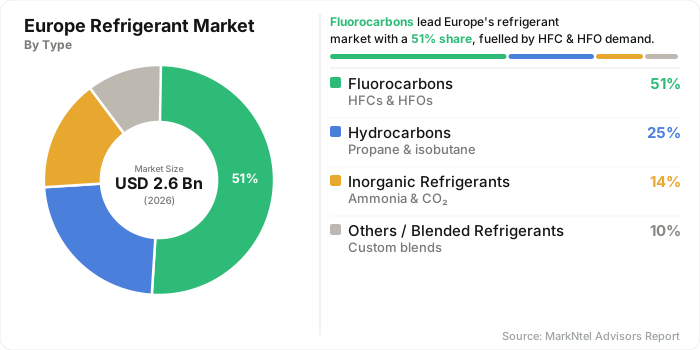
At the same time, HFOs are gaining adoption as next-generation alternatives with significantly lower global-warming potential, helping manufacturers comply with Europe’s evolving environmental regulations, including F-Gas reduction targets. Many HVAC manufacturers and refrigeration equipment suppliers have already optimized their systems around fluorocarbon-based refrigerants, which further reinforces their market presence. In addition, the transition toward lower-GWP blends such as R-454B and R-448A continues to support demand, allowing companies to meet regulatory requirements without major system redesigns.
Based on End-Use Industry:
- Residential
- Commercial
- Industrial
- Automotive
- Food & Beverage Processing
- Pharmaceuticals
- Electronics & Manufacturing
The industrial sector represents around 42% of the Europe refrigerant market, making it the largest end-use segment. Industrial facilities require large-scale refrigeration systems to maintain strict temperature conditions for production, storage, and logistics operations. Industries such as food and beverage processing, cold storage warehouses, pharmaceuticals, and chemical manufacturing rely heavily on high-capacity cooling infrastructure. These sectors must maintain consistent temperature control to preserve product quality, meet regulatory standards, and ensure operational efficiency. For example, food processing plants use refrigeration systems for freezing, chilling, and storing perishable goods throughout the supply chain.
Pharmaceutical manufacturers also require precise temperature environments to protect sensitive medicines and vaccines. Because these facilities operate continuously and at high capacity, they consume substantial volumes of refrigerants for both installation and maintenance. Moreover, the expansion of automated cold-chain logistics, growing demand for frozen food products, and stricter pharmaceutical storage standards across Europe continue to reinforce the strong demand for industrial refrigeration systems.
Europe Refrigerant Market (2026-32): Regional Projection
The Europe refrigerant market is dominated by Germany, accounting for approximately 18% of the regional market. Germany leads due to its rapid industrialization, high adoption of HVACR systems, and stringent environmental regulations that promote low‑GWP and natural refrigerants. Frequent heatwaves in recent years have also increased demand for residential and commercial air conditioning systems.
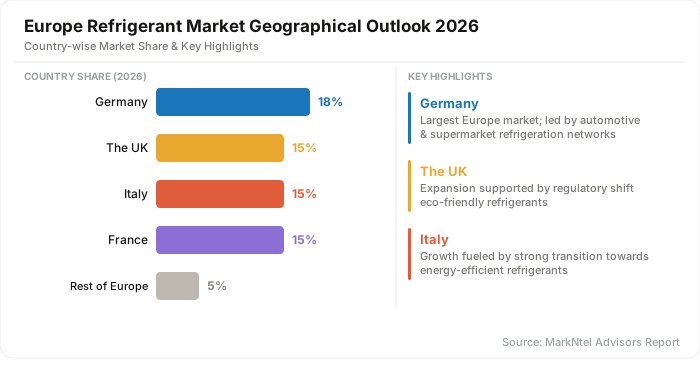
The country has a well-established manufacturing base for refrigeration and air conditioning equipment, with companies investing in advanced low‑GWP technologies and CO₂-based systems. German supermarkets, office complexes, and industrial facilities are increasingly retrofitting existing HVAC systems to comply with EU F‑Gas regulations, further driving refrigerant demand.
Moreover, supportive government policies, energy-efficiency incentives, and technical expertise in sustainable cooling solutions strengthen Germany’s position as the regional leader. The combination of high purchasing power, regulatory compliance needs, and technological advancement ensures Germany remains the dominant contributor to Europe’s refrigerant market.
Europe Refrigerant Market Competitive Landscape
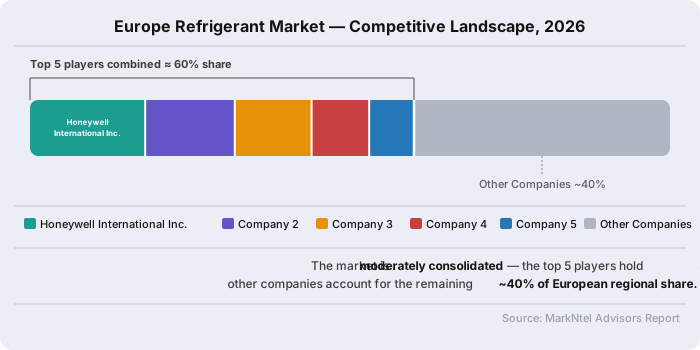
The market is moderately consolidated, with the top five players accounting for approximately 60% of the total market share. Leading companies include Honeywell International Inc., The Chemours Company, Daikin Industries Ltd., Arkema, and Linde plc.
Key Refrigerant Companies in Europe
- Arkema
- Linde plc
- Honeywell International Inc.
- The Chemours Company
- Daikin Industries Ltd.
- AGC Inc.
- Dongyue Group Limited
- A‑Gas International Limited
- Gas Servei
- Entalpia
- Others
Gain a Competitive Edge with Our Europe Refrigerant Market Report:
- Europe Refrigerant Market Report by MarkNtel Advisors provides a detailed & thorough analysis of market size & share, growth rate, competitive landscape, and key players. This comprehensive analysis helps businesses gain a holistic understanding of the market dynamics & make informed decisions.
- This report also highlights current market trends & future projections, allowing businesses to identify emerging opportunities & potential challenges. By understanding market forecasts, companies can align their strategies & stay ahead of the competition.
- Europe Refrigerant Market Report aids in assessing & mitigating risks associated with entering or operating in the market. By understanding market dynamics, regulatory frameworks, and potential challenges, businesses can develop strategies to minimize risks & optimize their operations.
*Reports Delivery Format - Market research studies from MarkNtel Advisors are offered in PDF, Excel and PowerPoint formats. Within 24 hours of the payment being successfully received, the report will be sent to your email address.
Frequently Asked Questions
- Market Segmentation
- Introduction
- Product Definition
- Research Process
- Assumptions
- Executive Summary
- Europe Refrigerant Market Policies, Regulations, and Product Standards
- Europe Refrigerant Market Trends & Developments
- Europe Refrigerant Market Dynamics
- Growth Factors
- Challenges
- Europe Refrigerant Market Hotspot & Opportunities
- Europe Refrigerant Market Outlook, 2022-2032F
- Market Size & Outlook
- By Revenues (USD Million)
- Market Share & Analysis
- By Type- Market Size & Forecast 2022-2032, USD Million
- Fluorocarbons
- Hydrofluorocarbons (HFCs)
- Hydrochlorofluorocarbons (HCFCs)
- Hydrofluoroolefins (HFOs)
- Hydrocarbons
- Propane (R-290)
- Isobutane (R-600a)
- Other hydrocarbons
- Inorganic Refrigerants
- Ammonia (NH₃)
- Carbon Dioxide (CO₂)
- Water
- Others / Blended Refrigerants
- Fluorocarbons
- By Application- Market Size & Forecast 2022-2032, USD Million
- Air Conditioning
- Refrigeration
- Chillers
- Heat Pumps
- Other Cooling Applications
- By End-Use Industry- Market Size & Forecast 2022-2032, USD Million
- Residential
- Commercial
- Industrial
- Automotive
- Food & Beverage Processing
- Pharmaceuticals
- Electronics & Manufacturing
- By Country
- Germany
- United Kingdom (UK)
- France
- Italy
- Belgium
- Spain
- Netherlands
- Rest of Europe
- By Company
- Competition Characteristics
- Market Share & Analysis
- By Type- Market Size & Forecast 2022-2032, USD Million
- Market Size & Outlook
- Germany Refrigerant Market Outlook, 2022-2032F
- Market Size & Outlook
- By Revenues (USD Million)
- Market Share & Analysis
- By Type- Market Size & Forecast 2022-2032, USD Million
- By Application- Market Size & Forecast 2022-2032, USD Million
- By End-Use Industry- Market Size & Forecast 2022-2032, USD Million
- Market Size & Outlook
- United Kingdom (UK) Refrigerant Market Outlook, 2022-2032F
- Market Size & Outlook
- By Revenues (USD Million)
- Market Share & Analysis
- By Type- Market Size & Forecast 2022-2032, USD Million
- By Application- Market Size & Forecast 2022-2032, USD Million
- By End-Use Industry- Market Size & Forecast 2022-2032, USD Million
- Market Size & Outlook
- France Refrigerant Market Outlook, 2022-2032F
- Market Size & Outlook
- By Revenues (USD Million)
- Market Share & Analysis
- By Type- Market Size & Forecast 2022-2032, USD Million
- By Application- Market Size & Forecast 2022-2032, USD Million
- By End-Use Industry- Market Size & Forecast 2022-2032, USD Million
- Market Size & Outlook
- Italy Refrigerant Market Outlook, 2022-2032F
- Market Size & Outlook
- By Revenues (USD Million)
- Market Share & Analysis
- By Type- Market Size & Forecast 2022-2032, USD Million
- By Application- Market Size & Forecast 2022-2032, USD Million
- By End-Use Industry- Market Size & Forecast 2022-2032, USD Million
- Market Size & Outlook
- Belgium Refrigerant Market Outlook, 2022-2032F
- Market Size & Outlook
- By Revenues (USD Million)
- Market Share & Analysis
- By Type- Market Size & Forecast 2022-2032, USD Million
- By Application- Market Size & Forecast 2022-2032, USD Million
- By End-Use Industry- Market Size & Forecast 2022-2032, USD Million
- Market Size & Outlook
- Spain Refrigerant Market Outlook, 2022-2032F
- Market Size & Outlook
- By Revenues (USD Million)
- Market Share & Analysis
- By Type- Market Size & Forecast 2022-2032, USD Million
- By Application- Market Size & Forecast 2022-2032, USD Million
- By End-Use Industry- Market Size & Forecast 2022-2032, USD Million
- Market Size & Outlook
- Netherlands Refrigerant Market Outlook, 2022-2032F
- Market Size & Outlook
- By Revenues (USD Million)
- Market Share & Analysis
- By Type- Market Size & Forecast 2022-2032, USD Million
- By Application- Market Size & Forecast 2022-2032, USD Million
- By End-Use Industry- Market Size & Forecast 2022-2032, USD Million
- Market Size & Outlook
- Europe Refrigerant Market Key Strategic Imperatives for Success & Growth
- Competitive Outlook
- Company Profiles
- Arkema
- Business Description
- Product Portfolio
- Collaborations & Alliances
- Recent Developments
- Financial Details
- Others
- Linde plc
- Business Description
- Product Portfolio
- Collaborations & Alliances
- Recent Developments
- Financial Details
- Others
- Honeywell International Inc.
- Business Description
- Product Portfolio
- Collaborations & Alliances
- Recent Developments
- Financial Details
- Others
- The Chemours Company
- Business Description
- Product Portfolio
- Collaborations & Alliances
- Recent Developments
- Financial Details
- Others
- Daikin Industries Ltd.
- Business Description
- Product Portfolio
- Collaborations & Alliances
- Recent Developments
- Financial Details
- Others
- AGC Inc.
- Business Description
- Product Portfolio
- Collaborations & Alliances
- Recent Developments
- Financial Details
- Others
- Dongyue Group Limited
- Business Description
- Product Portfolio
- Collaborations & Alliances
- Recent Developments
- Financial Details
- Others
- A-Gas International Limited
- Business Description
- Product Portfolio
- Collaborations & Alliances
- Recent Developments
- Financial Details
- Others
- Gas Servei
- Business Description
- Product Portfolio
- Collaborations & Alliances
- Recent Developments
- Financial Details
- Others
- Entalpia
- Business Description
- Product Portfolio
- Collaborations & Alliances
- Recent Developments
- Financial Details
- Others
- Others
- Business Description
- Product Portfolio
- Collaborations & Alliances
- Recent Developments
- Financial Details
- Others
- Arkema
- Company Profiles
- Disclaimer
MarkNtel Advisors follows a robust and iterative research methodology designed to ensure maximum accuracy and minimize deviation in market estimates and forecasts. Our approach combines both bottom-up and top-down techniques to effectively segment and quantify various aspects of the market. A consistent feature across all our research reports is data triangulation, which examines the market from three distinct perspectives to validate findings. Key components of our research process include:
1. Scope & Research Design At the outset, MarkNtel Advisors define the research objectives and formulate pertinent questions. This phase involves determining the type of research—qualitative or quantitative—and designing a methodology that outlines data collection methods, target demographics, and analytical tools. They also establish timelines and budgets to ensure the research aligns with client goals.
2. Sample Selection and Data Collection In this stage, the firm identifies the target audience and determines the appropriate sample size to ensure representativeness. They employ various sampling methods, such as random or stratified sampling, based on the research objectives. Data collection is carried out using tools like surveys, interviews, and observations, ensuring the gathered data is reliable and relevant.
3. Data Analysis and Validation Once data is collected, MarkNtel Advisors undertake a rigorous analysis process. This includes cleaning the data to remove inconsistencies, employing statistical software for quantitative analysis, and thematic analysis for qualitative data. Validation steps are taken to ensure the accuracy and reliability of the findings, minimizing biases and errors.

4. Data Forecast and FinalizationThe final phase involves forecasting future market trends based on the analyzed data. MarkNtel Advisors utilize predictive modeling and time series analysis to anticipate market behaviors. The insights are then compiled into comprehensive reports, featuring visual aids like charts and graphs, and include strategic recommendations to inform client decision-making
We offer flexible licensing options to cater to varying organizational needs. Choose the pricing pack that best suits your requirements:
Buy Now Inquire Before Buying
 Request Customization
 Talk to our Consultant







