

By Additive Type (Dispersants, Detergents, Viscosity Index Improvers, Anti-wear Additives, Antioxidants, Friction Modifiers, Corrosion & Rust Inhibitors, Pour Point Depressants, Defoamers (Foam Inhibi... ... foamers (Foam Inhibitors), Others), By Lubricant Type (Engine Oils, Transmission & Drive Line Fluids, Hydraulic Fluids, Gear Oils, Metalworking Fluids, Greases, Compressor Oils, Turbine Oils, Others), By Application (Automotive Lubricants, Industrial Lubricants), and others Read more
- Chemicals
- Jul 2026
- 360
- PDF, Excel, PPT
Lubricant Additives Market Key Takeaways
- The lubricant additives market was valued at USD 22.38 billion in 2025 and is projected to reach USD 24.59 billion in 2026 and USD 34.98 billion by 2032.
- The industry is projected to witness steady growth at a 6.05% CAGR during 2026–2032.
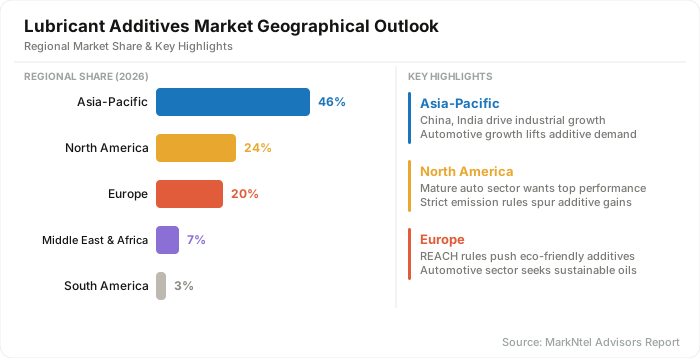
- Asia-Pacific leads the global market, accounting for approximately 46% of total revenue.
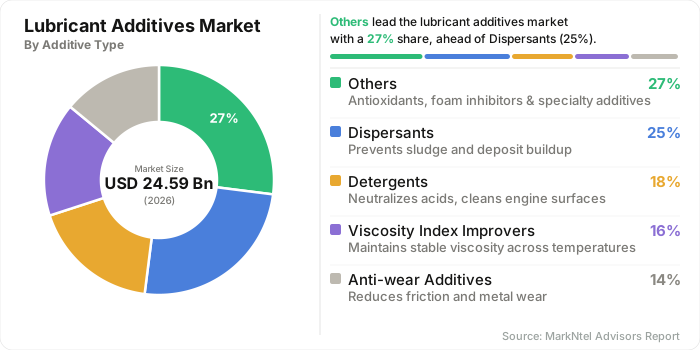
- Dispersants represent the leading additive type, capturing approximately 25% of the market share.
- Automotive lubricants dominate by application, securing approximately 57% of the market in 2026.
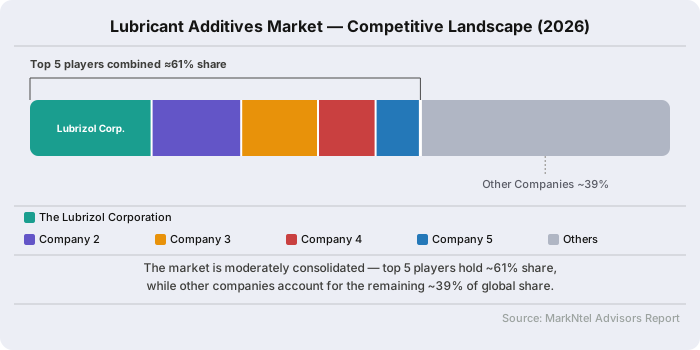
- The industry remains moderately consolidated, with the top five players collectively accounting for nearly 61% of the global market through strong technological capabilities and extensive OEM relationships.
Lubricant Additives Market Size and Outlook
The lubricant additives market size was valued at USD 22.38 billion in 2025 and is projected to grow from USD 24.59 billion in 2026 to USD 34.98 billion by 2032, registering a CAGR of 6.05% during the forecast period of 2026–2032. This steady growth will be supported by evolving automotive performance standards, increasing industrial efficiency requirements, and sustained investments in industrial lubrication, enabling manufacturers to deliver high-performance formulations for modern transportation and industrial equipment.
According to the International Organization of Motor Vehicle Manufacturers (OICA), global vehicle production increased from 92.7 million units in 2024 to 96.4 million units in 2025, reflecting 3.9% year-over-year growth. Rising vehicle production directly increases factory-fill demand for engine oils, transmission fluids, and greases formulated with advanced lubrication chemicals, reinforcing consumption of premium additive technologies required to enhance wear protection, oxidation resistance, and lubricant durability across passenger and commercial vehicle platforms.
Performance specification upgrades are expected to remain a key catalyst for formulation innovation. With the introduction of the API SQ specification, lubricant manufacturers are reformulating engine oils to deliver enhanced wear protection, improved oxidation stability, better engine cleanliness, stronger low-speed pre-ignition protection, and improved fuel economy. For example, LIQUI MOLY has upgraded its engine oil portfolio to comply with API SQ, demonstrating how evolving performance standards are accelerating investment in specialty additives and next-generation lubricant formulations.
Industrial demand is also expected to strengthen long-term growth prospects. According to the International Energy Agency's 4E Electric Motor Systems Annex (EMSA), electric motor systems account for approximately 53% of global electricity consumption, with pumps, fans, and compressors representing the largest share. As industries continue improving equipment efficiency and operational reliability, demand for advanced lubricant additive technologies that reduce friction, extend service intervals, and improve energy performance is expected to support sustained market expansion throughout the forecast period.
Lubricant Additives Market Key Indicators
- Asia-Pacific production rose 7.6% to around 59.2 million vehicles in 2025, accounting for more than 61% of global output, with China producing 34.53 million vehicles including 16.626 million new-energy units, up 29%. This concentration of hybrid lubricant demand in a single geography is reshaping additive specifications toward chemistries compatible with both combustion and electrified drivetrains.
- The International Energy Agency's Energy Efficiency 2025 report records over 250 new or updated policies enacted in 2025, in countries accounting for 85% of global energy demand. Regulatory density of this magnitude signals sustained institutional pressure on industrial operators to adopt higher-performance lubricants; consequently, formulators must integrate advanced corrosion inhibitor chemistries capable of meeting stricter equipment-efficiency mandates without compromising component protection.
- Global car registrations rose 3.5% to 77.6 million units in 2025, driven by a 5.5% increase in China, according to the European Automobile Manufacturers' Association . Each newly registered vehicle enters an active service cycle requiring periodic oil changes formulated with detergent additives, meaning registration growth of this scale sustains a recurring, multi-year replacement-lubricant demand stream layered on top of first-fill volumes.
- The International Energy Agency's Global EV Outlook 2026 records total spending on electric cars globally reaching about USD 860 billion in 2025, with government support rising nearly 20% to about USD 60 billion. While electric drivetrains reduce engine oil volumes, they simultaneously create new demand for electric vehicle lubricants such as thermal management and e-axle fluids, requiring additive suppliers to diversify their formulation portfolios.
Lubricant Additives Market Scope
| Category | Segments |
|---|---|
| By Additive Type | Dispersants, Detergents, Viscosity Index Improvers, Anti-wear Additives, Antioxidants, Friction Modifiers, Corrosion & Rust Inhibitors, Pour Point Depressants, Defoamers (Foam Inhibitors), Others |
| By Lubricant Type | Engine Oils, Transmission & Drive Line Fluids, Hydraulic Fluids, Gear Oils, Metalworking Fluids, Greases, Compressor Oils, Turbine Oils, Others |
| By Application | Automotive Lubricants, Industrial Lubricants |
Lubricant Additives Market Growth Drivers
Euro 7 Durability Standards Accelerating Demand for Advanced Lubricant Additives
Regulation (EU) 2024/1257 introduces the Euro 7 emissions standard for new light-duty vehicle types from 29 November 2026, extending emissions compliance durability to 10 years or 200,000 kilometers, whichever occurs first. Compared with previous Euro 6d requirements, engine oils must preserve oxidation resistance and wear protection over significantly longer operating periods. Consequently, the lubricant additives industry is benefiting from growing demand for advanced antioxidant and anti-wear chemistries capable of supporting extended-drain intervals.
The regulation also establishes a phased implementation for heavy-duty vehicle types beginning on 29 May 2028, prompting lubricant formulators to accelerate qualification of high-performance additive packages well before enforcement. Original equipment manufacturers increasingly require durable formulations that maintain lubricant integrity under severe operating conditions, creating opportunities for suppliers specializing in additive chemistry and engine oil additives to support next-generation commercial and passenger vehicle platforms.
OEM approval programs typically span several years, encouraging additive manufacturers to complete formulation validation well ahead of regulatory deadlines. Companies capable of delivering thermally stable, ashless antioxidant technologies with long-service performance are strengthening relationships with vehicle manufacturers during early qualification cycles. This regulatory transition is reinforcing innovation across the lubricant additives industry, while positioning long-life additive technologies as an increasingly important competitive differentiator throughout the European automotive lubrication value chain.
Recent Trends
Growing Adoption of API SQ and ILSAC GF-7 Standards Driving Next-Generation Lubricant Formulations
The automotive lubrication industry is entering a new phase of engine oil development following the introduction of API Service SQ and ILSAC GF-7A/GF-7B, which became available for licensing on 31 March 2025. These next-generation standards establish stricter requirements for fuel economy, engine cleanliness, wear protection, and compatibility with modern gasoline engines while supporting ultra-low-viscosity formulations, accelerating innovation across the lubricant additives industry.
The new API SQ category also incorporates performance requirements for emerging viscosity grades, including SAE 0W-8 and SAE 0W-12, encouraging lubricant manufacturers to develop advanced formulations capable of reducing friction without compromising engine durability. Meeting these specifications increasingly depends on sophisticated friction modifier technology and performance lubricants that enhance oxidation stability, wear protection, and fuel efficiency in turbocharged, hybrid, and gasoline direct-injection engines.
Commercial adoption has accelerated rapidly since the standards were introduced. By August 2025, the American Petroleum Institute had licensed more than 2,500 API SQ engine oil products and over 1,800 ILSAC GF-7 products, demonstrating broad industry acceptance and reinforcing the transition toward next-generation lubricant technologies . As OEMs increasingly specify these standards for new vehicle platforms, suppliers capable of developing compliant additive chemistries are strengthening their competitive position within the lubricant additives sector.
Lubricant Additives Market Opportunities and Challenges
Growing Electric Vehicle Penetration Driving Demand for Expanding EV Fluid Innovation
China's accelerating transition toward new energy vehicles is gradually reshaping lubricant consumption patterns. According to the IEA, the country sold more than 11 million electric cars in 2024, while incentives supporting vehicle replacement are expected to increase electric vehicles to around 60% of total car sales in 2025 . This shift presents a long-term challenge for the lubricant additives market, as battery electric vehicles eliminate the need for crankcase engine oil used in conventional powertrains.
Unlike internal combustion engines, battery electric vehicles rely on dedicated drivetrains, transmissions, and thermal management fluids rather than traditional engine lubricants. Consequently, manufacturers are redirecting research and development toward specialized formulations featuring dielectric insulation, oxidation resistance, copper compatibility, and enhanced thermal stability. This transition is encouraging innovation in EV fluid technology and lubricant innovation, enabling suppliers to diversify beyond conventional engine oil additive chemistries, further driving the demand for lubricant additives.
The evolving requirements of electric mobility are also creating significant commercial opportunities for next-generation additive technologies. In November 2025, Shell announced that its EV-Plus Thermal Fluid successfully cooled the battery, electric motor, and power electronics using a single-circuit, single-fluid architecture, demonstrating how advanced fluid technologies can simplify EV thermal management while improving system efficiency . This shows lubricant additive suppliers can offset declining engine oil demand by developing high-value formulations.
Segmentation Insights
Dispersants Leads Owing to Their Critical Role in Engine Cleanliness and Contamination Control
Dispersants accounted for the largest share of approximately 25% of the lubricant additives industry by additive type, owing to their essential role in suspending soot, sludge, and oxidation by-products that would otherwise accumulate and accelerate engine wear. Their ability to preserve engine cleanliness, maintain lubricant stability, and support extended oil-drain intervals has made dispersants indispensable across passenger cars, commercial vehicles, and heavy-duty equipment, particularly as the adoption of synthetic lubricants continues to increase.
The segment's leadership is further reinforced by increasingly demanding engine performance requirements and OEM specifications. In 2025, Afton Chemical introduced its HiTEC® 12220 premium dispersant inhibitor package for heavy-duty diesel engine oils, engineered to meet API CK-4/SP and API FA-4/SP requirements while delivering enhanced wear protection, oxidation resistance, and superior deposit, soot, and contamination handling. This development highlights the growing importance of advanced tribology solutions in next-generation lubricant formulations.
Further, dispersants play a vital role in minimizing low-temperature sludge formation and maintaining lubricant performance throughout extended service intervals, supporting increasingly stringent OEM durability requirements. As modern gasoline direct injection and heavy-duty diesel engines demand cleaner, longer-lasting lubricants, suppliers capable of improving dispersancy while maintaining compatibility with advanced emission-control technologies are expected to strengthen their competitive position and sustain the dominance of this additive category. Based on additive type, the scope has been classified into:
- Dispersants
- Detergents
- Viscosity Index Improvers
- Anti-wear Additives
- Antioxidants
- Friction Modifiers
- Corrosion & Rust Inhibitors
- Pour Point Depressants
- Defoamers (Foam Inhibitors)
- Others
Automotive Lubricants Lead Owing to Expanding Vehicle Parc and Advanced Engine Requirements
Automotive lubricants accounted for the largest share of approximately 57% of the lubricant additives landscape, reflecting the extensive global vehicle parc requiring engine oils, transmission fluids, gear oils, greases, and other specialty lubricants throughout their operational lifecycle. Continuous growth in passenger cars, commercial vehicles, and hybrid vehicles, coupled with routine maintenance and lubricant replacement cycles, sustains strong demand for additive-enhanced formulations, particularly with the increasing adoption of automotive lubrication solutions.
The segment's dominance is further supported by the critical role lubricant additives play in improving engine efficiency, minimizing friction, controlling deposits, preventing corrosion, and extending lubricant service life under varying operating conditions. As automakers develop more fuel-efficient engines with tighter tolerances and advanced emission-control technologies, lubricant formulations increasingly rely on sophisticated additive systems to deliver consistent performance while meeting evolving OEM specifications and regulatory requirements.
Demand for automotive lubricants is also reinforced by the expanding global vehicle fleet, rising average vehicle age, and growing preference for premium synthetic and semi-synthetic lubricants that require higher-performance additive packages. Increasing adoption of extended oil-drain intervals, hybrid powertrains, and advanced transmission systems is encouraging lubricant manufacturers to develop next-generation formulations utilizing fuel economy additives, ensuring the automotive application segment maintains its leading position. The key applications mapped in the study involve:
- Automotive Lubricants
- Industrial Lubricants
Lubricant Additives Market Geographical Outlook
Asia Pacific accounted for approximately 46% of the lubricant additives demand, making it the largest regional market. The region's leadership is supported by its position as the world's primary hub for automotive production, industrial manufacturing, and machinery assembly. Rapid industrialization, expanding transportation networks, and increasing demand for high-performance industrial fluids continue to strengthen lubricant additive consumption across major economies, including China, India, Japan, and South Korea.
The region also benefits from sustained government initiatives aimed at expanding domestic automotive manufacturing and strengthening supply chains. India's Production Linked Incentive (PLI) Scheme for Automobile and Auto Components had disbursed approximately USD 158 million to five approved applicants as of 30 November 2025, out of 82 approved applicants, according to the Ministry of Heavy Industries . The program supports capacity expansion and technological advancement across the automotive value chain, reinforcing long-term demand for lubricant manufacturing.
Growing investments in vehicle production, industrial equipment, and automotive component manufacturing are expected to sustain the region's market leadership throughout the forecast period. As manufacturers continue increasing production capacity and modernizing facilities, demand for advanced lubricant additive technologies is anticipated to rise alongside higher consumption of engine oils, transmission fluids, hydraulic fluids, and industrial lubricants, further strengthening Asia Pacific's dominant position in the global industry.
Lubricant Additives Market Competitive Analysis
The lubricant additives market is moderately consolidated, with the top five players collectively accounting for approximately 61% of global revenue. The Lubrizol Corporation, Infineum International Limited, Chevron Oronite Company LLC, Afton Chemical Corporation, and BASF SE maintain strong competitive positions through extensive research and development capabilities, broad additive portfolios, global manufacturing networks, and long-standing OEM approvals. Competition is primarily driven by formulation innovation, regulatory compliance, fuel-efficiency requirements, and strategic collaborations with lubricant manufacturers. Regional suppliers and specialty chemical companies continue to compete in niche applications.
Leading Companies in Lubricant Additives Industry
- The Lubrizol Corporation
- Infineum International Limited
- Afton Chemical Corporation
- Chevron Oronite Company LLC
- BASF SE
- Evonik Industries AG
- LANXESS AG
- Italmatch Chemicals S.p.A.
- Dorf Ketal Chemicals (India) Private Limited
- Nouryon Chemicals Holding B.V.
- Croda International Plc
- BRB International B.V.
- R.T. Vanderbilt Holding Company, Inc.
- Jinzhou Kangtai Lubricant Additives Co., Ltd.
- Dover Chemical Corporation
- Others
Lubricant Additives Industry News and Recent Developments
January 2026: Cosmo Oil Lubricants Expands API SQ-Compliant Engine Oil Portfolio
Cosmo Oil Lubricants Co., Ltd. expanded its passenger vehicle lubricant portfolio in January 2026 by introducing the COSMO FILLIO series compliant with API SQ and ILSAC GF-7 specifications. The company also launched a dedicated SAE 0W-8 engine oil designed for next-generation gasoline vehicles, supporting improved fuel economy and compliance with the latest engine performance standards.
Impact Analysis: The portfolio expansion reflects accelerating industry adoption of lower-viscosity engine oils and advanced additive technologies required by modern gasoline engines. By commercializing API SQ-compliant formulations, Cosmo Oil strengthens its competitiveness in high-performance automotive lubricants while responding to evolving OEM and regulatory requirements. The development is expected to stimulate demand for premium additive chemistries supporting oxidation resistance, wear protection, and fuel efficiency, reinforcing innovation-driven competition across the lubricant additives value chain.
July 2025: Lubrizol Supports Commercial Launch of Hybrid Engine Oil Using PV1710 Additive Technology
The Lubrizol Corporation supported the commercial launch of a hybrid-specific passenger vehicle engine oil developed by Lopal using its PV1710 additive technology. The formulation was engineered to meet the latest API SQ and ILSAC GF-7 performance requirements, addressing the lubrication needs of modern hybrid powertrains while enhancing engine protection, fuel efficiency, and durability.
Impact Analysis: The commercialization demonstrates the increasing importance of advanced additive platforms tailored to hybrid vehicles, one of the fastest-growing automotive segments. It highlights how additive suppliers are collaborating with lubricant manufacturers to accelerate the adoption of next-generation engine oils that satisfy evolving OEM specifications. Such partnerships enhance technological differentiation, broaden application opportunities for premium additive packages, and reinforce innovation as a key competitive factor within the global lubricant additives industry.
June 2025: Lubrizol Launches MF9145V Diesel Additive for Enhanced DPF Performance
The Lubrizol Corporation introduced Lubrizol® MF9145V, a next-generation diesel fuel additive engineered to reduce diesel particulate matter (DPM) formation at the source. The product is designed to lower diesel particulate filter (DPF) regeneration frequency, improve combustion efficiency, reduce maintenance requirements, and enhance fuel economy, particularly for commercial vehicles operating under demanding conditions.
Impact Analysis: The launch strengthens Lubrizol's position in advanced fuel additive technologies while addressing increasingly stringent emission and efficiency requirements for diesel-powered fleets. By reducing particulate formation and extending DPF service intervals, the additive offers tangible operational and maintenance benefits for fleet operators. The development also reflects the industry's growing emphasis on multifunctional additive solutions that improve vehicle reliability, support regulatory compliance, and create higher-value opportunities for lubricant additive manufacturers serving heavy-duty transportation markets.
- Market Segmentation
- Introduction
- Product Definition
- Research Process
- Assumptions
- Executive Summary
- Lubricant Additives Market Supply Chain & Value Chain Analysis
- Lubricant Additives Market Investment & Capacity Expansion Analysis
- Lubricant Additives Market Policies, Regulations, and Product Standards
- Lubricant Additives Production Trend 2022-2032
- Lubricant Additives Trend by Type of Additive Type
- Dispersants
- Detergents
- Viscosity Index Improvers
- Anti-wear Additives
- Antioxidants
- Friction Modifiers
- Corrosion & Rust Inhibitors
- Pour Point Depressants
- Defoamers (Foam Inhibitors)
- Others
- Company-Wise Production Plants and Statistics
- Installed Production Capacity
- Actual Production
- Planned Production Target
- Lubricant Additives Trend by Type of Additive Type
- Lubricant Additives Pricing Analysis 2022-2032
- Lubricant Additives Pricing Trend 2022-2032
- Lubricant Additives Pricing Trend by Regions 2022-2032
- North America
- South America
- Europe
- Middle East & Africa
- Asia Pacific
- Lubricant Additives Pricing Trend by Additive Type 2022-2032
- Dispersants
- Detergents
- Viscosity Index Improvers
- Anti-wear Additives
- Antioxidants
- Friction Modifiers
- Corrosion & Rust Inhibitors
- Pour Point Depressants
- Defoamers (Foam Inhibitors)
- Others
- Lubricant Additives Market Dynamics
- Growth Factors
- Challenges
- Lubricant Additives Market Hotspot & Opportunities
- Lubricant Additives Market Outlook, 2022-2032
- Market Size & Outlook
- By Revenues (USD Million)
- By Volume (Million Tons)
- Market Share & Outlook
- By Additive Type - Market Size & Forecast 2022-2032, USD Million & Million Tons
- Dispersants
- Detergents
- Viscosity Index Improvers
- Anti-wear Additives
- Antioxidants
- Friction Modifiers
- Corrosion & Rust Inhibitors
- Pour Point Depressants
- Defoamers (Foam Inhibitors)
- Others
- By Lubricant Type - Market Size & Forecast 2022-2032, USD Million & Million Tons
- Engine Oils
- Transmission & Drive Line Fluids
- Hydraulic Fluids
- Gear Oils
- Metalworking Fluids
- Greases
- Compressor Oils
- Turbine Oils
- Others
- By Application- Market Size & Forecast 2022-2032, USD Million & Million Tons
- Automotive Lubricants
- Passenger Car Motor Oil (PCMO)
- Heavy‑Duty Engine Oil (HDEO) / Commercial Vehicles
- Other Automotive Lubricants
- Industrial Lubricants
- Metalworking Fluids
- General Industrial Lubricants
- Power Generation
- Heavy Equipment / Construction & Mining
- Marine
- Aerospace
- Food & Beverage / Other Industrial
- Automotive Lubricants
- By Region
- North America
- South America
- Europe
- The Middle East & Africa
- Asia-Pacific
- By Company
- Competition Characteristics
- Market Share & Analysis
- By Additive Type - Market Size & Forecast 2022-2032, USD Million & Million Tons
- Market Size & Outlook
- North America Lubricant Additives Market Outlook, 2022-2032
- Market Size & Outlook
- By Revenues (USD Million)
- By Volume (Million Tons)
- Market Segmentation & Outlook
- By Additive Type - Market Size & Forecast 2022-2032, USD Million & Million Tons
- By Lubricant Type - Market Size & Forecast 2022-2032, USD Million & Million Tons
- By Application- Market Size & Forecast 2022-2032, USD Million & Million Tons
- By Country
- The US
- Canada
- Mexico
- The US Lubricant Additives Market Outlook, 2022-2032
- Market Size & Outlook
- By Revenues (USD Million)
- By Volume (Million Tons)
- Market Segmentation & Outlook
- By Additive Type - Market Size & Forecast 2022-2032, USD Million & Million Tons
- By Lubricant Type - Market Size & Forecast 2022-2032, USD Million & Million Tons
- By Application- Market Size & Forecast 2022-2032, USD Million & Million Tons
- Market Size & Outlook
- Canada Lubricant Additives Market Outlook, 2022-2032
- Market Size & Outlook
- By Revenues (USD Million)
- By Volume (Million Tons)
- Market Segmentation & Outlook
- By Additive Type - Market Size & Forecast 2022-2032, USD Million & Million Tons
- By Lubricant Type - Market Size & Forecast 2022-2032, USD Million & Million Tons
- By Application- Market Size & Forecast 2022-2032, USD Million & Million Tons
- Market Size & Outlook
- Mexico Lubricant Additives Market Outlook, 2022-2032
- Market Size & Outlook
- By Revenues (USD Million)
- By Volume (Million Tons)
- Market Segmentation & Outlook
- By Additive Type - Market Size & Forecast 2022-2032, USD Million & Million Tons
- By Lubricant Type - Market Size & Forecast 2022-2032, USD Million & Million Tons
- By Application- Market Size & Forecast 2022-2032, USD Million & Million Tons
- Market Size & Outlook
- Market Size & Outlook
- South America Lubricant Additives Market Outlook, 2022-2032
- Market Size & Outlook
- By Revenues (USD Million)
- By Volume (Million Tons)
- Market Segmentation & Outlook
- By Additive Type - Market Size & Forecast 2022-2032, USD Million & Million Tons
- By Lubricant Type - Market Size & Forecast 2022-2032, USD Million & Million Tons
- By Application- Market Size & Forecast 2022-2032, USD Million & Million Tons
- By Country
- Brazil
- Argentina
- Rest of South America
- Brazil Lubricant Additives Market Outlook, 2022-2032
- Market Size & Outlook
- By Revenues (USD Million)
- By Volume (Million Tons)
- Market Segmentation & Outlook
- By Additive Type - Market Size & Forecast 2022-2032, USD Million & Million Tons
- By Lubricant Type - Market Size & Forecast 2022-2032, USD Million & Million Tons
- By Application- Market Size & Forecast 2022-2032, USD Million & Million Tons
- Market Size & Outlook
- Argentina Lubricant Additives Market Outlook, 2022-2032
- Market Size & Outlook
- By Revenues (USD Million)
- By Volume (Million Tons)
- Market Segmentation & Outlook
- By Additive Type - Market Size & Forecast 2022-2032, USD Million & Million Tons
- By Lubricant Type - Market Size & Forecast 2022-2032, USD Million & Million Tons
- By Application- Market Size & Forecast 2022-2032, USD Million & Million Tons
- Market Size & Outlook
- Market Size & Outlook
- Europe Lubricant Additives Market Outlook, 2022-2032
- Market Size & Outlook
- By Revenues (USD Million)
- By Volume (Million Tons)
- Market Segmentation & Outlook
- By Additive Type - Market Size & Forecast 2022-2032, USD Million & Million Tons
- By Lubricant Type - Market Size & Forecast 2022-2032, USD Million & Million Tons
- By Application- Market Size & Forecast 2022-2032, USD Million & Million Tons
- By Country
- The UK
- Germany
- France
- Italy
- Spain
- The Benelux
- Rest of Europe
- The UK Lubricant Additives Market Outlook, 2022-2032
- Market Size & Outlook
- By Revenues (USD Million)
- By Volume (Million Tons)
- Market Segmentation & Outlook
- By Additive Type - Market Size & Forecast 2022-2032, USD Million & Million Tons
- By Lubricant Type - Market Size & Forecast 2022-2032, USD Million & Million Tons
- By Application- Market Size & Forecast 2022-2032, USD Million & Million Tons
- Market Size & Outlook
- Germany Lubricant Additives Market Outlook, 2022-2032
- Market Size & Outlook
- By Revenues (USD Million)
- By Volume (Million Tons)
- Market Segmentation & Outlook
- By Additive Type - Market Size & Forecast 2022-2032, USD Million & Million Tons
- By Lubricant Type - Market Size & Forecast 2022-2032, USD Million & Million Tons
- By Application- Market Size & Forecast 2022-2032, USD Million & Million Tons
- Market Size & Outlook
- France Lubricant Additives Market Outlook, 2022-2032
- Market Size & Outlook
- By Revenues (USD Million)
- By Volume (Million Tons)
- Market Segmentation & Outlook
- By Additive Type - Market Size & Forecast 2022-2032, USD Million & Million Tons
- By Lubricant Type - Market Size & Forecast 2022-2032, USD Million & Million Tons
- By Application- Market Size & Forecast 2022-2032, USD Million & Million Tons
- Market Size & Outlook
- Italy Lubricant Additives Market Outlook, 2022-2032
- Market Size & Outlook
- By Revenues (USD Million)
- By Volume (Million Tons)
- Market Segmentation & Outlook
- By Additive Type - Market Size & Forecast 2022-2032, USD Million & Million Tons
- By Lubricant Type - Market Size & Forecast 2022-2032, USD Million & Million Tons
- By Application- Market Size & Forecast 2022-2032, USD Million & Million Tons
- Market Size & Outlook
- Spain Lubricant Additives Market Outlook, 2022-2032
- Market Size & Outlook
- By Revenues (USD Million)
- By Volume (Million Tons)
- Market Segmentation & Outlook
- By Additive Type - Market Size & Forecast 2022-2032, USD Million & Million Tons
- By Lubricant Type - Market Size & Forecast 2022-2032, USD Million & Million Tons
- By Application- Market Size & Forecast 2022-2032, USD Million & Million Tons
- Market Size & Outlook
- The Benelux Lubricant Additives Market Outlook, 2022-2032
- Market Size & Outlook
- By Revenues (USD Million)
- By Volume (Million Tons)
- Market Segmentation & Outlook
- By Additive Type - Market Size & Forecast 2022-2032, USD Million & Million Tons
- By Lubricant Type - Market Size & Forecast 2022-2032, USD Million & Million Tons
- By Application- Market Size & Forecast 2022-2032, USD Million & Million Tons
- Market Size & Outlook
- Market Size & Outlook
- The Middle East & Africa Lubricant Additives Market Outlook, 2022-2032
- Market Size & Outlook
- By Revenues (USD Million)
- By Volume (Million Tons)
- Market Segmentation & Outlook
- By Additive Type - Market Size & Forecast 2022-2032, USD Million & Million Tons
- By Lubricant Type - Market Size & Forecast 2022-2032, USD Million & Million Tons
- By Application- Market Size & Forecast 2022-2032, USD Million & Million Tons
- By Country
- Saudi Arabia
- The UAE
- South Africa
- Egypt
- Rest of Middle East & Africa
- Saudi Arabia Lubricant Additives Market Outlook, 2022-2032
- Market Size & Outlook
- By Revenues (USD Million)
- By Volume (Million Tons)
- Market Segmentation & Outlook
- By Additive Type - Market Size & Forecast 2022-2032, USD Million & Million Tons
- By Lubricant Type - Market Size & Forecast 2022-2032, USD Million & Million Tons
- By Application- Market Size & Forecast 2022-2032, USD Million & Million Tons
- Market Size & Outlook
- The UAE Lubricant Additives Market Outlook, 2022-2032
- Market Size & Outlook
- By Revenues (USD Million)
- By Volume (Million Tons)
- Market Segmentation & Outlook
- By Additive Type - Market Size & Forecast 2022-2032, USD Million & Million Tons
- By Lubricant Type - Market Size & Forecast 2022-2032, USD Million & Million Tons
- By Application- Market Size & Forecast 2022-2032, USD Million & Million Tons
- Market Size & Outlook
- South Africa Lubricant Additives Market Outlook, 2022-2032
- Market Size & Outlook
- By Revenues (USD Million)
- By Volume (Million Tons)
- Market Segmentation & Outlook
- By Additive Type - Market Size & Forecast 2022-2032, USD Million & Million Tons
- By Lubricant Type - Market Size & Forecast 2022-2032, USD Million & Million Tons
- By Application- Market Size & Forecast 2022-2032, USD Million & Million Tons
- Market Size & Outlook
- Egypt Lubricant Additives Market Outlook, 2022-2032
- Market Size & Outlook
- By Revenues (USD Million)
- By Volume (Million Tons)
- Market Segmentation & Outlook
- By Additive Type - Market Size & Forecast 2022-2032, USD Million & Million Tons
- By Lubricant Type - Market Size & Forecast 2022-2032, USD Million & Million Tons
- By Application- Market Size & Forecast 2022-2032, USD Million & Million Tons
- Market Size & Outlook
- Market Size & Outlook
- Asia-Pacific Lubricant Additives Market Outlook, 2022-2032
- Market Size & Outlook
- By Revenues (USD Million)
- By Volume (Million Tons)
- Market Segmentation & Outlook
- By Additive Type - Market Size & Forecast 2022-2032, USD Million & Million Tons
- By Lubricant Type - Market Size & Forecast 2022-2032, USD Million & Million Tons
- By Application- Market Size & Forecast 2022-2032, USD Million & Million Tons
- By Country
- China
- Japan
- India
- South Korea
- Australia
- Rest of Asia-Pacific
- China Lubricant Additives Market Outlook, 2022-2032
- Market Size & Outlook
- By Revenues (USD Million)
- By Volume (Million Tons)
- Market Segmentation & Outlook
- By Additive Type - Market Size & Forecast 2022-2032, USD Million & Million Tons
- By Lubricant Type - Market Size & Forecast 2022-2032, USD Million & Million Tons
- By Application- Market Size & Forecast 2022-2032, USD Million & Million Tons
- Market Size & Outlook
- Japan Lubricant Additives Market Outlook, 2022-2032
- Market Size & Outlook
- By Revenues (USD Million)
- By Volume (Million Tons)
- Market Segmentation & Outlook
- By Additive Type - Market Size & Forecast 2022-2032, USD Million & Million Tons
- By Lubricant Type - Market Size & Forecast 2022-2032, USD Million & Million Tons
- By Application- Market Size & Forecast 2022-2032, USD Million & Million Tons
- Market Size & Outlook
- India Lubricant Additives Market Outlook, 2022-2032
- Market Size & Outlook
- By Revenues (USD Million)
- By Volume (Million Tons)
- Market Segmentation & Outlook
- By Additive Type - Market Size & Forecast 2022-2032, USD Million & Million Tons
- By Lubricant Type - Market Size & Forecast 2022-2032, USD Million & Million Tons
- By Application- Market Size & Forecast 2022-2032, USD Million & Million Tons
- Market Size & Outlook
- South Korea Lubricant Additives Market Outlook, 2022-2032
- Market Size & Outlook
- By Revenues (USD Million)
- By Volume (Million Tons)
- Market Segmentation & Outlook
- By Additive Type - Market Size & Forecast 2022-2032, USD Million & Million Tons
- By Lubricant Type - Market Size & Forecast 2022-2032, USD Million & Million Tons
- By Application- Market Size & Forecast 2022-2032, USD Million & Million Tons
- Market Size & Outlook
- Australia Lubricant Additives Market Outlook, 2022-2032
- Market Size & Outlook
- By Revenues (USD Million)
- By Volume (Million Tons)
- Market Segmentation & Outlook
- By Additive Type - Market Size & Forecast 2022-2032, USD Million & Million Tons
- By Lubricant Type - Market Size & Forecast 2022-2032, USD Million & Million Tons
- By Application- Market Size & Forecast 2022-2032, USD Million & Million Tons
- Market Size & Outlook
- Market Size & Outlook
- Lubricant Additives Market Key Strategic Imperatives for Success & Growth
- Competitive Outlook
- Company Profiles
- The Lubrizol Corporation
- Business Description
- Product Portfolio
- Collaborations & Alliances
- Recent Developments
- Financial Details
- Others
- Infineum International Limited
- Business Description
- Product Portfolio
- Collaborations & Alliances
- Recent Developments
- Financial Details
- Others
- Afton Chemical Corporation
- Business Description
- Product Portfolio
- Collaborations & Alliances
- Recent Developments
- Financial Details
- Others
- Chevron Oronite Company LLC
- Business Description
- Product Portfolio
- Collaborations & Alliances
- Recent Developments
- Financial Details
- Others
- BASF SE
- Business Description
- Product Portfolio
- Collaborations & Alliances
- Recent Developments
- Financial Details
- Others
- Evonik Industries AG
- Business Description
- Product Portfolio
- Collaborations & Alliances
- Recent Developments
- Financial Details
- Others
- LANXESS AG
- Business Description
- Product Portfolio
- Collaborations & Alliances
- Recent Developments
- Financial Details
- Others
- Italmatch Chemicals S.p.A.
- Business Description
- Product Portfolio
- Collaborations & Alliances
- Recent Developments
- Financial Details
- Others
- Dorf Ketal Chemicals (India) Private Limited
- Business Description
- Product Portfolio
- Collaborations & Alliances
- Recent Developments
- Financial Details
- Others
- Nouryon Chemicals Holding B.V.
- Business Description
- Product Portfolio
- Collaborations & Alliances
- Recent Developments
- Financial Details
- Others
- Croda International Plc
- Business Description
- Product Portfolio
- Collaborations & Alliances
- Recent Developments
- Financial Details
- Others
- BRB International B.V.
- Business Description
- Product Portfolio
- Collaborations & Alliances
- Recent Developments
- Financial Details
- Others
- Vanderbilt Chemicals, LLC
- Business Description
- Product Portfolio
- Collaborations & Alliances
- Recent Developments
- Financial Details
- Others
- Jinzhou Kangtai Lubricant Additives Co., Ltd.
- Business Description
- Product Portfolio
- Collaborations & Alliances
- Recent Developments
- Financial Details
- Others
- Dover Chemical Corporation
- Business Description
- Product Portfolio
- Collaborations & Alliances
- Recent Developments
- Financial Details
- Others
- Others
- The Lubrizol Corporation
- Company Profiles
- Disclaimer

MarkNtel Advisors follows a robust and iterative research methodology designed to ensure maximum accuracy and minimize deviation in market estimates and forecasts. Our approach combines both bottom-up and top-down techniques to effectively segment and quantify various aspects of the market. A consistent feature across all our research reports is data triangulation, which examines the market from three distinct perspectives to validate findings. Key components of our research process include:
1. Scope & Research Design At the outset, MarkNtel Advisors define the research objectives and formulate pertinent questions. This phase involves determining the type of research—qualitative or quantitative—and designing a methodology that outlines data collection methods, target demographics, and analytical tools. They also establish timelines and budgets to ensure the research aligns with client goals.
2. Sample Selection and Data Collection In this stage, the firm identifies the target audience and determines the appropriate sample size to ensure representativeness. They employ various sampling methods, such as random or stratified sampling, based on the research objectives. Data collection is carried out using tools like surveys, interviews, and observations, ensuring the gathered data is reliable and relevant.
3. Data Analysis and Validation Once data is collected, MarkNtel Advisors undertake a rigorous analysis process. This includes cleaning the data to remove inconsistencies, employing statistical software for quantitative analysis, and thematic analysis for qualitative data. Validation steps are taken to ensure the accuracy and reliability of the findings, minimizing biases and errors.

4. Data Forecast and FinalizationThe final phase involves forecasting future market trends based on the analyzed data. MarkNtel Advisors utilize predictive modeling and time series analysis to anticipate market behaviors. The insights are then compiled into comprehensive reports, featuring visual aids like charts and graphs, and include strategic recommendations to inform client decision-making
We’d love to understand what matters most to you.