

By Product Type (EC (Electrical Conductor) Wire Rod, Alloy Wire Rod, Deoxidized / Flip Coil Rod, Others), By Alloy Type (Pure Aluminum, Aluminum Alloys), By Form (Coil, Rod, Wire), By Diameter (Below... ... By Diameter (Below 8 mm, 8–10 mm, 10–12 mm, Above 12 mm), By Manufacturing Process (Continuous Casting & Rolling, Extrusion, Cold Rolling, Hot Rolling), By Application (Electrical Transmission & Distribution, Power & Communication Cables, Automotive Wiring, Industrial Equipment & Motors, Welding Applications, Construction Materials, Aerospace Components), By End User (Utilities (Power & Energy), Cable Manufacturers, Automotive OEMs, Industrial Equipment Manufacturers, Construction Industry, Aerospace & Defense, Electronics & Telecom, Others), and others Read more
- Buildings, Construction, Metals & Mining
- Apr 2026
- 160
- PDF, Excel, PPT
GCC Aluminum Wire Rod Market Key Takeaways
- GCC Aluminum Wire Rod market size was valued at around USD 1.3 billion in 2025 and is projected to grow from USD 1.36 billion in 2026 to USD 1.77 billion by 2032, exhibiting a CAGR of 4.5% during 2026-2032.
- In 2026, Saudi Arabia holds the largest share of about 34.42%.
- Based on product type, the EC (Electrical Conductor) Wire Rod holds a significant share of about 65% in 2026.
- By End User, the Utilities (Power & Energy) segment seized a significant share of about 42% in 2026.
- The industry in GCC is moderately fragmented, with approximately 20–30 companies operating across the region. The top five players collectively account for nearly 45% of the total market share.
GCC Aluminum Wire Rod Market Size and Outlook
The GCC Aluminum Wire Rod market was valued at approximately USD 1.3 billion in 2025 and is estimated to reach USD 1.36 billion in 2026. The market is further expected to grow to around USD 1.77 billion by 2032, registering a CAGR of 4.5% during the forecast period (2026–2032).
The Aluminum Wire Rod industry in GCC has shown steady and consistent growth, supported by the region’s strong position in global aluminum production and ongoing investments in electricity infrastructure. According to the International Aluminium Institute, the Middle East driven by GCC producers accounts for approximately 8–9% of global primary aluminum output, enabling downstream processing activities. This production strength has translated into stable demand, particularly as transmission networks expand across key economies. For instance, Saudi Arabia’s grid exceeds 90,000 circuit kilometers, as reported by the Saudi Electricity Company, supporting consistent consumption of aluminum conductors.
Additionally, market conditions remain favorable, driven by rising electricity demand, urbanization, and industrial development across the region. This trend is further supported by the UAE–Saudi Arabia 400 kV interconnection project, backed by an investment of approximately USD 205 million, which is enhancing cross-border electricity exchange and grid reliability. Such developments reflect growing investments in high-voltage transmission infrastructure across the GCC. Electricity demand is primarily driven by utilities and industrial users, while commercial infrastructure projects such as smart cities contribute to incremental growth. As a result, renewable energy deployment and grid upgrades in countries such as the UAE and Saudi Arabia continue to strengthen demand for aluminum-based transmission materials.
In parallel, government policies and development strategies continue to reinforce this growth trajectory through targeted infrastructure investments. Saudi Arabia’s Public Investment Fund, valued at USD 925 billion, has outlined its 2026–2030 strategy, allocating nearly 80% of investments toward domestic sectors, including infrastructure, clean energy, and industrial development . This capital deployment supports grid expansion, urban development, and industrial electrification across the region. Complementing this, initiatives such as the UAE Energy Strategy 2050 promote renewable integration and energy efficiency, further strengthening the long-term aluminum wire rod production across the GCC.
Looking ahead, these interconnected developments are expected to sustain stable aluminum wire rod market growth, supported by continued electrification, renewable integration, and industrial diversification across GCC economies. Industry players are advancing downstream investments and sustainability initiatives, including low-carbon aluminum production and localized supply chains. These efforts align with evolving regulatory frameworks and regional decarbonization goals. As infrastructure expansion and clean energy deployment continue to accelerate, demand for aluminum wire rods is expected to remain structurally strong and well-supported in the coming years.
GCC Aluminum Wire Rod Market Key Indicators
- Renewable energy capacity across GCC member states is projected to exceed 120 GW by 2030 and reach nearly 180 GW by 2040. This expansion in clean energy infrastructure requires large-scale transmission networks and grid connectivity, thereby increasing demand for aluminum conductors and supporting the GCC aluminum wire rod market growth.
- Aluminium Bahrain (Alba) has a production capacity exceeding 1.6 million metric tons annually, making it one of the world’s largest aluminum smelters. Strong primary production and integration with downstream cable and conductor manufacturers ensure raw material availability, thereby supporting demand for aluminum wire rods in electrical applications across Bahrain.
- GCC countries are expanding next-generation telecom infrastructure, with over 10,000 5G-Advanced (5G-A) sites deployed across the region. This expansion requires extensive power and cable infrastructure, increasing demand for aluminum conductors and supporting aluminum wire rod consumption .
- The UAE is advancing its national rail infrastructure through the Etihad Rail project spanning around 900 km and connecting multiple emirates, with operations expanding in 2026. Large-scale rail and transport infrastructure development requires extensive electrical systems and power distribution networks, thereby supporting demand for aluminum cables and wire rods.
GCC Aluminum Wire Rod Market Scope
| Category | Segments |
|---|---|
| By Product Type | (EC (Electrical Conductor) Wire Rod, Alloy Wire Rod, Deoxidized / Flip Coil Rod, Others), |
| By Alloy Type | (Pure Aluminum, Aluminum Alloys), |
| By Form | (Coil, Rod, Wire), |
| By Diameter | (Below 8 mm, 8–10 mm, 10–12 mm, Above 12 mm), |
| By Manufacturing Process | (Continuous Casting & Rolling, Extrusion, Cold Rolling, Hot Rolling), |
| By Application | (Electrical Transmission & Distribution, Power & Communication Cables, Automotive Wiring, Industrial Equipment & Motors, Welding Applications, Construction Materials, Aerospace Components), |
| By End User | (Utilities (Power & Energy), Cable Manufacturers, Automotive OEMs, Industrial Equipment Manufacturers, Construction Industry, Aerospace & Defense, Electronics & Telecom, Others), |
GCC Aluminum Wire Rod Market Growth Drivers
Rapid Renewable Energy Deployment
The accelerated deployment of renewable energy across the GCC has become a key structural driver of the aluminum wire rod industry, significantly increasing demand for conductive materials used in power systems. This driver is supported by accelerating clean energy adoption across GCC countries to meet diversification goals and rising electricity needs. Renewable energy capacity across the region recorded strong growth in 2025, with Saudi Arabia adding over 5,700 MW and the UAE contributing more than 1,000 MW, while Oman and Qatar more than doubled their capacity . This expansion is reinforcing demand across the energy and utilities sector in the GCC.
Building on this expansion, substantial investments in renewable energy projects are further increasing infrastructure requirements across the region. For instance, Saudi Arabia awarded renewable energy projects totaling 4.5 GW in 2025 with investments exceeding USD 2.4 billion, reflecting a clear scale-up in capacity development. As these projects expand, they require integrated electrical infrastructure, including substations, grid connectivity, and power evacuation systems. These systems rely on aluminum conductors manufactured from wire rods, thereby ensuring consistent material demand across transmission and distribution networks.
Importantly, this driver supports long-term market expansion by creating sustained infrastructure demand rather than short-term fluctuations. Each new renewable project contributes to incremental material requirements during installation and grid integration phases, maintaining consistent volume growth. In parallel, government-led clean energy targets continue to support renewable deployment and associated infrastructure development across GCC economies. As these initiatives progress, they are reinforcing a stable and long-term aluminum wire rod demand and supply outlook across the GCC region.
Recent Trends
Shift Toward Low-Carbon Aluminum Production
The shift toward low-carbon aluminum production is emerging as a key structural trend in the GCC aluminum wire rod industry, driven by decarbonization goals and rising sustainability requirements across global supply chains. Aluminum production remains energy-intensive, prompting producers to reduce carbon emissions through cleaner energy integration and improved process efficiency. In response, GCC countries are aligning industrial strategies with low-emission production models, reflecting a broader transition toward sustainable manufacturing. This shift is influencing both upstream processing and downstream demand across power and infrastructure applications.
This transition is supported by tangible developments and increasing market adoption across the region. For instance, Emirates Global Aluminium reported a 70% increase in low-carbon aluminum sales in 2025, reaching approximately 196,000 tonnes, driven by solar, nuclear, and recycled aluminum offerings . In parallel, Saudi Arabia is developing a green integrated aluminum industrial park in Yanbu, with an initial capacity of around 500,000 tons per year, combining low-emission power, smelting, and downstream processing. Together, these initiatives reflect a clear move toward integrated and sustainable aluminum value chains.
The persistence of this trend is reinforced by regulatory expectations, export market requirements, and growing demand for environmentally compliant materials. Producers are adopting cleaner technologies to meet evolving standards while maintaining global competitiveness. At the same time, regional energy transition strategies continue to support the use of clean power in industrial operations. As these factors converge, low-carbon aluminum production is expected to remain a long-term structural trend, reshaping industry practices and demand patterns across the GCC.
GCC Aluminum Wire Rod Market Opportunities and Challenges
Limited Downstream Diversification Encouraging Expansion into High-Value and Specialized Aluminum Applications
Limited downstream diversification remains a structural challenge in the aluminum wire rod industry across GCC, as production is largely concentrated in primary aluminum and semi-finished products with relatively lower penetration into high-value end-use applications. The regional ecosystem continues to rely heavily on smelting and export-oriented supply chains, limiting the development of advanced manufacturing segments. For instance, more than 60% of aluminum produced in the GCC is exported annually, primarily in unwrought and semi-finished forms . This upstream-focused structure constrains value realization and reduces resilience to global demand fluctuations, as revenues remain closely tied to bulk commodity exports rather than higher-margin applications.
However, this challenge is simultaneously creating an opportunity for expansion into value-added and specialized aluminum applications across the region. Governments in Saudi Arabia and the UAE are actively promoting local manufacturing and downstream integration through industrial development programs. Saudi Arabia is expanding its manufacturing base under Vision 2030 , while the UAE continues to strengthen domestic production through initiatives such as “Make it in the Emirates,” which has attracted significant industrial participation . As demand increases across power, construction, and industrial sectors, producers are exploring high-performance conductors and customized solutions, thereby enhancing competitiveness and unlocking new growth avenues.
Segmentation Insights
Electrical Conductor (EC) Grade Wire Rod is the Dominant Product Type
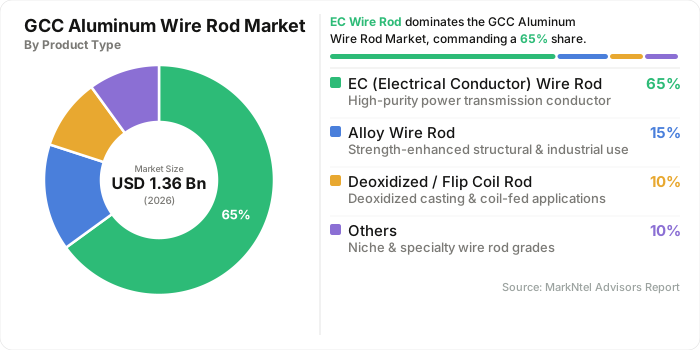
Based on product type, Electrical Conductor (EC) grade wire rod accounts for approximately 65% share of the GCC aluminum wire rod industry, making it the leading segment across the ecosystem. This dominance is primarily driven by its high electrical conductivity, typically around 61% IACS, which makes it well-suited for power transmission and distribution application s. In addition, EC-grade aluminum offers a balanced combination of weight and cost efficiency, making it a preferred material for overhead conductors such as AAC (All Aluminum Conductor) and ACSR (Aluminum Conductor Steel Reinforced). Its widespread use across grid infrastructure, utilities, and cable manufacturing further strengthens its leading position, particularly in countries such as Saudi Arabia and the UAE where power networks are expanding.
This strong position is closely linked to the continued expansion of electricity infrastructure across the GCC. Rising power consumption, along with ongoing investments in transmission networks, renewable energy integration, and grid modernization, is steadily increasing the need for efficient conductor materials. At the same time, aluminum’s cost advantage over copper and its lightweight nature make it especially suitable for long-distance transmission lines. Supported by strong regional aluminum production, EC-grade wire rods continue to dominate the GCC aluminum wire rod landscape, driven by consistent utility demand and favorable material properties. Based on product type, the market is segmented into:
- EC (Electrical Conductor) Wire Rod
- Alloy Wire Rod
- Deoxidized / Flip Coil Rod
- Others
Utilities (Power & Energy) is the Leading End-User Segment
Utilities (Power & Energy) account for approximately 42% share of the GCC aluminum wire rod market, making it the leading segment across the region. This dominance is primarily driven by the critical role of aluminum in high-voltage transmission systems, where its lightweight nature and cost efficiency make it well-suited for large-scale grid deployment. In the GCC, characterized by long transmission distances and challenging environmental conditions, aluminum enables efficient power transfer while optimizing infrastructure costs. As a result, it remains a preferred material across utility-led transmission networks.
This position is further reinforced by the evolving structure of power infrastructure development across the region. Renewable energy projects are often located away from major consumption centers, increasing the need for long-distance transmission networks. For instance, the Al Dhafra Solar PV Plant, with a capacity of around 2 GW, is situated approximately 30–35 km from Abu Dhabi city in a desert area, highlighting the requirement for extended grid connectivity . At the same time, rising electricity demand from urban expansion, industrial growth, and energy-intensive sectors such as desalination continues to strengthen baseline demand. Supported by strong aluminum rod production in GCC and ongoing government investments, the utilities segment maintains stable, high-volume consumption, reinforcing its dominant position. Based on end user, the market is segmented into:
- Utilities (Power & Energy)
- Cable Manufacturers
- Automotive OEMs
- Industrial Equipment Manufacturers
- Construction Industry
- Aerospace & Defense
- Electronics & Telecom
- Others
GCC Aluminum Wire Rod Market Geographical Outlook
Saudi Arabia accounts for approximately 34.42% share of the regional market, supported by its strong position in primary aluminum production and extensive power infrastructure development. The country benefits from a well-established industrial base and access to competitive energy resources, enabling cost-efficient production and steady downstream utilization. At the same time, the continuous expansion of electricity networks and transmission systems is driving consistent demand for aluminum wire rods. This combination of supply capability and infrastructure-led consumption underpins sustain growth across aluminum wire rod industry in Saudi Arabia.
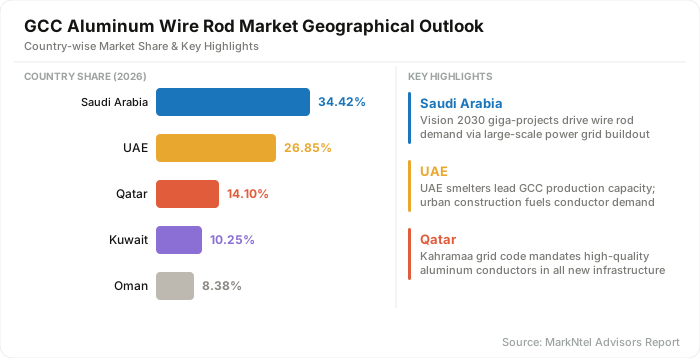
This position is further reinforced by the scale and structure of energy projects being developed across the country. For instance, the NEOM green hydrogen project integrates nearly 4 GW of solar and wind generation along with a dedicated transmission grid, highlighting the need for large-scale power evacuation infrastructure. In parallel, NEOM’s broader energy strategy includes the development of high-capacity transmission systems to connect generation sources with industrial and urban demand centers . These developments, combined with ongoing grid expansion and industrial growth, continue to sustain high consumption levels, reinforcing Saudi Arabia’s leading position in the GCC aluminum wire rod market.
GCC Aluminum Wire Rod Market Competitive Analysis
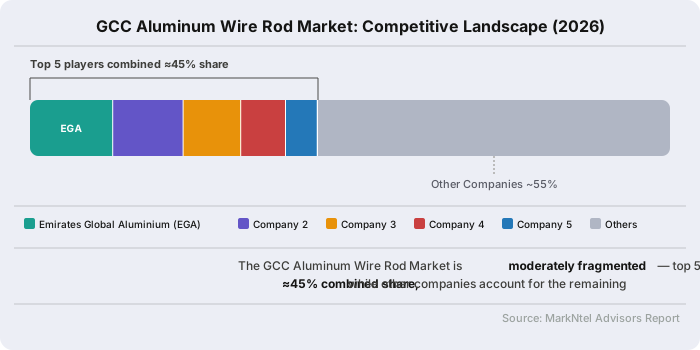
The aluminum wire rod industry across the GCC is moderately fragmented, with approximately 20–30 companies operating across the region. The top five players, Emirates Global Aluminium, Aluminium Bahrain (Alba), Ma'aden, Qatalum, and Midal Cables, collectively account for nearly 45% of the total market share.
GCC Aluminum Rod Manufacturers
- Ducab Aluminium Company (DAC)
- Midal Cables
- Oman Aluminium Processing Industries LLC
- Trans Gulf Aluminium Industries
- Emirates Global Aluminium
- Aluminium Bahrain (Alba)
- Ma'aden
- Qatalum
- Sohar Aluminium
- Riyadh Cables Group
- Others
GCC Aluminum Wire Rod Industry News and Recent Developments
November 2025: Aluminium Bahrain (Alba) Partners with Daiki Aluminium for Sustainable Recycling Facility
Aluminium Bahrain (Alba) partnered with Daiki Aluminium to develop a sustainable aluminum dross processing facility in Bahrain. The project focuses on recovering metal from industrial waste and improving resource efficiency, supporting circular aluminum production within the region.
Impact Analysis: The initiative strengthens raw material efficiency and promotes low-carbon aluminum production across the GCC. It is expected to enhance supply stability for downstream applications such as aluminum wire rods and conductors while supporting regional sustainability and circular economy goals.
August 2025: Midal Cables Launches MiRecAL Recycled Aluminum Wire Rod
Midal Cables launched “MiRecAL,” a recycled aluminum wire rod product line featuring 15% and 30% recycled content. The products are designed to reduce greenhouse gas emissions by up to 29% while meeting international standards, supporting Bahrain’s broader goal of achieving net-zero emissions by 2060.
Impact Analysis: The launch highlights the shift toward low-carbon aluminum products in the GCC. It is expected to support sustainable conductor manufacturing, enhance product differentiation, and accelerate adoption of recycled aluminum in power and cable applications across the GCC.
- Market Segmentation
- Introduction
- Product Definition
- Research Process
- Assumptions
- Executive Summary
- GCC Aluminum Wire Rod Market Policies, Regulations, and Product Standards
- GCC Aluminum Wire Rod Market Trends & Developments
- GCC Aluminum Wire Rod Market Dynamics
- Growth Factors
- Challenges
- GCC Aluminum Wire Rod Market Hotspot & Opportunities
- GCC Aluminum Wire Rod Market Outlook, 2022-2032F
- Market Size & Outlook
- By Revenues (USD Million)
- Market Share & Analysis
- By Product Type- Market Size & Forecast 2022-2032, USD Million
- EC (Electrical Conductor) Wire Rod
- Alloy Wire Rod
- Deoxidized / Flip Coil Rod
- Others
- By Alloy Type- Market Size & Forecast 2022-2032, USD Million
- Pure Aluminum
- Aluminum Alloys
- By Form- Market Size & Forecast 2022-2032, USD Million
- Coil
- Rod
- Wire
- By Diameter- Market Size & Forecast 2022-2032, USD Million
- Below 8 mm
- 8–10 mm
- 10–12 mm
- Above 12 mm
- By Manufacturing Process- Market Size & Forecast 2022-2032, USD Million
- Continuous Casting & Rolling
- Extrusion
- Cold Rolling
- Hot Rolling
- By Application- Market Size & Forecast 2022-2032, USD Million
- Electrical Transmission & Distribution
- Power & Communication Cables
- Automotive Wiring
- Industrial Equipment & Motors
- Welding Applications
- Construction Materials
- Aerospace Components
- By End User- Market Size & Forecast 2022-2032, USD Million
- Utilities (Power & Energy)
- Cable Manufacturers
- Automotive OEMs
- Industrial Equipment Manufacturers
- Construction Industry
- Aerospace & Defense
- Electronics & Telecom
- Others
- By Country
- The UAE
- Saudi Arabia
- Qatar
- Kuwait
- Oman
- Bahrain
- By Company
- Competition Characteristics
- Market Share & Analysis
- By Product Type- Market Size & Forecast 2022-2032, USD Million
- Market Size & Outlook
- The UAE Aluminum Wire Rod Market Outlook, 2022-2032F
- Market Size & Outlook
- By Revenues (USD Million)
- Market Share & Analysis
- By Product Type- Market Size & Forecast 2022-2032, USD Million
- By Alloy Type- Market Size & Forecast 2022-2032, USD Million
- By Form- Market Size & Forecast 2022-2032, USD Million
- By Diameter- Market Size & Forecast 2022-2032, USD Million
- By Manufacturing Process- Market Size & Forecast 2022-2032, USD Million
- By Application- Market Size & Forecast 2022-2032, USD Million
- By End User- Market Size & Forecast 2022-2032, USD Million
- Market Size & Outlook
- Saudi Arabia Aluminum Wire Rod Market Outlook, 2022-2032F
- Market Size & Outlook
- By Revenues (USD Million)
- Market Share & Analysis
- By Product Type- Market Size & Forecast 2022-2032, USD Million
- By Alloy Type- Market Size & Forecast 2022-2032, USD Million
- By Form- Market Size & Forecast 2022-2032, USD Million
- By Diameter- Market Size & Forecast 2022-2032, USD Million
- By Manufacturing Process- Market Size & Forecast 2022-2032, USD Million
- By Application- Market Size & Forecast 2022-2032, USD Million
- By End User- Market Size & Forecast 2022-2032, USD Million
- Market Size & Outlook
- Qatar Aluminum Wire Rod Market Outlook, 2022-2032F
- Market Size & Outlook
- By Revenues (USD Million)
- Market Share & Analysis
- By Product Type- Market Size & Forecast 2022-2032, USD Million
- By Alloy Type- Market Size & Forecast 2022-2032, USD Million
- By Form- Market Size & Forecast 2022-2032, USD Million
- By Diameter- Market Size & Forecast 2022-2032, USD Million
- By Manufacturing Process- Market Size & Forecast 2022-2032, USD Million
- By Application- Market Size & Forecast 2022-2032, USD Million
- By End User- Market Size & Forecast 2022-2032, USD Million
- Market Size & Outlook
- Kuwait Aluminum Wire Rod Market Outlook, 2022-2032F
- Market Size & Outlook
- By Revenues (USD Million)
- Market Share & Analysis
- By Product Type- Market Size & Forecast 2022-2032, USD Million
- By Alloy Type- Market Size & Forecast 2022-2032, USD Million
- By Form- Market Size & Forecast 2022-2032, USD Million
- By Diameter- Market Size & Forecast 2022-2032, USD Million
- By Manufacturing Process- Market Size & Forecast 2022-2032, USD Million
- By Application- Market Size & Forecast 2022-2032, USD Million
- By End User- Market Size & Forecast 2022-2032, USD Million
- Market Size & Outlook
- Oman Aluminum Wire Rod Market Outlook, 2022-2032F
- Market Size & Outlook
- By Revenues (USD Million)
- Market Share & Analysis
- By Product Type- Market Size & Forecast 2022-2032, USD Million
- By Alloy Type- Market Size & Forecast 2022-2032, USD Million
- By Form- Market Size & Forecast 2022-2032, USD Million
- By Diameter- Market Size & Forecast 2022-2032, USD Million
- By Manufacturing Process- Market Size & Forecast 2022-2032, USD Million
- By Application- Market Size & Forecast 2022-2032, USD Million
- By End User- Market Size & Forecast 2022-2032, USD Million
- Market Size & Outlook
- Bahrain Aluminum Wire Rod Market Outlook, 2022-2032F
- Market Size & Outlook
- By Revenues (USD Million)
- Market Share & Analysis
- By Product Type- Market Size & Forecast 2022-2032, USD Million
- By Alloy Type- Market Size & Forecast 2022-2032, USD Million
- By Form- Market Size & Forecast 2022-2032, USD Million
- By Diameter- Market Size & Forecast 2022-2032, USD Million
- By Manufacturing Process- Market Size & Forecast 2022-2032, USD Million
- By Application- Market Size & Forecast 2022-2032, USD Million
- By End User- Market Size & Forecast 2022-2032, USD Million
- Market Size & Outlook
- GCC Aluminum Wire Rod Market Key Strategic Imperatives for Success & Growth
- Competitive Outlook
- Company Profiles
- Ducab Aluminium Company (DAC)
- Business Description
- Product Portfolio
- Collaborations & Alliances
- Recent Developments
- Financial Details
- Others
- Midal Cables
- Business Description
- Product Portfolio
- Collaborations & Alliances
- Recent Developments
- Financial Details
- Others
- Oman Aluminium Processing Industries LLC
- Business Description
- Product Portfolio
- Collaborations & Alliances
- Recent Developments
- Financial Details
- Others
- Trans Gulf Aluminium Industries
- Business Description
- Product Portfolio
- Collaborations & Alliances
- Recent Developments
- Financial Details
- Others
- Emirates Global Aluminium
- Business Description
- Product Portfolio
- Collaborations & Alliances
- Recent Developments
- Financial Details
- Others
- Aluminium Bahrain (Alba)
- Business Description
- Product Portfolio
- Collaborations & Alliances
- Recent Developments
- Financial Details
- Others
- Ma'aden
- Business Description
- Product Portfolio
- Collaborations & Alliances
- Recent Developments
- Financial Details
- Others
- Qatalum
- Business Description
- Product Portfolio
- Collaborations & Alliances
- Recent Developments
- Financial Details
- Others
- Sohar Aluminium
- Business Description
- Product Portfolio
- Collaborations & Alliances
- Recent Developments
- Financial Details
- Others
- Riyadh Cables Group
- Business Description
- Product Portfolio
- Collaborations & Alliances
- Recent Developments
- Financial Details
- Others
- Ducab Aluminium Company (DAC)
- Company Profiles
- Disclaimer

MarkNtel Advisors follows a robust and iterative research methodology designed to ensure maximum accuracy and minimize deviation in market estimates and forecasts. Our approach combines both bottom-up and top-down techniques to effectively segment and quantify various aspects of the market. A consistent feature across all our research reports is data triangulation, which examines the market from three distinct perspectives to validate findings. Key components of our research process include:
1. Scope & Research Design At the outset, MarkNtel Advisors define the research objectives and formulate pertinent questions. This phase involves determining the type of research—qualitative or quantitative—and designing a methodology that outlines data collection methods, target demographics, and analytical tools. They also establish timelines and budgets to ensure the research aligns with client goals.
2. Sample Selection and Data Collection In this stage, the firm identifies the target audience and determines the appropriate sample size to ensure representativeness. They employ various sampling methods, such as random or stratified sampling, based on the research objectives. Data collection is carried out using tools like surveys, interviews, and observations, ensuring the gathered data is reliable and relevant.
3. Data Analysis and Validation Once data is collected, MarkNtel Advisors undertake a rigorous analysis process. This includes cleaning the data to remove inconsistencies, employing statistical software for quantitative analysis, and thematic analysis for qualitative data. Validation steps are taken to ensure the accuracy and reliability of the findings, minimizing biases and errors.

4. Data Forecast and FinalizationThe final phase involves forecasting future market trends based on the analyzed data. MarkNtel Advisors utilize predictive modeling and time series analysis to anticipate market behaviors. The insights are then compiled into comprehensive reports, featuring visual aids like charts and graphs, and include strategic recommendations to inform client decision-making
We’d love to understand what matters most to you.