

By Engine Type (Internal Combustion Engine (ICE), Electric Engine, Alternative Fuel Engine), By Fuel Type (Gasoline, Diesel, Hybrid, Alternative Fuels), By Vehicle Type (Passenger Cars, Light Commerci... ... Cars, Light Commercial Vehicles (LCVs), Heavy Commercial Vehicles (HCVs)), By Engine Capacity (Below 1.0L, 1.0L–2.0L, 2.0L–3.0L, Above 3.0L), By Engine Configuration (In-line Engine, V-type Engine, Opposed Engine), By Sales Channel (OEM, Aftermarket),and others Read more
- Automotive
- May 2026
- 240
- PDF, Excel, PPT
Asia Automotive Engines Market Key Takeaways
- The Asia automotive engines market was valued at around USD 54.6 billion in 2025 and is anticipated to expand from USD 58.38 billion in 2026 to USD 75.02 billion by 2032.
- The industry is projected to reflect a CAGR of 4.27% over the forecast period.
- China dominated the regional market with nearly 38% share in 2026, driven by strong vehicle production and expanding hybrid engine investments.
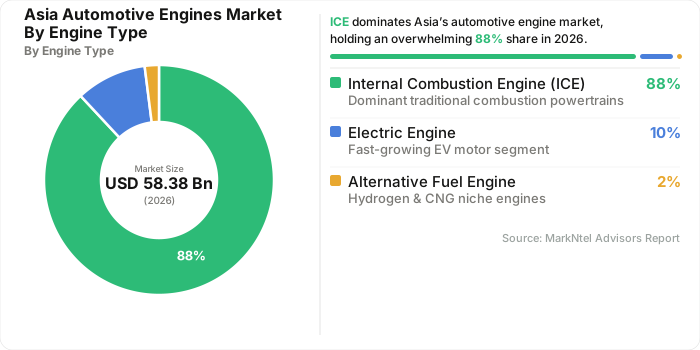
- In 2026, internal combustion engines accounted for nearly 88% share due to widespread gasoline and diesel vehicle adoption across Asia.
- By Vehicle type, passenger cars held approximately 64% share in 2026, supported by urbanization and rising demand for fuel-efficient personal mobility solutions.
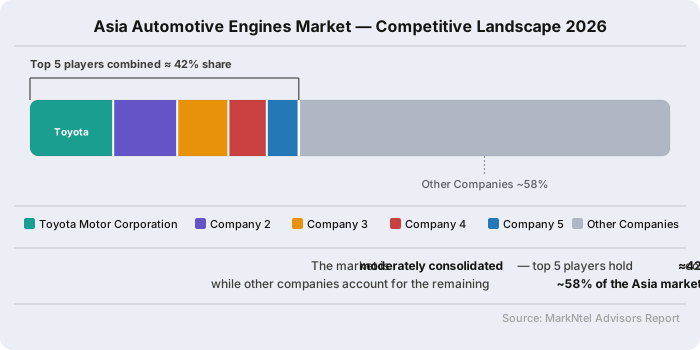
- The industry is moderately consolidated, with the top five leading players accounting for approximately 42% of the total market share.
Asia Automotive Engines Market Size and Outlook
The Asia automotive engines market is expected witness a steady CAGR of around 4.27% during the forecast period, supported by rising automotive production, growing urban populations, and increasing personal mobility demand across China, India, Japan, and Southeast Asia.
China remained the world’s largest automobile producer in 2024, while the International Energy Agency reported that the country accounted for more than 70% of global electric vehicle production during the same year. Rising disposable incomes and improving transportation accessibility are supporting higher passenger vehicle ownership across emerging Asian economies. Consequently, the regional automotive engine manufacturing industry has strengthened through expanding supplier networks and localized production capabilities.
Market growth is further supported by government initiatives focused on domestic manufacturing, cleaner mobility solutions, and infrastructure modernization. India’s Production Linked Incentive (PLI), FAME, and PM E-Drive programs mobilized more than USD 7.9 billion to strengthen automotive manufacturing and accelerate low-emission transportation adoption. At the same time, expanding highway networks, industrial corridors, and logistics infrastructure are increasing demand for commercial vehicles and advanced engine systems across Asia. Tightening emission regulations across China, Japan, and India are also encouraging manufacturers to accelerate investments in hybrid engine technologies and fuel-efficient powertrains.
Growing transportation, logistics, and industrial activities continue driving demand for durable and fuel-efficient automotive engines throughout the region. Heavy commercial vehicles increasingly require advanced powertrains to support freight transportation, industrial operations, and cross-border trade activities. Meanwhile, passenger vehicles remain the dominant end-user segment due to rising urban mobility requirements and increasing vehicle ownership among middle-income consumers. Additional demand from construction, mining, and agricultural equipment applications is also contributing to higher engine consumption across developing Asian economies.
To address evolving market requirements, automotive manufacturers are strengthening regional operations through localized production, electrification programs, and advanced engine development initiatives. Hyundai Motor announced plans in 2025 to increase electrified vehicle sales to 3.3 million units globally by 2030 while expanding hybrid vehicle offerings and manufacturing operations across Asia.
In parallel, manufacturers throughout the region are increasing investments in lightweight engine platforms, hybrid systems, and sustainable production technologies. These initiatives are expected to improve fuel efficiency, strengthen technological competitiveness, and support long-term growth across the Asia automotive engine market, which is projected to expand from USD 58.38 billion in 2026 to USD 75.02 billion by 2032.
Asia Automotive Engines Market Key Indicators
- According to the International Organization of Motor Vehicle Manufacturers (OICA), China produced more than 30 million vehicles in 2024, maintaining its position as the world’s largest automobile producer. Rising vehicle production is increasing demand for gasoline, diesel, and hybrid automotive engines across passenger and commercial vehicle manufacturing.
- Japan exported more than 4.4 million motor vehicles in 2024, supported by strong international demand for fuel-efficient and technologically advanced vehicles, as reported by the Japan Automobile Manufacturers Association (JAMA). Rising vehicle exports are increasing production requirements for advanced gasoline, hybrid, and fuel-efficient automotive engines across the country’s automotive manufacturing sector.
- India’s automobile industry produced more than 28 million vehicles during FY2024, according to the Society of Indian Automobile Manufacturers (SIAM). Rising domestic vehicle production and increasing passenger vehicle sales are accelerating demand for localized automotive engine manufacturing and advanced fuel-efficient engine systems across the country.
- Japanese automakers announced investment plans exceeding USD 11 billion in India to expand vehicle manufacturing, localization, and advanced automotive production capabilities. Rising investments in passenger and commercial vehicle manufacturing are strengthening regional automotive supply chains and supporting demand for fuel-efficient and hybrid automotive engine systems.
Asia Automotive Engines Market Scope
| Category | Segments |
|---|---|
| By Engine Type | Internal Combustion Engine (ICE), Electric Engine, Alternative Fuel Engine |
| By Fuel Type | Gasoline, Diesel, Hybrid, Alternative Fuels |
| By Vehicle Type | Passenger Cars, Light Commercial Vehicles (LCVs), Heavy Commercial Vehicles (HCVs |
| By Engine Capacity | Below 1.0L, 1.0L–2.0L, 2.0L–3.0L, Above 3.0L |
| By Engine Configuration | In-line Engine, V-type Engine, Opposed Engine |
| By Sales Channel | OEM, Aftermarket |
Asia Automotive Engines Market Growth Drivers
Rising Vehicle Production Across Asia
Expanding automotive manufacturing output across Asian economies has become a major structural factor driving demand for automotive engines, supporting large-scale production growth and strengthening regional supply chain operations. ASEAN vehicle sales exceeded 3.4 million units in 2024, supported by rising urban mobility demand, industrial growth, and improving economic conditions across Indonesia, Thailand, Vietnam, and Malaysia. Growing middle-income populations and increasing transportation requirements are encouraging higher passenger and commercial vehicle ownership throughout emerging Asian economies.
As vehicle production continues expanding, demand for gasoline, diesel, and hybrid automotive engines is also increasing steadily across regional manufacturing facilities and the broader vehicle powertrain systems ecosystem. The impact of higher vehicle production is particularly visible across export-oriented automotive manufacturing hubs such as Japan, China, South Korea, and India. Japan exported more than 4.4 million vehicles in 2024, including nearly 4 million passenger cars, according to the Japan Automobile Manufacturers Association (JAMA).
Strong export-driven automotive production is increasing demand for fuel-efficient gasoline and hybrid engine systems across regional OEM manufacturing operations. At the same time, governments across Asia are introducing localization incentives and industrial manufacturing policies to strengthen domestic automotive production capabilities and accelerate adoption of advanced combustion technologies across modern vehicle platforms.
Unlike short-term market fluctuations, rising vehicle production creates sustained long-term demand for complete engine systems and supporting automotive components. Consequently, manufacturers across Asia are increasing investments in localized production facilities, hybrid technologies, and advanced fuel-efficient engine platforms to support future transportation and industrial mobility requirements.
Recent Trends
Increasing Adoption of Hybrid Engine Technologies
Growing emphasis on fuel-efficient mobility and stricter emission reduction targets across Asian economies is accelerating the integration of hybrid engine technologies within passenger and commercial vehicle manufacturing. Countries including China, Japan, South Korea, and India are strengthening fuel-efficiency regulations and promoting cleaner transportation technologies to support long-term carbon reduction goals. These developments, combined with rising consumer preference for fuel-efficient vehicles, are encouraging automakers to expand hybrid vehicle production across the region.
As hybrid vehicle adoption continues increasing, automotive manufacturers are investing in advanced engine technologies to improve efficiency and regulatory compliance. Toyota announced plans to increase hybrid and plug-in hybrid vehicle production by nearly 30% by 2028 to address rising global demand for fuel-efficient vehicles. Similarly, Geely introduced its next-generation i-HEV intelligent hybrid system in 2026 featuring a hybrid engine with 48.41% thermal efficiency and fuel consumption as low as 2.22L/100 km. These developments reflect growing investments in advanced combustion technologies and high-efficiency hybrid powertrain systems across Asia.
Hybrid vehicles are increasingly being viewed as an effective intermediate mobility solution, balancing the fuel efficiency benefits of electrification with the operational flexibility of conventional engine-powered transportation. Limited charging infrastructure across several developing Asian economies is encouraging consumers and fleet operators to adopt hybrid vehicles that provide improved fuel efficiency and extended driving range. At the same time, tightening emission regulations and expanding sustainability targets across Asia are expected to sustain investments in hybrid technologies and advanced fuel-efficient engines over the coming years.
Asia Automotive Engines Market Opportunities and Challenges
Stringent Emission Regulations Driving Adoption of Low-Emission and Advanced Combustion Engine Systems
Stringent emission regulations and fuel-efficiency standards are emerging as a significant challenge for conventional internal combustion engine manufacturers across Asia. Governments across China, Japan, South Korea, and India are implementing stricter vehicular emission norms and carbon reduction targets to address rising environmental concerns and urban air pollution. For instance, China continues strengthening China VI emission standards, while India’s Bharat Stage VI (BS-VI) regulations have significantly tightened permissible emission limits for passenger and commercial vehicles.
According to the International Energy Agency, transport-related CO₂ emissions remained among the largest contributors to global energy-related emissions in 2024, increasing pressure on automotive manufacturers to reduce fuel consumption and engine emissions through more efficient vehicle propulsion systems.
At the same time, tightening emission regulations are creating strong opportunities for the development and adoption of low-emission and advanced combustion engine systems across Asia. Automotive manufacturers are increasingly investing in hybrid powertrains, turbocharged engines, lightweight engine platforms, and fuel-efficient combustion technologies to improve thermal efficiency and reduce emissions.
Volvo Trucks announced a new range of low-emission powertrains and advanced combustion engine platforms in 2026 designed for renewable fuels, including biodiesel, bio-LNG, and future hydrogen applications. These developments reflect growing industry investments in fuel-efficient and advanced automotive powertrain technologies to comply with tightening global emission regulations and support long-term sustainable mobility objectives.
Segmentation Insights
Strong Passenger Vehicle Production and Consumer Mobility Demand Supporting Dominance of Internal Combustion Engines (ICE)
Conventional internal combustion engines continue holding the largest share of the Asia automotive engines market, accounting for close to 88% of total market revenue. The segment maintains strong regional demand due to extensive production and utilization of gasoline and diesel-powered vehicles across China, India, Indonesia, Thailand, and Vietnam. Although electrification initiatives are gradually expanding across Asia, internal combustion engines continue to witness widespread adoption due to established fueling infrastructure, cost-efficient manufacturing, and strong integration into existing automotive supply chains. Their continued suitability for passenger transportation and commercial mobility applications is sustaining demand for fuel-efficient vehicle engines across regional automotive markets.
Growing middle-class populations and rising personal mobility requirements are further strengthening demand for passenger vehicles equipped with advanced gasoline and hybrid-compatible engine systems. Meanwhile, diesel-powered engines continue to maintain strong utilization across freight transportation fleets and heavy commercial vehicles throughout the region. Continuous advancements in turbocharged gasoline engines, lightweight engine materials, and intelligent engine management systems are improving the competitiveness of modern ICE platforms. Automotive manufacturers are also increasingly focusing on advanced hybrid powertrain development to improve fuel economy and comply with tightening environmental regulations across Asia. Based on engine type, the market has been segmented into:
- Internal Combustion Engine (ICE)
- Electric Engine
- Alternative Fuel Engine
Rising Urbanization and Consumer Vehicle Ownership Strengthening Passenger Cars Segment Leadership
Passenger Cars continue holding the largest share of the Asia automotive engines industry, accounting for approximately 64% of total market revenue. The segment is primarily supported by rising urbanization, improving disposable incomes, and increasing personal vehicle ownership across emerging and developed Asian economies. Expanding middle-class populations and improved access to automotive financing are steadily encouraging consumers to purchase personal mobility vehicles throughout China, India, Southeast Asia, Japan, and South Korea. As urban transportation requirements continue evolving, demand for passenger vehicles equipped with fuel-efficient mobility solutions and advanced gasoline and hybrid engine systems is also increasing steadily across the region.
Rapid infrastructure development and growing daily commuting requirements are further accelerating adoption of compact passenger vehicles designed for urban mobility applications. Consumers are increasingly prioritizing affordability, fuel efficiency, lower maintenance costs, and technologically advanced mobility features when selecting passenger cars. According to the Asian Development Bank, rapid urban population growth across Asia continues increasing transportation infrastructure requirements and mobility demand across major urban centers. In response to these evolving consumer and infrastructure trends, automotive manufacturers are expanding production of compact SUVs, crossover vehicles, hybrid sedans, and vehicles integrated with smart vehicle technologies throughout regional automotive markets. Based on vehicle type, the market is categorized into:
- Passenger Cars
- Light Commercial Vehicles (LCVs)
- Heavy Commercial Vehicles (HCVs)
Asia Automotive Engines Market Geographical Outlook
China dominates the Asia automotive engines market, accounting for approximately 38% of total regional demand, primarily due to its position as the world’s largest automobile manufacturing hub and its extensive automotive supply chain infrastructure. According to the International Organization of Motor Vehicle Manufacturers (OICA), China produced more than 30 million vehicles in 2024, significantly exceeding vehicle production volumes of other Asian countries.
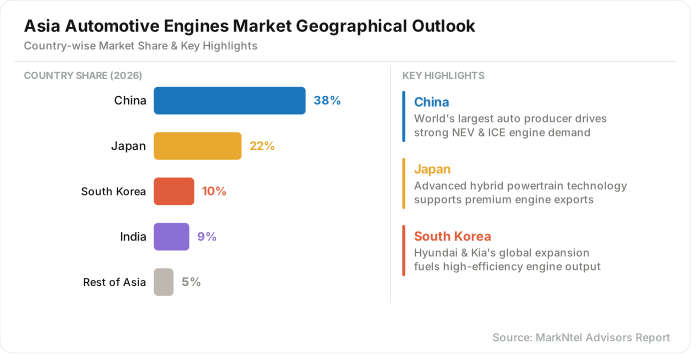
This large-scale passenger and commercial vehicle manufacturing ecosystem continues generating strong demand for gasoline, diesel, hybrid, and high-efficiency engine systems across both domestic and export-oriented automotive operations. Strong localization capabilities and cost-efficient manufacturing infrastructure further reinforce China’s long-term dominance within the asia automotive industry.
China’s leadership is also supported by continuous investments in transportation infrastructure development and integrated automotive manufacturing clusters across major production regions. Rising urban mobility demand, expanding middle-class populations, and increasing vehicle ownership are steadily sustaining automotive production growth throughout the country.
Although electrification initiatives are expanding rapidly, internal combustion and hybrid engine systems continue maintaining strong utilization across passenger transportation and logistics applications. Consequently, automotive manufacturers are increasing investments in localized production facilities, hybrid technologies, and intelligent engine management solutions to address evolving consumer preferences and tightening regulatory requirements across China.
Asia Automotive Engines Market Competitive Analysis
Competition within the Asia automotive engines industry remains moderately consolidated due to the presence of global automotive manufacturers and regional engine producers across major Asian economies. Leading companies including Toyota Motor Corporation, Volkswagen AG, Honda Motor Co., Ltd., Hyundai Motor Company, and Nissan Motor Co., Ltd. together account for approximately 42% share of the regional market, supported by strong manufacturing infrastructure, hybrid powertrain technologies, and extensive automotive supply chain integration across Asia.
Key Automotive Engine companies in Asia
- Toyota Motor Corporation
- Volkswagen AG
- Bayerische Motoren Werke AG
- General Motors Company
- Stellantis N.V.
- Cummins Inc
- Honda Motor Company, Ltd
- Mazda Motor Corporation
- Hyundai Motor Company
- Ford Motor Company
- Nissan Motor Co., Ltd.
- Groupe Renault
- Greaves Cotton
- Force Motors
- Weichai Power
- Yuchai International
- Anhui Quanchai Engine
- Others
Asia Automotive Engines Industry News and Recent Developments
March 2025: Great Wall Motor Introduced Diesel-Powered Tank 300 SUV in Thailand
Great Wall Motor (GWM) announced plans to introduce the diesel-powered Tank 300 SUV in Thailand to strengthen competition within the Southeast Asian utility vehicle market. The launch is aimed at addressing rising regional demand for fuel-efficient SUVs equipped with advanced diesel engine platforms suitable for both urban and off-road driving applications.
Impact Analysis: The development highlights continued demand for diesel-powered automotive engine systems across Southeast Asia despite ongoing electrification trends. Expanding production and sales of diesel-powered SUVs are expected to support demand for advanced combustion engines, fuel-efficiency technologies, and localized automotive engine manufacturing across regional passenger and utility vehicle segments.
April 2025: Kawasaki Heavy Industries Commercialized Hydrogen-Compatible Gas Engine in Japan
Kawasaki Heavy Industries announced commercialization of a hydrogen-compatible gas engine in Japan capable of operating with fuel blends containing up to 30% hydrogen. The development follows extensive operational testing and reflects growing industry focus on alternative fuel combustion technologies and low-emission engine systems.
Impact Analysis: The commercialization highlights accelerating investments in hydrogen-compatible engine technologies and alternative fuel propulsion systems across Asia. Increasing development of low-emission combustion engines is expected to support technological advancement within the automotive and industrial engine sector while strengthening long-term opportunities for sustainable engine manufacturing and cleaner mobility solutions.
- Market Segmentation
- Introduction
- Product Definition
- Research Process
- Assumptions
- Executive Summary
- Asia Automotive Engines Market Policies, Regulations, and Product Standards
- Asia Automotive Engines Market Trends & Developments
- Asia Automotive Engines Market Dynamics
- Growth Factors
- Challenges
- Asia Automotive Engines Market Hotspot & Opportunities
- Asia Automotive Engines Market Outlook, 2022-2032F
- Market Size & Outlook
- By Revenues (USD Million)
- Market Share & Analysis
- By Engine Type- Market Size & Forecast 2022-2032, USD Million
- Internal Combustion Engine (ICE)
- Electric Engine
- Alternative Fuel Engine
- By Fuel Type- Market Size & Forecast 2022-2032, USD Million
- Gasoline
- Diesel
- Hybrid
- Alternative Fuels
- By Vehicle Type- Market Size & Forecast 2022-2032, USD Million
- Passenger Cars
- Light Commercial Vehicles (LCVs)
- Heavy Commercial Vehicles (HCVs)
- By Engine Capacity- Market Size & Forecast 2022-2032, USD Million
- Below 1.0L
- 1.0L–2.0L
- 2.0L–3.0L
- Above 3.0L
- By Engine Configuration- Market Size & Forecast 2022-2032, USD Million
- In-line Engine
- V-type Engine
- Opposed Engine
- By Sales Channel- Market Size & Forecast 2022-2032, USD Million
- OEM
- Aftermarket
- By Country
- China
- Japan
- South Korea
- India
- Bangladesh
- Indonesia
- Thailand
- Vietnam
- Malaysia
- Saudi Arabia
- Turkey
- By Company
- Competition Characteristics
- Market Share & Analysis
- By Engine Type- Market Size & Forecast 2022-2032, USD Million
- Market Size & Outlook
- China Automotive Engines Market Outlook, 2022-2032F
- Market Size & Outlook
- By Revenues (USD Million)
- Market Share & Analysis
- By Engine Type- Market Size & Forecast 2022-2032, USD Million
- By Fuel Type- Market Size & Forecast 2022-2032, USD Million
- By Vehicle Type- Market Size & Forecast 2022-2032, USD Million
- By Engine Capacity- Market Size & Forecast 2022-2032, USD Million
- By Engine Configuration- Market Size & Forecast 2022-2032, USD Million
- By Sales Channel- Market Size & Forecast 2022-2032, USD Million
- Market Size & Outlook
- Japan Automotive Engines Market Outlook, 2022-2032F
- Market Size & Outlook
- By Revenues (USD Million)
- Market Share & Analysis
- By Engine Type- Market Size & Forecast 2022-2032, USD Million
- By Fuel Type- Market Size & Forecast 2022-2032, USD Million
- By Vehicle Type- Market Size & Forecast 2022-2032, USD Million
- By Engine Capacity- Market Size & Forecast 2022-2032, USD Million
- By Engine Configuration- Market Size & Forecast 2022-2032, USD Million
- By Sales Channel- Market Size & Forecast 2022-2032, USD Million
- Market Size & Outlook
- South Korea Automotive Engines Market Outlook, 2022-2032F
- Market Size & Outlook
- By Revenues (USD Million)
- Market Share & Analysis
- By Engine Type- Market Size & Forecast 2022-2032, USD Million
- By Fuel Type- Market Size & Forecast 2022-2032, USD Million
- By Vehicle Type- Market Size & Forecast 2022-2032, USD Million
- By Engine Capacity- Market Size & Forecast 2022-2032, USD Million
- By Engine Configuration- Market Size & Forecast 2022-2032, USD Million
- By Sales Channel- Market Size & Forecast 2022-2032, USD Million
- Market Size & Outlook
- India Automotive Engines Market Outlook, 2022-2032F
- Market Size & Outlook
- By Revenues (USD Million)
- Market Share & Analysis
- By Engine Type- Market Size & Forecast 2022-2032, USD Million
- By Fuel Type- Market Size & Forecast 2022-2032, USD Million
- By Vehicle Type- Market Size & Forecast 2022-2032, USD Million
- By Engine Capacity- Market Size & Forecast 2022-2032, USD Million
- By Engine Configuration- Market Size & Forecast 2022-2032, USD Million
- By Sales Channel- Market Size & Forecast 2022-2032, USD Million
- Market Size & Outlook
- Bangladesh Automotive Engines Market Outlook, 2022-2032F
- Market Size & Outlook
- By Revenues (USD Million)
- Market Share & Analysis
- By Engine Type- Market Size & Forecast 2022-2032, USD Million
- By Fuel Type- Market Size & Forecast 2022-2032, USD Million
- By Vehicle Type- Market Size & Forecast 2022-2032, USD Million
- By Engine Capacity- Market Size & Forecast 2022-2032, USD Million
- By Engine Configuration- Market Size & Forecast 2022-2032, USD Million
- By Sales Channel- Market Size & Forecast 2022-2032, USD Million
- Market Size & Outlook
- Indonesia Automotive Engines Market Outlook, 2022-2032F
- Market Size & Outlook
- By Revenues (USD Million)
- Market Share & Analysis
- By Engine Type- Market Size & Forecast 2022-2032, USD Million
- By Fuel Type- Market Size & Forecast 2022-2032, USD Million
- By Vehicle Type- Market Size & Forecast 2022-2032, USD Million
- By Engine Capacity- Market Size & Forecast 2022-2032, USD Million
- By Engine Configuration- Market Size & Forecast 2022-2032, USD Million
- By Sales Channel- Market Size & Forecast 2022-2032, USD Million
- Market Size & Outlook
- Thailand Automotive Engines Market Outlook, 2022-2032F
- Market Size & Outlook
- By Revenues (USD Million)
- Market Share & Analysis
- By Engine Type- Market Size & Forecast 2022-2032, USD Million
- By Fuel Type- Market Size & Forecast 2022-2032, USD Million
- By Vehicle Type- Market Size & Forecast 2022-2032, USD Million
- By Engine Capacity- Market Size & Forecast 2022-2032, USD Million
- By Engine Configuration- Market Size & Forecast 2022-2032, USD Million
- By Sales Channel- Market Size & Forecast 2022-2032, USD Million
- Market Size & Outlook
- Vietnam Automotive Engines Market Outlook, 2022-2032F
- Market Size & Outlook
- By Revenues (USD Million)
- Market Share & Analysis
- By Engine Type- Market Size & Forecast 2022-2032, USD Million
- By Fuel Type- Market Size & Forecast 2022-2032, USD Million
- By Vehicle Type- Market Size & Forecast 2022-2032, USD Million
- By Engine Capacity- Market Size & Forecast 2022-2032, USD Million
- By Engine Configuration- Market Size & Forecast 2022-2032, USD Million
- By Sales Channel- Market Size & Forecast 2022-2032, USD Million
- Market Size & Outlook
- Malaysia Automotive Engines Market Outlook, 2022-2032F
- Market Size & Outlook
- By Revenues (USD Million)
- Market Share & Analysis
- By Engine Type- Market Size & Forecast 2022-2032, USD Million
- By Fuel Type- Market Size & Forecast 2022-2032, USD Million
- By Vehicle Type- Market Size & Forecast 2022-2032, USD Million
- By Engine Capacity- Market Size & Forecast 2022-2032, USD Million
- By Engine Configuration- Market Size & Forecast 2022-2032, USD Million
- By Sales Channel- Market Size & Forecast 2022-2032, USD Million
- Market Size & Outlook
- Saudi Arabia Automotive Engines Market Outlook, 2022-2032F
- Market Size & Outlook
- By Revenues (USD Million)
- Market Share & Analysis
- By Engine Type- Market Size & Forecast 2022-2032, USD Million
- By Fuel Type- Market Size & Forecast 2022-2032, USD Million
- By Vehicle Type- Market Size & Forecast 2022-2032, USD Million
- By Engine Capacity- Market Size & Forecast 2022-2032, USD Million
- By Engine Configuration- Market Size & Forecast 2022-2032, USD Million
- By Sales Channel- Market Size & Forecast 2022-2032, USD Million
- Market Size & Outlook
- Turkey Automotive Engines Market Outlook, 2022-2032F
- Market Size & Outlook
- By Revenues (USD Million)
- Market Share & Analysis
- By Engine Type- Market Size & Forecast 2022-2032, USD Million
- By Fuel Type- Market Size & Forecast 2022-2032, USD Million
- By Vehicle Type- Market Size & Forecast 2022-2032, USD Million
- By Engine Capacity- Market Size & Forecast 2022-2032, USD Million
- By Engine Configuration- Market Size & Forecast 2022-2032, USD Million
- By Sales Channel- Market Size & Forecast 2022-2032, USD Million
- Market Size & Outlook
- Asia Automotive Engines Market Key Strategic Imperatives for Success & Growth
- Competitive Outlook
- Company Profiles
- Toyota Motor Corporation
- Business Description
- Product Portfolio
- Collaborations & Alliances
- Recent Developments
- Financial Details
- Others
- Volkswagen AG
- Business Description
- Product Portfolio
- Collaborations & Alliances
- Recent Developments
- Financial Details
- Others
- Bayerische Motoren Werke AG
- Business Description
- Product Portfolio
- Collaborations & Alliances
- Recent Developments
- Financial Details
- Others
- General Motors Company
- Business Description
- Product Portfolio
- Collaborations & Alliances
- Recent Developments
- Financial Details
- Others
- Stellantis N.V.
- Business Description
- Product Portfolio
- Collaborations & Alliances
- Recent Developments
- Financial Details
- Others
- Cummins Inc
- Business Description
- Product Portfolio
- Collaborations & Alliances
- Recent Developments
- Financial Details
- Others
- Honda Motor Company, Ltd
- Business Description
- Product Portfolio
- Collaborations & Alliances
- Recent Developments
- Financial Details
- Others
- Mazda Motor Corporation
- Business Description
- Product Portfolio
- Collaborations & Alliances
- Recent Developments
- Financial Details
- Others
- Hyundai Motor Company
- Business Description
- Product Portfolio
- Collaborations & Alliances
- Recent Developments
- Financial Details
- Others
- Ford Motor Company
- Business Description
- Product Portfolio
- Collaborations & Alliances
- Recent Developments
- Financial Details
- Others
- Nissan Motor Co., Ltd.
- Business Description
- Product Portfolio
- Collaborations & Alliances
- Recent Developments
- Financial Details
- Others
- Groupe Renault
- Business Description
- Product Portfolio
- Collaborations & Alliances
- Recent Developments
- Financial Details
- Others
- Greaves Cotton
- Business Description
- Product Portfolio
- Collaborations & Alliances
- Recent Developments
- Financial Details
- Others
- Force Motors
- Business Description
- Product Portfolio
- Collaborations & Alliances
- Recent Developments
- Financial Details
- Others
- Weichai Power
- Business Description
- Product Portfolio
- Collaborations & Alliances
- Recent Developments
- Financial Details
- Others
- Yuchai International
- Business Description
- Product Portfolio
- Collaborations & Alliances
- Recent Developments
- Financial Details
- Others
- Anhui Quanchai Engine
- Business Description
- Product Portfolio
- Collaborations & Alliances
- Recent Developments
- Financial Details
- Others
- Toyota Motor Corporation
- Company Profiles
- Disclaimer

MarkNtel Advisors follows a robust and iterative research methodology designed to ensure maximum accuracy and minimize deviation in market estimates and forecasts. Our approach combines both bottom-up and top-down techniques to effectively segment and quantify various aspects of the market. A consistent feature across all our research reports is data triangulation, which examines the market from three distinct perspectives to validate findings. Key components of our research process include:
1. Scope & Research Design At the outset, MarkNtel Advisors define the research objectives and formulate pertinent questions. This phase involves determining the type of research—qualitative or quantitative—and designing a methodology that outlines data collection methods, target demographics, and analytical tools. They also establish timelines and budgets to ensure the research aligns with client goals.
2. Sample Selection and Data Collection In this stage, the firm identifies the target audience and determines the appropriate sample size to ensure representativeness. They employ various sampling methods, such as random or stratified sampling, based on the research objectives. Data collection is carried out using tools like surveys, interviews, and observations, ensuring the gathered data is reliable and relevant.
3. Data Analysis and Validation Once data is collected, MarkNtel Advisors undertake a rigorous analysis process. This includes cleaning the data to remove inconsistencies, employing statistical software for quantitative analysis, and thematic analysis for qualitative data. Validation steps are taken to ensure the accuracy and reliability of the findings, minimizing biases and errors.

4. Data Forecast and FinalizationThe final phase involves forecasting future market trends based on the analyzed data. MarkNtel Advisors utilize predictive modeling and time series analysis to anticipate market behaviors. The insights are then compiled into comprehensive reports, featuring visual aids like charts and graphs, and include strategic recommendations to inform client decision-making
We’d love to understand what matters most to you.