

By Product Type (Air Care (Candle Air Fresheners, Electric Air Fresheners, Gel Air Fresheners, Liquid Air Fresheners, Spray/Aerosol Air Fresheners, Carpet Fresheners, Odour Neutral......izers , Others (Refrigerator Fresheners, Bin Fresheners, and others)), Dishwashing (Automatic Dishwashing (Automatic Dishwashing Liquids, Automatic Dishwashing Powders, Automatic Dishwashing Tablets, Dishwashing Additives), Hand Dishwashing), Home Insecticides (Electric Insecticides, Insecticide Baits, Insecticide Coils, Spray/Aerosol Insecticides, Others (Foggers/Bombs, In-Home Insect Repellents, and others)), Laundry Care (Carpet Cleaner, Fabric Softeners, Laundry Aids, Spot and Stain Removers, Starch/Ironing Aids, Water Softeners, Others (Colour Enhancers, Scent Booster, and others)), Polishes (Floor Polish, Furniture Polish, Metal Polish, Shoe Polish), Surface Care & Bleach (Home Care Wipes and Floor Cleaning Systems, Bathroom cleaners, Descalers, Drain Openers, Kitchen Cleaners, Multi-Purpose Cleaners, Bleach), Toilet Care (In-Cistern Devices, Toilet Care Tablets/Powders, Toilet Cleaning Systems, Toilet Liquids/Foam)), By Distribution Channel (Supermarkets & Hypermarkets, Convenience Stores, Traditional Retail Stores, Online Retail / E-commerce), and others Read more
- FMCG
- Jun 2026
- 140
- PDF, Excel, PPT
Nigeria Home Care Market Key Takeaways
- The Nigeria home care market was valued at USD 0.65 billion in 2025 and is projected to reach USD 0.79 billion in 2026 and USD 1.42 billion by 2032.
- The industry is projected to witness steady growth at a CAGR of 10.34% during the forecast period, i.e., 2026-32.
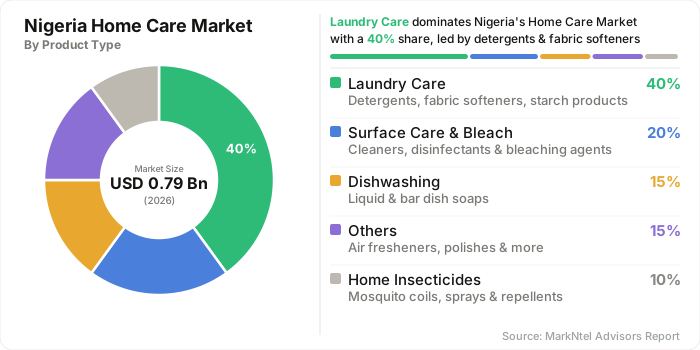
- In 2026, laundry care dominates the product landscape, accounting for approximately a 40% share.
- Traditional retail stores lead distribution with nearly a 55% share in 2026.
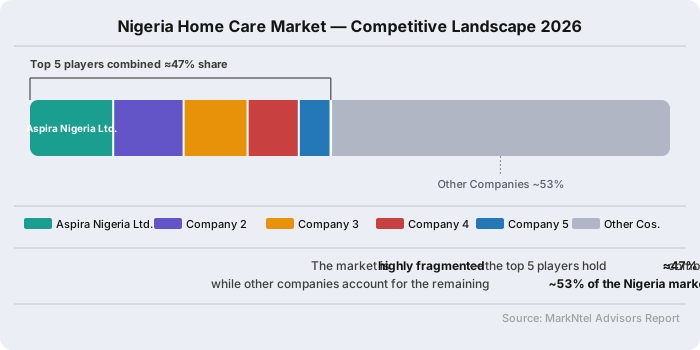
- The market structure remains moderately fragmented, with the top five players collectively contributing around 47% share, reflecting balanced competition between global leaders and regional manufacturers.
Nigeria Home Care Market Size and Outlook
The Nigeria home care market size was valued at USD 0.65 billion in 2025 and is projected to grow to USD 0.79 billion in 2026 and further reach USD 1.42 billion by 2032, registering a CAGR of approximately 10.34% during 2026–2032. Growth is supported by rapid urbanization and evolving lifestyles, which are increasing the demand for efficient cleaning solutions. Expanding cities are improving access to modern retail infrastructure and enabling broader availability of branded products across urban markets.
Demographic expansion remains a key growth pillar, with Nigeria’s population projected to rise from 262.4 million in 2030 to 312.7 million by 2040, while urbanization is expected to reach 69.1%. This transition will accelerate household consumption patterns, particularly across detergents, surface cleaners, and toilet care products, as newly formed households increasingly adopt standardized and packaged cleaning solutions across urban and peri-urban regions.
Government-led housing initiatives are further reinforcing demand fundamentals. In 2025, the Federal Government allocated USD 8.5 million for the construction of 20,000 housing units, with over 13,000 units already underway. Additionally, the Renewed Hope Social Housing Programme aims to expand housing across all 774 local government areas, supporting housing infrastructure development and increasing demand for essential home care products across newly occupied households nationwide.
Concurrently, rising demand for multi-functional cleaning solutions is driving product innovation, while local manufacturing expansion is improving supply reliability and reducing import dependence. As these trends are expected to strengthen distribution efficiency, enhance affordability, and support sustained long-term growth in the Nigeria home care industry, there is a broader consumer adoption of these home care products in the coming years.
Nigeria Home Care Market Key Indicators
- Nigeria’s demographic profile remains a critical structural growth factor, with a median age of 18.3 years in 2026, according to United Nations data. This youthful population is steadily transitioning into independent living and household formation, creating sustained demand for essential cleaning products. Over time, this expanding consumer base will reinforce long-term consumption potential, particularly across laundry care, dishwashing, and surface cleaning categories.
- Nigeria’s manufacturing sector accounted for 8.05% of GDP in 2025, slightly declining from 8.24% in 2024, as reported by the National Bureau of Statistics. Despite this dip, the sector continues to play a vital role in enabling local production of detergents, bleach, and insecticides. This supports domestic production capacity, reduces reliance on imports, and enhances supply chain stability in price-sensitive home care categories.
- Nigeria’s headline inflation moderated to 15.06% in February 2026, according to the National Bureau of Statistics. Persistent price pressures are influencing purchasing behavior, with consumers shifting toward smaller, affordable sachet-based cleaning products. This trend supports affordable packaging formats, enabling manufacturers to maintain volume growth while catering to price-sensitive households across both urban and rural markets.
- Consumer expenditure in Nigeria reached approximately USD 7.6 billion in Q4 2024, reflecting sustained spending despite economic pressures. This resilience indicates that household essentials, including cleaning products, remain a priority across income segments. Continued expenditure supports consumer spending resilience, allowing manufacturers to sustain demand levels and maintain steady product turnover even amid inflationary and macroeconomic uncertainties.
Nigeria Home Care Market Scope
| Category | Segments |
|---|---|
| By Product Type | Air Care (Candle Air Fresheners, Electric Air Fresheners, Gel Air Fresheners, Liquid Air Fresheners, Spray/Aerosol Air Fresheners, Carpet Fresheners, Odour Neutralizers , Others (Refrigerator Fresheners, Bin Fresheners, and others)), Dishwashing (Automatic Dishwashing (Automatic Dishwashing Liquids, Automatic Dishwashing Powders, Automatic Dishwashing Tablets, Dishwashing Additives), Hand Dishwashing), Home Insecticides (Electric Insecticides, Insecticide Baits, Insecticide Coils, Spray/Aerosol Insecticides, Others (Foggers/Bombs, In-Home Insect Repellents, and others)), Laundry Care (Carpet Cleaner, Fabric Softeners, Laundry Aids, Spot and Stain Removers, Starch/Ironing Aids, Water Softeners, Others (Colour Enhancers, Scent Booster, and others)), Polishes (Floor Polish, Furniture Polish, Metal Polish, Shoe Polish), Surface Care & Bleach (Home Care Wipes and Floor Cleaning Systems, Bathroom cleaners, Descalers, Drain Openers, Kitchen Cleaners, Multi-Purpose Cleaners, Bleach), Toilet Care (In-Cistern Devices, Toilet Care Tablets/Powders, Toilet Cleaning Systems, Toilet Liquids/Foam |
| By Distribution Channel | Supermarkets & Hypermarkets, Convenience Stores, Traditional Retail Stores, Online Retail / E-commerce |
Nigeria Home Care Market Growth Drivers
Rapid Urbanization and Changing Lifestyles
The Nigeria home care industry is being significantly driven by the rising concentration of population in urban areas, where approximately 55.8% of Nigerians currently reside. Increasing urbanization is improving access to modern retail infrastructure and expanding the availability of branded cleaning products. As consumers transition from informal markets to structured retail environments, purchasing behavior is shifting toward standardized, quality-assured solutions.
Demographic expansion further reinforces this growth trajectory, with Nigeria’s population projected to reach approximately 242.4 million by 2026. This rapid increase is contributing to higher household formation rates, particularly in urban regions and peri-urban clusters. As new households emerge, demand for home care products continues to rise, supported by urban household consumption and increasing residential density across metropolitan areas.
Additionally, urban consumers are exhibiting a stronger preference for convenient and hygienic cleaning solutions due to time constraints and rising health awareness. Improved access to supermarkets and convenience stores is accelerating organized retail penetration, enabling wider availability of packaged products. This shift is further encouraging manufacturers to expand product portfolios aligned with evolving consumer expectations and purchasing behavior patterns.
The sustained urban population growth and evolving consumption patterns are expected to drive long-term demand and strengthen organized retail expansion. As purchasing behavior continues to shift toward branded and convenient solutions, the Nigeria home care market will witness increased penetration across urban centers.
Recent Trends
Rising Demand for Multi-Functional Products
The Nigeria home care industry is witnessing a growing shift toward multi-functional products as consumers increasingly prioritize value, convenience, and efficiency amid persistent inflationary pressures. Instead of purchasing multiple specialized cleaners, households are opting for solutions that combine stain removal, disinfection, fragrance, and surface protection within a single formulation. This shift reflects evolving consumer cleaning preferences and rising demand for cost-effective, convenient cleaning solutions across urban and semi-urban households.
The trend is strongly supported by recent product innovation in 2025, as Henkel Nigeria launched WAW Complete 5-in-1 Liquid Detergent and WAW Active 5 All-Purpose Cleaner, both designed to deliver multiple cleaning benefits in a single product. The company emphasized deep cleaning, fabric protection, and long-lasting fragrance, highlighting growing demand for multi-purpose cleaning solutions and value-added formulations among price-sensitive consumers seeking improved product efficiency.
As competition intensifies, manufacturers are increasingly focusing on innovative cleaning products and enhanced formulations to improve functionality and user convenience. This shift is expected to accelerate product adoption, strengthen brand loyalty, and expand penetration across diverse income groups. Collectively, the rising demand for multifunctional solutions will continue to drive product innovation, improve affordability, and support sustained growth across the Nigeria home care market.
Nigeria Home Care Market Opportunities and Challenges
Counterfeit Product Proliferation Driving Local Manufacturing Expansion
The proliferation of substandard and counterfeit household products remains a major challenge in the Nigeria home care market. The National Agency for Food and Drug Administration and Control destroyed substandard products worth approximately USD 0.85 million in Abuja in January 2025, while the Standards Organisation of Nigeria reported seizures exceeding USD 12.5 million across multiple sectors in 2024. Informal retail channels continue to enable circulation of low-cost, unregulated cleaning products, disrupting organized retail channels and regulatory compliance.
This widespread presence of counterfeit products distorts pricing dynamics and weakens the competitiveness of organized players, as unregistered manufacturers bypass regulatory costs, quality standards, and certification requirements. As a result, branded home care products, consumer safety standards, and organized retail channels face ongoing pressure. However, tightening enforcement is gradually shifting consumer preference toward NAFDAC-registered and quality-assured products, fostering a more structured, transparent, and compliance-driven competitive environment across Nigeria’s evolving home care industry landscape.
Simultaneously, structural investments in local manufacturing are reinforcing this transition toward a more resilient supply ecosystem. For instance, Dangote Industries’ partnership with Honeywell to produce 400,000 metric tons of Linear Alkylbenzene (LAB) annually presents a significant opportunity for domestic manufacturers. As a key detergent input, local manufacturing of detergents supports supply chain efficiency, cost optimization, and import substitution, enabling compliant players to scale operations, improve margins, and capture greater market share sustainably.
Segmentation Insights
Laundry Care Products are Widely Used in Nigeria Home Care Industry
Laundry care remains the largest segment within Nigeria home care market with 40% of total revenue, due to its essential and high-frequency usage across both urban and rural households. Products such as detergents, fabric softeners, and stain removers are considered daily necessities, ensuring consistent demand regardless of economic cycles. The dominance of this segment is further supported by rising household cleaning frequency and increasing awareness of hygiene, particularly in densely populated urban areas and among expanding middle-income populations.
Urbanization and population growth are key drivers reinforcing laundry care demand. As new households are formed, especially in urban and peri-urban regions, consumption of detergents and related products rises proportionally. Additionally, the widespread availability of affordable detergent formats, including sachets and small packs, has significantly expanded accessibility among low- and middle-income consumers, supporting strong volumes and addressing mass-market consumer demand across diverse income segments.
Product innovation is also contributing to segment growth, with manufacturers introducing improved formulations offering stain removal, fragrance, and enhanced fabric care solutions. These innovations are strengthening product appeal while positioning laundry care as a category of daily-use cleaning products. Collectively, affordability, necessity, and continuous innovation are expected to sustain its leadership position and drive long-term growth in Nigeria home care sector. Based on product type, the scope has been divided into:
- Air Care
- Dishwashing
- Home Insecticides
- Laundry Care
- Polishes
- Surface Care & Bleach
- Toilet Care
Traditional Retail Dominance Shaping Home Care Distribution in Nigeria
Traditional retail stores continue to dominate Nigeria’s home care market with approximately 55% share, due to their widespread presence and accessibility across diverse geographic regions. These outlets, including neighborhood shops and open markets, remain the primary purchase points for a large share of consumers. Their stronghold is supported by deeply entrenched informal retail networks, which facilitate product availability even in areas where organized retail penetration remains limited.
Affordability and purchasing flexibility further strengthen the dominance of this segment. Traditional retailers commonly offer products in smaller pack sizes, including sachets, enabling consumers to align purchases with daily cash flows and constrained incomes. This supports price-sensitive consumption patterns and encourages frequent buying behavior. Additionally, their proximity to residential areas enhances convenience, making them a preferred channel for accessing essential home care products.
Manufacturers actively prioritize traditional channels through extensive distributor partnerships and localized supply strategies, ensuring consistent availability across fragmented markets. The effectiveness of last-mile connectivity enables efficient product reach, particularly in semi-urban and rural locations. Furthermore, rising demand for mass-market distribution channels continues to reinforce the relevance of traditional stores, sustaining their leadership despite the gradual expansion of modern retail and e-commerce platforms. The key distribution channels analyzed in this study include:
- Supermarkets & Hypermarkets
- Convenience Stores
- Traditional Retail Stores
- Online Retail / E-commerce
Nigeria Home Care Market Competitive Analysis
The Nigeria home care industry is characterized by the presence of several multinational and regional players, with key leaders including Procter & Gamble Co, Reckitt Benckiser Group Plc, Henkel AG & Co KGaA, SC Johnson & Son Inc, and Kenvue Inc. These companies collectively account for an estimated 47% of total market share, indicating a moderately fragmented competitive structure. Despite the strong presence of global brands with established portfolios and extensive distribution networks, a considerable share of the market is held by local and regional players such as Aspira Nigeria Ltd and Tolaram Group, particularly within price-sensitive segments.
Prominent Companies in Nigeria Home Care Market
- Aspira Nigeria Ltd
- Wings Corp
- Gongoni Co Ltd
- Reckitt Benckiser Group Plc (RB)
- Medreich Plc
- Kenvue Inc
- Tolaram Group
- SC Johnson & Son Inc
- Dabur India Ltd
- Henkel AG & Co KGaA
- Procter & Gamble Co
- Others
Nigeria Home Care Industry News and Recent Developments
November 2025: Aspira Nigeria Unveils Viva Matic to Transform Laundry Routines
Aspira Nigeria Ltd launched Viva Matic, a detergent specifically designed for washing machines, aimed at improving convenience and cleaning efficiency. The product targets evolving consumer preferences toward automated laundry solutions and enhanced fabric care. This launch reflects increasing demand for specialized detergents that align with modern appliances and urban lifestyles, supporting the shift toward premium and performance-driven laundry care products.
Impact Analysis: The introduction of Viva Matic strengthens Aspira’s position in the premium laundry segment while aligning with rising urbanization and appliance adoption trends. As washing machine penetration increases in Nigeria, demand for machine-compatible detergents is expected to grow, supporting higher-value product categories. This development also indicates a gradual shift from traditional handwashing to automated laundry practices, creating opportunities for value-added formulations and appliance-specific cleaning solutions.
September 2025: Sniper Introduces New Solutions for Control of Bedbugs, Household Pests
Sniper introduced new solutions targeting bedbugs and household pests, expanding its product portfolio within Nigeria’s home insecticides segment. The launch focuses on improving effectiveness and safety while addressing persistent pest control challenges in residential environments. This development reflects growing consumer demand for reliable pest management products, particularly in urban areas where sanitation concerns and pest infestations remain prevalent.
Impact Analysis: The expansion of Sniper’s product range enhances competition within the home insecticides segment, particularly in high-demand categories such as bedbug and pest control solutions. Rising urban density and sanitation concerns are driving demand for effective pest control products, positioning such innovations as critical growth drivers. Additionally, increased focus on safety and product reliability aligns with tightening regulatory oversight and consumer awareness.
- Market Segmentation
- Introduction
- Product Definition
- Research Process
- Assumptions
- Executive Summary
- Nigeria Home Care Market Policies, Regulations, and Product Standards
- Nigeria Home Care Production Trend 2022-2032
- Nigeria Home Care Trend by Type of Product Type
- Air Care
- Dishwashing
- Home Insecticides
- Laundry Care
- Polishes
- Surface Care & Bleach
- Toilet Care
- Company-wise Production Plants and Statistics
- Installed Production Capacity
- Actual Production
- Planned Production Target
- Nigeria Home Care Trend by Type of Product Type
- Nigeria Home Care Pricing Analysis 2022-2032
- Nigeria Home Care Pricing Trend 2022-2032
- Nigeria Home Care Pricing Trend by Product Type 2022-2032
- Air Care
- Dishwashing
- Home Insecticides
- Laundry Care
- Polishes
- Surface Care & Bleach
- Toilet Care
- Others
- Nigeria Home Care Market Dynamics
- Growth Factors
- Challenges
- Nigeria Home Care Market Hotspot & Opportunities
- Nigeria Home Care Market Import & Export Analysis
- Nigeria Home Care Market Outlook, 2022-2032F
- Market Size & Outlook
- By Revenues (USD Million)
- Market Share & Outlook
- By Product Type- Market Size & Forecast 2022-2032, USD Million
- Air Care
- Candle Air Fresheners
- Electric Air Fresheners
- Gel Air Fresheners
- Liquid Air Fresheners
- Spray/Aerosol Air Fresheners
- Carpet Fresheners
- Odour Neutralizers
- Others (Refrigerator Fresheners, Bin Fresheners, and others)
- Dishwashing
- Automatic Dishwashing
- Automatic Dishwashing Liquids
- Automatic Dishwashing Powders
- Automatic Dishwashing Tablets
- Dishwashing Additives
- Hand Dishwashing
- Automatic Dishwashing
- Home Insecticides
- Electric Insecticides
- Insecticide Baits
- Insecticide Coils
- Spray/Aerosol Insecticides
- Others (Foggers/Bombs, In-Home Insect Repellents, and others)
- Laundry Care
- Carpet Cleaner
- Fabric Softeners
- Laundry Aids
- Spot and Stain Removers
- Starch/Ironing Aids
- Water Softeners
- Others (Colour Enhancers, Scent Booster, and others)
- Polishes
- Floor Polish
- Furniture Polish
- Metal Polish
- Shoe Polish
- Surface Care & Bleach
- Home Care Wipes and Floor Cleaning Systems
- Bathroom cleaners
- Descalers
- Drain Openers
- Kitchen Cleaners
- Multi-Purpose Cleaners
- Bleach
- Toilet Care
- In-Cistern Devices
- Toilet Care Tablets/Powders
- Toilet Cleaning Systems
- Toilet Liquids/Foam
- Air Care
- By Distribution Channel- Market Size & Forecast 2022-2032, USD Million
- Supermarkets & Hypermarkets
- Convenience Stores
- Traditional Retail Stores
- Online Retail / E-commerce
- By Region- Market Size & Forecast 2022-2032, USD Million
- North
- East
- West
- South
- By Company
- Competition Characteristics
- Market Share & Analysis
- By Product Type- Market Size & Forecast 2022-2032, USD Million
- Market Size & Outlook
- Nigeria Air Care Market Outlook, 2022-2032
- Market Size & Outlook
- By Revenues (USD Million)
- Market Share & Outlook
- By Distribution Channel- Market Size & Forecast 2022-2032, USD Million
- By Region- Market Size & Forecast 2022-2032, USD Million
- Market Size & Outlook
- Nigeria Dishwashing Market Outlook, 2022-2032
- Market Size & Outlook
- By Revenues (USD Million)
- Market Share & Outlook
- By Distribution Channel- Market Size & Forecast 2022-2032, USD Million
- By Region- Market Size & Forecast 2022-2032, USD Million
- Market Size & Outlook
- Nigeria Home Insecticides Market Outlook, 2022-2032
- Market Size & Outlook
- By Revenues (USD Million)
- Market Share & Outlook
- By Distribution Channel- Market Size & Forecast 2022-2032, USD Million
- By Region- Market Size & Forecast 2022-2032, USD Million
- Market Size & Outlook
- Nigeria Laundry Care Market Outlook, 2022-2032
- Market Size & Outlook
- By Revenues (USD Million)
- Market Share & Outlook
- By Distribution Channel- Market Size & Forecast 2022-2032, USD Million
- By Region- Market Size & Forecast 2022-2032, USD Million
- Market Size & Outlook
- Nigeria Polishes Market Outlook, 2022-2032
- Market Size & Outlook
- By Revenues (USD Million)
- Market Share & Outlook
- By Distribution Channel- Market Size & Forecast 2022-2032, USD Million
- By Region- Market Size & Forecast 2022-2032, USD Million
- Market Size & Outlook
- Nigeria Surface Care & Bleach Market Outlook, 2022-2032
- Market Size & Outlook
- By Revenues (USD Million)
- Market Share & Outlook
- By Distribution Channel- Market Size & Forecast 2022-2032, USD Million
- By Region- Market Size & Forecast 2022-2032, USD Million
- Market Size & Outlook
- Nigeria Toilet Care Market Outlook, 2022-2032
- Market Size & Outlook
- By Revenues (USD Million)
- Market Share & Outlook
- By Distribution Channel- Market Size & Forecast 2022-2032, USD Million
- By Region- Market Size & Forecast 2022-2032, USD Million
- Market Size & Outlook
- Nigeria Home Care Market Key Strategic Imperatives for Success & Growth
- Competitive Outlook
- Company Profiles
- Aspira Nigeria Ltd
- Business Description
- Product Portfolio
- Collaborations & Alliances
- Recent Developments
- Financial Details
- Others
- Wings Corp
- Business Description
- Product Portfolio
- Collaborations & Alliances
- Recent Developments
- Financial Details
- Others
- Gongoni Co Ltd
- Business Description
- Product Portfolio
- Collaborations & Alliances
- Recent Developments
- Financial Details
- Others
- Reckitt Benckiser Group Plc (RB)
- Business Description
- Product Portfolio
- Collaborations & Alliances
- Recent Developments
- Financial Details
- Others
- Medreich Plc
- Business Description
- Product Portfolio
- Collaborations & Alliances
- Recent Developments
- Financial Details
- Others
- Kenvue Inc
- Business Description
- Product Portfolio
- Collaborations & Alliances
- Recent Developments
- Financial Details
- Others
- Tolaram Group
- Business Description
- Product Portfolio
- Collaborations & Alliances
- Recent Developments
- Financial Details
- Others
- SC Johnson & Son Inc
- Business Description
- Product Portfolio
- Collaborations & Alliances
- Recent Developments
- Financial Details
- Others
- Dabur India Ltd
- Business Description
- Product Portfolio
- Collaborations & Alliances
- Recent Developments
- Financial Details
- Others
- Henkel AG & Co KGaA
- Business Description
- Product Portfolio
- Collaborations & Alliances
- Recent Developments
- Financial Details
- Others
- Procter & Gamble Co
- Business Description
- Product Portfolio
- Collaborations & Alliances
- Recent Developments
- Financial Details
- Others
- Others
- Aspira Nigeria Ltd
- Company Profiles
- Disclaimer

MarkNtel Advisors follows a robust and iterative research methodology designed to ensure maximum accuracy and minimize deviation in market estimates and forecasts. Our approach combines both bottom-up and top-down techniques to effectively segment and quantify various aspects of the market. A consistent feature across all our research reports is data triangulation, which examines the market from three distinct perspectives to validate findings. Key components of our research process include:
1. Scope & Research Design At the outset, MarkNtel Advisors define the research objectives and formulate pertinent questions. This phase involves determining the type of research—qualitative or quantitative—and designing a methodology that outlines data collection methods, target demographics, and analytical tools. They also establish timelines and budgets to ensure the research aligns with client goals.
2. Sample Selection and Data Collection In this stage, the firm identifies the target audience and determines the appropriate sample size to ensure representativeness. They employ various sampling methods, such as random or stratified sampling, based on the research objectives. Data collection is carried out using tools like surveys, interviews, and observations, ensuring the gathered data is reliable and relevant.
3. Data Analysis and Validation Once data is collected, MarkNtel Advisors undertake a rigorous analysis process. This includes cleaning the data to remove inconsistencies, employing statistical software for quantitative analysis, and thematic analysis for qualitative data. Validation steps are taken to ensure the accuracy and reliability of the findings, minimizing biases and errors.

4. Data Forecast and FinalizationThe final phase involves forecasting future market trends based on the analyzed data. MarkNtel Advisors utilize predictive modeling and time series analysis to anticipate market behaviors. The insights are then compiled into comprehensive reports, featuring visual aids like charts and graphs, and include strategic recommendations to inform client decision-making
FILL THE FORM TO INQUIRE BEFORE BUYING THIS REPORT
We offer flexible licensing options to cater to varying organizational needs. Choose the pricing pack that best suits your requirements:
Buy Now Talk to our Consultant
 Request Customization