

By Product Type (Sun Protection Products, After-Sun Products, Self-Tanning Products), By SPF Range (Below SPF 30, SPF 30–50, Above SPF 50), By Form (Lotions & Creams, Sprays, Gels,......s, Sticks, Others), By Formulation (Chemical, Mineral, Hybrid), By Distribution Channel (Offline, Supermarkets & Hypermarkets, Pharmacies & Drug Stores, Specialty Stores, Online Retail), By Consumer Group (Adult Sun Care, Child Specific Sun Care), By Price Segment (Mass, Premium), and others Read more
- FMCG
- Jun 2026
- 130
- PDF, Excel, PPT
Brazil Sun Care Market Key Takeaways
- The Brazil sun care market was valued at USD 1.08 billion in 2025 and is projected to grow from USD 1.12 billion in 2026 to around USD 1.89 billion by 2032.
- The industry is projected to register sustainable growth at a CAGR of approximately 9.11% during the forecast period i.e.,2026-32.
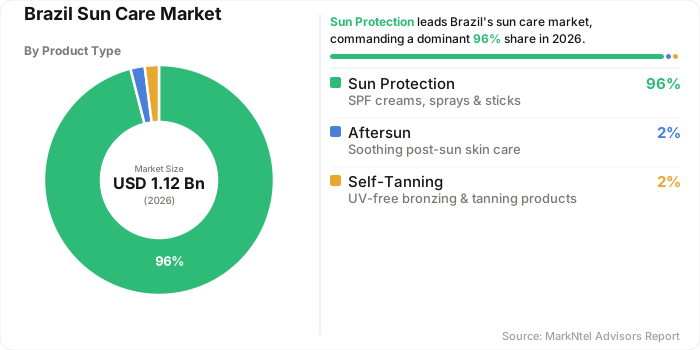
- By product type, sun protection products account for approximately 96% of the total market share. the segment is further expected to remain the fastest-growing, registering a CAGR of approximately 7.2% during 2026–2032.
- Based on the consumer group, adult sun care dominated with over 96% share in 2026 and is projected to grow at a 7.55 CAGR during 2026-32.
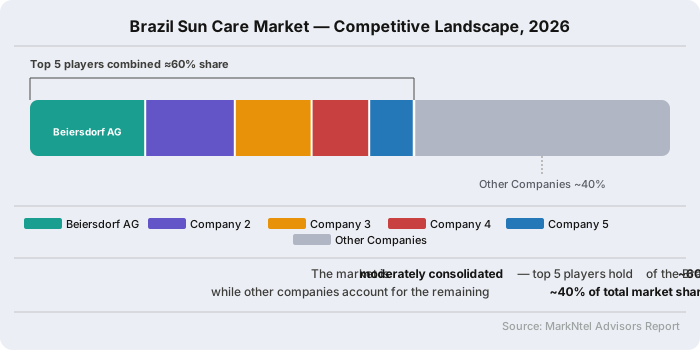
- The competitive landscape is moderately consolidated with the top five players collectively holding nearly 60% of the total market share.
Brazil Sun Care Market Size and Outlook
The Brazil sun care market is projected to witness a steady CAGR of approximately 9.11% during the forecast period, supported by tourism expansion, and improving consumer spending.
Brazil's record-breaking tourism expansion is directly amplifying sunscreen consumption across the country's most UV-exposed coastal and outdoor environments. According to data released by Embratur, Brazil's national tourism agency, international arrivals rose from 6.77 million in 2024 to 9 million in 2025, a 40% year-on-year increase and the highest annual total in Brazil's history, generating USD 7.17 billion in visitor spending.
With arrivals concentrated across sun-and-beach destinations in Bahia, Ceará, Santa Catarina, and Rio de Janeiro, this sustained influx is expanding seasonal SPF product demand through coastal pharmacy outlets, resort retail, and travel distribution points, directly broadening sun care consumption beyond Brazil's traditional urban SPF base.
Reinforcing this demand-side momentum, growing international recognition of Brazil as the world's third-largest sunscreen market is attracting supply-side investment in advanced UV filter ingredients and formulation infrastructure. Global specialty chemical distributors have established exclusive partnerships to supply high-performance UVA and UVB filter systems to Brazilian manufacturers, expanding domestic access to next-generation sun care ingredients and supporting product quality upgrades across both mass and premium SPF segments.
The demand for sun care products in Brazil is being increasingly supported by the rapid expansion of the country's e-commerce sector. According to Brazil's Ministry of Development, Industry, Trade and Services (MDIC), national e-commerce sales reached BRL 225 billion in 2024, representing a 14.6% increase compared with 2023, while online sales by micro and small enterprises surged to BRL 67 billion. The continued growth of digital commerce is improving consumer access to a wider range of sunscreen and sun protection products, including premium, dermatological, and international brands that may have limited availability through traditional retail channels.
As online beauty and personal care purchasing becomes more widespread, e-commerce is expected to remain a key distribution channel supporting the expansion of Brazil's sun care market, which is projected to grow from USD 1.12 billion in 2026 to approximately USD 1.89 billion by 2032.
Brazil Sun Care Market Key Indicators
- Brazil's real GDP grew 2.3% in 2025, marking the fifth consecutive year of economic expansion, with household consumption rising 1.3%, supported by labour market improvement, expanded credit, and government income transfer programmes. According to the World Bank, Brazil's real GDP per capita stood at USD 10,616 in 2024, with per capita GDP posting a further real increase of 1.9% in 2025 per IBGE, collectively strengthening consumer purchasing capacity for personal care and sun care products across Brazil's urban middle class.
- Brazil’s tropical and subtropical geography exposes a large share of the population to extremely high ultraviolet radiation throughout the year. According to the Brazilian Society of Dermatology, UV indexes above 11 are frequently recorded in several Brazilian regions, especially during summer months, significantly increasing the need for regular sunscreen usage. High UV exposure directly supports year-round demand for SPF products, sunblocks, and after-sun formulations.
- According to Brazil’s National Cancer Institute (INCA), the country recorded an estimated 220,490 new non-melanoma skin cancer cases, including 101,920 cases among men and 118,570 among women. Additionally, Brazil’s Cancer Mortality Atlas (SIM, 2024) reported 3,987 deaths associated with non-melanoma skin cancer, including 2,357 men and 1,630 women. The growing disease burden is significantly strengthening public awareness regarding photoprotection, early prevention, and daily sunscreen usage, thereby directly supporting the expansion of Brazil’s sun care market.
- The Brazilian Consensus on Photo protection recommends the use of sunscreen with SPF 30+ for all individuals exposed to sunlight. Rising concerns regarding photoaging, pigmentation, and skin cancer prevention are further driving consumer preference for multifunctional formulations such as anti-aging sunscreens, tinted SPF creams, and broad-spectrum dermatologist-developed products across urban Brazil.
- Brazil’s growing focus on preventive skincare and dermatological protection is significantly accelerating demand for premium sun care products. According to a study published in the Anais Brasileiros de Dermatologia, nearly 98.7% of Brazilian dermatologists recommend sunscreen usage to friends and family, while 78.8% recommend sunscreen to more than 80% of their patients.
Brazil Sun Care Market Scope
| Category | Segments |
|---|---|
| By Product Type | Sun Protection Products, After-Sun Products, Self-Tanning Products |
| By SPF Range | Below SPF 30, SPF 30–50, Above SPF 50 |
| By Form | Lotions & Creams, Sprays, Gels, Sticks, Others |
| By Formulation | Chemical, Mineral, Hybrid |
| By Distribution Channel | Offline, Supermarkets & Hypermarkets, Pharmacies & Drug Stores, Specialty Stores, Online Retail |
| By Consumer Group | Adult Sun Care, Child Specific Sun Care |
| By Price Segment | Mass, Premium |
Brazil Sun Care Market Growth Drivers
Rising Skin Cancer Awareness Accelerating Daily Sunscreen Adoption
The increasing incidence of skin cancer in Brazil continues emerging as one of the strongest long-term growth drivers for the country’s sun care market, supported by rising public awareness regarding UV-related health risks and preventive skincare practices. According to Brazil’s National Cancer Institute (INCA), skin cancer remains among the most commonly diagnosed cancer categories in the country. Brazil’s tropical climate conditions, extensive coastline, and strong outdoor lifestyle culture collectively contribute to prolonged sun exposure levels, encouraging greater consumer focus on daily photoprotection and preventive skincare adoption.
Simultaneously, educational campaigns and dermatologist-led awareness initiatives are further strengthening sunscreen adoption across urban and semi-urban consumer groups. According to the Brazilian Society of Dermatology (SBD), public photoprotection campaigns are increasingly encouraging consumers to integrate SPF products into everyday skincare routines rather than limiting usage to beach or outdoor activities. In response to evolving consumer preferences, manufacturers are expanding investments in lightweight, matte-finish, oil-control, and multifunctional sunscreen formulations designed specifically for Brazil’s humid climate conditions and oily skin concerns, thereby supporting broader year-round sunscreen usage across the country.
Recent Trends
Multifunctional and Tinted Sun Care Products Reshaping Brazil’s Urban SPF Market
The Brazil sun care industry is witnessing a strong shift toward multifunctional and cosmetically elegant sunscreen formulations, reflecting evolving consumer demand for daily-use SPF products that combine skincare, cosmetic enhancement, and environmental protection within a single application. Urban consumers across São Paulo, Rio de Janeiro, and other metropolitan regions increasingly prefer lightweight formulations offering broad-spectrum UV protection alongside oil control, pigmentation correction, and humid-climate wearability. This transition is accelerating demand for hybrid mineral-chemical sunscreens and tinted SPF products tailored to Brazil’s diverse skin tones and tropical climate conditions.
The trend is further supported by ongoing product innovation across Brazil’s dermocosmetic sunscreen category. For instance, Brazilian skincare brand Creamy launched Watery Fluid FPS 50, an ultra-light facial sunscreen formulated for oily and acne-prone skin types. The product combines SPF50 protection with prolonged oil control, rapid absorption, invisible finish, and non-comedogenic performance specifically adapted for Brazil’s hot and humid environment. Simultaneously, rising adoption of tinted SPF50 products, reef-safe formulations, and hybrid UV-filter technologies is encouraging manufacturers such as Beiersdorf AG to expand clinically positioned and environmentally conscious sun care offerings across Brazil’s rapidly evolving urban SPF market.
Brazil Sun Care Market Opportunities and Challenges
Rising Price Sensitivity and Inconsistent SPF Habits Creating Opportunities for Accessible Innovation
Price sensitivity and inconsistent daily sunscreen usage continue to challenge the Brazil sun care market, particularly across lower-income consumers and secondary regional cities. Premium mineral-based facial sunscreens in Brazil are often priced significantly higher than standard chemical formulations, limiting mass-market adoption despite growing awareness regarding UV protection and skin cancer prevention. Additionally, sunscreen usage in Brazil remains strongly associated with beaches, vacations, and outdoor recreation rather than consistent daily skincare routines, restricting category penetration among occasional users.
However, these challenges are simultaneously creating significant growth opportunities for manufacturers focused on affordability, accessibility, and localized innovation. Brands are increasingly introducing smaller pack sizes, sachet-based sampling formats, and masstige positioning strategies designed to reduce financial barriers and encourage trial purchases among price-conscious consumers. Expanding pharmacy infrastructure, rising e-commerce penetration, and mobile commerce adoption across Brazil’s Interior and Northeast regions are further improving accessibility to affordable SPF products.
At the same time, increasing dermatological awareness and UV-avoidance behavior are opening whitespace opportunities in after-sun and self-tanning categories, while Brazil’s advanced UV-filter regulatory framework and manufacturing scale position the country as an emerging regional hub for sun care innovation and exports across Latin America.
Segmentation Insights
Dominance of Sun Protection Segment Driven by Preventive Skincare Demand
Sun protection products represent the leading category within Brazil's sun care market, accounting for approximately 96% of total share, directly reflecting the core functional demand dynamics underpinning overall category consumption. Brazil's persistently high UV exposure levels, tropical climate conditions, and growing consumer awareness regarding skin cancer prevention, photoaging, melasma, and pigmentation collectively continue supporting strong year-round demand for daily-use SPF products.
Compared with after sun and self-tanning formats, consumers consistently prioritize preventive sun protection products for regular skincare use, particularly facial sunscreens and multifunctional SPF formulations that integrate seamlessly into daily routines.
Simultaneously, increasing product innovation tailored to Brazil’s climatic conditions is further strengthening sunscreen adoption across the country. For instance, Ada Tina launched Brazil’s first sunscreen featuring “anti-heat” protection technology, designed specifically to combat heat-induced skin aging, collagen degradation, oxidative stress, and melasma caused by prolonged exposure to high temperatures and solar radiation.
The development of advanced SPF50+, lightweight fluid textures, sweat-resistant formulations, and multifunctional dermatological sunscreens specifically adapted for Brazil’s tropical environment continues reinforcing the dominance of preventive sun protection products within overall category demand. Based on product type, the Brazil sun care market is segmented as follows:
- Sun Protection
- Aftersun
- Self-Tanning
Strong Dominance of Adult Sun Care Driven by Daily SPF Adoption and Preventive Skincare Awareness
Adult Sun Care accounts for more than 96% of the total Brazil sun care market in 2026, reinforcing its dominant position across the consumer landscape. This leadership is primarily supported by rising awareness regarding skin cancer prevention, photoaging, pigmentation, and prolonged ultraviolet exposure across Brazil’s tropical and high-UV climatic conditions. As a result, sunscreen usage among adults is increasingly shifting from seasonal beach-related application toward regular daily skincare routines, strengthening category demand across both mass-market and premium product segments.
The segment’s sustained expansion is further supported by increasing dermatologist recommendations and growing consumer preference for multifunctional SPF formulations addressing hydration, oil control, anti-aging, and cosmetic coverage within a single product. Urban consumers across São Paulo and Rio de Janeiro are increasingly integrating facial sunscreens, tinted SPF creams, and lightweight gel-based formulations into everyday grooming practices. Simultaneously, companies are expanding dermatologically safe sunscreen portfolios to address evolving photoprotection preferences.
For instance, in 2026, Booma recently launched a 100% mineral sunscreen formulated for children using naturally derived ingredients and sensitive-skin positioning, highlighting the broader industry focus on clinically safe and skin-compatible sun protection technologies across Brazil. Based on consumer group, the Brazil sun care market is segmented into:
- Adult Sun Care
- Baby and Child-Specific Sun Care
Brazil Sun Care Market Competitive Analysis
The Brazil sun care market is moderately consolidated, with a strong presence of multinational skincare companies, dermocosmetic brands, and domestic beauty players operating across lotions, creams, gels, sprays, sticks, and serum-based sunscreen formats. The top five companies, including Johnson & Johnson, Beiersdorf AG, Procter & Gamble (Procosa),Natura & Co, and Grupo Boticário collectively account for 60 %of the total market share, supported by strong retail penetration, dermatologist-backed portfolios, advanced SPF formulations, and continuous product innovation.
Key Players in the Brazil Sun Care Market
- Johnson & Johnson
- Procter & Gamble
- Beiersdorf AG
- ISDIN
- Hypera Pharma
- Grupo Boticário
- Natura & Co
- Avon
- Coty Inc.
- Pierre Fabre Group
- Stiefel Laboratories
- NAOS Group
- Eurofarma Group
- Aché Laboratórios Farmacêuticos
- Laboratoires Expanscience
- Atalanta Group
Brazil Sun Care Industry News and Recent Developments
-
2026 Océane Launches Daily Sunscreen SPF 70 Brand's First-Ever Sun Care Entry
Brazilian cosmetics brand Océane entered the sunscreen segment for the first time with this high-demand launch. The Daily Sunscreen SPF 70 features a fluid texture with a dry touch and hydrating formula, developed for daily use either alone or as a makeup base, responding directly to Brazilian consumers who suffer with heavy or whitening formulas. Its formula includes panthenol for hydration, vitamin E for antioxidant action, a prebiotic to preserve the skin barrier, plus allantoin and oat and chamomile extracts as soothing agents. The product is vegan, paraben-free, and dermatologically and ophthalmologically tested for all skin types. The launch was celebrated with a pop-up event and yoga activation in São Paulo.
Impact Analysis: Océane's debut in sun care signals the growing confidence of digitally native Brazilian beauty brands in challenging multinational incumbents on their home turf. By positioning the Daily Sunscreen SPF 70 around sensorial comfort and inclusive skin compatibility rather than clinical credentials alone the brand taps directly into the behavioral barrier driving low daily SPF adherence among Brazilian consumers. The launch reinforces the broader DTC-led premiumization trend reshaping Brazil's sun care aisle and intensifies competitive pressure on established pharmacy-channel players.
-
2026 Sallve Launches Protetor Solar Bastão Antimanchas com Cor FPS 90 — Brand's Most Ambitious Sun Care Entry Yet
Building on the viral success of its 2025 oil-control stick sunscreen, Brazilian DTC skincare brand Sallve launched its most ambitious sun care product to date: a tinted anti-dark spot sunscreen stick with FPS 90. The formula delivers broad-spectrum protection against UVA, UVB, blue light, visible light, and infrared radiation, while combining tranexamic acid, niacinamide, and nano-encapsulated vitamin C to actively treat and prevent hyperpigmentation, including melasma. Available in 8 shades with medium buildable coverage, the product functions simultaneously as a sunscreen, treatment, and foundation substitute.
Impact Analysis: The Bastão Antimanchas FPS 90 directly challenges the traditional boundary between dermocosmetic treatment and everyday photoprotection by stacking clinical-grade actives within a sun care delivery format. The 8-shade range signals a deliberate inclusivity strategy targeting Brazil's racially diverse consumer base a dimension historically underserved by multinational incumbents. With FPS 90 positioning at the very top of the protection spectrum, Sallve simultaneously elevates consumer expectations around SPF efficacy while reinforcing its dermatologist-endorsed credibility against both domestic pharmacy brands and premium multinational competitors.
- Market Segmentation
- Introduction
- Product Definition
- Research Process
- Assumptions
- Executive Summary
- Brazil Sun Care Market Policies, Regulations, and Product Standards
- Brazil Sun Care Market Dynamics
- Growth Factors
- Challenges
- Brazil Sun Care Market Hotspot & Opportunities
- Brazil Sun Care Market Outlook, 2022-2032F
- Market Size & Outlook
- By Revenues (USD Million)
- Market Share & Outlook
- By Product Type- Market Size & Forecast 2022-2032, USD Million
- Sun Protection Products
- After-Sun Products
- Self-Tanning Products
- By SPF Range- Market Size & Forecast 2022-2032, USD Million
- Below SPF 30
- SPF 30–50
- Above SPF 50
- By Form- Market Size & Forecast 2022-2032, USD Million
- Lotions & Creams
- Sprays
- Gels
- Sticks
- Others
- By Formulation- Market Size & Forecast 2022-2032, USD Million
- Chemical
- Mineral
- Hybrid
- By Distribution Channel- Market Size & Forecast 2022-2032, USD Million
- Offline
- Supermarkets & Hypermarkets
- Pharmacies & Drug Stores
- Specialty Stores
- Online Retail
- By Consumer Group - Market Size & Forecast 2022-2032, USD Million
- Adult Sun Care
- Child Specific Sun Care
- By Price Segment- Market Size & Forecast 2022-2032, USD Million
- Mass
- Premium
- By Region- Market Size & Forecast 2022-2032, USD Million
- North
- South
- East
- West
- By Company
- Competition Characteristics
- Market Share & Analysis
- By Product Type- Market Size & Forecast 2022-2032, USD Million
- Market Size & Outlook
- Brazil Sun Protection Products Market Outlook, 2022-2032
- Market Size & Outlook
- By Revenues (USD Million)
- Market Share & Outlook
- By SPF Range- Market Size & Forecast 2022-2032, USD Million
- By Form- Market Size & Forecast 2022-2032, USD Million
- By Formulation- Market Size & Forecast 2022-2032, USD Million
- By Distribution Channel- Market Size & Forecast 2022-2032, USD Million
- By Consumer Group - Market Size & Forecast 2022-2032, USD Million
- By Price Segment- Market Size & Forecast 2022-2032, USD Million
- By Region- Market Size & Forecast 2022-2032, USD Million
- Market Size & Outlook
- Brazil After-Sun Products Market Outlook, 2022-2032
- Market Size & Outlook
- By Revenues (USD Million)
- Market Share & Outlook
- By SPF Range- Market Size & Forecast 2022-2032, USD Million
- By Form- Market Size & Forecast 2022-2032, USD Million
- By Formulation- Market Size & Forecast 2022-2032, USD Million
- By Distribution Channel- Market Size & Forecast 2022-2032, USD Million
- By Consumer Group - Market Size & Forecast 2022-2032, USD Million
- By Price Segment- Market Size & Forecast 2022-2032, USD Million
- By Region- Market Size & Forecast 2022-2032, USD Million
- Market Size & Outlook
- Brazil Self-Tanning Products Market Outlook, 2022-2032
- Market Size & Outlook
- By Revenues (USD Million)
- Market Share & Outlook
- By SPF Range- Market Size & Forecast 2022-2032, USD Million
- By Form- Market Size & Forecast 2022-2032, USD Million
- By Formulation- Market Size & Forecast 2022-2032, USD Million
- By Distribution Channel- Market Size & Forecast 2022-2032, USD Million
- By Consumer Group - Market Size & Forecast 2022-2032, USD Million
- By Price Segment- Market Size & Forecast 2022-2032, USD Million
- By Region- Market Size & Forecast 2022-2032, USD Million
- Market Size & Outlook
- Brazil Sun Care Market Key Strategic Imperatives for Success & Growth
- Competitive Outlook
- Company Profiles
- Johnson & Johnson,
- Business Description
- Product Portfolio
- Collaborations & Alliances
- Recent Developments
- Financial Details
- Others
- Procter & Gamble
- Business Description
- Product Portfolio
- Collaborations & Alliances
- Recent Developments
- Financial Details
- Others
- Beiersdorf AG
- Business Description
- Product Portfolio
- Collaborations & Alliances
- Recent Developments
- Financial Details
- Others
- ISDIN
- Business Description
- Product Portfolio
- Collaborations & Alliances
- Recent Developments
- Financial Details
- Others
- Hypera Pharma
- Business Description
- Product Portfolio
- Collaborations & Alliances
- Recent Developments
- Financial Details
- Others
- Grupo Boticário
- Business Description
- Product Portfolio
- Collaborations & Alliances
- Recent Developments
- Financial Details
- Others
- Natura & Co
- Business Description
- Product Portfolio
- Collaborations & Alliances
- Recent Developments
- Financial Details
- Others
- Avon
- Business Description
- Product Portfolio
- Collaborations & Alliances
- Recent Developments
- Financial Details
- Others
- Coty Inc.
- Business Description
- Product Portfolio
- Collaborations & Alliances
- Recent Developments
- Financial Details
- Others
- Pierre Fabre Group
- Business Description
- Product Portfolio
- Collaborations & Alliances
- Recent Developments
- Financial Details
- Others
- Stiefel Laboratories
- Business Description
- Product Portfolio
- Collaborations & Alliances
- Recent Developments
- Financial Details
- Others
- NAOS Group
- Business Description
- Product Portfolio
- Collaborations & Alliances
- Recent Developments
- Financial Details
- Others
- Eurofarma Group
- Business Description
- Product Portfolio
- Collaborations & Alliances
- Recent Developments
- Financial Details
- Others
- Aché Laboratórios Farmacêuticos
- Business Description
- Product Portfolio
- Collaborations & Alliances
- Recent Developments
- Financial Details
- Others
- Laboratoires Expanscience
- Business Description
- Product Portfolio
- Collaborations & Alliances
- Recent Developments
- Financial Details
- Others
- Atalanta Group
- Business Description
- Product Portfolio
- Collaborations & Alliances
- Recent Developments
- Financial Details
- Others
- Others
- Johnson & Johnson,
- Company Profiles
- Disclaimer

MarkNtel Advisors follows a robust and iterative research methodology designed to ensure maximum accuracy and minimize deviation in market estimates and forecasts. Our approach combines both bottom-up and top-down techniques to effectively segment and quantify various aspects of the market. A consistent feature across all our research reports is data triangulation, which examines the market from three distinct perspectives to validate findings. Key components of our research process include:
1. Scope & Research Design At the outset, MarkNtel Advisors define the research objectives and formulate pertinent questions. This phase involves determining the type of research—qualitative or quantitative—and designing a methodology that outlines data collection methods, target demographics, and analytical tools. They also establish timelines and budgets to ensure the research aligns with client goals.
2. Sample Selection and Data Collection In this stage, the firm identifies the target audience and determines the appropriate sample size to ensure representativeness. They employ various sampling methods, such as random or stratified sampling, based on the research objectives. Data collection is carried out using tools like surveys, interviews, and observations, ensuring the gathered data is reliable and relevant.
3. Data Analysis and Validation Once data is collected, MarkNtel Advisors undertake a rigorous analysis process. This includes cleaning the data to remove inconsistencies, employing statistical software for quantitative analysis, and thematic analysis for qualitative data. Validation steps are taken to ensure the accuracy and reliability of the findings, minimizing biases and errors.

4. Data Forecast and FinalizationThe final phase involves forecasting future market trends based on the analyzed data. MarkNtel Advisors utilize predictive modeling and time series analysis to anticipate market behaviors. The insights are then compiled into comprehensive reports, featuring visual aids like charts and graphs, and include strategic recommendations to inform client decision-making
FILL THE FORM TO INQUIRE BEFORE BUYING THIS REPORT
We offer flexible licensing options to cater to varying organizational needs. Choose the pricing pack that best suits your requirements:
Buy Now Talk to our Consultant
 Request Customization