

By Vehicle Type (Passenger Cars, Light Commercial Vehicles, Heavy Commercial Vehicles, Two-Wheelers, Three-Wheelers, Off-Highway Vehicles), By Propulsion Type (Internal Combustion......Engine Vehicles, Hybrid Vehicles, Battery Electric Vehicles, Plug-in Hybrid Electric Vehicles, Fuel Cell Electric Vehicles), By Sales Channel (OEM Dealers, Independent Dealers, Online Platforms, Direct-to-Consumer), By Application (Personal Use, Commercial Use, Public Transport, Industrial Use), By Ownership Model (Individual Ownership, Fleet Ownership, Subscription-Based Mobility, Shared Mobility), and others Read more
- Automotive
- Apr 2026
- 370
- PDF, Excel, PPT
Global Automotive Market Key Takeaways
- The Global Automotive market size was valued at USD 2.75 trillion in 2025 and is projected to grow from USD 3.02 trillion in 2026 to USD 5.30 trillion by 2032. Along with this, the market is estimated to grow at a CAGR of around 9.82% during the forecast period.
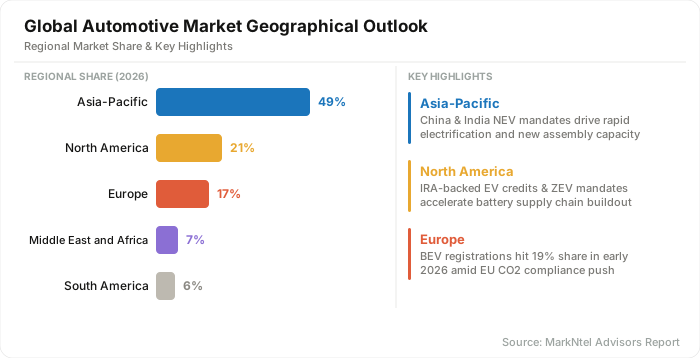
- Asia Pacific is the leading region with a significant share of 49% in 2026.
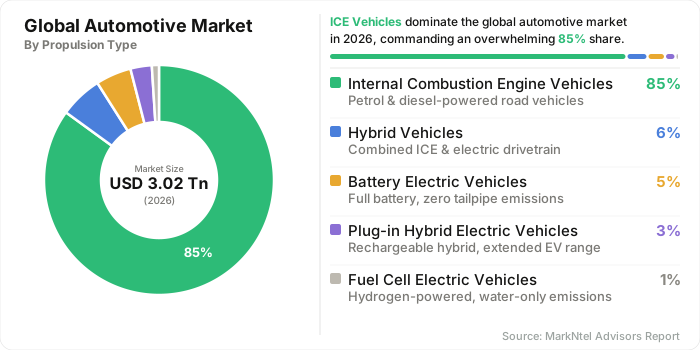
- By propulsion type, the ICE vehicles segment represented a significant share of about 85% in the Global Automotive Market in 2026.
- By vehicle type, the passenger cars seized a significant share of about 76% in the Global Automotive market in 2026.
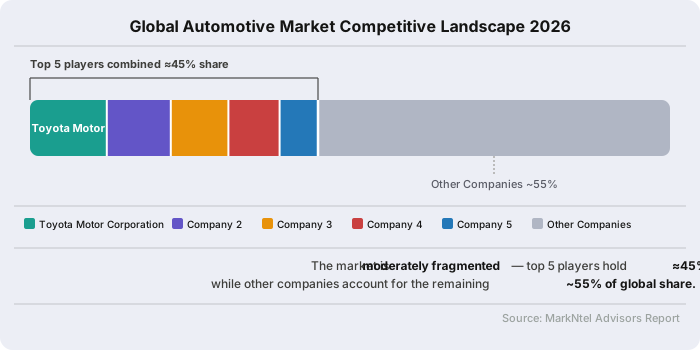
- The global automotive market is moderately consolidated, with 18 prominent manufacturers. The top five players together hold around 45% of the market size.
Global Automotive Market Size and Outlook
The Global Automotive market size was valued at USD 2.75 trillion in 2025 and is projected to grow from USD 3.02 trillion in 2026 to USD 5.30 trillion by 2032. Along with this, the market is estimated to grow at a CAGR of around 9.82% during the forecast period, i.e., 2026-32.
The global automotive market has experienced sustained expansion over the past decade, with new vehicle sales reaching approximately 91.7 million units in 2025, reflecting growth driven by population increases, rising urbanization rates, and expanding middle‑class vehicle ownership. Economic strength in emerging regions such as South Asia has contributed significantly, with forecasts indicating continued unit sales stability into 2026 as global economic growth is projected to be near 2.7% in 2026. This steady demand is supported by demographic shifts toward increased mobility needs and expanding commercial logistics sectors.
Infrastructure investments and technology adoption are reshaping market dynamics, with electrification complementing traditional automotive manufacturing. The global stock of electric vehicles is projected to grow at an average rate of about 25% per year through 2030, with policy frameworks in several major markets reinforcing EV charging network expansions and grid integration efforts. Government commitments to expand public charging capacity and promote interoperability are creating enabling conditions for broader EV adoption alongside existing transport infrastructure.
Regulatory developments in 2025 and 2026 are also influencing market structure, with many jurisdictions revising emissions standards and fleet decarbonization targets. For example, the European Union’s fleet‑wide CO₂ emissions reduction targets enacted in 2025 mandate stricter compliance pathways fo r manufacturers, accelerating the transition toward zero‑emission vehicles and influencing product planning and R&D investments. These regulations are complemented by national and subnational charging infrastructure mandates that reduce barriers to EV usage.
End‑user segmentation continues to shape demand patterns, with personal vehicle ownership remaining predominant, while commercial and industrial applications grow in significance due to e‑commerce expansion and logistics electrification. Commercial fleet electrification programs are gaining traction in key markets, directly affecting long‑term automotive investments. Additionally, macroeconomic conditions such as consumer income levels and credit availability continue to determine purchasing behavior across regions, ensuring that both conventional and electrified powertrains coexist in the market landscape.
Global Automotive Market Key Indicators
- According to the International Organization of Motor Vehicle Manufacturers (OICA), global vehicle production totaled approximately 93.5 million units in 2023, recovering above pre-pandemic levels; sustained output at this scale maintains baseline demand for automotive components, assembly capacity, stamping, casting, and electronic systems across the global automotive supply chain.
- According to the World Steel Association, global crude steel production in 2024 was about 1,885 million tonnes. Within this overall steel output, the automotive industry is one of the major ends‑use sectors. The ongoing shift in automotive manufacturing toward advanced high‑strength steels (AHSS) and press‑hardened steel grades to reduce vehicle weight increases demand for specialized steel products, influencing raw material cost structures and supplier strategies in vehicle manufacturing globally.
- According to the International Energy Agency (IEA), the global stock of publicly accessible EV charging points increased by more than 40 % in 2023. By the end of 2023, there were about 3.9 million public charging points worldwide, with more than 1.1 million of those installed during 2023 itself .
- In 2024, the European Union adopted the Euro 7 regulation, establishing a unified set of emissions rules for passenger cars, light commercial vehicles, buses, and heavy trucks with updated pollutant limits and lifetime requirements. Under Euro 7, new pollutant controls, including more stringent lifetime emissions and tests for brake and tyre particles, will be phased in over the coming years once the regulation is published in the Official Journal and enters into force. These tighter rules add complexity and cost to combustion‑engine emissions control systems and further accelerate automakers’ reallocation of capital toward zero‑emission powertrain technologies in European automotive manufacturing.
Global Automotive Market Scope
| Category | Segments |
|---|---|
| By Vehicle Type | (Passenger Cars, Light Commercial Vehicles, Heavy Commercial Vehicles, Two-Wheelers, Three-Wheelers, Off-Highway Vehicles), |
| By Propulsion Type | (Internal Combustion Engine Vehicles, Hybrid Vehicles, Battery Electric Vehicles, Plug-in Hybrid Electric Vehicles, Fuel Cell Electric Vehicles), |
| By Sales Channel | (OEM Dealers, Independent Dealers, Online Platforms, Direct-to-Consumer), |
| By Application | (Personal Use, Commercial Use, Public Transport, Industrial Use), |
| By Ownership Model | (Individual Ownership, Fleet Ownership, Subscription-Based Mobility, Shared Mobility), |
Global Automotive Industry Growth Drivers
Electrification of Vehicles through Policy‑Led EV Adoption
The global shift toward electrified transportation, specifically the structural policy impetus behind electric vehicle (EV) adoption, is the dominant market driver expanding automotive demand and market volume. This driver has emerged robustly over recent years as emission standards and zero‑emission mandates in major markets such as the European Union and China have tightened, compelling manufacturers and consumers alike to pivot to electrified fleets. In China, EV sales are projected to reach around 70% of total car sales in 2025, driven by continued incentives for replacing older vehicles and price competitiveness , reflecting a systemic shift rather than transitory uptake. These policies have measurably lifted demand across geographies; in Europe, new EV sales account for roughly 25% of the market , while emerging economies also report strong percentage increases tied directly to supportive frameworks.
Unlike short‑term pricing effects, electrification demand directly expands market volume by creating new classes of vehicles and replacement cycles. The IEA outlook shows that EV penetration is not merely substituting ICE sales but adding to aggregate demand through fleet turnover and compliance requirements, which sustains higher shipment volumes over time. Continued national and supranational regulatory commitments to emissions reduction, combined with broader societal shifts toward low‑emission transport, ensure that electrified vehicle demand structurally broadens global market size rather than temporarily influencing pricing or adoption patterns
Recent Trends
The Rise of Software‑Defined Vehicles in Automotive Value Chains
The automotive industry is undergoing a fundamental structural shift toward software‑defined vehicles (SDVs), where software, not hardware, predominantly determines vehicle capability and user experience. SDVs replace traditional segmented electronic control units with centralized, software‑centric architectures that support over‑the‑air updates, cloud connectivity, and continuous functional enhancements. This evolution has accelerated over recent years due to digitalization, advances in AI, and the growing expectation for vehicles to operate as connected computing platforms rather than static hardware products.
The World Health Organization (WHO) estimates that road traffic accidents cause approximately 1.19 million deaths annually, prompting regulatory bodies in the European Union, United States, and Japan to mandate Advanced Driver-Assistance Systems (ADAS) including autonomous emergency braking and lane -keeping assist as standard fitment in new passenger vehicles from 2024 onwards, expanding addressable electronic content and software value per vehicle across the automotive supply chain.
This trend is reshaping value chains across the industry: OEMs are restructuring engineering processes around agile software development, suppliers are transitioning from mechanical modules to software services, and new consumer‑centric business models such as feature subscriptions and remote updates are emerging. Nearly half of global OEMs now prioritize the SDV transition as a strategic objective, indicating its deep penetration into core product roadmaps and operational practices. For instance, BMW’s forthcoming Neue Klasse platform the architectural foundation for future BMW EVs, adopts a software‑defined vehicle (SDV) architecture with centralized computing units (“super brains”) that decouple software from traditional hardware modules. This design explicitly enables over‑the‑air (OTA) updates and continual feature enhancements without hardware changes, illustrating the structural software orientation of models like the iX’s successors.
These changes extend beyond rear‑end vehicle delivery to influence design, manufacturing, and after‑sales support, affecting both end‑user segments and the broader ecosystem of technology partners.
The SDV trend is expected to persist and accelerate, driven by the digital expectations of consumers, regulatory pressure for connected safety features, and the alignment of automotive innovation with broader technology ecosystems (e.g., cloud, AI, and edge computing infrastructures). Public developments such as open‑source automotive platforms aim to standardize SDV ecosystems further, while major investments by technology and automotive firms reinforce their long-term influence on industry evolution.
Opportunities and Challenges
Limited Battery Resources Accelerate Energy Technology Innovation
Rapid electrification of the global automotive fleet is intensifying focus on battery technology, but this creates notable challenges. Current lithium‑ion batteries face limitations in energy density, charging speed, lifecycle durability and depend heavily on finite raw materials like lithium, cobalt, and nickel. According to the International Energy Agency, demand for battery metals could increase four‑ to six‑fold by 2030 to support EV growth, intensifying supply constraints and price volatility. Additionally, mining and refining these materials often carry significant environmental impacts, including land disruption, water consumption, and CO₂ emissions, complicating automakers’ sustainability goals and circular economy commitments. At the same time, tightening environmental regulations such as the EU Battery Regulation impose rigorous lifecycle and recycling standards, increasing compliance costs for manufacturers and suppliers.
This challenge is creating a significant opportunity for next‑generation battery innovation, sustainable material sourcing, and circular value chains.
Investment in battery recycling technologies, including hydrometallurgical and direct recycling processes, is enabling the recovery of critical metals and reducing raw material costs while lowering environmental impact. For example, in January 2026, Redwood also closed an expanded Series E financing round of USD 425 million that included Google as a new investor, underscoring strong investor interest from Big Tech in battery recycling and energy storage infrastructure.
As sustainability becomes a core procurement and regulatory requirement, companies that lead in sustainable battery development, efficient manufacturing, and closed‑loop recycling can unlock new revenue streams, brand differentiation, and long‑term resilience in the evolving global automotive ecosystem.
Segmentation Insights
The Unstoppable Reign of ICE Vehicles in the Global Market
Internal Combustion Engine (ICE) Vehicles dominate the global automotive sector, accounting for around 85% of total sales in the current period. This leadership is primarily driven by well-established manufacturing ecosystems, widespread fuel infrastructure, and consumer familiarity with ICE technology. Countries with large automotive industries, such as the U.S., Germany, and China, continue to heavily invest in ICE vehicle production lines, enabling high production volumes at competitive costs.
Policy frameworks also influence ICE dominance. While many regions incentivize EV adoption, transitional policies still support ICE vehicles through favorable taxation, fleet renewal programs, and emissions optimization technologies. Hybridized ICE models further prolong segment relevance by integrating partial electrification, reducing emissions without requiring a full infrastructure overhaul.
The market impact of ICE vehicles is evident in supply chain stability and aftermarket services. Major OEMs like Toyota (with its Corolla and Camry series) continue to attract end-user demand due to reliability, resale value, and fuel accessibility. Consequently, sustained investment in ICE powertrains, engine efficiency technologies, and global distribution networks ensures that ICE vehicles retain leadership in the propulsion type segment through 2032. The market is divided into the following Sub-categories:
- Internal Combustion Engine Vehicles
- Hybrid Vehicles
- Battery Electric Vehicles
- Plug-in Hybrid Electric Vehicles
- Fuel Cell Electric Vehicles
Passenger Cars Holding the Wheel of Automotive Growth
Passenger cars lead the global automotive sector, capturing approximately 76% of overall sales. Their dominance is reinforced by high consumer demand for personal mobility, urban commuting, and status-oriented ownership patterns, particularly in emerging economies and mature markets alike. Urbanization trends and rising disposable incomes fuel continued passenger car adoption, keeping production and sales volumes elevated.
Policy incentives, such as subsidies for efficient fuel engines, safety regulation compliance, and limited emissions standards, further sustain the passenger car segment. OEMs invest heavily in this segment to launch next-generation models, integrating advanced infotainment, connectivity, and safety features. For example, BMW and Toyota are jointly developing next‑generation fuel cell systems for passenger cars, demonstrating strategic investment in alternative clean powertrains alongside conventional and electric platforms.
Market impact extends to supply chain and aftermarket dynamics. High sales volumes drive consistent revenue streams from spare parts, maintenance services, and financing solutions, reinforcing end-user confidence. Investments in global assembly plants, dealer networks, and digital retail platforms enable OEMs to maintain leadership, making passenger cars the most resilient and influential segment across the global automotive industry through 2032. The market is further divided into the following sub-categories:
- Passenger Cars
- Light Commercial Vehicles
- Heavy Commercial Vehicles
- Two-Wheelers
- Three-Wheelers
- Off-Highway Vehicles
Global Automotive Market Geographical Outlook
The Asia Pacific region represents the largest and most dominant segment in the global automotive sector with a market share of 49%, far surpassing other regions in terms of production, sales, and adoption intensity. China, as the single largest automotive economy, produces and consumes more vehicles annually than any other country, supported by robust industrial capacity and massive domestic demand. In 2024, China accounted for the largest share of global vehicle output and maintained the world’s highest annual sales volume. This scale is amplified by strong regional integration with neighboring markets such as India, Japan, South Korea , and ASEAN countries, which collectively form a dense industrial network of suppliers, logistics, and manufacturing facilities that lower costs and improve speed to market.
Structural and economic fundamentals underpin the Asia Pacific’s leadership. Rapid urbanization in China, India, and Southeast Asia has increased the need for personal and commercial mobility, while rising disposable incomes have expanded the market for passenger vehicles. Urban population percentages and GDP per capita figures in these countries have steadily risen, enabling broader consumer access to vehicle ownership. Modern transport infrastructure and concentrated manufacturing zones further reduce production and distribution costs, enabling economies of scale that reinforce regional competitiveness.
Regulatory and policy environments also advantage the Asia Pacific. India’s FAME incentives and state initiatives promote electric mobility and local production, attracting investment and expanding manufacturing capacity.
End‑user demand patterns and industry presence contribute to sustained dominance. Consumers in China and India increasingly adopt both traditional and new energy passenger cars, aided by domestic brands such as BYD, Geely, and Tata that offer competitively priced, feature‑rich models. Export growth from Asia Pacific automakers into other regions demonstrates the region’s central role in global automotive trade and technology leadership.
Global Automotive Industry Competitive Analysis
The global automotive market is moderately consolidated, with 18 major manufacturers operating worldwide. The top five players, Toyota Motor Corporation, Volkswagen AG, Hyundai Motor Company, Stellantis N.V., and General Motors Company, collectively account for approximately 45% of the total market share.
Major Companies in the Global Automotive Industry
- Toyota Motor Corporation
- Volkswagen AG
- Hyundai Motor Company
- Stellantis N.V.
- General Motors Company
- Ford Motor Company
- Honda Motor Co., Ltd.
- Nissan Motor Co., Ltd.
- BMW AG
- Mercedes-Benz Group AG
- Tesla, Inc.
- BYD Company Limited
- SAIC Motor Corporation Limited
- Renault Group
- Suzuki Motor Corporation
- Kia Corporation
- Tata Motors Limited
- Geely Automobile Holdings Limited
Global Automotive Industry News and Recent Developments
2026: Stellantis N.V. Announces Strategic Business Reset with USD 24 billion Charges and Suspended Dividend
Stellantis N.V. in February 2026 revealed a major overhaul of its business strategy, announcing approximately USD 24 billion of charges related to shifts in product planning, electrification pacing, and alignment with customer demand, mainly from the second half of 2025. These charges are excluded from adjusted operating income and reflect costs from restructuring product programs, reassessing EV investments, and broader operational changes aimed at better serving customer preferences. As part of preserving financial stability after the steep charges and net loss, Stellantis’s Board suspended the planned 2026 dividend and authorized issuance of up to €5 billion in hybrid bonds. The company also reported improvements in shipment volume and sequential revenue growth in the second half of 2025, and reiterated guidance for progressive improvement in revenue, margins, and industrial free cash flow during 2026.
Impact Analysis: This strategic reset marks one of the most significant course corrections by a major legacy automaker in recent years. Suspending the 2026 dividend underscores the financial strain the reset imposed and indicates a prioritization of balance‑sheet strength over short‑term shareholder returns. In the competitive automotive landscape, Stellantis’s move signals that traditional OEMs may need to balance electrification investments more carefully with market realities, avoid over‑committing to unproven programs, and sharpen product execution. The reset also creates potential ripple effects across Stellantis’s supplier base, dealer networks, and brand portfolios, pushing suppliers and partners to adjust commitments in line with Stellantis’s revised production and innovation cadence. Overall, the shift highlights the broader industry challenge of navigating electrification cost pressures, shifting demand, and profitability especially for large legacy groups managing expansive global footprints
2026: Used EV Wave Looming (800,000 Units by 2028)
The U.S. market is set to receive 800,000 off‑lease EVs by 2028, creating potential resale value pressures and up to USD 8 billion in industry losses if residual values decline significantly. Automakers and finance companies are adjusting with certified pre‑owned programs and enhanced battery testing to protect valuations.
Impact & Analysis: The influx of used EVs into the vehicle parc will accelerate electrification in secondary markets, though pricing and battery life concerns could distort ownership economics. Used EV residuals hinge on battery health; shorter replacement cycles on earlier generation battery packs could increase long‑term total cost of ownership versus ICE vehicles. Growth in used EV stock expands services for diagnostics, battery refurbishment, and charging infrastructure servicing across the aftermarket.
2025: US Administration Initiates Review of Inflation Reduction Act Electric Vehicle Tax Credit Provisions, Creating Regulatory Uncertainty for North American EV Investment
The incoming US administration issued executive orders in January 2025 directing federal agencies to review and potentially pause the implementation of clean energy provisions under the Inflation Reduction Act (IRA), including the consumer EV tax credit of up to USD 7,500 for new qualifying battery electric vehicles and the USD 4,000 credit for used EVs. The review placed at risk an estimated USD 50 billion in committed EV and battery manufacturing investments from Ford Motor Company, General Motors Company, and Stellantis N.V. that had been announced between 2022 and 2024 contingent on IRA incentive certainty. The executive action followed a period in which US EV adoption had reached a 9.5% share of new car sales in the third quarter of 2024, with manufacturer pricing strategies having been calibrated to the USD 7,500 credit threshold as a demand-support mechanism.
Impact Analysis: The January 2025 IRA review injected material regulatory uncertainty into North American EV supply chain investment decisions, causing Ford Motor Company and General Motors Company to reassess capital deployment timelines for battery cell manufacturing and EV assembly expansions. Automakers without North American manufacturing commitments — including BYD Company Limited, which had not yet established US production — face a strategic inflection point in which the relative attractiveness of the North American market versus European and Southeast Asian expansion targets shifts in real time, redistributing geographic investment flows across the global automotive sector.
*Reports Delivery Format - Market research studies from MarkNtel Advisors are offered in PDF, Excel and PowerPoint formats. Within 24 hours of the payment being successfully received, the report will be sent to your email address.
- Market Segmentation
- Introduction
- Product Definition
- Research Process
- Assumptions
- Executive Summary
- Global Automotive Market Policies, Regulations, and Product Standards
- Global Automotive Market Trends & Developments
- Global Automotive Market Dynamics
- Growth Factors
- Challenges
- Global Automotive Market Hotspot & Opportunities
- Global Automotive Market Outlook, 2022-2032F
- Market Size & Outlook
- By Revenues (USD Million)
- Market Share & Analysis
- By Vehicle Type- Market Size & Forecast 2022-2032, USD Million
- Passenger Cars
- Light Commercial Vehicles
- Heavy Commercial Vehicles
- Two-Wheelers
- Three-Wheelers
- Off-Highway Vehicles
- By Propulsion Type- Market Size & Forecast 2022-2032, USD Million
- Internal Combustion Engine Vehicles
- Hybrid Vehicles
- Battery Electric Vehicles
- Plug-in Hybrid Electric Vehicles
- Fuel Cell Electric Vehicles
- By Sales Channel- Market Size & Forecast 2022-2032, USD Million
- OEM Dealers
- Independent Dealers
- Online Platforms
- Direct-to-Consumer
- By Application- Market Size & Forecast 2022-2032, USD Million
- Personal Use
- Commercial Use
- Public Transport
- Industrial Use
- By Ownership Model- Market Size & Forecast 2022-2032, USD Million
- Individual Ownership
- Fleet Ownership
- Subscription-Based Mobility
- Shared Mobility
- By Region
- North America
- South America
- Europe
- The Middle East & Africa
- Asia-Pacific
- By Company
- Competition Characteristics
- Market Share & Analysis
- By Vehicle Type- Market Size & Forecast 2022-2032, USD Million
- Market Size & Outlook
- North America Automotive Market Outlook, 2022-2032F
- Market Size & Outlook
- By Revenues (USD Million)
- Market Share & Analysis
- By Vehicle Type- Market Size & Forecast 2022-2032, USD Million
- By Propulsion Type- Market Size & Forecast 2022-2032, USD Million
- By Sales Channel- Market Size & Forecast 2022-2032, USD Million
- By Application- Market Size & Forecast 2022-2032, USD Million
- By Ownership Model- Market Size & Forecast 2022-2032, USD Million
- By Country
- The US
- Canada
- Mexico
- Rest of North America
- The US Automotive Market Outlook, 2022-2032F
- Market Size & Outlook
- By Revenues (USD Million)
- Market Share & Analysis
- By Vehicle Type- Market Size & Forecast 2022-2032, USD Million
- By Propulsion Type- Market Size & Forecast 2022-2032, USD Million
- By Sales Channel- Market Size & Forecast 2022-2032, USD Million
- By Application- Market Size & Forecast 2022-2032, USD Million
- By Ownership Model- Market Size & Forecast 2022-2032, USD Million
- Market Size & Outlook
- Canada Automotive Market Outlook, 2022-2032F
- Market Size & Outlook
- By Revenues (USD Million)
- Market Share & Analysis
- By Vehicle Type- Market Size & Forecast 2022-2032, USD Million
- By Propulsion Type- Market Size & Forecast 2022-2032, USD Million
- By Sales Channel- Market Size & Forecast 2022-2032, USD Million
- By Application- Market Size & Forecast 2022-2032, USD Million
- By Ownership Model- Market Size & Forecast 2022-2032, USD Million
- Market Size & Outlook
- Mexico Automotive Market Outlook, 2022-2032F
- Market Size & Outlook
- By Revenues (USD Million)
- Market Share & Analysis
- By Vehicle Type- Market Size & Forecast 2022-2032, USD Million
- By Propulsion Type- Market Size & Forecast 2022-2032, USD Million
- By Sales Channel- Market Size & Forecast 2022-2032, USD Million
- By Application- Market Size & Forecast 2022-2032, USD Million
- By Ownership Model- Market Size & Forecast 2022-2032, USD Million
- Market Size & Outlook
- Market Size & Outlook
- South America Automotive Market Outlook, 2022-2032F
- Market Size & Outlook
- By Revenues (USD Million)
- Market Share & Analysis
- By Vehicle Type- Market Size & Forecast 2022-2032, USD Million
- By Propulsion Type- Market Size & Forecast 2022-2032, USD Million
- By Sales Channel- Market Size & Forecast 2022-2032, USD Million
- By Application- Market Size & Forecast 2022-2032, USD Million
- By Ownership Model- Market Size & Forecast 2022-2032, USD Million
- By Country
- Brazil
- Argentina
- Chile
- Peru
- Ecuador
- Rest of South America
- Brazil Automotive Market Outlook, 2022-2032F
- Market Size & Outlook
- By Revenues (USD Million)
- Market Share & Analysis
- By Vehicle Type- Market Size & Forecast 2022-2032, USD Million
- By Propulsion Type- Market Size & Forecast 2022-2032, USD Million
- By Sales Channel- Market Size & Forecast 2022-2032, USD Million
- By Application- Market Size & Forecast 2022-2032, USD Million
- By Ownership Model- Market Size & Forecast 2022-2032, USD Million
- Market Size & Outlook
- Argentina Automotive Market Outlook, 2022-2032F
- Market Size & Outlook
- By Revenues (USD Million)
- Market Share & Analysis
- By Vehicle Type- Market Size & Forecast 2022-2032, USD Million
- By Propulsion Type- Market Size & Forecast 2022-2032, USD Million
- By Sales Channel- Market Size & Forecast 2022-2032, USD Million
- By Application- Market Size & Forecast 2022-2032, USD Million
- By Ownership Model- Market Size & Forecast 2022-2032, USD Million
- Market Size & Outlook
- Chile Automotive Market Outlook, 2022-2032F
- Market Size & Outlook
- By Revenues (USD Million)
- Market Share & Analysis
- By Vehicle Type- Market Size & Forecast 2022-2032, USD Million
- By Propulsion Type- Market Size & Forecast 2022-2032, USD Million
- By Sales Channel- Market Size & Forecast 2022-2032, USD Million
- By Application- Market Size & Forecast 2022-2032, USD Million
- By Ownership Model- Market Size & Forecast 2022-2032, USD Million
- Market Size & Outlook
- Peru Automotive Market Outlook, 2022-2032F
- Market Size & Outlook
- By Revenues (USD Million)
- Market Share & Analysis
- By Vehicle Type- Market Size & Forecast 2022-2032, USD Million
- By Propulsion Type- Market Size & Forecast 2022-2032, USD Million
- By Sales Channel- Market Size & Forecast 2022-2032, USD Million
- By Application- Market Size & Forecast 2022-2032, USD Million
- By Ownership Model- Market Size & Forecast 2022-2032, USD Million
- Market Size & Outlook
- Ecuador Automotive Market Outlook, 2022-2032F
- Market Size & Outlook
- By Revenues (USD Million)
- Market Share & Analysis
- By Vehicle Type- Market Size & Forecast 2022-2032, USD Million
- By Propulsion Type- Market Size & Forecast 2022-2032, USD Million
- By Sales Channel- Market Size & Forecast 2022-2032, USD Million
- By Application- Market Size & Forecast 2022-2032, USD Million
- By Ownership Model- Market Size & Forecast 2022-2032, USD Million
- Market Size & Outlook
- Market Size & Outlook
- Europe Automotive Market Outlook, 2022-2032F
- Market Size & Outlook
- By Revenues (USD Million)
- Market Share & Analysis
- By Vehicle Type- Market Size & Forecast 2022-2032, USD Million
- By Propulsion Type- Market Size & Forecast 2022-2032, USD Million
- By Sales Channel- Market Size & Forecast 2022-2032, USD Million
- By Application- Market Size & Forecast 2022-2032, USD Million
- By Ownership Model- Market Size & Forecast 2022-2032, USD Million
- By Country
- The UK
- Germany
- France
- Italy
- Spain
- The Netherlands, Belgium, Sweden
- Denmark
- Switzerland
- Rest of Europe
- The UK Automotive Market Outlook, 2022-2032F
- Market Size & Outlook
- By Revenues (USD Million)
- Market Share & Analysis
- By Vehicle Type- Market Size & Forecast 2022-2032, USD Million
- By Propulsion Type- Market Size & Forecast 2022-2032, USD Million
- By Sales Channel- Market Size & Forecast 2022-2032, USD Million
- By Application- Market Size & Forecast 2022-2032, USD Million
- By Ownership Model- Market Size & Forecast 2022-2032, USD Million
- Market Size & Outlook
- Germany Automotive Market Outlook, 2022-2032F
- Market Size & Outlook
- By Revenues (USD Million)
- Market Share & Analysis
- By Vehicle Type- Market Size & Forecast 2022-2032, USD Million
- By Propulsion Type- Market Size & Forecast 2022-2032, USD Million
- By Sales Channel- Market Size & Forecast 2022-2032, USD Million
- By Application- Market Size & Forecast 2022-2032, USD Million
- By Ownership Model- Market Size & Forecast 2022-2032, USD Million
- Market Size & Outlook
- France Automotive Market Outlook, 2022-2032F
- Market Size & Outlook
- By Revenues (USD Million)
- Market Share & Analysis
- By Vehicle Type- Market Size & Forecast 2022-2032, USD Million
- By Propulsion Type- Market Size & Forecast 2022-2032, USD Million
- By Sales Channel- Market Size & Forecast 2022-2032, USD Million
- By Application- Market Size & Forecast 2022-2032, USD Million
- By Ownership Model- Market Size & Forecast 2022-2032, USD Million
- Market Size & Outlook
- Italy Automotive Market Outlook, 2022-2032F
- Market Size & Outlook
- By Revenues (USD Million)
- Market Share & Analysis
- By Vehicle Type- Market Size & Forecast 2022-2032, USD Million
- By Propulsion Type- Market Size & Forecast 2022-2032, USD Million
- By Sales Channel- Market Size & Forecast 2022-2032, USD Million
- By Application- Market Size & Forecast 2022-2032, USD Million
- By Ownership Model- Market Size & Forecast 2022-2032, USD Million
- Market Size & Outlook
- Spain Automotive Market Outlook, 2022-2032F
- Market Size & Outlook
- By Revenues (USD Million)
- Market Share & Analysis
- By Vehicle Type- Market Size & Forecast 2022-2032, USD Million
- By Propulsion Type- Market Size & Forecast 2022-2032, USD Million
- By Sales Channel- Market Size & Forecast 2022-2032, USD Million
- By Application- Market Size & Forecast 2022-2032, USD Million
- By Ownership Model- Market Size & Forecast 2022-2032, USD Million
- Market Size & Outlook
- The Netherlands, Belgium, Sweden Automotive Market Outlook, 2022-2032F
- Market Size & Outlook
- By Revenues (USD Million)
- Market Share & Analysis
- By Vehicle Type- Market Size & Forecast 2022-2032, USD Million
- By Propulsion Type- Market Size & Forecast 2022-2032, USD Million
- By Sales Channel- Market Size & Forecast 2022-2032, USD Million
- By Application- Market Size & Forecast 2022-2032, USD Million
- By Ownership Model- Market Size & Forecast 2022-2032, USD Million
- Market Size & Outlook
- Denmark Automotive Market Outlook, 2022-2032F
- Market Size & Outlook
- By Revenues (USD Million)
- Market Share & Analysis
- By Vehicle Type- Market Size & Forecast 2022-2032, USD Million
- By Propulsion Type- Market Size & Forecast 2022-2032, USD Million
- By Sales Channel- Market Size & Forecast 2022-2032, USD Million
- By Application- Market Size & Forecast 2022-2032, USD Million
- By Ownership Model- Market Size & Forecast 2022-2032, USD Million
- Market Size & Outlook
- Switzerland Automotive Market Outlook, 2022-2032F
- Market Size & Outlook
- By Revenues (USD Million)
- Market Share & Analysis
- By Vehicle Type- Market Size & Forecast 2022-2032, USD Million
- By Propulsion Type- Market Size & Forecast 2022-2032, USD Million
- By Sales Channel- Market Size & Forecast 2022-2032, USD Million
- By Application- Market Size & Forecast 2022-2032, USD Million
- By Ownership Model- Market Size & Forecast 2022-2032, USD Million
- Market Size & Outlook
- Market Size & Outlook
- The Middle East & Africa Automotive Market Outlook, 2022-2032F
- Market Size & Outlook
- By Revenues (USD Million)
- Market Share & Analysis
- By Vehicle Type- Market Size & Forecast 2022-2032, USD Million
- By Propulsion Type- Market Size & Forecast 2022-2032, USD Million
- By Sales Channel- Market Size & Forecast 2022-2032, USD Million
- By Application- Market Size & Forecast 2022-2032, USD Million
- By Ownership Model- Market Size & Forecast 2022-2032, USD Million
- By Country
- Saudi Arabia
- The UAE
- Qatar
- Kuwait
- Oman
- South Africa
- Egypt
- Nigeria
- Rest of Middle East & Africa
- Saudi Arabia Automotive Market Outlook, 2022-2032F
- Market Size & Outlook
- By Revenues (USD Million)
- Market Share & Analysis
- By Vehicle Type- Market Size & Forecast 2022-2032, USD Million
- By Propulsion Type- Market Size & Forecast 2022-2032, USD Million
- By Sales Channel- Market Size & Forecast 2022-2032, USD Million
- By Application- Market Size & Forecast 2022-2032, USD Million
- By Ownership Model- Market Size & Forecast 2022-2032, USD Million
- Market Size & Outlook
- The UAE Automotive Market Outlook, 2022-2032F
- Market Size & Outlook
- By Revenues (USD Million)
- Market Share & Analysis
- By Vehicle Type- Market Size & Forecast 2022-2032, USD Million
- By Propulsion Type- Market Size & Forecast 2022-2032, USD Million
- By Sales Channel- Market Size & Forecast 2022-2032, USD Million
- By Application- Market Size & Forecast 2022-2032, USD Million
- By Ownership Model- Market Size & Forecast 2022-2032, USD Million
- Market Size & Outlook
- Qatar Automotive Market Outlook, 2022-2032F
- Market Size & Outlook
- By Revenues (USD Million)
- Market Share & Analysis
- By Vehicle Type- Market Size & Forecast 2022-2032, USD Million
- By Propulsion Type- Market Size & Forecast 2022-2032, USD Million
- By Sales Channel- Market Size & Forecast 2022-2032, USD Million
- By Application- Market Size & Forecast 2022-2032, USD Million
- By Ownership Model- Market Size & Forecast 2022-2032, USD Million
- Market Size & Outlook
- Kuwait Automotive Market Outlook, 2022-2032F
- Market Size & Outlook
- By Revenues (USD Million)
- Market Share & Analysis
- By Vehicle Type- Market Size & Forecast 2022-2032, USD Million
- By Propulsion Type- Market Size & Forecast 2022-2032, USD Million
- By Sales Channel- Market Size & Forecast 2022-2032, USD Million
- By Application- Market Size & Forecast 2022-2032, USD Million
- By Ownership Model- Market Size & Forecast 2022-2032, USD Million
- Market Size & Outlook
- Oman Automotive Market Outlook, 2022-2032F
- Market Size & Outlook
- By Revenues (USD Million)
- Market Share & Analysis
- By Vehicle Type- Market Size & Forecast 2022-2032, USD Million
- By Propulsion Type- Market Size & Forecast 2022-2032, USD Million
- By Sales Channel- Market Size & Forecast 2022-2032, USD Million
- By Application- Market Size & Forecast 2022-2032, USD Million
- By Ownership Model- Market Size & Forecast 2022-2032, USD Million
- Market Size & Outlook
- South Africa Automotive Market Outlook, 2022-2032F
- Market Size & Outlook
- By Revenues (USD Million)
- Market Share & Analysis
- By Vehicle Type- Market Size & Forecast 2022-2032, USD Million
- By Propulsion Type- Market Size & Forecast 2022-2032, USD Million
- By Sales Channel- Market Size & Forecast 2022-2032, USD Million
- By Application- Market Size & Forecast 2022-2032, USD Million
- By Ownership Model- Market Size & Forecast 2022-2032, USD Million
- Market Size & Outlook
- Egypt Automotive Market Outlook, 2022-2032F
- Market Size & Outlook
- By Revenues (USD Million)
- Market Share & Analysis
- By Vehicle Type- Market Size & Forecast 2022-2032, USD Million
- By Propulsion Type- Market Size & Forecast 2022-2032, USD Million
- By Sales Channel- Market Size & Forecast 2022-2032, USD Million
- By Application- Market Size & Forecast 2022-2032, USD Million
- By Ownership Model- Market Size & Forecast 2022-2032, USD Million
- Market Size & Outlook
- Nigeria Automotive Market Outlook, 2022-2032F
- Market Size & Outlook
- By Revenues (USD Million)
- Market Share & Analysis
- By Vehicle Type- Market Size & Forecast 2022-2032, USD Million
- By Propulsion Type- Market Size & Forecast 2022-2032, USD Million
- By Sales Channel- Market Size & Forecast 2022-2032, USD Million
- By Application- Market Size & Forecast 2022-2032, USD Million
- By Ownership Model- Market Size & Forecast 2022-2032, USD Million
- Market Size & Outlook
- Market Size & Outlook
- Asia-Pacific Automotive Market Outlook, 2022-2032F
- Market Size & Outlook
- By Revenues (USD Million)
- Market Share & Analysis
- By Vehicle Type- Market Size & Forecast 2022-2032, USD Million
- By Propulsion Type- Market Size & Forecast 2022-2032, USD Million
- By Sales Channel- Market Size & Forecast 2022-2032, USD Million
- By Application- Market Size & Forecast 2022-2032, USD Million
- By Ownership Model- Market Size & Forecast 2022-2032, USD Million
- By Country
- China
- Japan
- India
- South Korea
- Australia
- Indonesia
- Thailand
- Philippines
- Malaysia
- Vietnam
- Rest of Asia-Pacific
- China Automotive Market Outlook, 2022-2032F
- Market Size & Outlook
- By Revenues (USD Million)
- Market Share & Analysis
- By Vehicle Type- Market Size & Forecast 2022-2032, USD Million
- By Propulsion Type- Market Size & Forecast 2022-2032, USD Million
- By Sales Channel- Market Size & Forecast 2022-2032, USD Million
- By Application- Market Size & Forecast 2022-2032, USD Million
- By Ownership Model- Market Size & Forecast 2022-2032, USD Million
- Market Size & Outlook
- Japan Automotive Market Outlook, 2022-2032F
- Market Size & Outlook
- By Revenues (USD Million)
- Market Share & Analysis
- By Vehicle Type- Market Size & Forecast 2022-2032, USD Million
- By Propulsion Type- Market Size & Forecast 2022-2032, USD Million
- By Sales Channel- Market Size & Forecast 2022-2032, USD Million
- By Application- Market Size & Forecast 2022-2032, USD Million
- By Ownership Model- Market Size & Forecast 2022-2032, USD Million
- Market Size & Outlook
- India Automotive Market Outlook, 2022-2032F
- Market Size & Outlook
- By Revenues (USD Million)
- Market Share & Analysis
- By Vehicle Type- Market Size & Forecast 2022-2032, USD Million
- By Propulsion Type- Market Size & Forecast 2022-2032, USD Million
- By Sales Channel- Market Size & Forecast 2022-2032, USD Million
- By Application- Market Size & Forecast 2022-2032, USD Million
- By Ownership Model- Market Size & Forecast 2022-2032, USD Million
- Market Size & Outlook
- South Korea Automotive Market Outlook, 2022-2032F
- Market Size & Outlook
- By Revenues (USD Million)
- Market Share & Analysis
- By Vehicle Type- Market Size & Forecast 2022-2032, USD Million
- By Propulsion Type- Market Size & Forecast 2022-2032, USD Million
- By Sales Channel- Market Size & Forecast 2022-2032, USD Million
- By Application- Market Size & Forecast 2022-2032, USD Million
- By Ownership Model- Market Size & Forecast 2022-2032, USD Million
- Market Size & Outlook
- Australia Automotive Market Outlook, 2022-2032F
- Market Size & Outlook
- By Revenues (USD Million)
- Market Share & Analysis
- By Vehicle Type- Market Size & Forecast 2022-2032, USD Million
- By Propulsion Type- Market Size & Forecast 2022-2032, USD Million
- By Sales Channel- Market Size & Forecast 2022-2032, USD Million
- By Application- Market Size & Forecast 2022-2032, USD Million
- By Ownership Model- Market Size & Forecast 2022-2032, USD Million
- Market Size & Outlook
- Indonesia Automotive Market Outlook, 2022-2032F
- Market Size & Outlook
- By Revenues (USD Million)
- Market Share & Analysis
- By Vehicle Type- Market Size & Forecast 2022-2032, USD Million
- By Propulsion Type- Market Size & Forecast 2022-2032, USD Million
- By Sales Channel- Market Size & Forecast 2022-2032, USD Million
- By Application- Market Size & Forecast 2022-2032, USD Million
- By Ownership Model- Market Size & Forecast 2022-2032, USD Million
- Market Size & Outlook
- Thailand Automotive Market Outlook, 2022-2032F
- Market Size & Outlook
- By Revenues (USD Million)
- Market Share & Analysis
- By Vehicle Type- Market Size & Forecast 2022-2032, USD Million
- By Propulsion Type- Market Size & Forecast 2022-2032, USD Million
- By Sales Channel- Market Size & Forecast 2022-2032, USD Million
- By Application- Market Size & Forecast 2022-2032, USD Million
- By Ownership Model- Market Size & Forecast 2022-2032, USD Million
- Market Size & Outlook
- Philippines Automotive Market Outlook, 2022-2032F
- Market Size & Outlook
- By Revenues (USD Million)
- Market Share & Analysis
- By Vehicle Type- Market Size & Forecast 2022-2032, USD Million
- By Propulsion Type- Market Size & Forecast 2022-2032, USD Million
- By Sales Channel- Market Size & Forecast 2022-2032, USD Million
- By Application- Market Size & Forecast 2022-2032, USD Million
- By Ownership Model- Market Size & Forecast 2022-2032, USD Million
- Market Size & Outlook
- Malaysia Automotive Market Outlook, 2022-2032F
- Market Size & Outlook
- By Revenues (USD Million)
- Market Share & Analysis
- By Vehicle Type- Market Size & Forecast 2022-2032, USD Million
- By Propulsion Type- Market Size & Forecast 2022-2032, USD Million
- By Sales Channel- Market Size & Forecast 2022-2032, USD Million
- By Application- Market Size & Forecast 2022-2032, USD Million
- By Ownership Model- Market Size & Forecast 2022-2032, USD Million
- Market Size & Outlook
- Vietnam Automotive Market Outlook, 2022-2032F
- Market Size & Outlook
- By Revenues (USD Million)
- Market Share & Analysis
- By Vehicle Type- Market Size & Forecast 2022-2032, USD Million
- By Propulsion Type- Market Size & Forecast 2022-2032, USD Million
- By Sales Channel- Market Size & Forecast 2022-2032, USD Million
- By Application- Market Size & Forecast 2022-2032, USD Million
- By Ownership Model- Market Size & Forecast 2022-2032, USD Million
- Market Size & Outlook
- Market Size & Outlook
- Global Automotive Market Key Strategic Imperatives for Success & Growth
- Competitive Outlook
- Company Profiles
- Toyota Motor Corporation
- Business Description
- Product Portfolio
- Collaborations & Alliances
- Recent Developments
- Financial Details
- Others
- Volkswagen AG
- Business Description
- Product Portfolio
- Collaborations & Alliances
- Recent Developments
- Financial Details
- Others
- Hyundai Motor Company
- Business Description
- Product Portfolio
- Collaborations & Alliances
- Recent Developments
- Financial Details
- Others
- Stellantis N.V.
- Business Description
- Product Portfolio
- Collaborations & Alliances
- Recent Developments
- Financial Details
- Others
- General Motors Company
- Business Description
- Product Portfolio
- Collaborations & Alliances
- Recent Developments
- Financial Details
- Others
- Ford Motor Company
- Business Description
- Product Portfolio
- Collaborations & Alliances
- Recent Developments
- Financial Details
- Others
- Honda Motor Co., Ltd.
- Business Description
- Product Portfolio
- Collaborations & Alliances
- Recent Developments
- Financial Details
- Others
- Nissan Motor Co., Ltd.
- Business Description
- Product Portfolio
- Collaborations & Alliances
- Recent Developments
- Financial Details
- Others
- BMW AG
- Business Description
- Product Portfolio
- Collaborations & Alliances
- Recent Developments
- Financial Details
- Others
- Mercedes-Benz Group AG
- Business Description
- Product Portfolio
- Collaborations & Alliances
- Recent Developments
- Financial Details
- Others
- Tesla, Inc.
- Business Description
- Product Portfolio
- Collaborations & Alliances
- Recent Developments
- Financial Details
- Others
- BYD Company Limited
- Business Description
- Product Portfolio
- Collaborations & Alliances
- Recent Developments
- Financial Details
- Others
- SAIC Motor Corporation Limited
- Business Description
- Product Portfolio
- Collaborations & Alliances
- Recent Developments
- Financial Details
- Others
- Renault Group
- Business Description
- Product Portfolio
- Collaborations & Alliances
- Recent Developments
- Financial Details
- Others
- Suzuki Motor Corporation
- Business Description
- Product Portfolio
- Collaborations & Alliances
- Recent Developments
- Financial Details
- Others
- Kia Corporation
- Business Description
- Product Portfolio
- Collaborations & Alliances
- Recent Developments
- Financial Details
- Others
- Tata Motors Limited
- Business Description
- Product Portfolio
- Collaborations & Alliances
- Recent Developments
- Financial Details
- Others
- Geely Automobile Holdings Limited
- Business Description
- Product Portfolio
- Collaborations & Alliances
- Recent Developments
- Financial Details
- Others
- Toyota Motor Corporation
- Company Profiles
- Disclaimer

MarkNtel Advisors follows a robust and iterative research methodology designed to ensure maximum accuracy and minimize deviation in market estimates and forecasts. Our approach combines both bottom-up and top-down techniques to effectively segment and quantify various aspects of the market. A consistent feature across all our research reports is data triangulation, which examines the market from three distinct perspectives to validate findings. Key components of our research process include:
1. Scope & Research Design At the outset, MarkNtel Advisors define the research objectives and formulate pertinent questions. This phase involves determining the type of research—qualitative or quantitative—and designing a methodology that outlines data collection methods, target demographics, and analytical tools. They also establish timelines and budgets to ensure the research aligns with client goals.
2. Sample Selection and Data Collection In this stage, the firm identifies the target audience and determines the appropriate sample size to ensure representativeness. They employ various sampling methods, such as random or stratified sampling, based on the research objectives. Data collection is carried out using tools like surveys, interviews, and observations, ensuring the gathered data is reliable and relevant.
3. Data Analysis and Validation Once data is collected, MarkNtel Advisors undertake a rigorous analysis process. This includes cleaning the data to remove inconsistencies, employing statistical software for quantitative analysis, and thematic analysis for qualitative data. Validation steps are taken to ensure the accuracy and reliability of the findings, minimizing biases and errors.

4. Data Forecast and FinalizationThe final phase involves forecasting future market trends based on the analyzed data. MarkNtel Advisors utilize predictive modeling and time series analysis to anticipate market behaviors. The insights are then compiled into comprehensive reports, featuring visual aids like charts and graphs, and include strategic recommendations to inform client decision-making
FILL THE FORM TO INQUIRE BEFORE BUYING THIS REPORT
We offer flexible licensing options to cater to varying organizational needs. Choose the pricing pack that best suits your requirements:
Buy Now Talk to our Consultant
 Request Customization