India Used Car Market Research Report: Trends & Forecast (2026-2032)
By Vehicle Type (SUVs, Sedans, Hatchbacks), By Kind of Cars (Budget Cars, Economy Cars, Luxury Cars), By Fuel Type (Gasoline, Electric, Diesel, Hybrid), By Vehicle Age (Less than 3 ... Years, 3 to 5 Years, More than 5 Years), By Transaction Type (Certified Pre-Owned (CPO), Independent Retail, Online Marketplaces, Auctions), By Sales Channel (Dealerships, Online Platforms, Direct Owner Sales), By End-User (Individual Consumers, Businesses and Fleet Buyers, Rental and Leasing Services), and others Read more
- Automotive
- Apr 2026
- Pages 130
- Report Format: PDF, Excel, PPT
India Used Car Market
Projected 11.47% CAGR from 2026 to 2032
Study Period
2026-2032
Market Size (2026)
USD 45.0 Billion
Market Size (2032)
USD 86.32 Billion
Base Year
2025
Projected CAGR
11.47%
Leading Segments
By Kind of Cars: Economy Cars
India Used Car Market Report Key Takeaways:
- The India Used Car market size was valued at USD 40.41 billion in 2025 and is projected to grow from USD 45.0 billion in 2026 to USD 86.32 billion by 2032, exhibiting a CAGR of 11.47% during the forecast period.
- By kind of cars, the economy cars segment represented a significant share of about 49% in the India Used Car Market in 2026.
- By end user, the individual consumers segment represented a significant share of about 85% in the India Used Car Market in 2026.
Market Insights & Analysis: India Used Car Market (2026-32):
The India Used Car Market size was valued at approximately USD 40.41 billion in 2025 and is projected to grow from USD 45.0 billion in 2026 to USD 86.32 billion by 2032. Along with this, the market is estimated to grow at a CAGR of around 11.47% during the forecast period, i.e., 2026-32.
The India used car market is witnessing robust growth, primarily driven by affordability and economic accessibility. Pre-owned vehicles offer a cost-effective mobility solution for price-sensitive buyers across metro and Tier-2 cities, allowing them to access reliable transportation at significantly lower costs compared to new models. This value proposition is particularly strong in regions with varying income levels, where budget constraints make pre-owned options a practical choice.
Regional dynamics reveal interesting patterns. While South and North India dominate overall market share, East India has maintained steady demand, contributing consistently to national growth despite lower absolute volumes. In 2025, West Bengal accounted for 2.5% of the total national used car demand, illustrating how affordability continues to shape consumer choices. Buyers in this region consistently prioritize low-maintenance, cost-effective vehicles over expensive new cars, sustaining the influence of economic accessibility even where transaction volumes are comparatively smaller .
A key trend reshaping the market is shorter ownership cycles and younger inventory. Increasingly, vehicle owners are selling their cars within 3–4 years, which introduces fresher, higher-quality pre-owned vehicles into the market. These cars meet buyer expectations for enhanced features, improved safety, and better efficiency, narrowing the gap between new and used models. This trend not only elevates the quality of available inventory but also accelerates market participation by building consumer confidence in pre-owned vehicles.
The structural shift toward newer used models is reflected in market data, with the used-to-new car sales ratio at 1.4:1 in 2025, signaling that pre-owned vehicles are increasingly preferred over pricier new cars. Volume growth is projected at 8–10% annually, highlighting sustained demand for vehicles that combine affordability with modern features and performance. This growth trajectory is further supported by the expansion of digital marketplaces, organized resale networks, and financing solutions, which simplify access to pre-owned vehicles and enhance trust in transactions.
Overall, the India used car market is poised for continued expansion, driven by affordability, economic accessibility, and evolving consumer preferences. Regional variations, younger vehicle inventory, and organized platforms are collectively enhancing market efficiency, making pre-owned vehicles a mainstream, trusted choice across diverse urban and semi-urban regions. These trends and structural shifts indicate that the sector will sustain long-term growth well beyond 2025.
India Used Car Market Recent Developments:
- 2025: Cars24 announced plans to invest USD 60 million to fortify its technology stack, expanding R&D, AI, ML, and product teams. The company will hire over 100 tech specialists, enhancing features like real‑time car valuations and maintenance tracking via its platform .
India Used Car Market Scope:
| Category | Segments |
|---|---|
| By Vehicle Type | (SUVs, Sedans, Hatchbacks), |
| By Kind of Cars | (Budget Cars, Economy Cars, Luxury Cars), |
| By Fuel Type | (Gasoline, Electric, Diesel, Hybrid), |
| By Vehicle Age | (Less than 3 Years, 3 to 5 Years, More than 5 Years), |
| By Transaction Type | (Certified Pre-Owned (CPO), Independent Retail, Online Marketplaces, Auctions), |
| By Sales Channel | (Dealerships, Online Platforms, Direct Owner Sales), |
| By End-User | (Individual Consumers, Businesses and Fleet Buyers, Rental and Leasing Services), |
India Used Car Market Driver:
Affordability & Economic Accessibility Augmenting Market Growth
Affordability continues to be a critical driver of India’s used car market, influencing demand across regions and buyer segments. In 2025, Tier‑2 cities accounted for 62% of used car sales, surpassing metro contributions 38% as smaller cities increasingly drive national demand. Non-metro consumers prioritize low-cost options, reliability, and lower maintenance expenses, reshaping both the geographic distribution and buyer profile of the market .
In North India, contributing 24.8% of national demand, states like Uttar Pradesh 13 % and Delhi 6% illustrate how affordability interacts with regulatory frameworks. Delhi’s environmental valuation and age-based policies influence resale pricing, often lowering transaction values and making pre-owned vehicles under USD 12,000 more attractive relative to new cars. Buyers increasingly favor vehicles with better fuel efficiency, reduced depreciation, and lower insurance costs, emphasizing economic accessibility as a decisive factor in vehicle choice .
Overall, across India, affordability and economic accessibility remain fundamental to market expansion. By making pre-owned vehicles financially viable and low-risk, this driver ensures strong demand, particularly in cost-sensitive regions and emerging Tier‑2 markets, supporting the sustained growth of the used car ecosystem.
India Used Car Market Trend:
Shorter Ownership Cycles & Younger Inventory
A defining trend in India’s used car market is the shift toward shorter ownership cycles and a younger pre-owned vehicle inventory. According to Crisil Ratings, the average age of used cars sold in India has been steadily declining and is projected to reach approximately 3.7 years, reflecting that owners are exchanging or selling vehicles within 3–4 years. This accelerated turnover contributes to a fresher, higher-quality pool of pre-owned cars .
Supporting this, the Indian Blue Book reports that vehicles aged four to seven years now account for nearly 30 % of organized used car sales, illustrating a clear preference for newer pre-owned models over older stock. Buyers increasingly seek recent model years for enhanced safety, fuel efficiency, and modern features, aligning the used car experience more closely with new car expectations .
The trend is reinforced by digital marketplaces and accessible financing options, which simplify transactions and support faster vehicle upgrades. As a result, newer cars enter the used market sooner, elevating the quality and appeal of pre-owned vehicles, attracting more buyers, and expanding market participation.
In conclusion, shorter ownership cycles are generating a younger, more desirable inventory, enhancing consumer confidence and driving sustained growth in India’s used car market.
India Used Car Market Opportunity:
Expanding Online Certified Pre-Owned (CPO) Platforms
The expansion of Certified Pre‑Owned (CPO) platforms represents a strong opportunity in India’s used car market by enhancing consumer confidence and structured, organized sales. Manufacturer‑backed CPO programmes provide rigorous inspection, refurbishment, and extended warranty coverage, reducing perceived risks associated with used car purchases and attracting quality‑seeking buyers. For example, Maruti Suzuki’s True Value network, one of India’s largest CPO channels, operates through over 1,252 outlets across 942 cities, offering certified vehicles that undergo comprehensive quality checks and come with warranties and support services, which significantly improve the formal used car retail experience .
Similarly, Kia India’s Certified Pre‑Owned programme has expanded its eligibility criteria, increasing the age limit for certified vehicles from 5 to 7 years and offering up to 24 months / 40,000 km warranty on Kia cars, while also providing 12 months / 15,000 km warranty for multi‑brand vehicles sold through its CPO network. This upgrade boosts buyer assurance and broadens choice, encouraging more consumers to purchase through organized channels .
These developments show how organized CPO platforms are leveraging brand credibility, warranty benefits, and quality checks to convert hesitant buyers into confident ones. By integrating digital tools with extensive outlet networks, CPO programmes make certified used cars more accessible and trustworthy.
Overall, the ongoing expansion of online and manufacturer‑backed CPO platforms will continue to professionalize the used car ecosystem, deepen organized market penetration, and strengthen buyer trust, creating significant growth potential for the sector.
India Used Car Market Challenge:
High Pre-Owned Loan Interest Rates
A major challenge in India’s used car market is that loans for pre‑owned vehicles typically carry higher interest rates than new car loans, increasing the overall cost of ownership and discouraging some value‑driven buyers. Lenders view used cars as riskier collateral because of depreciation, uncertain maintenance history, and lower resale value, prompting them to price loans accordingly. As a result, rates on used car financing often range several percentage points above new car loans, sometimes climbing above 11% p.a. in 2025 in public and private banks, compared with lower rates available for new cars .
For example, major Indian lenders such as State Bank of India, HDFC Bank, and Axis Bank offer used car loans with rates typically between 11.25% and 17.50%, reflecting the risk premium associated with older vehicles . Even when lending conditions improve broadly, such as RBI repo rate cuts aimed at lowering borrowing costs overall, used car interest rates may not decline proportionately because banks still price for the added risk of depreciation and valuation uncertainty.
Unlike new car loans, which often benefit from manufacturer support, promotional offers, or longer tenures, used car loan terms are comparatively shorter and costlier, pressuring monthly EMIs and total interest outlays for buyers. This differential can make financing a used vehicle less attractive than purchasing new in some cases, especially for budget‑constrained individuals.
Overall, elevated interest rates on pre‑owned car loans raise the cost of financing, reduce affordability for many buyers, and constrain the used car market’s growth potential in price‑sensitive segments.
India Used Car Market (2026-32) Segmentation Analysis:
The India Used Car Market study of MarkNtel Advisors evaluates & highlights the major trends and influencing factors in each segment. It includes predictions for the period 2026–32 at the country level. Based on the analysis, the market has been further classified as;
Based on Kind of Cars:
- Budget Cars
- Economy Cars
- Luxury Cars
Economy cars dominate India’s used car market, accounting for nearly 49% of sales, due to affordability, low maintenance costs, and high fuel efficiency. These vehicles appeal to first‑time buyers and middle-class families seeking reliable transport without a significant financial burden. The segment benefits from rising urbanization and tier-2 city expansion, where buyers prioritize value over premium features. Online marketplaces and certified pre-owned programs further boost trust in economy cars, ensuring buyers are confident in quality and resale value.
Additionally, manufacturers’ focus on standardized parts and service networks makes servicing economical vehicles simpler, keeping the total cost of ownership low. The growing trend of short-term mobility solutions, like app-based rentals, also encourages buyers to choose budget-friendly, fuel-efficient cars that maximize ROI, consolidating economy cars as the most traded category in the pre-owned ecosystem.
Based on End User:
- Individual Consumers
- Businesses and Fleet Buyers
- Rental and Leasing Services
Individual consumers dominate the Indian used car market, representing 85% of transactions, reflecting personal mobility needs and affordability pressures. Unlike fleet or rental buyers, individuals prioritize vehicles that match lifestyle, family size, and fuel efficiency, often opting for economy and compact cars. The rise of digital platforms allows consumers to compare prices, inspect car history, and complete transactions securely, significantly reducing entry barriers.
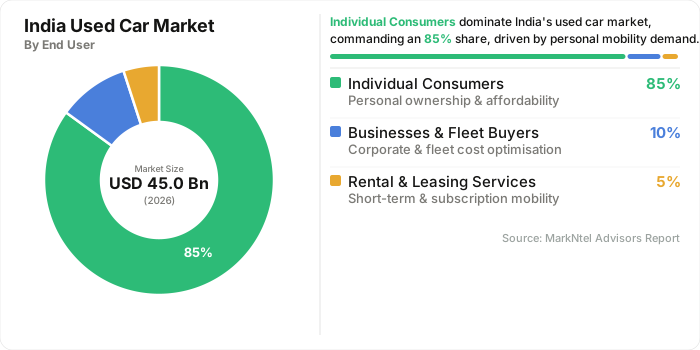
Factors such as financing options, certified pre-owned programs, and flexible resale possibilities make individual purchases safer and more attractive. Increasing urban population density and the growing desire for personal transportation in smaller cities have reinforced this trend. Overall, individual consumers drive volume in the market, shaping pricing, vehicle age preference, and transaction models, making them the most influential end-user segment in India’s pre-owned car ecosystem.
India Used Car Market (2026-32): Regional Projection
The India used car market is dominated by South India, which accounted for approximately 41.5 % of national demand in 2025. This dominance is driven by cost-conscious buyers opting for pre-owned vehicles over expensive new models, along with the wider availability of financing options that make purchases more accessible. Southern states such as Tamil Nadu, Karnataka, Andhra Pradesh, and Telangana benefit from well-established service and parts networks, making budget and mid-range pre-owned cars particularly attractive across both metro and non-metro areas.
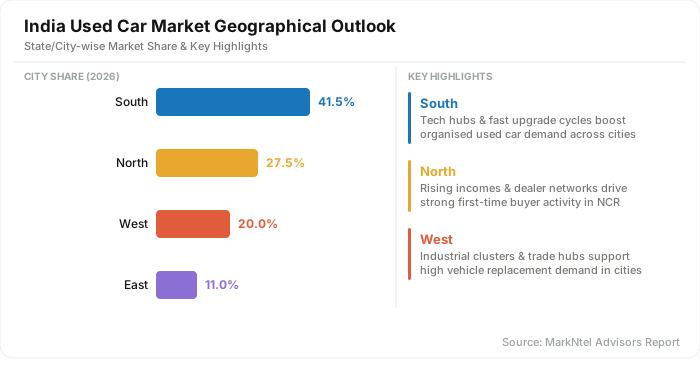
For example, the Cars24 Gears of Growth Report 2025 highlights that Tier-2 cities in South India are increasingly driving used car sales, with non-metro buyers prioritizing affordability, low maintenance, and reliability. This trend reflects a structural shift where smaller cities are contributing significantly to national demand while organized resale channels facilitate safer and more transparent transactions.
The South’s market leadership is reinforced by high digital platform penetration, financing availability, and organized dealership networks, which together enhance buyer confidence. Consequently, South India remains the primary growth engine for the country’s used car market, combining affordability, accessibility, and structured support to attract a broad spectrum.
India Used Car Market Competitive Landscape:
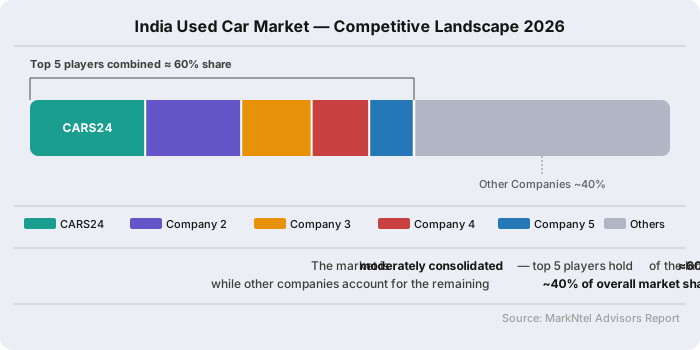
The India used car market is moderately consolidated, with over 50 companies operating across organized and digital channels. The top five players, Cars24, Maruti Suzuki India Ltd, Mahindra First Choice Wheels Ltd, Spinny, and CarTrade.com, collectively account for nearly 55–65 % of the organized market share. Cars24 leads the digital segment, Maruti Suzuki dominates certified pre-owned sales, Mahindra First Choice has a strong franchise network, Spinny is expanding through online and physical touchpoints, and CarTrade.com has a significant presence in multi-brand resale and financing solutions.
Leading Companies in India:
- Big Boy Toyz Ltd
- BMW India Private Limited
- Cars24
- CarTrade.com
- Honda Cars India Ltd
- Mahindra First Choice Wheels
- Maruti Suzuki India Ltd
- OLX
- Quikr India Pvt Ltd
- Spinny
- Toyota Kirloskar Motor
Gain a Competitive Edge with Our India Used Car Market Report:
- India Used Car Market Report by MarkNtel Advisors provides a detailed & thorough analysis of market size & share, growth rate, competitive landscape, and key players. This comprehensive analysis helps businesses gain a holistic understanding of the market dynamics & make informed decisions.
- This report also highlights current market trends & future projections, allowing businesses to identify emerging opportunities & potential challenges. By understanding market forecasts, companies can align their strategies & stay ahead of the competition.
- India Used Car Market Report aids in assessing & mitigating risks associated with entering or operating in the market. By understanding market dynamics, regulatory frameworks, and potential challenges, businesses can develop strategies to minimize risks & optimize their operations.
*Reports Delivery Format - Market research studies from MarkNtel Advisors are offered in PDF, Excel and PowerPoint formats. Within 24 hours of the payment being successfully received, the report will be sent to your email address.
Frequently Asked Questions
- Market Segmentation
- Introduction
- Product Definition
- Research Process
- Assumptions
- Executive Summary
- India Used Car Market Policies, Regulations, and Product Standards
- India Used Car Market Trends & Developments
- India Used Car Market Dynamics
- Growth Factors
- Challenges
- India Used Car Market Hotspot & Opportunities
- India Used Car Market Outlook, 2022-2032F
- Market Size & Outlook
- By Revenues (USD Million)
- By Units Sold (Thousand Units)
- Market Share & Outlook
- By Vehicle Type- Market Size & Forecast 2022-2032, USD Million & Thousand Units
- SUVs
- Sedans
- Hatchbacks
- By Kind of Cars- Market Size & Forecast 2022-2032, USD Million & Thousand Units
- Budget Cars
- Economy Cars
- Luxury Cars
- By Fuel Type - Market Size & Forecast 2022-2032, USD Million & Thousand Units
- Gasoline
- Electric
- Diesel
- Hybrid
- By Vehicle Age- Market Size & Forecast 2022-2032, USD Million & Thousand Units
- Less than 3 Years
- 3 to 5 Years
- More than 5 Years
- By Transaction Type- Market Size & Forecast 2022-2032, USD Million & Thousand Units
- Certified Pre-Owned (CPO)
- Independent Retail
- Online Marketplaces
- Auctions
- By Sales Channel- Market Size & Forecast 2022-2032, USD Million & Thousand Units
- Dealerships
- Online Platforms
- Direct Owner Sales
- By End-User- Market Size & Forecast 2022-2032, USD Million & Thousand Units
- Individual Consumers
- Businesses and Fleet Buyers
- Rental and Leasing Services
- By Region- Market Size & Forecast 2022-2032, USD Million & Thousand Units
- South
- West
- East
- North
- By Company
- Competition Characteristics
- Market Share & Analysis
- By Vehicle Type- Market Size & Forecast 2022-2032, USD Million & Thousand Units
- Market Size & Outlook
- India Used SUVs Market Outlook, 2022-2032
- Market Size & Outlook
- By Revenues (USD Million)
- By Units Sold (Thousand Units)
- Market Share & Outlook
- By Kind of Cars- Market Size & Forecast 2022-2032, USD Million & Thousand Units
- By Fuel Type - Market Size & Forecast 2022-2032, USD Million & Thousand Units
- By Vehicle Age- Market Size & Forecast 2022-2032, USD Million & Thousand Units
- By Transaction Type- Market Size & Forecast 2022-2032, USD Million & Thousand Units
- By Sales Channel- Market Size & Forecast 2022-2032, USD Million & Thousand Units
- By End-User- Market Size & Forecast 2022-2032, USD Million & Thousand Units
- By Region- Market Size & Forecast 2022-2032, USD Million & Thousand Units
- Market Size & Outlook
- India Used Sedans Market Outlook, 2022-2032
- Market Size & Outlook
- By Revenues (USD Million)
- By Units Sold (Thousand Units)
- Market Share & Outlook
- By Kind of Cars- Market Size & Forecast 2022-2032, USD Million & Thousand Units
- By Fuel Type - Market Size & Forecast 2022-2032, USD Million & Thousand Units
- By Vehicle Age- Market Size & Forecast 2022-2032, USD Million & Thousand Units
- By Transaction Type- Market Size & Forecast 2022-2032, USD Million & Thousand Units
- By Sales Channel- Market Size & Forecast 2022-2032, USD Million & Thousand Units
- By End-User- Market Size & Forecast 2022-2032, USD Million & Thousand Units
- By Region- Market Size & Forecast 2022-2032, USD Million & Thousand Units
- Market Size & Outlook
- India Used Hatchbacks Market Outlook, 2022-2032
- Market Size & Outlook
- By Revenues (USD Million)
- By Units Sold (Thousand Units)
- Market Share & Outlook
- By Kind of Cars- Market Size & Forecast 2022-2032, USD Million & Thousand Units
- By Fuel Type - Market Size & Forecast 2022-2032, USD Million & Thousand Units
- By Vehicle Age- Market Size & Forecast 2022-2032, USD Million & Thousand Units
- By Transaction Type- Market Size & Forecast 2022-2032, USD Million & Thousand Units
- By Sales Channel- Market Size & Forecast 2022-2032, USD Million & Thousand Units
- By End-User- Market Size & Forecast 2022-2032, USD Million & Thousand Units
- By Region- Market Size & Forecast 2022-2032, USD Million & Thousand Units
- Market Size & Outlook
- India Used Car Market Key Strategic Imperatives for Success & Growth
- Competitive Outlook
- Company Profiles
- Big Boy Toyz Ltd
- Business Description
- Product Portfolio
- Collaborations & Alliances
- Recent Developments
- Financial Details
- Others
- BMW India Private Limited
- Business Description
- Product Portfolio
- Collaborations & Alliances
- Recent Developments
- Financial Details
- Others
- Cars24
- Business Description
- Product Portfolio
- Collaborations & Alliances
- Recent Developments
- Financial Details
- Others
- CarTrade.com
- Business Description
- Product Portfolio
- Collaborations & Alliances
- Recent Developments
- Financial Details
- Others
- Honda Cars India Ltd
- Business Description
- Product Portfolio
- Collaborations & Alliances
- Recent Developments
- Financial Details
- Others
- Mahindra First Choice Wheels
- Business Description
- Product Portfolio
- Collaborations & Alliances
- Recent Developments
- Financial Details
- Others
- Maruti Suzuki India Ltd
- Business Description
- Product Portfolio
- Collaborations & Alliances
- Recent Developments
- Financial Details
- Others
- OLX
- Business Description
- Product Portfolio
- Collaborations & Alliances
- Recent Developments
- Financial Details
- Others
- Quikr India Pvt Ltd
- Business Description
- Product Portfolio
- Collaborations & Alliances
- Recent Developments
- Financial Details
- Others
- Spinny
- Business Description
- Product Portfolio
- Collaborations & Alliances
- Recent Developments
- Financial Details
- Others
- Toyota Kirloskar Motor
- Business Description
- Product Portfolio
- Collaborations & Alliances
- Recent Developments
- Financial Details
- Others
- Big Boy Toyz Ltd
- Company Profiles
- Disclaimer
MarkNtel Advisors follows a robust and iterative research methodology designed to ensure maximum accuracy and minimize deviation in market estimates and forecasts. Our approach combines both bottom-up and top-down techniques to effectively segment and quantify various aspects of the market. A consistent feature across all our research reports is data triangulation, which examines the market from three distinct perspectives to validate findings. Key components of our research process include:
1. Scope & Research Design At the outset, MarkNtel Advisors define the research objectives and formulate pertinent questions. This phase involves determining the type of research—qualitative or quantitative—and designing a methodology that outlines data collection methods, target demographics, and analytical tools. They also establish timelines and budgets to ensure the research aligns with client goals.
2. Sample Selection and Data Collection In this stage, the firm identifies the target audience and determines the appropriate sample size to ensure representativeness. They employ various sampling methods, such as random or stratified sampling, based on the research objectives. Data collection is carried out using tools like surveys, interviews, and observations, ensuring the gathered data is reliable and relevant.
3. Data Analysis and Validation Once data is collected, MarkNtel Advisors undertake a rigorous analysis process. This includes cleaning the data to remove inconsistencies, employing statistical software for quantitative analysis, and thematic analysis for qualitative data. Validation steps are taken to ensure the accuracy and reliability of the findings, minimizing biases and errors.

4. Data Forecast and FinalizationThe final phase involves forecasting future market trends based on the analyzed data. MarkNtel Advisors utilize predictive modeling and time series analysis to anticipate market behaviors. The insights are then compiled into comprehensive reports, featuring visual aids like charts and graphs, and include strategic recommendations to inform client decision-making
We offer flexible licensing options to cater to varying organizational needs. Choose the pricing pack that best suits your requirements:
Buy Now Inquire Before Buying
 Request Customization
 Talk to our Consultant