

Global Welding Gas Market Research Report: Forecast (2026-2032)
By Gas Type (Argon, Carbon Dioxide, Oxygen, Hydrogen, Others (Helium, Acetylene, Gas Mixtures)), By Application (Gas Metal Arc Welding (GMAW / MIG), Gas Tungsten Arc Welding (GTAW ... / TIG), Shielded Metal Arc Welding (SMAW), Flux Cored Arc Welding (FCAW), Others), By End-Use Industry (Automotive, Construction & Infrastructure, Metal Manufacturing & Fabrication, Shipbuilding, Energy (Oil & Gas, Power), Others), and others Read more
- Energy
- Mar 2026
- Pages 450
- Report Format: PDF, Excel, PPT
Global Welding Gas Market
Projected 5.2% CAGR from 2026 to 2032
Study Period
2026-2032
Market Size (2026)
USD 3.68 Billion
Market Size (2032)
USD 4.99 Billion
Largest Region
Asia-Pacific
Projected CAGR
5.2%
Leading Segments
By Gas Type: Argon
Global Welding Gas Market Report Key Takeaways
- Welding gas market size was valued at around USD 3.5 billion in 2025 and is projected to grow from USD 3.68 billion in 2026 to USD 4.99 billion by 2032, exhibiting a CAGR of 5.2% during 2026-2032.
- Asia-Pacific holds the largest share of about 43.42%.
- By Gas Type, the Argon Gas holds a significant share of about 35%.
- By End-Use, the Metal Manufacturing & Fabrication segment seized a significant share of about 39% in 2026.
- The industry is moderately consolidated, with over 30 companies participating globally. However, the top five players collectively account for nearly 60% share.
Welding Gas Market Size & Outlook
Welding gas market valued at around USD 3.5 billion in 2025 and is projected to grow from USD 3.68 billion in 2026 to USD 4.99 billion by 2032, exhibiting a CAGR of 5.2% during 2026-2032.
The global industry for welding gases has grown consistently alongside expansion in manufacturing, construction, and transportation equipment production. Welding gases such as argon, oxygen, and carbon dioxide are essential for metal joining processes used in steel fabrication, heavy machinery production, shipbuilding, and automotive manufacturing. Industrial end-users, particularly fabrication workshops, engineering contractors, and equipment manufacturers, represent the primary source of demand. As industrial output and engineering activity have expanded globally, the consumption of welding gases has increased across multiple manufacturing and infrastructure sectors.
Government infrastructure and industrial development policies continue to support overall expansion. In 2026, China’s National Development and Reform Commission approved an infrastructure investment plan valued at approximately USD 42 billion covering 281 projects involving pipelines, transportation systems, and industrial facilities under the country’s upcoming 15th Five-Year Plan. Additionally, the Chinese government announced more than USD 700 billion in construction investments for railways, nuclear power plants, and water infrastructure. These initiatives significantly increase demand for steel fabrication and welding operations during project construction and equipment installation.
Infrastructure investment in developed economies also reinforces steady market demand. The United Kingdom has outlined a national infrastructure pipeline worth about USD 900 billion over the next decade, covering energy networks, transportation systems, and industrial facilities. Such large-scale projects require extensive welding of steel structures, pipelines, and mechanical assemblies. Commercial and industrial construction contractors, therefore, represent a critical end-user segment for welding gases used during structural fabrication and infrastructure development.
Significant initiatives and technological innovations further strengthen the overall outlook of the welding gas industry. In 2026, Linde plc announced plans to build a new air separation plant in Wisconsin to supply industrial gases, including oxygen, nitrogen, and argon, to manufacturing customers. Meanwhile, a robotic welding system was introduced at the Torbanlea train manufacturing facility in Australia as part of a USD 7.1 billion rail manufacturing program. Additionally, in 2025, Shenzhen Jewellok Technology launched automatic gas changeover manifolds designed to ensure an uninterrupted gas supply for automated welding and industrial automation manufacturing processes. These developments highlight increasing investments in automated welding technologies and industrial gas supply capacity, supporting sustained expansion across the market for welding gases.
Welding Gas Market Key Indicators
- According to the International Organization of Motor Vehicle Manufacturers (OICA), global motor vehicle production exceeded 68.7 million units in the first nine months of 2025, reflecting robust automotive manufacturing activity. Higher vehicle production increases welding operations in body assembly, chassis fabrication, and metal joining processes, thereby driving demand for welding gases such as argon, CO₂, and oxygen and supporting growth.
- Global construction output is projected to reach around USD 9.4 trillion in 2025, indicating significant expansion in infrastructure and building development worldwide. Large-scale construction projects involve extensive welding of structural steel components, pipelines, and metal frameworks, which directly drives demand for welding gases used during fabrication and on-site assembly, thereby supporting the overall growth of the welding gas industry.
- The global railway network exceeds 1.3 million kilometers, reflecting widespread rail infrastructure. Ongoing expansion and maintenance require welding of tracks, freight wagons, and passenger coaches, which directly increases the consumption of welding gases in railway manufacturing and repair activities.
- China alone operates over 45,000 km of high-speed rail lines, the largest network globally, indicating extensive railway infrastructure development. Such large-scale rail projects involve continuous welding of steel tracks, signaling systems, and structural components, thereby driving demand for welding gases used in installation and maintenance. Ultimately, positively shapes the growth trajectory of the welding gas market.
- Global shipyards received over 2,000 new ship orders totaling more than 56 million CGT, highlighting strong shipbuilding activity. Construction of vessels involves large-scale welding of steel plates for hulls and offshore structures, thereby driving significant demand for welding gases in ship fabrication processes.
- The global pipeline network exceeds 3.5 million kilometers, indicating extensive energy infrastructure. Pipeline construction, maintenance, and repair require continuous welding of metal joints, directly supporting demand for welding gases across oil & gas and energy projects.
- Global offshore wind capacity exceeded 75 GW in 2024, reflecting rapid growth in renewable energy infrastructure. Installation of wind turbines involves welding of steel foundations, towers, and subsea structures, thereby increasing demand for welding gases used in fabrication and assembly.
- According to Airbus, the global commercial aircraft fleet is expected to grow from nearly 23,000 to around 48,000 by 2038, indicating strong expansion in aerospace manufacturing. Aircraft production involves precision welding and metal joining in structural components, which drives demand for high-quality welding gases used in fabrication processes.
Welding Gas Industry News and Recent Developments
June 2025: Linde plc Signs Long-Term Industrial Gas Supply Deal for Low-Carbon Ammonia Facility
Impact Analysis: The agreement strengthens Linde’s industrial gas supply infrastructure and supports rising demand for gases such as hydrogen, nitrogen, and argon used in welding and fabrication processes across large-scale industrial facilities. It also highlights the growing role of industrial gas suppliers in enabling low-carbon chemical production and establishing long-term supply partnerships in North America.
August 2025: Air Liquide Acquires DIG Airgas to Expand Industrial Gas Distribution in South Korea
Impact Analysis: The acquisition strengthens Air Liquide’s industrial gas distribution network in Asia, enhancing its ability to supply gases such as argon, oxygen, and carbon dioxide used in welding, metal fabrication, and manufacturing processes. It supports growing industrial activity in the region and reinforces the role of industrial gas suppliers in meeting rising demand from welding-intensive applications.
July 2025: Linde Announces Expansion of Industrial Gas Supply for Space Sector
Impact Analysis: Linde expanded its U.S. facility to supply oxygen and nitrogen for aerospace manufacturing. Increased production capacity supports welding and fabrication processes in high-precision industries, highlighting growing demand for industrial gases across advanced manufacturing sectors.
Welding Gas Market Growth Drivers
Expanding Steel Fabrication in Infrastructure and Industrial Construction
Rising steel fabrication requirements in infrastructure and industrial construction projects are a major driver of growth & expansion. Welding gases such as argon, carbon dioxide, and oxygen are widely used in MIG, TIG, and oxy-fuel welding processes to shield weld pools, stabilize arcs, and improve weld quality in structural steel, pipelines, pressure vessels, and heavy machinery. As large-scale construction and industrial fabrication activities increase, demand for welding gases rises correspondingly across fabrication workshops, construction sites, and manufacturing facilities.
Infrastructure investments continue to expand globally, significantly increasing structural steel consumption and associated welding activities. According to the Global Infrastructure Hub, global infrastructure investment needs are projected to reach approximately USD 94 trillion between 2016 and 2040 to support urbanization, transportation networks, industrial facilities, and energy infrastructure. These projects involve extensive welding in bridges, rail systems, pipelines, and industrial plants, directly driving consumption of shielding and fuel gases used in welding operations.
Government-led infrastructure programs are further accelerating welding-intensive construction activities. In 2025, the Government of India continued implementing the National Infrastructure Pipeline program involving investments exceeding USD 1.4 trillion across sectors such as transport, energy, and urban infrastructure. Similarly, in 2025, the United States Infrastructure Investment and Jobs Act continued allocating more than USD 550 billion toward infrastructure modernization, including bridges, highways, and energy systems. The expansion of these large-scale steel-intensive projects continues to strengthen global demand for welding gases used in fabrication and construction applications, ultimately augmenting the size & volume of the market for welding gases.
Recent Trends
Rising Use of Robotic and Automated Welding with Precision Shielding Gas Control
The increasing deployment of robotic and automated welding systems is emerging as a major technological trend influencing the welding gas market. Automated welding cells used in MIG and TIG welding processes require highly controlled shielding gas flow to maintain arc stability, weld penetration, and consistent bead quality. As manufacturers adopt robotic welding in high-volume production environments, the demand for precisely blended shielding gases such as argon–CO₂ and argon–oxygen mixtures is increasing across automated fabrication lines.
The trend is accelerating as industries invest heavily in industrial automation and smart manufacturing technologies. According to the International Federation of Robotics’ World Robotics 2025, global industrial robot installations reached approximately 542,000 units in 2024. Automotive manufacturers, heavy equipment producers, and metal fabrication companies widely deploy robotic welding systems for body structures, chassis components, and heavy steel assemblies, which require continuous and stable welding gas supply to support automated operations.
Manufacturing policies and investments in advanced production technologies are further strengthening this trend. Initiatives such as the U.S. CHIPS and Science Act are encouraging the development of automated manufacturing facilities. In 2025, Path Robotics and ALM Positioners deployed an AI-powered robotic welding system at TYCROP to improve production efficiency and welding consistency. As robotic welding adoption expands across industrial sectors, demand for high-purity and precisely controlled shielding gases is expected to increase steadily in the welding gas landscape.
Welding Gas Market Opportunities & Challenges
Environmental Concerns (CO₂ Emissions) Leading to the Development of Low-Emission Welding Gases
Rising environmental concerns and tightening emission regulations are emerging as a significant challenge for the use of conventional CO₂-intensive welding gases. Governments and regulatory authorities are implementing stricter climate policies to limit industrial emissions and promote cleaner production practices. For instance, the European Union’s revised Emissions Trading System (ETS) implemented during 2025–2026 has further reduced emission allowances and increased carbon pricing pressure on industrial sectors. According to the International Energy Agency, global energy-related CO₂ emissions exceeded 37 billion metric tons in 2024, highlighting the scale of industrial decarbonization required. Such regulatory tightening is increasing compliance costs and limiting the long-term viability of CO₂-heavy welding gas mixtures.
This challenge is simultaneously creating a strong opportunity for the development and adoption of low-emission and sustainable welding gas solutions. Manufacturers are increasingly shifting toward argon-rich blends, oxygen-based mixtures, and advanced shielding gases that reduce carbon intensity while maintaining welding performance. Policy initiatives such as the EU’s Fit for 55 framework and industrial decarbonization programs in the U.S. and Asia-Pacific are further accelerating this transition by incentivizing cleaner technologies. Additionally, innovation in gas recycling systems and efficient gas delivery technologies is enabling end-users to optimize consumption and reduce emissions. As sustainability becomes a key procurement criterion, welding gas providers are capitalizing on this shift by offering eco-friendly product portfolios, thereby unlocking new revenue streams and competitive differentiation in the global welding gas industry.
Segmentation Insights
Argon Gas is the Widely Used Shielding Gas
Argon gas alone contributes approximately 35% share of the overall volume in welding gas market, making it the most widely used shielding gas across industrial welding applications. This dominance is primarily attributed to its properties as a highly stable inert gas, which effectively prevents oxidation and atmospheric contamination during welding. Argon ensures superior arc stability, smooth metal transfer, and high-quality weld finishes, making it essential in precision welding processes such as gas metal arc welding (MIG) and gas tungsten arc welding (TIG). Its extensive usage across automotive manufacturing, heavy equipment production, and metal fabrication industries further reinforces its leading position in the industry.
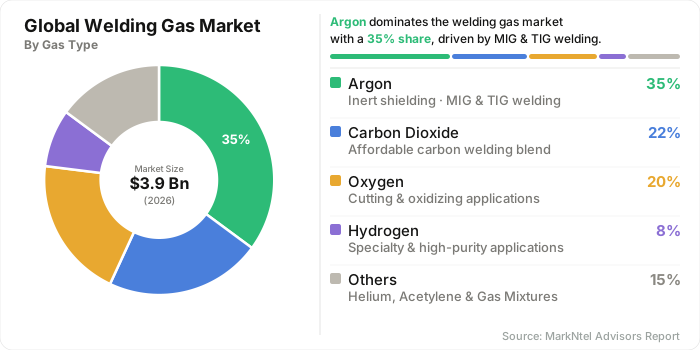
From a demand perspective, the expansion of global manufacturing activities continues to strengthen argon consumption. According to the United Nations Industrial Development Organization, global manufacturing output recorded a growth of approximately 0.4% in Q3 2024, indicating steady industrial activity that directly drives welding demand. Additionally, argon’s dominance is supported by its high natural availability, accounting for nearly 0.93% of the Earth’s atmosphere, and its cost-effective production through air separation units (ASUs). This ensures a scalable and reliable supply, enabling industrial gas manufacturers to maintain consistent global distribution. As a result, argon continues to hold the largest share in the welding gas industry, supported by both technical superiority and supply-side advantages. Based on gas types, the scope has been segmented into
- Argon
- Carbon Dioxide
- Oxygen
- Hydrogen
- Others (Helium, Acetylene, Gas Mixtures)
Metal Manufacturing & Fabrication Leads as the Dominant End-Use Vertical
The metal manufacturing and fabrication segment accounts for approximately 39% share, making it the largest revenue contributor among end-use industries. This dominance is primarily driven by the fact that welding is a core and continuous process in the fabrication of structural components, industrial machinery, and pipeline systems. Fabrication facilities extensively utilize shielding gases such as argon and carbon dioxide to ensure arc stability, prevent oxidation, and maintain weld integrity, particularly in large-scale steel and metal assembly operations across infrastructure, energy, and heavy engineering sectors.
From a demand standpoint, the scale of global metal production significantly reinforces welding gas consumption. According to the World Steel Association, global crude steel production reached approximately 1.89 billion tonnes in 2023, reflecting the extensive volume of metal fabrication activities worldwide. In addition, large-scale pipeline infrastructure projects continue to drive sustained welding demand. For instance, in 2025, DS1 completed welding and inspection work for a green hydrogen pipeline project at the Port of Klaipėda, while mainline welding spanning approximately 1,426 km of the East African Crude Oil Pipeline was also completed. These developments highlight the high intensity and continuity of welding operations in energy infrastructure, thereby reinforcing the dominant position of metal manufacturing and fabrication in the welding gas market. The key end users mapped in the study involve:
- Automotive
- Construction & Infrastructure
- Metal Manufacturing & Fabrication
- Shipbuilding
- Energy (Oil & Gas, Power)
- Others
Report Scope
| Category | Segments |
|---|---|
| By Gas Type | (Argon, Carbon Dioxide, Oxygen, Hydrogen, Others (Helium, Acetylene, Gas Mixtures)), |
| By Application | (Gas Metal Arc Welding (GMAW / MIG), Gas Tungsten Arc Welding (GTAW / TIG), Shielded Metal Arc Welding (SMAW), Flux Cored Arc Welding (FCAW), Others), |
| By End-Use Industry | (Automotive, Construction & Infrastructure, Metal Manufacturing & Fabrication, Shipbuilding, Energy (Oil & Gas, Power), Others), and others |
Welding Gas Market Geographical Outlook
The Asia-Pacific region accounts for approximately 43.42% of global welding gas demand, supported by its position as the world’s largest manufacturing and industrial production hub. Major economies, including China, India, Japan, and South Korea, host well-established automotive, machinery, shipbuilding, and metal fabrication verticals that rely extensively on welding processes. These applications require consistent use of shielding gases such as argon and carbon dioxide to ensure weld quality, arc stability, and operational efficiency in large-scale production environments.
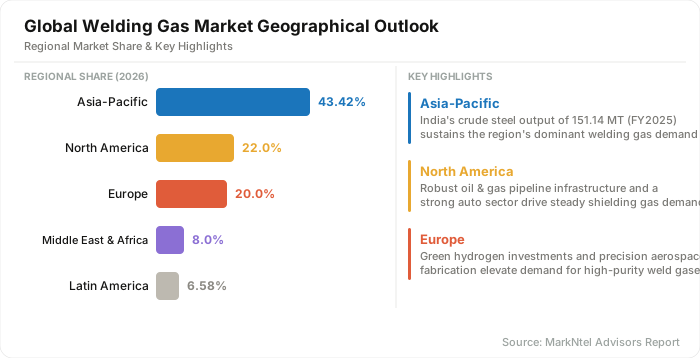
This leadership in the welding gas market is further reinforced by the region’s strong metal production base and downstream fabrication intensity. According to the India Brand Equity Foundation, India ranks as the world’s second-largest crude steel producer, with output reaching approximately 151.14 million tonnes in FY2025. Such large-scale steel production directly translates into sustained welding activity across construction, heavy engineering, and industrial manufacturing applications.
In addition, ongoing investments in infrastructure and energy projects continue to amplify welding demand across the region. Governments are actively expanding transportation networks, industrial facilities, and pipeline infrastructure to support rapid urbanization and economic growth. For instance, in 2025, China Petroleum Pipeline Engineering Co., Ltd. introduced its “Four Full-Capacity” automated pipeline welding and inspection system, deployed across major projects including the East African Crude Oil Pipeline and China’s West-to-East Gas Pipeline. These large-scale developments involve extensive steel fabrication and pipeline construction, significantly increasing welding intensity and reinforcing Asia-Pacific’s leading position in the global welding gas landscape.
Welding Gas Market Competitive Analysis
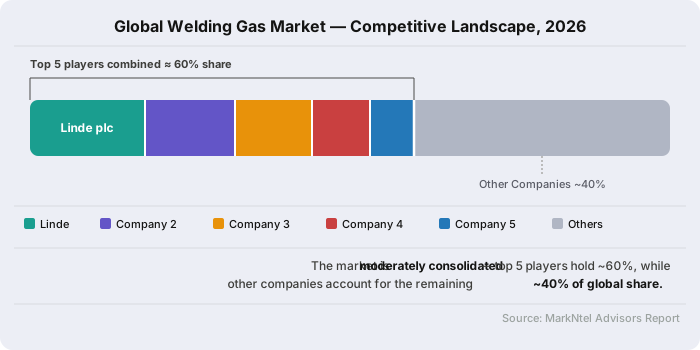
The global industry for welding gases is moderately consolidated, with over 30 companies operating globally. The top five players, Linde plc, Air Liquide, Air Products and Chemicals, Inc., Messer Group GmbH, and Nippon Sanso Holdings Corporation, collectively account for nearly 60% of the total share. Linde leads globally, while Air Liquide dominates Europe, and Air Products has a strong presence in North America and the Asia-Pacific.
Major Companies Producing Welding Gases
-
Linde plc
-
Air Liquide
-
Air Products and Chemicals, Inc.
-
Messer Group GmbH
-
Nippon Sanso Holdings Corporation
-
Taiyo Nippon Sanso Corporation
-
Air Water Inc.
-
SOL Group
-
Matheson Tri-Gas, Inc.
-
Gulf Cryo
-
INOX Air Products
-
Praxair
-
Airgas
-
SIAD Group
-
Westfalen AG
Strategic Industry Activities by Key Players
-
CRC Evans, March 2025: Secured a contract for the Master Gas III Pipeline Phase 3 project in Saudi Arabia, covering welding and construction of a 56-inch, 150-km natural gas pipeline. The project highlights expanding gas infrastructure development, where extensive pipeline welding activities directly drive demand for welding gases used in energy sector fabrication and construction.
-
McDermott, June 2025: Opened a new welding and technology center in Dubai, expanding its presence in the Middle East. The facility supports advanced welding solutions and technology development for energy and infrastructure projects, increasing demand for welding gases used in large-scale fabrication and construction activities across the region.
-
5C-Tech, January 2026: Secured a mainline welding subcontract for a 40-km section of the Wardenburg–Drohne hydrogen pipeline project in Germany and completed welding work on the 60-km Khor Mor–Chemchemal pipeline in Iraq. These developments highlight growing pipeline infrastructure and associated welding operations, driving demand for welding gases in energy sector applications. These developments are projected to drive additional revenue growth for the welding gas industry.
-
B&J Welding Supply, February 2026: Backed by Cordatus Capital, it acquired GM Welding Supply, an industrial gas and welding supplies distributor based in Texas. The acquisition strengthens B&J’s regional distribution network and supports the expansion of welding gas supply across Texas and neighboring sectors, meeting rising demand from manufacturing and fabrication industries.
-
CM2 Supply, April 2025: It was launched following the merger of Central McGowan and Minneapolis Oxygen, creating a new distributor of industrial and welding gases in the U.S. Midwest. The company also acquired M&H Gas & Midwest Hydro Testing earlier in 2025, strengthening its supply and distribution of welding gases across industrial and manufacturing sectors.
-
Messer Group, December 2025: Announced an investment of over USD 70 million to build a new air separation unit in Arkansas, USA. The facility will produce industrial gases such as oxygen, nitrogen, and argon, supporting growing demand for welding gases used in metal fabrication and manufacturing processes.
-
SIAD Group & SOL Group, September 2025: Inaugurated an approximately USD 55 million air separation plant in Zagreb, Croatia, through their joint venture OXY Technical Gases. The facility produces liquid oxygen, nitrogen, and argon, strengthening the supply of welding gases used in industrial fabrication and infrastructure development across the European region.
Frequently Asked Questions
- Market Segmentation
- Introduction
- Product Definition
- Research Process
- Assumptions
- Executive Summary
- Global Welding Gas Market Policies, Regulations, and Product Standards
- Global Welding Gas Market Trends & Developments
- Global Welding Gas Market Dynamics
- Growth Factors
- Challenges
- Global Welding Gas Market Hotspot & Opportunities
- Global Welding Gas Market Outlook, 2022-2032F
- Market Size & Outlook
- By Revenues (USD Million)
- Market Share & Analysis
- By Gas Type- Market Size & Forecast 2022-2032, USD Million
- Argon
- Carbon Dioxide
- Oxygen
- Hydrogen
- Others (Helium, Acetylene, Gas Mixtures)
- By Application- Market Size & Forecast 2022-2032, USD Million
- Gas Metal Arc Welding (GMAW / MIG)
- Gas Tungsten Arc Welding (GTAW / TIG)
- Shielded Metal Arc Welding (SMAW)
- Flux Cored Arc Welding (FCAW)
- Others
- By End-Use Industry- Market Size & Forecast 2022-2032, USD Million
- Automotive
- Construction & Infrastructure
- Metal Manufacturing & Fabrication
- Shipbuilding
- Energy (Oil & Gas, Power)
- Others
- By Region
- North America
- South America
- Europe
- The Middle East & Africa
- Asia-Pacific
- By Company
- Competition Characteristics
- Market Share & Analysis
- By Gas Type- Market Size & Forecast 2022-2032, USD Million
- Market Size & Outlook
- North America Welding Gas Market Outlook, 2022-2032F
- Market Size & Outlook
- By Revenues (USD Million)
- Market Share & Analysis
- By Gas Type- Market Size & Forecast 2022-2032, USD Million
- By Application- Market Size & Forecast 2022-2032, USD Million
- By End-Use Industry- Market Size & Forecast 2022-2032, USD Million
- By Country
- The US
- Canada
- Mexico
- Rest of North America
- The US Welding Gas Market Outlook, 2022-2032F
- Market Size & Outlook
- By Revenues (USD Million)
- Market Share & Analysis
- By Gas Type- Market Size & Forecast 2022-2032, USD Million
- By Application- Market Size & Forecast 2022-2032, USD Million
- By End-Use Industry- Market Size & Forecast 2022-2032, USD Million
- Market Size & Outlook
- Canada Welding Gas Market Outlook, 2022-2032F
- Market Size & Outlook
- By Revenues (USD Million)
- Market Share & Analysis
- By Gas Type- Market Size & Forecast 2022-2032, USD Million
- By Application- Market Size & Forecast 2022-2032, USD Million
- By End-Use Industry- Market Size & Forecast 2022-2032, USD Million
- Market Size & Outlook
- Mexico Welding Gas Market Outlook, 2022-2032F
- Market Size & Outlook
- By Revenues (USD Million)
- Market Share & Analysis
- By Gas Type- Market Size & Forecast 2022-2032, USD Million
- By Application- Market Size & Forecast 2022-2032, USD Million
- By End-Use Industry- Market Size & Forecast 2022-2032, USD Million
- Market Size & Outlook
- Market Size & Outlook
- South America Welding Gas Market Outlook, 2022-2032F
- Market Size & Outlook
- By Revenues (USD Million)
- Market Share & Analysis
- By Gas Type- Market Size & Forecast 2022-2032, USD Million
- By Application- Market Size & Forecast 2022-2032, USD Million
- By End-Use Industry- Market Size & Forecast 2022-2032, USD Million
- By Country
- Brazil
- Argentina
- Rest of South America
- Brazil Welding Gas Market Outlook, 2022-2032F
- Market Size & Outlook
- By Revenues (USD Million)
- Market Share & Analysis
- By Gas Type- Market Size & Forecast 2022-2032, USD Million
- By Application- Market Size & Forecast 2022-2032, USD Million
- By End-Use Industry- Market Size & Forecast 2022-2032, USD Million
- Market Size & Outlook
- Argentina Welding Gas Market Outlook, 2022-2032F
- Market Size & Outlook
- By Revenues (USD Million)
- Market Share & Analysis
- By Gas Type- Market Size & Forecast 2022-2032, USD Million
- By Application- Market Size & Forecast 2022-2032, USD Million
- By End-Use Industry- Market Size & Forecast 2022-2032, USD Million
- Market Size & Outlook
- Market Size & Outlook
- Europe Welding Gas Market Outlook, 2022-2032F
- Market Size & Outlook
- By Revenues (USD Million)
- Market Share & Analysis
- By Gas Type- Market Size & Forecast 2022-2032, USD Million
- By Application- Market Size & Forecast 2022-2032, USD Million
- By End-Use Industry- Market Size & Forecast 2022-2032, USD Million
- By Country
- The UK
- Germany
- France
- Italy
- Switzerland
- BENELUX
- Rest of Europe
- The UK Welding Gas Market Outlook, 2022-2032F
- Market Size & Outlook
- By Revenues (USD Million)
- Market Share & Analysis
- By Gas Type- Market Size & Forecast 2022-2032, USD Million
- By Application- Market Size & Forecast 2022-2032, USD Million
- By End-Use Industry- Market Size & Forecast 2022-2032, USD Million
- Market Size & Outlook
- Germany Welding Gas Market Outlook, 2022-2032F
- Market Size & Outlook
- By Revenues (USD Million)
- Market Share & Analysis
- By Gas Type- Market Size & Forecast 2022-2032, USD Million
- By Application- Market Size & Forecast 2022-2032, USD Million
- By End-Use Industry- Market Size & Forecast 2022-2032, USD Million
- Market Size & Outlook
- France Welding Gas Market Outlook, 2022-2032F
- Market Size & Outlook
- By Revenues (USD Million)
- Market Share & Analysis
- By Gas Type- Market Size & Forecast 2022-2032, USD Million
- By Application- Market Size & Forecast 2022-2032, USD Million
- By End-Use Industry- Market Size & Forecast 2022-2032, USD Million
- Market Size & Outlook
- Italy Welding Gas Market Outlook, 2022-2032F
- Market Size & Outlook
- By Revenues (USD Million)
- Market Share & Analysis
- By Gas Type- Market Size & Forecast 2022-2032, USD Million
- By Application- Market Size & Forecast 2022-2032, USD Million
- By End-Use Industry- Market Size & Forecast 2022-2032, USD Million
- Market Size & Outlook
- Switzerland Welding Gas Market Outlook, 2022-2032F
- Market Size & Outlook
- By Revenues (USD Million)
- Market Share & Analysis
- By Gas Type- Market Size & Forecast 2022-2032, USD Million
- By Application- Market Size & Forecast 2022-2032, USD Million
- By End-Use Industry- Market Size & Forecast 2022-2032, USD Million
- Market Size & Outlook
- BENELUX Welding Gas Market Outlook, 2022-2032F
- Market Size & Outlook
- By Revenues (USD Million)
- Market Share & Analysis
- By Gas Type- Market Size & Forecast 2022-2032, USD Million
- By Application- Market Size & Forecast 2022-2032, USD Million
- By End-Use Industry- Market Size & Forecast 2022-2032, USD Million
- Market Size & Outlook
- Market Size & Outlook
- The Middle East & Africa Welding Gas Market Outlook, 2022-2032F
- Market Size & Outlook
- By Revenues (USD Million)
- Market Share & Analysis
- By Gas Type- Market Size & Forecast 2022-2032, USD Million
- By Application- Market Size & Forecast 2022-2032, USD Million
- By End-Use Industry- Market Size & Forecast 2022-2032, USD Million
- By Country
- Saudi Arabia
- UAE
- Qatar
- Turkey
- Israel
- South Africa
- Egypt
- Rest of the Middle East & Africa
- Saudi Arabia Welding Gas Market Outlook, 2022-2032F
- Market Size & Outlook
- By Revenues (USD Million)
- Market Share & Analysis
- By Gas Type- Market Size & Forecast 2022-2032, USD Million
- By Application- Market Size & Forecast 2022-2032, USD Million
- By End-Use Industry- Market Size & Forecast 2022-2032, USD Million
- Market Size & Outlook
- UAE Welding Gas Market Outlook, 2022-2032F
- Market Size & Outlook
- By Revenues (USD Million)
- Market Share & Analysis
- By Gas Type- Market Size & Forecast 2022-2032, USD Million
- By Application- Market Size & Forecast 2022-2032, USD Million
- By End-Use Industry- Market Size & Forecast 2022-2032, USD Million
- Market Size & Outlook
- Qatar Welding Gas Market Outlook, 2022-2032F
- Market Size & Outlook
- By Revenues (USD Million)
- Market Share & Analysis
- By Gas Type- Market Size & Forecast 2022-2032, USD Million
- By Application- Market Size & Forecast 2022-2032, USD Million
- By End-Use Industry- Market Size & Forecast 2022-2032, USD Million
- Market Size & Outlook
- Turkey Welding Gas Market Outlook, 2022-2032F
- Market Size & Outlook
- By Revenues (USD Million)
- Market Share & Analysis
- By Gas Type- Market Size & Forecast 2022-2032, USD Million
- By Application- Market Size & Forecast 2022-2032, USD Million
- By End-Use Industry- Market Size & Forecast 2022-2032, USD Million
- Market Size & Outlook
- Israel Welding Gas Market Outlook, 2022-2032F
- Market Size & Outlook
- By Revenues (USD Million)
- Market Share & Analysis
- By Gas Type- Market Size & Forecast 2022-2032, USD Million
- By Application- Market Size & Forecast 2022-2032, USD Million
- By End-Use Industry- Market Size & Forecast 2022-2032, USD Million
- Market Size & Outlook
- South Africa Welding Gas Market Outlook, 2022-2032F
- Market Size & Outlook
- By Revenues (USD Million)
- Market Share & Analysis
- By Gas Type- Market Size & Forecast 2022-2032, USD Million
- By Application- Market Size & Forecast 2022-2032, USD Million
- By End-Use Industry- Market Size & Forecast 2022-2032, USD Million
- Market Size & Outlook
- Egypt Welding Gas Market Outlook, 2022-2032F
- Market Size & Outlook
- By Revenues (USD Million)
- Market Share & Analysis
- By Gas Type- Market Size & Forecast 2022-2032, USD Million
- By Application- Market Size & Forecast 2022-2032, USD Million
- By End-Use Industry- Market Size & Forecast 2022-2032, USD Million
- Market Size & Outlook
- Market Size & Outlook
- Asia-Pacific Welding Gas Market Outlook, 2022-2032F
- Market Size & Outlook
- By Revenues (USD Million)
- Market Share & Analysis
- By Gas Type- Market Size & Forecast 2022-2032, USD Million
- By Application- Market Size & Forecast 2022-2032, USD Million
- By End-Use Industry- Market Size & Forecast 2022-2032, USD Million
- By Country
- China
- Japan
- India
- South Korea
- Indonesia
- Australia
- Singapore
- Vietnam
- Rest of Asia-Pacific
- China Welding Gas Market Outlook, 2022-2032F
- Market Size & Outlook
- By Revenues (USD Million)
- Market Share & Analysis
- By Gas Type- Market Size & Forecast 2022-2032, USD Million
- By Application- Market Size & Forecast 2022-2032, USD Million
- By End-Use Industry- Market Size & Forecast 2022-2032, USD Million
- Market Size & Outlook
- Japan Welding Gas Market Outlook, 2022-2032F
- Market Size & Outlook
- By Revenues (USD Million)
- Market Share & Analysis
- By Gas Type- Market Size & Forecast 2022-2032, USD Million
- By Application- Market Size & Forecast 2022-2032, USD Million
- By End-Use Industry- Market Size & Forecast 2022-2032, USD Million
- Market Size & Outlook
- India Welding Gas Market Outlook, 2022-2032F
- Market Size & Outlook
- By Revenues (USD Million)
- Market Share & Analysis
- By Gas Type- Market Size & Forecast 2022-2032, USD Million
- By Application- Market Size & Forecast 2022-2032, USD Million
- By End-Use Industry- Market Size & Forecast 2022-2032, USD Million
- Market Size & Outlook
- South Korea Welding Gas Market Outlook, 2022-2032F
- Market Size & Outlook
- By Revenues (USD Million)
- Market Share & Analysis
- By Gas Type- Market Size & Forecast 2022-2032, USD Million
- By Application- Market Size & Forecast 2022-2032, USD Million
- By End-Use Industry- Market Size & Forecast 2022-2032, USD Million
- Market Size & Outlook
- Indonesia Welding Gas Market Outlook, 2022-2032F
- Market Size & Outlook
- By Revenues (USD Million)
- Market Share & Analysis
- By Gas Type- Market Size & Forecast 2022-2032, USD Million
- By Application- Market Size & Forecast 2022-2032, USD Million
- By End-Use Industry- Market Size & Forecast 2022-2032, USD Million
- Market Size & Outlook
- Australia Welding Gas Market Outlook, 2022-2032F
- Market Size & Outlook
- By Revenues (USD Million)
- Market Share & Analysis
- By Gas Type- Market Size & Forecast 2022-2032, USD Million
- By Application- Market Size & Forecast 2022-2032, USD Million
- By End-Use Industry- Market Size & Forecast 2022-2032, USD Million
- Market Size & Outlook
- Singapore Welding Gas Market Outlook, 2022-2032F
- Market Size & Outlook
- By Revenues (USD Million)
- Market Share & Analysis
- By Gas Type- Market Size & Forecast 2022-2032, USD Million
- By Application- Market Size & Forecast 2022-2032, USD Million
- By End-Use Industry- Market Size & Forecast 2022-2032, USD Million
- Market Size & Outlook
- Vietnam Welding Gas Market Outlook, 2022-2032F
- Market Size & Outlook
- By Revenues (USD Million)
- Market Share & Analysis
- By Gas Type- Market Size & Forecast 2022-2032, USD Million
- By Application- Market Size & Forecast 2022-2032, USD Million
- By End-Use Industry- Market Size & Forecast 2022-2032, USD Million
- Market Size & Outlook
- Market Size & Outlook
- Global Welding Gas Market Key Strategic Imperatives for Success & Growth
- Competitive Outlook
- Company Profiles
- Linde plc
- Business Description
- Product Portfolio
- Collaborations & Alliances
- Recent Developments
- Financial Details
- Others
- Air Liquide
- Business Description
- Product Portfolio
- Collaborations & Alliances
- Recent Developments
- Financial Details
- Others
- Air Products and Chemicals, Inc.
- Business Description
- Product Portfolio
- Collaborations & Alliances
- Recent Developments
- Financial Details
- Others
- Messer Group GmbH
- Business Description
- Product Portfolio
- Collaborations & Alliances
- Recent Developments
- Financial Details
- Others
- Nippon Sanso Holdings Corporation
- Business Description
- Product Portfolio
- Collaborations & Alliances
- Recent Developments
- Financial Details
- Others
- Taiyo Nippon Sanso Corporation
- Business Description
- Product Portfolio
- Collaborations & Alliances
- Recent Developments
- Financial Details
- Others
- Air Water Inc.
- Business Description
- Product Portfolio
- Collaborations & Alliances
- Recent Developments
- Financial Details
- Others
- SOL Group
- Business Description
- Product Portfolio
- Collaborations & Alliances
- Recent Developments
- Financial Details
- Others
- Matheson Tri-Gas, Inc.
- Business Description
- Product Portfolio
- Collaborations & Alliances
- Recent Developments
- Financial Details
- Others
- Gulf Cryo
- Business Description
- Product Portfolio
- Collaborations & Alliances
- Recent Developments
- Financial Details
- Others
- INOX Air Products
- Business Description
- Product Portfolio
- Collaborations & Alliances
- Recent Developments
- Financial Details
- Others
- Praxair
- Business Description
- Product Portfolio
- Collaborations & Alliances
- Recent Developments
- Financial Details
- Others
- Airgas
- Business Description
- Product Portfolio
- Collaborations & Alliances
- Recent Developments
- Financial Details
- Others
- SIAD Group
- Business Description
- Product Portfolio
- Collaborations & Alliances
- Recent Developments
- Financial Details
- Others
- Westfalen AG
- Business Description
- Product Portfolio
- Collaborations & Alliances
- Recent Developments
- Financial Details
- Others
- Others
- Business Description
- Product Portfolio
- Collaborations & Alliances
- Recent Developments
- Financial Details
- Others
- Linde plc
- Company Profiles
- Disclaimer
MarkNtel Advisors follows a robust and iterative research methodology designed to ensure maximum accuracy and minimize deviation in market estimates and forecasts. Our approach combines both bottom-up and top-down techniques to effectively segment and quantify various aspects of the market. A consistent feature across all our research reports is data triangulation, which examines the market from three distinct perspectives to validate findings. Key components of our research process include:
1. Scope & Research Design At the outset, MarkNtel Advisors define the research objectives and formulate pertinent questions. This phase involves determining the type of research—qualitative or quantitative—and designing a methodology that outlines data collection methods, target demographics, and analytical tools. They also establish timelines and budgets to ensure the research aligns with client goals.
2. Sample Selection and Data Collection In this stage, the firm identifies the target audience and determines the appropriate sample size to ensure representativeness. They employ various sampling methods, such as random or stratified sampling, based on the research objectives. Data collection is carried out using tools like surveys, interviews, and observations, ensuring the gathered data is reliable and relevant.
3. Data Analysis and Validation Once data is collected, MarkNtel Advisors undertake a rigorous analysis process. This includes cleaning the data to remove inconsistencies, employing statistical software for quantitative analysis, and thematic analysis for qualitative data. Validation steps are taken to ensure the accuracy and reliability of the findings, minimizing biases and errors.

4. Data Forecast and FinalizationThe final phase involves forecasting future market trends based on the analyzed data. MarkNtel Advisors utilize predictive modeling and time series analysis to anticipate market behaviors. The insights are then compiled into comprehensive reports, featuring visual aids like charts and graphs, and include strategic recommendations to inform client decision-making
We offer flexible licensing options to cater to varying organizational needs. Choose the pricing pack that best suits your requirements:
Buy Now Inquire Before Buying
 Request Customization
 Talk to our Consultant







