

The US Guns and Ammunition Market Research Report: Forecast (2026-2032)
By Product Type (Guns, Ammunition), By Lethality (Non-Lethal, Lethal), By Application (Defense, Close Protection Services, Civilians), and others ... Read more
- Aerospace & Defense
- Jun 2026
- Pages 140
- Report Format: PDF, Excel, PPT
The US Guns and Ammunition Market
Projected 6.89% CAGR from 2026 to 2032
Study Period
2026-2032
Market Size (2026)
USD 6.11 Billion
Market Size (2032)
USD 9.12 Billion
Base Year
2025
Projected CAGR
6.89%
Leading Segments
By Application: Defense
The U.S. Guns and Ammunition Market Key Takeaways
- The U.S. Guns and Ammunition Market was valued at USD 5.98 billion in 2025 and is projected to grow from USD 6.11 billion in 2026 to USD 9.12 billion by 2032.
- The market is projected to witness steady growth at a CAGR of 6.89% during 2026-2032.
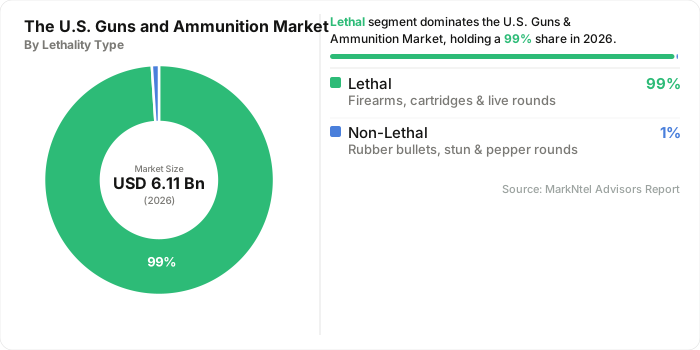
- By lethality, the Lethal segment dominates the market with a 99% share in 2026.
- By application, the Defense segment leads the market with a 68% share in 2026.
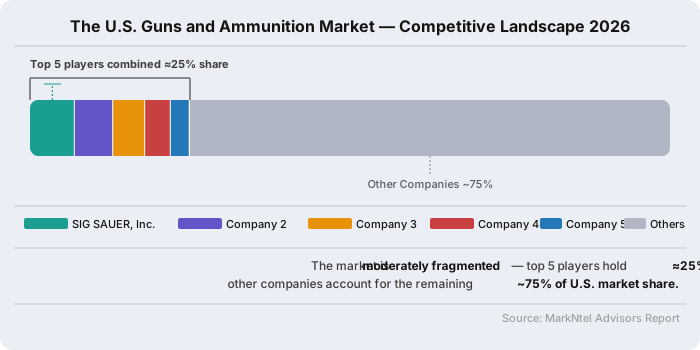
- The market remains moderately fragmented, with the top five players collectively accounting for approximately 25% market share.
The U.S. Guns and Ammunition Market Size and Outlook
The U.S. Guns and Ammunition Market was valued at USD 5.98 billion in 2025 and is projected to grow from USD 6.11 billion in 2026 to USD 9.12 billion by 2032, registering a CAGR of 6.89% during the forecast period of 2026–2032.
The market represents a critical component of the U.S. sporting, recreational, personal protection, and defense ecosystem. Firearms and the shooting sports industry in the United States continue to serve a broad range of applications, including self-defense, hunting, competitive shooting, law enforcement activities, and military operations. Firearm ownership trends in the USA are supported by the country's well-established shooting culture, extensive hunting participation, expanding recreational shooting activities, and sustained procurement requirements from public safety and defense agencies. As a result, the industry remains an important contributor to domestic manufacturing, distribution, and outdoor recreation activities across the United States.
According to the U.S. Department of State, global arms trade reached USD 318.7 billion in 2024, registering a 29% year-over-year increase, reflecting strong global defense demand and heightened procurement activity across allied nations. This robust growth underscores increasing international reliance on U.S. defense systems and reinforces long-term revenue visibility and expansion opportunities for manufacturers operating within the defense and ammunition supply chain.
According to the National Shooting Sports Foundation, the firearm and ammunition industry generated approximately USD 91.7 billion in total economic impact in 2024. In addition, industry estimates indicate that approximately 17.7 billion rounds of ammunition were sold during 2024, reflecting the scale of ammunition consumption across civilian, law enforcement, and defense applications.
At the same time, the industry is undergoing gradual transformation through investments in advanced manufacturing technologies, automation systems, precision machining capabilities, and modern ammunition production processes. Manufacturers are increasingly focusing on production efficiency, supply chain resilience, and product innovation to address evolving consumer preferences and procurement requirements. Growing emphasis on premium ammunition products, performance-enhancing projectile technologies, and domestic manufacturing capacity expansion is expected to further strengthen the long-term outlook of the U.S. Guns and Ammunition Market.
The U.S. Guns and Ammunition Market Key Indicators
- According to the Federal Bureau of Investigation, the National Instant Criminal Background Check System processed 28.1 million firearm-related civilian gun in 2024, while adjusted retail firearm transaction estimates remained above 15 million units, highlighting continued consumer demand for firearms and associated ammunition products across the U.S. market.
- According to the Bureau of Alcohol, Tobacco, Firearms, and Explosives (ATF), U.S. manufacturers produced approximately 9.47 million firearms in 2024, including pistols, revolvers, rifles, and shotguns. The sustained level of domestic production reflects strong supply-side activity and continued replenishment of civilian, law-enforcement, and commercial distribution channels.
- As per the U.S. Fish and Wildlife Service (USFWS), approximately 60 million Americans participate in target shooting activities, while the country is home to more than 14 million hunters. The large participation base continues to generate recurring demand for firearms, ammunition, shooting accessories, and hunting-related equipment.
- According to the Centers for Disease Control and Prevention (CDC), the United States recorded approximately 44,447 firearm-related deaths in 2024, equivalent to 13.1 deaths per 100,000 population. Ongoing public safety concerns continue to support demand for personal protection firearms, concealed carry products, and self-defense ammunition.
- According to WITS, U.S. exports of munitions of war and other ammunition totalled approximately USD 3.99 billion in 2024, maintaining the country's position as the world's largest ammunition export market. Major export markets included Israel, the UAE, Saudi Arabia, Japan, and Germany, reflecting sustained international demand for U.S.-manufactured ammunition and defense products.
The U.S. Guns and Ammunition Market Scope
| Category | Segments |
|---|---|
| By Product Type | Guns, Ammunition |
| By Lethality | Non-Lethal, Lethal |
| By Application | Defense, Close Protection Services, Civilians |
The U.S. Guns and Ammunition Market Growth Driver
Escalating Geopolitical Tensions and Armed Conflicts
Rising geopolitical tensions and the increasing frequency of armed conflicts are strengthening demand for firearms and ammunition across the defense and security sectors. According to the Stockholm International Peace Research Institute, global military expenditure reached a record USD 2.72 trillion in 2024, increasing 9.4% year-over-year, marking the fastest annual growth since the end of the Cold War. The sharp rise reflects growing investments in military readiness, ammunition stockpiling, force modernization, and defense preparedness amid an increasingly uncertain global security environment.
The escalation of conflicts is further accelerating ammunition procurement activities worldwide. According to SIPRI Yearbook 2025, small-caliber ammunition growth increased from 188,000 to approximately 239,000 in 2024, the highest level recorded during 2018–2024. Expanding defense budgets and stockpile replenishment initiatives are increasing demand for small-, medium-, and large-caliber ammunition, creating favourable growth opportunities for U.S. manufacturers throughout the forecast period.
Recent Trends
Growing Adoption of Biometric Firearm Systems in the USA is Transforming the Industry
The firearms industry in the USA is witnessing a gradual shift toward smart firearm technologies as manufacturers focus on enhancing user safety, access control, and responsible firearm ownership. Smart guns utilize biometric authentication, fingerprint recognition, RFID-enabled systems, and digital access technologies to ensure that firearms can only be operated by authorized users. This trend is gaining momentum as manufacturers seek to address concerns related to accidental discharge, unauthorized access, and firearm theft while differentiating their product offerings in an increasingly competitive market.
According to Biofire Technologies, the company expanded commercial deliveries of its biometric-enabled Biofire Smart Gun throughout 2024 and 2025, featuring fingerprint and facial recognition technologies that unlock the firearm only for authorized users. The emergence of such products reflects growing industry investment in advanced firearm technologies designed to improve safety without compromising usability.
As consumers, law enforcement agencies, and policymakers place greater emphasis on secure firearm ownership and access management, the integration of biometric authentication, digital security systems, and smart firearm technologies is expected to become an increasingly important trend shaping the future development of the U.S. guns and ammunition market.
The U.S. Guns and Ammunition Market Opportunities and Challenges
Production Capacity Constraints During Demand Surges Are Driving Long-Term Facility Expansion
The U.S. Guns and Ammunition Market continues to face challenges associated with production capacity constraints amid rising ammunition demand from military modernization programs, stockpile replenishment initiatives, and growing geopolitical uncertainties. Increasing procurement requirements have placed pressure on existing manufacturing facilities, particularly for critical ammunition categories, resulting in the need for higher output, improved operational efficiency, and enhanced supply chain resilience. As defense agencies seek to strengthen preparedness and maintain inventory readiness, manufacturers are facing growing pressure to expand production capabilities and reduce potential supply bottlenecks.
At the same time, this challenge is creating significant opportunities for capacity expansion and manufacturing modernization across the ammunition industry. According to the U.S. Department of Defense, production of 155mm artillery ammunition increased to approximately 28,000 rounds per month in 2024, with plans to exceed 100,000 rounds per month by 2026 through investments in new production lines and facility upgrades. These investments are expected to strengthen domestic production capabilities, enhance supply security, and create long-term growth opportunities for manufacturers throughout the forecast period.
Segmentation Analysis
Lethal Weapons Dominate Market Demand Through Extensive Civilian, Law Enforcement, and Military Usage
The Lethal segment dominated the U.S. guns and ammunition market in 2026, accounting for 99% market share. The segment's leadership is primarily driven by the widespread use of firearms and live ammunition across personal protection, hunting, sport shooting, law enforcement, and military applications. Demand remains structurally strong due to the extensive installed base of small arms ammunition and the recurring requirement for ammunition purchases associated with training, recreational activities, and operational readiness.
According to the National Shooting Sports Foundation, approximately 3.9 million Americans became new gun owners in 2024, highlighting the continued expansion of the firearm ownership base across the United States. In addition, the expanding consumer base, combined with ongoing procurement requirements from public safety and defense agencies, continues to reinforce the dominant position of lethal firearms and ammunition within the U.S. market. Based on lethality type, the industry is segmented into:
- Non-Lethal
- Lethal
Defense Dominates Market Demand Through Sustained Military Procurement and Ammunition Stockpile Expansion
Defense segments dominated the U.S. Guns and Ammunition Market in 2026, accounting for a 68% market share. The segment’s leadership is being reinforced by sustained military modernization programs in the USA and the continued expansion of domestic ammunition capacity. In September 2024, the U.S. Army awarded contracts covering 500,000 M119A2 propellant charges, 260,000 M231 Modular Artillery Charge System units, 2.2 million M232A2 MACS, and 16,900 M1128 high-explosive projectiles, underscoring the scale and repeat nature of defense ammunition demand.
At the same time, the U.S. Army opened a new Universal Artillery Projectile Lines facility in Mesquite, Texas, in 2024, a project valued at more than USD 500 million and designed to support production of up to 100,000 155mm shells per month. This combination of large procurement awards and industrial-base expansion continues to anchor defense demand at the center of the U.S. guns and ammunition market and supports the segment’s dominant revenue position through the forecast period. By application type, the industry scope is segmented into:
- Defense
- Security Services
- Civilians
The U.S. Guns and Ammunition Industry Competitive Analysis
The U.S. Guns and Ammunition Market is moderately fragmented, with the top five players collectively accounting for approximately 25% of the market share, indicating a competitive landscape among firearms manufacturers in the United States. Key participants include SIG SAUER, Inc., Smith & Wesson Brands, Inc., Sturm, Ruger & Company, Inc., Taurus International Manufacturing, Inc., Springfield Armory, Inc., AMMO, Inc., Federal Cartridge Company, Hornady Manufacturing Company, FN Herstal S.A., and Black Hills Ammunition, Inc.
Leading Guns and Ammunition Manufacturers in the USA
- SIG SAUER, Inc.
- Smith & Wesson Brands, Inc.
- Sturm, Ruger & Company, Inc.
- Taurielus International Manufacturing, Inc.
- Springfd Armory, Inc.
- AMMO, Inc.
- Federal Cartridge Company
- Hornady Manufacturing Company
- FN Herstal S.A.
- Black Hills Ammunition, Inc.
The U.S. Guns and Ammunition Industry News and Recent Developments
January 2025: Winchester Acquires AMMO, Inc.’s Ammunition Manufacturing Assets
Winchester Ammunition, a business of Olin Corporation, entered into an agreement to acquire the small-caliber ammunition manufacturing assets of AMMO, Inc. for USD 75 million. The transaction includes a 185,000-square-foot manufacturing facility in Wisconsin, brass shellcase production capabilities, and associated ammunition operations, strengthening Winchester's presence in specialty ammunition categories.
Impact Analysis: The acquisition highlights the ongoing consolidation trend within the U.S. ammunition industry as manufacturers seek to strengthen production capabilities and improve economies of scale. The addition of new manufacturing assets and shellcase production capacity is expected to enhance Winchester's supply chain integration, improve participation in high-margin specialty ammunition segments, and support long-term production expansion amid growing ammunition demand.
June 2024: SIG SAUER Expands Next Generation Squad Weapon (NGSW) Ammunition Programs
SIG SAUER continued expanding production and development activities related to the U.S. Army's NGSW program, including the 6.8×51mm hybrid ammunition platform designed for enhanced range, lethality, and battlefield performance. The company also highlighted growing interest in advanced ammunition technologies from allied military forces seeking to modernize small-arms capabilities.
Impact Analysis: The expansion reflects the defense sector's increasing emphasis on next-generation ammunition technologies capable of delivering improved operational effectiveness. Growing adoption of advanced military calibers is expected to stimulate investments in ammunition innovation, production capacity expansion, and weapons modernization programs, supporting long-term growth opportunities within the U.S. guns and ammunition market.
Frequently Asked Questions
1. Market Segmentation
2. Introduction
2.1. Product Definition
2.2. Research Process
2.3. Assumptions
3. Executive Summary
4. The US Gun Production and Sales 2022-2025
4.1. Annual Gun Production
4.1.1. YoY Production in Million Units
4.1.2. Type of Guns Produced
4.1.2.1. Rifles
4.1.2.2. Pistols
4.1.2.3. Shotguns
4.1.2.4. Others
4.1.3. Top Producers of Guns
4.2. By Total Number of Guns Sold
4.3. State wise Gun Sales
5. The US Guns and Ammunition Export-Import Analysis
6. The US Guns and Ammunition Market Pricing Analysis, 2022-2032F
7. The US Guns and Ammunition Production Trend, 2022-2032F
7.1. The US Guns and Ammunition Trend by Type of Product Type
7.1.1. Guns
7.1.2. Ammunition
7.2. Company Wise Production Plants and Statistics
7.2.1. Installed Production Capacity
7.2.2. Actual Production
7.2.3. Planned Production Target
8. The US Guns and Ammunition Pricing Analysis 2022-2032
8.1. The US Guns and Ammunition Pricing Trend 2022-2032
8.2. The US Guns and Ammunition Pricing Trend by Product Category 2022-2032
8.2.1. Guns
8.2.2. Ammunition
9. The US Guns and Ammunition Market Supply Chain Analysis
10. The US Guns and Ammunition Market Policies, Regulations, and Product Standards
10.1. State wise Gun Regulations
10.2. Impending Regulations
11. The US Guns and Ammunition Market Trends & Developments
12. The US Guns and Ammunition Market Dynamics
12.1. Growth Drivers
12.2. Challenges
13. The US Guns and Ammunition Market Hotspot & Opportunities
14. The US Guns and Ammunition Market Outlook, 2022-2032F
15. Market Size & Outlook, 2022-2032F
15.1. By Revenues (USD Million)
15.2. By Units Sold (Thousand Units)
15.3. Market Share & Outlook
15.3.1. By Product Type- Market Size & Forecast 2022-2032, USD Million & Thousand Units
15.3.1.1. Guns
15.3.1.2. Ammunition
15.3.2. By Lethality- Market Size & Forecast 2022-2032, USD Million & Thousand Units
15.3.2.1. Non-Lethal
15.3.2.2. Lethal
15.3.3. By Application- Market Size & Forecast 2022-2032, USD Million & Thousand Units
15.3.3.1. Defense
15.3.3.1.1. Military Operation
15.3.3.1.2. Law Enforcement
15.3.3.1.3. Security Services
15.3.3.2. Close Protection Services
15.3.3.2.1. Event Security
15.3.3.2.2. Secure Transportation
15.3.3.2.3. Others (Industrial Security, Private Investigation, etc.)
15.3.3.3. Civilians
15.3.3.3.1. Self Defense
15.3.3.3.2. Sport Shooting
15.3.3.3.3. Hunting
15.3.4. By Company
15.3.4.1. Competition Characteristics
15.3.4.2. Revenue Shares & Analysis
16. The US Gun Market Outlook, 2022-2032F
16.1. Market Size & Outlook
16.1.1. By Revenues (USD Million)
16.1.2. By Units Sold (Thousand Units)
16.2. Market Share & Outlook
16.2.1. By Type- Market Size & Forecast 2022-2032, USD Million & Thousand Units
16.2.1.1. Handguns
16.2.1.1.1. Pistols
16.2.1.1.2. Revolvers
16.2.1.2. Long Guns
16.2.1.2.1. Rifles
16.2.1.2.2. Shotguns
16.2.1.2.3. Carbines
16.2.1.2.4. Assault Rifles
16.2.1.2.5. Others (Sniper Rifles, Machine Guns, etc.)
16.2.2. By Lethality- Market Size & Forecast 2022-2032, USD Million & Thousand Units
16.2.3. By Application- Market Size & Forecast 2022-2032, USD Million & Thousand Units
17. The US Ammunition Market Outlook, 2022-2032F
17.1. Market Size & Outlook
17.1.1. By Revenues (USD Million)
17.1.2. By Units Sold (Thousand Units)
17.2. Market Share & Outlook
17.2.1. By Type- Market Size & Forecast 2022-2032, USD Million & Thousand Units
17.2.1.1. Full Metal Jacket Bullets
17.2.1.2. Hollow Point Bullets
17.2.1.3. Jacketed Hollow Point
17.2.1.4. Soft Point Bullets
17.2.1.5. Boat Tail Bullets
17.2.1.6. Ballistic Tip Bullets
17.2.1.7. Others (Wad Cutter Bullets, Steel Core Bullets, etc.)
17.2.1.8. By Caliber
17.2.1.8.1. Small Caliber (below 8.2 mm)
17.2.1.8.2. Medium Caliber (8.2 to 9.9 mm)
17.2.1.8.3. Large Caliber (Above 9.9 mm)
17.2.2. By Lethality- Market Size & Forecast 2022-2032, USD Million & Thousand Units
17.2.3. By Application- Market Size & Forecast 2022-2032, USD Million & Thousand Units
18. The US Guns and Ammunition Market Key Strategic Imperatives for Success & Growth
19. Competitive Outlook
20. Company Profiles
20.1. SIG SAUER, Inc.
20.1.1. Business Description
20.1.2. Production Statistics
20.1.3. Product Portfolio
20.1.4. Strategic Alliances or Partnerships
20.1.5. Recent Developments
20.1.6. Financial Details
20.1.7. Others
20.2. Smith & Wesson Brands, Inc.
20.2.1. Business Description
20.2.2. Production Statistics
20.2.3. Product Portfolio
20.2.4. Strategic Alliances or Partnerships
20.2.5. Recent Developments
20.2.6. Financial Details
20.2.7. Others
20.3. Sturm, Ruger & Co., Inc.
20.3.1. Business Description
20.3.2. Production Statistics
20.3.3. Product Portfolio
20.3.4. Strategic Alliances or Partnerships
20.3.5. Recent Developments
20.3.6. Financial Details
20.3.7. Others
20.4. Taurus International Manufacturing Inc.
20.4.1. Business Description
20.4.2. Production Statistics
20.4.3. Product Portfolio
20.4.4. Strategic Alliances or Partnerships
20.4.5. Recent Developments
20.4.6. Financial Details
20.4.7. Others
20.5. Springfield Armory, Inc.
20.5.1. Business Description
20.5.2. Production Statistics
20.5.3. Product Portfolio
20.5.4. Strategic Alliances or Partnerships
20.5.5. Recent Developments
20.5.6. Financial Details
20.5.7. Others
20.6. AMMO Inc.
20.6.1. Business Description
20.6.2. Production Statistics
20.6.3. Product Portfolio
20.6.4. Strategic Alliances or Partnerships
20.6.5. Recent Developments
20.6.6. Financial Details
20.6.7. Others
20.7. Federal Cartridge Company
20.7.1. Business Description
20.7.2. Production Statistics
20.7.3. Product Portfolio
20.7.4. Strategic Alliances or Partnerships
20.7.5. Recent Developments
20.7.6. Financial Details
20.7.7. Others
20.8. Hornady Manufacturing Company
20.8.1. Business Description
20.8.2. Production Statistics
20.8.3. Product Portfolio
20.8.4. Strategic Alliances or Partnerships
20.8.5. Recent Developments
20.8.6. Financial Details
20.8.7. Others
20.9. FN Herstal S.A.
20.9.1. Business Description
20.9.2. Production Statistics
20.9.3. Product Portfolio
20.9.4. Strategic Alliances or Partnerships
20.9.5. Recent Developments
20.9.6. Financial Details
20.9.7. Others
20.10. Black Hills Ammunition Inc.
20.10.1. Business Description
20.10.2. Production Statistics
20.10.3. Product Portfolio
20.10.4. Strategic Alliances or Partnerships
20.10.5. Recent Developments
20.10.6. Financial Details
20.10.7. Others
20.11. Others
21. Disclaimer
MarkNtel Advisors follows a robust and iterative research methodology designed to ensure maximum accuracy and minimize deviation in market estimates and forecasts. Our approach combines both bottom-up and top-down techniques to effectively segment and quantify various aspects of the market. A consistent feature across all our research reports is data triangulation, which examines the market from three distinct perspectives to validate findings. Key components of our research process include:
1. Scope & Research Design At the outset, MarkNtel Advisors define the research objectives and formulate pertinent questions. This phase involves determining the type of research—qualitative or quantitative—and designing a methodology that outlines data collection methods, target demographics, and analytical tools. They also establish timelines and budgets to ensure the research aligns with client goals.
2. Sample Selection and Data Collection In this stage, the firm identifies the target audience and determines the appropriate sample size to ensure representativeness. They employ various sampling methods, such as random or stratified sampling, based on the research objectives. Data collection is carried out using tools like surveys, interviews, and observations, ensuring the gathered data is reliable and relevant.
3. Data Analysis and Validation Once data is collected, MarkNtel Advisors undertake a rigorous analysis process. This includes cleaning the data to remove inconsistencies, employing statistical software for quantitative analysis, and thematic analysis for qualitative data. Validation steps are taken to ensure the accuracy and reliability of the findings, minimizing biases and errors.

4. Data Forecast and FinalizationThe final phase involves forecasting future market trends based on the analyzed data. MarkNtel Advisors utilize predictive modeling and time series analysis to anticipate market behaviors. The insights are then compiled into comprehensive reports, featuring visual aids like charts and graphs, and include strategic recommendations to inform client decision-making
We offer flexible licensing options to cater to varying organizational needs. Choose the pricing pack that best suits your requirements:
Buy Now Inquire Before Buying
 Request Customization
 Talk to our Consultant







