

Europe Sustainable Aviation Fuel Market Research Report: Forecast (2026-2032)
By Fuel Type (HEFA, Alcohol-to-Jet, Fischer-Tropsch, e-SAF, Others), By Feedstock (Used Cooking Oil, Animal Fats & Waste Oils, Municipal Solid Waste, Lignocellulosic Biomass, Alcoh ... ols, Captured CO₂ & Green Hydrogen, Others (including Algae and Industrial Off-Gases)), By End User (Commercial Aviation, Defense & Military Aviation, General Aviation), and others Read more
- Aerospace & Defense
- Jul 2026
- Pages 245
- Report Format: PDF, Excel, PPT
Europe Sustainable Aviation Fuel Market
Projected 17.92% CAGR from 2026 to 2032
Study Period
2026-2032
Market Size (2026)
USD 846.65 Million
Market Size (2032)
USD 2277 Million
Base Year
2025
Projected CAGR
17.92%
Leading Segments
By Fuel Type: HEFA
Europe Sustainable Aviation Fuel Market Key Takeaways
- The Europe sustainable aviation fuel market size was valued at around USD 718 million in 2025 and is projected to grow from USD 846.65 million in 2026 to USD 2,277 million by 2032, exhibiting a CAGR of 17.92% during 2026-2032.
- Germany is expected to dominate the Europe market, accounting for approximately 22% market share in 2026.
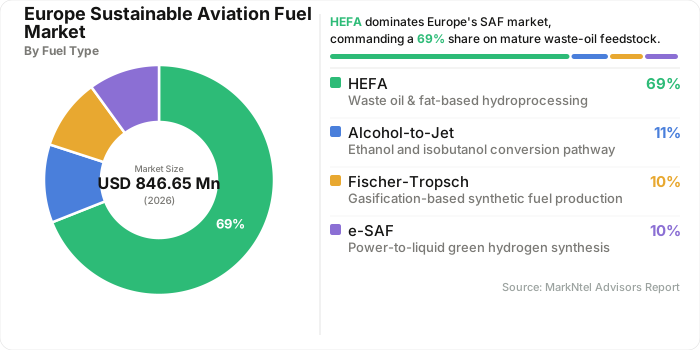
- By fuel type, HEFA is anticipated to hold nearly 69% of the market share in 2026.
- By End User, the commercial aviation segment is projected to account for approximately 88% of the market in 2026.
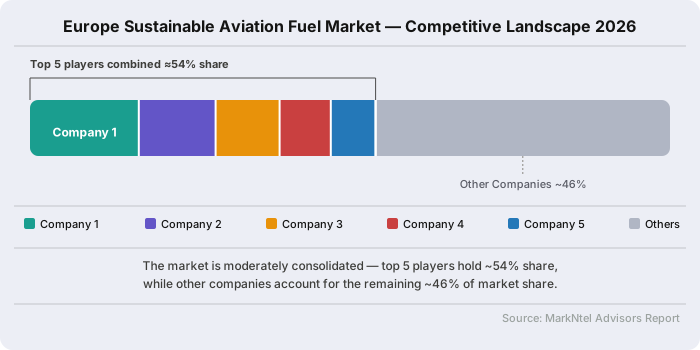
- The industry is moderately consolidated, with top five players collectively account for approximately 54% market share.
Europe Sustainable Aviation Fuel Market Size and Outlook
The sustainable aviation fuel market size in Europe was valued at USD 718 million in 2025 and is projected to grow from USD 846.65 million in 2026 to USD 2,277 million by 2032. Along with this, the market is estimated to grow at a CAGR of around 17.92% during the forecast period, i.e., 2026-32.
The market's long-term growth outlook is attributed to the concrete investment roadmap rather than regulatory targets alone. In November 2025, the European Commission adopted the Sustainable Transport Investment Plan (STIP), confirming that meeting ReFuelEU Aviation and FuelEU Maritime targets will require approximately 20 million tonnes of sustainable alternative fuels by 2035, comprising 13.2 million tonnes of biofuels and 6.8 million tonnes of synthetic e-fuels, demanding an estimated 113.73 billion in production investment.
To close this financing gap, the Commission committed to mobilizing at least USD 3.30 billion by the end of 2027 under STIP, with InvestEU separately contributing at least USD 2.28 billion toward sustainable alternative fuels over the same period. The plan additionally earmarks USD 151.3 million in Horizon Europe research funding to support next-generation fuel technologies, signaling coordinated capital deployment across research, production scale-up, and commercial offtake stages of the SAF value chain, distinct from existing blending obligations alone.
Complementing this, the eSAF Early Movers Coalition, formally presented in December 2025 and joined by Austria, Finland, France, Germany, Luxembourg, the Netherlands, Portugal, and Spain, will pilot a USD 569 million double-sided auction in 2026 to de-risk synthetic aviation fuel offtake agreements. Together, these coordinated financing mechanisms position Europe's SAF market for accelerated production scale-up beyond biofuel pathways, strengthening the long-term commercial viability of e-fuels through 2032.
Europe Sustainable Aviation Fuel Market Key Indicators
- The ReFuelEU Aviation Regulation mandates a minimum 2% Sustainable Aviation Fuel (SAF) blend at EU airports from 2025, increasing to 6% by 2030, creating long-term demand certainty for SAF and encouraging investments in production capacity across Europe.
- The European Hydrogen Bank allocated approximately USD 1.07 billion through its 2025 auction to accelerate renewable hydrogen production, strengthening feedstock availability for synthetic sustainable aviation fuel (e-SAF) and supporting the development of advanced Power-to-Liquid fuel pathways.
- The EU Innovation Fund finances large-scale clean technology projects, including Sustainable Aviation Fuel production, using revenues generated from the EU Emissions Trading System (EU ETS), accelerating technology commercialization, reducing investment risks, and expanding SAF manufacturing capacity.
- The European Commission has established a dedicated synthetic aviation fuel (e-SAF) sub-mandate of 1.2% from 2030, increasing to 35% by 2050, driving long-term investments in renewable hydrogen, carbon capture, and Power-to-Liquid technologies to support the decarbonization of the aviation sector.
- Eurostat collects monthly air transport statistics from airports handling more than 150,000 passenger units annually across EU Member States and participating countries, with rising passenger traffic indicating higher jet fuel consumption and strengthening long-term demand for Sustainable Aviation Fuel.
Europe Sustainable Aviation Fuel Market Scope
| Category | Segments |
|---|---|
| By Fuel Type | HEFA, Alcohol-to-Jet, Fischer-Tropsch, e-SAF, Others |
| By Feedstock | Used Cooking Oil, Animal Fats & Waste Oils, Municipal Solid Waste, Lignocellulosic Biomass, Alcohols, Captured CO₂ & Green Hydrogen, Others (including Algae and Industrial Off-Gases |
| By End User | Commercial Aviation, Defense & Military Aviation, General Aviation |
Europe Sustainable Aviation Fuel Market Growth Drivers
Growing Investments in Commercial SAF Production Facilities Accelerating Market Expansion
Commercial-scale investments in sustainable aviation fuel production facilities are becoming one of the strongest drivers of the Europe Sustainable Aviation Fuel market. As airlines face rising SAF blending obligations and decarbonization commitments, refiners are rapidly expanding domestic production capacity to improve supply security and reduce reliance on imported fuels. Increasing investment in advanced biorefineries, renewable feedstocks, and integrated refining infrastructure is enabling Europe to strengthen its SAF value chain while supporting long-term industrial competitiveness. These developments are expected to improve fuel availability, reduce supply constraints, and encourage wider adoption across the aviation sector.
Supporting this trend, in May 2025, Moeve (formerly Cepsa) announced the Final Investment Decision (FID) for the first phase of the Andalusian Green Hydrogen Valley in Spain. The project will supply renewable hydrogen for large-scale production of renewable fuels, including sustainable aviation fuel, at the company's La Rábida Energy Park. The investment forms part of one of Europe's largest integrated renewable fuel initiatives and is expected to strengthen regional SAF production while supporting the commercialization of low-carbon aviation fuels.
Recent Trends
Digital Compliance and Fuel Traceability Strengthening Europe's SAF Market
Digital traceability and sustainability certification are emerging as key trends in the Europe sustainable aviation fuel (SAF) market as regulatory oversight becomes more stringent. With increasing SAF blending obligations, producers, fuel suppliers, and airlines are adopting standardized reporting systems to verify feedstock origin, greenhouse gas emissions, and fuel sustainability throughout the supply chain. These digital compliance mechanisms improve transparency, facilitate cross-border fuel accounting, and strengthen confidence among airlines and regulators, while ensuring that SAF supplied across EU airports satisfies the sustainability criteria established under the ReFuelEU Aviation framework.
Supporting this trend, the European Commission released additional implementation guidance and Frequently Asked Questions (FAQs) for the ReFuelEU Aviation Regulation in February 2025, providing greater clarity on fuel traceability, sustainability verification, reporting obligations, and the flexibility mechanism for aviation fuel suppliers. The Commission also confirmed that the industry is on track to achieve the 2% SAF blending requirement in 2025 and progress toward the 6% target by 2030, reinforcing the importance of robust digital compliance systems as SAF deployment expands across Europe.
Europe Sustainable Aviation Fuel Market Opportunities and Challenges
Feedstock Trade Exposure Challenges the Europe Sustainable Aviation Fuel Market, Reinforcing Momentum for Extended Producer Protection
The Europe sustainable aviation fuel market faces feedstock-level vulnerability, as SAF production under the dominant HEFA pathway relies on the same used cooking oil and renewable diesel feedstock pool that faced destabilizing Chinese import competition. While the European Commission's Implementing Regulation (EU) 2025/261, published in February 2025, imposed definitive anti-dumping duties of 10% to 35.6% on Chinese biodiesel and renewable diesel, the regulation explicitly exempted sustainable aviation fuel itself, leaving European SAF producers without equivalent trade protection against lower-cost, difficult-to-verify imported fuel entering the aviation supply chain.
This regulatory gap is creating momentum for extending safeguards specifically to SAF production. The Commission's biodiesel duties already protect nearly 6,000 jobs across more than 60 producers in 18 member states within a market valued at USD 28.44 billion annually, demonstrating clear precedent for defending domestic renewable fuel manufacturing. Industry bodies are now pressing the Commission to close the SAF exemption, which would strengthen investment certainty for European HEFA-pathway producers sharing feedstock and refining infrastructure with the protected biodiesel sector.
Segmentation Insights
HEFA Holds Approximately 69% Market Share Owing to Commercial Maturity and Established Refining Infrastructure
HEFA is estimated to account for approximately 69% of the Europe sustainable aviation fuel (SAF) market in 2026, making it the leading production pathway. Its dominance is supported by commercial readiness, compatibility with existing hydroprocessing refinery infrastructure, and the availability of sustainable feedstocks such as used cooking oil and animal fats. Unlike emerging pathways including Alcohol-to-Jet and e-SAF, HEFA has already achieved large-scale commercialization, enabling fuel producers to rapidly meet the increasing SAF blending obligations under the ReFuelEU Aviation Regulation. Continuous refinery conversions and investments across Europe are further strengthening production capacity and supply reliability.
The segment's leadership is reinforced by ongoing industrial developments. In April 2025, Repsol began large-scale production at its Cartagena advanced biofuels plant, capable of producing 250,000 tonnes of renewable fuels annually, including Sustainable Aviation Fuel produced from waste-based feedstocks. The facility represents one of Europe's first industrial-scale renewable fuel plants dedicated to aviation decarbonization and demonstrates the industry's continued preference for commercially proven HEFA technology to satisfy growing airline demand and regulatory requirements. Based on fuel type, the market is segmented into:
- HEFA
- Alcohol-to-Jet
- Fischer-Tropsch
- e-SAF
- Others
Commercial Aviation Accounts for Approximately 88% Market Share Driven by Mandatory SAF Adoption Across Europe
Commercial aviation is estimated to capture approximately 88% of the Europe Sustainable aviation fuel market in 2026, making it the largest end-user segment. The segment benefits from Europe's extensive airline network, high jet fuel consumption, and legally mandated SAF blending targets introduced under the ReFuelEU Aviation Regulation. Commercial airlines are rapidly increasing SAF procurement to comply with decarbonization requirements while advancing their own net-zero emission strategies. Compared with defense and general aviation, commercial carriers operate significantly larger fleets and maintain substantially higher annual fuel consumption, resulting in considerably greater SAF demand.
The segment's growth is further supported by regulatory implementation across the European Union. From January 2025, the ReFuelEU Aviation Regulation became applicable, requiring aviation fuel suppliers at EU airports to ensure minimum SAF blending levels while progressively increasing renewable fuel requirements over time. This landmark legislation provides long-term demand certainty for SAF producers and airlines, encouraging investment in production capacity, airport fueling infrastructure, and long-term supply agreements that will continue reinforcing the dominance of commercial aviation throughout the forecast period. Based on End User, the market is segmented into:
- Commercial Aviation
- Defense & Military Aviation
- General Aviation
Europe Sustainable Aviation Fuel Market Regional Analysis
Germany Accounted for 22% of the Europe Sustainable Aviation Fuel (SAF) market in 2026, emerging as the leading country, underpinned by robust decarbonization policies, strong government support for sustainable aviation, and significant investments in advanced SAF technologies. Germany's National Power-to-Liquid (PtL) Strategy promotes the commercialization of synthetic aviation fuels, while leading industrial players continue to expand production capacity and develop commercial-scale projects.
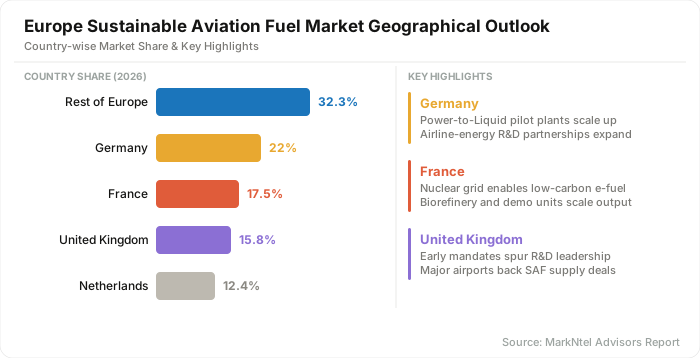
In addition, Germany's extensive aviation network, well-established refining infrastructure, and active participation in the ReFuelEU Aviation Regulation strengthen domestic SAF production and consumption. The country's focus on renewable hydrogen, carbon capture utilization, and long-term airline decarbonization commitments is expected to reinforce its position as Europe's largest SAF market throughout the forecast period.
Europe Sustainable Aviation Fuel Market Competitive Landscape
The Europe Sustainable Aviation Fuel market is moderately consolidated, with the top five companies Neste Oyj, Shell plc, TotalEnergies SE, Eni S.p.A., and Repsol S.A. collectively accounting for approximately 54% of the market. Competition is driven by commercial SAF production capacity, refinery conversions, long-term airline offtake agreements, feedstock security, and compliance with the ReFuelEU Aviation regulation, while emerging producers continue to strengthen the competitive landscape.
Key Companies in the Europe Sustainable Aviation Fuel Market
- Neste Oyj
- Shell plc
- TotalEnergies SE
- Eni S.p.A.
- Repsol S.A.
- OMV AG
- Moeve
- Preem AB
- SkyNRG B.V.
- Air bp (BP plc)
- UPM Biofuels
- Sasol Limited
- LanzaJet Inc.
- LanzaTech Global Inc.
- World Fuel Services Europe Ltd.
- Others
Europe Sustainable Aviation Fuel Industry News and Recent Developments
May 2026: Neste Launches ISCC CORSIA Plus-Certified Sustainable Aviation Fuel for European Airlines
In May 2026, Neste announced the commercial availability of ISCC CORSIA Plus-certified Sustainable Aviation Fuel (SAF) across its European supply network. The new certified product enables airlines to meet both the EU ReFuelEU Aviation requirements and ICAO CORSIA sustainability criteria while providing verified lifecycle greenhouse gas reductions. The launch strengthens Neste's portfolio of certified SAF products supplied to airports across Europe.
Impact Analysis: The product launch enhances the availability of fully certified SAF for European carriers, simplifying regulatory compliance and accelerating SAF adoption. It also strengthens supply chain transparency and reinforces Europe's position as a leading market for sustainable aviation fuels.
May 2025: Deutsche Aircraft Unveils the D328eco Designed for 100% SAF Compatibility
Deutsche Aircraft officially unveiled the D328eco regional turboprop in May 2025. The aircraft is designed to operate using 100% Sustainable Aviation Fuel (SAF), supporting regional aviation decarbonization while reducing lifecycle emissions. The aircraft incorporates next-generation propulsion and improved fuel efficiency for European regional operators.
Impact Analysis: Although it is an aircraft launch rather than a fuel launch, the D328eco directly stimulates SAF demand by expanding the fleet of aircraft optimized for sustainable fuels. This supports long-term SAF consumption across regional aviation in Europe.
February 2026: World Fuel Services and Neste Expand Commercial SAF Offering Across Europe
Neste and World Fuel Services expanded their commercial SAF offering under a new long-term agreement covering more than 100 European airports. The expanded product availability provides airlines and business aviation customers with easier access to certified SAF across Europe.
Impact Analysis: The broader commercial rollout improves market accessibility, reduces supply bottlenecks, and supports higher SAF blending rates under the ReFuelEU Aviation Regulation, strengthening Europe's SAF distribution network.
June 2026: Rebound Introduces Commercial Alcohol-to-Jet SAF Project
The newly established Rebound joint venture (Airbus, Safran, Technip Energies, and Tereos) launched Europe's first large-scale commercial Alcohol-to-Jet (ATJ) SAF platform in France. The project will produce approximately 160,000 tonnes of SAF annually using ethanol feedstock once operational.
Impact Analysis: The launch expands Europe's portfolio beyond HEFA-based fuels, reducing reliance on used cooking oil while accelerating commercialization of advanced SAF technologies capable of supporting future aviation fuel demand.
July 2025: Carbon Neutral Fuels Advances ASAP-DAC e-SAF Product Development
UK-based Carbon Neutral Fuels received government-backed funding to complete engineering for its ASAP-DAC project, which will produce ASTM-compliant Power-to-Liquid e-SAF using direct air capture and renewable hydrogen. The planned fuel is expected to supply a significant share of the UK's future synthetic aviation fuel demand.
Impact Analysis: The development accelerates commercialization of synthetic SAF, broadens Europe's technology mix beyond bio-based fuels, and supports long-term compliance with increasingly stringent SAF blending mandates.
Frequently Asked Questions
- Market Segmentation
- Introduction
- Definition & Scope of Sustainable Aviation Fuel (SAF)
- Role of SAF in European Climate Targets
- ReFuelEU Aviation Regulation & Mandates
- Overview of European Aviation Environmental Report (EAER) Framework
- Research Methodology & Data Sources
- Executive Summary
- European Aviation Environmental Context
- Aviation’s Contribution to Emissions
- Lifecycle Emissions & Climate Impact
- Role of SAF within Broader Decarbonization Measures
- Regulatory Landscape Overview
- Europe Sustainable Aviation Fuel Market Overview, 2022-32
- SAF Market Definition & Categories
- Bio-based SAF
- Synthetic SAF / e SAF
- Historic & Current SAF Production Volumes
- SAF Consumption & Uptake in Europe
- SAF Share vs. ReFuelEU Targets
- SAF Market Definition & Categories
- Europe Sustainable Aviation Fuel Market Production Statistics, 2022-32
- Annual SAF Fuel Production (EU & Member States)
- Capacity vs. Actual Output
- Feedstock Breakdown (e.g., used cooking oil, waste fats)
- SAF Production Growth Trends
- Europe Sustainable Aviation Fuel Market Production Plants & Infrastructure, 2022-32
- Existing SAF Production Facilities in Europe
- Planned & Under Construction SAF Refineries
- Feedstock Supply Chain & Logistics
- Storage, Blending & Distribution Infrastructure
- Europe Sustainable Aviation Fuel Market Technologies & Pathways, 2022-32
- SAF Production Technologies
- HEFA (Hydroprocessed Esters & Fatty Acids)
- ATJ (Alcohol to Jet)
- Fischer Tropsch / BtL
- e SAF (Power to Liquid)
- Technology Readiness & Bottlenecks
- Innovation & R&D Trends
- SAF Production Technologies
- Europe Sustainable Aviation Fuel Market Sustainability & Certification, 2022-32
- SAF Sustainability Criteria (RED II & other frameworks)
- Lifecycle Emissions Accounting
- Verification, Compliance & Fraud Prevention Concerns
- Feedstock Sustainability Impacts
- Europe Sustainable Aviation Fuel Market Pricing & Economic Analysis, 2022-32
- SAF Price Dynamics & Reference Pricing
- Feedstock Cost Implications
- Impact of Mandates & Compliance Costs
- Price Forecasts & Economic Scenarios
- Regulatory Framework & Policy Drivers, 2022-32
- ReFuelEU Aviation Regulation
- EU Climate Policies Affecting SAF
- National SAF Policies Across Europe
- Incentives, Subsidies & Market Instruments
- International Policy Alignment
- Europe Sustainable Aviation Fuel Market Demand & Uptake Analysis, 2022-32
- Airline SAF Procurement Trends
- Reporting & Compliance Status
- Demand Forecast to 2030 & Beyond
- Barriers to SAF Uptake
- Europe Sustainable Aviation Fuel Market Competitiveness & Supply Chain Issues, 2022-32
- SAF Market Stakeholders & Roles
- Supply Chain Risks & Bottlenecks
- Imports & Global Supply Dynamics
- Price Competitiveness Challenges
- Investment, Financing & Market Growth, 2022-32
- SAF Project Investment Trends
- Public & Private Finance Support
- Cost of Capital & Investment Risks
- Finance Mechanisms (e.g., green funding, carbon pricing)
- Environmental Impact Assessment, 2022-32
- CO₂ Emissions Reductions from SAF Use
- Other Environmental Co-Benefits
- Non CO₂ Impact Considerations
- Lifecycle Assessment Case Studies
- Emerging Trends, 2022-32
- e SAF & Advanced Technology Adoption
- Infrastructure Scaling & Market Expansion
- Alignment with Net Zero Pathways
- Cross-Sector Collaboration (energy, waste, aviation)
- Case Studies & Best Practices, 2022-32
- Successful European SAF Production Projects
- Airline SAF Usage Examples
- Policy Implementation Case Studies
- Europe Sustainable Aviation Fuel Market Policies, Regulations, and Product Standards
- Europe Sustainable Aviation Fuel Market Trends & Developments
- Europe Sustainable Aviation Fuel Market Dynamics
- Growth Factors
- Challenges
- Europe Sustainable Aviation Fuel Market Hotspot & Opportunities
- Europe Sustainable Aviation Fuel Market Outlook, 2022-2032F
- Market Size & Outlook
- By Revenues (USD Million)
- Market Segmentation & Outlook
- By Fuel Type- Market Size & Forecast 2022-2032, USD Million
- HEFA
- Alcohol-to-Jet
- Fischer-Tropsch
- e-SAF
- Others
- By Feedstock- Market Size & Forecast 2022-2032, USD Million
- Used Cooking Oil
- Animal Fats & Waste Oils
- Municipal Solid Waste
- Lignocellulosic Biomass
- Alcohols
- Captured CO₂ & Green Hydrogen
- Others (including Algae and Industrial Off-Gases)
- By End User- Market Size & Forecast 2022-2032, USD Million
- Commercial Aviation
- Defense & Military Aviation
- General Aviation
- By Country
- United Kingdom
- Germany
- France
- Italy
- Spain
- Netherlands
- Finland
- Sweden
- Austria
- Rest of Europe
- By Company
- Competition Characteristics
- Market Share & Analysis
- By Fuel Type- Market Size & Forecast 2022-2032, USD Million
- Market Size & Outlook
- United Kingdom Sustainable Aviation Fuel Market Outlook, 2022-2032F
- Market Size & Outlook
- By Revenues (USD Million)
- Market Segmentation & Outlook
- By Production Pathway- Market Size & Forecast 2022-2032, USD Million
- By Feedstock- Market Size & Forecast 2022-2032, USD Million
- By End User- Market Size & Forecast 2022-2032, USD Million
- By Geography- Market Size & Forecast 2022-2032, USD Million
- Market Size & Outlook
- Germany Sustainable Aviation Fuel Market Outlook, 2022-2032F
- Market Size & Outlook
- By Revenues (USD Million)
- Market Segmentation & Outlook
- By Production Pathway- Market Size & Forecast 2022-2032, USD Million
- By Feedstock- Market Size & Forecast 2022-2032, USD Million
- By End User- Market Size & Forecast 2022-2032, USD Million
- By Geography- Market Size & Forecast 2022-2032, USD Million
- Market Size & Outlook
- France Sustainable Aviation Fuel Market Outlook, 2022-2032F
- Market Size & Outlook
- By Revenues (USD Million)
- Market Segmentation & Outlook
- By Production Pathway- Market Size & Forecast 2022-2032, USD Million
- By Feedstock- Market Size & Forecast 2022-2032, USD Million
- By End User- Market Size & Forecast 2022-2032, USD Million
- By Geography- Market Size & Forecast 2022-2032, USD Million
- Market Size & Outlook
- Italy Sustainable Aviation Fuel Market Outlook, 2022-2032F
- Market Size & Outlook
- By Revenues (USD Million)
- Market Segmentation & Outlook
- By Production Pathway- Market Size & Forecast 2022-2032, USD Million
- By Feedstock- Market Size & Forecast 2022-2032, USD Million
- By End User- Market Size & Forecast 2022-2032, USD Million
- By Geography- Market Size & Forecast 2022-2032, USD Million
- Market Size & Outlook
- Spain Sustainable Aviation Fuel Market Outlook, 2022-2032F
- Market Size & Outlook
- By Revenues (USD Million)
- Market Segmentation & Outlook
- By Production Pathway- Market Size & Forecast 2022-2032, USD Million
- By Feedstock- Market Size & Forecast 2022-2032, USD Million
- By End User- Market Size & Forecast 2022-2032, USD Million
- By Geography- Market Size & Forecast 2022-2032, USD Million
- Market Size & Outlook
- Netherlands Sustainable Aviation Fuel Market Outlook, 2022-2032F
- Market Size & Outlook
- By Revenues (USD Million)
- Market Segmentation & Outlook
- By Production Pathway- Market Size & Forecast 2022-2032, USD Million
- By Feedstock- Market Size & Forecast 2022-2032, USD Million
- By End User- Market Size & Forecast 2022-2032, USD Million
- By Geography- Market Size & Forecast 2022-2032, USD Million
- Market Size & Outlook
- Finland Sustainable Aviation Fuel Market Outlook, 2022-2032F
- Market Size & Outlook
- By Revenues (USD Million)
- Market Segmentation & Outlook
- By Production Pathway- Market Size & Forecast 2022-2032, USD Million
- By Feedstock- Market Size & Forecast 2022-2032, USD Million
- By End User- Market Size & Forecast 2022-2032, USD Million
- By Geography- Market Size & Forecast 2022-2032, USD Million
- Market Size & Outlook
- Sweden Sustainable Aviation Fuel Market Outlook, 2022-2032F
- Market Size & Outlook
- By Revenues (USD Million)
- Market Segmentation & Outlook
- By Production Pathway- Market Size & Forecast 2022-2032, USD Million
- By Feedstock- Market Size & Forecast 2022-2032, USD Million
- By End User- Market Size & Forecast 2022-2032, USD Million
- By Geography- Market Size & Forecast 2022-2032, USD Million
- Market Size & Outlook
- Austria Sustainable Aviation Fuel Market Outlook, 2022-2032F
- Market Size & Outlook
- By Revenues (USD Million)
- Market Segmentation & Outlook
- By Production Pathway- Market Size & Forecast 2022-2032, USD Million
- By Feedstock- Market Size & Forecast 2022-2032, USD Million
- By End User- Market Size & Forecast 2022-2032, USD Million
- By Geography- Market Size & Forecast 2022-2032, USD Million
- Market Size & Outlook
- Europe Sustainable Aviation Fuel Market Key Strategic Imperatives for Success & Growth
- Competitive Outlook
- Company Profiles
- Neste Oyj
- Business Description
- Product Portfolio
- Collaborations & Alliances
- Recent Developments
- Financial Details
- Others
- Shell plc
- Business Description
- Product Portfolio
- Collaborations & Alliances
- Recent Developments
- Financial Details
- Others
- TotalEnergies SE
- Business Description
- Product Portfolio
- Collaborations & Alliances
- Recent Developments
- Financial Details
- Others
- Eni S.p.A.
- Business Description
- Product Portfolio
- Collaborations & Alliances
- Recent Developments
- Financial Details
- Others
- Repsol S.A.
- Business Description
- Product Portfolio
- Collaborations & Alliances
- Recent Developments
- Financial Details
- Others
- OMV AG
- Business Description
- Product Portfolio
- Collaborations & Alliances
- Recent Developments
- Financial Details
- Others
- Moeve
- Business Description
- Product Portfolio
- Collaborations & Alliances
- Recent Developments
- Financial Details
- Others
- Preem AB
- Business Description
- Product Portfolio
- Collaborations & Alliances
- Recent Developments
- Financial Details
- Others
- SkyNRG B.V.
- Business Description
- Product Portfolio
- Collaborations & Alliances
- Recent Developments
- Financial Details
- Others
- Air bp (BP plc)
- Business Description
- Product Portfolio
- Collaborations & Alliances
- Recent Developments
- Financial Details
- Others
- UPM Biofuels
- Business Description
- Product Portfolio
- Collaborations & Alliances
- Recent Developments
- Financial Details
- Others
- Sasol Limited
- Business Description
- Product Portfolio
- Collaborations & Alliances
- Recent Developments
- Financial Details
- Others
- LanzaJet Inc.
- Business Description
- Product Portfolio
- Collaborations & Alliances
- Recent Developments
- Financial Details
- Others
- LanzaTech Global Inc.
- Business Description
- Product Portfolio
- Collaborations & Alliances
- Recent Developments
- Financial Details
- Others
- World Fuel Services Europe Ltd.
- Business Description
- Product Portfolio
- Collaborations & Alliances
- Recent Developments
- Financial Details
- Others
- Others
- Neste Oyj
- Company Profiles
- Disclaimer
MarkNtel Advisors follows a robust and iterative research methodology designed to ensure maximum accuracy and minimize deviation in market estimates and forecasts. Our approach combines both bottom-up and top-down techniques to effectively segment and quantify various aspects of the market. A consistent feature across all our research reports is data triangulation, which examines the market from three distinct perspectives to validate findings. Key components of our research process include:
1. Scope & Research Design At the outset, MarkNtel Advisors define the research objectives and formulate pertinent questions. This phase involves determining the type of research—qualitative or quantitative—and designing a methodology that outlines data collection methods, target demographics, and analytical tools. They also establish timelines and budgets to ensure the research aligns with client goals.
2. Sample Selection and Data Collection In this stage, the firm identifies the target audience and determines the appropriate sample size to ensure representativeness. They employ various sampling methods, such as random or stratified sampling, based on the research objectives. Data collection is carried out using tools like surveys, interviews, and observations, ensuring the gathered data is reliable and relevant.
3. Data Analysis and Validation Once data is collected, MarkNtel Advisors undertake a rigorous analysis process. This includes cleaning the data to remove inconsistencies, employing statistical software for quantitative analysis, and thematic analysis for qualitative data. Validation steps are taken to ensure the accuracy and reliability of the findings, minimizing biases and errors.

4. Data Forecast and FinalizationThe final phase involves forecasting future market trends based on the analyzed data. MarkNtel Advisors utilize predictive modeling and time series analysis to anticipate market behaviors. The insights are then compiled into comprehensive reports, featuring visual aids like charts and graphs, and include strategic recommendations to inform client decision-making
We offer flexible licensing options to cater to varying organizational needs. Choose the pricing pack that best suits your requirements:
Buy Now Inquire Before Buying
 Request Customization
 Talk to our Consultant







