

South Korea Mobile Gaming Market Research Report: Forecast (2026-2032)
By Game Type (Casual Gaming, Puzzle Gaming, Strategy Gaming, Role-Playing Gaming (RPG), Multiplayer Online Battle Arena (MOBA), Others (Action, Adventure, Simulation, Sports, Racin ... g, Card & Casino)), By Platform (Android, iOS), By Monetization Model (In-App Purchases (IAP), In-Game Advertising, Paid Games, Subscription-Based Games), By Distribution Channel (App Stores (Google Play, Apple App Store), Proprietary Publisher Platforms, Third-Party App Stores, Others), By End User (Individual Player, Casual Players, Competitive E-sports Players, Game Streamers), and others Read more
- ICT & Electronics
- Aug 2026
- Pages 145
- Report Format: PDF, Excel, PPT
South Korea Mobile Gaming Market
Projected 7.99% CAGR from 2026 to 2032
Study Period
2026-2032
Market Size (2026)
USD 3.77 Billion
Market Size (2032)
USD 5.98 Billion
Base Year
2025
Projected CAGR
7.99%
Leading Segments
By Game Type: Casual Gaming
South Korea Mobile Gaming Market Key Takeaways
- South Korea mobile gaming market size was valued at USD 3.28 billion in 2025 and is projected to grow from USD 3.77 billion in 2026 to USD 5.98 billion by 2032.
- The industry is projected to sustain growth at a steady CAGR of 7.99% during 2026-2032.
- By game type, role-playing games hold a significant share of about 42% in 2026.
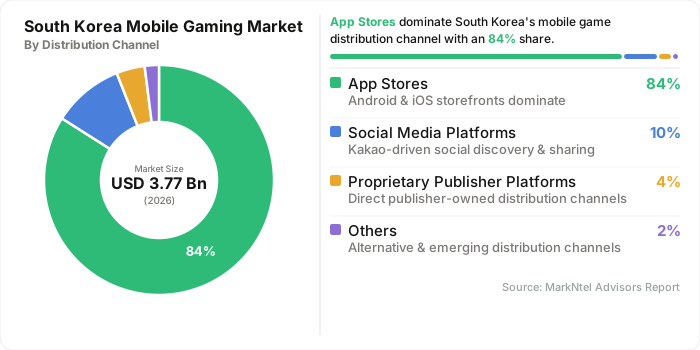
- By distribution channel, app stores seized a significant share of about 84% in 2026.
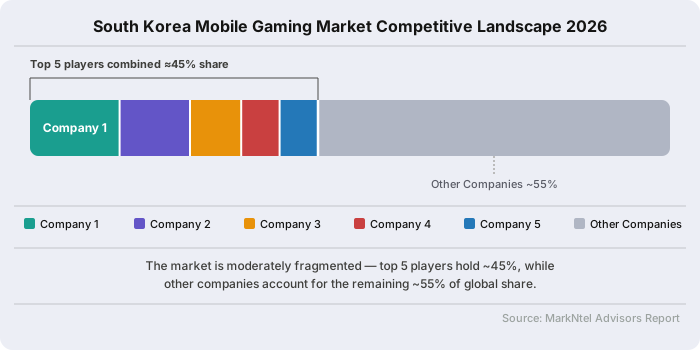
- The industry is moderately fragmented. However, the top five players collectively account for nearly 45% share.
South Korea Mobile Gaming Market Size and Outlook
The mobile gaming market size in South Korea was valued at USD 3.28 billion in 2025 and is projected to grow from USD 3.77 billion in 2026 to USD 5.98 billion by 2032. Along with this, the market is estimated to grow at a CAGR of around 7.99% during the forecast period, i.e., 2026-32.
The market is expected to maintain strong growth over the coming years, supported by the country's advanced digital infrastructure, high smartphone penetration, continuous innovation by domestic game developers, and increasing investment in next-generation gaming technologies. Mobile gaming has become the cornerstone of the country's gaming ecosystem, benefiting from widespread access to high-speed 5G networks, seamless digital payment systems, and a consumer base that readily embraces premium digital entertainment.
According to the 2025 Korea Game White Paper published by the Ministry of Culture, Sports and Tourism (MCST) and the Korea Creative Content Agency (KOCCA), mobile games generated approximately USD 10.3 billion in revenue in 2024, accounting for 59.0% of South Korea's total game industry sales, significantly outperforming PC games (25.2%), console games (5.0%), and arcade games (1.2%). This leadership underscores the country's strong preference for mobile-first gaming experiences.
Industry leaders are also increasing investments in artificial intelligence, blockchain integration, cybersecurity, and cross-platform gaming to improve user engagement and strengthen long-term competitiveness. Reflecting the industry's financial strength, NEXON became the first South Korean game publisher to surpass approximately USD 2.8 billion in annual revenue for 2024, driven by robust performance across its gaming portfolio and continued expansion in mobile titles, according to The Korea Economic Daily Global. These technological advancements, combined with South Korea's mature gaming culture and supportive digital ecosystem, are expected to sustain innovation, increase player spending, and reinforce the country's position as one of the world's leading mobile gaming markets.
Therefore, South Korea's mobile gaming market is well positioned for sustained growth, supported by its strong digital infrastructure, continuous innovation by leading game developers, and high consumer engagement with mobile entertainment. Ongoing investments in AI, cross-platform gaming, cybersecurity, and established gaming franchises are expected to strengthen the market's competitiveness and drive long-term revenue growth, reinforcing South Korea's position as one of the world's leading mobile gaming hubs.
South Korea Mobile Gaming Market Key Indicators
- According to the 2025 Korea Game White Paper published by the Ministry of Culture, Sports and Tourism (MCST) and the Korea Creative Content Agency (KOCCA), South Korea's game industry generated KRW 23.85 trillion (approximately USD 17.5 billion) in revenue in 2024, representing a 3.9% year-over-year increase. The industry also expanded its workforce by 3.1% to 87,576 employees, reflecting sustained growth across the gaming ecosystem. Mobile games remained the dominant segment, contributing KRW 14.07 trillion (approximately USD 10.3 billion) and accounting for 59.0% of total industry revenue, reaffirming mobile gaming as the primary growth engine of South Korea's digital gaming industry.
- The global gaming market reached approximately USD 220.1 billion in 2024, while South Korea accounted for 7.2% of global game sales, maintaining its position as the world's fourth-largest gaming market, behind China, the United States, and Japan. The country's sustained global ranking reflects its strong domestic gaming ecosystem, high consumer spending on digital games, and the international competitiveness of Korean game publishers, particularly in the mobile gaming segment.
- Mobile gaming continues to dominate South Korea's gaming landscape, accounting for 59% of total game market revenue, highlighting consumers' growing preference for smartphone-based entertainment. In contrast, the country's traditional PC bangs (gaming cafés) have experienced a sustained decline, with the number of venues falling to 7,280 by October 2024, down from 10,208 in 2019. The report also notes that PC bang usage decreased by 6% in 2025 to approximately 780 million hours, reflecting an ongoing shift in player behavior toward more accessible, mobile-first gaming experiences supported by widespread smartphone adoption and high-speed mobile connectivity.
South Korea Mobile Gaming Market Scope
| Category | Segments |
|---|---|
| By Game Type | Casual Gaming, Puzzle Gaming, Strategy Gaming, Role-Playing Gaming (RPG), Multiplayer Online Battle Arena (MOBA), Others (Action, Adventure, Simulation, Sports, Racing, Card & Casino |
| By Platform | Android, iOS |
| By Monetization Model | In-App Purchases (IAP), In-Game Advertising, Paid Games, Subscription-Based Games |
| By Distribution Channel | App Stores (Google Play, Apple App Store), Proprietary Publisher Platforms, Third-Party App Stores, Others |
| By End User | Individual Player, Casual Players, Competitive E-sports Players, Game Streamers |
South Korea Mobile Gaming Market Growth Drivers
High Mobile Gaming Participation and Strong Gaming Culture Drive Market Expansion
South Korea's long-established gaming culture remains one of the strongest growth drivers for the mobile gaming industry, supported by a large and highly engaged player base. According to the Korea Creative Content Agency (KOCCA), the 2024 Game User Survey found that 91.7% of game players used mobile games, making smartphones the country's most popular gaming platform. The survey also showed that average daily gaming time increased to 171 minutes on weekdays and 253 minutes on weekends, up by 12 minutes from the previous year, indicating stronger player engagement and higher opportunities for in-app purchases and live-service monetization.
Government policies are expected to reinforce this participation in the coming years. In May 2024, the Ministry of Culture, Sports and Tourism (MCST) launched the 2024–2028 Comprehensive Game Industry Promotion Plan, aiming to increase Korea's game industry revenue from approximately USD 16.2 billion) in 2022 to approximately USD 21.9 billion by 2028, while expanding game exports from USD 8.98 billion to USD 12.0 billion and increasing industry employment from 84,000 to 95,000 jobs. The strategy includes strengthening esports, supporting game developers, fostering skilled talent, and expanding global competitiveness of Korean game studios.
The combination of exceptionally high mobile game participation and sustained government investment is expected to keep user engagement and spending on an upward trajectory. As more players adopt mobile-first gaming and the domestic gaming ecosystem expands, demand for mobile games will continue to strengthen, driving long-term market growth.
Recent Trends
Cross-Platform Mobile and PC Gaming Emerges as a Key Industry Trend
Cross-platform gaming has emerged as one of the defining trends in South Korea's mobile gaming industry, enabling players to seamlessly switch between smartphones and PCs while retaining the same game progress, characters, and purchases. This approach improves accessibility, extends gameplay time, and strengthens player retention by allowing users to play anytime and on any supported device. According to the 2025 Korea Game White Paper published by the Ministry of Culture, Sports and Tourism (MCST) and the Korea Creative Content Agency (KOCCA), mobile games generated KRW 14.071 trillion (approximately USD 10.3 billion) in 2024, accounting for 59.0% of South Korea's total game industry revenue, highlighting the importance of integrating mobile platforms with the country's strong PC gaming ecosystem.
A notable example is Netmarble's RF Online Next was introduced in 2025 with cross-platform functionality, modernizing the classic franchise while enabling synchronized gameplay across mobile and PC platforms. Looking beyond 2025, leading Korean publishers are expected to expand cross-platform ecosystems by investing in cloud infrastructure, Unreal Engine 5, AI-driven game optimization, and globally connected live-service titles, further accelerating adoption of unified gaming experiences.
The expansion of cross-platform gaming is transforming how South Korean consumers engage with mobile games by delivering seamless experiences across devices. Continued investments in cross-platform technologies and flagship franchises will strengthen player retention, increase monetization opportunities, and support sustained growth of the mobile gaming industry.
South Korea Mobile Gaming Market Opportunities and Challenges
Rising Cybersecurity Threats Drive Investment in Advanced Game Security Solutions
The rapid growth of South Korea's mobile gaming industry has been accompanied by a rise in cyber threats, including account hijacking, cheating software, bot attacks, payment fraud, and unauthorized third-party programs. These threats undermine fair gameplay, reduce player confidence, and force publishers to allocate significant resources to cybersecurity, fraud monitoring, and server protection. As mobile games increasingly adopt competitive multiplayer modes and in-app transactions, maintaining secure gaming environments has become a major operational challenge.
The South Korean government has also identified cybersecurity as a national priority. Through the National Cybersecurity Strategy and investments led by the Ministry of Science and ICT (MSIT), the country is expanding AI-based cybersecurity capabilities and strengthening digital infrastructure to counter increasingly sophisticated cyberattacks, encouraging digital service providers including gaming companies to adopt advanced security technologies.
The increasing threat landscape is driving substantial innovation in game security technologies. A notable example is Nexon's February 2025 introduction of the globally recognized Easy Anti-Cheat (EAC) solution for Sudden Attack. The company began beta testing EAC alongside its proprietary Nexon Game Security (NGS) platform to improve the detection of unauthorized programs and create a fairer gaming environment before full deployment. Furthermore, Nexon launched MapleStory N in May 2025, incorporating blockchain technology to authenticate player achievements, secure ownership of digital assets, and enhance transparency within its virtual economy, reducing risks associated with asset manipulation and fraud.
As publishers continue investing in AI-powered anti-cheat systems, blockchain-based asset verification, and real-time fraud detection, cybersecurity is evolving from a cost burden into a competitive advantage, strengthening user trust, increasing player retention, and supporting sustainable growth in South Korea's mobile gaming market.
Segmentation Insights
Role-Playing Gaming Holds the Leading Position with Nearly 42% Revenue Share
Role-Playing Gaming holds nearly 42% share of the South Korea mobile gaming industry revenue due to the country's long-standing preference for immersive MMORPG and RPG experiences that encourage high player engagement and recurring spending. These games offer expansive virtual worlds, character customization, guild-based gameplay, competitive PvP modes, and continuous content updates, resulting in longer player retention than most other genres.
Leading publishers such as NEXON Co., Ltd., Netmarble Corporation, NCSOFT Corporation, Kakao Games Corp., and Com2uS Corporation continue to prioritize RPG development by expanding successful franchises. Recent launches, including Mabinogi Mobile (March 2025) and Seven Knights Re:Birth (May 2025), further strengthened the genre's popularity among Korean gamers.
According to the 2025 Korea Game White Paper published by the Ministry of Culture, Sports and Tourism (MCST) and the Korea Creative Content Agency (KOCCA), mobile games accounted for 59.0% of South Korea's total game industry revenue in 2024, with RPG titles consistently dominating the country's top-grossing mobile game rankings through strong in-app purchases, battle passes, and live-service monetization, reinforcing the segment's market leadership. Based on game type, the scope has been segmented into
- Casual Gaming
- Puzzle Gaming
- Strategy Gaming
- Role-Playing Gaming
- Multiplayer Online Battle Arena
- Others (Action & Adventure)
App Stores Capture Approximately 84% of Total Industry Revenue
App Stores hold the dominant position, accounting for an estimated 84% of total industry revenue, owing to South Korea's high smartphone penetration, widespread adoption of digital payment systems, and strong consumer preference for downloading games through official application marketplaces. These platforms provide secure payment processing, frequent software updates, reliable app discovery, and seamless user experiences, making them the primary distribution channels for mobile game publishers.
Leading developers such as NEXON Co., Ltd., Netmarble Corporation, NCSOFT Corporation, Krafton, Inc., and Kakao Games Corp. regularly launch and update their titles through Google Play and the Apple App Store to maximize market reach and monetization. According to the 2025 Korea Game White Paper published by the Ministry of Culture, Sports and Tourism (MCST) and the Korea Creative Content Agency (KOCCA), mobile games generated KRW 14.071 trillion (approximately USD 10.3 billion) in 2024, representing 59.0% of South Korea's total game industry revenue, highlighting the continued importance of app stores as the primary gateway for game downloads, in-app purchases, subscriptions, and live-service content distribution. Based on distribution channel, the market is categorized into:
- App Stores (Google Play, Apple App Store)
- Proprietary Publisher Platforms
- Social Media Platforms
- Others
South Korea Mobile Gaming Market Competitive Analysis
The South Korea mobile gaming market is moderately fragmented, with the top five companies accounting for approximately 45% of the market by value in 2026. Key participants include NCSOFT Corporation, Netmarble Corporation, Krafton, Inc., NEXON Co., Ltd., and Com2uS Corporation.
Major Companies in South Korea Mobile Gaming Industry
- NCSOFT Corporation
- Netmarble Corporation
- Krafton, Inc.
- NEXON Co., Ltd.
- Com2uS Corporation
- Kakao Games Corp.
- Wemade Co., Ltd.
- Neowiz Corporation
- Gravity Co., Ltd.
- Pearl Abyss Corp.
- Others
South Korea Mobile Gaming Industry News and Recent Developments
May 2025: Netmarble Launches Seven Knights Re:Birth
In May 2025, Netmarble Corporation officially launched Seven Knights Re:Birth in South Korea as a remake of its flagship mobile RPG Seven Knights. The title features upgraded graphics, refined turn-based combat, enhanced character progression, and modernized gameplay while preserving the original storyline and core mechanics. The launch forms part of Netmarble's strategy to revitalize one of its most successful intellectual properties, which has accumulated over 70 million players worldwide.
Impact Analysis: The launch reinforces Netmarble's leadership in South Korea's mobile RPG segment by revitalizing one of its most successful intellectual properties with modern gameplay and enhanced graphics. It is expected to increase player retention, encourage spending on in-game purchases, and attract both returning and new users. The remake also intensifies competition in the RPG category, prompting rival developers to invest in remastered franchises and premium mobile gaming experiences.
2025: Nexon Launches Mabinogi Mobile
In March 2025, NEXON Co., Ltd. officially launched MABINOGI MOBILE in South Korea for PC and mobile platforms. Developed by devCAT Studio, the MMORPG is based on Nexon's iconic Mabinogi intellectual property and features open-world exploration, customizable characters, life-simulation content, social interactions, and multiplayer gameplay optimized for mobile devices.
Impact Analysis: The launch expands Nexon's flagship Mabinogi franchise into the mobile gaming segment, strengthening its cross-platform ecosystem and attracting a wider audience. By combining life-simulation features, open-world exploration, and multiplayer gameplay, the title enhances user engagement and monetization opportunities through in-game purchases. Its success is expected to encourage other South Korean developers to leverage established intellectual properties for mobile platforms, driving innovation and increasing competition in the domestic MMORPG market.
Frequently Asked Questions
- Market Segmentation
- Introduction
- Product Definition
- Research Process
- Assumptions
- Executive Summary
- South Korea Mobile Gaming Market Policies, Regulations, and Product Standards
- South Korea Mobile Gaming Market Trends & Developments
- South Korea Mobile Gaming Market Dynamics
- Growth Factors
- Challenges
- South Korea Mobile Gaming Market Hotspot & Opportunities
- South Korea Mobile Gaming Market Outlook, 2022-2032
- Market Size & Outlook
- By Revenues (USD Million)
- Market Segmentation & Outlook
- By Game Type- Market Size & Forecast 2022-2032, USD Million
- Casual Gaming
- Puzzle Gaming
- Strategy Gaming
- Role-Playing Gaming (RPG)
- Multiplayer Online Battle Arena (MOBA)
- Others (Action, Adventure, Simulation, Sports, Racing, Card & Casino)
- By Platform- Market Size & Forecast 2022-2032, USD Million
- Android
- iOS
- By Monetization Model- Market Size & Forecast 2022-2032, USD Million
- In-App Purchases (IAP)
- In-Game Advertising
- Paid Games
- Subscription-Based Games
- By Distribution Channel- Market Size & Forecast 2022-2032, USD Million
- App Stores (Google Play, Apple App Store)
- Proprietary Publisher Platforms
- Third-Party App Stores
- Others
- By End User- Market Size & Forecast 2022-2032, USD Million
- Individual Player
- Casual Players
- Competitive E-sports Players
- Game Streamers
- By Region- Market Size & Forecast 2022-2032, USD Million
- Seoul Capital Area
- Central Region
- Honam Region
- Yeongnam Region
- Gangwon Region
- Jeju Region
- By Company
- Competition Characteristics
- Market Share & Analysis
- By Game Type- Market Size & Forecast 2022-2032, USD Million
- Market Size & Outlook
- South Korea Casual Gaming Market Outlook, 2022-2032
- Market Size & Outlook
- By Revenues (USD Million)
- Market Segmentation & Outlook
- By Platform- Market Size & Forecast 2022-2032, USD Million
- By Monetization Model- Market Size & Forecast 2022-2032, USD Million
- By Distribution Channel- Market Size & Forecast 2022-2032, USD Million
- By End User- Market Size & Forecast 2022-2032, USD Million
- By Region- Market Size & Forecast 2022-2032, USD Million
- Market Size & Outlook
- South Korea Puzzle Gaming Market Outlook, 2022-2032
- Market Size & Outlook
- By Revenues (USD Million)
- Market Segmentation & Outlook
- By Platform- Market Size & Forecast 2022-2032, USD Million
- By Monetization Model- Market Size & Forecast 2022-2032, USD Million
- By Distribution Channel- Market Size & Forecast 2022-2032, USD Million
- By End User- Market Size & Forecast 2022-2032, USD Million
- By Region- Market Size & Forecast 2022-2032, USD Million
- Market Size & Outlook
- South Korea Strategy Gaming Market Outlook, 2022-2032
- Market Size & Outlook
- By Revenues (USD Million)
- Market Segmentation & Outlook
- By Platform- Market Size & Forecast 2022-2032, USD Million
- By Monetization Model- Market Size & Forecast 2022-2032, USD Million
- By Distribution Channel- Market Size & Forecast 2022-2032, USD Million
- By End User- Market Size & Forecast 2022-2032, USD Million
- By Region- Market Size & Forecast 2022-2032, USD Million
- Market Size & Outlook
- South Korea Role-Playing Gaming (RPG) Market Outlook, 2022-2032
- Market Size & Outlook
- By Revenues (USD Million)
- Market Segmentation & Outlook
- By Platform- Market Size & Forecast 2022-2032, USD Million
- By Monetization Model- Market Size & Forecast 2022-2032, USD Million
- By Distribution Channel- Market Size & Forecast 2022-2032, USD Million
- By End User- Market Size & Forecast 2022-2032, USD Million
- By Region- Market Size & Forecast 2022-2032, USD Million
- Market Size & Outlook
- South Korea Multiplayer Online Battle Arena (MOBA) Market Outlook, 2022-2032
- Market Size & Outlook
- By Revenues (USD Million)
- Market Segmentation & Outlook
- By Platform- Market Size & Forecast 2022-2032, USD Million
- By Monetization Model- Market Size & Forecast 2022-2032, USD Million
- By Distribution Channel- Market Size & Forecast 2022-2032, USD Million
- By End User- Market Size & Forecast 2022-2032, USD Million
- By Region- Market Size & Forecast 2022-2032, USD Million
- Market Size & Outlook
- South Korea Mobile Gaming Market Key Strategic Imperatives for Success & Growth
- Competitive Outlook
- Company Profiles
- NCSOFT Corporation
- Business Description
- Product Portfolio
- Collaborations & Alliances
- Recent Developments
- Financial Details
- Others
- Netmarble Corporation
- Business Description
- Product Portfolio
- Collaborations & Alliances
- Recent Developments
- Financial Details
- Others
- Krafton, Inc.
- Business Description
- Product Portfolio
- Collaborations & Alliances
- Recent Developments
- Financial Details
- Others
- NEXON Co., Ltd.
- Business Description
- Product Portfolio
- Collaborations & Alliances
- Recent Developments
- Financial Details
- Others
- Com2uS Corporation
- Business Description
- Product Portfolio
- Collaborations & Alliances
- Recent Developments
- Financial Details
- Others
- Kakao Games Corp.
- Business Description
- Product Portfolio
- Collaborations & Alliances
- Recent Developments
- Financial Details
- Others
- Wemade Co., Ltd.
- Business Description
- Product Portfolio
- Collaborations & Alliances
- Recent Developments
- Financial Details
- Others
- Neowiz Corporation
- Business Description
- Product Portfolio
- Collaborations & Alliances
- Recent Developments
- Financial Details
- Others
- Gravity Co., Ltd.
- Business Description
- Product Portfolio
- Collaborations & Alliances
- Recent Developments
- Financial Details
- Others
- Pearl Abyss Corp.
- Business Description
- Product Portfolio
- Collaborations & Alliances
- Recent Developments
- Financial Details
- Others
- NCSOFT Corporation
- Company Profiles
- Disclaimer
MarkNtel Advisors follows a robust and iterative research methodology designed to ensure maximum accuracy and minimize deviation in market estimates and forecasts. Our approach combines both bottom-up and top-down techniques to effectively segment and quantify various aspects of the market. A consistent feature across all our research reports is data triangulation, which examines the market from three distinct perspectives to validate findings. Key components of our research process include:
1. Scope & Research Design At the outset, MarkNtel Advisors define the research objectives and formulate pertinent questions. This phase involves determining the type of research—qualitative or quantitative—and designing a methodology that outlines data collection methods, target demographics, and analytical tools. They also establish timelines and budgets to ensure the research aligns with client goals.
2. Sample Selection and Data Collection In this stage, the firm identifies the target audience and determines the appropriate sample size to ensure representativeness. They employ various sampling methods, such as random or stratified sampling, based on the research objectives. Data collection is carried out using tools like surveys, interviews, and observations, ensuring the gathered data is reliable and relevant.
3. Data Analysis and Validation Once data is collected, MarkNtel Advisors undertake a rigorous analysis process. This includes cleaning the data to remove inconsistencies, employing statistical software for quantitative analysis, and thematic analysis for qualitative data. Validation steps are taken to ensure the accuracy and reliability of the findings, minimizing biases and errors.

4. Data Forecast and FinalizationThe final phase involves forecasting future market trends based on the analyzed data. MarkNtel Advisors utilize predictive modeling and time series analysis to anticipate market behaviors. The insights are then compiled into comprehensive reports, featuring visual aids like charts and graphs, and include strategic recommendations to inform client decision-making
We offer flexible licensing options to cater to varying organizational needs. Choose the pricing pack that best suits your requirements:
Buy Now Inquire Before Buying
 Request Customization
 Talk to our Consultant







