

Global Plant-based Dairy Market Research Report: Forecast (2026-32)
By Product Type (Plant-Based Milk, Plant-Based Cheese, Plant-Based Yoghurt), By Nature (Organic, Natural, Conventional), By End User (Individual Consumption, Food Processing Indust ... ries, Bakery & Confectionery, Snacks & Savouries, Ready Meals, HoReCa, Others), By Sales Channel (Offline, Online), By Region (North America, South America, Europe, The Middle East & Africa, Asia-Pacific) Read more
- Food & Beverages
- Mar 2026
- Pages 450
- Report Format: PDF, Excel, PPT
Global Plant-based Dairy Market
Projected 3.82% CAGR from 2026 to 2032
Study Period
2026-2032
Market Size (2026)
USD 21.96 Billion
Market Size (2032)
USD 27.50 Billion
Largest Region
Asia-Pacific
Projected CAGR
3.82%
Leading Segments
By Sales Channel: Offline
Global Plant-Based Dairy Market Report Key Takeaways:
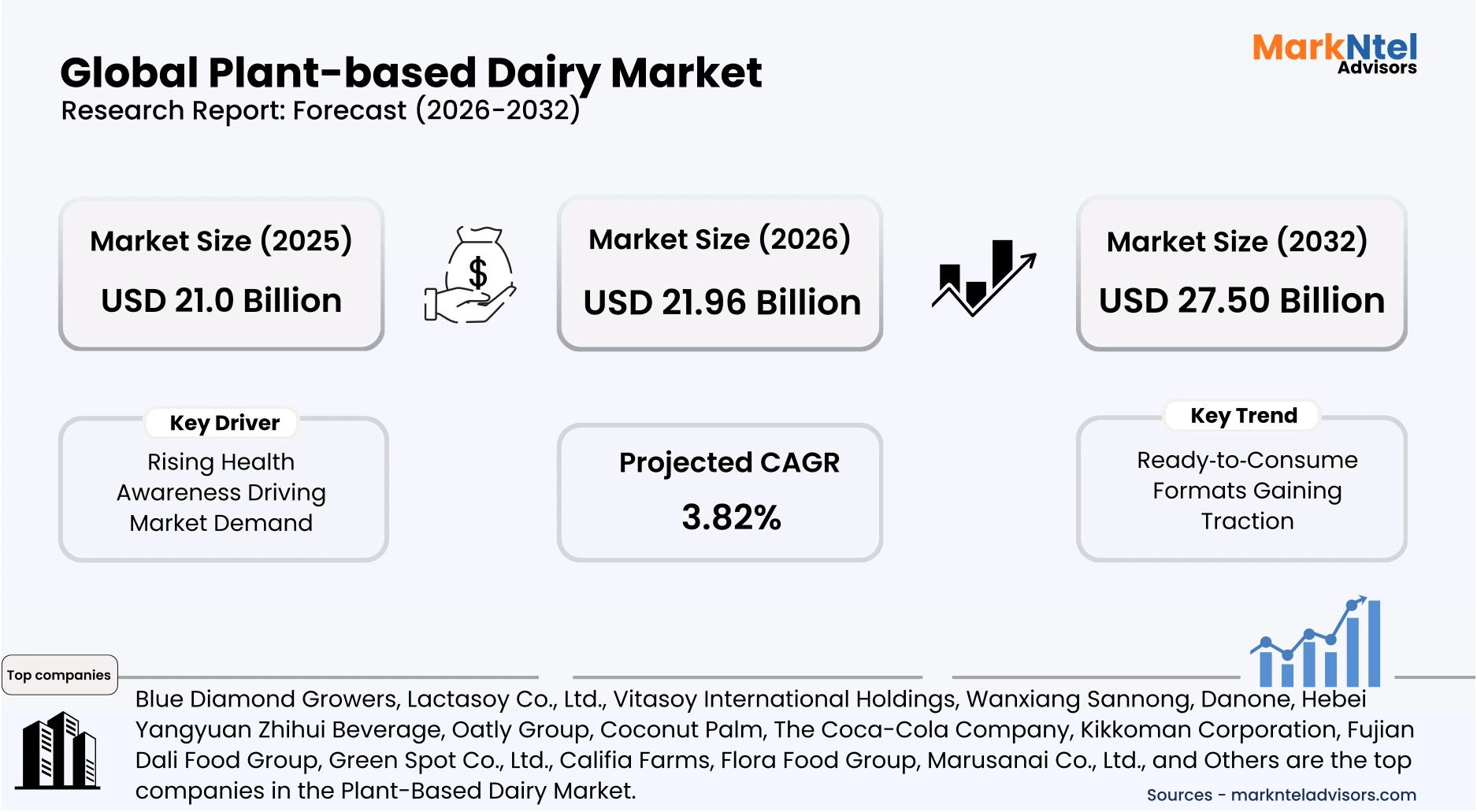
- The Global Plant-Based Dairy market size was valued at USD 21.0 billion in 2025 and is projected to grow from USD 21.96 billion in 2026 to USD 27.50 billion by 2032, exhibiting a CAGR of 3.82% during the forecast period.
- Asia‑Pacific holds the largest market share of about 44% in the Global Plant-Based Dairy Market in 2026.
- By product type, the plant‑based milk segment represented a significant share of about 85% in the Global Plant-Based Dairy Market in 2026.
- By sales channel, the offline segment seized a significant share of about 90% in the Global Plant-Based Dairy Market in 2026.
- Leading plant-based dairy companies in the global market are Blue Diamond Growers, Lactasoy Co., Ltd., Vitasoy International Holdings, Wanxiang Sannong, Danone, Hebei Yangyuan Zhihui Beverage, Oatly Group, Coconut Palm, The Coca-Cola Company, Kikkoman Corporation, Fujian Dali Food Group, Green Spot Co., Ltd., Califia Farms, Flora Food Group, Marusanai Co., Ltd., and Others.
Market Insights & Analysis: Global Plant-Based Dairy Market (2026-32):
The Global Plant-Based Dairy Market size was valued at USD 21.0 billion in 2025 and is projected to grow from USD 21.96 billion in 2026 to USD 27.50 billion by 2032. Along with this, the market is estimated to grow at a CAGR of around 3.82% during the forecast period, i.e., 2026-32.
The plant-based dairy market is poised for significant growth globally, driven primarily by rising health awareness and the increasing preference for lactose-free, low-cholesterol, and nutrient-rich alternatives. Consumers are becoming more conscious of digestive health, cardiovascular wellness, and overall nutrition, motivating a shift away from traditional dairy products toward plant-based options. In the United States, for instance, an estimated 36% of people experience lactose malabsorption, prompting many to opt for plant-based dairy to avoid digestive issues such as bloating and diarrhea. Plant milks also provide low saturated fat and zero lactose, aligning with federal nutrition guidance on maintaining healthy dietary patterns.
Globally, lactose intolerance remains a key factor influencing consumption patterns. In Brazil, roughly 60% of the population experiences lactose malabsorption, driving the adoption of lactose-free alternatives like soy and oat milk that support digestive comfort and balanced nutrition .
Innovation and convenience trends are reshaping the market. The popularity of ready-to-consume (RTD) plant-based beverages continues to rise, catering to busy, health-conscious consumers. For example, Oatly launched two RTD iced oat-milk coffees, Barista Iced Macchiato and Barista Iced Flat White. In UK supermarkets, making plant-based caffeine beverages widely accessible. RTD formats such as dairy-free cold brews and canned plant-milk coffees are gaining traction, providing both convenience and nutrition in on-the-go formats.
Product innovation further fuels market potential. In 2025, US brand Miyoko’s Creamery released a spicy Jalapeño plant-milk cheese spread made from organic cultured cashew milk, combining bold flavors with dairy-free convenience for spreads and snacking .
Future investments are expected to accelerate growth. Oatly Group announced a USD 16 million investment to expand its Landskrona, Sweden oat-milk production facility, increasing annual capacity by over 33 % by March 2027 to meet rising global demand and strengthen supply chains for plant-based beverages .
Overall, driven by health consciousness, digestive wellness, convenience-oriented RTD formats, and robust investment in production capacity and product innovation, the plant-based dairy market is well-positioned for sustained expansion. With rising global demand and continued innovation in flavors, formats, and functional ingredients, this market is expected to experience strong growth through 2027 and beyond, appealing to both new and existing consumer segments.
Global Plant-Based Dairy Market Recent Developments:
- 2025: Danone introduced Silk Protein in late 2025, a new plant‑based dairy alternative with 50% more protein and half the sugar of traditional dairy milk (about 13 g protein/serving). It targets health‑conscious consumers seeking higher nutrition from plant milks.
- 2025: COYO launched a dairy‑free oat and coconut yogurt nationwide in Australia, blending 74% oat milk with 17% coconut cream for a creamy, plant‑based yogurt option .
Global Plant-Based Dairy Market Scope:
| Category | Segments |
|---|---|
| By Product Type | (Plant-Based Milk, Plant-Based Cheese, Plant-Based Yoghurt), |
| By Nature | (Organic, Natural, Conventional), |
| By End User | (Individual Consumption, Food Processing Industries, Bakery & Confectionery, Snacks & Savouries, Ready Meals, HoReCa, Others), |
| By Sales Channel | (Offline, Online), |
Global Plant-Based Dairy Market Driver:
Rising Health Awareness Driving Market Demand
A major driver of the plant‑based dairy market is increasing consumer awareness of health and digestive issues associated with traditional dairy consumption. Lactose intolerance, a condition in which the body cannot properly digest lactose (milk sugar), affects an estimated about 65 % of adults worldwide due to lactase enzyme deficiency . In the United States alone, roughly 30 million adults show symptoms of lactose intolerance by age 20, according to clinical facts from the National Institute of Diabetes and Digestive and Kidney Diseases (NIH/NIDDK). Such widespread intolerance is prompting consumers to seek lactose‑free alternatives, with plant‑based milks (such as oat, almond, soy, and rice) naturally meeting this need because they are inherently lactose‑free.
Government dietary guidance further supports plant‑forward eating patterns. The Dietary Guidelines for Americans acknowledge that healthy dietary patterns can include vegetarian and plant‑based options and emphasize nutrient‑rich diets for long‑term health . Many plant‑based dairy alternatives also contain lower saturated fat and no cholesterol, aligning with federal nutrition advice on reducing risks of cardiovascular disease and managing weight through balanced food choices.
The prevalence of reduced lactose digestion also varies regionally, about 8% in the UK and up to 72% in Italy, encouraging broader European interest in easier‑to‑digest, low‑cholesterol plant milks and fortified variants .
Overall, as health authorities and consumers increasingly prioritize digestive comfort, metabolic wellness, and preventive nutrition, rising health awareness will continue to propel demand for plant‑based dairy products, bolstering market expansion well beyond 2025.
Global Plant-Based Dairy Market Trend:
Ready‑to‑Consume Formats Gaining Traction
A key trend in the plant‑based dairy market is the growing popularity of ready‑to‑consume (RTD) plant‑based beverages, driven by consumer demand for convenience, taste, and nutrition. In 2025, brands are extending beyond traditional cartons to offer innovative plant‑based drinks with broad appeal. For example, Califia Farms launched “Creamy Refreshers,” tropical‑flavored, dairy‑free beverages made with coconut cream and real fruit juice, available nationwide at major U.S. retailers for around USD 6 per bottle. These serve both refreshment and nutrition in a grab‑and‑drink format.
Moreover, collaborations like the limited‑edition Oatly Barista Edition coffee blend with Nespresso tailor plant‑based oat beverages for coffee lovers, reflecting how RTD formats are becoming lifestyle products, not just milk substitutes. Ready‑to‑drink offerings also extend to seasonal plant‑based creamers such as Califia’s plant‑based Horchata and flavored almond creamers, which cater to home coffee consumption and seasonal trends.
Regulatory support further reflects this shift. In early 2025, the U.S. FDA acknowledged the growing variety of plant‑based foods and beverage alternatives and released draft guidance to clarify labeling standards, aiming to help consumers make informed choices among RTD plant‑based milks and drinks.
Global Plant-Based Dairy Market Opportunity:
Growth of E‑Commerce Offering Ample Growth Opportunities
The rapid expansion of e‑commerce presents a major opportunity for the plant‑based dairy market by transforming how consumers discover, purchase, and repurchase dairy alternatives. In the United States, e‑commerce sales across all retail categories, including groceries and beverages, reached USD 310.3 billion in Q3 2025, accounting for 16.4% of total retail sales, according to the U.S. Census Bureau. This shift reflects a broader consumer preference for online grocery shopping, including plant‑based milks, yogurts, and ready‑to‑drink beverages .
Specific examples show how plant‑based brands are leveraging this trend. Califia Farms and Oatly actively promote online subscriptions for their plant‑milk products via e‑commerce platforms like Amazon and directly through brand websites, offering bundles and discounted auto‑deliveries for frequent buyers. This digital strategy increases customer loyalty and repeat purchases without traditional retail limitations.
Globally, countries are strengthening digital commerce infrastructure to support online food retail. In India, the government’s Open Network for Digital Commerce (ONDC) initiative enables small and medium retailers, including local organic and plant‑based dairy sellers, to list products online and reach urban and rural buyers .
Similarly, UK e‑grocery platforms such as Tesco and Sainsbury’s have expanded their online plant‑based dairy assortments, making oat, soy, and almond milks easily available for home delivery.
Overall, with e‑commerce adoption rising worldwide and digital platforms offering convenience, customized bundles, and subscription models, the plant‑based dairy market can significantly expand its reach and consumer base, making online retail a key growth opportunity moving forward.
Global Plant-Based Dairy Market Challenge:
High Production Costs
A key challenge for the plant‑based dairy market is higher production and retail costs compared with traditional dairy, which can limit consumer adoption, especially among price‑sensitive households. For example, in the United States, non‑dairy milks such as oat, soy, or almond milk often retail at approximately USD 7.27 per gallon, while conventional cow’s milk typically costs around USD 4.21 per gallon, a significant price gap at the point of purchase. This premium reflects the comparatively higher processing, ingredient, blending, and packaging costs involved in plant‑based beverage production . Unlike conventional dairy, which benefits from long‑established large‑scale supply chains and processing infrastructure, plant‑based alternatives are still scaling up, often resulting in higher unit costs due to smaller production volumes and less efficient economies of scale.
Additionally, plant‑based producers generally receive much less governmental financial support than traditional meat and dairy sectors. In global subsidy comparisons, livestock and dairy industries received billions in support, while plant‑based alternatives accounted for only a fraction of that funding over decades, contributing to artificially lower prices for animal products and relatively higher retail prices for plant‑based ones.
These structural cost disadvantages make plant‑based dairy products appear less affordable compared with subsidized conventional dairy, presenting a barrier to wider mass‑market adoption, particularly in lower‑income regions and among budget‑constrained consumers.
Overall, reducing production costs through improved supply chain efficiencies, scaling up manufacturing, and policy incentives will be critical for making plant‑based dairy more accessible and expanding overall market growth.
Global Plant-Based Dairy Market (2026-32) Segmentation Analysis:
The Global Plant-Based Dairy Market study of MarkNtel Advisors evaluates & highlights the major trends and influencing factors in each segment. It includes predictions for the period 2026–32 at the global level. Based on the analysis, the market has been further classified as;
Based on Product Type:
-
- Plant-Based Milk
- Soy
- Almond
- Oat
- Coconut
- Rice
- Blends
- Others
- Plant-Based Cheese
- Plant-Based Yoghurt
- Plant-Based Milk
Plant-based milk dominates the market, accounting for approximately 85% of the total size. This is primarily due to increasing health consciousness among consumers, lactose intolerance concerns, and a rising preference for sustainable and environmentally friendly alternatives to traditional dairy. Soy, almond, oat, and coconut are the most popular variants, with oat and almond gaining traction for their creamy texture and nutritional benefits. The convenience of ready-to-use milk for beverages, cereals, and cooking further drives adoption.
In addition, aggressive marketing, product innovation, and collaborations by major players such as Danone, Oatly, and Blue Diamond Growers have expanded consumer awareness and accessibility. Plant-based milk appeals to a broad demographic, including vegans, millennials, and health-conscious individuals, which reinforces its leading position. With ongoing research enhancing taste and nutritional content, this segment is expected to maintain dominance over other plant-based dairy products like cheese or yogurt.
Based on Sales Channel:
-
- Offline
- Online
The offline sales channel leads the market with nearly 90% share, reflecting consumer preference for in-store purchases. Supermarkets, hypermarkets, and grocery stores provide opportunities for tactile evaluation, allowing buyers to check packaging, freshness, and product quality before purchase. Additionally, offline channels benefit from brand visibility, promotional campaigns, and instant availability, which is particularly important for perishable plant-based dairy products. In emerging regions, e-commerce penetration remains limited due to logistics challenges and cold-chain dependency, making offline channels more reliable. Established brands leverage offline stores to build trust, run in-store tastings, and offer bundled promotions, further increasing footfall.
Moreover, cultural habits and shopping routines favor offline purchases, particularly in countries where dairy substitutes are still gaining awareness. Consequently, offline distribution remains the most dominant channel for plant-based dairy, with strong growth potential supported by expanding retail networks and increased consumer footfall.
Global Plant-Based Dairy Market (2026-32): Regional Projection
The global plant-based dairy market is dominated by the Asia-Pacific region, accounting for approximately 44% of the market. This dominance is driven by rising health awareness, increasing lactose intolerance, and growing adoption of plant-based diets in countries such as China, India, Japan, and South Korea. Urban centers like Shanghai, Beijing, Mumbai, Delhi, and Tokyo are major consumers due to higher disposable incomes, exposure to global food trends, and access to modern retail formats, including supermarkets, convenience stores, and e-commerce platforms.
In addition, cultural shifts toward vegetarianism and plant-forward diets, coupled with government nutrition initiatives promoting balanced diets and sustainable food consumption, further boost plant-based dairy adoption. Manufacturers such as Oatly, Vitasoy, and Blue Diamond Growers are actively expanding production and distribution networks in the region to cater to rising demand. Functional, fortified, and ready-to-drink plant-based products are increasingly preferred in urban households, schools, and foodservice outlets, reinforcing Asia-Pacific’s leading position in the global market.
Gain a Competitive Edge with Our Global Plant-Based Dairy Market Report:
- Global Plant-Based Dairy Market Report by MarkNtel Advisors provides a detailed & thorough analysis of market size & share, growth rate, competitive landscape, and key players. This comprehensive analysis helps businesses gain a holistic understanding of the market dynamics & make informed decisions.
- This report also highlights current market trends & future projections, allowing businesses to identify emerging opportunities & potential challenges. By understanding market forecasts, companies can align their strategies & stay ahead of the competition.
- Global Plant-Based Dairy Market Report aids in assessing & mitigating risks associated with entering or operating in the market. By understanding market dynamics, regulatory frameworks, and potential challenges, businesses can develop strategies to minimize risks & optimize their operations.
Frequently Asked Questions
- Market Segmentation
- Introduction
- Product Definition
- Research Process
- Assumptions
- Executive Summary
- Global Plant-Based Dairy Market Policies, Regulations, and Product Standards
- Global Plant-Based Dairy Market Trends & Developments
- Global Plant-Based Dairy Market Dynamics
- Growth Factors
- Challenges
- Global Plant-Based Dairy Market Hotspot & Opportunities
- Global Plant-Based Dairy Market Outlook, 2022-2032F
- Market Size & Outlook
- By Revenues (USD Million)
- Market Share & Analysis
- By Product Type- Market Size & Forecast 2022-2032, USD Million
- Plant-Based Milk
- Soy
- Almond
- Oat
- Coconut
- Rice
- Blends
- Others
- Plant-Based Cheese
- Plant-Based Yoghurt
- Plant-Based Milk
- By Nature- Market Size & Forecast 2022-2032, USD Million
- Organic
- Natural
- Conventional
- By End User- Market Size & Forecast 2022-2032, USD Million
- Individual Consumption
- Food Processing Industries
- Bakery & Confectionery
- Snacks & Savouries
- Ready Meals
- HoReCa
- Others
- By Sales Channel- Market Size & Forecast 2022-2032, USD Million
- Offline
- Online
- By Region
- North America
- South America
- Europe
- The Middle East & Africa
- Asia-Pacific
- By Company
- Competition Characteristics
- Market Share & Analysis
- By Product Type- Market Size & Forecast 2022-2032, USD Million
- Market Size & Outlook
- North America Plant-Based Dairy Market Outlook, 2022-2032F
- Market Size & Outlook
- By Revenues (USD Million)
- Market Share & Analysis
- By Product Type- Market Size & Forecast 2022-2032, USD Million
- By Nature- Market Size & Forecast 2022-2032, USD Million
- By End User- Market Size & Forecast 2022-2032, USD Million
- By Sales Channel- Market Size & Forecast 2022-2032, USD Million
- By Country
- The US
- Canada
- Mexico
- Rest of North America
- The US Plant-Based Dairy Market Outlook, 2022-2032F
- Market Size & Outlook
- By Revenues (USD Million)
- Market Share & Analysis
- By Product Type- Market Size & Forecast 2022-2032, USD Million
- By Nature- Market Size & Forecast 2022-2032, USD Million
- By End User- Market Size & Forecast 2022-2032, USD Million
- By Sales Channel- Market Size & Forecast 2022-2032, USD Million
- Market Size & Outlook
- Canada Plant-Based Dairy Market Outlook, 2022-2032F
- Market Size & Outlook
- By Revenues (USD Million)
- Market Share & Analysis
- By Product Type- Market Size & Forecast 2022-2032, USD Million
- By Nature- Market Size & Forecast 2022-2032, USD Million
- By End User- Market Size & Forecast 2022-2032, USD Million
- By Sales Channel- Market Size & Forecast 2022-2032, USD Million
- Market Size & Outlook
- Mexico Plant-Based Dairy Market Outlook, 2022-2032F
- Market Size & Outlook
- By Revenues (USD Million)
- Market Share & Analysis
- By Product Type- Market Size & Forecast 2022-2032, USD Million
- By Nature- Market Size & Forecast 2022-2032, USD Million
- By End User- Market Size & Forecast 2022-2032, USD Million
- By Sales Channel- Market Size & Forecast 2022-2032, USD Million
- Market Size & Outlook
- Market Size & Outlook
- South America Plant-Based Dairy Market Outlook, 2022-2032F
- Market Size & Outlook
- By Revenues (USD Million)
- Market Share & Analysis
- By Product Type- Market Size & Forecast 2022-2032, USD Million
- By Nature- Market Size & Forecast 2022-2032, USD Million
- By End User- Market Size & Forecast 2022-2032, USD Million
- By Sales Channel- Market Size & Forecast 2022-2032, USD Million
- By Country
- Brazil
- Argentina
- Chile
- Colombia
- Peru
- Rest of South America
- Brazil Plant-Based Dairy Market Outlook, 2022-2032F
- Market Size & Outlook
- By Revenues (USD Million)
- Market Share & Analysis
- By Product Type- Market Size & Forecast 2022-2032, USD Million
- By Nature- Market Size & Forecast 2022-2032, USD Million
- By End User- Market Size & Forecast 2022-2032, USD Million
- By Sales Channel- Market Size & Forecast 2022-2032, USD Million
- Market Size & Outlook
- Argentina Plant-Based Dairy Market Outlook, 2022-2032F
- Market Size & Outlook
- By Revenues (USD Million)
- Market Share & Analysis
- By Product Type- Market Size & Forecast 2022-2032, USD Million
- By Nature- Market Size & Forecast 2022-2032, USD Million
- By End User- Market Size & Forecast 2022-2032, USD Million
- By Sales Channel- Market Size & Forecast 2022-2032, USD Million
- Market Size & Outlook
- Chile Plant-Based Dairy Market Outlook, 2022-2032F
- Market Size & Outlook
- By Revenues (USD Million)
- Market Share & Analysis
- By Product Type- Market Size & Forecast 2022-2032, USD Million
- By Nature- Market Size & Forecast 2022-2032, USD Million
- By End User- Market Size & Forecast 2022-2032, USD Million
- By Sales Channel- Market Size & Forecast 2022-2032, USD Million
- Market Size & Outlook
- Colombia Plant-Based Dairy Market Outlook, 2022-2032F
- Market Size & Outlook
- By Revenues (USD Million)
- Market Share & Analysis
- By Product Type- Market Size & Forecast 2022-2032, USD Million
- By Nature- Market Size & Forecast 2022-2032, USD Million
- By End User- Market Size & Forecast 2022-2032, USD Million
- By Sales Channel- Market Size & Forecast 2022-2032, USD Million
- Market Size & Outlook
- Peru Plant-Based Dairy Market Outlook, 2022-2032F
- Market Size & Outlook
- By Revenues (USD Million)
- Market Share & Analysis
- By Product Type- Market Size & Forecast 2022-2032, USD Million
- By Nature- Market Size & Forecast 2022-2032, USD Million
- By End User- Market Size & Forecast 2022-2032, USD Million
- By Sales Channel- Market Size & Forecast 2022-2032, USD Million
- Market Size & Outlook
- Market Size & Outlook
- Europe Plant-Based Dairy Market Outlook, 2022-2032F
- Market Size & Outlook
- By Revenues (USD Million)
- Market Share & Analysis
- By Product Type- Market Size & Forecast 2022-2032, USD Million
- By Nature- Market Size & Forecast 2022-2032, USD Million
- By End User- Market Size & Forecast 2022-2032, USD Million
- By Sales Channel- Market Size & Forecast 2022-2032, USD Million
- By Country
- The UK
- Germany
- France
- Italy
- Spain
- Netherlands
- Belgium
- Switzerland
- Sweden
- Austria
- Portugal
- Poland
- Rest of Europe
- The UK Plant-Based Dairy Market Outlook, 2022-2032F
- Market Size & Outlook
- By Revenues (USD Million)
- Market Share & Analysis
- By Product Type- Market Size & Forecast 2022-2032, USD Million
- By Nature- Market Size & Forecast 2022-2032, USD Million
- By End User- Market Size & Forecast 2022-2032, USD Million
- By Sales Channel- Market Size & Forecast 2022-2032, USD Million
- Market Size & Outlook
- Germany Plant-Based Dairy Market Outlook, 2022-2032F
- Market Size & Outlook
- By Revenues (USD Million)
- Market Share & Analysis
- By Product Type- Market Size & Forecast 2022-2032, USD Million
- By Nature- Market Size & Forecast 2022-2032, USD Million
- By End User- Market Size & Forecast 2022-2032, USD Million
- By Sales Channel- Market Size & Forecast 2022-2032, USD Million
- Market Size & Outlook
- France Plant-Based Dairy Market Outlook, 2022-2032F
- Market Size & Outlook
- By Revenues (USD Million)
- Market Share & Analysis
- By Product Type- Market Size & Forecast 2022-2032, USD Million
- By Nature- Market Size & Forecast 2022-2032, USD Million
- By End User- Market Size & Forecast 2022-2032, USD Million
- By Sales Channel- Market Size & Forecast 2022-2032, USD Million
- Market Size & Outlook
- Italy Plant-Based Dairy Market Outlook, 2022-2032F
- Market Size & Outlook
- By Revenues (USD Million)
- Market Share & Analysis
- By Product Type- Market Size & Forecast 2022-2032, USD Million
- By Nature- Market Size & Forecast 2022-2032, USD Million
- By End User- Market Size & Forecast 2022-2032, USD Million
- By Sales Channel- Market Size & Forecast 2022-2032, USD Million
- Market Size & Outlook
- Spain Plant-Based Dairy Market Outlook, 2022-2032F
- Market Size & Outlook
- By Revenues (USD Million)
- Market Share & Analysis
- By Product Type- Market Size & Forecast 2022-2032, USD Million
- By Nature- Market Size & Forecast 2022-2032, USD Million
- By End User- Market Size & Forecast 2022-2032, USD Million
- By Sales Channel- Market Size & Forecast 2022-2032, USD Million
- Market Size & Outlook
- Netherlands Plant-Based Dairy Market Outlook, 2022-2032F
- Market Size & Outlook
- By Revenues (USD Million)
- Market Share & Analysis
- By Product Type- Market Size & Forecast 2022-2032, USD Million
- By Nature- Market Size & Forecast 2022-2032, USD Million
- By End User- Market Size & Forecast 2022-2032, USD Million
- By Sales Channel- Market Size & Forecast 2022-2032, USD Million
- Market Size & Outlook
- Belgium Plant-Based Dairy Market Outlook, 2022-2032F
- Market Size & Outlook
- By Revenues (USD Million)
- Market Share & Analysis
- By Product Type- Market Size & Forecast 2022-2032, USD Million
- By Nature- Market Size & Forecast 2022-2032, USD Million
- By End User- Market Size & Forecast 2022-2032, USD Million
- By Sales Channel- Market Size & Forecast 2022-2032, USD Million
- Market Size & Outlook
- Switzerland Plant-Based Dairy Market Outlook, 2022-2032F
- Market Size & Outlook
- By Revenues (USD Million)
- Market Share & Analysis
- By Product Type- Market Size & Forecast 2022-2032, USD Million
- By Nature- Market Size & Forecast 2022-2032, USD Million
- By End User- Market Size & Forecast 2022-2032, USD Million
- By Sales Channel- Market Size & Forecast 2022-2032, USD Million
- Market Size & Outlook
- Sweden Plant-Based Dairy Market Outlook, 2022-2032F
- Market Size & Outlook
- By Revenues (USD Million)
- Market Share & Analysis
- By Product Type- Market Size & Forecast 2022-2032, USD Million
- By Nature- Market Size & Forecast 2022-2032, USD Million
- By End User- Market Size & Forecast 2022-2032, USD Million
- By Sales Channel- Market Size & Forecast 2022-2032, USD Million
- Market Size & Outlook
- Austria Plant-Based Dairy Market Outlook, 2022-2032F
- Market Size & Outlook
- By Revenues (USD Million)
- Market Share & Analysis
- By Product Type- Market Size & Forecast 2022-2032, USD Million
- By Nature- Market Size & Forecast 2022-2032, USD Million
- By End User- Market Size & Forecast 2022-2032, USD Million
- By Sales Channel- Market Size & Forecast 2022-2032, USD Million
- Market Size & Outlook
- Portugal Plant-Based Dairy Market Outlook, 2022-2032F
- Market Size & Outlook
- By Revenues (USD Million)
- Market Share & Analysis
- By Product Type- Market Size & Forecast 2022-2032, USD Million
- By Nature- Market Size & Forecast 2022-2032, USD Million
- By End User- Market Size & Forecast 2022-2032, USD Million
- By Sales Channel- Market Size & Forecast 2022-2032, USD Million
- Market Size & Outlook
- Poland Plant-Based Dairy Market Outlook, 2022-2032F
- Market Size & Outlook
- By Revenues (USD Million)
- Market Share & Analysis
- By Product Type- Market Size & Forecast 2022-2032, USD Million
- By Nature- Market Size & Forecast 2022-2032, USD Million
- By End User- Market Size & Forecast 2022-2032, USD Million
- By Sales Channel- Market Size & Forecast 2022-2032, USD Million
- Market Size & Outlook
- Market Size & Outlook
- The Middle East & Africa Plant-Based Dairy Market Outlook, 2022-2032F
- Market Size & Outlook
- By Revenues (USD Million)
- Market Share & Analysis
- By Product Type- Market Size & Forecast 2022-2032, USD Million
- By Nature- Market Size & Forecast 2022-2032, USD Million
- By End User- Market Size & Forecast 2022-2032, USD Million
- By Sales Channel- Market Size & Forecast 2022-2032, USD Million
- By Country
- Saudi Arabia
- UAE
- South Africa
- Israel
- Egypt
- Nigeria
- Rest of Middle East & Africa
- Saudi Arabia Plant-Based Dairy Market Outlook, 2022-2032F
- Market Size & Outlook
- By Revenues (USD Million)
- Market Share & Analysis
- By Product Type- Market Size & Forecast 2022-2032, USD Million
- By Nature- Market Size & Forecast 2022-2032, USD Million
- By End User- Market Size & Forecast 2022-2032, USD Million
- By Sales Channel- Market Size & Forecast 2022-2032, USD Million
- Market Size & Outlook
- UAE Plant-Based Dairy Market Outlook, 2022-2032F
- Market Size & Outlook
- By Revenues (USD Million)
- Market Share & Analysis
- By Product Type- Market Size & Forecast 2022-2032, USD Million
- By Nature- Market Size & Forecast 2022-2032, USD Million
- By End User- Market Size & Forecast 2022-2032, USD Million
- By Sales Channel- Market Size & Forecast 2022-2032, USD Million
- Market Size & Outlook
- South Africa Plant-Based Dairy Market Outlook, 2022-2032F
- Market Size & Outlook
- By Revenues (USD Million)
- Market Share & Analysis
- By Product Type- Market Size & Forecast 2022-2032, USD Million
- By Nature- Market Size & Forecast 2022-2032, USD Million
- By End User- Market Size & Forecast 2022-2032, USD Million
- By Sales Channel- Market Size & Forecast 2022-2032, USD Million
- Market Size & Outlook
- Israel Plant-Based Dairy Market Outlook, 2022-2032F
- Market Size & Outlook
- By Revenues (USD Million)
- Market Share & Analysis
- By Product Type- Market Size & Forecast 2022-2032, USD Million
- By Nature- Market Size & Forecast 2022-2032, USD Million
- By End User- Market Size & Forecast 2022-2032, USD Million
- By Sales Channel- Market Size & Forecast 2022-2032, USD Million
- Market Size & Outlook
- Egypt Plant-Based Dairy Market Outlook, 2022-2032F
- Market Size & Outlook
- By Revenues (USD Million)
- Market Share & Analysis
- By Product Type- Market Size & Forecast 2022-2032, USD Million
- By Nature- Market Size & Forecast 2022-2032, USD Million
- By End User- Market Size & Forecast 2022-2032, USD Million
- By Sales Channel- Market Size & Forecast 2022-2032, USD Million
- Market Size & Outlook
- Nigeria Plant-Based Dairy Market Outlook, 2022-2032F
- Market Size & Outlook
- By Revenues (USD Million)
- Market Share & Analysis
- By Product Type- Market Size & Forecast 2022-2032, USD Million
- By Nature- Market Size & Forecast 2022-2032, USD Million
- By End User- Market Size & Forecast 2022-2032, USD Million
- By Sales Channel- Market Size & Forecast 2022-2032, USD Million
- Market Size & Outlook
- Market Size & Outlook
- Asia-Pacific Plant-Based Dairy Market Outlook, 2022-2032F
- Market Size & Outlook
- By Revenues (USD Million)
- Market Share & Analysis
- By Product Type- Market Size & Forecast 2022-2032, USD Million
- By Nature- Market Size & Forecast 2022-2032, USD Million
- By End User- Market Size & Forecast 2022-2032, USD Million
- By Sales Channel- Market Size & Forecast 2022-2032, USD Million
- By Country
- China
- Japan
- India
- South Korea
- Australia
- New Zealand
- Rest of Asia-Pacific
- China Plant-Based Dairy Market Outlook, 2022-2032F
- Market Size & Outlook
- By Revenues (USD Million)
- Market Share & Analysis
- By Product Type- Market Size & Forecast 2022-2032, USD Million
- By Nature- Market Size & Forecast 2022-2032, USD Million
- By End User- Market Size & Forecast 2022-2032, USD Million
- By Sales Channel- Market Size & Forecast 2022-2032, USD Million
- Market Size & Outlook
- Japan Plant-Based Dairy Market Outlook, 2022-2032F
- Market Size & Outlook
- By Revenues (USD Million)
- Market Share & Analysis
- By Product Type- Market Size & Forecast 2022-2032, USD Million
- By Nature- Market Size & Forecast 2022-2032, USD Million
- By End User- Market Size & Forecast 2022-2032, USD Million
- By Sales Channel- Market Size & Forecast 2022-2032, USD Million
- Market Size & Outlook
- India Plant-Based Dairy Market Outlook, 2022-2032F
- Market Size & Outlook
- By Revenues (USD Million)
- Market Share & Analysis
- By Product Type- Market Size & Forecast 2022-2032, USD Million
- By Nature- Market Size & Forecast 2022-2032, USD Million
- By End User- Market Size & Forecast 2022-2032, USD Million
- By Sales Channel- Market Size & Forecast 2022-2032, USD Million
- Market Size & Outlook
- South Korea Plant-Based Dairy Market Outlook, 2022-2032F
- Market Size & Outlook
- By Revenues (USD Million)
- Market Share & Analysis
- By Product Type- Market Size & Forecast 2022-2032, USD Million
- By Nature- Market Size & Forecast 2022-2032, USD Million
- By End User- Market Size & Forecast 2022-2032, USD Million
- By Sales Channel- Market Size & Forecast 2022-2032, USD Million
- Market Size & Outlook
- Australia Plant-Based Dairy Market Outlook, 2022-2032F
- Market Size & Outlook
- By Revenues (USD Million)
- Market Share & Analysis
- By Product Type- Market Size & Forecast 2022-2032, USD Million
- By Nature- Market Size & Forecast 2022-2032, USD Million
- By End User- Market Size & Forecast 2022-2032, USD Million
- By Sales Channel- Market Size & Forecast 2022-2032, USD Million
- Market Size & Outlook
- New Zealand Plant-Based Dairy Market Outlook, 2022-2032F
- Market Size & Outlook
- By Revenues (USD Million)
- Market Share & Analysis
- By Product Type- Market Size & Forecast 2022-2032, USD Million
- By Nature- Market Size & Forecast 2022-2032, USD Million
- By End User- Market Size & Forecast 2022-2032, USD Million
- By Sales Channel- Market Size & Forecast 2022-2032, USD Million
- Market Size & Outlook
- Market Size & Outlook
- Global Plant-Based Dairy Market Key Strategic Imperatives for Success & Growth
- Competitive Outlook
- Company Profiles
- Blue Diamond Growers
- Business Description
- Product Portfolio
- Collaborations & Alliances
- Recent Developments
- Financial Details
- Others
- Lactasoy Co., Ltd.
- Business Description
- Product Portfolio
- Collaborations & Alliances
- Recent Developments
- Financial Details
- Others
- Vitasoy International Holdings
- Business Description
- Product Portfolio
- Collaborations & Alliances
- Recent Developments
- Financial Details
- Others
- Wanxiang Sannong
- Business Description
- Product Portfolio
- Collaborations & Alliances
- Recent Developments
- Financial Details
- Others
- Danone
- Business Description
- Product Portfolio
- Collaborations & Alliances
- Recent Developments
- Financial Details
- Others
- Hebei Yangyuan Zhihui Beverage
- Business Description
- Product Portfolio
- Collaborations & Alliances
- Recent Developments
- Financial Details
- Others
- Oatly Group
- Business Description
- Product Portfolio
- Collaborations & Alliances
- Recent Developments
- Financial Details
- Others
- Coconut Palm
- Business Description
- Product Portfolio
- Collaborations & Alliances
- Recent Developments
- Financial Details
- Others
- The Coca-Cola Company
- Business Description
- Product Portfolio
- Collaborations & Alliances
- Recent Developments
- Financial Details
- Others
- Kikkoman Corporation
- Business Description
- Product Portfolio
- Collaborations & Alliances
- Recent Developments
- Financial Details
- Others
- Fujian Dali Food Group
- Business Description
- Product Portfolio
- Collaborations & Alliances
- Recent Developments
- Financial Details
- Others
- Green Spot Co., Ltd.
- Business Description
- Product Portfolio
- Collaborations & Alliances
- Recent Developments
- Financial Details
- Others
- Califia Farms
- Business Description
- Product Portfolio
- Collaborations & Alliances
- Recent Developments
- Financial Details
- Others
- Flora Food Group
- Business Description
- Product Portfolio
- Collaborations & Alliances
- Recent Developments
- Financial Details
- Others
- Marusanai Co., Ltd.
- Business Description
- Product Portfolio
- Collaborations & Alliances
- Recent Developments
- Financial Details
- Others
- Others
- Business Description
- Product Portfolio
- Collaborations & Alliances
- Recent Developments
- Financial Details
- Others
- Blue Diamond Growers
- Company Profiles
- Disclaimer
MarkNtel Advisors follows a robust and iterative research methodology designed to ensure maximum accuracy and minimize deviation in market estimates and forecasts. Our approach combines both bottom-up and top-down techniques to effectively segment and quantify various aspects of the market. A consistent feature across all our research reports is data triangulation, which examines the market from three distinct perspectives to validate findings. Key components of our research process include:
1. Scope & Research Design At the outset, MarkNtel Advisors define the research objectives and formulate pertinent questions. This phase involves determining the type of research—qualitative or quantitative—and designing a methodology that outlines data collection methods, target demographics, and analytical tools. They also establish timelines and budgets to ensure the research aligns with client goals.
2. Sample Selection and Data Collection In this stage, the firm identifies the target audience and determines the appropriate sample size to ensure representativeness. They employ various sampling methods, such as random or stratified sampling, based on the research objectives. Data collection is carried out using tools like surveys, interviews, and observations, ensuring the gathered data is reliable and relevant.
3. Data Analysis and Validation Once data is collected, MarkNtel Advisors undertake a rigorous analysis process. This includes cleaning the data to remove inconsistencies, employing statistical software for quantitative analysis, and thematic analysis for qualitative data. Validation steps are taken to ensure the accuracy and reliability of the findings, minimizing biases and errors.

4. Data Forecast and FinalizationThe final phase involves forecasting future market trends based on the analyzed data. MarkNtel Advisors utilize predictive modeling and time series analysis to anticipate market behaviors. The insights are then compiled into comprehensive reports, featuring visual aids like charts and graphs, and include strategic recommendations to inform client decision-making
We offer flexible licensing options to cater to varying organizational needs. Choose the pricing pack that best suits your requirements:
Buy Now Inquire Before Buying
 Request Customization
 Talk to our Consultant







