

Global Methanol Market Research Report: Forecast (2026-2032)
By Application (Formaldehyde, Acetic Acid, MTBE, Dimethyl Ether (DME), MTO/MTP, Biodiesel, Others (Methyl Methacrylate, Chloromethanes, Solvents, Fuel Cells, etc.)), By End-User In ... dustry (Petrochemical, Fuel & Energy, Automotive, Textile, Water Treatment, Industrial chemicals, Pharmaceutical, Agrochemical, Others), By Feedstock (Natural Gas, Coal, Biomass & Renewable Feedstocks), and others Read more
- Chemicals
- Jun 2026
- Pages 339
- Report Format: PDF, Excel, PPT
Global Methanol Market
Projected 2.77% CAGR from 2026 to 2032
Study Period
2026-2032
Market Size (2026)
USD 44.29 Billion
Market Size (2032)
USD 52.17 Billion
Largest Region
Asia Pacific
Projected CAGR
2.77%
Leading Segments
By Feedstock Type: Natural Gas-Based Methanol
Methanol Market Key Takeaways
- The global methanol market size was valued at USD 43.18 billion in 2025 and is projected to grow from USD 44.29 billion in 2026 to USD 52.17 billion by 2032.
- The industry is projected to reflect sustained growth at a steady CAGR of 2.77% during 2026-2032.
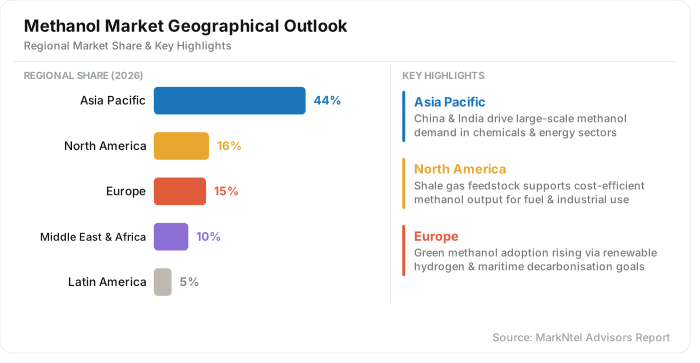
- Asia Pacific holds the largest share of about 44% in 2026.
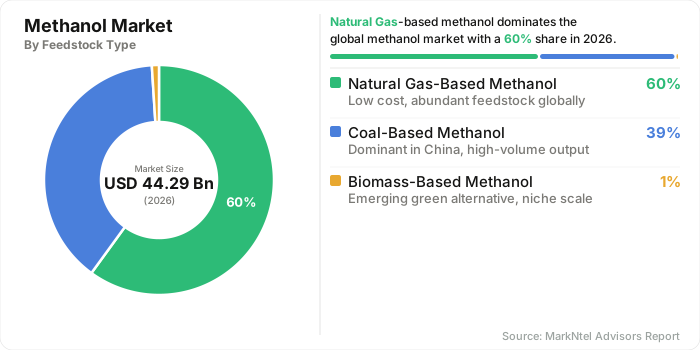
- By feedstock type, natural gas-based methanol holds a significant share of about 60% in 2026.
- By end user, petrochemicals seized a significant share of about 45% in 2026.
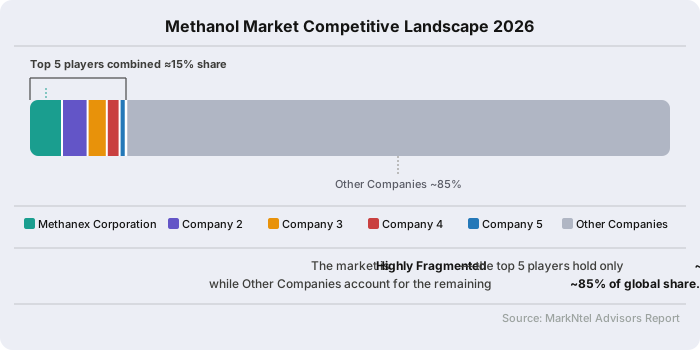
- The industry is highly fragmented. However, the top five players collectively account for nearly 15% share.
Methanol Market Size and Outlook
The global methanol market size was valued at USD 43.18 billion in 2025 and is projected to grow from USD 44.29 billion in 2026 to USD 52.17 billion by 2032. Along with this, the market is estimated to grow at a CAGR of around 2.77% during the forecast period, i.e., 2026-32.
The market is entering a new phase of growth as its role expands beyond traditional chemical applications into energy, transportation, and low-carbon industrial solutions. Methanol remains a critical feedstock for formaldehyde, acetic acid, and olefins production, supporting demand from construction, furniture, packaging, automotive, and consumer goods industries. According to the Methanol Institute, methanol has a production capacity of approximately 110 million metric tons across more than 90 plants worldwide, highlighting its importance to global manufacturing and chemical value chains.
A key factor shaping the market outlook is the rapid emergence of methanol as a low-carbon fuel. In April 2025, the International Maritime Organization approved its Net-Zero Framework, introducing greenhouse-gas reduction measures and carbon-pricing mechanisms for international shipping. These regulations are encouraging ship-owners and fuel suppliers to accelerate the adoption of alternative fuels, including methanol.
At the same time, investments in renewable methanol are increasing significantly. The Methanol Institute reported that, as of March 2026, 263 renewable methanol projects had been announced globally, representing an anticipated production capacity of 48.5 million metric tons by 2031. Also, in June 2025, Methanex Corporation completed the acquisition of OCI Global's international methanol business in a transaction valued at approximately USD 2.05 billion. The acquisition significantly expanded Methanex's global production footprint and reinforced confidence in long-term methanol demand, particularly across chemical and fuel applications.
Looking ahead, rising demand from formaldehyde production, expanding methanol-to-olefins (MTO) capacity, and increasing adoption of methanol as a marine fuel are expected to support market growth. As industries seek cost-effective and scalable decarbonization solutions, methanol is increasingly positioned as both a strategic chemical feedstock and an emerging clean-energy carrier, strengthening its long-term growth prospects across global markets.
Methanol Market Key Indicators
- Methanol is increasingly used in Methanol-to-Olefins (MTO) technology to produce ethylene and propylene, key building blocks for plastics. According to Plastics Europe, global plastics production exceeded 413 million metric tons in 2023. Growing demand for packaging, consumer goods, healthcare products, and electronics drives olefin production, thereby increasing methanol demand. The continued expansion of plastics manufacturing, particularly in the Asia-Pacific, serves as a leading indicator of methanol market growth.
- In January 2026, ACME Group announced a 200 KTPA green methanol plant in Odisha, India, aimed at strengthening sustainable methanol production. Similarly, HIF Global is developing a nearly USD 4 billion green hydrogen-to-methanol project in Brazil, with each production module expected to generate 220,000 tonnes of methanol annually. Such large-scale investments highlight the growing role of methanol in decarbonization initiatives and indicate strong future demand for both conventional and low-carbon methanol.
- Approximately 65% of global methanol production is derived from natural gas, while the remaining 35% is primarily produced from coal. Natural gas remains the dominant feedstock due to its cost competitiveness, established infrastructure, and lower carbon intensity relative to coal-based production. Consequently, trends in global natural gas production and availability directly influence methanol production economics, supply security, and market competitiveness. Rising natural gas output in key producing regions such as North America and the Middle East supports the expansion of natural gas-based methanol capacity and helps maintain stable feedstock availability for the industry.
Methanol Market Scope
| Category | Segments |
|---|---|
| By Application | Formaldehyde, Acetic Acid, MTBE, Dimethyl Ether (DME), MTO/MTP, Biodiesel, Others (Methyl Methacrylate, Chloromethanes, Solvents, Fuel Cells, etc. |
| By End-User Industry | Petrochemical, Fuel & Energy, Automotive, Textile, Water Treatment, Industrial chemicals, Pharmaceutical, Agrochemical, Others |
| By Feedstock | Natural Gas, Coal, Biomass & Renewable Feedstocks |
Methanol Market Growth Drivers
Strong Demand for Formaldehyde Derivatives Drives Methanol Market Expansion
Formaldehyde remains the largest derivative of methanol and accounts for a significant share of global methanol consumption. According to the Methanol Institute, the largest-volume application of methanol is its conversion into formaldehyde, which is widely used in the production of resins, adhesives, laminates, insulation materials, and engineered wood products. These materials serve as essential inputs for furniture manufacturing, residential housing, commercial construction, and various industrial applications.
Demand for formaldehyde is being reinforced by rising construction activity worldwide. The U.S. Census Bureau reported that total U.S. construction spending reached USD 2.154 trillion in 2024, representing a 6.5% increase over 2023. Rising investments in residential, commercial, educational, and infrastructure projects are increasing the consumption of engineered wood products and formaldehyde-based resins, thereby supporting methanol usage throughout the value chain.
Therefore, continued infrastructure development, housing construction, and expansion of wood-based panel manufacturing are expected to sustain formaldehyde demand. Ongoing investments in residential, commercial, and infrastructure projects are increasing the need for engineered wood products such as plywood, particleboard, and medium-density fiberboard (MDF), which rely heavily on formaldehyde-based resins. Since methanol is the primary feedstock used in formaldehyde production, sustained growth in these end-use industries is expected to generate additional methanol demand globally.
Recent Trends
Rising Adoption of Methanol as a Marine Fuel
The adoption of methanol as a marine fuel has emerged as a major trend in the global methanol industry as the shipping industry seeks practical solutions to reduce greenhouse gas emissions. According to DNV, more than 450 methanol-capable vessels were either operating or on order by the end of 2025, and potential marine methanol demand could reach 60 million tonnes by 2040, making shipping one of the fastest-growing demand drivers for methanol, reflecting strong industry confidence in methanol as a commercially viable alternative fuel.
Furthermore, methanol accounted for 12 of the 25 alternative-fuel vessel orders placed in March 2025, demonstrating accelerating uptake across multiple vessel categories. Commercial investments have also increased significantly. In October 2024, Maersk signed a long-term agreement with LONGi for bio-methanol supply beginning in 2026 to support its growing fleet of dual-fuel methanol vessels.
Looking ahead, investments in methanol bunkering infrastructure are expected to drive further demand. Singapore's Maritime and Port Authority announced plans to develop capacity to supply more than 1 million metric tons of low-carbon methanol annually by 2030, supporting future growth in methanol-fueled shipping.
Therefore, rising adoption of methanol as a marine fuel is transforming methanol from a traditional chemical feedstock into a strategic energy product. Expanding vessel fleets, fuel supply agreements, and bunkering infrastructure investments are expected to significantly increase methanol demand and support long-term market growth.
Methanol Market Opportunities and Challenges
Growing Environmental Compliance Requirements Support the Expansion of Green Methanol
Stringent environmental regulations have become a major challenge for the global methanol market as governments and regulatory bodies implement stricter carbon-emission standards across industrial and transportation sectors. In 2025, the International Maritime Organization (IMO) approved a Net-Zero Framework that introduces mandatory greenhouse-gas reduction measures and a global carbon-pricing mechanism for international shipping.
The challenge is particularly significant because regulations are accelerating demand for low-carbon fuels while increasing costs for fossil-based alternatives. The IMO's decarbonization roadmap targets at least a 20% reduction in shipping emissions by 2030 and net-zero emissions around 2050. Producers that continue relying on carbon-intensive methanol production risk higher compliance expenditures and reduced competitiveness in regulated markets.
However, these regulations are also creating substantial opportunities for renewable methanol producers. In June 2024, White Summit Capital announced a USD 267 million investment in a green hydrogen and e-methanol project in Spain, which is expected to produce 100,000 metric tons of e-methanol annually from 2027. Also, shipping companies are investing in methanol-powered vessels, while demand for renewable fuels is rising because of FuelEU Maritime and IMO decarbonization requirements. Green methanol is emerging as a preferred solution for reducing shipping emissions, encouraging investments in renewable hydrogen, carbon capture, and e-methanol projects.
Therefore, while environmental regulations increase operational and compliance costs for conventional producers, they are simultaneously expanding commercial opportunities for low-carbon methanol. The growing investment pipeline in renewable methanol projects is expected to support long-term market growth and strengthen methanol's role in global decarbonization efforts.
Segmentation Insights
Natural Gas-Based Methanol Dominates Global Feedstock Consumption
Natural Gas-Based Methanol accounts for approximately 60% of the global methanol industry revenue, making it the leading segment due to its cost competitiveness, abundant feedstock availability, and relatively lower carbon intensity compared to coal-based production. Natural gas is the preferred feedstock in major methanol-producing regions such as the Middle East, North America, Trinidad & Tobago, and parts of Southeast Asia, where access to low-cost gas enables efficient large-scale production. The process offers higher conversion efficiency and lower operating costs, allowing producers to maintain competitive pricing in global markets.
Additionally, natural gas-based methanol generates significantly lower greenhouse gas emissions than coal-based methanol, making it more aligned with increasingly stringent environmental regulations and corporate sustainability goals. The segment also benefits from strong demand across key downstream applications, including formaldehyde, acetic acid, fuel blending, and methanol-to-olefins (MTO) production. Furthermore, most newly announced conventional methanol projects outside China continue to utilize natural gas feedstocks because of their established infrastructure, reliable supply chains, and favorable economics, reinforcing the segment’s dominant position in the global methanol industry. Based on feedstock type, the scope has been segmented into
- Natural Gas-Based Methanol
- Coal-Based Methanol
- Biomass-Based Methanol
Petrochemicals Remain the Largest End-User Segment in the Methanol Market
Petrochemicals account for approximately 45% of the global methanol industry, making them the largest revenue contributor among all end-user segments. This dominance is primarily driven by methanol’s extensive use as a feedstock for producing key petrochemical intermediates such as ethylene and propylene through Methanol-to-Olefins (MTO) and Methanol-to-Propylene (MTP) technologies. These olefins are essential raw materials for manufacturing plastics, packaging materials, synthetic fibers, automotive components, consumer goods, and construction products. Growing urbanization, industrialization, and rising consumption of packaged goods have significantly increased demand for these downstream petrochemical products.
The segment is further supported by strong investments in integrated petrochemical complexes, particularly across Asia-Pacific, where China has established substantial MTO capacity to reduce dependence on conventional naphtha-based production. Additionally, increasing demand for polyethylene and polypropylene from packaging, electronics, healthcare, and automotive industries continues to boost methanol consumption. The versatility of methanol as a cost-effective chemical building block, coupled with expanding petrochemical production capacities worldwide, reinforces the segment’s leading position in the global methanol industry. Based on the end user, the scope has been classified into
- Petrochemical
- Fuel & Energy
- Automotive
- Textile
- Water Treatment
- Industrial chemicals
- Pharmaceutical
- Agrochemical
- Others
Methanol Market Geographical Outlook
Asia Pacific accounts for approximately 44% of methanol demand, making it the leading regional market. This dominance is driven by the region's extensive petrochemical industry, rapid industrialization, expanding manufacturing activities, and strong consumption of methanol derivatives. China remains the largest contributor, serving as the world's largest producer and consumer of methanol.
According to Blooming Global, China accounts for more than 60% of global methanol production capacity, supported by its large-scale coal-to-methanol industry and integrated petrochemical infrastructure. The country also hosts significant Methanol-to-Olefins (MTO) capacity, where methanol is converted into ethylene and propylene for plastics, packaging, textiles, and consumer goods manufacturing
The region's leadership is further supported by ongoing investments in petrochemical and chemical manufacturing infrastructure. For example, in 2025, China's Datang Group commenced operations at the country's first coal-to-chemicals project integrated with green hydrogen in Inner Mongolia, supporting lower-carbon methanol and chemical production. Rising urbanization, housing development, and industrial growth across China, India, South Korea, and Southeast Asia continue to drive demand for formaldehyde, acetic acid, adhesives, laminates, and engineered wood products derived from methanol.
Methanol Market Competitive Analysis
The global methanol industry is highly fragmented, with strong competition among international and regional producers. The top five players, Methanex Corporation, Proman AG, Saudi Basic Industries Corporation (SABIC), PETRONAS Chemicals Group Berhad, and Zagros Petrochemical Company, collectively hold approximately 15% of the market share.
Key Players in the Methanol Market
- Methanex Corporation
- SABIC
- Proman
- Zagros Petrochemical Company
- Celanese Corporation
- Mitsubishi Gas Chemical Company, Inc.
- OCI Global
- Petronas Chemicals Group Berhad
- Yankuang Energy Group Company Limited
- China National Chemical Corporation (ChemChina)
- Shandong Energy Group
- Inner Mongolia Yuanxing Energy Co., Ltd.
- BASF SE
- LyondellBasell Industries N.V.
- Helm AG
- Others
Methanol Industry News and Recent Developments
May 2025: World's First Commercial-Scale E-Methanol Plant Opens in Denmark
Denmark inaugurated the world's first commercial-scale e-methanol plant in Kassø. Developed by European Energy and Mitsui, the USD 167 million facility will produce 42,000 metric tons of e-methanol annually using renewable energy and captured CO₂. The project marks a major milestone in the commercialization of green methanol for shipping and industrial applications.
Impact Analysis: The launch of the Kassø e-methanol plant marks a significant step in scaling renewable methanol from pilot to commercial production. It strengthens confidence in e-methanol as a viable low-carbon fuel for shipping and industrial applications, encourages additional investments in renewable fuel projects globally, and supports the development of supply chains required to meet growing demand for sustainable marine fuels.
2025: India Advances Green Methanol Infrastructure at Deendayal Port
Oswal Energies signed an agreement with Deendayal Port Authority to develop facilities for green hydrogen, green methanol, and green ammonia production. The project supports India's National Green Energy Initiative and aims to strengthen domestic production of sustainable fuels for future industrial and maritime applications.
Impact Analysis: The project strengthens India's position in the emerging green methanol value chain by promoting domestic production of sustainable fuels. It is expected to reduce dependence on imported fossil fuels, support future green shipping initiatives, and attract investments in renewable hydrogen and carbon-neutral fuel infrastructure. The development also aligns with India's long-term decarbonization and energy security objectives, creating new opportunities for the methanol market.
Frequently Asked Questions
- Market Segmentation
- Introduction
- Product Definition
- Research Process
- Assumptions
- Executive Summary
- Global Methanol Market Policies, Regulations, and Product Standards
- Global Methanol Production (Thousand Tons) Trend 2022-2032
- Global Methanol Production (Thousand Tons) Trend by Application
- Company-wise Production Plants and Statistics
- Installed Production Capacity
- Actual Production
- Planned Production Target
- Global Methanol Pricing Analysis 2022-2032
- Global Methanol Pricing Trend (USD/Tons) 2022-2032
- Global Methanol Pricing Trend (USD/Tons) By Regions 2022-2032
- North America
- South America
- Europe
- Middle East & Africa
- Asia Pacific
- Global Methanol Pricing Trend (USD/Tons) By Application 2022-2032
- Formaldehyde
- Acetic Acid
- MTBE
- Dimethyl Ether (DME)
- MTO/MTP
- Biodiesel
- Others (Methyl Methacrylate, Chloromethanes, Solvents, Fuel Cells, etc.)
- Global Methanol Market Trends & Developments
- Global Methanol Market Dynamics
- Growth Factors
- Challenges
- Global Methanol Market Hotspot & Opportunities
- Global Methanol Market Outlook, 2022-2032F
- Market Size & Outlook
- By Revenues (USD Million)
- By Quantity Sold (Thousand Tons)
- Market Share & Analysis
- By Application- Market Size & Forecast 2022-2032, USD Million & Thousand Tons
- Formaldehyde
- Acetic Acid
- MTBE
- Dimethyl Ether (DME)
- MTO/MTP
- Biodiesel
- Others (Methyl Methacrylate, Chloromethanes, Solvents, Fuel Cells, etc.)
- By End-User Industry- Market Size & Forecast 2022-2032, USD Million & Thousand Tons
- Petrochemical
- Fuel & Energy
- Automotive
- Textile
- Water Treatment
- Industrial chemicals
- Pharmaceutical
- Agrochemical
- Others
- By Feedstock- Market Size & Forecast 2022-2032, USD Million & Thousand Tons
- Natural Gas
- Coal
- Biomass & Renewable Feedstocks
- By Region
- North America
- South America
- Europe
- Middle East & Africa
- Asia Pacific
- By Company
- Competition Characteristics
- Market Share & Analysis
- By Application- Market Size & Forecast 2022-2032, USD Million & Thousand Tons
- Market Size & Outlook
- North America Methanol Market Outlook, 2022-2032F
- Market Size & Outlook
- By Revenues (USD Million)
- By Quantity Sold (Thousand Tons)
- Market Share & Analysis
- By Application- Market Size & Forecast 2022-2032, USD Million & Thousand Tons
- By End-User Industry- Market Size & Forecast 2022-2032, USD Million & Thousand Tons
- By Feedstock- Market Size & Forecast 2022-2032, USD Million & Thousand Tons
- By Country
- The US
- Canada
- Mexico
- The US Methanol Market Outlook, 2022-2032F
- Market Size & Outlook
- By Revenues (USD Million)
- By Quantity Sold (Thousand Tons)
- Market Share & Analysis
- By Application- Market Size & Forecast 2022-2032, USD Million & Thousand Tons
- By End-User Industry- Market Size & Forecast 2022-2032, USD Million & Thousand Tons
- By Feedstock- Market Size & Forecast 2022-2032, USD Million & Thousand Tons
- Market Size & Outlook
- Canada Methanol Market Outlook, 2022-2032F
- Market Size & Outlook
- By Revenues (USD Million)
- By Quantity Sold (Thousand Tons)
- Market Share & Analysis
- By Application- Market Size & Forecast 2022-2032, USD Million & Thousand Tons
- By End-User Industry- Market Size & Forecast 2022-2032, USD Million & Thousand Tons
- By Feedstock- Market Size & Forecast 2022-2032, USD Million & Thousand Tons
- Market Size & Outlook
- Mexico Methanol Market Outlook, 2022-2032F
- Market Size & Outlook
- By Revenues (USD Million)
- By Quantity Sold (Thousand Tons)
- Market Share & Analysis
- By Application- Market Size & Forecast 2022-2032, USD Million & Thousand Tons
- By End-User Industry- Market Size & Forecast 2022-2032, USD Million & Thousand Tons
- By Feedstock- Market Size & Forecast 2022-2032, USD Million & Thousand Tons
- Market Size & Outlook
- Market Size & Outlook
- South America Methanol Market Outlook, 2022-2032F
- Market Size & Outlook
- By Revenues (USD Million)
- By Quantity Sold (Thousand Tons)
- Market Share & Analysis
- By Application- Market Size & Forecast 2022-2032, USD Million & Thousand Tons
- By End-User Industry- Market Size & Forecast 2022-2032, USD Million & Thousand Tons
- By Feedstock- Market Size & Forecast 2022-2032, USD Million & Thousand Tons
- By Country
- Brazil
- Argentina
- Chile
- Colombia
- Rest of South America
- Brazil Methanol Market Outlook, 2022-2032F
- Market Size & Outlook
- By Revenues (USD Million)
- By Quantity Sold (Thousand Tons)
- Market Share & Analysis
- By Application- Market Size & Forecast 2022-2032, USD Million & Thousand Tons
- By End-User Industry- Market Size & Forecast 2022-2032, USD Million & Thousand Tons
- By Feedstock- Market Size & Forecast 2022-2032, USD Million & Thousand Tons
- Market Size & Outlook
- Argentina Methanol Market Outlook, 2022-2032F
- Market Size & Outlook
- By Revenues (USD Million)
- By Quantity Sold (Thousand Tons)
- Market Share & Analysis
- By Application- Market Size & Forecast 2022-2032, USD Million & Thousand Tons
- By End-User Industry- Market Size & Forecast 2022-2032, USD Million & Thousand Tons
- By Feedstock- Market Size & Forecast 2022-2032, USD Million & Thousand Tons
- Market Size & Outlook
- Chile Methanol Market Outlook, 2022-2032F
- Market Size & Outlook
- By Revenues (USD Million)
- By Quantity Sold (Thousand Tons)
- Market Share & Analysis
- By Application- Market Size & Forecast 2022-2032, USD Million & Thousand Tons
- By End-User Industry- Market Size & Forecast 2022-2032, USD Million & Thousand Tons
- By Feedstock- Market Size & Forecast 2022-2032, USD Million & Thousand Tons
- Market Size & Outlook
- Colombia Methanol Market Outlook, 2022-2032F
- Market Size & Outlook
- By Revenues (USD Million)
- By Quantity Sold (Thousand Tons)
- Market Share & Analysis
- By Application- Market Size & Forecast 2022-2032, USD Million & Thousand Tons
- By End-User Industry- Market Size & Forecast 2022-2032, USD Million & Thousand Tons
- By Feedstock- Market Size & Forecast 2022-2032, USD Million & Thousand Tons
- Market Size & Outlook
- Market Size & Outlook
- Europe Methanol Market Outlook, 2022-2032F
- Market Size & Outlook
- By Revenues (USD Million)
- By Quantity Sold (Thousand Tons)
- Market Share & Analysis
- By Application- Market Size & Forecast 2022-2032, USD Million & Thousand Tons
- By End-User Industry- Market Size & Forecast 2022-2032, USD Million & Thousand Tons
- By Feedstock- Market Size & Forecast 2022-2032, USD Million & Thousand Tons
- By Country
- The UK
- Germany
- France
- Italy
- Spain
- Rest of Europe
- The UK Methanol Market Outlook, 2022-2032F
- Market Size & Outlook
- By Revenues (USD Million)
- By Quantity Sold (Thousand Tons)
- Market Share & Analysis
- By Application- Market Size & Forecast 2022-2032, USD Million & Thousand Tons
- By End-User Industry- Market Size & Forecast 2022-2032, USD Million & Thousand Tons
- By Feedstock- Market Size & Forecast 2022-2032, USD Million & Thousand Tons
- Market Size & Outlook
- Germany Methanol Market Outlook, 2022-2032F
- Market Size & Outlook
- By Revenues (USD Million)
- By Quantity Sold (Thousand Tons)
- Market Share & Analysis
- By Application- Market Size & Forecast 2022-2032, USD Million & Thousand Tons
- By End-User Industry- Market Size & Forecast 2022-2032, USD Million & Thousand Tons
- By Feedstock- Market Size & Forecast 2022-2032, USD Million & Thousand Tons
- Market Size & Outlook
- France Methanol Market Outlook, 2022-2032F
- Market Size & Outlook
- By Revenues (USD Million)
- By Quantity Sold (Thousand Tons)
- Market Share & Analysis
- By Application- Market Size & Forecast 2022-2032, USD Million & Thousand Tons
- By End-User Industry- Market Size & Forecast 2022-2032, USD Million & Thousand Tons
- By Feedstock- Market Size & Forecast 2022-2032, USD Million & Thousand Tons
- Market Size & Outlook
- Italy Methanol Market Outlook, 2022-2032F
- Market Size & Outlook
- By Revenues (USD Million)
- By Quantity Sold (Thousand Tons)
- Market Share & Analysis
- By Application- Market Size & Forecast 2022-2032, USD Million & Thousand Tons
- By End-User Industry- Market Size & Forecast 2022-2032, USD Million & Thousand Tons
- By Feedstock- Market Size & Forecast 2022-2032, USD Million & Thousand Tons
- Market Size & Outlook
- Spain Methanol Market Outlook, 2022-2032F
- Market Size & Outlook
- By Revenues (USD Million)
- By Quantity Sold (Thousand Tons)
- Market Share & Analysis
- By Application- Market Size & Forecast 2022-2032, USD Million & Thousand Tons
- By End-User Industry- Market Size & Forecast 2022-2032, USD Million & Thousand Tons
- By Feedstock- Market Size & Forecast 2022-2032, USD Million & Thousand Tons
- Market Size & Outlook
- Market Size & Outlook
- Middle East & Africa Methanol Market Outlook, 2022-2032F
- Market Size & Outlook
- By Revenues (USD Million)
- By Quantity Sold (Thousand Tons)
- Market Share & Analysis
- By Application- Market Size & Forecast 2022-2032, USD Million & Thousand Tons
- By End-User Industry- Market Size & Forecast 2022-2032, USD Million & Thousand Tons
- By Feedstock- Market Size & Forecast 2022-2032, USD Million & Thousand Tons
- By Country
- Saudi Arabia
- The UAE
- South Africa
- Egypt
- Qatar
- Kuwait
- Oman
- Bahrain
- Morocco
- Algeria
- Rest of Middle East & Africa
- Saudi Arabia Methanol Market Outlook, 2022-2032F
- Market Size & Outlook
- By Revenues (USD Million)
- By Quantity Sold (Thousand Tons)
- Market Share & Analysis
- By Application- Market Size & Forecast 2022-2032, USD Million & Thousand Tons
- By End-User Industry- Market Size & Forecast 2022-2032, USD Million & Thousand Tons
- By Feedstock- Market Size & Forecast 2022-2032, USD Million & Thousand Tons
- Market Size & Outlook
- The UAE Methanol Market Outlook, 2022-2032F
- Market Size & Outlook
- By Revenues (USD Million)
- By Quantity Sold (Thousand Tons)
- Market Share & Analysis
- By Application- Market Size & Forecast 2022-2032, USD Million & Thousand Tons
- By End-User Industry- Market Size & Forecast 2022-2032, USD Million & Thousand Tons
- By Feedstock- Market Size & Forecast 2022-2032, USD Million & Thousand Tons
- Market Size & Outlook
- South Africa Methanol Market Outlook, 2022-2032F
- Market Size & Outlook
- By Revenues (USD Million)
- By Quantity Sold (Thousand Tons)
- Market Share & Analysis
- By Application- Market Size & Forecast 2022-2032, USD Million & Thousand Tons
- By End-User Industry- Market Size & Forecast 2022-2032, USD Million & Thousand Tons
- By Feedstock- Market Size & Forecast 2022-2032, USD Million & Thousand Tons
- Market Size & Outlook
- Egypt Methanol Market Outlook, 2022-2032F
- Market Size & Outlook
- By Revenues (USD Million)
- By Quantity Sold (Thousand Tons)
- Market Share & Analysis
- By Application- Market Size & Forecast 2022-2032, USD Million & Thousand Tons
- By End-User Industry- Market Size & Forecast 2022-2032, USD Million & Thousand Tons
- By Feedstock- Market Size & Forecast 2022-2032, USD Million & Thousand Tons
- Market Size & Outlook
- Qatar Methanol Market Outlook, 2022-2032F
- Market Size & Outlook
- By Revenues (USD Million)
- By Quantity Sold (Thousand Tons)
- Market Share & Analysis
- By Application- Market Size & Forecast 2022-2032, USD Million & Thousand Tons
- By End-User Industry- Market Size & Forecast 2022-2032, USD Million & Thousand Tons
- By Feedstock- Market Size & Forecast 2022-2032, USD Million & Thousand Tons
- Market Size & Outlook
- Kuwait Methanol Market Outlook, 2022-2032F
- Market Size & Outlook
- By Revenues (USD Million)
- By Quantity Sold (Thousand Tons)
- Market Share & Analysis
- By Application- Market Size & Forecast 2022-2032, USD Million & Thousand Tons
- By End-User Industry- Market Size & Forecast 2022-2032, USD Million & Thousand Tons
- By Feedstock- Market Size & Forecast 2022-2032, USD Million & Thousand Tons
- Market Size & Outlook
- Oman Methanol Market Outlook, 2022-2032F
- Market Size & Outlook
- By Revenues (USD Million)
- By Quantity Sold (Thousand Tons)
- Market Share & Analysis
- By Application- Market Size & Forecast 2022-2032, USD Million & Thousand Tons
- By End-User Industry- Market Size & Forecast 2022-2032, USD Million & Thousand Tons
- By Feedstock- Market Size & Forecast 2022-2032, USD Million & Thousand Tons
- Market Size & Outlook
- Bahrain Methanol Market Outlook, 2022-2032F
- Market Size & Outlook
- By Revenues (USD Million)
- By Quantity Sold (Thousand Tons)
- Market Share & Analysis
- By Application- Market Size & Forecast 2022-2032, USD Million & Thousand Tons
- By End-User Industry- Market Size & Forecast 2022-2032, USD Million & Thousand Tons
- By Feedstock- Market Size & Forecast 2022-2032, USD Million & Thousand Tons
- Market Size & Outlook
- Morocco Methanol Market Outlook, 2022-2032F
- Market Size & Outlook
- By Revenues (USD Million)
- By Quantity Sold (Thousand Tons)
- Market Share & Analysis
- By Application- Market Size & Forecast 2022-2032, USD Million & Thousand Tons
- By End-User Industry- Market Size & Forecast 2022-2032, USD Million & Thousand Tons
- By Feedstock- Market Size & Forecast 2022-2032, USD Million & Thousand Tons
- Market Size & Outlook
- Algeria Methanol Market Outlook, 2022-2032F
- Market Size & Outlook
- By Revenues (USD Million)
- By Quantity Sold (Thousand Tons)
- Market Share & Analysis
- By Application- Market Size & Forecast 2022-2032, USD Million & Thousand Tons
- By End-User Industry- Market Size & Forecast 2022-2032, USD Million & Thousand Tons
- By Feedstock- Market Size & Forecast 2022-2032, USD Million & Thousand Tons
- Market Size & Outlook
- Market Size & Outlook
- Asia Pacific Methanol Market Outlook, 2022-2032F
- Market Size & Outlook
- By Revenues (USD Million)
- By Quantity Sold (Thousand Tons)
- Market Share & Analysis
- By Application- Market Size & Forecast 2022-2032, USD Million & Thousand Tons
- By End-User Industry- Market Size & Forecast 2022-2032, USD Million & Thousand Tons
- By Feedstock- Market Size & Forecast 2022-2032, USD Million & Thousand Tons
- By Country
- China
- Japan
- India
- South Korea
- Australia
- Indonesia
- Thailand
- Rest of Asia-Pacific
- China Methanol Market Outlook, 2022-2032F
- Market Size & Outlook
- By Revenues (USD Million)
- By Quantity Sold (Thousand Tons)
- Market Share & Analysis
- By Application- Market Size & Forecast 2022-2032, USD Million & Thousand Tons
- By End-User Industry- Market Size & Forecast 2022-2032, USD Million & Thousand Tons
- By Feedstock- Market Size & Forecast 2022-2032, USD Million & Thousand Tons
- Market Size & Outlook
- Japan Methanol Market Outlook, 2022-2032F
- Market Size & Outlook
- By Revenues (USD Million)
- By Quantity Sold (Thousand Tons)
- Market Share & Analysis
- By Application- Market Size & Forecast 2022-2032, USD Million & Thousand Tons
- By End-User Industry- Market Size & Forecast 2022-2032, USD Million & Thousand Tons
- By Feedstock- Market Size & Forecast 2022-2032, USD Million & Thousand Tons
- Market Size & Outlook
- India Methanol Market Outlook, 2022-2032F
- Market Size & Outlook
- By Revenues (USD Million)
- By Quantity Sold (Thousand Tons)
- Market Share & Analysis
- By Application- Market Size & Forecast 2022-2032, USD Million & Thousand Tons
- By End-User Industry- Market Size & Forecast 2022-2032, USD Million & Thousand Tons
- By Feedstock- Market Size & Forecast 2022-2032, USD Million & Thousand Tons
- Market Size & Outlook
- South Korea Methanol Market Outlook, 2022-2032F
- Market Size & Outlook
- By Revenues (USD Million)
- By Quantity Sold (Thousand Tons)
- Market Share & Analysis
- By Application- Market Size & Forecast 2022-2032, USD Million & Thousand Tons
- By End-User Industry- Market Size & Forecast 2022-2032, USD Million & Thousand Tons
- By Feedstock- Market Size & Forecast 2022-2032, USD Million & Thousand Tons
- Market Size & Outlook
- Australia Methanol Market Outlook, 2022-2032F
- Market Size & Outlook
- By Revenues (USD Million)
- By Quantity Sold (Thousand Tons)
- Market Share & Analysis
- By Application- Market Size & Forecast 2022-2032, USD Million & Thousand Tons
- By End-User Industry- Market Size & Forecast 2022-2032, USD Million & Thousand Tons
- By Feedstock- Market Size & Forecast 2022-2032, USD Million & Thousand Tons
- Market Size & Outlook
- Indonesia Methanol Market Outlook, 2022-2032F
- Market Size & Outlook
- By Revenues (USD Million)
- By Quantity Sold (Thousand Tons)
- Market Share & Analysis
- By Application- Market Size & Forecast 2022-2032, USD Million & Thousand Tons
- By End-User Industry- Market Size & Forecast 2022-2032, USD Million & Thousand Tons
- By Feedstock- Market Size & Forecast 2022-2032, USD Million & Thousand Tons
- Market Size & Outlook
- Thailand Methanol Market Outlook, 2022-2032F
- Market Size & Outlook
- By Revenues (USD Million)
- By Quantity Sold (Thousand Tons)
- Market Share & Analysis
- By Application- Market Size & Forecast 2022-2032, USD Million & Thousand Tons
- By End-User Industry- Market Size & Forecast 2022-2032, USD Million & Thousand Tons
- By Feedstock- Market Size & Forecast 2022-2032, USD Million & Thousand Tons
- Market Size & Outlook
- Market Size & Outlook
- Global Methanol Market Key Strategic Imperatives for Success & Growth
- Competitive Outlook
- Company Profiles
- Methanex Corporation
- Business Description
- Product Portfolio
- Collaborations & Alliances
- Recent Developments
- Financial Details
- Others
- SABIC
- Business Description
- Product Portfolio
- Collaborations & Alliances
- Recent Developments
- Financial Details
- Others
- Proman
- Business Description
- Product Portfolio
- Collaborations & Alliances
- Recent Developments
- Financial Details
- Others
- Zagros Petrochemical Company
- Business Description
- Product Portfolio
- Collaborations & Alliances
- Recent Developments
- Financial Details
- Others
- Celanese Corporation
- Business Description
- Product Portfolio
- Collaborations & Alliances
- Recent Developments
- Financial Details
- Others
- Mitsubishi Gas Chemical Company, Inc.
- Business Description
- Product Portfolio
- Collaborations & Alliances
- Recent Developments
- Financial Details
- Others
- OCI Global
- Business Description
- Product Portfolio
- Collaborations & Alliances
- Recent Developments
- Financial Details
- Others
- Petronas Chemicals Group Berhad
- Business Description
- Product Portfolio
- Collaborations & Alliances
- Recent Developments
- Financial Details
- Others
- Yankuang Energy Group Company Limited
- Business Description
- Product Portfolio
- Collaborations & Alliances
- Recent Developments
- Financial Details
- Others
- China National Chemical Corporation (ChemChina)
- Business Description
- Product Portfolio
- Collaborations & Alliances
- Recent Developments
- Financial Details
- Others
- Shandong Energy Group
- Business Description
- Product Portfolio
- Collaborations & Alliances
- Recent Developments
- Financial Details
- Others
- Inner Mongolia Yuanxing Energy Co., Ltd.
- Business Description
- Product Portfolio
- Collaborations & Alliances
- Recent Developments
- Financial Details
- Others
- BASF SE
- Business Description
- Product Portfolio
- Collaborations & Alliances
- Recent Developments
- Financial Details
- Others
- LyondellBasell Industries N.V.
- Business Description
- Product Portfolio
- Collaborations & Alliances
- Recent Developments
- Financial Details
- Others
- Helm AG
- Business Description
- Product Portfolio
- Collaborations & Alliances
- Recent Developments
- Financial Details
- Others
- Methanex Corporation
- Company Profiles
- Disclaimer
MarkNtel Advisors follows a robust and iterative research methodology designed to ensure maximum accuracy and minimize deviation in market estimates and forecasts. Our approach combines both bottom-up and top-down techniques to effectively segment and quantify various aspects of the market. A consistent feature across all our research reports is data triangulation, which examines the market from three distinct perspectives to validate findings. Key components of our research process include:
1. Scope & Research Design At the outset, MarkNtel Advisors define the research objectives and formulate pertinent questions. This phase involves determining the type of research—qualitative or quantitative—and designing a methodology that outlines data collection methods, target demographics, and analytical tools. They also establish timelines and budgets to ensure the research aligns with client goals.
2. Sample Selection and Data Collection In this stage, the firm identifies the target audience and determines the appropriate sample size to ensure representativeness. They employ various sampling methods, such as random or stratified sampling, based on the research objectives. Data collection is carried out using tools like surveys, interviews, and observations, ensuring the gathered data is reliable and relevant.
3. Data Analysis and Validation Once data is collected, MarkNtel Advisors undertake a rigorous analysis process. This includes cleaning the data to remove inconsistencies, employing statistical software for quantitative analysis, and thematic analysis for qualitative data. Validation steps are taken to ensure the accuracy and reliability of the findings, minimizing biases and errors.

4. Data Forecast and FinalizationThe final phase involves forecasting future market trends based on the analyzed data. MarkNtel Advisors utilize predictive modeling and time series analysis to anticipate market behaviors. The insights are then compiled into comprehensive reports, featuring visual aids like charts and graphs, and include strategic recommendations to inform client decision-making
We offer flexible licensing options to cater to varying organizational needs. Choose the pricing pack that best suits your requirements:
Buy Now Inquire Before Buying
 Request Customization
 Talk to our Consultant







