

Latin America Electronic Health Records Market Research Report: Forecast (2026-2032)
By Deployment (On-Premise, Cloud-Based), By Function (Patient Management, E-Prescription, Appointment Scheduling, Billing & Revenue Cycle Management, Other), By End User (Hospitals ... , Clinics, Specialty Centers, Laboratories), and others Read more
- Healthcare
- Jun 2026
- Pages 240
- Report Format: PDF, Excel, PPT
Latin America Electronic Health Records Market
Projected 4.28% CAGR from 2026 to 2032
Study Period
2026-2032
Market Size (2026)
USD 2.24 Billion
Market Size (2032)
USD 2.88 Billion
Base Year
2025
Projected CAGR
4.28%
Leading Segments
By Deployment: Cloud
Latin America Electronic Health Records Market Key Takeaways
- Latin America electronic health records market size was valued at USD 2.12 billion in 2025 and is projected to grow from USD 2.24 billion in 2026 to USD 2.88 billion by 2032.
- The industry is projected to reflect sustained growth at a steady CAGR of 4.28% during 2026-2032.
- Brazil holds the largest share of about 28% in 2026.
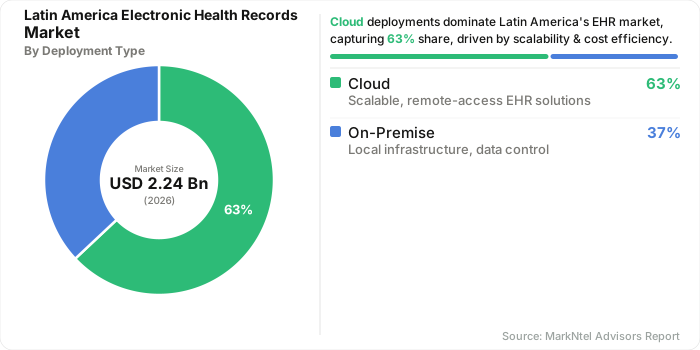
- By deployment type, cloud-based deployment holds a significant share of about 63% in 2026.
- By end user, Hospitals seized a significant share of about 50% in 2026.
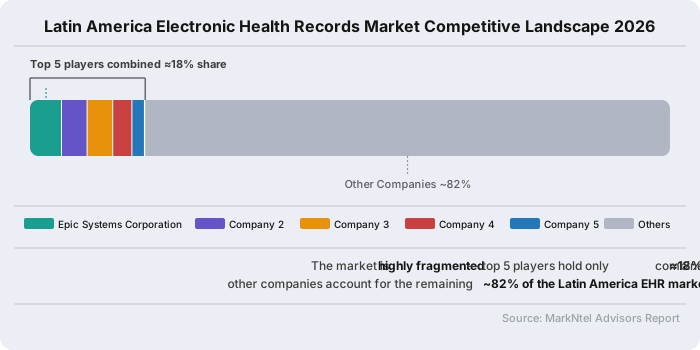
- The industry is highly fragmented. However, the top five players collectively account for nearly 18% share.
Latin America Electronic Health Records Market Size and Outlook
The Latin America Electronic Health Records market size was valued at USD 2.12 billion in 2025 and is projected to grow from USD 2.24 billion in 2026 to USD 2.88 billion by 2032. Along with this, the market is estimated to grow at a CAGR of around 4.28% during the forecast period, i.e., 2026-32.
The Latin America electronic health record market is entering a period of sustained growth as governments and healthcare providers accelerate digital transformation to improve care quality, healthcare interoperability, and operational efficiency. In 2024, the launch of the Pan-American Highway for Digital Health established a framework for cross-border interoperability, digital infrastructure, and standardized health data exchange, creating favorable conditions for wider adoption of electronic medical records across the region.
Healthcare systems are also investing in digital capabilities to further support EHR implementation. In 2025, PAHO announced that more than 70,000 health professionals had been trained in digital health competencies, including healthcare data management and emerging technologies, strengthening workforce readiness for cloud-based EHR deployment and use. In parallel, the expansion of telehealth programs and cloud healthcare services is increasing demand for integrated patient records that enable seamless information sharing across hospitals, clinics, and remote care settings. PAHO continues to promote scalable telehealth solutions that place interoperable digital records at the core of patient-centered care.
The market outlook is further reinforced by growing regional collaboration on interoperability and responsible digital innovation. According to PAHO’s 2025 progress update, 20 countries across the Americas are advancing initiatives in healthcare interoperability, telehealth, and artificial intelligence (AI) in healthcare through the Pan-American Highway for Digital Health, highlighting a shift from fragmented digital projects toward integrated health information systems and digital health ecosystems.
As healthcare providers continue migrating from paper-based and legacy systems to cloud-enabled EHR platforms, the EHR market in Latin America is expected to benefit from stronger policy support, improved digital infrastructure, and rising demand for secure, interoperable electronic patient records and healthcare IT solutions. These trends are expected to accelerate adoption of EHR software, strengthen clinical workflow automation, and support long-term demand for healthcare IT industry.
Latin America Electronic Health Records Market Key Indicators
- A growing healthcare workforce increases the need for interoperable electronic records and digital documentation tools. Recent OECD data show that Mexico has 2.7 practicing physicians and 3.0 nurses per 1,000 populations, while workforce density is higher in several other Latin American countries such as Chile and Costa Rica. As physician shortages persist and patient volumes rise, AI-enabled and cloud-based EHR systems are increasingly deployed to improve productivity and reduce administrative workloads.
- According to the Pan American Health Organization (PAHO), non-communicable diseases (NCDs) account for nearly 80% of all deaths in the Americas. The growing prevalence of cardiovascular diseases, diabetes, cancer, and respiratory disorders requires continuous patient monitoring and longitudinal health records, significantly increasing demand for EHR solutions.
- Brazil's Ministry of Health reported that all 5,570 municipalities, 26 states, and the Federal District have joined the SUS Digital program, while the federal government allocated USD 89 million in 2024 to accelerate healthcare digitalization and electronic medical record implementation. As healthcare providers transition from paper-based systems to digital platforms, demand for Electronic Health Records increases substantially across public healthcare facilities.
- Brazil's Ministry of Health allocated BRL 133.6 million for telehealth projects during 2024-2026, with an objective of delivering approximately 160,000 digital healthcare consultations through the public healthcare system. The growing volume of virtual consultations generates large quantities of patient information that must be securely stored, retrieved, and shared, thereby increasing the need for interoperable EHR systems.
Latin America Electronic Health Records Market Scope
| Category | Segments |
|---|---|
| By Deployment | On-Premise, Cloud-Based |
| By Function | Patient Management, E-Prescription, Appointment Scheduling, Billing & Revenue Cycle Management, Other |
| By End User | Hospitals, Clinics, Specialty Centers, Laboratories |
Latin America Electronic Health Records Market Growth Drivers
Government-Led Digital Health Initiatives Accelerate EHR Adoption
Government-backed digital health initiatives are emerging as the strongest catalyst for electronic health record adoption in Latin America, accelerating investments in interoperable health information systems and enabling seamless cross-border health data exchange. In March 2024, the Government of Japan committed USD 5 million as the initiative’s first external contribution, demonstrating international support for modernizing healthcare data infrastructure.
The initiative is already working with more than 20 countries in Latin America and the Caribbean to strengthen digital governance, connectivity, interoperability, and health information systems. Furthermore, PAHO’s 2024 regional digital maturity assessment found that only 4.1% of countries had reached the highest level of digital health maturity, while 42.8% remained at the initial awareness stage, highlighting significant opportunities for EHR deployment and modernization.
Government funding, interoperability mandates, and long-term digital health programs are creating a strong foundation for EHR adoption across Latin America. As countries continue investing in standardized health information systems through 2030, demand for scalable and interoperable EHR platforms is expected to increase substantially.
Recent Trends
Big Data and Artificial Intelligence are Transforming Electronic Health Record Solutions across Latin America.
The use of big data and AI analytics is becoming a key trend in the Latin America electronic health records industry as digital patient data expands. In 2024, the Pan American Health Organization and the Inter-American Development Bank launched the Artificial Intelligence in Public Health Readiness Assessment Toolkit, a framework to help governments evaluate AI readiness across 10 core domains, including data infrastructure, governance, workforce, funding, and implementation.
The availability of structured EHR data is also improving AI deployment. According to PAHO, more than 70,000 health professionals across the Americas had been trained through its digital health literacy initiatives by 2025, strengthening capabilities in data management, digital tools, and AI-enabled healthcare. A digitally skilled workforce increases the value of electronic records by enabling advanced analytics, predictive modeling, and evidence-based clinical decisions.
Moreover, PAHO’s Strategy for the Responsible Use of Artificial Intelligence in Public Health and national digital transformation programs are expected to expand investments in interoperable health information systems and AI-ready infrastructure. As governments standardize electronic records and improve data quality, healthcare providers will increasingly rely on EHR platforms capable of supporting large-scale analytics and machine learning applications.
In essence, the rapid growth of big data and AI is transforming EHRs into intelligent decision-support platforms rather than simple record repositories. Continued investment in AI governance, workforce development, and interoperable digital infrastructure will strengthen demand for advanced EHR solutions and accelerate market growth across Latin America.
Latin America Electronic Health Records Market Opportunities and Challenges
High Implementation Costs Drive Demand for Cost-Effective Cloud-Based EHR Solutions
The substantial cost of implementing Electronic Health Record systems continues to limit adoption across Latin America, particularly among resource-constrained healthcare providers. Expenses related to software customization, legacy system migration, cybersecurity, interoperability, and workforce training often require significant capital investment, making large-scale deployments difficult for many institutions.
The challenge is reflected in broader healthcare financing trends. According to the OECD and the World Bank’s Health at a Glance: Latin America and the Caribbean 2023, 32.4% of total health expenditure in the region is financed through out-of-pocket payments, compared with an OECD average of around 20%. This reliance on direct household spending places financial pressure on health systems and reduces the capacity of providers to invest in advanced digital technologies such as enterprise-wide EHR platforms.
To overcome these constraints, healthcare organizations are increasingly adopting cloud-based, software-as-a-service EHR solutions that require lower upfront investment and offer subscription-based pricing. Looking ahead, PAHO’s Digital Transformation Toolkit promotes standardized digital architecture, cloud technologies, and interoperable information systems to improve efficiency and reduce implementation complexity. As digital infrastructure matures and scalable deployment models become more accessible, cost barriers are expected to diminish, supporting broader EHR adoption across Latin America.
Although implementation costs remain a key restraint, they are accelerating the transition toward affordable cloud-native EHR solutions. This shift is expected to expand digital health adoption and create sustained growth opportunities for the Latin American EHR industry.
Segmentation Insights
Cloud-Based Deployment Leads the Latin America EHR Market
Cloud-based deployment accounts for approximately 63% of the Latin America electronic health records industry revenue, making it the leading deployment segment due to its cost efficiency, scalability, and flexibility. Unlike on-premise systems, cloud-based EHR platforms require minimal upfront investment in servers and IT infrastructure, enabling hospitals and clinics particularly small and medium-sized providers to adopt digital records through subscription-based pricing models. Cloud deployment also simplifies software updates, maintenance, and cybersecurity management, reducing the burden on in-house IT teams.
Furthermore, governments and healthcare organizations across Latin America are increasingly prioritizing digital transformation and interoperable health information systems, encouraging the adoption of cloud-native solutions that facilitate secure data exchange and remote access. The growing use of telemedicine and mobile health applications has further strengthened demand for cloud-hosted EHR platforms capable of supporting multi-site operations and real-time data sharing. As investments in healthcare digitization continue to expand, cloud deployment is expected to maintain its dominant position and drive future market growth across the region. Based on deployment, the scope has been segmented into
- Cloud
- On-premise
Hospitals Remain the Largest End-User Segment in the Latin America Electronic Health Records Market
Hospitals account for approximately 50% of the Latin America electronic health records industry, making them the largest revenue contributor among all end-user segments. This dominance is primarily driven by their high patient volumes, complex clinical workflows, and increasing investments in digital healthcare infrastructure. Hospitals rely on EHR systems to integrate patient records, laboratory results, imaging data, pharmacy information, and billing processes into a unified platform, improving care coordination and operational efficiency.
In addition, government-led digital health initiatives and regulatory efforts to enhance interoperability have encouraged both public and private hospitals to modernize their health information systems. The growing adoption of telemedicine, data analytics, and value-based care models has further accelerated EHR implementation in hospital settings. As healthcare providers continue to prioritize quality of care and administrative efficiency, hospitals are expected to remain the leading end users of EHR solutions across Latin America. Based on end user, the scope has been classified into
- Hospitals
- Clinics
- Specialty Centers
- Laboratories
Latin America Electronic Health Records Market Geographical Outlook
Brazil accounts for approximately 28% of the Latin America electronic health records industry, making it the region’s largest market. Its leadership is driven by a well-established healthcare infrastructure, increasing investments in healthcare IT, and strong government support for digital transformation. A key initiative is Brazil’s National Health Data Network (RNDS), which promotes interoperability by enabling the secure exchange of electronic health information across healthcare providers and supporting integrated patient records.
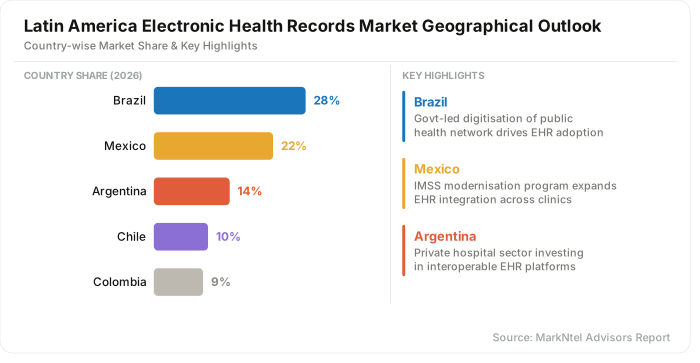
The country has also advanced digital healthcare through Meu SUS Digital (formerly Conecte SUS), improving citizens’ access to health information and services. In the private sector, leading hospital networks such as Rede D’Or São Luiz and Hospital Israelita Albert Einstein continue to invest in electronic medical records, artificial intelligence, and cloud-based digital platforms to enhance clinical efficiency and patient care. Coupled with the rapid expansion of telemedicine and broader healthcare modernization efforts, these initiatives continue to strengthen Brazil’s position as the primary driver of EHR adoption and market growth in Latin America.
Latin America Electronic Health Records Market Competitive Analysis
The Latin America electronic health records market is highly fragmented, with competition among global healthcare IT providers and regional software vendors. The top five players Epic Systems Corporation, Oracle Corporation, Medical Information Technology, Inc. (MEDITECH), InterSystems Corporation, and Dedalus S.p.A. collectively account for approximately 18% of the market share.
Key Participants in the Latin America Electronic Health Records Ecosystem
- Epic Systems Corporation
- Oracle Corporation
- Medical Information Technology, Inc. (MEDITECH)
- InterSystems Corporation
- Dedalus S.p.A.
- Veradigm Inc.
- athenahealth, Inc.
- eClinicalWorks, LLC
- NextGen Healthcare, Inc.
- CompuGroup Medical SE & Co. KGaA
- Koninklijke Philips N.V.
- MV Sistemas Ltda.
- Others
Latin America Electronic Health Records Industry News and Recent Developments
2025: Oracle Health Launches Next-Generation AI-Powered Electronic Health Record
Oracle Health introduced its next-generation cloud-native Electronic Health Record (EHR) platform with embedded artificial intelligence and voice-enabled functionality. The solution automates clinical documentation, enhances workflow efficiency, and provides contextual patient insights to reduce administrative burden and support informed decision-making.
Impact Analysis: Oracle Health’s AI-powered EHR is expected to accelerate the adoption of intelligent clinical systems by reducing documentation time and improving provider productivity. The integration of voice-enabled workflows and contextual AI can enhance care quality, lower administrative costs, and strengthen interoperability. The launch is also likely to intensify competition among EHR vendors, encouraging greater investment in cloud-native and AI-driven healthcare solutions across global markets.
-
eClinicalWorks Introduces AI-Powered Enhancements to Its Cloud EHR Platform
eClinicalWorks expanded its cloud-based EHR with new artificial intelligence capabilities, including AI-assisted clinical documentation and workflow automation. The enhancements are intended to reduce physician burnout, improve operational efficiency, and support better patient engagement across ambulatory care settings.
Impact Analysis: The AI enhancements introduced by eClinicalWorks are expected to improve clinical efficiency by automating routine documentation and administrative tasks, allowing healthcare professionals to devote more time to patient care. These capabilities can reduce physician burnout, increase operational productivity, and support value-based care initiatives. The development also reinforces the industry trend toward AI-enabled cloud EHR platforms, prompting competitors to expand their own intelligent automation offerings.
Frequently Asked Questions
- Market Segmentation
- Introduction
- Product Definition
- Research Process
- Assumptions
- Executive Summary
- Latin America Electronic Health Record Market Policies, Regulations, and Product Standards
- Latin America Electronic Health Record Market Trends & Developments
- Latin America Electronic Health Record Market Dynamics
- Growth Factors
- Challenges
- Latin America Electronic Health Record Market Hotspot & Opportunities
- Latin America Electronic Health Record Market Outlook, 2022-2032F
- Market Size & Outlook
- By Revenues (USD Million)
- Market Segmentation & Outlook
- By Deployment- Market Size & Forecast 2022-2032, USD Million
- On-Premise
- Cloud-Based
- By Function- Market Size & Forecast 2022-2032, USD Million
- Patient Management
- E-Prescription
- Appointment Scheduling
- Billing & Revenue Cycle Management
- Other
- By End User- Market Size & Forecast 2022-2032, USD Million
- Hospitals
- Clinics
- Specialty Centers
- Laboratories
- By Country
- Brazil
- Argentina
- Colombia
- Chile
- Rest of Latin America
- By Company
- Competition Characteristics
- Market Segmentation & Outlook
- By Deployment- Market Size & Forecast 2022-2032, USD Million
- Market Size & Outlook
- Brazil Electronic Health Record Market Outlook, 2022-2032F
- Market Size & Outlook
- By Revenues (USD Million)
- Market Segmentation & Outlook
- By Deployment- Market Size & Forecast 2022-2032, USD Million
- By Function- Market Size & Forecast 2022-2032, USD Million
- By Application- Market Size & Forecast 2022-2032, USD Million
- By End User- Market Size & Forecast 2022-2032, USD Million
- Market Size & Outlook
- Argentina Electronic Health Record Market Outlook, 2022-2032F
- Market Size & Outlook
- By Revenues (USD Million)
- Market Segmentation & Outlook
- By Deployment- Market Size & Forecast 2022-2032, USD Million
- By Function- Market Size & Forecast 2022-2032, USD Million
- By Application- Market Size & Forecast 2022-2032, USD Million
- By End User- Market Size & Forecast 2022-2032, USD Million
- Market Size & Outlook
- Colombia Electronic Health Record Market Outlook, 2022-2032F
- Market Size & Outlook
- By Revenues (USD Million)
- Market Segmentation & Outlook
- By Deployment- Market Size & Forecast 2022-2032, USD Million
- By Function- Market Size & Forecast 2022-2032, USD Million
- By Application- Market Size & Forecast 2022-2032, USD Million
- By End User- Market Size & Forecast 2022-2032, USD Million
- Market Size & Outlook
- Chile Electronic Health Record Market Outlook, 2022-2032F
- Market Size & Outlook
- By Revenues (USD Million)
- Market Segmentation & Outlook
- By Deployment- Market Size & Forecast 2022-2032, USD Million
- By Function- Market Size & Forecast 2022-2032, USD Million
- By Application- Market Size & Forecast 2022-2032, USD Million
- By End User- Market Size & Forecast 2022-2032, USD Million
- Market Size & Outlook
- Latin America Electronic Health Record Market Key Strategic Imperatives for Success & Growth
- Competitive Outlook
- Company Profiles
- Epic Systems Corporation
- Business Description
- Product Portfolio
- Collaborations & Alliances
- Recent Developments
- Financial Details
- Others
- Oracle Corporation
- Business Description
- Product Portfolio
- Collaborations & Alliances
- Recent Developments
- Financial Details
- Others
- Medical Information Technology, Inc. (MEDITECH)
- Business Description
- Product Portfolio
- Collaborations & Alliances
- Recent Developments
- Financial Details
- Others
- InterSystems Corporation
- Business Description
- Product Portfolio
- Collaborations & Alliances
- Recent Developments
- Financial Details
- Others
- Dedalus S.p.A.
- Business Description
- Product Portfolio
- Collaborations & Alliances
- Recent Developments
- Financial Details
- Others
- Veradigm Inc.
- Business Description
- Product Portfolio
- Collaborations & Alliances
- Recent Developments
- Financial Details
- Others
- athenahealth, Inc.
- Business Description
- Product Portfolio
- Collaborations & Alliances
- Recent Developments
- Financial Details
- Others
- eClinicalWorks, LLC
- Business Description
- Product Portfolio
- Collaborations & Alliances
- Recent Developments
- Financial Details
- Others
- NextGen Healthcare, Inc.
- Business Description
- Product Portfolio
- Collaborations & Alliances
- Recent Developments
- Financial Details
- Others
- CompuGroup Medical SE & Co. KGaA
- Business Description
- Product Portfolio
- Collaborations & Alliances
- Recent Developments
- Financial Details
- Others
- Koninklijke Philips N.V.
- Business Description
- Product Portfolio
- Collaborations & Alliances
- Recent Developments
- Financial Details
- Others
- MV Sistemas Ltda.
- Business Description
- Product Portfolio
- Collaborations & Alliances
- Recent Developments
- Financial Details
- Others
- Others
- Epic Systems Corporation
- Company Profiles
- Disclaimer
MarkNtel Advisors follows a robust and iterative research methodology designed to ensure maximum accuracy and minimize deviation in market estimates and forecasts. Our approach combines both bottom-up and top-down techniques to effectively segment and quantify various aspects of the market. A consistent feature across all our research reports is data triangulation, which examines the market from three distinct perspectives to validate findings. Key components of our research process include:
1. Scope & Research Design At the outset, MarkNtel Advisors define the research objectives and formulate pertinent questions. This phase involves determining the type of research—qualitative or quantitative—and designing a methodology that outlines data collection methods, target demographics, and analytical tools. They also establish timelines and budgets to ensure the research aligns with client goals.
2. Sample Selection and Data Collection In this stage, the firm identifies the target audience and determines the appropriate sample size to ensure representativeness. They employ various sampling methods, such as random or stratified sampling, based on the research objectives. Data collection is carried out using tools like surveys, interviews, and observations, ensuring the gathered data is reliable and relevant.
3. Data Analysis and Validation Once data is collected, MarkNtel Advisors undertake a rigorous analysis process. This includes cleaning the data to remove inconsistencies, employing statistical software for quantitative analysis, and thematic analysis for qualitative data. Validation steps are taken to ensure the accuracy and reliability of the findings, minimizing biases and errors.

4. Data Forecast and FinalizationThe final phase involves forecasting future market trends based on the analyzed data. MarkNtel Advisors utilize predictive modeling and time series analysis to anticipate market behaviors. The insights are then compiled into comprehensive reports, featuring visual aids like charts and graphs, and include strategic recommendations to inform client decision-making
We offer flexible licensing options to cater to varying organizational needs. Choose the pricing pack that best suits your requirements:
Buy Now Inquire Before Buying
 Request Customization
 Talk to our Consultant







