

Kuwait Healthcare Market Research Report: Growth Drivers & Forecast (2026-2032)
By Healthcare Expenditure Type (Public Healthcare Expenditure, Private Healthcare Expenditure, Out-of-Pocket Expenditure), By Pharmaceutical Segment (Prescription Drugs, Over-the-C ... ounter (OTC) Drugs, Generic Drugs, Branded Drugs, Biologics & Biosimilars), By Therapeutic Area (Cardiovascular Diseases, Oncology, Diabetes, Respiratory Diseases, Neurology, Infectious Diseases, Others), By Medical Device Type (Diagnostic Imaging Devices, Patient Monitoring Devices, Surgical Equipment, In-vitro Diagnostics, Orthopedic Devices, Cardiovascular Devices, Others), By Technology Type (Artificial Intelligence in Healthcare, Telemedicine & Remote Monitoring, Electronic Health Records (EHR), Healthcare Analytics, Robotic Surgery, Wearables & Health Apps), By Healthcare Workforce (Physicians, Nurses, Dentists, Allied Health Professionals), By Insurance Type (Public Health Insurance, Private Health Insurance), By Disease Category (Chronic Diseases, Infectious Diseases, Mental Health Disorders), By End User (Hospitals, Clinics, Diagnostic Centers / Laboratories, Ambulatory Surgical Centers, Home Healthcare, Research Institutes, Pharmacies, Others) Read more
- Healthcare
- Mar 2026
- Pages 170
- Report Format: PDF, Excel, PPT
Kuwait Healthcare Market
Projected 9.17% CAGR from 2026 to 2032
Study Period
2026-2032
Market Size (2026)
USD 7.23 Billion
Market Size (2032)
USD 12.24 Billion
Base Year
2025
Projected CAGR
9.17%
Leading Segments
By Therapeutic Area: Cardiovascular Diseases
Kuwait Healthcare Market Report Key Takeaways:
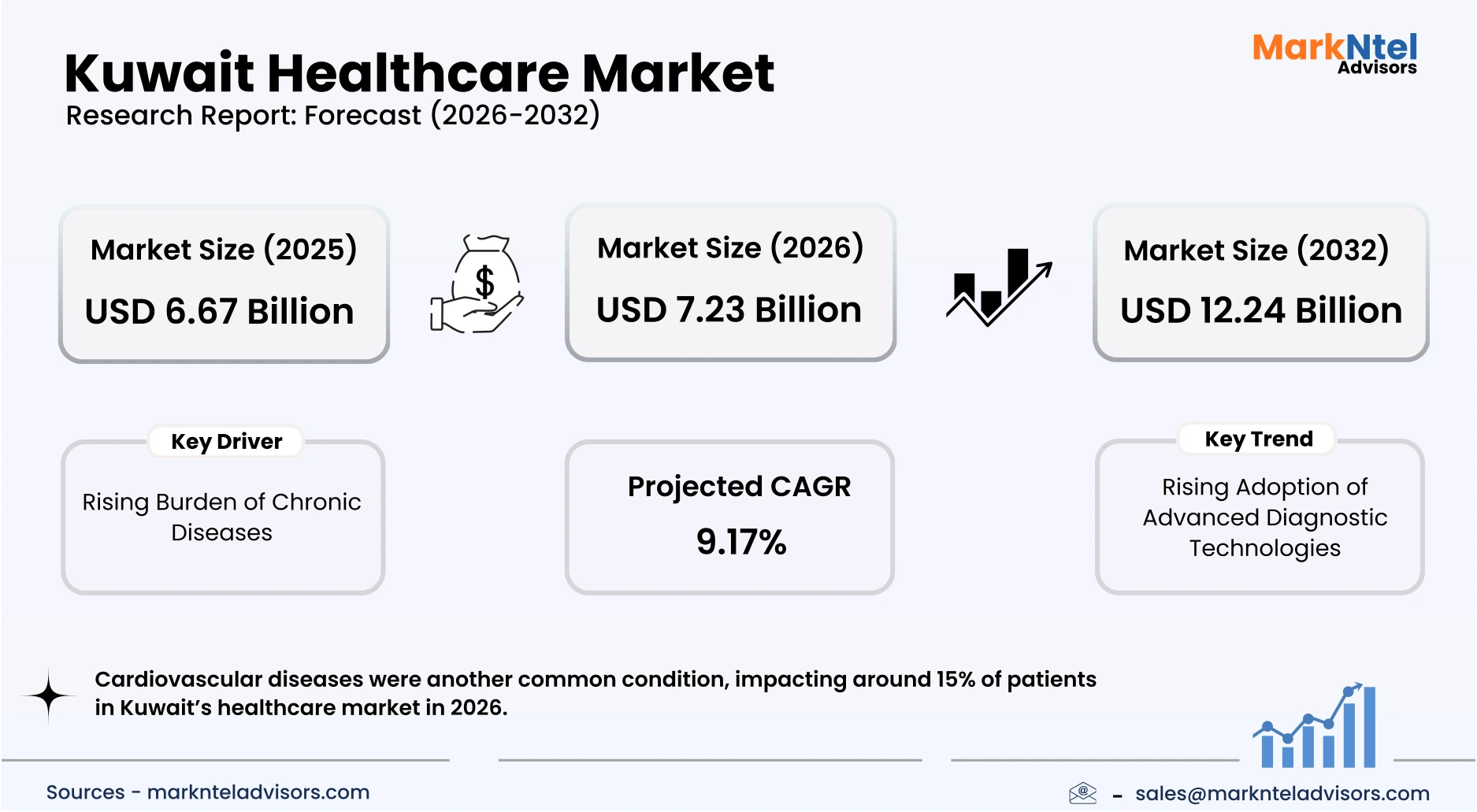
- The Kuwait Healthcare Market size was valued at USD 6.67 billion in 2025 and is projected to grow from USD 7.23 billion in 2026 to USD 12.24 billion by 2032, exhibiting a CAGR of 9.17% during the forecast period.
- About 25% of patients in Kuwait’s healthcare market in 2026 are affected by diabetes, highlighting its significant prevalence.
- Cardiovascular diseases were another common condition, impacting around 15% of patients in Kuwait’s healthcare market in 2026.
- Kuwait’s healthcare infrastructure includes 44 hospitals, over 100 outpatient care centers, and numerous rehabilitation and residential care facilities.
Market Insights & Analysis: Kuwait Healthcare Market (2026-32):
The Kuwait Healthcare Market size was valued at USD 6.67 billion in 2025 and is projected to grow from USD 7.23 billion in 2026 to USD 12.24 billion by 2032, exhibiting a CAGR of 9.17 % during the forecast period, i.e., 2026-32.
Kuwait’s healthcare sector is undergoing steady transformation as rising disease prevalence, expanding infrastructure, and increasing adoption of advanced medical technologies reshape healthcare delivery across the country.
The rising burden of non-communicable diseases in Kuwait is increasing demand for specialized care and long-term treatment. Around 16.2% of adults suffer from osteoarthritis, while 15.9% experience thyroid disorders. Additionally, about 13% of adults report depression or depressive symptoms, highlighting the growing need for expanded mental health services and specialized healthcare programs.
Alongside these conditions, Genetic disorders such as thalassemia and sickle cell anemia remain public health concerns in Kuwait due to high consanguineous marriage rates. To address this, nationwide premarital screening programs have conducted over 400,000 genetic tests, supporting early detection of hereditary disease carriers and prevention of inherited disorders .
Disease patterns in the country are shifting toward chronic conditions such as obesity-related metabolic disorders, chronic kidney disease, respiratory illnesses like asthma, and cancer, which are increasingly contributing to hospital admissions and long-term healthcare demand.
Healthcare infrastructure expansion remains central to Kuwait’s healthcare development strategy. The country operates around 7,095 hospital beds, equivalent to roughly two beds per 1,000 people. Government hospitals dominate capacity, while about 16 private hospitals provide nearly 1,200 beds. Private providers also plan to add around 1,800 additional beds, which will enhance treatment capacity and reduce reliance on overseas medical care .
Healthcare utilization in Kuwait remains high, with over 211,904 annual inpatient discharges in public hospitals. Kuwait’s healthcare infrastructure includes around 44 hospitals, more than 100 primary healthcare and outpatient polyclinics, and numerous specialized rehabilitation and long-term care facilities, forming a comprehensive network that supports both primary and advanced medical services across the country.
Technological innovation is also playing an important role in modernizing healthcare services. Hospitals across Kuwait are increasingly integrating advanced diagnostic technologies to enhance clinical accuracy and improve patient outcomes. In 2023, healthcare facilities such as Jaber Hospital began integrating artificial intelligence-based diagnostic systems within radiology and endoscopic procedures to detect tumors that may not be visible through conventional diagnostic methods. These technologies are improving diagnostic precision while reducing medical errors .
The country’s pharmaceutical sector is also gradually strengthening to support domestic healthcare demand. Kuwait Saudi Pharmaceutical Industries Company, a major domestic manufacturer, produces around 120 generic pharmaceutical products, including antibiotics and analgesics, which are supplied to both local and regional markets. In 2023, the company partnered with Abbott Laboratories to locally manufacture 26 pharmaceutical and healthcare products, supporting Kuwait’s long-term ambition to develop a regional pharmaceutical manufacturing hub.
Large-scale government investments are further strengthening healthcare capacity. Under the National Healthcare Development Plan (2024–2025), Kuwait is implementing around 20 healthcare projects valued at approximately USD 462 million, including expansions of New Al-Sabah Hospital, New Adan Hospital, the Infectious Disease Hospital, and the Kuwait Cancer Center. These initiatives are aimed at increasing treatment capacity and improving access to specialized healthcare services.
Kuwait’s healthcare sector is expected to expand steadily in the coming years as the burden of chronic diseases rises and healthcare infrastructure continues to develop. Ongoing investments in hospitals, advanced diagnostics, and pharmaceutical manufacturing will play a critical role in improving healthcare accessibility and strengthening the country’s healthcare ecosystem.
Kuwait Healthcare Market Scope:
| Category | Segments |
|---|---|
| By Healthcare Expenditure Type | (Public Healthcare Expenditure, Private Healthcare Expenditure, Out-of-Pocket Expenditure), |
| By Pharmaceutical Segment | (Prescription Drugs, Over-the-Counter (OTC) Drugs, Generic Drugs, Branded Drugs, Biologics & Biosimilars), |
| By Therapeutic Area | (Cardiovascular Diseases, Oncology, Diabetes, Respiratory Diseases, Neurology, Infectious Diseases, Others), |
| By Medical Device Type | (Diagnostic Imaging Devices, Patient Monitoring Devices, Surgical Equipment, In-vitro Diagnostics, Orthopedic Devices, Cardiovascular Devices, Others), |
| By Technology Type | (Artificial Intelligence in Healthcare, Telemedicine & Remote Monitoring, Electronic Health Records (EHR), Healthcare Analytics, Robotic Surgery, Wearables & Health Apps), |
| By Healthcare Workforce | (Physicians, Nurses, Dentists, Allied Health Professionals), |
| By Insurance Type | (Public Health Insurance, Private Health Insurance), |
| By Disease Category | (Chronic Diseases, Infectious Diseases, Mental Health Disorders), |
| By End User | (Hospitals, Clinics, Diagnostic Centers / Laboratories, Ambulatory Surgical Centers, Home Healthcare, Research Institutes, Pharmacies, Others) |
Kuwait Healthcare Market Driver:
Rising Burden of Chronic Diseases
The rising prevalence of various diseases is a key factor driving growth in Kuwait’s healthcare sector. Obesity has emerged as one of the most significant public health challenges in the country, contributing to the growing incidence of metabolic and chronic disorders that require long-term medical management.
According to statements from Kuwait’s Ministry of Health, nearly 77% of the population is overweight, and more than 40% is classified as obese, reflecting one of the highest obesity burdens in the Middle East. Recent health assessments further indicate that approximately 45.3% of Kuwait’s population is obese, placing the country among the top ten globally for obesity prevalence.
High obesity rates are increasing the prevalence of metabolic and cardiovascular diseases in Kuwait. In 2024, obesity alone was linked to over 2 million morbidity cases and 961 deaths, highlighting rising pressure on healthcare systems and the need for expanded medical and preventive care services.
In addition to metabolic diseases, respiratory conditions are also contributing to healthcare demand. Asthma is particularly prevalent in Kuwait, with epidemiological studies showing that around 17.9% of adults report asthma, making it one of the most common chronic diseases after metabolic disorders .
Overall, the growing prevalence of obesity, respiratory illnesses, and other chronic conditions is significantly increasing demand for hospitals, specialized treatments, and long-term disease management services. As a result, Kuwait’s healthcare sector is expected to expand steadily with greater investment in healthcare infrastructure, preventive programs, and advanced medical technologies.
Kuwait Healthcare Market Trend:
Rising Adoption of Advanced Diagnostic Technologies
The Kuwait Healthcare Market is increasingly witnessing the adoption of advanced diagnostic technologies as part of the government’s strategy to strengthen early disease detection, clinical efficiency, and precision medicine.
The Ministry of Health, Kuwait, has been expanding the deployment of modern imaging systems, molecular diagnostics, and nuclear medicine technologies across public hospitals to improve diagnostic accuracy and treatment planning.
A significant milestone was achieved in 2023, when a hybrid PET/MRI imaging system was introduced at Jahra Hospital, marking the first installation of this technology in Kuwait. This advanced system integrates positron emission tomography (PET) with magnetic resonance imaging (MRI) to simultaneously capture metabolic and anatomical data, enabling physicians to diagnose complex conditions such as cancer, neurological disorders, and inflammatory diseases with greater precision.
Hybrid imaging technology significantly enhances diagnostic outcomes by enabling earlier detection of tumors and disease progression compared with conventional imaging techniques. The integrated PET/MRI system also reduces radiation exposure by up to 70% compared with traditional PET/CT scans, making it particularly beneficial for pediatric and long-term monitoring patients.
The growing adoption of advanced imaging and diagnostic technologies is transforming Kuwait’s healthcare delivery model toward data-driven and precision-based medicine. Continued government investments and hospital modernization initiatives are expected to significantly increase the demand for high-end diagnostic technologies, supporting sustained growth in the Kuwait Healthcare Market.
Kuwait Healthcare Market Opportunity:
Home Healthcare and Remote Patient Monitoring
Home healthcare and remote patient monitoring (RPM) are emerging opportunities in Kuwait’s healthcare sector as the Ministry of Health in Kuwait expands community-based care to reduce hospital burden. For example, in 2025, 872 bedridden patients received home healthcare services in the first half of the year, reflecting growing adoption of home-based care to support elderly and chronically ill patients while improving healthcare accessibility.
In parallel, Kuwait is strengthening remote healthcare capabilities through digital health platforms and telemedicine services. Since the launch of the national electronic patient system in October 2023, more than 3.9 million users have accessed digital healthcare services, including appointment scheduling, remote consultations, and digital health monitoring tools. These platforms enable physicians to remotely track patient health conditions, improving treatment continuity while reducing the need for frequent hospital visits.
Looking ahead, the government is accelerating digital healthcare investments under Kuwait Vision 2035, allocating approximately USD 56 million toward healthcare digital transformation. The initiative includes telehealth platforms, electronic health records, and remote monitoring technologies integrated across hospitals and clinics.
The expansion of home healthcare programs and digital patient monitoring systems is creating strong opportunities within Kuwait’s healthcare ecosystem. Continued government investments in telehealth and digital infrastructure are expected to enhance healthcare accessibility and drive long-term sector growth.
Kuwait Healthcare Market Challenge:
Regulatory Complexities and Compliance Costs
Regulatory complexity is a major challenge in Kuwait’s healthcare sector, as the Ministry of Health in Kuwait enforces strict oversight to ensure patient safety and quality standards. However, lengthy approval processes, extensive documentation requirements, and compliance costs increase operational burdens for healthcare providers and pharmaceutical companies.
In 2024, Kuwait introduced updated pharmaceutical pricing and registration regulations requiring medicines to be officially registered and priced by the Ministry of Health before sale. Companies must submit Good Manufacturing Practice (GMP) certificates, safety data, and pricing approvals, increasing compliance requirements and delaying new drug market entry .
Regulatory enforcement has also intensified in recent years. In 2025, Kuwaiti authorities referred 23 private healthcare facilities for legal review and closed five clinics due to violations related to professional advertising and medical practice regulations. Such strict enforcement demonstrates the government’s commitment to maintaining healthcare standards but also increases operational risks for providers that fail to meet regulatory requirements.
Although strict regulatory frameworks strengthen healthcare quality and patient safety, complex approval procedures and compliance costs may delay market entry for new healthcare providers and pharmaceutical products. Consequently, these regulatory barriers could limit private sector expansion and slow the pace of growth within Kuwait’s healthcare market.
Kuwait Healthcare Market Epidemiology Profile:
Cardiovascular Diseases:
Cardiovascular diseases represent a significant public health challenge in Kuwait, with approximately 15% of patients, highlighting the substantial prevalence of the disease and its significant contribution to the country’s overall healthcare burden. Epidemiological studies indicate a high prevalence of cardiovascular risk factors across the population. Hypertension affects around 35.2% of women and 43.5% of men, significantly increasing the risk of heart disease and stroke. In addition, metabolic conditions such as dyslipidemia are highly prevalent and contribute to the growing burden of cardiovascular complications.
The incidence of cardiovascular disease in Kuwait remains substantial. Global health estimates indicate an age-standardized incidence rate of approximately 1,336 cases per 100,000 people. Several modifiable risk factors contribute to this high incidence, including obesity (48.2%), dyslipidemia (70.3%), hypertension (25.3%), diabetes (23.3%), and smoking (17.8%). Sedentary lifestyles and unhealthy dietary patterns further elevate cardiovascular risk among residents.
Cardiovascular diseases are also a leading cause of death in the country. International health estimates report approximately 4,201 deaths annually attributed to cardiovascular conditions, with an age-standardized mortality rate of about 168 deaths per 100,000 people. These figures highlight the significant healthcare burden associated with heart disease in Kuwait.
Clinical management typically begins with early diagnosis and risk-factor evaluation through tests such as electrocardiography (ECG), echocardiography, stress testing, and blood pressure monitoring. Hospitals increasingly utilize advanced diagnostic imaging and continuous cardiac monitoring systems to detect coronary artery disease and related conditions at earlier stages.
For moderate to severe cases, treatment progresses to interventional procedures such as cardiac catheterization and angioplasty. In 2025, physicians at Chest Diseases Hospital successfully implemented advanced catheter-based stent procedures for complex angina cases, demonstrating Kuwait’s growing capacity to manage severe cardiac conditions domestically .
Diabetes:
Diabetes represents a significant public health challenge in Kuwait, with approximately 25% of patients, highlighting the substantial prevalence of the disease and its significant contribution to the country’s overall healthcare burden. According to the International Diabetes Federation Diabetes Atlas, approximately 908,500 adults aged 20–79 years were living with diabetes in Kuwait in 2024, compared with 298,000 cases in 2011 and 75,600 cases in 2000, indicating a rapid rise in disease prevalence. The age-standardized diabetes prevalence reached about 25.6% in 2024, placing Kuwait among the countries with the highest diabetes prevalence globally and among the top three worldwide for adult diabetes prevalence.
The data also indicate a large population at risk of developing diabetes. In 2024, approximately 574,000 adults were reported to have impaired fasting glucose (pre-diabetes), while around 639,300 individuals had impaired glucose tolerance, both conditions significantly increasing the likelihood of progression to type 2 diabetes .
Diabetes also contributes notably to mortality in the country. Estimates suggest that around 923 deaths among adults aged 20–79 years were attributed to diabetes in 2024, accounting for approximately 14.8% of deaths within this age group. Several factors contribute to the high prevalence of diabetes in Kuwait, including obesity, sedentary lifestyles, unhealthy dietary patterns, and genetic predisposition.
Clinical management in Kuwait increasingly emphasizes patient education and behavioral management. Programs such as Dose Adjustment for Normal Eating (DAFNE) support adults with type 1 diabetes in adjusting insulin doses based on diet and lifestyle, while youth-focused initiatives, including KICk-OFF and WICKED, provide education for children and adolescents to improve insulin management and lifestyle awareness . Additional initiatives, such as the Diabetes Journey educational workshop and specialized Type-2 Diabetes Remission Clinics, focus on early intervention, lifestyle modification, and weight reduction to improve glycemic control and reduce long-term complications.
Gain a Competitive Edge with Our Kuwait Healthcare Market Report:
- The Kuwait Healthcare Market Report by MarkNtel Advisors provides a detailed & thorough analysis of market size & share, growth rate, competition, and key players. This comprehensive analysis helps businesses gain a holistic understanding of the market dynamics & make informed decisions.
- This report also highlights current market trends & future projections, allowing businesses to identify emerging opportunities & potential challenges. By understanding market forecasts, companies can align their strategies & stay ahead of the competition.
- The Kuwait Healthcare Market Report aids in assessing & mitigating risks associated with entering or operating in the market. By understanding market dynamics, regulatory frameworks, and potential challenges, businesses can develop strategies to minimize risks & optimize their operations.
*Reports Delivery Format - Market research studies from MarkNtel Advisors are offered in PDF, Excel and PowerPoint formats. Within 24 hours of the payment being successfully received, the report will be sent to your email address.
Frequently Asked Questions
- Introduction
- Executive Summary
- Key Insights
- Key Findings (2020–2024)
- Market Outlook Snapshot (2025–2032F)
- Strategic Imperatives
- Macro Environment Analysis
- Kuwait at a Glance
- Geographic Overview
- Political Structure
- Trade & Regional Alliances
- Others
- Demographic Profile (2020–2032F)
- Population Trends
- Age Structure
- Urban vs Rural Distribution
- Fertility Rate Trends
- Migration Trends
- Ethnic Composition
- Economic Profile (2020–2032F)
- GDP (Current & Constant USD)
- GDP by Sector
- Working Population & Labor Participation
- Per Capita Income & Purchasing Power
- Unemployment & Underemployment
- Inflation Rate & Healthcare Cost Impact
- Foreign Direct Investment Trends
- Kuwait PESTLE Analysis
- Kuwait at a Glance
- Kuwait Healthcare Sector Analysis, 2026
- Healthcare System Overview
- Structure of Healthcare System
- Public vs Private Healthcare
- Governance & Regulatory Authorities
- Others
- Healthcare Ecosystem & Infrastructure (2020–2026)
- Healthcare Expenditure
- Healthcare Expenditure as % of GDP
- Per Capita Healthcare Expenditure
- Healthcare Facilities
- Number of Hospitals
- Number of Clinics
- Number of Pharmacies
- Number of Diagnostic Centres
- Public vs Private Distribution
- Bed Availability & Utilization
- Beds per 1,000 Population
- Beds Specialty
- Regional Disparities
- Healthcare Workforce
- Physicians per 1,000 Population
- Physicians by Speciality
- Nurses
- Dentists
- Allied Health Professionals
- Healthcare Expenditure
- Healthcare System Overview
- Health Outcomes & Public Health Indicators (2020–2026)
- Life Expectancy (Male vs Female)
- Infant Mortality Rate
- Maternal Mortality Ratio
- Immunization Coverage Rates (Measles, DPT, HPV, COVID-19)
- Overall Disease Burden Trends
- Healthcare Reforms & Large-Scale Projects (2020-2026)
- Government Reforms
- Public-Private Partnerships
- Infrastructure Expansion Projects
- Private Sector Investments
- Others
- Insurance Framework
- Public Health Insurance Programs
- Private Health Insurance Market
- Insurance Penetration & Coverage Gaps
- Payer Landscape
- Reimbursement Models (FFS, Bundled, Value-Based Care)
- Claims Management & Transparency Issues
- Out-of-Pocket Expenditure Trends (2020-2026)
- Regulatory Environment (Healthcare Sector)
- Market Authorisation for Pharmaceuticals
- Market Authorisation for Medical Devices
- Licensing for Manufacturing, Import & Export
- Clinical Trial Regulations
- Intellectual Property & Patent Protection
- Advertising, Labeling & Packaging Regulations
- Pharmacy & Hospital Licensing Rules
- Others
- Market Dynamics & Technology
- Healthcare Market Dynamics
- Growth Drivers
- Challenges & Barriers
- Emerging Opportunities
- Value Chain Analysis
- Healthcare Technology Trends
- Digital Health Maturity
- Telemedicine & Remote Monitoring
- Artificial Intelligence & Machine Learning
- Health Apps & Wearables
- Robotic Surgery
- EHR, Data Interoperability & Cybersecurity
- Others
- Healthcare Market Dynamics
- Epidemiology Profile (By Age & By Gender) (2020–2032F)
- Chronic Diseases
- Cardiovascular Diseases
- Prevalence
- Incidence
- Mortality Rate
- Risk Factors
- Healthcare & Economic Burden
- Infrastructure Challenges
- Treatment Landscape
- Others
- Diabetes
- Prevalence
- Incidence
- Mortality Rate
- Risk Factors
- Healthcare & Economic Burden
- Infrastructure Challenges
- Treatment Landscape
- Others
- Cancer
- Prevalence
- Incidence
- Mortality Rate
- Risk Factors
- Healthcare & Economic Burden
- Infrastructure Challenges
- Treatment Landscape
- Others
- Chronic Respiratory Diseases
- Prevalence
- Incidence
- Mortality Rate
- Risk Factors
- Healthcare & Economic Burden
- Infrastructure Challenges
- Treatment Landscape
- Others
- Chronic Kidney Disease
- Prevalence
- Incidence
- Mortality Rate
- Risk Factors
- Healthcare & Economic Burden
- Infrastructure Challenges
- Treatment Landscape
- Others
- Cardiovascular Diseases
- Infectious Diseases
- Tuberculosis
- Prevalence
- Incidence
- Mortality Rate
- Risk Factors
- Healthcare & Economic Burden
- Infrastructure Challenges
- Treatment Landscape
- Others
- HIV
- Prevalence
- Incidence
- Mortality Rate
- Risk Factors
- Healthcare & Economic Burden
- Infrastructure Challenges
- Treatment Landscape
- Others
- Hepatitis
- Prevalence
- Incidence
- Mortality Rate
- Risk Factors
- Healthcare & Economic Burden
- Infrastructure Challenges
- Treatment Landscape
- Others
- Others
- Tuberculosis
- Mental Health
- Prevalence of Mental Health Disorders
- Suicide Rates & Trends
- Urban-Rural & Gender Disparities
- Infrastructure Gaps
- Economic & Social Burden
- Chronic Diseases
- Kuwait Healthcare System Stakeholders Analysis, 2026
- Kuwait Pharmaceutical Market Outlook (2020–2030F)
- Market Size & Growth
- Market Size (USD Million), 2020-2030F
- Market by Key Segments
- Prescription vs OTC
- Generics vs Branded
- Therapeutic Category Distribution
- Manufacturing Landscape
- Distribution & Supply Chain
- Major Distributors
- Major Suppliers
- Major Local and Multinational Players
- Pharmaceutical sector (Top 5–10 companies, % market share)
- Imports & Exports (Value in USD Million) (2020-2026)
- Key Pharmaceutical Clusters (if there)
- Investments and R&D (2020-2026)
- Others
- Market Size & Growth
- Kuwait Medical Devices Market Outlook (2020–2030F)
- Market Size & Growth
- Market Size (USD Million), 2020-2030F
- Market by Key Segments
- By Device Type
- By Risk Class
- By End-User
- Manufacturing Landscape
- Distribution & Supply Chain
- Distributors
- Supply Chain
- Major Local and Multinational Players
- Medical Devices Sector (Top 5–10 companies, % market share)
- Imports & Exports (Value in USD Million) (2020-2026)
- Key Medical Device Clusters (if there)
- Investments and R&D (2020-2026)
- Others
- Market Size & Growth
- Kuwait Pharmaceutical Market Outlook (2020–2030F)
- Kuwait Strategic & Investments in Healthcare Outlook (2025-2032F)
- High-Growth Segments
- Foreign Investment Opportunities
- Government Incentives & Ease of Doing Business
- Risk Assessment & Mitigation
- Trade Associations & Industry Bodies
- Pharmaceutical Associations
- Medical Device Associations
- Healthcare Provider Associations
- Regulatory & Standards Bodies
- Healthcare Trade Fairs & Conferences (2024–2026)
- National Healthcare Exhibitions
- Medical Technology Events
- Pharmaceutical Conferences
- Regional Latin America Events Relevant to Kuwait
- Impact of Global Health Events
- COVID-19 Impact (2020–2022)
- Post-Pandemic Recovery
- Emergency Preparedness Evolution
- Strategic Recommendations
- Market Entry Strategy
- Partnership Models
- Pricing Strategy
- Regulatory Navigation
- Disclaimer
MarkNtel Advisors follows a robust and iterative research methodology designed to ensure maximum accuracy and minimize deviation in market estimates and forecasts. Our approach combines both bottom-up and top-down techniques to effectively segment and quantify various aspects of the market. A consistent feature across all our research reports is data triangulation, which examines the market from three distinct perspectives to validate findings. Key components of our research process include:
1. Scope & Research Design At the outset, MarkNtel Advisors define the research objectives and formulate pertinent questions. This phase involves determining the type of research—qualitative or quantitative—and designing a methodology that outlines data collection methods, target demographics, and analytical tools. They also establish timelines and budgets to ensure the research aligns with client goals.
2. Sample Selection and Data Collection In this stage, the firm identifies the target audience and determines the appropriate sample size to ensure representativeness. They employ various sampling methods, such as random or stratified sampling, based on the research objectives. Data collection is carried out using tools like surveys, interviews, and observations, ensuring the gathered data is reliable and relevant.
3. Data Analysis and Validation Once data is collected, MarkNtel Advisors undertake a rigorous analysis process. This includes cleaning the data to remove inconsistencies, employing statistical software for quantitative analysis, and thematic analysis for qualitative data. Validation steps are taken to ensure the accuracy and reliability of the findings, minimizing biases and errors.

4. Data Forecast and FinalizationThe final phase involves forecasting future market trends based on the analyzed data. MarkNtel Advisors utilize predictive modeling and time series analysis to anticipate market behaviors. The insights are then compiled into comprehensive reports, featuring visual aids like charts and graphs, and include strategic recommendations to inform client decision-making
We offer flexible licensing options to cater to varying organizational needs. Choose the pricing pack that best suits your requirements:
Buy Now Inquire Before Buying
 Request Customization
 Talk to our Consultant







