

India Waste Management Market Research Report: Trends & Forecast (2026-2032)
By Waste Type (Industrial Waste, Medical Waste, Municipal Solid Waste, Hazardous Waste, E-Waste, Other Waste Types), By Disposal Method (Landfill, Incineration, Recycling, Composti ... ng, Waste-to-Energy), By Service Type (Collection, Transportation, Recycling & Recovery, Treatment, Disposal), By Source (Residential, Commercial, Industrial, Institutional), By Material (Paper & Paperboard, Plastic, Metal, Glass, Food, Others), and others Read more
- Environment
- Apr 2026
- Pages 165
- Report Format: PDF, Excel, PPT
India Waste Management Market
Projected 4.83% CAGR from 2026 to 2032
Study Period
2026-2032
Market Size (2026)
USD 14.26 Billion
Market Size (2032)
USD 18.95 Billion
Base Year
2025
Projected CAGR
4.83%
Leading Segments
By Waste Type: Medical Waste
India Waste Management Market Report Key Takeaways:
- The India Waste Management market size was valued at USD 13.56 billion in 2025 and is projected to grow from USD 14.26 billion in 2026 to USD 18.95 billion by 2032, exhibiting a CAGR of 4.83% during the forecast period.
- By waste type, the municipal solid waste segment represented a significant share of about 57% in the India Waste Management Market in 2026.
- By service type, the collection service represented a significant share of about 39% in the India Waste Management Market in 2026.
Market Insights & Analysis: India Waste Management Market (2026-32):
India Waste Management Market size was valued at around USD 13.56 billion in 2025 and is projected to grow from USD 14.26 billion in 2026 to USD 18.95 billion by 2032. Along with this, the market is estimated to grow at a CAGR of around 4.83% during the forecast period, i.e., 2026-32.
The India Waste Management Market is set for robust growth, driven by strong government regulations, urbanization, and increasing awareness of environmental sustainability. National sanitation initiatives such as the Swachh Bharat Mission and the Solid Waste Management (SWM) Rules, 2016 have laid a foundation for systematic waste collection, segregation, recycling, and scientific disposal across urban and municipal systems. These frameworks mandate urban local bodies and municipalities to adopt structured waste management practices, creating a regulatory environment conducive to market expansion.
Regulatory interventions continue to evolve with the introduction of the SWM Rules 2026, effective from April, 2026. The new regulation enforces four-stream segregation at source wet, dry, sanitary, and special waste—and assigns stronger responsibilities to urban local bodies for collection, transportation, and processing of waste. This creates a structured market for waste management services and infrastructure, promoting investments in modern facilities and operational efficiency.
Parallel to regulatory drivers, technology adoption is emerging as a critical trend shaping market dynamics. Cities are increasingly implementing smart waste management systems, including IoT-enabled bins, GPS-tracked collection vehicles, and RFID-based monitoring. For example, in 2025, the Dehradun Municipal Corporation enhanced door-to-door waste collection coverage from 45% to 72% after adopting technology-enabled monitoring. The city expanded its fleet to about 280 GPS-tracked vehicles, enabling real-time route monitoring, operational efficiency, and reduced public complaints .
Future investments are expected to accelerate market growth. For instance, Delhi’s municipal authorities plan to process an additional 7,750 tonnes of municipal solid waste per day by 2028 through the expansion of four waste-to-energy plants and the construction of two new biogas facilities. This expansion is designed to bridge the city’s waste-processing gap and manage rising urban waste volumes efficiently .
Overall, the India Waste Management Market is evolving into a more organized, technology-driven, and regulation-compliant ecosystem. Strong government policies, growing smart city initiatives, and planned infrastructure expansions are expected to drive investments in waste collection, recycling, and energy recovery, positioning the sector for sustainable growth in the coming decade.
India Waste Management Market Recent Developments:
- 2025: The Government of Delhi announced the development of India’s first large-scale e-waste eco park in Holambi Kalan, covering about 11.4 acres. The project involves an estimated investment of USD 18 million and will process 51,000 tonnes of e-waste annually, strengthening formal recycling infrastructure and resource recovery .
- 2025: The Lucknow Municipal Corporation approved a waste-to-energy plant project valued at approximately USD 24 million. The proposed facility aims to convert municipal solid waste into electricity, reducing landfill dependence while strengthening scientific waste processing infrastructure and supporting sustainable urban waste management across Lucknow and nearby areas .
India Waste Management Market Scope:
| Category | Segments |
|---|---|
| By Waste Type | (Industrial Waste, Medical Waste, Municipal Solid Waste, Hazardous Waste, E-Waste, Other Waste Types), |
| By Disposal Method | (Landfill, Incineration, Recycling, Composting, Waste-to-Energy), |
| By Service Type | (Collection, Transportation, Recycling & Recovery, Treatment, Disposal), |
| By Source | (Residential, Commercial, Industrial, Institutional), |
| By Material | (Paper & Paperboard, Plastic, Metal, Glass, Food, Others), |
India Waste Management Market Driver:
Favorable Government Policies & Regulations
Government-led initiatives are a key driver of the India Waste Management Market, providing both policy support and funding to expand waste infrastructure nationwide. Under the Swachh Bharat Mission, urban India generates approximately 1,62,162 tonnes of municipal solid waste per day, of which over 1,31,000 tonnes are processed, highlighting the scale of government-driven operations .
The government has also launched the “Zero Dumpsite” initiative, targeting the remediation of legacy waste sites across Indian cities. To date, more than 61% of legacy waste has been processed, with 214 major dumpsites prioritized for biomining, recycling, and scientific disposal techniques .
These efforts not only improve environmental quality but also create opportunities for private sector participation in collection, recycling, and waste-to-energy projects.
Furthermore, Extended Producer Responsibility (EPR) regulations for plastic packaging waste have introduced mandatory recycling and reuse targets. Producers are required to recycle 30–50% of rigid plastic packaging by 2024–25, increasing to 60–80% by 2027–28, driving formal waste collection, organized recycling infrastructure, and adoption of circular economy principles .
Overall, by establishing clear regulatory frameworks, financial incentives, and ambitious targets for waste processing and recycling, government policies are stimulating investments, technological adoption, and market growth, positioning India’s waste management sector for sustainable expansion in the coming years.
India Waste Management Market Trend:
Adoption of Smart Waste Management Technologies
The adoption of smart waste management technologies is transforming India’s municipal waste sector by improving operational efficiency, accountability, and environmental outcomes. Technology-enabled solutions, including IoT sensors, GPS tracking, and RFID monitoring systems, allow municipalities to track waste collection, transportation, and processing in real time. These systems optimize route planning, reduce missed collections, and ensure timely maintenance of waste infrastructure.
For example, Surat’s Integrated Command and Control Centre monitors over 2,100 waste bins and vehicles using GPS and RFID systems. This enables the city to track waste collection operations, identify service gaps, and enhance overall efficiency, contributing to cleaner streets and improved citizen satisfaction .
Similarly, the Municipal Corporation of Delhi (MCD) has deployed RFID-based monitoring at 13 waste processing and landfill sites, tracking around 1,400 waste-transport vehicles to maintain transparency in transportation and disposal operations .
These initiatives demonstrate that smart technologies not only improve operational efficiency but also support regulatory compliance and resource optimization. As Indian cities expand smart-city programs and invest in digital monitoring, sensor-based collection, and analytics-driven decision making, the adoption of technology-enabled waste management solutions is expected to accelerate significantly, driving market growth across collection, transportation, recycling, and treatment services.
India Waste Management Market Opportunity:
Expansion of Waste-to-Energy Projects
The expansion of waste-to-energy (WtE) infrastructure represents a major growth opportunity in the India Waste Management Market as governments and municipalities increasingly focus on converting waste streams into renewable energy. Rising waste generation, rapid urbanization, and limited landfill capacity are pushing cities to invest in advanced waste processing technologies that can simultaneously address environmental challenges and produce clean power.
Government initiatives are already supporting large-scale investments in this segment. In 2025, the Ministry of New and Renewable Energy announced additional funding of approximately USD 103 million to strengthen biomass, biogas, and waste-to-energy projects under the National Bioenergy Programme. The initiative aims to promote the conversion of agricultural and organic waste into energy, expand the bioenergy ecosystem, and support research and development projects linked to waste-derived fuels and green hydrogen production.
At the municipal level, cities are also expanding waste-to-energy capacity to handle rising urban waste volumes. For instance, the Municipal Corporation of Delhi has outlined plans to expand existing WtE plants at Tehkhand and Okhla by 2027, increasing waste-processing capacity by 1,000 tonnes per day at each facility. After expansion, the Tehkhand plant is expected to process 3,000 tonnes of waste daily and generate about 45 MW of electricity, while the Okhla facility will handle 2,950 tonnes per day with about 40 MW of power output .
These investments illustrate the strong long-term potential of waste-to-energy technologies in India’s waste management ecosystem. As government funding and municipal infrastructure projects expand, waste-to-energy development will create significant opportunities for waste processing companies, technology providers, and renewable energy developers across the country.
India Waste Management Market Challenge:
Limited Waste Segregation at Source
A key challenge in India’s waste management market is the poor implementation of waste segregation at the household level, despite regulatory mandates. Under the Solid Waste Management Rules, 2016, all waste generators are required to segregate waste into wet, dry, and hazardous streams before handing it over for collection. However, real‑world execution remains weak. For instance, data from the Municipal Corporation of Delhi (MCD) shows that only about 55% of generated waste was segregated at source in 2024, reflecting slow adoption of the regulation and enforcement gaps .
This lag in segregation impacts the entire waste value chain: mixed waste increases processing costs, reduces recyclability, and diminishes efficiency of composting and waste‑to‑energy plants. When organic and recyclable fractions are mixed, contaminants hinder compost quality and lower energy recovery potential. Moreover, the lack of consistent segregation leads to greater reliance on landfills, increasing environmental and public health risks.
Efforts to improve this situation are underway, such as implementing four‑stream segregation (wet, dry, sanitary, special care) under the upcoming Solid Waste Management Rules, 2026, which the New Delhi Municipal Council will enforce from April 2026 .
Overall, without effective source segregation, downstream processing, recycling, and energy recovery mechanisms will continue to underperform, limiting the overall sustainability and efficiency of India’s waste management system.
India Waste Management Market (2026-32) Segmentation Analysis:
The India Waste Management Market study of MarkNtel Advisors evaluates & highlights the major trends and influencing factors in each segment. It includes predictions for the period 2026–32 at the country level. Based on the analysis, the market has been further classified as;
Based on Waste Type:
- Industrial Waste
- Medical Waste
- Municipal Solid Waste
- Hazardous Waste
- E-Waste
- Other Waste Types
Municipal Solid Waste (MSW) holds the largest share of the India waste management market, accounting for about 57%, primarily due to rapid urban expansion and rising consumption across cities and towns. Household activities, retail establishments, small businesses, and public institutions generate large volumes of mixed waste daily, including food waste, plastics, paper, and packaging materials. According to the Central Pollution Control Board, India produces hundreds of thousands of tonnes of municipal waste each day, with metropolitan regions contributing a significant proportion. Population growth, urban migration, and changing lifestyles have further increased waste generation rates.
Government initiatives such as Swachh Bharat Mission have also strengthened municipal waste collection, segregation, and processing systems, encouraging local authorities to expand formal waste handling infrastructure. Cities are increasingly investing in waste-to-energy plants, composting units, and material recovery facilities to manage the growing MSW stream. Because municipal waste represents the most consistent and high-volume waste category generated by households and urban services, it naturally forms the dominant segment in the country’s waste management ecosystem.
Based on Service Type:
- Collection
- Transportation
- Recycling & Recovery
- Treatment
- Disposal
Collection represents the largest share of the service segment in the India waste management market, accounting for approximately 39%, as it forms the first and most essential stage of the waste management value chain. Every category of waste whether residential, commercial, or institutional must be collected before it can be transported, treated, recycled, or disposed of. In India’s urban and semi-urban areas, the scale of daily waste generation requires extensive door-to-door collection networks, municipal fleets, and private contractors.
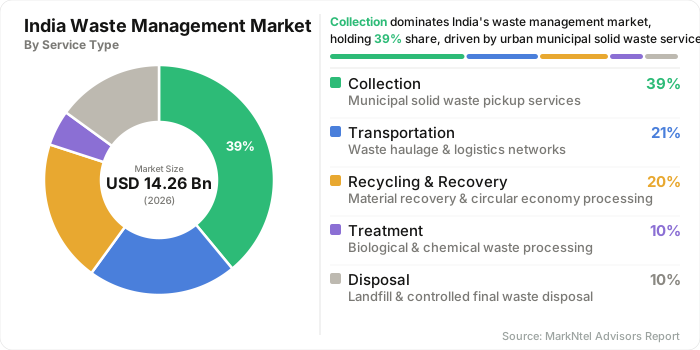
Programs under Swachh Bharat Mission have significantly expanded organized collection coverage by promoting door-to-door waste pickup and segregation practices. Municipal corporations, guided by standards from the Central Pollution Control Board, increasingly partner with private operators and sanitation workers to improve collection efficiency and reduce unmanaged waste. Since the success of downstream processes such as recycling, composting, and waste-to-energy largely depends on effective waste collection systems, this service naturally commands the highest share within the waste management service landscape.
India Waste Management Market (2026-32): Regional Projection
The India Waste Management Market is dominated by the Northern region, including states such as Uttar Pradesh, Punjab, Haryana, Delhi NCR, Uttarakhand, Himachal Pradesh, and Jammu & Kashmir. This region generates high volumes of municipal and industrial waste due to its dense population, rapid urbanization, and extensive industrial activity. States like Uttar Pradesh are leading with large-scale initiatives, such as the Integrated Waste Management City in Gorakhpur, which spans 40 acres and includes dry and wet waste processing units, hazardous waste facilities, and bio-CNG production, serving multiple urban local bodies .
Strong government focus, progressive municipal policies, and early adoption of advanced waste processing and recycling infrastructure enable Northern India to dominate the market. The combination of policy support, investment in WtE and recycling, and high waste generation positions this region as the key driver of growth for India’s waste management sector.
India Waste Management Market Competitive Landscape:
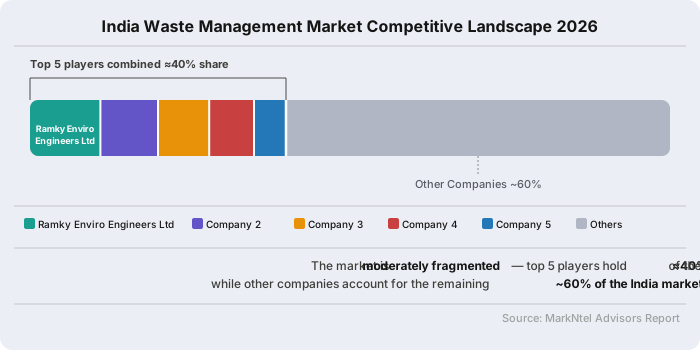
The India waste management market is highly fragmented, with numerous organized and unorganized players operating across municipal, industrial, and recycling segments. The top five companies, Ramky Enviro Engineers Ltd, A2Z Green Waste Management Ltd, Antony Waste Handling Cell Ltd, Attero Recycling Pvt Ltd, and BVG India Ltd collectively account for approximately 40% of the total market share.
Major Waste Management Companies in India:
- Ramky Enviro Engineers Ltd
- Antony Waste Handling Cell Ltd
- A2Z Green Waste Management Ltd
- Jindal ITF Urban Infrastructure Ltd
- IL&FS Environmental Infrastructure & Services Ltd
- BVG India Ltd
- Ecogreen Energy Pvt Ltd
- NEPRA Resource Management Pvt Ltd
- Exigo Recycling Pvt Ltd
- Attero Recycling Pvt Ltd
- Cerebra Integrated Technologies Ltd
Gain a Competitive Edge with Our India Waste Management Market Report:
- India Waste Management Market Report by MarkNtel Advisors provides a detailed & thorough analysis of market size & share, growth rate, competitive landscape, and key players. This comprehensive analysis helps businesses gain a holistic understanding of the market dynamics & make informed decisions.
- This report also highlights current market trends & future projections, allowing businesses to identify emerging opportunities & potential challenges. By understanding market forecasts, companies can align their strategies & stay ahead of the competition.
- India Waste Management Market Report aids in assessing & mitigating risks associated with entering or operating in the market. By understanding market dynamics, regulatory frameworks, and potential challenges, businesses can develop strategies to minimize risks & optimize their operations.
*Reports Delivery Format - Market research studies from MarkNtel Advisors are offered in PDF, Excel and PowerPoint formats. Within 24 hours of the payment being successfully received, the report will be sent to your email address.
Frequently Asked Questions
- Market Segmentation
- Introduction
- Product Definition
- Research Process
- Assumptions
- Executive Summary
- India Waste Management Market Policies, Regulations, and Product Standards
- India Waste Management Market Trends & Developments
- India Waste Management Market Dynamics
- Growth Factors
- Challenges
- India Waste Management Market Hotspot & Opportunities
- Overview of Waste Generation in India
- India Historical Trends in Waste Generation, 2022-2032
- Waste Composition Analysis, 2026
- Waste Generation by Type, 2022-2026
- Municipal Solid Waste
- Plastic Waste
- E-Waste
- Hazardous Waste
- Biomedical Waste
- Waste Generation By - Urban vs Rural in India, 2022-2026
- Per Capita Waste Generation Trends, 2022-2026
- State-wise / City-wise Waste Generation, 2022-2026
- Sector-wise Waste Generation (Residential, Commercial, Industrial), 2022-2026
- Collection Efficiency and Coverage
- Plastic Waste Scenario
- E-Waste Scenario
- Legacy Waste and Dumpsite Status
- Key Trends in Waste Generation
- Environmental Impact of Current Waste Levels
- Key Challenges in Waste Generation Management
- India Waste Management Market Gap Analysis, 2026
- Generation Vs Treatment
- Waste Management Plants in India & Their Capacities
- India Waste Management Market Technology & Innovation Landscape
- Waste-to-Energy Technologies
- Recycling Technologies
- Smart Waste Management (IoT, AI)
- Digital Monitoring Systems
- India Waste Management Market Outlook, 2022-2032F
- Market Size & Outlook
- By Revenues (USD Million)
- Market Share & Outlook
- By Waste Type- Market Size & Forecast 2022-2032, USD Million
- Industrial Waste
- Medical Waste
- Municipal Solid Waste
- Hazardous Waste
- E-Waste
- Other Waste Types
- By Disposal Method- Market Size & Forecast 2022-2032, USD Million
- Landfill
- Incineration
- Recycling
- Composting
- Waste-to-Energy
- By Service Type- Market Size & Forecast 2022-2032, USD Million
- Collection
- Transportation
- Recycling & Recovery
- Treatment
- Disposal
- By Source- Market Size & Forecast 2022-2032, USD Million
- Residential
- Commercial
- Industrial
- Institutional
- By Material- Market Size & Forecast 2022-2032, USD Million
- Paper & Paperboard
- Plastic
- Metal
- Glass
- Food
- Others
- By Region- Market Size & Forecast 2022-2032, USD Million
- North
- Uttar Pradesh
- Punjab
- Haryana
- Delhi NCR
- Uttarakhand
- Himachal Pradesh
- Jammu & Kashmir
- Others
- East
- West Bengal
- Bihar
- Jharkhand
- Odisha
- North Eastern States
- Others
- West
- Rajasthan
- Gujarat
- Maharashtra
- Madhya Pradesh
- Others
- South
- Tamil Nadu
- Karnataka
- Kerala
- Andhra Pradesh
- Telangana
- Others
- North
- By Company
- Competition Characteristics
- Market Share & Analysis
- By Waste Type- Market Size & Forecast 2022-2032, USD Million
- Market Size & Outlook
- India Industrial Waste Management Market Outlook, 2022-2032
- Market Size & Outlook
- By Revenues (USD Million)
- Market Share & Outlook
- By Disposal Method- Market Size & Forecast 2022-2032, USD Million
- By Service Type- Market Size & Forecast 2022-2032, USD Million
- By Source- Market Size & Forecast 2022-2032, USD Million
- By Material- Market Size & Forecast 2022-2032, USD Million
- By Region- Market Size & Forecast 2022-2032, USD Million
- Market Size & Outlook
- India Medical Waste Management Market Outlook, 2022-2032
- Market Size & Outlook
- By Revenues (USD Million)
- Market Share & Outlook
- By Disposal Method- Market Size & Forecast 2022-2032, USD Million
- By Service Type- Market Size & Forecast 2022-2032, USD Million
- By Source- Market Size & Forecast 2022-2032, USD Million
- By Material- Market Size & Forecast 2022-2032, USD Million
- By Region- Market Size & Forecast 2022-2032, USD Million
- Market Size & Outlook
- India Municipal Solid Waste Management Market Outlook, 2022-2032
- Market Size & Outlook
- By Revenues (USD Million)
- Market Share & Outlook
- By Disposal Method- Market Size & Forecast 2022-2032, USD Million
- By Service Type- Market Size & Forecast 2022-2032, USD Million
- By Source- Market Size & Forecast 2022-2032, USD Million
- By Material- Market Size & Forecast 2022-2032, USD Million
- By Region- Market Size & Forecast 2022-2032, USD Million
- Market Size & Outlook
- India Hazardous Waste Management Market Outlook, 2022-2032
- Market Size & Outlook
- By Revenues (USD Million)
- Market Share & Outlook
- By Disposal Method- Market Size & Forecast 2022-2032, USD Million
- By Service Type- Market Size & Forecast 2022-2032, USD Million
- By Source- Market Size & Forecast 2022-2032, USD Million
- By Material- Market Size & Forecast 2022-2032, USD Million
- By Region- Market Size & Forecast 2022-2032, USD Million
- Market Size & Outlook
- India E-Waste Management Market Outlook, 2022-2032
- Market Size & Outlook
- By Revenues (USD Million)
- Market Share & Outlook
- By Disposal Method- Market Size & Forecast 2022-2032, USD Million
- By Service Type- Market Size & Forecast 2022-2032, USD Million
- By Source- Market Size & Forecast 2022-2032, USD Million
- By Material- Market Size & Forecast 2022-2032, USD Million
- By Region- Market Size & Forecast 2022-2032, USD Million
- Market Size & Outlook
- India Waste Management Market Key Strategic Imperatives for Success & Growth
- Competitive Outlook
- Company Profiles
- Ramky Enviro Engineers Ltd
- Business Description
- Product Portfolio
- Collaborations & Alliances
- Recent Developments
- Financial Details
- Others
- Antony Waste Handling Cell Ltd
- Business Description
- Product Portfolio
- Collaborations & Alliances
- Recent Developments
- Financial Details
- Others
- A2Z Green Waste Management Ltd
- Business Description
- Product Portfolio
- Collaborations & Alliances
- Recent Developments
- Financial Details
- Others
- Jindal ITF Urban Infrastructure Ltd
- Business Description
- Product Portfolio
- Collaborations & Alliances
- Recent Developments
- Financial Details
- Others
- IL&FS Environmental Infrastructure & Services Ltd
- Business Description
- Product Portfolio
- Collaborations & Alliances
- Recent Developments
- Financial Details
- Others
- BVG India Ltd
- Business Description
- Product Portfolio
- Collaborations & Alliances
- Recent Developments
- Financial Details
- Others
- Ecogreen Energy Pvt Ltd
- Business Description
- Product Portfolio
- Collaborations & Alliances
- Recent Developments
- Financial Details
- Others
- NEPRA Resource Management Pvt Ltd
- Business Description
- Product Portfolio
- Collaborations & Alliances
- Recent Developments
- Financial Details
- Others
- Exigo Recycling Pvt Ltd
- Business Description
- Product Portfolio
- Collaborations & Alliances
- Recent Developments
- Financial Details
- Others
- Attero Recycling Pvt Ltd
- Business Description
- Product Portfolio
- Collaborations & Alliances
- Recent Developments
- Financial Details
- Others
- Cerebra Integrated Technologies Ltd
- Business Description
- Product Portfolio
- Collaborations & Alliances
- Recent Developments
- Financial Details
- Others
- Ramky Enviro Engineers Ltd
- Company Profiles
- Disclaimer
MarkNtel Advisors follows a robust and iterative research methodology designed to ensure maximum accuracy and minimize deviation in market estimates and forecasts. Our approach combines both bottom-up and top-down techniques to effectively segment and quantify various aspects of the market. A consistent feature across all our research reports is data triangulation, which examines the market from three distinct perspectives to validate findings. Key components of our research process include:
1. Scope & Research Design At the outset, MarkNtel Advisors define the research objectives and formulate pertinent questions. This phase involves determining the type of research—qualitative or quantitative—and designing a methodology that outlines data collection methods, target demographics, and analytical tools. They also establish timelines and budgets to ensure the research aligns with client goals.
2. Sample Selection and Data Collection In this stage, the firm identifies the target audience and determines the appropriate sample size to ensure representativeness. They employ various sampling methods, such as random or stratified sampling, based on the research objectives. Data collection is carried out using tools like surveys, interviews, and observations, ensuring the gathered data is reliable and relevant.
3. Data Analysis and Validation Once data is collected, MarkNtel Advisors undertake a rigorous analysis process. This includes cleaning the data to remove inconsistencies, employing statistical software for quantitative analysis, and thematic analysis for qualitative data. Validation steps are taken to ensure the accuracy and reliability of the findings, minimizing biases and errors.

4. Data Forecast and FinalizationThe final phase involves forecasting future market trends based on the analyzed data. MarkNtel Advisors utilize predictive modeling and time series analysis to anticipate market behaviors. The insights are then compiled into comprehensive reports, featuring visual aids like charts and graphs, and include strategic recommendations to inform client decision-making
We offer flexible licensing options to cater to varying organizational needs. Choose the pricing pack that best suits your requirements:
Buy Now Inquire Before Buying
 Request Customization
 Talk to our Consultant







