

India Cancer Treatment Drugs Market Research Report: Forecast (2026-2032)
By Drug class (Cytotoxic Drugs (Alkylating Agents, Antimetabolites, Others), Targeted Drugs (Monoclonal Antibodies, Others), Immune Checkpoint Inhibitors, Hormonal Agents, Other Dr ... ugs), By Treatment Type (Chemotherapy, Targeted Therapy, Immunotherapy, Hormonal Therapy, Radiation Therapy, Other Treatment Types), By Cancer Type (Breast Cancer, Lung Cancer, Colorectal Cancer, Gastrointestinal Cancer, Prostate Cancer, Cervical Cancer, Hematologic/Blood Cancers, Head & Neck Cancer, Brain & CNS Cancers, Skin Cancer, Others), By Dosage Form (Solid (Tablets, Capsules), Liquid, Injectable, Prefilled Syringes, Others), By End-Users (Hospitals, Specialty Clinics, Cancer and Radiation Therapy Centers), By Distribution Channel (Hospital Pharmacies, Retail Pharmacies, Online Pharmacies), and others Read more
- Healthcare
- Jun 2026
- Pages 139
- Report Format: PDF, Excel, PPT
India Cancer Treatment Drugs Market
Projected 14.73% CAGR from 2026 to 2032
Study Period
2026-2032
Market Size (2026)
USD 3.12 Billion
Market Size (2032)
USD 7.12 Billion
Base Year
2025
Projected CAGR
14.73%
Leading Segments
By Drug Class: Targeted Drugs
India Cancer Treatment Drugs Market Key Takeaways
- The India Cancer Treatment Drugs Market is valued at USD 2.88 billion in 2025 and is projected to reach USD 3.12 billion by 2026 and USD 7.12 billion by 2032.
- The industry is projected to witness steady growth at a CAGR of 14.73% during 2026–2032.
- Targeted Drugs lead the market with 44% market share in 2026.
- Breast Cancer dominates the market by cancer type with 19% share.
- North India accounts for the largest share of the market, representing approximately 34% of total revenue in 2026.
- The market remains moderately fragmented, with the top five companies accounting for approximately 18% of total market share in 2026.
India Cancer Treatment Drugs Market Size & Outlook
The India Cancer Treatment Drugs Market was valued at USD 2.88 billion in 2025 and is projected to grow from USD 3.12 billion in 2026 to USD 7.12 billion by 2032, registering a CAGR of 14.73% during the forecast period.
The market is witnessing robust expansion owing to the increasing prevalence of cancer, growing healthcare expenditure, and rising demand for advanced oncology therapies across the country. Continuous improvements in healthcare infrastructure, greater awareness regarding early diagnosis, and expanding access to specialized cancer treatment facilities are further supporting industry growth.
India continues to experience a significant rise in cancer incidence, driven by population growth, aging demographics, urbanization, lifestyle-related risk factors, and increasing exposure to environmental pollutants. According to the latest estimates from the Indian Council of Medical Research (ICMR), the country reported more than 14 lakh cancer cases in recent years, with breast, oral, cervical, lung, and colorectal cancers representing a substantial share of the overall disease burden. The growing patient pool is creating sustained demand for cancer therapeutics and supportive care medicines across hospitals, specialty clinics, and cancer treatment centers.
The market is also benefiting from rapid advancements in oncology treatment approaches. Increasing adoption of targeted therapies, immunotherapies, precision medicine, monoclonal antibodies, and biosimilars is improving treatment outcomes and expanding therapeutic options for patients. Pharmaceutical companies are investing significantly in oncology research, clinical development, and strategic collaborations to strengthen their cancer drug portfolios. In addition, the growing availability of innovative biologics and combination therapies is accelerating the transition toward more personalized cancer treatment strategies in India.
Looking ahead, favourable government initiatives and expanding cancer-care infrastructure are expected to create substantial growth opportunities for market participants. Such as 217 AMRIT Pharmacies provide oncology medicines at 50–80% lower prices, while PMBJP supplies 289 essential cancer drugs at subsidized rates. These programs support cancer treatment under public healthcare schemes, and investments in tertiary oncology facilities are enhancing treatment accessibility across urban and semi-urban regions.
Furthermore, the increasing focus on domestic manufacturing, affordable oncology drugs, and next-generation cancer therapies is expected to strengthen market penetration. Supported by rising disease burden, technological innovation, and improving healthcare access, the India Cancer Treatment Drugs Industry is anticipated to maintain strong growth momentum through 2032.
India Cancer Treatment Drugs Market Key Indicators
- As per Medical Research-National Cancer Registry Programme, the estimated number of cancer cases in India increased from 13.9 lakh in 2020 to 15.3 lakh in 2024, reflecting a steady rise in disease burden. The expanding patient population is driving demand for chemotherapy, targeted therapies, immunotherapies, and supportive oncology drugs across hospitals and specialty cancer centers nationwide.
- According to the Union Budget 2025-26, the Government of India announced the establishment of 200 Day Care Cancer Centres during FY2025-26, with a long-term objective of expanding cancer treatment services across district hospitals. The initiative is expected to improve oncology care accessibility in underserved regions, strengthen treatment capacity, and increase utilization of cancer therapeutics across the country.
- The Government of India is expanding cancer screening and diagnosis through the National Programme for Prevention and Control of Non-Communicable Diseases (NP-NCD) and Ayushman Bharat network. The country has operationalized more than 1.8 lakh Ayushman Arogya Mandirs, supporting large-scale screening, referral, and early detection programs that are expected to increase treatment uptake and demand for oncology medicines.
- According to the Department of Pharmaceuticals, the Indian pharmaceutical sector is valued at more than USD 65 billion and is among the world's largest suppliers of generic medicines. Growing domestic manufacturing capabilities, increasing biologics production, and rising investments in specialty pharmaceuticals are supporting the development and availability of affordable oncology drugs across India.
- Under Ayushman Bharat-PMJAY, more than 6.8 million cancer treatments worth approximately USD 1.5 billion have been delivered, including over 450,000 targeted therapy treatments valued at around USD 113 million. The large-scale utilization of advanced oncology therapies under a government-funded reimbursement program highlights improving patient access to cancer care across India. Rising treatment coverage and greater affordability are accelerating therapy adoption and strengthening the long-term growth potential of the India Cancer Treatment Drugs Market.
India Cancer Treatment Drugs Market Scope
| Category | Segments |
|---|---|
| By Drug class | Cytotoxic Drugs (Alkylating Agents, Antimetabolites, Others), Targeted Drugs (Monoclonal Antibodies, Others), Immune Checkpoint Inhibitors, Hormonal Agents, Other Drugs |
| By Treatment Type | Chemotherapy, Targeted Therapy, Immunotherapy, Hormonal Therapy, Radiation Therapy, Other Treatment Types |
| By Cancer Type | Breast Cancer, Lung Cancer, Colorectal Cancer, Gastrointestinal Cancer, Prostate Cancer, Cervical Cancer, Hematologic/Blood Cancers, Head & Neck Cancer, Brain & CNS Cancers, Skin Cancer, Others |
| By Dosage Form | Solid (Tablets, Capsules), Liquid, Injectable, Prefilled Syringes, Others |
| By End-Users | Hospitals, Specialty Clinics, Cancer and Radiation Therapy Centers |
| By Distribution Channel | Hospital Pharmacies, Retail Pharmacies, Online Pharmacies |
India Cancer Treatment Drugs Market Drivers
India’s Cancer Treatment Drugs Market is benefiting from expanding screening and early-detection initiatives across the country. As of March 2026, the National NCD Portal reported that 8.73 crore women had been screened for cervical cancer, while the government launched a nationwide HPV vaccination campaign targeting around 1.15 crore girls. These initiatives are improving cancer detection rates and increasing the number of patients entering treatment pathways, thereby supporting sustained demand for oncology drugs and related therapies.
At the same time, India’s oncology care ecosystem is expanding in a way that directly supports drug adoption. The government has approved 19 State Cancer Institutes and 20 Tertiary Care Cancer Centres, while cancer treatment facilities have also been approved in all 22 new AIIMS, strengthening specialized care capacity across the country.
In parallel, the public reimbursement and affordable-medicine network is widening access, with over 200 AB PMJAY packages covering more than 500 oncology-related procedures, 15,057 Jan Aushadhi Kendras, and 222 AMRIT pharmacies offering discounted cancer medicines. This combination of stronger treatment infrastructure and improved affordability is expected to accelerate oncology drug penetration in both public and private care settings.
Recent Trends
Growing Adoption of Advanced Precision Oncology and Cell-Based Cancer Therapies
India’s cancer treatment drugs market is increasingly moving toward precision oncology, with cell-based therapies emerging as a major clinical shift. In April 2024, the country launched NexCAR19, its first home-grown CAR-T therapy, marking a key milestone in advanced cancer care and expanding access to a highly specialized treatment option for blood cancers. The launch reflects a broader move toward individualized therapy, where treatment selection is increasingly guided by tumour biology rather than a one-size-fits-all protocol.
The momentum is continuing in 2026, with the government-backed Helix Cell Therapeutics project focused on developing and clinically evaluating a dual-targeting CAR-T therapy for multiple myeloma through a Phase I trial. The therapy is designed for patients who have already exhausted multiple lines of treatment, signaling a stronger pipeline for difficult-to-treat cancers. This trend is strengthening India’s oncology innovation ecosystem and accelerating the adoption of next-generation therapies such as CAR-T, targeted biologics, and other precision treatment platforms.
India Cancer Treatment Drugs Market Opportunities and Challenges
High Cost of Cancer Drugs Creating Opportunities for Biosimilars and Domestic Oncology Manufacturing
The high cost of innovative cancer therapies remains a key challenge for the India cancer treatment industry. Advanced targeted therapies, immunotherapies, and cell-based treatments continue to place a significant financial burden on patients despite improving reimbursement coverage. A 2025 study evaluating 33 oral targeted anticancer drugs found that branded therapies could require anywhere from 29% to more than 3,700% of average monthly per-capita income for a 28-day treatment cycle, highlighting the affordability gap associated with modern oncology care. Furthermore, limited availability of low-cost alternatives for several advanced therapies continues to restrict patient access and treatment adoption.
However, this challenge is creating a substantial opportunity for biosimilars and domestic oncology manufacturing. In 2024, India commercialized NexCAR19, the country's first indigenous CAR-T cell therapy developed by ImmunoACT, offering a significantly lower-cost alternative to imported CAR-T treatments. Additionally, Indian pharmaceutical companies such as Biocon Biologics, Dr. Reddy's Laboratories, and Zydus Lifesciences continue to expand their oncology biosimilar and biologics portfolios. The opportunity is further reinforced by PMBJP generic versions of targeted cancer medicines can reduce treatment costs compared with branded alternatives, demonstrating the potential for domestic manufacturing to improve affordability and expand access to advanced cancer therapies across India.
India Cancer Treatment Drugs Market Segmentation
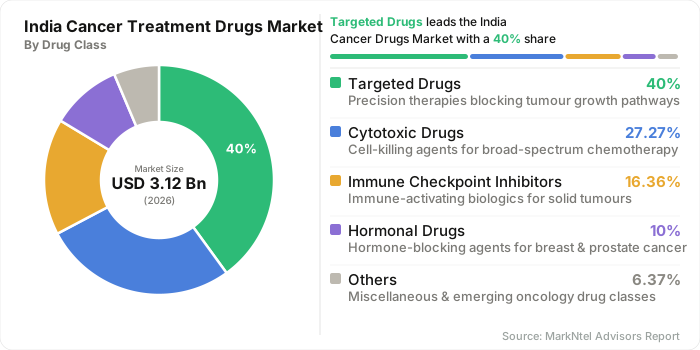
Targeted Drugs Hold the Largest Drug-Class Market Share
Targeted drugs are the leading segment in the India Cancer Treatment Drugs Market, with an estimated 44% share, based on India’s cancer mix and the shift toward precision oncology. IARC’s India fact sheet shows that breast, cervix uteri, lip/oral cavity, lung, and colorectum are among the country’s most common cancers, while the Government of India has confirmed that NexCAR19 and other CAR-T therapies are commercially available for specific blood cancers. Together, these trends support stronger adoption of biomarker-driven, high-value oncology treatments.
The segment’s dominance is further supported by the increasing adoption of precision oncology and biomarker-driven treatment approaches across India. According to the Ministry of Health & Family Welfare, more than 4.5 lakh targeted therapy treatments worth approximately USD 113 million had been delivered under Ayushman Bharat-PMJAY by 2025, reflecting growing utilization of advanced cancer medicines. Expanding availability of targeted therapies for breast, lung, blood, and colorectal cancers, coupled with improving molecular diagnostic capabilities and reimbursement support, continues to strengthen the adoption of personalized oncology treatments across the country. Based on drug class, the industry is dominated by:
- Targeted Drugs
- Cytotoxic Drugs
- Immune Checkpoint Inhibitors
- Hormonal Drugs
- Others
Breast Cancer Remains the Most Significant Cancer Segment
Breast cancer accounts for the largest share of the India Cancer Treatment Drugs Market, with 19% market share in 2026. The segment's dominance is driven by its position as the most prevalent cancer among Indian women. According to an Indian Council of Medical Research, study published in JAMA (2025), breast cancer cases were projected to exceed 238,000 in 2024, making it the leading cancer among women and one of the largest contributors to India's projected 1.56 million new cancer cases. The substantial patient pool continues to drive demand for oncology drugs and long-term treatment services.
The segment's leadership is further supported by its high prevalence and increasing treatment intensity. According to NICPR-ICMR, breast cancer accounts for approximately 27% of all cancers among Indian women, while 1 in 28 women is expected to develop the disease during her lifetime. The growing adoption of HER2-targeted therapies, CDK4/6 inhibitors, antibody-drug conjugates (ADCs), and hormone-based treatments is increasing treatment expenditure per patient. Rising awareness, earlier diagnosis, and broader access to advanced therapies continue to strengthen the segment's revenue contribution within India's oncology market. Based on Cancer Type, the industry is segmented into:
- Lung Cancer
- Colorectal Cancer
- Gastrointestinal Cancer
- Prostate Cancer
- Cervical Cancer
- Hematologic/Blood Cancers
- Head & Neck Cancer
- Brain & CNS Cancers
- Skin Cancer
- Others
India Cancer Treatment Drugs Market Regional Outlook
North India accounts for the largest share of the India Cancer Treatment Drugs Market, representing approximately 34% of total revenue in 2026. The region's leadership is supported by its large patient population, strong concentration of tertiary-care hospitals, and the presence of major oncology institutions including All India Institute of Medical Sciences, the National Cancer Institute, and several Regional Cancer Centres. States such as Delhi, Uttar Pradesh, Punjab, Haryana, Rajasthan, and Uttarakhand continue to witness substantial demand for cancer diagnosis and treatment services due to increasing disease burden and improving healthcare access.
The region is also benefiting from significant public healthcare investments and expanding oncology infrastructure. Government initiatives aimed at strengthening cancer care delivery, wider adoption of Ayushman Bharat-PMJAY, growing availability of advanced therapies, and increasing penetration of specialized oncology hospitals are supporting market growth. Furthermore, the presence of leading private healthcare providers and growing adoption of targeted therapies, immunotherapies, and precision oncology treatments continue to reinforce North India's position as the largest regional market for cancer treatment in the country.
India Cancer Treatment Drugs Market Competitive Analysis
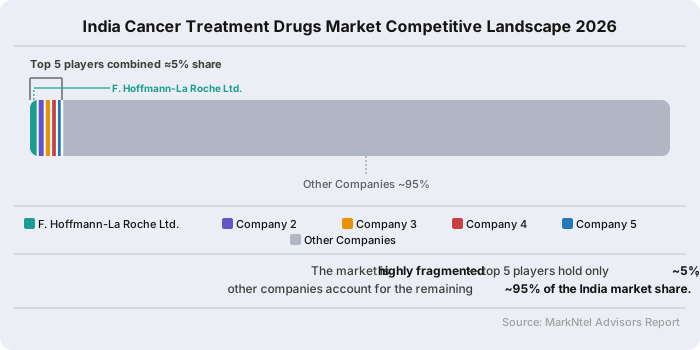
The India Cancer Treatment Drugs Market is moderately fragmented, with the top five companies such as F. Hoffmann-La Roche AG, Bristol-Myers Squibb Company, AstraZeneca PLC, Novartis AG, and Merck KGaA accounting for approximately 18% of the total industry share in 2026. These companies are actively investing in precision oncology, targeted therapies, immuno-oncology products, and biosimilars to expand their presence in India.
Key Manufacturers in the India Cancer Treatment Drugs Industry
- F. Hoffmann-La Roche AG
- Bristol-Myers Squibb Company
- AstraZeneca PLC
- Novartis AG
- Merck KGaA
- Amgen Inc.
- Bayer AG
- Astellas Pharma Inc.
- Cipla Limited
- Natco Pharma Limited
India Cancer Treatment Drugs Industry News and Recent Developments
June 2026: AstraZeneca Secures India Approval for Enhertu in HER2-Positive Breast Cancer
AstraZeneca received regulatory approval in India for Enhertu (trastuzumab deruxtecan) as a first-line treatment for HER2-positive breast cancer, expanding access to advanced antibody-drug conjugate (ADC) therapies for eligible patients across the country.
Impact Analysis: The approval reinforces the growing adoption of precision oncology and next-generation biologic therapies in India. It also reflects the increasing shift toward targeted treatment approaches that improve clinical outcomes while driving demand for high-value oncology drugs, particularly in breast cancer, the country's largest cancer segment.
June 2026: Glenmark Launches TEVIMBRA, Expanding India’s Immuno-Oncology Landscape
Glenmark Pharmaceuticals launched TEVIMBRA (tislelizumab) in India following CDSCO approval for the treatment of advanced non-small cell lung cancer and esophageal squamous cell carcinoma, marking the company's entry into the immuno-oncology segment.
Impact Analysis: The launch highlights the expanding availability of immune checkpoint inhibitors in India and reflects the increasing commercialization of innovative cancer therapies. Growing access to immunotherapy is expected to diversify treatment options, improve patient outcomes, and accelerate growth within the country's high-value oncology therapeutics market.
September 2025: Alkem Laboratories Launches Indigenous Pertuzumab Biosimilar
Alkem Laboratories introduced Pertuza, an indigenously developed biosimilar version of pertuzumab for HER2-positive breast cancer treatment in India. The launch strengthens the company's oncology portfolio and expands access to advanced biologic therapies.
Impact Analysis: The development underscores the growing role of domestic pharmaceutical manufacturers in improving affordability of cancer treatment. Increasing biosimilar penetration is expected to reduce treatment costs, enhance patient access to targeted therapies, and create new growth opportunities within India's rapidly expanding oncology drug market.
Frequently Asked Questions
- Market Segmentation
- Introduction
- Product Definition
- Research Process
- Assumptions
- Executive Summary
- India Cancer Treatment Drugs Market Policies, Regulations, and Product Standards
- India Cancer Treatment Drugs Market Trends & Developments
- India Cancer Treatment Drugs Market Dynamics
- Growth Factors
- Challenges
- India Cancer Treatment Drugs Market Hotspot & Opportunities
- India Cancer Treatment Drugs Market Outlook, 2022-2032F
- Market Size & Outlook
- By Revenues (USD Million)
- Market Share & Outlook
- By Drug class- Market Size & Forecast 2022-2032, USD Million
- Cytotoxic Drugs
- Alkylating Agents
- Antimetabolites
- Others
- Targeted Drugs
- Monoclonal Antibodies
- Others
- Immune Checkpoint Inhibitors
- Hormonal Agents
- Other Drugs
- Cytotoxic Drugs
- By Treatment Type- Market Size & Forecast 2022-2032, USD Million
- Chemotherapy
- Targeted Therapy
- Immunotherapy
- Hormonal Therapy
- Radiation Therapy
- Other Treatment Types
- By Cancer Type- Market Size & Forecast 2022-2032, USD Million
- Breast Cancer
- Lung Cancer
- Colorectal Cancer
- Gastrointestinal Cancer
- Prostate Cancer
- Cervical Cancer
- Hematologic/Blood Cancers
- Head & Neck Cancer
- Brain & CNS Cancers
- Skin Cancer
- Others
- By Dosage Form- Market Size & Forecast 2022-2032, USD Million
- Solid
- Tablets
- Capsules
- Liquid
- Injectable
- Prefilled Syringes
- Others
- Solid
- By End-Users- Market Size & Forecast 2022-2032, USD Million
- Hospitals
- Specialty Clinics
- Cancer and Radiation Therapy Centers
- By Distribution Channel- Market Size & Forecast 2022-2032, USD Million
- Hospital Pharmacies
- Retail Pharmacies
- Online Pharmacies
- By Region- Market Size & Forecast 2022-2032, USD Million
- North
- South
- East
- West
- By Company
- Competition Characteristics
- Market Share & Analysis
- By Drug class- Market Size & Forecast 2022-2032, USD Million
- Market Size & Outlook
- North India Cancer Treatment Drugs Market Outlook, 2022-2032
- Market Size & Outlook
- By Revenues (USD Million)
- Market Share & Outlook
- By Drug Class- Market Size & Forecast 2022-2032, USD Million
- By Cancer Type- Market Size & Forecast 2022-2032, USD Million
- By Dosage Form- Market Size & Forecast 2022-2032, USD Million
- By End-Users- Market Size & Forecast 2022-2032, USD Million
- By Distribution Channel- Market Size & Forecast 2022-2032, USD Million
- By Region- Market Size & Forecast 2022-2032, USD Million
- Market Size & Outlook
- South India Cancer Treatment Drugs Market Outlook, 2022-2032
- Market Size & Outlook
- By Revenues (USD Million)
- Market Share & Outlook
- By Drug Class- Market Size & Forecast 2022-2032, USD Million
- By Cancer Type- Market Size & Forecast 2022-2032, USD Million
- By Dosage Form- Market Size & Forecast 2022-2032, USD Million
- By End-Users- Market Size & Forecast 2022-2032, USD Million
- By Distribution Channel- Market Size & Forecast 2022-2032, USD Million
- By Region- Market Size & Forecast 2022-2032, USD Million
- Market Size & Outlook
- East India Cancer Treatment Drugs Market Outlook, 2022-2032
- Market Size & Outlook
- By Revenues (USD Million)
- Market Share & Outlook
- By Drug Class- Market Size & Forecast 2022-2032, USD Million
- By Cancer Type- Market Size & Forecast 2022-2032, USD Million
- By Dosage Form- Market Size & Forecast 2022-2032, USD Million
- By End-Users- Market Size & Forecast 2022-2032, USD Million
- By Distribution Channel- Market Size & Forecast 2022-2032, USD Million
- By Region- Market Size & Forecast 2022-2032, USD Million
- Market Size & Outlook
- West India Cancer Treatment Drugs Market Outlook, 2022-2032
- Market Size & Outlook
- By Revenues (USD Million)
- Market Share & Outlook
- By Drug Class- Market Size & Forecast 2022-2032, USD Million
- By Cancer Type- Market Size & Forecast 2022-2032, USD Million
- By Dosage Form- Market Size & Forecast 2022-2032, USD Million
- By End-Users- Market Size & Forecast 2022-2032, USD Million
- By Distribution Channel- Market Size & Forecast 2022-2032, USD Million
- By Region- Market Size & Forecast 2022-2032, USD Million
- Market Size & Outlook
- India Cancer Treatment Drugs Market Key Strategic Imperatives for Success & Growth
- Competitive Outlook
- Company Profiles
- F. Hoffmann-La Roche AG
- Business Description
- Product Portfolio
- Collaborations & Alliances
- Recent Developments
- Financial Details
- Others
- Bristol-Myers Squibb Company
- Business Description
- Product Portfolio
- Collaborations & Alliances
- Recent Developments
- Financial Details
- Others
- AstraZeneca PLC
- Business Description
- Product Portfolio
- Collaborations & Alliances
- Recent Developments
- Financial Details
- Others
- Novartis AG
- Business Description
- Product Portfolio
- Collaborations & Alliances
- Recent Developments
- Financial Details
- Others
- Merck KGaA
- Business Description
- Product Portfolio
- Collaborations & Alliances
- Recent Developments
- Financial Details
- Others
- Amgen Inc.
- Business Description
- Product Portfolio
- Collaborations & Alliances
- Recent Developments
- Financial Details
- Others
- Bayer AG
- Business Description
- Product Portfolio
- Collaborations & Alliances
- Recent Developments
- Financial Details
- Others
- Astellas Pharma Inc.
- Business Description
- Product Portfolio
- Collaborations & Alliances
- Recent Developments
- Financial Details
- Others
- Cipla Limited
- Business Description
- Product Portfolio
- Collaborations & Alliances
- Recent Developments
- Financial Details
- Others
- Natco Pharma Limited
- Business Description
- Product Portfolio
- Collaborations & Alliances
- Recent Developments
- Financial Details
- Others
- F. Hoffmann-La Roche AG
- Company Profiles
- Disclaimer
MarkNtel Advisors follows a robust and iterative research methodology designed to ensure maximum accuracy and minimize deviation in market estimates and forecasts. Our approach combines both bottom-up and top-down techniques to effectively segment and quantify various aspects of the market. A consistent feature across all our research reports is data triangulation, which examines the market from three distinct perspectives to validate findings. Key components of our research process include:
1. Scope & Research Design At the outset, MarkNtel Advisors define the research objectives and formulate pertinent questions. This phase involves determining the type of research—qualitative or quantitative—and designing a methodology that outlines data collection methods, target demographics, and analytical tools. They also establish timelines and budgets to ensure the research aligns with client goals.
2. Sample Selection and Data Collection In this stage, the firm identifies the target audience and determines the appropriate sample size to ensure representativeness. They employ various sampling methods, such as random or stratified sampling, based on the research objectives. Data collection is carried out using tools like surveys, interviews, and observations, ensuring the gathered data is reliable and relevant.
3. Data Analysis and Validation Once data is collected, MarkNtel Advisors undertake a rigorous analysis process. This includes cleaning the data to remove inconsistencies, employing statistical software for quantitative analysis, and thematic analysis for qualitative data. Validation steps are taken to ensure the accuracy and reliability of the findings, minimizing biases and errors.

4. Data Forecast and FinalizationThe final phase involves forecasting future market trends based on the analyzed data. MarkNtel Advisors utilize predictive modeling and time series analysis to anticipate market behaviors. The insights are then compiled into comprehensive reports, featuring visual aids like charts and graphs, and include strategic recommendations to inform client decision-making
We offer flexible licensing options to cater to varying organizational needs. Choose the pricing pack that best suits your requirements:
Buy Now Inquire Before Buying
 Request Customization
 Talk to our Consultant







