

India Body Lotion Market Research Report: Size, Share, Trends & Forecast (2026-2032)
By Product Type (Moisturizing Body Lotion, Brightening/Whitening Lotion, Treatment Lotion (Anti-aging, firming, medicated), Sun Protection Lotion, Others), By Skin Type (Dry Skin, ... Oily Skin, Normal Skin, Sensitive Skin, Combination Skin), By Ingredient Type (Conventional, Natural& Organic, Vegan & Cruelty-Free), By End User (Male, Female, Babies & Children), By Packaging Type (Bottles, Tubes, Jars/Tubs, Sachets & Travel Packs), By Price Range (Economy, Mid-Range, Premium, Luxury), By Distribution Channel (Supermarkets & Hypermarkets, Convenience Stores, Pharmacies & Drug Stores, Specialty Beauty Stores, Online Retail/E-Commerce, Direct-to-Consumer (DTC) Brands, Others), and others Read more
- FMCG
- Jun 2026
- Pages 150
- Report Format: PDF, Excel, PPT
India Body Lotion Market
Projected 3.87% CAGR from 2026 to 2032
Study Period
2026-2032
Market Size (2026)
USD 1.21 Billion
Market Size (2032)
USD 1.52 Billion
Base Year
2025
Projected CAGR
3.87%
Leading Segments
By Product Type: Moisturizing Body Lotion
India Body Lotion Market Key Takeaways
- The India body lotion market was valued at USD 1.17 billion in 2025, rising to USD 1.21 billion in 2026, and projected to reach USD 1.52 billion by 2032.
- The industry is projected to witness steady growth at a CAGR of 3.87% during the forecast period i.e., 2026-32.
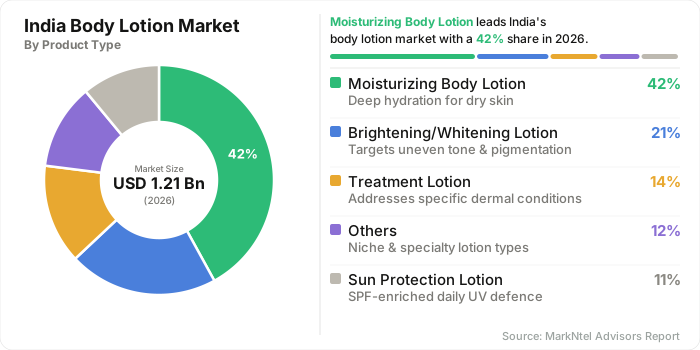
- Moisturizing body lotion dominates the product landscape, accounting for approximately a 42% share.
- By end user, the female segment leads with around 58% share in 2026.
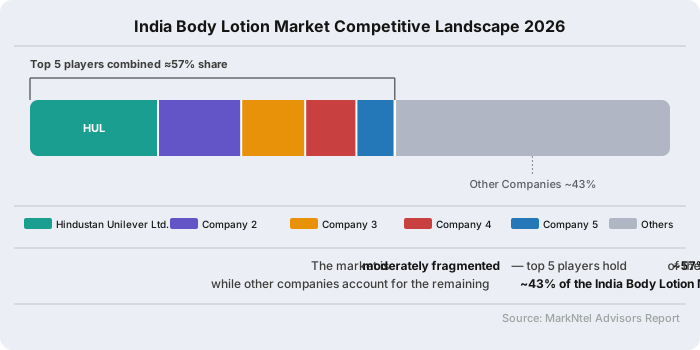
- The market structure remains moderately fragmented, with the top five players collectively holding nearly 57% share, balancing strong brand dominance with rising competition from regional and niche brands.
India Body Lotion Market Size and Outlook
The India body lotion market, valued at USD 1.21 billion in 2026 and projected to reach USD 1.52 billion by 2032 at a CAGR of 3.87%, is expected to witness stable and demand-driven expansion. Growth is underpinned by rising disposable income levels and the rapid expansion of the middle class, which is increasing expenditure on personal care essentials. This is further reinforced by long-term skincare demand, as consumers increasingly integrate body lotions into daily grooming routines rather than limiting usage to seasonal needs.
India’s broader beauty and personal care industry, valued at approximately USD 28 billion in 2025, provides a strong consumption base supporting category growth. Rapid urbanization is a critical structural driver, with the World Bank projecting the urban population share to reach 40% by 2036, up from 31%. Urban regions, contributing nearly 70% of GDP, are fostering higher income levels and exposure to global grooming trends. This is accelerating urban skincare consumption growth, particularly in metros and Tier II cities.
Digital retail is emerging as a key growth accelerator, reshaping access and purchasing behavior. Beauty e-commerce and quick-commerce sales grew 39% in value between June and November 2024, significantly outpacing physical retail growth . Increasing online adoption is enhancing product visibility, enabling faster consumer trials, and driving demand for advanced formulations. This shift is strengthening digital beauty retail expansion, while also encouraging innovation-led skincare demand, particularly for serum-based, active-ingredient, and multifunctional body lotions.
Strategic investments and global participation are further enhancing market competitiveness and innovation depth. Notably, L’Oréal’s acquisition of a majority stake in Innovist in 2026 highlights rising international confidence in India’s science-led skincare segment . Such developments are expected to accelerate product innovation, strengthen premium offerings, and intensify competition. Taken together, evolving consumer behavior, digital acceleration, and investment activity will continue to support sustained, value-driven growth across the India body lotion industry.
India Body Lotion Market Key Indicators
- India’s internet subscriber base reached 1,028.61 million by December 2025, according to TRAI, marking a structural shift in how consumers access personal care products. Digital platforms now serve as primary discovery engines for moisturising, brightening, and SPF-based lotions through reviews and targeted promotions. This widespread connectivity is accelerating online skincare products, enabling brands to scale visibility and drive repeat purchases across urban and semi-urban consumers.
- Women accounted for 47% of India’s internet users in 2024, the highest level recorded, as per IBEF, citing IAMAI data . This expanding female digital audience is critical for body care demand, as it strengthens engagement with skincare content, product comparisons, and ingredient awareness. The trend is directly contributing to higher women-led skincare, particularly in categories such as hydrating and nourishing body lotions.
- India’s 2–2.5 million digital creators influence over USD 350 billion in annual consumer spending as of 2025, as per the IBEF. Influencer-led skincare education is normalizing multi-step routines and ingredient-focused purchasing decisions. This has accelerated demand for advanced formulations such as serum-infused and dermatologically tested lotions, strengthening premium body lotion adoption and shifting consumers away from basic moisturizers.
- India recorded 20.57 million international tourist arrivals in 2024, including 9.95 million foreign tourists, reflecting a strong recovery in travel activity . Increased hotel stays, wellness tourism, and travel retail are expanding the usage of personal care amenities, including body lotions. This is reinforcing hospitality-driven skincare, particularly through institutional channels such as hotels, resorts, and travel hubs.
India Body Lotion Market Scope
| Category | Segments |
|---|---|
| By Product Type | Moisturizing Body Lotion, Brightening/Whitening Lotion, Treatment Lotion (Anti-aging, firming, medicated), Sun Protection Lotion, Others |
| By Skin Type | Dry Skin, Oily Skin, Normal Skin, Sensitive Skin, Combination Skin |
| By Ingredient Type | Conventional, Natural& Organic, Vegan & Cruelty-Free |
| By End User | Male, Female, Babies & Children |
| By Packaging Type | Bottles, Tubes, Jars/Tubs, Sachets & Travel Packs |
| By Price Range | Economy, Mid-Range, Premium, Luxury |
| By Distribution Channel | Supermarkets & Hypermarkets, Convenience Stores, Pharmacies & Drug Stores, Specialty Beauty Stores, Online Retail/E-Commerce, Direct-to-Consumer (DTC) Brands, Others |
India Body Lotion Market Growth Drivers
Rising Disposable Income and Middle-Class Expansion
India’s expanding middle-class base and sustained rise in disposable income are significantly strengthening demand across discretionary personal care categories, including the India body lotion market. According to the Ministry of Statistics and Programme Implementation (MoSPI), Gross National Disposable Income increased from approximately USD 3.9 trillion in 2024 to USD 4.2 trillion in 2025, reflecting strong income growth . This trend is reinforcing rising skincare expenditure, as consumers allocate higher budgets toward personal care and grooming products.
The upward trajectory is further supported by projections indicating GNDI could reach approximately USD 4.5 trillion in 2026, highlighting continued improvement in household purchasing power. As income levels rise, consumers are gradually shifting from basic moisturizers to premium and function-specific body care products. This transition aligns with middle-class consumption growth in FMCG, where higher-value skincare offerings, including hydrating and SPF-based lotions, are gaining traction across urban and semi-urban regions with evolving preferences.
Government policy has further strengthened consumption potential. The Union Budget 2025-26 raised the income-tax rebate threshold, eliminating tax liability for annual incomes up to approximately USD 13,900. This initiative supports the disposable income impact on cosmetics while accelerating urban lifestyle skincare adoption . Collectively, these factors are expected to sustain long-term demand momentum within the India body lotion industry, reinforcing future scalability.
Recent Trends
Rising Preference for Natural and Ayurvedic Ingredients
The India body lotion market is witnessing a pronounced transition toward natural, herbal, and Ayurvedic formulations as consumers increasingly prioritise ingredient transparency and safety. Growing concerns around synthetic additives such as parabens, mineral oils, and artificial fragrances are encouraging a shift toward plant-based alternatives. This evolving preference is driving herbal skincare, with brands reformulating products using botanicals like aloe vera, turmeric, cocoa butter, and coconut oil to align with clean-label expectations.
At the product level, companies are actively introducing formulations that combine natural ingredients with advanced delivery formats. For instance, Himalaya expanded its portfolio with the Winter Cherry & Aloe Nourishing Serum Body Lotion, which integrates aloe vera extracts and nature-derived moisturising agents. Such innovations reflect rising demand for plant-based moisturizers, where consumers seek gentle yet effective hydration solutions that combine traditional ingredients with modern skincare benefits and improved absorption characteristics.
Regulatory focus and quality compliance are further reinforcing this trend, with increasing emphasis on ingredient safety and transparency across the cosmetics sector. Industry developments indicate a broader movement toward standardisation and clean formulation practices, strengthening consumer trust in natural products. This is accelerating clean beauty adoption while supporting ayurvedic personal care growth, as both legacy and emerging brands expand herbal portfolios. Collectively, these shifts are expected to redefine product positioning and sustain long-term demand for India body lotion industry.
India Body Lotion Market Opportunities and Challenges
Counterfeit Skincare Threat Driving Shift Toward Trusted Brands
Counterfeit and spurious products remain a major constraint on consumer confidence within the India body lotion market, significantly impacting brand credibility and purchase decisions. ASPA’s State of Counterfeiting in India 2025 report indicates that nearly 35% of Indians encountered fake products in the past year, while 89% of urban consumers have purchased counterfeit goods at least once. This highlights rising fake skincare products, particularly in body lotion categories where duplication is widespread across informal and online retail channels.
The issue is further compounded by the presence of substandard formulations containing harmful substances such as heavy metals, posing direct risks to skin health and safety. Enforcement actions have intensified, with authorities seizing counterfeit cosmetics worth approximately USD 0.78 million in Mumbai and USD 0.086 million in Gujarat during 2025 . These developments underscore increasing regulatory scrutiny and highlight the growing importance of cosmetic quality compliance alongside stronger oversight of unorganised distribution networks.
At the same time, this trust deficit is creating a clear opportunity for organised and compliant manufacturers to differentiate. Regulatory reforms under the Cosmetics (Amendment) Rules, 2025, introduced 31A for licence cancellation, are strengthening product validation and enforcement mechanisms . Brands are responding through authentication technologies, controlled retail channels, and dermatologically tested formulations, accelerating authentic skincare demand and improving branded personal care preference. Collectively, these shifts are expected to formalise the market and support premium, trust-led growth of India body lotion industry over the long term.
Segmentation Insights
Moisturizing Lotions Leading with Strong Daily-Use Demand
Moisturizing body lotion dominates the India body lotion market, contributing approximately 42% of total revenue, driven by its daily-use applicability across diverse climatic conditions. Rising awareness around skin hydration and barrier protection is supporting consistent demand for these products throughout the year. The segment’s strong performance is further reinforced by increasing daily hydration skincare demand, as consumers prioritise routine-based body care over seasonal usage.
Brightening and whitening lotions represent a significant secondary segment, supported by persistent consumer preference for even skin tone and radiance-enhancing products. These formulations often incorporate various ingredients, aligning with evolving skincare expectations. Growth in this category is closely linked to skin brightening products, where aspirational beauty standards and rising disposable income are encouraging adoption of value-added and result-oriented body care solutions.
Treatment lotions, including anti-aging, firming, and medicated variants, along with sun protection lotions, are gaining traction as niche yet rapidly expanding segments. Increasing concerns around premature aging, UV exposure, and skin conditions are driving demand for specialized formulations. This shift is strengthening functional body care products, while also supporting dermatological lotion demand as consumers move toward targeted, science-backed solutions, contributing to overall category premiumisation and diversification. Based on product type, the scope has been classified into:
- Moisturizing Body Lotion
- Brightening/Whitening Lotion
- Treatment Lotion (Anti-aging, firming, medicated)
- Sun Protection Lotion
- Others
Female Consumer Dominance with Rising Grooming Expenditure
The female segment accounts for approximately 58% of total revenue, making it the largest contributor within the India body lotion market. This dominance is driven by higher product engagement, broader usage across skincare routines, and stronger brand responsiveness among female consumers. Increasing focus on self-care and appearance is reinforcing female skincare consumption, with consistent demand for moisturizing, brightening, and treatment-based lotions across both urban and emerging markets.
A key structural driver is the rising economic participation of women. India’s female labour force participation rate increased to 41.7% from 23.3%, according to the Periodic Labour Force Survey . This shift is expanding financial independence and boosting discretionary spending on personal care. As a result, working women's grooming expenditure in India is rising, supporting higher adoption of premium and specialized body care products across income segments.
The male and unisex segments are also witnessing gradual growth, driven by evolving grooming norms and increasing awareness around skincare among men. However, female consumers continue to lead innovation adoption and category expansion. This trend is strengthening women-led beauty market growth, while also encouraging premium skincare adoption, as brands increasingly tailor formulations, packaging, and marketing strategies to meet evolving female consumer preferences. The study categorizes key end-user segments as follows:
- Male
- Female
- Babies & Children
India Body Lotion Market Competitive Analysis
The top five players in the India body lotion industry include Hindustan Unilever Limited, Beiersdorf AG, The Procter & Gamble Company, L'Oréal S.A., and Dabur India Limited, collectively accounting for approximately 57% of the market share. The market remains moderately fragmented, with strong competition from regional brands and emerging D2C players. While multinational and large domestic firms dominate premium and mass segments through extensive distribution and brand equity, smaller players are gaining traction via natural, Ayurvedic, and niche offerings.
Prominent Companies in India Body Lotion Market
- Hindustan Unilever Limited
- Beiersdorf AG
- Marico Limited
- The Himalaya Wellness Company
- Johnson & Johnson Private Limited
- The Procter & Gamble Company
- L'Oréal S.A.
- Honasa Consumer Limited
- Dabur India Limited
- Emami Limited
- Others
India Body Lotion Industry News and Recent Developments
April 2026: NIVEA India Launches Super 10 Serum Lotion
NIVEA India introduced its Super 10 Serum Lotion portfolio in April 2026, targeting concerns such as dullness, uneven skin tone, and dark spots. The formulation combines Niacinamide, 120X Vitamin C, Vitamins A and E, and SPF 15 protection within a lightweight serum-lotion format. Available in Glow and Youth variants, the product reflects NIVEA’s strategy of bringing facial-skincare-grade actives into body care while promoting visible skin benefits through daily use.
Impact Analysis: The launch reinforces a major shift within the body lotion industry toward functional and ingredient-led body care products. By incorporating high-performance actives traditionally associated with facial skincare, NIVEA is helping redefine consumer expectations beyond basic moisturization. The introduction of serum-based body lotions is likely to accelerate premiumization, encourage higher consumer spending, and intensify competition among established brands. Furthermore, the inclusion of SPF protection and targeted skin-benefit claims highlights growing demand for multifunctional products.
November 2025: Himalaya Wellness Launches Cocoa Butter Intensive Serum Body Lotion
Himalaya Wellness partnered with the Indian Women’s Ice Hockey Team to launch its Cocoa Butter Intensive Serum Body Lotion under the #StrongWomenSoftSkin campaign. The product combines serum technology with natural-origin extracts and is positioned as a deep-moisturization solution capable of supporting skin health in harsh climatic conditions.
Impact Analysis: This launch underscores the growing momentum behind natural and Ayurvedic-inspired premium body care products in India. By combining botanical ingredients with serum-based technology, Himalaya is bridging traditional herbal positioning with modern skincare science. The athlete-led campaign also expands body lotion marketing beyond cosmetic benefits toward performance, skin protection, and wellness. As consumers increasingly seek natural yet clinically positioned formulations, such innovations are expected to strengthen demand for herbal body lotions and encourage competitors to invest in advanced moisturization technologies.
Frequently Asked Questions
- Market Segmentation
- Introduction
- Product Definition
- Research Process
- Assumptions
- Executive Summary
- India Body Lotion Market Import & Export Analysis
- India Body Lotion Production Trend 2022-2032
- India Body Lotion Trend by Type of Product Type
- Moisturizing Body Lotion
- Brightening/Whitening Lotion
- Treatment Lotion (Anti-aging, firming, medicated)
- Sun Protection Lotion
- Others
- Company-Wise Production Plants and Statistics
- Installed Production Capacity
- Actual Production
- Planned Production Target
- India Body Lotion Trend by Type of Product Type
- India Body Lotion Pricing Analysis 2022-2032
- India Body Lotion Pricing Trend 2022-2032
- India Body Lotion Pricing Trend by Product Type 2022-2032
- Moisturizing Body Lotion
- Brightening/Whitening Lotion
- Treatment Lotion (Anti-aging, firming, medicated)
- Sun Protection Lotion
- Others
- India Body Lotion Market Policies, Regulations, and Product Standards
- India Body Lotion Market Dynamics
- Growth Factors
- Challenges
- India Body Lotion Market Hotspot & Opportunities
- India Body Lotion Market Outlook, 2022-2032F
- Market Size & Outlook
- By Revenues (USD Million)
- By Quantity Sold (Tons)
- Market Share & Outlook
- By Product Type
- Moisturizing Body Lotion
- Brightening/Whitening Lotion
- Treatment Lotion (Anti-aging, firming, medicated)
- Sun Protection Lotion
- Others
- By Skin Type
- Dry Skin
- Oily Skin
- Normal Skin
- Sensitive Skin
- Combination Skin
- By Ingredient Type
- Conventional
- Natural& Organic
- Vegan & Cruelty-Free
- By End User
- Male
- Female
- Babies & Children
- By Packaging Type
- Bottles
- Tubes
- Jars/Tubs
- Sachets & Travel Packs
- By Price Range
- Economy
- Mid-Range
- Premium
- Luxury
- By Distribution Channel
- Supermarkets & Hypermarkets
- Convenience Stores
- Pharmacies & Drug Stores
- Specialty Beauty Stores
- Online Retail/E-Commerce
- Direct-to-Consumer (DTC) Brands
- Others
- By Region
- North
- South
- East
- West
- By Company
- Competition Characteristics
- Market Share & Analysis
- By Product Type
- Market Size & Outlook
- India Moisturizing Body Lotion Market Outlook, 2022-2032
- Market Size & Outlook
- By Revenues (USD Million)
- By Quantity Sold (Tons)
- Market Segmentation & Outlook
- By Skin Type
- By Ingredient Type
- By End User
- By Packaging Type
- By Price Range
- By Distribution Channel
- By Region
- Market Size & Outlook
- India Brightening/Whitening Lotion Market Outlook, 2022-2032
- Market Size & Outlook
- By Revenues (USD Million)
- By Quantity Sold (Tons)
- Market Segmentation & Outlook
- By Skin Type
- By Ingredient Type
- By End User
- By Packaging Type
- By Price Range
- By Distribution Channel
- By Region
- Market Size & Outlook
- India Treatment Lotion (Anti-aging, Firming, Medicated) Market Outlook, 2022-2032
- Market Size & Outlook
- By Revenues (USD Million)
- By Quantity Sold (Tons)
- Market Segmentation & Outlook
- By Skin Type
- By Ingredient Type
- By End User
- By Packaging Type
- By Price Range
- By Distribution Channel
- By Region
- Market Size & Outlook
- India Sun Protection Lotion Market Outlook, 2022-2032
- Market Size & Outlook
- By Revenues (USD Million)
- By Quantity Sold (Tons)
- Market Segmentation & Outlook
- By Skin Type
- By Ingredient Type- Market Size & Forecast 2022-2032, USD Million& Tons
- By End User
- By Packaging Type
- By Price Range
- By Distribution Channel
- By Region
- Market Size & Outlook
- India Body Lotion Market Key Strategic Imperatives for Success & Growth
- Competitive Outlook
- Company Profiles
- Hindustan Unilever Limited
- Business Description
- Product Portfolio
- Collaborations & Alliances
- Recent Developments
- Financial Details
- Others
- Beiersdorf AG
- Business Description
- Product Portfolio
- Collaborations & Alliances
- Recent Developments
- Financial Details
- Others
- Marico Limited
- Business Description
- Product Portfolio
- Collaborations & Alliances
- Recent Developments
- Financial Details
- Others
- The Himalaya Wellness Company
- Business Description
- Product Portfolio
- Collaborations & Alliances
- Recent Developments
- Financial Details
- Others
- Johnson & Johnson Private Limited
- Business Description
- Product Portfolio
- Collaborations & Alliances
- Recent Developments
- Financial Details
- Others
- The Procter & Gamble Company
- Business Description
- Product Portfolio
- Collaborations & Alliances
- Recent Developments
- Financial Details
- Others
- L'Oréal S.A.
- Business Description
- Product Portfolio
- Collaborations & Alliances
- Recent Developments
- Financial Details
- Others
- Honasa Consumer Limited
- Business Description
- Product Portfolio
- Collaborations & Alliances
- Recent Developments
- Financial Details
- Others
- Dabur India Limited
- Business Description
- Product Portfolio
- Collaborations & Alliances
- Recent Developments
- Financial Details
- Others
- Emami Limited
- Business Description
- Product Portfolio
- Collaborations & Alliances
- Recent Developments
- Financial Details
- Others
- Others
- Hindustan Unilever Limited
- Company Profiles
- Disclaimer
MarkNtel Advisors follows a robust and iterative research methodology designed to ensure maximum accuracy and minimize deviation in market estimates and forecasts. Our approach combines both bottom-up and top-down techniques to effectively segment and quantify various aspects of the market. A consistent feature across all our research reports is data triangulation, which examines the market from three distinct perspectives to validate findings. Key components of our research process include:
1. Scope & Research Design At the outset, MarkNtel Advisors define the research objectives and formulate pertinent questions. This phase involves determining the type of research—qualitative or quantitative—and designing a methodology that outlines data collection methods, target demographics, and analytical tools. They also establish timelines and budgets to ensure the research aligns with client goals.
2. Sample Selection and Data Collection In this stage, the firm identifies the target audience and determines the appropriate sample size to ensure representativeness. They employ various sampling methods, such as random or stratified sampling, based on the research objectives. Data collection is carried out using tools like surveys, interviews, and observations, ensuring the gathered data is reliable and relevant.
3. Data Analysis and Validation Once data is collected, MarkNtel Advisors undertake a rigorous analysis process. This includes cleaning the data to remove inconsistencies, employing statistical software for quantitative analysis, and thematic analysis for qualitative data. Validation steps are taken to ensure the accuracy and reliability of the findings, minimizing biases and errors.

4. Data Forecast and FinalizationThe final phase involves forecasting future market trends based on the analyzed data. MarkNtel Advisors utilize predictive modeling and time series analysis to anticipate market behaviors. The insights are then compiled into comprehensive reports, featuring visual aids like charts and graphs, and include strategic recommendations to inform client decision-making
We offer flexible licensing options to cater to varying organizational needs. Choose the pricing pack that best suits your requirements:
Buy Now Inquire Before Buying
 Request Customization
 Talk to our Consultant







