

Pool Equipment Market Research Report: Forecast (2026-2032)
By Product Type (Pumps, Filters, Pool Cleaners, Heaters, Water Treatment Equipment, Pool Lighting Systems, Automation & Smart Control Systems, Pool Covers, Other Pool Equipment), B ... y Pool Type (In-Ground Pools, Above-Ground Pools), By End User (Residential, Commercial), By Installation Type (New Installations, Replacement & Retrofit), By Distribution Channel (Direct Sales, Specialty Pool Equipment Dealers, Home Improvement Retail Stores, Online, Distributors & Wholesalers), and others Read more
- Environment
- Jul 2026
- Pages 340
- Report Format: PDF, Excel, PPT
Pool Equipment Market
Projected 6% CAGR from 2026 to 2032
Study Period
2026-2032
Market Size (2026)
USD 14.29 Billion
Market Size (2032)
USD 20.37 Billion
Largest Region
North America
Projected CAGR
6%
Leading Segments
By Product Type: Pumps
Pool Equipment Market Key Takeaways
- The Global Pool Equipment Market was valued at USD 13.49 billion in 2025 and is projected to grow from USD 14.29 billion in 2026 to USD 20.37 billion in 2032.
- The industry is projected to witness steady growth at a CAGR of 6% during 2026–2032.
- North America leads the global market with nearly 65% share in 2026.
- Pumps dominate the market with 26% share in 2026.
- In-ground pools account for approximately 70% share in 2026.
- The market remains moderately consolidated, with the top five players accounting for 50% share.
Pool Equipment Market Size & Outlook
The Global Pool Equipment Market is valued at approximately USD 13.49 billion in 2025 and is projected to grow from USD 14.29 billion in 2026 to around USD 20.37 billion by 2032, registering a CAGR of 6% during 2026–2032.
Growth is strongly supported by rising residential pool installations, expanding hospitality infrastructure, and accelerating replacement demand for pumps, filtration systems, heaters, and automated water treatment solutions across developed and emerging economies.
The market expansion is being reinforced by large-scale tourism and hospitality activity. According to the World Travel & Tourism Council (WTTC, 2025), the global travel and tourism sector is expected to contribute over USD 12 trillion to global GDP, driving significant investments in hotels, resorts, and wellness infrastructure. This is increasing the installation of swimming pools as standard amenities in premium hospitality properties, particularly in Asia-Pacific and the Middle East, where tourism-led construction activity is expanding rapidly.
In addition, rising urbanization and lifestyle upgrades are strengthening residential demand for swimming pool systems. Growing adoption of energy-efficient pool pumps, smart filtration systems, and IoT-enabled pool automation technologies is accelerating equipment replacement cycles in mature markets such as North America and Europe. Manufacturers are increasingly focusing on high-efficiency and digitally integrated systems to meet sustainability expectations and regulatory efficiency standards, further supporting steady market expansion.
Looking ahead, the market outlook remains positive, driven by continuous innovation in smart pool technologies, rising disposable incomes, and increasing preference for premium leisure infrastructure. Expansion of luxury housing projects, gated communities, and wellness-focused developments is expected to sustain long-term demand. As a result, the global pool equipment market is anticipated to experience stable growth, with a clear shift toward automated, energy-efficient, and connected pool ecosystems over the forecast period.
Pool Equipment Market Key Indicators
- According to the U.S. Department of Energy (DOE), dedicated-purpose pool pump motors manufactured from September 29, 2025, with 1.15–5 THP must incorporate variable-speed control, while motors below 0.5 THP must achieve a minimum 69% full-load efficiency. These regulations are accelerating demand for energy-efficient pool pumps and advanced motor technologies.
- The U.S. Centers for Disease Control and Prevention (CDC), the 2024 Model Aquatic Health Code (MAHC) requires NSF-certified flow meters and specifies pool water turnover times ranging from 1 to 6 hours, depending on pool type. These requirements support the growing demand for certified pumps, filtration, and automated circulation systems.
- As per the Natural Resources Canada (NRCan), new energy efficiency regulations for residential pool pumps become mandatory from January 1, 2026, covering circulation pumps up to 5 horsepower (3,730 watts). The regulation encourages wider adoption of high-efficiency pool pump technologies across North America.
- According to Eurostat, 2024 recorded a historic milestone of more than 3 billion nights spent at tourist accommodation establishments across the European Union, the highest level on record. Rising occupancy across hotels, resorts, and recreational facilities is encouraging investments in new swimming pools and the modernization of existing aquatic amenities, accelerating demand for energy-efficient pool equipment and smart water management systems.
Pool Equipment Market Scope
| Category | Segments |
|---|---|
| By Product Type | Pumps, Filters, Pool Cleaners, Heaters, Water Treatment Equipment, Pool Lighting Systems, Automation & Smart Control Systems, Pool Covers, Other Pool Equipment |
| By Pool Type | In-Ground Pools, Above-Ground Pools |
| By End User | Residential, Commercial |
| By Installation Type | New Installations, Replacement & Retrofit |
| By Distribution Channel | Direct Sales, Specialty Pool Equipment Dealers, Home Improvement Retail Stores, Online, Distributors & Wholesalers |
Pool Equipment Market Growth Drivers
Hospitality Expansion Driving Pool Equipment Demand
The rapid expansion of the global hospitality industry is accelerating demand for commercial pool equipment as hotel operators increasingly integrate premium recreational amenities to enhance guest experiences. According to the World Travel & Tourism Council (WTTC), the global Travel & Tourism sector is projected to contribute more than USD 12 trillion to the global economy in 2025. This robust growth is encouraging hotel developers and resort operators to invest in premium leisure infrastructure, including swimming pools, wellness centers, and aquatic facilities, thereby driving demand for advanced pool equipment.
Simultaneously, rising investments in upscale tourism and mixed-use real estate projects are strengthening the adoption of smart pool systems and energy-efficient pool equipment across commercial properties. For instance, Marriott International expects to add more than 30 luxury hotels globally by the end of 2025, while Hilton plans to surpass 500 luxury and lifestyle hotels worldwide through continued portfolio expansion. As newly developed hospitality assets increasingly incorporate multiple pools, spas, and wellness amenities, demand for high-performance pumps, automated water treatment systems, and intelligent pool management solutions continues to grow, supporting long-term market expansion.
Recent Trends
Smart Pool Automation Transforming Equipment Demand
The adoption of smart pool automation is emerging as a key trend in the global pool equipment market as residential homeowners, hotels, resorts, and commercial facilities increasingly prioritize operational efficiency, water conservation, and remote asset management. Advances in IoT, cloud connectivity, and AI-enabled monitoring are accelerating the deployment of connected pumps, automated filtration, intelligent chemical dosing systems, and app-controlled pool management platforms. Reflecting this trend, in January 2025, Fluidra introduced the Jandy X-Series AOP Systems, integrating UV-C and ozone technologies with intelligent controls to enhance water quality while reducing chemical consumption and maintenance requirements.
Manufacturers are also expanding digital ecosystems by integrating connected pool technologies with predictive maintenance and real-time performance monitoring. In 2025, Hayward Holdings enhanced its Omni® automation platform with advanced remote diagnostics and energy optimization capabilities, enabling commercial and residential pool operators to improve equipment performance while reducing operating costs. Simultaneously, increasing adoption of variable-speed pumps, smart sensors, and automated water treatment systems is strengthening demand for IoT-enabled pool equipment, as end users seek sustainable, low-maintenance, and energy-efficient pool operations across both new installations and retrofit projects.
Pool Equipment Market Opportunities and Challenges
Regulatory Compliance Challenges, Retrofit Market Opportunities
The implementation of stricter sustainability and energy efficiency regulations is increasing compliance costs across the global pool equipment industry. According to the European Commission, the Ecodesign for Sustainable Products Regulation (ESPR) entered into force in July 2024, expanding sustainability requirements and Digital Product Passport (DPP) provisions across product value chains. Additionally, the International Copper Study Group (ICSG) reported that global refined copper demand is projected to increase by 2.4% in 2025, while manufacturers continue to face elevated input costs for copper-intensive motors, electronics, and control systems. These regulatory and raw material pressures are compelling manufacturers to redesign products, invest in compliance testing, and optimize production processes, increasing equipment costs for both manufacturers and commercial pool operators.
At the same time, the growing installed base of aging swimming pools is creating substantial opportunities in the pool equipment retrofit market. According to the Pool & Hot Tub Alliance (PHTA), the United States has more than 10.7 million residential swimming pools, representing a vast replacement industry for pumps, filtration, heating, and automation systems. Leveraging this opportunity, Fluidra expanded its aftermarket portfolio in 2024 by launching the Jandy VS FloPro™ 1.85 HP Variable-Speed Pump, designed to improve energy efficiency and simplify upgrades for existing pools. The expanding retrofit cycle continues to accelerate demand for energy-efficient pool pumps and smart automation solutions across mature swimming pool markets.
Pool Equipment Market Segmentations Insights
Circulation Systems Anchoring Global Equipment Demand
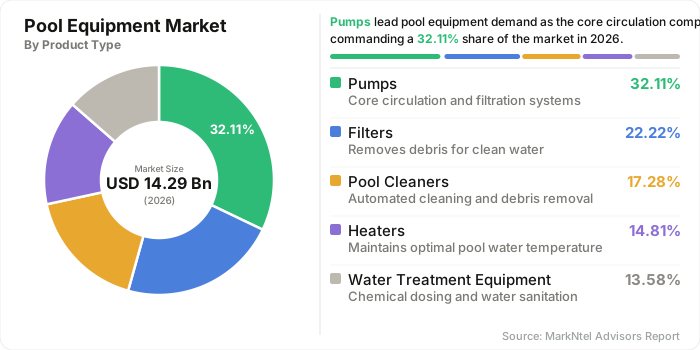
Pumps are the leading segment, holding approximately 26% share in the global pool equipment industry, making it the leading product category due to its essential role in water circulation and hydraulic performance. Global demand is strongly supported by large installed base turnover, with swimming pool pump systems typically requiring replacement within 5–8 years of operation depending on usage intensity. Pumps also account for a major portion of equipment procurement in both residential and commercial pool construction projects, reinforcing steady production volumes across global manufacturers.
On the supply side, leading companies such as Pentair, Fluidra, and Hayward operate integrated manufacturing and distribution networks across North America, Europe, and Asia, supporting consistent global pump output. The United States alone, with more than 10.7 million residential swimming pools (PHTA), generates a continuous aftermarket demand cycle for replacement pumps and upgraded circulation systems. This large installed base, combined with expanding hospitality and resort pool construction, ensures sustained sales momentum for high-efficiency and variable-capacity pump systems worldwide. Based on product type, the global pool equipment industry has been segmented into:
- Pumps
- Filters
- Pool Cleaners
- Heaters
- Water Treatment Equipment
- Pool Lighting Systems
- Automation & Smart Control Systems
- Pool Covers
- Other Pool Equipment
Permanent Pool Infrastructure Driving Equipment Consumption
In-ground pool segment is the leading segments, holds approximately 70% share of the global pool equipment market, driven by strong adoption across luxury residential housing, hospitality projects, and commercial aquatic facilities. According to Eurostat construction and housing improvement indicators (2024), residential renovation spending in Europe remains heavily concentrated in premium outdoor lifestyle upgrades, particularly in Southern Europe where swimming pools are a standard feature in high-value properties. These installations require high-capacity circulation and treatment systems, increasing equipment value per unit.
From a structural demand perspective, in-ground pools generate higher lifecycle equipment consumption due to permanent installation and multi-system integration. Large hospitality developments increasingly incorporate multiple in-ground pools, spa pools, and wellness zones as standard infrastructure. This is reinforced by the UN Tourism 2024 recovery trend, where global travel activity has returned close to pre-pandemic levels, supporting continued investment in resorts and hotels. As a result, demand for pool filtration systems and pool automation systems remains structurally strong across global premium infrastructure projects. Based on pool type, the industry has been segmented into:
- In-Ground
- Above-Ground
Pool Equipment Market Geographical Outlook
North America holds the leading position in the global pool equipment market with a 65% share in 2026, driven by a highly mature residential pool infrastructure. According to the Pool & Hot Tub Alliance (PHTA), the United States alone has over 300,000 public pools, creating the world's largest installed base for pumps, filtration systems, heaters, and cleaning equipment, which strongly supports replacement-driven demand.
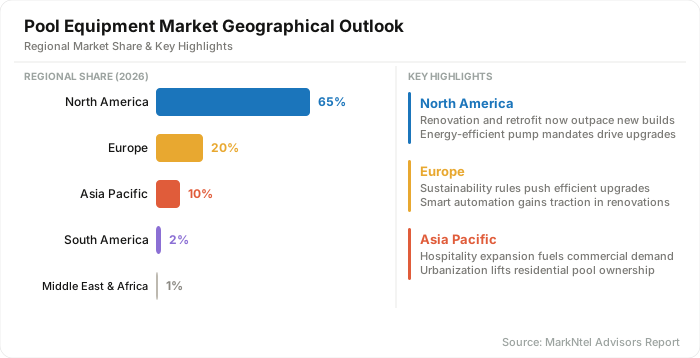
The region's dominance is further reinforced by high disposable incomes and strong demand for premium lifestyle amenities in states such as Florida, California, and Texas. This is accelerating the adoption of energy-efficient pool pumps and smart automation systems as consumers increasingly replace conventional equipment with technology-enabled, low-maintenance solutions that reduce operating and energy costs. Reflecting this trend, Hayward Industries expanded its 2025 professional product lineup by introducing a new generation of variable-speed pool pumps, along with advanced salt chlorinators, skimmers, and electrical control equipment designed to improve energy efficiency, lower operating costs, and meet evolving energy-efficiency standards.
In addition, North America benefits from a well-established ecosystem of leading manufacturers such as Pentair, Hayward, and Fluidra, ensuring continuous product innovation and broad equipment availability. Rising investments in hospitality infrastructure and wellness tourism further support commercial pool installations. Combined with stringent energy-efficiency regulations and a strong aftermarket replacement cycle, the region remains the world's most mature and replacement-driven pool equipment market.
Pool Equipment Market Competitive Analysis
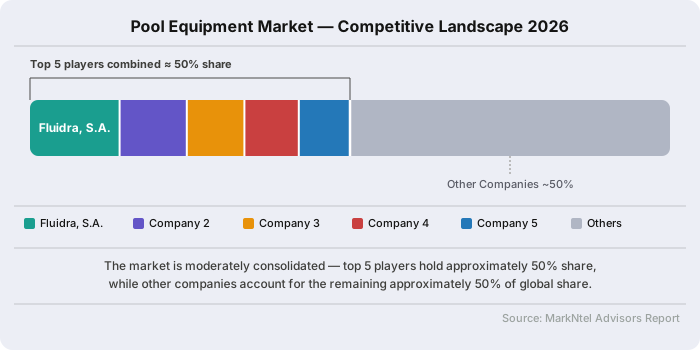
The global pool equipment industry is moderately consolidated, with leading players focusing on innovation in energy-efficient pool systems and smart automation technologies to strengthen competitive positioning. The top five players, Fluidra, Pentair, Hayward, Maytronics, and Waterco, collectively hold a significant share of the global industry, estimated at around 50%, reflecting strong brand dominance and global distribution networks.
Key Companies in the pool equipment industry
- Fluidra, S.A.
- Pentair plc
- Hayward Holdings, Inc.
- Waterco Limited
- Maytronics Ltd.
- Emaux Water Technology Co., Ltd.
- Guangdong LASWIM Pool & Spa Equipment Co., Ltd.
- Piscines Desjoyaux SA
- CF Group
- Nextpool Group
- BWT Holding GmbH
- SPECK Pumpen Verkaufsgesellschaft GmbH
- Davey Water Products Pty Ltd
- Aiper Intelligent, LLC
- Fairland Group Co., Ltd.
Pool Equipment Industry News and Recent Developments
September 2025 Pentair Launches Next-Generation IntelliFlo3 VSF Smart Pump with Grid-Responsive Connectivity
Pentair introduced its upgraded IntelliFlo3 VSF variable-speed pump system with cloud-based connectivity and utility-responsive demand control functionality. The system enables real-time energy optimization and remote performance monitoring, allowing residential and commercial pool operators to reduce operational energy consumption while improving hydraulic efficiency and system control integration.
Impact Analysis: This development strengthens the transition toward smart pool equipment ecosystems, where energy management and digital control are becoming core purchasing criteria. The integration of connected pump systems supports long-term reduction in electricity usage and enhances operational efficiency, particularly in North American and European markets where energy costs and regulatory efficiency requirements are rising.
January 2025 Fluidra Expands Water Treatment Portfolio with Advanced Oxidation and Smart Sanitization Systems
Fluidra expanded its Jandy X-Series AOP system range, integrating UV-C and ozone-based oxidation technology certified under NSF/ANSI/CAN 50 standards. The system is designed to enhance water quality while reducing reliance on traditional chemical dosing, improving safety and sustainability in residential and commercial swimming pools.
Impact Analysis: This expansion reflects growing demand for chemical-efficient pool water treatment systems, particularly in hospitality and premium residential segments. The shift toward advanced oxidation and automated sanitization technologies is expected to reduce chemical consumption, improve water safety compliance, and accelerate adoption of integrated pool automation systems across global markets.
Frequently Asked Questions
- Market Segmentation
- Introduction
- Product Definition
- Research Process
- Assumptions
- Executive Summary
- Global Pool Equipment Market Policies, Regulations, and Product Standards
- Global Pool Equipment Market Trends & Developments
- Global Pool Equipment Market Dynamics
- Growth Drivers
- Challenges
- Global Pool Equipment Market Hotspot & Opportunities
- Global Pool Equipment Market Value Chain Analysis
- Global Pool Equipment Market Outlook, 2020-2030F
- Market Size & Outlook
- By Revenues (USD Million)
- By Units Sold (Thousand Units)
- Market Share & Outlook
- By Component
- Equipment- Market Size & Forecast 2020-2030, USD Million & Thousand Units
- Pumps- Market Size & Forecast 2020-2030, USD Million & Thousand Units
- Cleaners- Market Size & Forecast 2020-2030, USD Million & Thousand Units
- Filters- Market Size & Forecast 2020-2030, USD Million & Thousand Units
- Heaters- Market Size & Forecast 2020-2030, USD Million & Thousand Units
- Chlorinators- Market Size & Forecast 2020-2030, USD Million & Thousand Units
- Pool Lights- Market Size & Forecast 2020-2030, USD Million
- Heat Pumps-- Market Size & Forecast 2020-2030, USD Million & Thousand Units
- Sanitization- Market Size & Forecast 2020-2030, USD Million
- Automation- Market Size & Forecast 2020-2030, USD Million
- Others- Market Size & Forecast 2020-2030, USD Million & Thousand Units
- Chemicals- Market Size & Forecast 2020-2030, USD Million
- Maintenance/Services- Market Size & Forecast 2020-2030, USD Million
- Equipment- Market Size & Forecast 2020-2030, USD Million & Thousand Units
- By End User
- Residential- Market Size & Forecast 2020-2030, USD Million
- Commercial- Market Size & Forecast 2020-2030, USD Million
- By Pool Type
- In-Ground- Market Size & Forecast 2020-2030, USD Million
- Above Ground- Market Size & Forecast 2020-2030, USD Million
- By Region
- North America
- South America
- Europe
- Middle East & Africa
- Asia-Pacific
- By Company
- Company Revenue Shares
- Competitor Characteristics
- By Component
- Market Size & Outlook
- North America Pool Equipment Market Outlook, 2020-2030F
- Market Size & Outlook
- By Revenues (USD Million)
- By Units Sold (Thousand Units)
- Market Share & Outlook
- By Component- Market Size & Forecast 2020-2030, USD Million & Thousand Units
- By End User- Market Size & Forecast 2020-2030, USD Million
- By Pool Type- Market Size & Forecast 2020-2030, USD Million
- By Country
- The US
- Canada
- Mexico
- The US Pool Equipment Market Outlook, 2020-2030F
- Market Size & Outlook
- By Revenues (USD Million)
- By Units Sold (Thousand Units)
- Market Share & Outlook
- By Component- Market Size & Forecast 2020-2030, USD Million & Thousand Units
- Market Size & Outlook
- Canada Pool Equipment Market Outlook, 2020-2030F
- Market Size & Outlook
- By Revenues (USD Million)
- By Units Sold (Thousand Units)
- Market Share & Outlook
- By Component- Market Size & Forecast 2020-2030, USD Million & Thousand Units
- Market Size & Outlook
- Mexico Pool Equipment Market Outlook, 2020-2030F
- Market Size & Outlook
- By Revenues (USD Million)
- By Units Sold (Thousand Units)
- Market Share & Outlook
- By Component- Market Size & Forecast 2020-2030, USD Million & Thousand Units
- Market Size & Outlook
- Market Size & Outlook
- South America Pool Equipment Market Outlook, 2020-2030F
- Market Size & Outlook
- By Revenues (USD Million)
- By Units Sold (Thousand Units)
- Market Share & Outlook
- By Component- Market Size & Forecast 2020-2030, USD Million & Thousand Units
- By End User- Market Size & Forecast 2020-2030, USD Million
- By Pool Type- Market Size & Forecast 2020-2030, USD Million
- By Country
- Brazil
- Rest of South America
- Brazil Pool Equipment Market Outlook, 2020-2030F
- Market Size & Outlook
- By Revenues (USD Million)
- By Units Sold (Thousand Units)
- Market Share & Outlook
- By Component- Market Size & Forecast 2020-2030, USD Million & Thousand Units
- Market Size & Outlook
- Market Size & Outlook
- Europe Pool Equipment Market Outlook, 2020-2030F
- Market Size & Outlook
- By Revenues (USD Million)
- By Units Sold (Thousand Units)
- Market Share & Outlook
- By Component- Market Size & Forecast 2020-2030, USD Million & Thousand Units
- By End User- Market Size & Forecast 2020-2030, USD Million
- By Pool Type- Market Size & Forecast 2020-2030, USD Million
- By Country
- Germany
- The UK
- France
- Italy
- Spain
- Rest of Europe
- Germany Pool Equipment Market Outlook, 2020-2030F
- Market Size & Outlook
- By Revenues (USD Million)
- By Units Sold (Thousand Units)
- Market Share & Outlook
- By Component- Market Size & Forecast 2020-2030, USD Million & Thousand Units
- Market Size & Outlook
- The UK Pool Equipment Market Outlook, 2020-2030F
- Market Size & Outlook
- By Revenues (USD Million)
- By Units Sold (Thousand Units)
- Market Share & Outlook
- By Component- Market Size & Forecast 2020-2030, USD Million & Thousand Units
- Market Size & Outlook
- France Pool Equipment Market Outlook, 2020-2030F
- Market Size & Outlook
- By Revenues (USD Million)
- By Units Sold (Thousand Units)
- Market Share & Outlook
- By Component- Market Size & Forecast 2020-2030, USD Million & Thousand Units
- Market Size & Outlook
- Italy Pool Equipment Market Outlook, 2020-2030F
- Market Size & Outlook
- By Revenues (USD Million)
- By Units Sold (Thousand Units)
- Market Share & Outlook
- By Component- Market Size & Forecast 2020-2030, USD Million & Thousand Units
- Market Size & Outlook
- Spain Pool Equipment Market Outlook, 2020-2030F
- Market Size & Outlook
- By Revenues (USD Million)
- By Units Sold (Thousand Units)
- Market Share & Outlook
- By Component- Market Size & Forecast 2020-2030, USD Million & Thousand Units
- Market Size & Outlook
- Market Size & Outlook
- The Middle East & Africa Pool Equipment Market Outlook, 2020-2030F
- Market Size & Outlook
- By Revenues (USD Million)
- By Units Sold (Thousand Units)
- Market Share & Outlook
- By Component- Market Size & Forecast 2020-2030, USD Million & Thousand Units
- By End User- Market Size & Forecast 2020-2030, USD Million
- By Pool Type- Market Size & Forecast 2020-2030, USD Million
- By Country
- The UAE
- Saudi Arabia
- Qatar
- Rest of Middle East & Africa
- The UAE Pool Equipment Market Outlook, 2020-2030F
- Market Size & Outlook
- By Revenues (USD Million)
- By Units Sold (Thousand Units)
- Market Share & Outlook
- By Component- Market Size & Forecast 2020-2030, USD Million & Thousand Units
- Market Size & Outlook
- Saudi Arabia Pool Equipment Market Outlook, 2020-2030F
- Market Size & Outlook
- By Revenues (USD Million)
- By Units Sold (Thousand Units)
- Market Share & Outlook
- By Component- Market Size & Forecast 2020-2030, USD Million & Thousand Units
- Market Size & Outlook
- Qatar Pool Equipment Market Outlook, 2020-2030F
- Market Size & Outlook
- By Revenues (USD Million)
- By Units Sold (Thousand Units)
- Market Share & Outlook
- By Component- Market Size & Forecast 2020-2030, USD Million & Thousand Units
- Market Size & Outlook
- Market Size & Outlook
- Asia-Pacific Pool Equipment Market Outlook, 2020-2030F
- Market Size & Outlook
- By Revenues (USD Million)
- By Units Sold (Thousand Units)
- Market Share & Outlook
- By Component- Market Size & Forecast 2020-2030, USD Million & Thousand Units
- By End User- Market Size & Forecast 2020-2030, USD Million
- By Pool Type- Market Size & Forecast 2020-2030, USD Million
- By Country
- China
- Japan
- India
- Singapore
- Vietnam
- Indonesia
- Rest of Asia Pacific
- China Pool Equipment Market Outlook, 2020-2030F
- Market Size & Outlook
- By Revenues (USD Million)
- By Units Sold (Thousand Units)
- Market Share & Outlook
- By Component- Market Size & Forecast 2020-2030, USD Million & Thousand Units
- Market Size & Outlook
- Japan Pool Equipment Market Outlook, 2020-2030F
- Market Size & Outlook
- By Revenues (USD Million)
- By Units Sold (Thousand Units)
- Market Share & Outlook
- By Component- Market Size & Forecast 2020-2030, USD Million & Thousand Units
- Market Size & Outlook
- India Pool Equipment Market Outlook, 2020-2030F
- Market Size & Outlook
- By Revenues (USD Million)
- By Units Sold (Thousand Units)
- Market Share & Outlook
- By Component- Market Size & Forecast 2020-2030, USD Million & Thousand Units
- Market Size & Outlook
- Singapore Pool Equipment Market Outlook, 2020-2030F
- Market Size & Outlook
- By Revenues (USD Million)
- By Units Sold (Thousand Units)
- Market Share & Outlook
- By Component- Market Size & Forecast 2020-2030, USD Million & Thousand Units
- Market Size & Outlook
- Vietnam Pool Equipment Market Outlook, 2020-2030F
- Market Size & Outlook
- By Revenues (USD Million)
- By Units Sold (Thousand Units)
- Market Share & Outlook
- By Component- Market Size & Forecast 2020-2030, USD Million & Thousand Units
- Market Size & Outlook
- Indonesia Pool Equipment Market Outlook, 2020-2030F
- Market Size & Outlook
- By Revenues (USD Million)
- By Units Sold (Thousand Units)
- Market Share & Outlook
- By Component- Market Size & Forecast 2020-2030, USD Million & Thousand Units
- Market Size & Outlook
- Market Size & Outlook
- Global Pool Equipment Market Key Strategic Imperatives for Success & Growth
- Competition Outlook
- Company Profile
- Fluidra SA
- Business Description
- Product Portfolio
- Strategic Alliances or Partnerships
- Recent Developments
- Financial Details
- Others
- Pentair Plc
- Business Description
- Product Portfolio
- Strategic Alliances or Partnerships
- Recent Developments
- Financial Details
- Others
- WaterCo Ltd
- Business Description
- Product Portfolio
- Strategic Alliances or Partnerships
- Recent Developments
- Financial Details
- Others
- Maytronics Ltd
- Business Description
- Product Portfolio
- Strategic Alliances or Partnerships
- Recent Developments
- Financial Details
- Others
- Aqua Products Inc.
- Business Description
- Product Portfolio
- Strategic Alliances or Partnerships
- Recent Developments
- Financial Details
- Others
- Hayward Industries Inc.
- Business Description
- Product Portfolio
- Strategic Alliances or Partnerships
- Recent Developments
- Financial Details
- Others
- Zodiac Pool Systems Inc.
- Business Description
- Product Portfolio
- Strategic Alliances or Partnerships
- Recent Developments
- Financial Details
- Others
- CF Group
- Business Description
- Product Portfolio
- Strategic Alliances or Partnerships
- Recent Developments
- Financial Details
- Others
- Desjoyaux S.A.
- Business Description
- Product Portfolio
- Strategic Alliances or Partnerships
- Recent Developments
- Financial Details
- Others
- Emaux Water Technology Co. Ltd.
- Business Description
- Product Portfolio
- Strategic Alliances or Partnerships
- Recent Developments
- Financial Details
- Others
- Guangdong Laswim Pool & Spa Equipment Co.
- Business Description
- Product Portfolio
- Strategic Alliances or Partnerships
- Recent Developments
- Financial Details
- Others
- NextPool Group
- Business Description
- Product Portfolio
- Strategic Alliances or Partnerships
- Recent Developments
- Financial Details
- Others
- Raypak
- Business Description
- Product Portfolio
- Strategic Alliances or Partnerships
- Recent Developments
- Financial Details
- Others
- Others
- Fluidra SA
- Company Profile
- Disclaimer
MarkNtel Advisors follows a robust and iterative research methodology designed to ensure maximum accuracy and minimize deviation in market estimates and forecasts. Our approach combines both bottom-up and top-down techniques to effectively segment and quantify various aspects of the market. A consistent feature across all our research reports is data triangulation, which examines the market from three distinct perspectives to validate findings. Key components of our research process include:
1. Scope & Research Design At the outset, MarkNtel Advisors define the research objectives and formulate pertinent questions. This phase involves determining the type of research—qualitative or quantitative—and designing a methodology that outlines data collection methods, target demographics, and analytical tools. They also establish timelines and budgets to ensure the research aligns with client goals.
2. Sample Selection and Data Collection In this stage, the firm identifies the target audience and determines the appropriate sample size to ensure representativeness. They employ various sampling methods, such as random or stratified sampling, based on the research objectives. Data collection is carried out using tools like surveys, interviews, and observations, ensuring the gathered data is reliable and relevant.
3. Data Analysis and Validation Once data is collected, MarkNtel Advisors undertake a rigorous analysis process. This includes cleaning the data to remove inconsistencies, employing statistical software for quantitative analysis, and thematic analysis for qualitative data. Validation steps are taken to ensure the accuracy and reliability of the findings, minimizing biases and errors.

4. Data Forecast and FinalizationThe final phase involves forecasting future market trends based on the analyzed data. MarkNtel Advisors utilize predictive modeling and time series analysis to anticipate market behaviors. The insights are then compiled into comprehensive reports, featuring visual aids like charts and graphs, and include strategic recommendations to inform client decision-making
We offer flexible licensing options to cater to varying organizational needs. Choose the pricing pack that best suits your requirements:
Buy Now Inquire Before Buying
 Request Customization
 Talk to our Consultant







