

Global Construction Equipment Rental Market Research Report: Forecast (2026-2032)
By Equipment Type ( Earthmoving Equipment, Material Handling Equipment, Concrete and Road Construction, Others), By Product Type (Excavator, Loader, Grader, Bulldozer, Road Roll ... er, Tipper, Forklifts, Cranes, Diesel Generator, Concrete Pumps, Concrete Mixers, Others), By Application ( Residential, Commercial, Industrial), and others Read more
- Buildings, Construction, Metals & Mining
- Jun 2026
- Pages 339
- Report Format: PDF, Excel, PPT
Global Construction Equipment Rental Market
Projected 5.8 % CAGR from 2026 to 2032
Study Period
2026-2032
Market Size (2026)
USD 163.99 Billion
Market Size (2032)
USD 230 Billion
Largest Region
North America
Projected CAGR
5.8 %
Leading Segments
By Equipment Type: Earthmoving Equipment
Global Construction Equipment Rental Market Key Takeaways
- The construction equipment rental market was valued at approximately USD 163.99 billion in 2026 and is projected to reach nearly USD 230 billion by 2032.
- The market is expected to register a CAGR of around 5.8 % during the forecast period (2026–2032).
- North America account for over 32 % of the global market share, supported by large-scale infrastructure spending, urban redevelopment, and industrial expansion projects.
- Earthmoving equipment remains the dominant equipment category, holding 45% of the global rental demand in 2026.
- Infrastructure and commercial construction sectors are the leading end-use segments, holding a share of 75% in 2024.
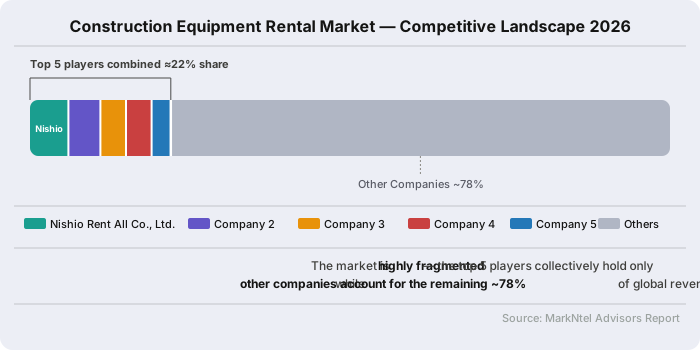
- The market remains moderately consolidated, with leading players such as United Rentals, Ashtead Group, Herc Rentals, Loxam, and Kanamoto holding 22% of the market share
Global Construction Equipment Rental Market Size and Outlook
The global construction equipment rental market is projected to witness steady CAGR of around 5.8 % during 2026–2032, driven by rising governments investments in transportation networks, smart cities, renewable energy infrastructure, and industrial construction projects, creating sustained demand for rental construction machinery. For instance, the United States government is advancing infrastructure modernization through the USD 1.2 trillion Infrastructure Investment, including USD 110 billion for roads and bridges, USD 66 billion for rail, and USD 65 billion for power infrastructure, increasing demand for rented construction equipment across major projects.
In 2026, in China, the National Development and Reform Commission (NDRC) released an early batch of major infrastructure projects and central budget investment plans worth approximately USD 42 billion. In addition, the NDRC approved major transportation, water conservancy, energy, and scientific research projects with total investments exceeding USD 58 billion. These initiatives are expected to increase demand for construction equipment and rental services across the country.
India is also emerging as a key growth market for construction equipment rental services. Under the Union Budget 2026–27, the Government of India increased capital expenditure to approximately USD 145 billion, focusing on highways, railways, smart cities, and urban infrastructure projects. Major programs such as Bharatmala Pariyojana, and the National Infrastructure Pipeline (NIP) are creating demand for construction machinery across the country. Therefore, equipment rental solutions are becoming an increasingly attractive option for contractors seeking flexibility and lower upfront investment requirements.
Japan government initiatives aimed at strengthening aging infrastructure and enhancing climate resilience are supporting the use of advanced construction equipment across public works projects. Collectively, these government-led infrastructure investments are expected to strengthen the Asia-Pacific construction sector, which is valued at USD 163.99 billion in 2026 and is projected to reach nearly USD 230 billion by 2032, and support the growing adoption of equipment rental services. Rising construction activity, increasing project complexity, and the need for cost-efficient equipment utilization are encouraging contractors throughout the region to rely on rental fleets, thereby contributing to the long-term expansion of the construction equipment rental market across Asia-Pacific.
Global Construction Equipment Rental Market Key Indicators
- According to global infrastructure investment estimates, worldwide infrastructure spending is expected to exceed USD 94 trillion by 2040, creating sustained long-term demand for heavy construction machinery and rental services.
- PM Gati Shakti is accelerating multi-modal infrastructure development through coordinated investments in highways, freight corridors, rail networks, logistics parks, industrial clusters, and port connectivity. The initiative has identified 434 infrastructure projects worth nearly USD 13 billion, boosting demand for construction equipment rental services for large-scale infrastructure execution across India.
- The construction equipment rental market in Asia-Pacific benefits from demand generated by disaster recovery activities in earthquake-prone countries. Japan alone experiences around 20% of global earthquakes with magnitude 6.0 or higher, requiring continuous investment in infrastructure repair, reconstruction, and resilient construction projects, which supports demand for rental construction equipment.
- Developing and emerging economies are expected to be major growth engines for the construction equipment rental market as rapid urbanization drives infrastructure demand. The World Bank estimates low- and middle-income countries require up to USD 2.7 trillion annually in urban infrastructure investment, increasing demand for rental construction equipment.
- According to CBRE India, steel prices increased by nearly 12–15% and aluminium costs remained highly volatile during recent infrastructure expansion cycles, significantly elevating overall project expenses. This cost pressure is encouraging contractors to adopt construction equipment rental solutions to reduce upfront capital investment and improve operational flexibility.
Global Construction Equipment Rental Market Scope
| Category | Segments |
|---|---|
| By Equipment Type | Earthmoving Equipment, Material Handling Equipment, Concrete and Road Construction, Others |
| By Product Type | Excavator, Loader, Grader, Bulldozer, Road Roller, Tipper, Forklifts, Cranes, Diesel Generator, Concrete Pumps, Concrete Mixers, Others |
| By Application | Residential, Commercial, Industrial |
Global Construction Equipment Rental Market Growth Driver
Increasing Adoption of Asset-Light Business Models in Construction
The growing shift toward asset-light operating strategies among contractors and construction companies has emerged as one of the most significant drivers of the global construction equipment rental market. Construction firms are increasingly choosing rental equipment over ownership to reduce upfront capital investment, improve cash flow, and enhance operational flexibility. Rental solutions enable contractors to access modern excavators, loaders earthmoving equipment without bearing long-term ownership costs such as maintenance, depreciation, and equipment replacement.
Governments are significantly increasing capital expenditure on transportation, logistics, energy, and urban development projects, creating sustained demand for construction equipment. For example, the Government of India increased public capital expenditure to approximately USD 144 billion in FY 2026–27, compared with USD 75 billion in FY 2021–22, demonstrating a substantial expansion in infrastructure investment. The increased project pipeline is encouraging contractors to rely on rental fleets to efficiently manage equipment utilization across multiple projects.
As construction projects become larger and more complex, contractors are prioritizing financial flexibility and access to technologically advanced machinery over asset ownership. Consequently, the combination of infrastructure expansion and the growing preference for asset-light business models is accelerating the transition toward rental-based equipment utilization, making it a key long-term growth driver for the global construction equipment rental market.
Recent Trends
Rapid Expansion of Smart and Sustainable Rental Fleets
The global construction equipment rental market is witnessing rapid adoption of smart, connected, and environmentally sustainable equipment fleets worldwide. Rental companies worldwide are increasingly investing in digital fleet technologies, low-emission machinery, and electric construction equipment to align with evolving sustainability regulations and contractor demand. A major emerging trend is the integration of telematics and AI-powered fleet monitoring systems into rental equipment. These technologies allow real-time tracking of fuel consumption, equipment utilization and operator performance.
For instance, in 2025, United Rentals expanded its intelligent fleet management platform with advanced telematics integration and predictive maintenance analytics to improve uptime and reduce operational inefficiencies. Rental companies are adding battery-powered mini excavators, electric aerial platforms, and low-emission compact loaders to comply with stricter environmental regulations and urban emission standards. In parallel, demand for specialized equipment rentals is rising rapidly due to growth in renewable energy infrastructure projects such as wind farms, solar parks, and EV manufacturing facilities.
These projects require high-capacity cranes, lifting systems, and precision earthmoving machinery on temporary project cycles. In conclusion, recent trends in the global construction equipment rental industry are strongly shaped by digital transformation, sustainability regulations, electrification of fleets, and the growing need for flexible project-based equipment deployment worldwide.
Global Construction Equipment Rental Market Opportunities and Challenges
Overcoming Utilization Constraints by Telematics and Predictive Maintenance
Low equipment utilization and frequent downtime continue to pose significant challenges for the construction equipment rental market. Rental companies often face difficulties in maintaining optimal fleet productivity due to project delays, seasonal fluctuations in construction activities, unexpected equipment failures, and maintenance-related disruptions. These factors can leave a substantial portion of rental assets idle, reducing overall fleet efficiency and profitability. Furthermore, underutilized equipment increases ownership and maintenance costs while limiting opportunities for fleet expansion and revenue generation. As competition intensifies, rental providers are under growing pressure to maximize asset performance and improve operational efficiency.
However, the increasing adoption of telematics-enabled fleet management systems, predictive maintenance technologies, and Equipment-as-a-Service (EaaS) models is creating new growth opportunities for the market. These advanced solutions provide real-time visibility into equipment location, performance, and usage patterns, enabling rental companies to optimize fleet deployment and utilization. Predictive maintenance capabilities help identify potential equipment issues before failures occur, reducing unplanned downtime and repair costs. Additionally, EaaS models offer greater flexibility and efficiency in equipment management. Together, these innovations are helping rental providers enhance productivity, improve customer satisfaction, and strengthen long-term profitability.
Segmentation Insights
Earthmoving Equipment Remains the Dominant Equipment Segment Owing to Large Infrastructure Activity
Earthmoving equipment accounts for the largest share of the global construction equipment rental market owing to its extensive utilization across highways, railways, mining operations, industrial projects, urban redevelopment, and energy infrastructure developments. Equipment such as excavators, loaders, bulldozers, backhoe loaders, and motor graders are widely rented due to their operational versatility, high productivity, and suitability for both short-term and long-duration projects.
The continued expansion of highways, railways, metro systems, airports, and utility infrastructure projects across emerging and developed economies is significantly driving demand for rental earthmoving machinery, enabling contractors to reduce capital expenditure and improve project flexibility. Cranes and lifting equipment are also experiencing substantial rental demand, particularly in renewable energy projects, high-rise commercial construction, shipbuilding activities, and large-scale industrial developments where specialized lifting capabilities are required.
Compact construction equipment is witnessing rapid adoption in urban redevelopment, residential projects, and smart city initiatives where limited working space increases the need for maneuverable and fuel-efficient machinery. Based on equipment type, the market has been segmented into:
- Earthmoving Equipment
- Material Handling Equipment
- Concrete & Road Construction Equipment
- Aerial Work Platforms
- Cranes & Lifting Equipment
- Mining Equipment
- Compact Construction Equipment
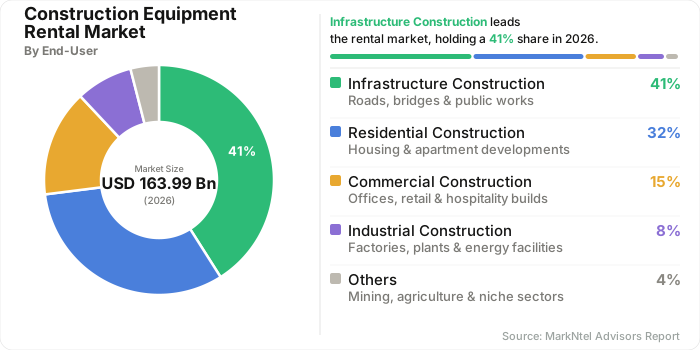
Infrastructure and Commercial Construction Lead End-User Demand Owing to Mega Developments
Infrastructure construction remains the leading end- user segment in the global construction equipment rental industry, supported by expanding investments in highways, railways, airports, ports, bridges, energy systems, and public utility projects. For instance, India’s PM Gati Shakti initiative identified 434 infrastructure projects worth nearly ₹11.17 lakh crore to strengthen multimodal connectivity and logistics efficiency, significantly increasing demand for rented earthmoving and material handling equipment across transportation and industrial projects. Governments across are increasing infrastructure spending to support economic growth, urban connectivity, and industrial expansion, thereby accelerating demand for rented construction machinery and heavy equipment.
Commercial construction is also contributing significantly to market growth due to rapid urbanization and increasing investments in logistics warehouses, industrial parks, data centers, office spaces, hospitality projects, and mixed-use real estate developments across regions such as North America, Asia-Pacific, and the Middle East. Additionally, the mining and energy sectors continue to generate stable rental demand owing to rising investments in critical mineral extraction, renewable energy installations, transmission infrastructure, and oil & gas development projects globally. Based on end users, the industry has been segmented into:
- Infrastructure Construction
- Residential Construction
- Commercial Construction
- Industrial Construction
- Mining & Energy
- Oil & Gas Projects
- Others
Global Construction Equipment Rental Market Regional Projection
Asia-Pacific dominates the construction equipment rental market with a market share of 44% and is expected to maintain its leadership position during 2026–2032, supported by rapid urbanization, large-scale infrastructure investments, industrial expansion, and increasing construction activities across major economies such as China, India, Japan, South Korea, and Australia. The region continues to witness strong demand for rental excavators, loaders, cranes, aerial work platforms, and earthmoving equipment driven by transportation projects, smart city developments, industrial parks, renewable energy installations, logistics infrastructure, and urban redevelopment programs.
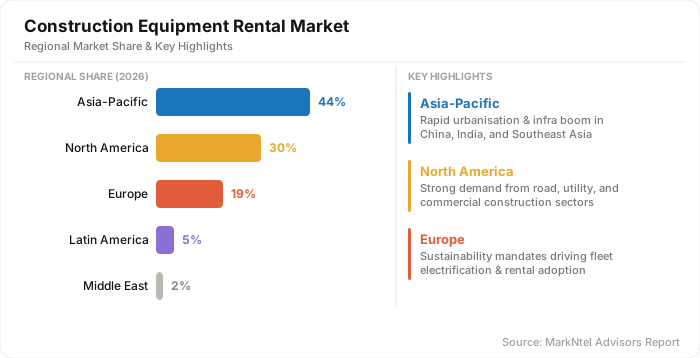
Government initiatives supporting infrastructure modernization and manufacturing expansion are further accelerating construction activity across the region. Furthermore, the presence of a large contractor base, increasing participation of small and medium-sized construction firms, and rising investments in energy, transportation, and industrial infrastructure continue to strengthen market demand.
Global Construction Equipment Rental Market Competitive Analysis
The global construction equipment rental market is moderately consolidated, with major international rental providers expanding aggressively through acquisitions, fleet modernization, and digital rental platforms. Leading global players holds 22% of the market share, are also investing heavily in AI-driven fleet management systems, predictive maintenance technologies, and sustainability-focused fleet upgrades to improve operational efficiency and customer retention.
Key Companies in the Global Construction Equipment Rental Market
- United Rentals
- Ashtead Group
- Herc Rentals
- Loxam
- Kanamoto
- Nishio Rent All
- Boels Rental
- Sunbelt Rentals
- Aktio Corporation
- H&E Equipment Services
Global Construction Equipment Rental Market News and Recent Developments
MAY 2026: United Rentals expanded its digital customer experience capabilities with the launch of Equipment Agent in ChatGPT
United Rentals launched Equipment Agent in ChatGPT, an AI-powered digital assistant designed to help customers identify suitable equipment, obtain rental recommendations, and access support services more efficiently. The solution enhances the company's digital customer experience by simplifying equipment selection, improving access to rental information, and supporting faster decision-making for construction and industrial customers.
Impact Analysis: The launch of AI-powered Equipment Agent by United Rentals is expected to accelerate the adoption of digital customer service platforms across the construction equipment rental industry. The innovation enhances customer accessibility to real-time equipment information, improves rental decision-making efficiency, and reduces operational delays through automated support capabilities
June 2025: United Rentals partnered with Raiven to digitalize rental solutions.
United Rentals announced a partnership with Raiven to expand digital access to equipment rental services. Through the partnership, United Rentals integrated its fleet of construction, industrial, and general equipment into Raiven’s cloud-based procurement platform, enabling contractors and facility managers to simplify equipment sourcing, improve procurement visibility, and manage rental requirements through a centralized digital marketplace.
Impact Analysis: The partnership reflects the increasing digitalization of the construction equipment rental industry, where cloud-based procurement platforms and integrated fleet management solutions are becoming critical for improving operational efficiency and customer accessibility. The initiative is expected to accelerate adoption of digital rental ecosystems, simplify contractor procurement workflows, and strengthen technology-driven equipment rental services.
Jan 2026 : Cooper Equipment Rentals Expands Golden Equipment Campaign with Skyjack Partnership
Canadian construction equipment rental company Cooper Equipment Rentals partnered with Skyjack to introduce nine new branded golden telehandlers, a golden trench shield, and a golden pump as part of its 5th annual Golden Equipment Campaign. Cooper Equipment Rentals also announced a new fundraising target of USD 150,000 for 2026, supported through equipment rentals and the nationwide #SpotCooperGold awareness campaign encouraging public participation through social media engagement.
Impact Analysis: The partnership strengthens brand visibility and corporate social responsibility positioning for both Cooper Equipment Rentals and Skyjack within the North American construction equipment rental industry. The initiative also reflects a broader trend in the equipment rental sector where companies increasingly align ESG (Environmental, Social, and Governance) strategies with operational activities to strengthen stakeholder trust and community relations. The deployment of Skyjack’s telehandlers nationwide highlights growing collaboration between rental companies and OEM manufacturers to promote equipment visibility, fleet modernization, and social impact branding simultaneously.
Frequently Asked Questions
- Market Segmentation
- Introduction
- Product Definition
- Research Process
- Assumptions
- Executive Summary
- Global Construction Equipment Rental Market Policies, Regulations, and Product Standards
- Global Construction Equipment Rental Market Trends & Developments
- Global Construction Equipment Rental Market Dynamics
- Growth
- Challenges
- Global Construction Equipment Rental Market Hotspot & Opportunities
- Global Construction Equipment Rental Market
- Market Size & Analysis
- By Revenues (USD Million)
- Market Share & Outlook - Market Size & Forecast 2022-32F, (USD Million)
- By Equipment Type
- Earthmoving Equipment
- Material Handling Equipment
- Concrete and Road Construction
- Others
- By Product Type
- Excavator
- Loader
- Grader
- Bulldozer
- Road Roller
- Tipper
- Forklifts
- Cranes
- Diesel Generator
- Concrete Pumps
- Concrete Mixers
- Others
- By Application
- Residential
- Commercial
- Industrial
- By Region
- North America
- South America
- Europe
- The Middle East & Africa
- Asia-Pacific
- By Company
- Competition Characteristics
- Revenue Shares & Analysis
- By Equipment Type
- Market Size & Analysis
- North America Construction Equipment Rental Market Outlook, 2022-2032F
- Market Size & Analysis
- By Revenues (USD Million)
- Market Share & Outlook - Market Size & Forecast 2022-32F, (USD Million)
- By Equipment Type
- By Application
- By Product Type
- By Country
- The US
- Canada
- Mexico
- The United States Construction Equipment Rental Market Outlook, 2022-2032F
- Market Size & Analysis
- By Revenues (USD Million)
- Market Share & Outlook - Market Size & Forecast 2022-32F, (USD Million)
- By Equipment Type
- By Application
- By Product Type
- Market Size & Analysis
- Canada Construction Equipment Rental Market Outlook, 2022-2032F
- Market Size & Analysis
- By Revenues (USD Million)
- Market Share & Outlook - Market Size & Forecast 2022-32F, (USD Million)
- By Equipment Type
- By Application
- By Product Type
- Market Size & Analysis
- Mexico Construction Equipment Rental Market Outlook, 2022-2032F
- Market Size & Analysis
- By Revenues (USD Million)
- Market Share & Outlook - Market Size & Forecast 2022-32F, (USD Million)
- By Equipment Type
- By Application
- By Product Type
- Market Size & Analysis
- Market Size & Analysis
- South America Construction Equipment Rental Market Outlook, 2022-2032F
- Market Size & Analysis
- By Revenues (USD Million)
- Market Share & Outlook - Market Size & Forecast 2022-32F, (USD Million)
- By Equipment Type
- By Application
- By Product Type
- By Country
- Brazil
- Argentina
- Chile
- Rest of South America
- Brazil Construction Equipment Rental Market Outlook, 2022-2032F
- Market Size & Analysis
- By Revenues (USD Million)
- Market Share & Outlook - Market Size & Forecast 2022-32F, (USD Million)
- By Equipment Type
- By Application
- By Product Type
- Market Size & Analysis
- Market Size & Analysis
- Europe Construction Equipment Rental Market Outlook, 2022-2032F
- Market Size & Analysis
- By Revenues (USD Million)
- Market Share & Outlook - Market Size & Forecast 2022-32F, (USD Million)
- By Equipment Type
- By Application
- By Product Type
- By Country
- Germany
- The UK
- France
- Italy
- Spain
- Rest of Europe
- Germany Construction Equipment Rental Market Outlook, 2022-2032F
- Market Size & Analysis
- By Revenues (USD Million)
- Market Share & Outlook - Market Size & Forecast 2022-32F, (USD Million)
- By Equipment Type
- By Application
- By Product Type
- Market Size & Analysis
- The UK Construction Equipment Rental Market Outlook, 2022-2032F
- Market Size & Analysis
- By Revenues (USD Million)
- Market Share & Outlook - Market Size & Forecast 2022-32F, (USD Million)
- By Equipment Type
- By Application
- By Product Type
- Market Size & Analysis
- France Construction Equipment Rental Market Outlook, 2022-2032F
- Market Size & Analysis
- By Revenues (USD Million)
- Market Share & Outlook - Market Size & Forecast 2022-32F, (USD Million)
- By Equipment Type
- By Application
- By Product Type
- Market Size & Analysis
- Italy Construction Equipment Rental Market Outlook, 2022-2032F
- Market Size & Analysis
- By Revenues (USD Million)
- Market Share & Outlook - Market Size & Forecast 2022-32F, (USD Million)
- By Equipment Type
- By Application
- By Product Type
- Market Size & Analysis
- Spain Construction Equipment Rental Market Outlook, 2022-2032F
- Market Size & Analysis
- By Revenues (USD Million)
- Market Share & Outlook - Market Size & Forecast 2022-32F, (USD Million)
- By Equipment Type
- By Application
- By Product Type
- Market Size & Analysis
- Market Size & Analysis
- The Middle East & Africa Construction Equipment Rental Market Outlook, 2022-2032F
- Market Size & Analysis
- By Revenues (USD Million)
- Market Share & Outlook - Market Size & Forecast 2022-32F, (USD Million)
- By Equipment Type
- By Application
- By Product Type
- By Country
- The UAE
- Saudi Arabia
- South Africa
- Rest of the MEA
- The UAE Construction Equipment Rental Market Outlook, 2022-2032F
- Market Size & Analysis
- By Revenues (USD Million)
- Market Share & Outlook - Market Size & Forecast 2022-32F, (USD Million)
- By Equipment Type
- By Application
- By Product Type
- Market Size & Analysis
- Saudi Arabia Construction Equipment Rental Market Outlook, 2022-2032F
- Market Size & Analysis
- By Revenues (USD Million)
- Market Share & Outlook - Market Size & Forecast 2022-32F, (USD Million)
- By Equipment Type
- By Application
- By Product Type
- Market Size & Analysis
- South Africa Construction Equipment Rental Market Outlook, 2022-2032F
- Market Size & Analysis
- By Revenues (USD Million)
- Market Share & Outlook - Market Size & Forecast 2022-32F, (USD Million)
- By Equipment Type
- By Application
- By Product Type
- Market Size & Analysis
- Market Size & Analysis
- Asia-Pacific Construction Equipment Rental Market Outlook, 2022-2032F
- Market Size & Analysis
- By Revenues (USD Million)
- Market Share & Outlook - Market Size & Forecast 2022-32F, (USD Million)
- By Equipment Type
- By Application
- By Product Type
- By Country
- China
- India
- Japan
- South Korea
- Australia
- Rest of Asia-Pacific
- China Construction Equipment Rental Market Outlook, 2022-2032F
- Market Size & Analysis
- By Revenues (USD Million)
- Market Share & Outlook - Market Size & Forecast 2022-32F, (USD Million)
- By Equipment Type
- By Application
- By Product Type
- Market Size & Analysis
- India Construction Equipment Rental Market Outlook, 2022-2032F
- Market Size & Analysis
- By Revenues (USD Million)
- Market Share & Outlook - Market Size & Forecast 2022-32F, (USD Million)
- By Equipment Type
- By Application
- By Product Type
- Market Size & Analysis
- Japan Construction Equipment Rental Market Outlook, 2022-2032F
- Market Size & Analysis
- By Revenues (USD Million)
- Market Share & Outlook - Market Size & Forecast 2022-32F, (USD Million)
- By Equipment Type
- By Application
- By Product Type
- Market Size & Analysis
- South Korea Construction Equipment Rental Market Outlook, 2022-2032F
- Market Size & Analysis
- By Revenues (USD Million)
- Market Share & Outlook - Market Size & Forecast 2022-32F, (USD Million)
- By Equipment Type
- By Application
- By Product
- Market Size & Analysis
- Australia Construction Equipment Rental Market Outlook, 2022-2032F
- Market Size & Analysis
- By Revenues (USD Million)
- Market Share & Outlook - Market Size & Forecast 2022-32F, (USD Million)
- By Equipment Type
- By Application
- By Product Type
- Market Size & Analysis
- Market Size & Analysis
- Global Construction Equipment Rental Market Key Strategic Imperatives for Success & Growth
- Competition Outlook
- Company Profiles
- Caterpillar Inc.
- Business Description
- Product Portfolio
- Strategic Alliances or Partnerships
- Recent Developments
- Financial Details
- Others
- United Rentals, Inc.
- Business Description
- Product Portfolio
- Strategic Alliances or Partnerships
- Recent Developments
- Financial Details
- Others
- Sennebogen
- Business Description
- Product Portfolio
- Strategic Alliances or Partnerships
- Recent Developments
- Financial Details
- Others
- Komatsu Ltd.
- Business Description
- Product Portfolio
- Strategic Alliances or Partnerships
- Recent Developments
- Financial Details
- Others
- CNH Industrial N.V.
- Business Description
- Product Portfolio
- Strategic Alliances or Partnerships
- Recent Developments
- Financial Details
- Others
- Loxam
- Business Description
- Product Portfolio
- Strategic Alliances or Partnerships
- Recent Developments
- Financial Details
- Others
- Ramirent Plc.
- Business Description
- Product Portfolio
- Strategic Alliances or Partnerships
- Recent Developments
- Financial Details
- Others
- Zoomlion Heavy Industry Science and Technology Co., Ltd.
- Business Description
- Product Portfolio
- Strategic Alliances or Partnerships
- Recent Developments
- Financial Details
- Others
- Herc Rentals Inc.
- Business Description
- Product Portfolio
- Strategic Alliances or Partnerships
- Recent Developments
- Financial Details
- Others
- H&E Equipment Service
- Business Description
- Product Portfolio
- Strategic Alliances or Partnerships
- Recent Developments
- Financial Details
- Others
- Nishio Rent All Co. Ltd.
- Business Description
- Product Portfolio
- Strategic Alliances or Partnerships
- Recent Developments
- Financial Details
- Others
- Nikken Corporation
- Business Description
- Product Portfolio
- Strategic Alliances or Partnerships
- Recent Developments
- Financial Details
- Others
- Sunbelt
- Business Description
- Product Portfolio
- Strategic Alliances or Partnerships
- Recent Developments
- Financial Details
- Others
- Taiyokenki Rental Co., Ltd.
- Business Description
- Product Portfolio
- Strategic Alliances or Partnerships
- Recent Developments
- Financial Details
- Others
- AKTIO Corporation
- Business Description
- Product Portfolio
- Strategic Alliances or Partnerships
- Recent Developments
- Financial Details
- Others
- Others
- Caterpillar Inc.
- Company Profiles
- Disclaimer
MarkNtel Advisors follows a robust and iterative research methodology designed to ensure maximum accuracy and minimize deviation in market estimates and forecasts. Our approach combines both bottom-up and top-down techniques to effectively segment and quantify various aspects of the market. A consistent feature across all our research reports is data triangulation, which examines the market from three distinct perspectives to validate findings. Key components of our research process include:
1. Scope & Research Design At the outset, MarkNtel Advisors define the research objectives and formulate pertinent questions. This phase involves determining the type of research—qualitative or quantitative—and designing a methodology that outlines data collection methods, target demographics, and analytical tools. They also establish timelines and budgets to ensure the research aligns with client goals.
2. Sample Selection and Data Collection In this stage, the firm identifies the target audience and determines the appropriate sample size to ensure representativeness. They employ various sampling methods, such as random or stratified sampling, based on the research objectives. Data collection is carried out using tools like surveys, interviews, and observations, ensuring the gathered data is reliable and relevant.
3. Data Analysis and Validation Once data is collected, MarkNtel Advisors undertake a rigorous analysis process. This includes cleaning the data to remove inconsistencies, employing statistical software for quantitative analysis, and thematic analysis for qualitative data. Validation steps are taken to ensure the accuracy and reliability of the findings, minimizing biases and errors.

4. Data Forecast and FinalizationThe final phase involves forecasting future market trends based on the analyzed data. MarkNtel Advisors utilize predictive modeling and time series analysis to anticipate market behaviors. The insights are then compiled into comprehensive reports, featuring visual aids like charts and graphs, and include strategic recommendations to inform client decision-making
We offer flexible licensing options to cater to varying organizational needs. Choose the pricing pack that best suits your requirements:
Buy Now Inquire Before Buying
 Request Customization
 Talk to our Consultant







