

Southeast Asia Construction Equipment Rental Market Research Report: Forecast (2026-2032)
By Type (Earthmoving Equipment (Excavator, Loader, Grader, Bulldozer, Skid-steer & Compact Track Loaders, Trenchers, Dump Trucks, Others), Material Handling Equipment (Forklifts & ... Tele handlers, Cranes (Crawler, Mobile, Tower)), Other Construction Equipment (Road Rollers & Asphalt Pavers, Diesel Generators, Others)), By Propulsion type (Diesel, Petrol, Hybrid, Electric/ Battery Powered), By End Users (Infrastructure, Industrial, Commercial & Mixed-Use, Residential, Others), and others Read more
- Buildings, Construction, Metals & Mining
- Jul 2026
- Pages 240
- Report Format: PDF, Excel, PPT
Southeast Asia Construction Equipment Rental Market
Projected 8.29% CAGR from 2026 to 2032
Study Period
2026-2032
Market Size (2026)
USD 4.65 Billion
Market Size (2032)
USD 7.49 Billion
Base Year
2025
Projected CAGR
8.29%
Leading Segments
By Type: Earthmoving Equipment
Southeast Asia Construction Equipment Rental Market Key Takeaways
- Southeast Asia Construction Equipment Rental Market size was valued at USD 3.29 billion in 2025 and is projected to grow from USD 4.65 billion in 2026 to USD 7.49 billion by 2032.
- The market is projected to register a CAGR of 8.29% during 2026–2032.
- Indonesia holds the largest share of about 27% in 2026 amongst the others.
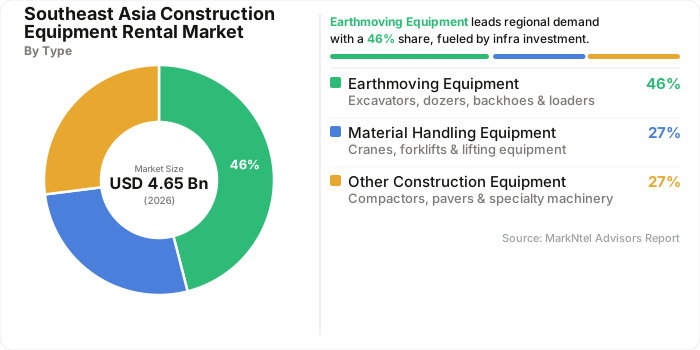
- By vehicle type, the earthmoving equipment segment held the largest share of about 46% in 2026.
- By propulsion type, diesel-powered equipment accounted for approximately 72% of the market in 2026.
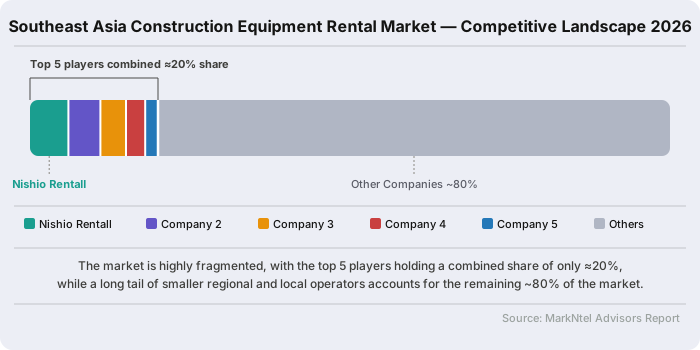
- The industry is moderately consolidated, with the top five players collectively accounting for approximately 20% of the market share in 2026.
Southeast Asia Construction Equipment Rental Market Size and Outlook
The construction equipment rental market size in Southeast Asia was valued at USD 3.29 billion in 2025 and is projected to grow from USD 4.65 billion in 2026 to USD 7.49 billion by 2032. Along with this, the market is estimated to grow at a CAGR of around 8.29% during the forecast period, i.e., 2026–32.
The demand for construction equipment rental is anchored in a substantial infrastructure investment pipeline that extends well beyond cyclical construction activity. Governments across the region are prioritising transport connectivity and urban mobility as core economic objectives. Indonesia is advancing the USD 32 billion Nusantara capital city development, while the Philippines' Build Better More program encompasses over 190 flagship projects valued at USD 165 billion, collectively creating a multi-year deployment requirement for excavators, cranes, loaders, and aerial work platforms.
Vietnam's accelerating delivery of the North-South Expressway and Long Thanh International Airport, alongside Thailand's Eastern Economic Corridor, is generating stable and recurring demand for organised rental fleets independent of domestic budget cycles. These large-scale civil and transport infrastructure programs reinforce long-term fleet utilisation rates and favour rental operators with the regional capacity and fleet depth to service sustained, multi-phase construction contracts across multiple markets simultaneously.
Rapid urban expansion is further broadening the addressable market beyond established megacities into second and third-tier urban centres. ASEAN's urban population is projected to exceed 400 million by decade-end, driving requirements for housing, utilities, transit systems, and social infrastructure across the region. Indonesia's One Million Houses Program and Vietnam's social housing expansion initiatives exemplify the scale of this pipeline, reinforcing a diversified construction base that reduces dependence on any single segment and supports sustained rental demand throughout the forecast period.
Southeast Asia Construction Equipment Rental Market Key Indicators
- Major public infrastructure commitments, including Indonesia's USD 32 billion new capital development and the Philippines' USD 165 billion portfolio of over 190 strategic projects, are creating long-duration machinery utilization opportunities across Southeast Asia.
- The region's urban population is expected to surpass 400 million by 2030, expanding requirements for housing stock, transportation networks, public services, and municipal infrastructure, thereby increasing reliance on rented construction machinery.
- Vietnam's position as a manufacturing hub is strengthening through Amkor's planned capacity increase from 1.2 billion to 3.6 billion semiconductor units annually and Foxconn's USD 4 billion investment base, accelerating industrial facility development and equipment deployment needs.
- Construction progress on Vietnam's USD 7.7 billion rail corridor connecting Hanoi with the Chinese border is supporting elevated demand for heavy machinery used in ground preparation, structural works, logistics handling, and corridor infrastructure development.
Southeast Asia Construction Equipment Rental Market Scope
| Category | Segments |
|---|---|
| By Type | Earthmoving Equipment (Excavator, Loader, Grader, Bulldozer, Skid-steer & Compact Track Loaders, Trenchers, Dump Trucks, Others), Material Handling Equipment (Forklifts & Tele handlers, Cranes (Crawler, Mobile, Tower)), Other Construction Equipment (Road Rollers & Asphalt Pavers, Diesel Generators, Others |
| By Propulsion type | Diesel, Petrol, Hybrid, Electric/ Battery Powered |
| By End Users | Infrastructure, Industrial, Commercial & Mixed-Use, Residential, Others |
Southeast Asia Construction Equipment Rental Market Growth Drivers
Manufacturing Relocation and Industrial Estate Expansion Driving Long-Term Equipment Rental Demand
Southeast Asia's emergence as a preferred manufacturing destination under the China+1 strategy is creating a distinct source of construction equipment demand independent of public infrastructure spending. As multinational manufacturers expand production capacity across Vietnam and Indonesia, industrial parks, factories, warehouses, and utility networks require extensive earthmoving, lifting, and material-handling equipment. Consequently, manufacturing-led construction projects generate sustained fleet deployment periods, strengthening equipment utilization rates and supporting recurring revenue opportunities for rental providers.
Vietnam remains a key beneficiary of this shift. In 2025, Intel Products Vietnam expanded its operations at Saigon Hi-Tech Park, while Amkor Technology is increasing annual capacity at its Bac Ninh semiconductor facility from 1.2 billion to 3.6 billion units. Concurrently, Foxconn's cumulative investment in Bac Ninh has reached approximately USD 4 billion. These expansions require continuous site development, factory construction, and utility installation, directly supporting long-term rental equipment demand.
Indonesia is simultaneously scaling industrial construction through large-format economic zones. The 4,300-hectare Batang Industrial Special Economic Zone reached full absorption of its initial 450-hectare phase by early 2026, while Phase 2 was approximately 95% occupied and nearly 1,950 additional hectares entered development. As a result, ongoing civil works, infrastructure installation, and factory construction are creating a diversified private-sector project pipeline that supports sustained demand for construction equipment rental services throughout the forecast period.
Recent Trends
Digitalization and AI-Driven Fleet Optimization Reshaping Equipment Rental Operations
Construction equipment rental companies across Southeast Asia are increasingly deploying telematics, IoT sensors, and GPS-enabled fleet management systems to improve asset utilization and reduce operating costs. Real-time visibility into equipment location, fuel consumption, operating hours, and maintenance status is enabling rental operators to shift from reactive servicing models toward predictive maintenance frameworks, reducing unplanned downtime and improving fleet productivity. Consequently, digital connectivity is becoming a procurement criterion, with operators prioritizing assets capable of generating operational data throughout their lifecycle.
Leading OEMs, including Caterpillar, Komatsu, and Volvo CE, have embedded telematics platforms, including VisionLink, Komtrax, and CareTrack, respectively, directly into their equipment ecosystems, enabling remote diagnostics and condition monitoring at scale. Rental companies across the region are integrating these systems into customer-facing service models, allowing contractors to track utilization and project performance in real time. This is accelerating a broader shift in which digital fleet performance data is influencing both equipment selection and long-term rental contract structures.
Artificial intelligence is further advancing fleet economics by improving demand forecasting and asset allocation. AI-driven planning models are analysing project pipelines, historical utilization patterns, and regional construction activity to optimize fleet deployment across multiple job sites. Dynamic pricing tools are simultaneously enabling rental providers to maximize returns during peak periods while sustaining utilization through slower construction cycles. From a strategic standpoint, the growing adoption of connected and AI-enabled fleet management systems is creating sustained replacement demand for technologically advanced equipment and supporting higher-value, data-integrated rental service offerings, thereby accelerating construction equipment rental market share expansion across the region.
Southeast Asia Construction Equipment Rental Market Challenges and Opportunities
Stricter Environmental Compliance Regulations Accelerating Rental Demand for Modern Hybrid and Electric Construction Equipment
Tightening emission regulations across Southeast Asia are increasing compliance costs for construction equipment rental operators. Thailand has advanced Euro 5 and Euro 6 implementation, while Cambodia will require Euro 5 compliance for all new vehicles from 2027. Concurrently, Singapore's Green Building Masterplan targets 80% of buildings by gross floor area to achieve green certification by 2030, increasing equipment compliance requirements across project sites. Consequently, ageing diesel fleets face a shrinking addressable market, creating replacement-driven demand across the rental sector.
For rental operators, compliance mandates are accelerating fleet retirement cycles and capital expenditure requirements. A significant share of equipment operating across Indonesia, Vietnam, and the Philippines remains below advanced emission standards, with retrofitting often proving economically unviable. Furthermore, Indonesia's construction decarbonisation roadmap targets a 30% reduction in sector emissions by 2030, reinforcing procurement preferences for lower-emission machinery. As a result, operators with legacy fleets face rising asset obsolescence risks, driving fleet modernization requirements throughout the market.
The same regulatory pressure is creating a structural opportunity for rental providers investing in compliant equipment. Hybrid and electric construction machinery typically carries a 20–50% acquisition premium over conventional diesel alternatives, prompting contractors to increasingly favour rental rather than ownership. Consequently, rental companies can position themselves as cost-efficient access points to compliant equipment, expanding utilization rates while capturing demand from contractors seeking regulatory compliance without significant upfront investment.
Beyond compliance, improving equipment economics are strengthening the long-term rental value proposition. Volvo CE's 2025 hydraulic hybrid excavators deliver up to 20% better fuel efficiency and 15% lower CO₂ emissions, while fully electric excavators can reduce energy operating costs by 60–70% versus diesel models. From a strategic standpoint, rental providers deploying these assets gain preferential access to green-certified developments and public infrastructure projects, supporting sustained revenue growth and construction equipment rental industry expansion.
Segmentation Insights
Earthmoving Equipment Leading Rental Demand Through Broad-Based Infrastructure and Site Development Activity
Earthmoving equipment dominated the Southeast Asia construction equipment rental industry with approximately 46% share in 2026, supported by its indispensable role across infrastructure, industrial, mining, and urban development projects. Excavators, backhoe loaders, bulldozers, skid-steer loaders, and motor graders are extensively utilized during the initial phases of construction, including land clearing, excavation, grading, trenching, and site preparation. Their versatility across multiple project types enables consistently high utilization rates, making them the most frequently rented equipment category in the region.
Rental adoption remains particularly strong within the earthmoving category due to high acquisition costs, maintenance requirements, and fluctuating project timelines. Consequently, contractors increasingly prefer rental arrangements that provide operational flexibility while reducing capital commitments. As infrastructure investment and industrial construction activity continue to expand across Southeast Asia, earthmoving equipment is expected to remain the largest revenue-generating vehicle category within the rental market. Based on type, the scope has been segmented into:
- Earthmoving Equipment
- Material Handling Equipment
- Other Construction Equipment
Diesel Powered Equipment Maintaining Market Leadership Through Performance Reliability and Established Fuel Infrastructure
Diesel powered equipment accounted for approximately 72% of the Southeast Asia construction equipment rental industry in 2026, reflecting its continued dominance across heavy-duty construction, mining, and infrastructure applications. Diesel-powered excavators, loaders, cranes, and road construction machinery remain the preferred choice for contractors due to their high power output, extended operating range, and ability to perform reliably under demanding site conditions. These characteristics are particularly important for large-scale projects operating in remote or infrastructure-constrained locations.
Although sustainability regulations and equipment electrification initiatives are gradually gaining momentum, adoption remains concentrated in selected urban projects and developed markets such as Singapore. Consequently, most contractors continue to prioritize equipment availability, operational familiarity, and proven performance over alternative powertrain technologies. As a result, diesel-powered equipment is expected to retain a significant share of rental demand throughout the forecast period, particularly across infrastructure, industrial, and mining-related construction activities. Based on engine type, the scope has been segmented into:
- Diesel
- Petrol
- Hybrid
- Electric/ Battery Powered
Southeast Asia Construction Equipment Rental Market Geographical Outlook
Indonesia dominates the Southeast Asia construction equipment rental industry with 27% of the market share, supported by the scale, diversity, and multi-year duration of its active construction pipeline. In April 2025, Indonesia launched Phase II of its Nusantara capital city development, backed by a state budget allocation of USD 2.8 billion, with construction covering legislative and judicial complexes, roads and multi-utility tunnels, and low-rise residential buildings, requiring sustained civil works, foundation works, and heavy equipment deployment throughout the forecast period.
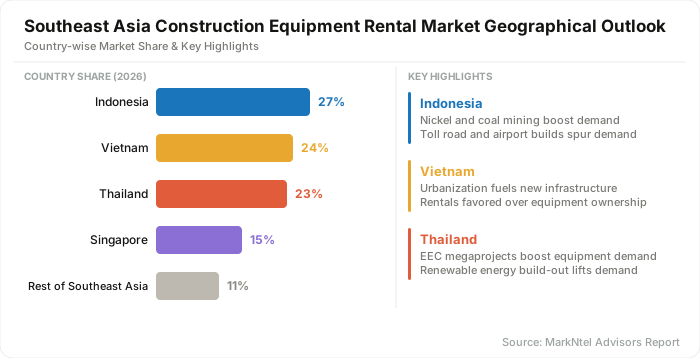
Vietnam and Thailand represent the region's most active growth frontiers. In December 2025, Vietnam opened key infrastructure projects to traffic in a single coordinated national initiative. The country’s USD 7.7 billion rail megaproject linking Hanoi to the Chinese border has station construction underway. In Thailand, the board of investment approved investments exceeding USD 30.7 billion across 624 projects, driving sustained demand for specialist equipment across the Eastern Economic Corridor and its associated industrial estates.
Southeast Asia Construction Equipment Rental Market Competitive Analysis
The Southeast Asia Construction Equipment Rental Industry is moderately consolidated, with prominent international and regional manufacturers capitalizing on extensive distribution networks and localized assembly facilities. Top players, including Nishio Rent All, Kanamoto, and Aktio Corporation, having a market share of 20%, aggressively deploy strategic investments and regional corporate acquisitions to secure long-term contracts with regional mining and public civil engineering enterprises.
Key Companies in the Southeast Asia Construction Equipment Rental Market
- Nishio Rent All Co. Ltd.
- Kanamoto Co., Ltd.
- Aktio Corporation
- Mitsubishi Corporation (Nikken)
- Sumitomo Corporation (Aver Asia)
- Rent (Thailand) Co., Ltd.
- Galmon (S) Pte. Ltd.
- Coates Hire (PT Coates Indonesia)
- Tat Hong Equipment Service Co.
- Dingchang Mechanical Equipment Co., Ltd.
- Ravago Equipment Rentals Inc.
- Sin Heng Heavy Machinery Ltd.
- Guzent Inc.
- Chu Kai Public Company Ltd
- Tiong Woon Corporation Holding Ltd.
Southeast Asia Construction Equipment Rental Industry News and Recent Developments
2026: Nishio Rent All Expands Aerial Platform Business and Heavy Lineup in Vietnam and Southeast Asia
Nishio Rent All expanded its aerial work platform rental business in Vietnam by launching new operations in Can Tho City. Additionally, the company strengthened its heavy equipment lineup by securing Volvo construction equipment distribution support across Southeast Asia. These initiatives drastically improved regional access to modern lifting and construction machinery required for major infrastructure and industrial projects.
Impact Analysis: This operational expansion significantly strengthens Nishio Rent All's competitive position within the Southeast Asian machinery rental market. By introducing advanced aerial platforms to new urban hubs and securing distribution support from a tier-one global manufacturer like Volvo, the company enhances fleet availability and operational reliability for large-scale public engineering contractors. This strategic move successfully addresses the region's rising demand for high-performance, efficient machinery.
2026: Kanamoto Enhances Infrastructure Rental Footprint Through Vietnamese Subsidiary Expansion
Kanamoto expanded the commercial operations of its key joint venture subsidiary, KANAMOTO FECON RENTAL JSC, within Vietnam. The company deliberately increased the local availability of specialized construction rental equipment to support active civil infrastructure and urban development projects. This targeted fleet expansion solidified Kanamoto’s general market positioning in the competitive Southeast Asian equipment rental sector.
Impact Analysis: This expansion improves Kanamoto's localized service capabilities by supplying critical heavy machinery to high-growth industrial and civil construction sites across Vietnam. By scaling its subsidiary's asset base, the firm capitalizes directly on state-backed transport and urban modernization programs. The investment reduces logistical constraints for domestic contractors and supports regional market growth by offering flexible, technologically advanced machinery rental solutions.
Frequently Asked Questions
- Market Segmentation
- Introduction
- Product Definition
- Research Process
- Assumptions
- Executive Summary
- Southeast Asia Construction Equipment Rental Market Policies, Regulations, and Product Standards
- Southeast Asia Construction Equipment Rental Market Trends & Developments
- Southeast Asia Construction Equipment Rental Market Dynamics
- Growth Factors
- Challenges
- Southeast Asia Construction Equipment Rental Market Hotspot & Opportunities
- Southeast Asia Construction Equipment Rental Market Outlook, 2022-2032F
- Market Size & Outlook
- By Revenues (USD Million)
- Market Segmentation & Outlook
- By Type- Market Size & Forecast 2022-2032, USD Million
- Earthmoving Equipment
- Excavator
- Loader
- Grader
- Bulldozer
- Skid-steer & Compact Track Loaders
- Trenchers
- Dump Trucks
- Others
- Material Handling Equipment
- Forklifts & Tele handlers
- Cranes
- Crawler
- Mobile
- Tower
- Other Construction Equipment
- Road Rollers & Asphalt Pavers
- Diesel Generators
- Others
- Earthmoving Equipment
- Propulsion type
- Diesel
- Petrol
- Hybrid
- Electric/ Battery Powered
- By End Users- Market Size & Forecast 2022-2032, USD Million
- Infrastructure
- Industrial
- Commercial & Mixed-Use
- Residential
- Others
- By Country
- Singapore
- Indonesia
- Malaysia
- Thailand
- Vietnam
- Philippines
- Rest of Southeast Asia
- By Company
- Competition Characteristics
- Market Share & Analysis
- By Type- Market Size & Forecast 2022-2032, USD Million
- Market Size & Outlook
- Singapore Construction Equipment Rental Market Outlook, 2022-2032F
- Market Size & Outlook
- By Revenues (USD Million)
- Market Segmentation & Outlook
- By Type- Market Size & Forecast 2022-2032, USD Million
- By End Users- Market Size & Forecast 2022-2032, USD Million
- Market Size & Outlook
- Indonesia Construction Equipment Rental Market Outlook, 2022-2032F
- Market Size & Outlook
- By Revenues (USD Million)
- Market Segmentation & Outlook
- By Type- Market Size & Forecast 2022-2032, USD Million
- By End Users- Market Size & Forecast 2022-2032, USD Million
- Market Size & Outlook
- Malaysia Construction Equipment Rental Market Outlook, 2022-2032F
- Market Size & Outlook
- By Revenues (USD Million)
- Market Segmentation & Outlook
- By Type- Market Size & Forecast 2022-2032, USD Million
- By End Users- Market Size & Forecast 2022-2032, USD Million
- Market Size & Outlook
- Thailand Construction Equipment Rental Market Outlook, 2022-2032F
- Market Size & Outlook
- By Revenues (USD Million)
- Market Segmentation & Outlook
- By Type- Market Size & Forecast 2022-2032, USD Million
- By End Users- Market Size & Forecast 2022-2032, USD Million
- Market Size & Outlook
- Vietnam Construction Equipment Rental Market Outlook, 2022-2032F
- Market Size & Outlook
- By Revenues (USD Million)
- Market Segmentation & Outlook
- By Type- Market Size & Forecast 2022-2032, USD Million
- By End Users- Market Size & Forecast 2022-2032, USD Million
- Market Size & Outlook
- Philippines Construction Equipment Rental Market Outlook, 2022-2032F
- Market Size & Outlook
- By Revenues (USD Million)
- Market Segmentation & Outlook
- By Type- Market Size & Forecast 2022-2032, USD Million
- By End Users- Market Size & Forecast 2022-2032, USD Million
- Market Size & Outlook
- Southeast Asia Construction Equipment Rental Market Key Strategic Imperatives for Success & Growth
- Competitive Outlook
- Company Profiles
- Nishio Rent All Co. Ltd.
- Business Description
- Product Portfolio
- Collaborations & Alliances
- Recent Developments
- Financial Details
- Others
- Kanamoto Co., Ltd.
- Business Description
- Product Portfolio
- Collaborations & Alliances
- Recent Developments
- Financial Details
- Others
- Aktio Corporation
- Business Description
- Product Portfolio
- Collaborations & Alliances
- Recent Developments
- Financial Details
- Others
- Mitsubishi Corporation (Nikken)
- Business Description
- Product Portfolio
- Collaborations & Alliances
- Recent Developments
- Financial Details
- Others
- Sumitomo Corporation (Aver Asia)
- Business Description
- Product Portfolio
- Collaborations & Alliances
- Recent Developments
- Financial Details
- Others
- Rent (Thailand) Co., Ltd.
- Business Description
- Product Portfolio
- Collaborations & Alliances
- Recent Developments
- Financial Details
- Others
- Galmon (S) Pte. Ltd.
- Business Description
- Product Portfolio
- Collaborations & Alliances
- Recent Developments
- Financial Details
- Others
- Coates Hire (PT Coates Indonesia)
- Business Description
- Product Portfolio
- Collaborations & Alliances
- Recent Developments
- Financial Details
- Others
- Tat Hong Equipment Service Co. (owned by Standard Chartered Private Equity)
- Business Description
- Product Portfolio
- Collaborations & Alliances
- Recent Developments
- Financial Details
- Others
- Dingchang Mechanical Equipment Co., Ltd.
- Business Description
- Product Portfolio
- Collaborations & Alliances
- Recent Developments
- Financial Details
- Others
- Ravago Equipment Rentals Inc.
- Business Description
- Product Portfolio
- Collaborations & Alliances
- Recent Developments
- Financial Details
- Others
- Sin Heng Heavy Machinery Ltd.
- Business Description
- Product Portfolio
- Collaborations & Alliances
- Recent Developments
- Financial Details
- Others
- Guzent Inc.
- Business Description
- Product Portfolio
- Collaborations & Alliances
- Recent Developments
- Financial Details
- Others
- Chu Kai Public Company Ltd
- Business Description
- Product Portfolio
- Collaborations & Alliances
- Recent Developments
- Financial Details
- Others
- Tiong Woon Corporation Holding Ltd.
- Business Description
- Product Portfolio
- Collaborations & Alliances
- Recent Developments
- Financial Details
- Others
- Nishio Rent All Co. Ltd.
- Company Profiles
- Disclaimer
MarkNtel Advisors follows a robust and iterative research methodology designed to ensure maximum accuracy and minimize deviation in market estimates and forecasts. Our approach combines both bottom-up and top-down techniques to effectively segment and quantify various aspects of the market. A consistent feature across all our research reports is data triangulation, which examines the market from three distinct perspectives to validate findings. Key components of our research process include:
1. Scope & Research Design At the outset, MarkNtel Advisors define the research objectives and formulate pertinent questions. This phase involves determining the type of research—qualitative or quantitative—and designing a methodology that outlines data collection methods, target demographics, and analytical tools. They also establish timelines and budgets to ensure the research aligns with client goals.
2. Sample Selection and Data Collection In this stage, the firm identifies the target audience and determines the appropriate sample size to ensure representativeness. They employ various sampling methods, such as random or stratified sampling, based on the research objectives. Data collection is carried out using tools like surveys, interviews, and observations, ensuring the gathered data is reliable and relevant.
3. Data Analysis and Validation Once data is collected, MarkNtel Advisors undertake a rigorous analysis process. This includes cleaning the data to remove inconsistencies, employing statistical software for quantitative analysis, and thematic analysis for qualitative data. Validation steps are taken to ensure the accuracy and reliability of the findings, minimizing biases and errors.

4. Data Forecast and FinalizationThe final phase involves forecasting future market trends based on the analyzed data. MarkNtel Advisors utilize predictive modeling and time series analysis to anticipate market behaviors. The insights are then compiled into comprehensive reports, featuring visual aids like charts and graphs, and include strategic recommendations to inform client decision-making
We offer flexible licensing options to cater to varying organizational needs. Choose the pricing pack that best suits your requirements:
Buy Now Inquire Before Buying
 Request Customization
 Talk to our Consultant







