

Germany Healthcare Market Research Report: Trends, Forecast & Opportunities (2026-2032)
By Healthcare Expenditure Type (Public Healthcare Expenditure, Private Healthcare Expenditure, Out-of-Pocket Expenditure), By Pharmaceutical Segment (Prescription Drugs, Over-the-C ... ounter (OTC) Drugs, Generic Drugs, Branded Drugs, Biologics & Biosimilars), By Therapeutic Area (Cardiovascular Diseases, Oncology, Diabetes, Respiratory Diseases, Neurology, Infectious Diseases, Others), By Medical Device Type (Diagnostic Imaging Devices, Patient Monitoring Devices, Surgical Equipment, In-vitro Diagnostics, Orthopedic Devices, Cardiovascular Devices, Others), By Technology Type (Artificial Intelligence in Healthcare, Telemedicine & Remote Monitoring, Electronic Health Records (EHR), Healthcare Analytics, Robotic Surgery, Wearables & Health Apps), By Healthcare Workforce (Physicians, Nurses, Dentists, Allied Health Professionals), By Insurance Type (Public Health Insurance, Private Health Insurance), By Disease Category (Chronic Diseases, Infectious Diseases, Mental Health Disorders), By End User (Hospitals, Clinics, Diagnostic Centers / Laboratories, Ambulatory Surgical Centers, Home Healthcare, Research Institutes, Pharmacies, Others) Read more
- Healthcare
- Mar 2026
- Pages 135
- Report Format: PDF, Excel, PPT
Germany Healthcare Market
Projected 3.03% CAGR from 2026 to 2032
Study Period
2026-2032
Market Size (2026)
USD 594.79 Billion
Market Size (2032)
USD 711.6 Billion
Base Year
2025
Projected CAGR
3.03%
Leading Segments
By Therapeutic Area: Cardiovascular Diseases
Germany Healthcare Market Report Key Takeaways:
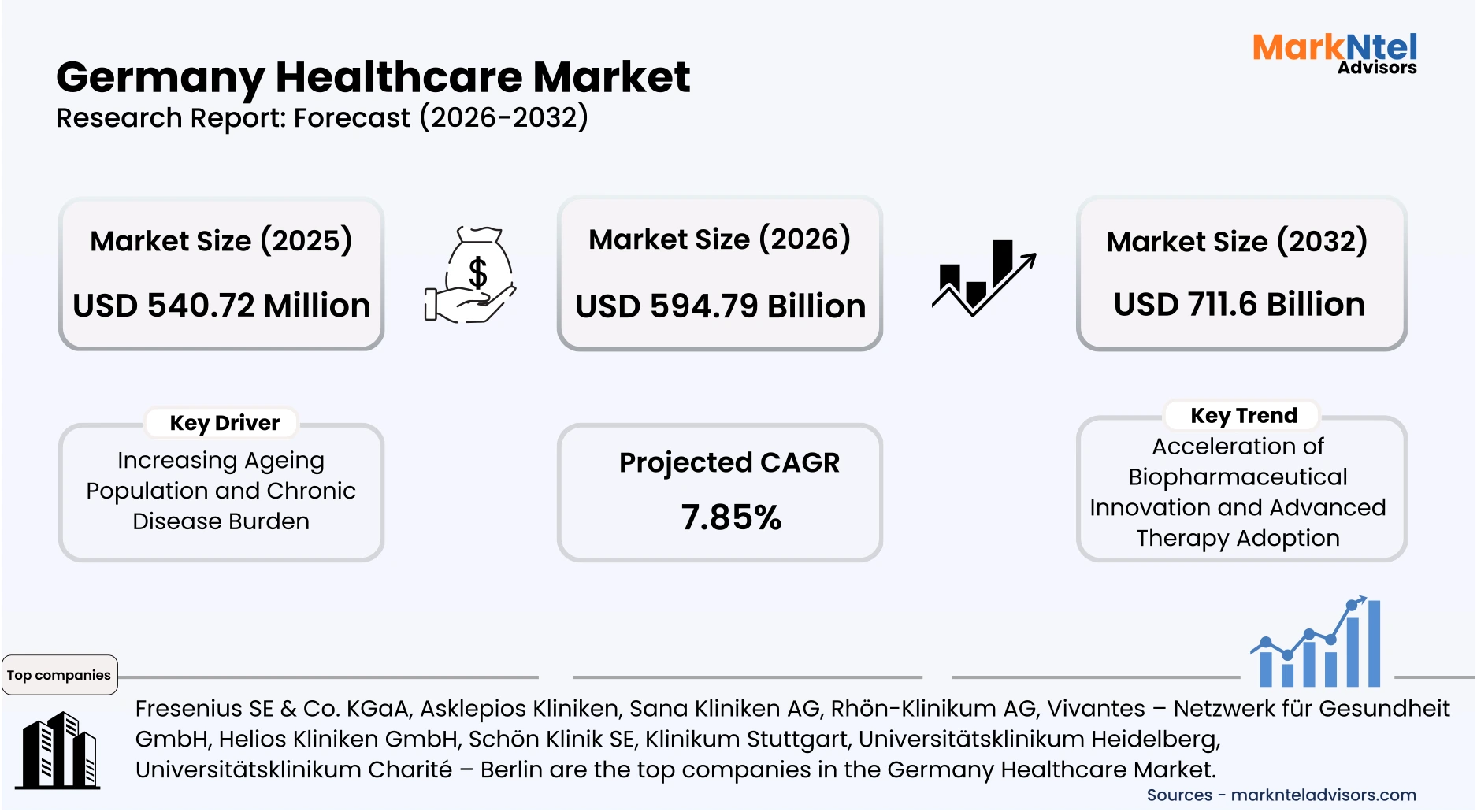
- The German Healthcare Market size was valued at USD 540.72 billion in 2025 and is projected to grow from USD 594.79 billion in 2026 to USD 711.6 billion by 2032, exhibiting a CAGR of 3.03% during the forecast period.
- Around 40% of the total patient population suffers from cardiovascular diseases in 2026.
- Diabetes is another prevalent disease that affects around 7.2% of adults in Germany.
- Leading Healthcare Companies in Germany are Fresenius SE & Co. KGaA, Asklepios Kliniken, Sana Kliniken AG, Rhön-Klinikum AG, Vivantes – Netzwerk für Gesundheit GmbH, Helios Kliniken GmbH, Schön Klinik SE, Klinikum Stuttgart, Universitätsklinikum Heidelberg, Universitätsklinikum Charité – Berlin and others.
Market Insights & Analysis: Germany Healthcare Market (2026-32):
The Germany Healthcare Market size was valued at USD 540.72 billion in 2025 and is projected to grow from USD 594.79 billion in 2026 to USD 711.6 billion by 2032, exhibiting a CAGR of 3.03%during the forecast period.
Germany’s healthcare sector continues to demonstrate structural resilience, supported by sustained public financing and institutional capacity. Germany has one of the largest healthcare systems in Europe, serving a population of approximately 84 million people. The healthcare system experiences high patient utilization, with approximately 17.2 million hospital admissions recorded in 2023. The average hospital stay is approximately 7.2 days , reflecting improvements in treatment efficiency and outpatient care integration. Institutional end users, particularly public and university hospitals, remain central demand drivers, accounting for the majority of complex treatment volumes and capital equipment purchases. Current market conditions are shaped by demographic transformation and regulatory modernization. According to the Federal Statistical Office of Germany, approximately 22.7% of the population was aged 65 or older in 2025, and coordinated population projections show that the share of individuals aged, along with an increasing demand for chronic disease management and long-term services.
The Leading cause of hospitalization in Germany accounts for nearly 30% of hospital diagnoses , including coronary artery disease, stroke, and heart failure. Germany has one of the highest hospital bed capacities in the European Union, supporting extensive inpatient care services. Germany has 7.7 beds per 1,000 population, significantly higher than the OECD average of about 4.2 beds per 1,000 population, indicating strong healthcare capacity. Germany also maintains a large and highly developed healthcare workforce supporting its extensive medical infrastructure. Based on 2025 estimates, the country has approximately 4.7 practicing physicians per 1,000 people, equivalent to roughly 390,000–400,000 doctors nationwide. The nursing workforce remains one of the largest in Europe, with about 12.2 nurses per 1,000 people, ensuring strong hospital and long-term care support. Additionally, Germany has approximately 68 pharmacists per 100,000 inhabitants, facilitating widespread access to pharmaceuticals.
The 2025 Hospital Care Improvement Act (Krankenhausversorgungsverbesserungsgesetz ), also known as KHVVG, introduced structural funding adjustments to enhance quality-based reimbursement and regional care coordination.
Industry-led innovation is further deepening the market, particularly in pharmaceuticals and medical technology manufacturing. In 2025, Siemens Healthineers AG expanded domestic production capacity for imaging systems to reinforce localised supply resilience, while BioNTech SE advanced oncology pipeline investments in Mainz. Such initiatives align with Germany’s High-Tech Strategy 2025 framework, which promotes life-science research and public-private collaboration. Institutional purchasers, including specialty clinics and research hospitals, continue to stimulate demand for high-value diagnostic platforms and advanced biologics.
Digital transformation policies are also reinforcing long-term growth prospects. The nationwide electronic patient record rollout mandated by the Digital Act (Digital-Gesetz) in 2025 accelerates interoperability across ambulatory practices and insurance systems. Approximately 15% of German hospitals had already integrated AI-based diagnostic systems by 2023, reflecting the early adoption of advanced digital technologies in clinical decision support. Combined with federal incentives for telematics integration and cybersecurity upgrades, these measures position Germany’s healthcare sector for sustained expansion through 2032, underpinned by regulatory certainty, technological diffusion, and diversified end-user demand.
Germany Healthcare Market Scope:
| Category | Segments |
|---|---|
| By Healthcare Expenditure Type | (Public Healthcare Expenditure, Private Healthcare Expenditure, Out-of-Pocket Expenditure), |
| By Pharmaceutical Segment | (Prescription Drugs, Over-the-Counter (OTC) Drugs, Generic Drugs, Branded Drugs, Biologics & Biosimilars), |
| By Therapeutic Area | (Cardiovascular Diseases, Oncology, Diabetes, Respiratory Diseases, Neurology, Infectious Diseases, Others), |
| By Medical Device Type | (Diagnostic Imaging Devices, Patient Monitoring Devices, Surgical Equipment, In-vitro Diagnostics, Orthopedic Devices, Cardiovascular Devices, Others), |
| By Technology Type | (Artificial Intelligence in Healthcare, Telemedicine & Remote Monitoring, Electronic Health Records (EHR), Healthcare Analytics, Robotic Surgery, Wearables & Health Apps), |
| By Healthcare Workforce | (Physicians, Nurses, Dentists, Allied Health Professionals), |
| By Insurance Type | (Public Health Insurance, Private Health Insurance), |
| By Disease Category | (Chronic Diseases, Infectious Diseases, Mental Health Disorders), |
| By End User | (Hospitals, Clinics, Diagnostic Centers / Laboratories, Ambulatory Surgical Centers, Home Healthcare, Research Institutes, Pharmacies, Others) |
Germany Healthcare Market Driver:
Increasing Ageing Population and Chronic Disease Burden
Germany’s accelerating demographic ageing is the most structurally significant driver of increasing long-term healthcare demand. According to the Federal Statistical Office of Germany (Destatis), 23% of the population was aged 65 or older in 2023, and projections indicate this share will exceed 25% by 2035 . The OECD reports that Germany has one of the highest old-age dependency ratios in Europe, intensifying pressure on healthcare systems. This demographic shift has strengthened consistently over the past decade due to low fertility rates and rising life expectancy.
An ageing population directly increases demand for hospital services, long-term care, pharmaceuticals, and outpatient treatment. Data from the German Federal Ministry of Health shows that individuals over 65 account for a disproportionately high share of healthcare expenditure, particularly for cardiovascular, orthopedic, and oncological treatments. The World Health Organization confirms that chronic diseases such as diabetes and heart disease rise sharply with age, requiring continuous medical supervision rather than episodic care. This translates into sustained utilization growth across primary care, specialist services, and rehabilitation facilities.
The impact is volume-driven rather than price-driven, as higher patient numbers and longer treatment durations expand total service demand. Destatis reports that hospital treatment cases among elderly cohorts have grown steadily, reflecting measurable increases in care utilization. Additional data from health expenditure reporting, e.g., medical cost analyses, show that older adults account for disproportionate shares of healthcare costs, particularly for chronic diseases like osteoarthritis, which has significantly increased direct medical system burden among older age groups. Consequently, population ageing functions as a systemic demand catalyst that structurally enlarges Germany’s healthcare market size and capacity requirements.
Germany Healthcare Market Trend:
Acceleration of Biopharmaceutical Innovation and Advanced Therapy Adoption
A defining structural trend in Germany’s pharmaceuticals and biotechnology market is the rapid expansion of advanced biopharmaceuticals, including gene and cell therapies. According to the Paul-Ehrlich-Institut, the number of authorized advanced therapy medicinal products (ATMPs) and clinical trials has steadily increased in recent years. Simultaneously , the European Medicines Agency reported continued EU approvals of biologics and gene therapies through 2025, many of which are launched in Germany due to its large reimbursement market. This reflects a systemic shift from conventional small-molecule drugs toward high-value biologic and precision therapies.
The trend has accelerated due to regulatory facilitation and strong public funding support for biotechnology innovation. Germany’s Federal Ministry of Education and Research expanded life sciences funding programs in 2025 to strengthen domestic biotech capacity and translational research. Under Germany’s AMNOG pricing framework, innovative medicines demonstrating added benefit gain faster market access within statutory insurance coverage. Consequently, pharmaceutical companies are increasing investment in biologics manufacturing, cold-chain logistics, and specialized treatment centers.
This transformation is structurally reshaping value chains toward complex biologics production, personalized medicine, and hospital-based administration models. Biologics now account for a growing share of pharmaceutical expenditure in Germany, reflecting volume and therapeutic complexity rather than simple price inflation. As ageing demographics increase oncology and rare disease prevalence, demand for advanced therapies is expected to persist. Therefore, biopharmaceutical innovation represents a durable structural evolution in Germany’s pharmaceutical and biotechnology ecosystem.
Germany Healthcare Market Opportunity:
Outpatient Digital Diagnostics and Remote Monitoring Devices Offering Novel Opportunities
A compelling opportunity in Germany’s Medical Technology sector lies in outpatient digital diagnostics and remote monitoring devices aligned with structural hospital reform. The 2025 Krankenhausversorgungsverbesserungsgesetz (KHVVG) restructures hospital financing to prioritize specialization and shift appropriate services to outpatient settings from 2025 onward. According to the German Federal Ministry of Health, the reform aims to improve efficiency and reduce unnecessary inpatient treatment volumes. This transition creates sustained demand for portable imaging, wearable cardiac monitors, and home-based diagnostic systems.
The opportunity exists because Germany’s ageing population is increasing chronic disease prevalence, requiring continuous monitoring rather than episodic hospitalization. Amboss, a Berlin-based MedTech platform focused on clinical decision support, completed a USD282.9 million round to scale its digital diagnostic solutions and international expansion. As inpatient capacity is rationalized under reform measures, care delivery is structurally migrating toward ambulatory and home-based models.
This shift favors new and mid-sized MedTech firms specializing in digital-enabled, interoperable devices rather than capital-intensive hospital equipment manufacturing. Emerging players can scale through modular, software-integrated solutions compatible with national digital health infrastructure. Standardized interoperability requirements lower integration barriers while creating niche innovation spaces. Consequently, outpatient diagnostics and remote monitoring represent a structurally durable and scalable entry opportunity within Germany’s evolving MedTech landscape.
Germany Healthcare Market Challenge:
Severe Workforce Shortage in Germany’s Healthcare System
A severe shortage of healthcare professionals is a critical structural challenge constraining growth and operational efficiency in Germany’s healthcare market. According to the OECD Health at a Glance 2025 report, Germany faces below-average physician and nursing staff ratios relative to patient demand among peer nations. Germany had 4.7 practicing doctors per 1,000 people, above the OECD average of 3.9 per 1,000 in 2025.
The demographic shift toward an older population has intensified care needs, yet workforce growth has not kept pace, creating persistent staffing gaps. The German Federal Employment Agency reports nursing vacancies numbering in the tens of thousands, with shortages particularly acute in long-term care and rural regions.
This challenge exists because slower workforce training throughput, ageing existing personnel, and limited immigration integration policies have not matched rising healthcare demand. Germany’s statutory health system, which covers nearly 90% of the population, places sustained pressure on service delivery capacity as both inpatient and outpatient care requirements grow. Real-world instances include hospital units reducing service lines due to staffing shortages and extended wait times for specialist appointments, as documented by national health news outlets and healthcare employer surveys.
A severe workforce shortage materially limits market expansion by restricting service availability, reducing throughput, and increasing labor costs. Providers unable to recruit adequate staff must curtail operations, undermining the adoption of new technologies that require trained personnel. High vacancy rates also deter investment in capacity expansion, as firms face uncertainty in delivering services at scale. The German Federal Employment Agency reports very high demand for qualified nurses, with only 44 jobseekers per 100 nursing vacancies in 2023 , indicating a significant mismatch between openings and available domestic workforce capacity. Consequently, workforce constraints represent a systemic barrier to Germany’s healthcare market evolution.
Germany Healthcare Market Epidemiology Profile:
Cardiovascular Diseases:
Cardiovascular diseases represent the most dominant disease burden within Germany’s epidemiology profile, driven primarily by demographic ageing and lifestyle-related risk factors. According to the Robert Koch Institute, cardiovascular conditions account for the largest share of morbidity and mortality nationwide, with coronary heart disease, hypertension, and stroke forming the core clinical burden. Around 40% of the total patients suffered with cardiovascular diseases, generating substantial healthcare costs. Cardiovascular diseases and cancer together account for over half of all deaths in Germany. Around 1.2 million new cardiovascular cases occur annually, with about 13 million people living with CVD.
This demographic trend continuously fuels demand for cardiology services, diagnostic imaging, and chronic disease management programs across hospitals and outpatient care networks.
Policy frameworks and healthcare investments further reinforce the dominance of cardiovascular disease management. Government-funded prevention programs targeting hypertension screening, smoking reduction, and obesity management are widely implemented through statutory health insurance systems. In addition, Germany maintains one of Europe’s most advanced cardiology infrastructures, including specialized cardiac centers and high availability of interventional procedures such as angioplasty and bypass surgeries. These investments sustain strong clinical capacity while supporting innovation in cardiovascular therapeutics and medical devices.
The treatment landscape is also shaped by strong pharmaceutical adoption and early diagnosis rates. Germany has around 11.8 cardiac catheterization laboratories per million inhabitants, one of the highest densities in Europe. This indicates a highly developed interventional cardiology infrastructure supporting procedures such as PCI and structural heart interventions. As cardiovascular diseases remain the leading cause of death in Germany, sustained healthcare spending, preventive initiatives, and high patient volumes continue to secure the segment’s dominant position in the national epidemiology and healthcare market landscape.
Diabetes:
Diabetes represents the leading metabolic disorder within Germany’s epidemiology landscape, largely driven by the growing prevalence of type 2 diabetes associated with ageing, sedentary lifestyles, and rising obesity levels. Data from the Robert Koch Institute indicates that millions of adults in Germany live with diagnosed diabetes, while a substantial number remain undiagnosed. Around 7.2% of adults in Germany have diagnosed diabetes , with additional undiagnosed cases. This expanding patient pool generates sustained demand for glucose monitoring, pharmacological therapies, and continuous disease management services. Germany had about 6.5 million adults (20–79 years) living with diabetes in 2025. The country ranks among the highest diabetes healthcare expenditures in Europe
Government policy and the healthcare system structure significantly support diabetes management. Germany’s statutory health insurance framework funds preventive screening, early diagnosis programs, and structured disease management programs (DMPs) designed specifically for diabetes patients. These programs emphasize continuous monitoring, physician coordination, and lifestyle interventions, reducing complications such as cardiovascular disease and kidney disorders. Investments in digital health tools and remote monitoring technologies further strengthen chronic disease management capabilities across primary care networks.
The treatment ecosystem is also characterized by strong pharmaceutical innovation and widespread adoption of modern therapies. Advanced antidiabetic medications, including GLP-1 receptor agonists and SGLT2 inhibitors, are increasingly incorporated into clinical guidelines recommended by organizations such as the German Diabetes Association. Combined with robust diagnostic infrastructure and high patient awareness, these factors sustain diabetes as one of the most significant and resource-intensive segments within Germany’s healthcare epidemiology and chronic disease management landscape.
Gain a Competitive Edge with Our Germany Healthcare Market Report:
- The Germany Healthcare Market Report by MarkNtel Advisors provides a detailed & thorough analysis of market size & share, growth rate, competitive landscape, and key players. This comprehensive analysis helps businesses gain a holistic understanding of the market dynamics & make informed decisions.
- This report also highlights current market trends & future projections, allowing businesses to identify emerging opportunities & potential challenges. By understanding market forecasts, companies can align their strategies & stay ahead of the competition.
- The Germany Healthcare Market Report aids in assessing & mitigating risks associated with entering or operating in the market. By understanding market dynamics, regulatory frameworks, and potential challenges, businesses can develop strategies to minimize risks & optimize their operations.
*Reports Delivery Format - Market research studies from MarkNtel Advisors are offered in PDF, Excel and PowerPoint formats. Within 24 hours of the payment being successfully received, the report will be sent to your email address.
Frequently Asked Questions
- Introduction
- Executive Summary
- Key Insights
- Key Findings (2020–2024)
- Market Outlook Snapshot (2025–2032F)
- Strategic Imperatives
- Macro Environment Analysis
- Germany at a Glance
- Geographic Overview
- Political Structure
- Trade & Regional Alliances
- Others
- Demographic Profile (2020–2032F)
- Population Trends
- Age Structure
- Urban vs Rural Distribution
- Fertility Rate Trends
- Migration Trends
- Ethnic Composition
- Economic Profile (2020–2032F)
- GDP (Current & Constant USD)
- GDP by Sector
- Working Population & Labor Participation
- Per Capita Income & Purchasing Power
- Unemployment & Underemployment
- Inflation Rate & Healthcare Cost Impact
- Foreign Direct Investment Trends
- Country PESTLE Analysis
- Germany at a Glance
- Germany Healthcare Sector Analysis, 2026
- Healthcare System Overview
- Structure of Healthcare System
- Public vs Private Healthcare
- Governance & Regulatory Authorities
- Others
- Healthcare Ecosystem & Infrastructure (2020–2026)
- Healthcare Expenditure
- Healthcare Expenditure as % of GDP
- Per Capita Healthcare Expenditure
- Healthcare Facilities
- Number of Hospitals
- Number of Clinics
- Number of Pharmacies
- Number of Diagnostic Centres
- Public vs Private Distribution
- Bed Availability & Utilization
- Beds per 1,000 Population
- Beds Speciality
- Regional Disparities
- Healthcare Workforce
- Physicians per 1,000 Population
- Physicians by Speciality
- Nurses
- Dentists
- Allied Health Professionals
- Healthcare Expenditure
- Healthcare System Overview
- Health Outcomes & Public Health Indicators (2020–2026)
- Life Expectancy (Male vs Female)
- Infant Mortality Rate
- Maternal Mortality Ratio
- Immunisation Coverage Rates (Measles, DPT, HPV, COVID-19)
- Overall Disease Burden Trends
- Healthcare Reforms & Large-Scale Projects (2020-2026)
- Government Reforms
- Public-Private Partnerships
- Infrastructure Expansion Projects
- Private Sector Investments
- Others
- Insurance Framework
- Public Health Insurance Programs
- Private Health Insurance Market
- Insurance Penetration & Coverage Gaps
- Payer Landscape
- Reimbursement Models (FFS, Bundled, Value-Based Care)
- Claims Management & Transparency Issues
- Out-of-Pocket Expenditure Trends (2020-2026)
- Regulatory Environment (Healthcare Sector)
- Market Authorisation for Pharmaceuticals
- Market Authorisation for Medical Devices
- Licensing for Manufacturing, Import & Export
- Clinical Trial Regulations
- Intellectual Property & Patent Protection
- Advertising, Labeling & Packaging Regulations
- Pharmacy & Hospital Licensing Rules
- Others
- Market Dynamics & Technology
- Healthcare Market Dynamics
- Growth Drivers
- Challenges & Barriers
- Emerging Opportunities
- Value Chain Analysis
- Healthcare Technology Trends
- Digital Health Maturity
- Telemedicine & Remote Monitoring
- Artificial Intelligence & Machine Learning
- Health Apps & Wearables
- Robotic Surgery
- EHR, Data Interoperability & Cybersecurity
- Others
- Healthcare Market Dynamics
- Epidemiology Profile (By Age & By Gender) (2020–2032F)
- Chronic Diseases
- Cardiovascular Diseases
- Prevalence
- Incidence
- Mortality Rate
- Risk Factors
- Healthcare & Economic Burden
- Infrastructure Challenges
- Treatment Landscape
- Others
- Diabetes
- Prevalence
- Incidence
- Mortality Rate
- Risk Factors
- Healthcare & Economic Burden
- Infrastructure Challenges
- Treatment Landscape
- Others
- Cancer
- Prevalence
- Incidence
- Mortality Rate
- Risk Factors
- Healthcare & Economic Burden
- Infrastructure Challenges
- Treatment Landscape
- Others
- Chronic Respiratory Diseases
- Prevalence
- Incidence
- Mortality Rate
- Risk Factors
- Healthcare & Economic Burden
- Infrastructure Challenges
- Treatment Landscape
- Others
- Chronic Kidney Disease
- Prevalence
- Incidence
- Mortality Rate
- Risk Factors
- Healthcare & Economic Burden
- Infrastructure Challenges
- Treatment Landscape
- Others
- Cardiovascular Diseases
- Infectious Diseases
- Tuberculosis
- Prevalence
- Incidence
- Mortality Rate
- Risk Factors
- Healthcare & Economic Burden
- Infrastructure Challenges
- Treatment Landscape
- Others
- HIV
- Prevalence
- Incidence
- Mortality Rate
- Risk Factors
- Healthcare & Economic Burden
- Infrastructure Challenges
- Treatment Landscape
- Others
- Hepatitis
- Prevalence
- Incidence
- Mortality Rate
- Risk Factors
- Healthcare & Economic Burden
- Infrastructure Challenges
- Treatment Landscape
- Others
- Others
- Tuberculosis
- Mental Health
- Prevalence of Mental Health Disorders
- Suicide Rates & Trends
- Urban-Rural & Gender Disparities
- Infrastructure Gaps
- Economic & Social Burden
- Chronic Diseases
- Germany Healthcare System Stakeholders Analysis, 2026
- Germany Pharmaceutical Market Outlook (2020–2030F)
- Market Size & Growth
- Market Size (USD Million), 2020-2030F
- Market by Key Segments
- Prescription vs OTC
- Generics vs Branded
- Therapeutic Category Distribution
- Manufacturing Landscape
- Distribution & Supply Chain
- Major Distributors
- Major Suppliers
- Major Local and Multinational Players
- Fresenius SE & Co. KGaA
- Helios Kliniken GmbH
- Asklepios Kliniken
- Sana Kliniken AG
- Rhön-Klinikum AG
- Siemens Healthineers
- Schön Klinik SE
- Klinikum Stuttgart
- University Medical Centre Hamburg
- Charité – Universitätsmedizin
- Pharmaceutical sector (Top 5–10 companies, % market share)
- Imports & Exports (Value in USD Million) (2020-2026)
- Key Pharmaceutical Clusters (if there)
- Investments and R&D (2020-2026)
- Others
- Market Size & Growth
- Germany Medical Devices Market Outlook (2020–2030F)
- Market Size & Growth
- Market Size (USD Million), 2020-2030F
- Market by Key Segments
- By Device Type
- By Risk Class
- By End-User
- Manufacturing Landscape
- Distribution & Supply Chain
- Distributors
- Supply Chain
- Major Local and Multinational Players
- Fresenius SE & Co. KGaA
- Helios Kliniken GmbH
- Asklepios Kliniken
- Sana Kliniken AG
- Rhön-Klinikum AG
- Siemens Healthineers
- Schön Klinik SE
- Klinikum Stuttgart
- University Medical Centre Hamburg
- Charité – Universitätsmedizin
- Medical Devices Sector (Top 5–10 companies, % market share)
- Imports & Exports (Value in USD Million) (2020-2026)
- Key Medical Device Clusters (if there)
- Investments and R&D (2020-2026)
- Others
- Market Size & Growth
- Germany Pharmaceutical Market Outlook (2020–2030F)
- Germany Strategic & Investments in Healthcare Outlook (2025-2032F)
- High-Growth Segments
- Foreign Investment Opportunities
- Government Incentives & Ease of Doing Business
- Risk Assessment & Mitigation
- Trade Associations & Industry Bodies
- Pharmaceutical Associations
- Medical Device Associations
- Healthcare Provider Associations
- Regulatory & Standards Bodies
- Healthcare Trade Fairs & Conferences (2024–2026)
- National Healthcare Exhibitions
- Medical Technology Events
- Pharmaceutical Conferences
- Regional Latin America Events Relevant to Germany
- Impact of Global Health Events
- COVID-19 Impact (2020–2022)
- Post-Pandemic Recovery
- Emergency Preparedness Evolution
- Strategic Recommendations
- Market Entry Strategy
- Partnership Models
- Pricing Strategy
- Regulatory Navigation
- Disclaimer
MarkNtel Advisors follows a robust and iterative research methodology designed to ensure maximum accuracy and minimize deviation in market estimates and forecasts. Our approach combines both bottom-up and top-down techniques to effectively segment and quantify various aspects of the market. A consistent feature across all our research reports is data triangulation, which examines the market from three distinct perspectives to validate findings. Key components of our research process include:
1. Scope & Research Design At the outset, MarkNtel Advisors define the research objectives and formulate pertinent questions. This phase involves determining the type of research—qualitative or quantitative—and designing a methodology that outlines data collection methods, target demographics, and analytical tools. They also establish timelines and budgets to ensure the research aligns with client goals.
2. Sample Selection and Data Collection In this stage, the firm identifies the target audience and determines the appropriate sample size to ensure representativeness. They employ various sampling methods, such as random or stratified sampling, based on the research objectives. Data collection is carried out using tools like surveys, interviews, and observations, ensuring the gathered data is reliable and relevant.
3. Data Analysis and Validation Once data is collected, MarkNtel Advisors undertake a rigorous analysis process. This includes cleaning the data to remove inconsistencies, employing statistical software for quantitative analysis, and thematic analysis for qualitative data. Validation steps are taken to ensure the accuracy and reliability of the findings, minimizing biases and errors.

4. Data Forecast and FinalizationThe final phase involves forecasting future market trends based on the analyzed data. MarkNtel Advisors utilize predictive modeling and time series analysis to anticipate market behaviors. The insights are then compiled into comprehensive reports, featuring visual aids like charts and graphs, and include strategic recommendations to inform client decision-making
We offer flexible licensing options to cater to varying organizational needs. Choose the pricing pack that best suits your requirements:
Buy Now Inquire Before Buying
 Request Customization
 Talk to our Consultant







