GCC Pharmaceutical Logistics Market Research Report: Forecast (2026-2032)
By Mode of Transport (Route) (Air, Road, Sea, Rail), By Product Type (General Drugs & Medicines, Surgical Goods & Medical Devices, Chemical Pharma Products, Bio-Pharma & Specialize ... d Pharma Products), By Service Type (Transportation & Freight Forwarding, Warehousing, Cross-Docking, Value Added Services (Inventory management, Packaging, Labelling), Others (Customs Brokerage, Marketing, Call Support)), By Storage Type (Refrigerated, Ultra-frozen (Less than 0°C), Chilled (1°C - 10°C), Air-conditioned (Above 11°C), Ambient), By Logistics Provider Type (3PL (Third-Party), 4PL (Fourth-Party), Integrated Logistics), By End Users (Hospitals, Laboratories, Pharmaceutical companies, Others), and others Read more
- Healthcare
- Jun 2026
- Pages 220
- Report Format: PDF, Excel, PPT
GCC Pharmaceutical Logistics Market
Projected 6.7% CAGR from 2026 to 2032
Study Period
2026-2032
Market Size (2026)
USD 2.78 Billion
Market Size (2032)
USD 4.10 Billion
Base Year
2025
Projected CAGR
6.7%
Leading Segments
By Storage Type: Refrigerated Storage
GCC Pharmaceutical Logistics Market Key Takeaways
- The GCC Pharmaceutical Logistics Market was valued at approximately USD 2.78 billion in 2026 and is projected to reach nearly USD 4.10 billion by 2032.
- The industry is projected to grow at a CAGR of around 6.7% during 2026-2032.
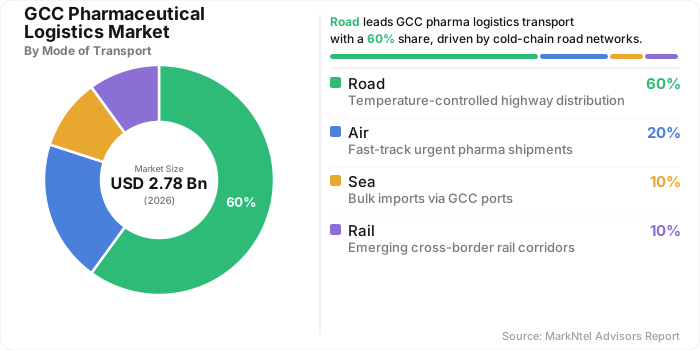
- By Mode of Transport, Road Transportation dominated the market with an estimated share of 60% in 2026.
- By Storage Type, Refrigerated Storage held the leading share of approximately 50% in 2026.
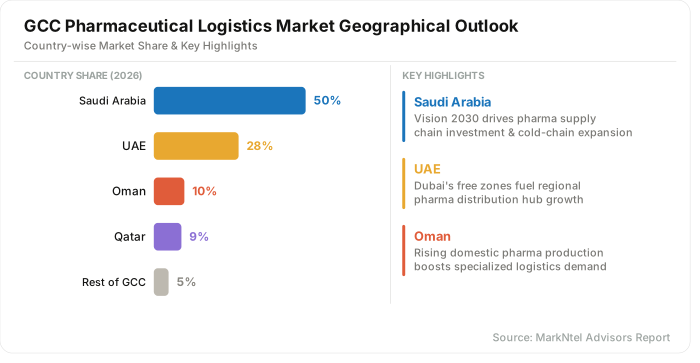
- Saudi Arabia accounted for the largest country-level share of 50% of the total industry with potential shares.
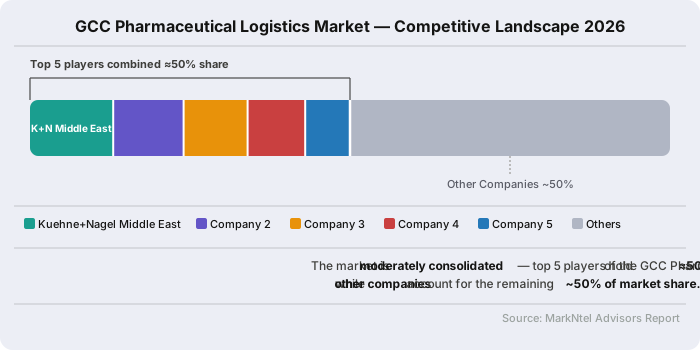
- The industry is moderately consolidated, with the top five players collectively accounting for approximately 50% of the regional market share.
GCC Pharmaceutical Logistics Market Size & Outlook
The Pharmaceutical Logistics Market of the GCC is projected to witness steady growth at a CAGR of around 6.7% during 2026-2032.
The market is expanding steadily as healthcare systems across the region increase investments in reliable medicine distribution and temperature-controlled supply chains. Rising pharmaceutical consumption and growing demand for specialty medicines are increasing the need for compliant warehousing, refrigerated transportation, and inventory management systems capable of handling sensitive healthcare products.
The demand for pharmaceutical products in Saudi Arabia is projected to increase at a CAGR of around 7.93% during 2025–2030, driven by rising healthcare expenditure, growing healthcare service utilization, and an increasing burden of chronic diseases. Along with ongoing healthcare infrastructure expansion across the GCC, these trends are generating greater demand for efficient pharmaceutical distribution, accelerating the adoption of organized and technology-enabled logistics networks to improve medicine availability, product integrity, and overall supply-chain efficiency.
The growing use of biologics, vaccines, insulin products, and specialty therapeutics is becoming a major growth driver for pharmaceutical logistics providers across the GCC. These products require uninterrupted cold-chain handling, monitored transportation, and validated storage environments to maintain product quality and safety. In response, logistics companies are expanding refrigerated transportation fleets, strengthening pharma-grade warehouse infrastructure, and adopting digital monitoring technologies to improve shipment visibility, reduce spoilage risks, and ensure regulatory compliance throughout pharmaceutical distribution operations.
Government-led regulatory reforms are strengthening the GCC pharmaceutical logistics ecosystem. In the UAE, Federal Decree-Law No. 38 of 2024, which came into force in January 2025, established an updated regulatory framework for medical products, pharmacies, and pharmaceutical establishments, supporting greater oversight of pharmaceutical distribution and supply-chain operations. In Saudi Arabia, the Saudi Food and Drug Authority (SFDA) intensified enforcement of its Drug Track & Trace System (RSD) during 2025 and 2026, imposing penalties on pharmaceutical companies and pharmacies that failed to comply with electronic medicine tracking requirements.
These initiatives are enhancing pharmaceutical traceability, regulatory compliance, and supply-chain transparency across the GCC, thereby supporting demand for advanced pharmaceutical logistics services. As a result, the GCC pharmaceutical logistics market, valued at USD 2.78 billion in 2026, is projected to reach nearly USD 4.10 billion by 2032, driven by increasing regulatory oversight, growing pharmaceutical demand, and continued investments in modern supply-chain infrastructure.
GCC Pharmaceutical Logistics Market Key Indicators
- GCC countries continue to report some of the highest diabetes prevalence rates globally, with adult diabetes prevalence exceeding 15% in several markets. The growing diabetic population is increasing demand for insulin, GLP-1 receptor agonists, and other temperature-sensitive medications, thereby driving the need for advanced pharmaceutical cold-chain logistics and distribution networks across the region.
- The UAE handled approximately 2.16 million tonnes of air cargo during H1 2024, reinforcing its role as a major pharmaceutical logistics hub in the Middle East. Rising air cargo volumes are facilitating the rapid transportation of vaccines, biologics, specialty medicines, and other high-value healthcare products across GCC markets.
- Jebel Ali Port handled approximately 15.5 million TEUs in 2024, reflecting strong trade activity and growing healthcare product imports. Increasing container throughput is supporting the efficient movement of active pharmaceutical ingredients (APIs), finished drugs, and medical devices, thereby strengthening pharmaceutical logistics demand.
- Ongoing investments in temperature-controlled infrastructure are enhancing the region's pharmaceutical supply chain capabilities. For instance, Americold and RSA Cold Chain announced a USD 35 million cold storage facility in Dubai, supporting the storage and distribution of biologics, vaccines, and other temperature-sensitive pharmaceutical products.
- According to Saudi Arabia's General Authority for Statistics, 23.1% of adults were classified as obese in 2024. Rising obesity levels are contributing to a higher prevalence of chronic diseases such as diabetes and cardiovascular disorders, leading to increased pharmaceutical consumption and greater logistics requirements across the healthcare sector.
- Cancer cases across the GCC are projected to increase from approximately 42,475 cases in 2020 to nearly 104,000 cases by 2040. The growing cancer burden is driving demand for oncology drugs, biologics, and precision therapies that require specialized handling, secure transportation, and temperature-controlled storage, thereby supporting the expansion of pharmaceutical logistics services.
GCC Pharmaceutical Logistics Market Scope
| Category | Segments |
|---|---|
| By Mode of Transport | Route) (Air, Road, Sea, Rail |
| By Product Type | General Drugs & Medicines, Surgical Goods & Medical Devices, Chemical Pharma Products, Bio-Pharma & Specialized Pharma Products |
| By Service Type | Transportation & Freight Forwarding, Warehousing, Cross-Docking, Value Added Services (Inventory management, Packaging, Labelling), Others (Customs Brokerage, Marketing, Call Support |
| By Storage Type | Refrigerated, Ultra-frozen (Less than 0°C), Chilled (1°C - 10°C), Air-conditioned (Above 11°C), Ambient |
| By Logistics Provider Type | 3PL (Third-Party), 4PL (Fourth-Party), Integrated Logistics |
| By End Users | Hospitals, Laboratories, Pharmaceutical companies, Others |
GCC Pharmaceutical Logistics Market Growth Drivers
Rising Specialty Drug Consumption and Chronic Disease Burden
The rising prevalence of diabetes, cardiovascular diseases, cancer, renal disorders, and hypertension across GCC countries is significantly increasing long-term pharmaceutical distribution requirements. According to the International Diabetes Federation (IDF), the Middle East and North Africa (MENA) region recorded the world's highest diabetes prevalence, with approximately 84.7 million adults living with diabetes in 2024, representing 1 in every 6 adults, and this figure is projected to reach 162.6 million by 2050. Aging populations, urbanization, and lifestyle-related health conditions are driving sustained demand for compliant pharmaceutical storage, temperature-controlled transportation, and hospital replenishment logistics across regional healthcare systems.
Rising pharmaceutical consumption is increasing investment in GDP-compliant logistics infrastructure capable of maintaining cold-chain continuity, shipment integrity, inventory traceability, and regulatory auditability across domestic and cross-border healthcare supply chains. The growing distribution of biologics, vaccines, insulin therapies, and specialty therapeutics is further accelerating demand for ultra-low-temperature storage, validated transportation systems, real-time temperature monitoring, and pharma-grade warehousing.
The increasing burden of oncology treatments is also contributing to pharmaceutical logistics demand. According to a study published by the International Agency for Research on Cancer (IARC), cancer cases across GCC countries are projected to rise from approximately 42,475 cases in 2020 to nearly 104,000 cases by 2040, significantly increasing requirements for specialized oncology drugs, biologics, and temperature-sensitive therapies. Saudi Arabia and the UAE remain central investment hubs, supported by pharmaceutical localization initiatives, expanding healthcare procurement networks, and rising specialty medicine distribution volumes across the GCC.
Recent Trends
Integration of IoT-Enabled Cold-Chain Monitoring and Digital Traceability Platforms
The increasing distribution of biologics, biosimilars, vaccines, and specialty therapeutics across GCC countries is accelerating the adoption of digitally integrated pharmaceutical logistics solutions. As these products require strict temperature control, validated handling procedures, and end-to-end shipment visibility, pharmaceutical companies and logistics providers are increasingly deploying IoT-enabled monitoring systems and digital traceability platforms to ensure regulatory compliance and product integrity throughout the supply chain.
To meet growing demand for GDP-compliant logistics services, industry participants are investing in advanced pharmaceutical warehousing, sensor-enabled cold storage facilities, and digitally monitored transportation networks. These technologies enable real-time temperature tracking, automated compliance reporting, inventory visibility, and proactive risk management, helping reduce product spoilage and strengthen supply-chain reliability.
For instance, DHL Supply Chain announced a USD 100 million investment in automated pharmaceutical warehousing across Saudi Arabia and the UAE in 2025, incorporating digitally controlled temperature-monitoring systems into its operations. Similarly, Kuehne+Nagel expanded its pharma-certified facilities at Dubai South with real-time sensor infrastructure designed to support stringent pharmaceutical handling and traceability requirements.
As regulatory standards continue to evolve and the volume of temperature-sensitive medicines increases, the adoption of IoT-enabled cold-chain monitoring, serialization technologies, and digital traceability platforms is emerging as a key trend shaping the GCC pharmaceutical logistics market.
GCC Pharmaceutical Logistics Market Opportunities & Challenges
Cross-Border Regulatory Complexity Drives Demand for Digitally Integrated Pharmaceutical Logistics Solutions
Regulatory fragmentation across GCC countries remains a significant challenge for pharmaceutical logistics providers operating regional distribution networks. While countries are pursuing greater economic integration, pharmaceutical supply chains must comply with multiple regulatory frameworks, including Saudi Arabia's SFDA Drug Track & Trace System (RSD), the UAE's Tatmeen platform, and Federal Decree-Law No. 38 of 2024, as well as country-specific registration, import approval, and distribution requirements enforced by health authorities in Qatar, Kuwait, Oman, and Bahrain. Variations in serialization standards, product registration procedures, customs documentation, and Good Distribution Practice (GDP) compliance requirements increase administrative complexity and operational costs for logistics providers.
The challenge is particularly pronounced for biologics, vaccines, and specialty medicines that require uninterrupted temperature-controlled transportation and end-to-end traceability. Differences in regulatory compliance procedures can result in customs delays, additional verification requirements, and higher inventory holding costs. However, the increasing adoption of digital customs platforms, electronic documentation systems, and pharmaceutical traceability technologies is creating opportunities to streamline cross-border operations. As GCC governments continue investing in digital trade facilitation and supply-chain modernization initiatives, logistics providers with strong regulatory expertise, advanced cold-chain capabilities, and integrated digital monitoring systems are expected to gain a competitive advantage in the evolving pharmaceutical logistics market in the GCC.
Segmentation Insights
Road Transport Dominates GCC Pharmaceutical Distribution
Road transport holds the 60% shares of the GCC Pharmaceutical Logistics Market by mode of transport due to the region’s integrated highway connectivity, geographic proximity between member states, and growing need for high-frequency pharmaceutical distribution. Compared with air and sea freight, road transportation offers lower transit costs, shorter delivery cycles, and greater operational flexibility for hospital replenishment, retail pharmacy distribution, and temperature-controlled medicine delivery.
Pharmaceutical localization initiatives under Saudi Arabia’s Vision 2030 and the UAE National Strategy for Industry and Advanced Technology are increasing movement of finished medicines between manufacturing facilities, pharma-grade warehousing hubs, and healthcare distribution networks. This is accelerating demand for GDP-compliant refrigerated trucking fleets and validated transportation systems capable of maintaining cold-chain continuity and shipment integrity.
The continued expansion of e-pharmacy fulfilment and chronic disease medication delivery is further increasing recurring demand for road-based pharmaceutical logistics services across GCC healthcare supply chains.
Rising Biologics and Specialty Drug Volumes Accelerate Demand for Refrigerated Pharmaceutical Storage
Refrigerated Storage held the largest share of approximately 50% in 2026 and is also expected to register the fastest growth during 2026–2032, driven by rising distribution of biologics, biosimilars, vaccines, insulin therapies, and specialty oncology drugs requiring validated thermal integrity throughout pharmaceutical supply chains. Saudi Arabia’s biologics market, valued at approximately USD 6.8 billion in 2022, is projected to reach nearly USD 14 billion by 2030, increasing demand for GDP-compliant cold-chain infrastructure, pharma-grade warehousing, and temperature-controlled distribution capacity across the region.
Chilled Storage (1°C-10°C) accounts for the largest share due to widespread handling requirements for vaccines, insulin products, and conventional biologic therapies. Meanwhile, Ultra-Frozen Storage is projected to witness the fastest expansion, supported by growing adoption of cell and gene therapies and advanced biologics requiring temperatures as low as -80°C. Saudi Arabia’s biosimilar market, projected to reach USD 4.9 billion by 2032, is expected to further accelerate long-term investment in refrigerated pharmaceutical storage infrastructure.
GCC Pharmaceutical Logistics Market Geographical Outlook
Saudi Arabia accounted for approximately 50% of the GCC Pharmaceutical Logistics Market in 2026, supported by its position as the region's largest pharmaceutical consumer and healthcare market. The country's large population base, rising prevalence of chronic diseases, increasing pharmaceutical consumption, and expanding healthcare infrastructure continue to generate substantial demand for pharmaceutical storage, transportation, and distribution services. The growing adoption of biologics, specialty medicines, vaccines, and temperature-sensitive therapeutics is further driving investments in advanced cold-chain logistics capabilities across the Kingdom.
Government-led healthcare and logistics transformation initiatives are also playing a pivotal role in strengthening Saudi Arabia's market position. Under Vision 2030, the Kingdom has committed more than USD 13 billion toward healthcare sector modernization, including investments in healthcare facilities, pharmaceutical manufacturing, digital healthcare systems, and supply-chain resilience. In parallel, Saudi Arabia's USD 267 billion logistics development program, which includes the establishment of 59 logistics centres across the country, is enhancing transportation connectivity, warehousing capacity, and nationwide distribution efficiency.
The Kingdom is also promoting pharmaceutical localization through initiatives aimed at increasing domestic drug production and reducing reliance on imports. Furthermore, the implementation of the SFDA Drug Track & Trace System (RSD) and stricter Good Distribution Practice (GDP) compliance requirements are accelerating the adoption of advanced traceability, monitoring, and temperature-controlled logistics solutions. These factors collectively position Saudi Arabia as the primary growth engine of the GCC pharmaceutical logistics market throughout the forecast period.
GCC Pharmaceutical Logistics Market Competitive Analysis
The GCC pharmaceutical logistics market is moderately consolidated, with global and regional logistics providers competing across specialized pharmaceutical cold-chain, 3PL, and integrated healthcare logistics service models. Major participants operating across the region include Kuehne+Nagel Middle East, DHL Supply Chain, Aramex, Agility Logistics, and DB Schenker. The top five players collectively account for approximately 50% of the regional market.
Key Companies in the GCC Pharmaceutical Logistics Market
- Kuehne+Nagel Middle East
- Aramex
- Agility
- Emirates SkyCargo
- DHL Supply Chain
- CEVA Logistics
- Kerry Logistics Middle East L.L.C.
- Yusen Logistics (Middle East) L.L.C.
- RHS Logistics
- Qafila
- Nawara Transportation & Freight Co.
- Mosanada Logistics Services
- Oriental Commercial and Shipping Co. Ltd.
GCC Pharmaceutical Logistics Market Industry News & Recent Developments
2025: AJEX Launches Saudi Arabia's First GMP-GxP Certified Healthcare Logistics Facility
AJEX Logistics opened Saudi Arabia's first GMP-GxP-certified healthcare logistics depot in Riyadh. The facility includes dedicated temperature-controlled storage zones for biologics, vaccines, and other temperature-sensitive pharmaceutical products, along with advanced traceability and labeling capabilities.
Impact Analysis: The facility strengthens Saudi Arabia's pharmaceutical cold-chain infrastructure and enhances compliant storage and distribution capabilities for life sciences products, supporting the Kingdom's growing healthcare and pharmaceutical sectors.
Frequently Asked Questions
- Market Segmentation
- Introduction
- Product Definition
- Research Process
- Assumptions
- Executive Summary
- GCC Pharmaceutical Logistics Market Policies, Regulations, and Product Standards
- GCC Pharmaceutical Pricing Analysis 2022-2032
- Global GCC Pharmaceutical Pricing Trend 2022-2032
- Global GCC Pharmaceutical Pricing Trend by Countries 2022-2032
- Saudi Arabia
- The UAE
- Oman
- Qatar
- Bahrain
- Kuwait
- GCC Pharmaceutical Logistics Market Trends & Developments
- GCC Pharmaceutical Logistics Market Dynamics
- Growth Factors
- Challenges
- GCC Pharmaceutical Logistics Market Hotspot & Opportunities
- GCC Pharmaceutical Logistics Market Outlook, 2022-2032F
- Market Size & Outlook
- By Revenues (USD Million)
- Market Share & Analysis
- By Mode of Transport (Route)- Market Size & Forecast 2022-2032, USD Million
- Air
- Road
- Sea
- Rail
- By Product Type- Market Size & Forecast 2022-2032, USD Million
- General Drugs & Medicines
- Surgical Goods & Medical Devices
- Chemical Pharma Products
- Bio-Pharma & Specialized Pharma Products
- By Service Type- Market Size & Forecast 2022-2032, USD Million
- Transportation & Freight Forwarding
- Warehousing
- Cross-Docking
- Value Added Services
- Inventory management
- Packaging
- Labelling
- Others
- Customs Brokerage
- Marketing
- Call Support
- By Storage Type- Market Size & Forecast 2022-2032, USD Million
- Refrigerated
- Ultra-frozen (Less than 0°C)
- Chilled (1°C - 10°C)
- Air-conditioned (Above 11°C)
- Ambient
- By Logistics Provider Type- Market Size & Forecast 2022-2032, USD Million
- 3PL (Third-Party)
- 4PL (Fourth-Party)
- Integrated Logistics
- By End Users- Market Size & Forecast 2022-2032, USD Million
- Hospitals
- Laboratories
- Pharmaceutical companies
- Others
- By Country
- The UAE
- Saudi Arabia
- Oman
- Qatar
- Bahrain
- Kuwait
- By Company
- Competition Characteristics
- Market Share & Analysis
- By Mode of Transport (Route)- Market Size & Forecast 2022-2032, USD Million
- Market Size & Outlook
- The UAE Pharmaceutical Logistics Market Outlook, 2022-2032F
- Market Size & Outlook
- By Revenues (USD Million)
- Market Share & Analysis
- By Mode of Transport (Route)- Market Size & Forecast 2022-2032, USD Million
- By Product Type- Market Size & Forecast 2022-2032, USD Million
- By Service Type- Market Size & Forecast 2022-2032, USD Million
- By Storage Type- Market Size & Forecast 2022-2032, USD Million
- By Logistics Provider Type- Market Size & Forecast 2022-2032, USD Million
- By End Users- Market Size & Forecast 2022-2032, USD Million
- Market Size & Outlook
- Saudi Arabia Pharmaceutical Logistics Market Outlook, 2022-2032F
- Market Size & Outlook
- By Revenues (USD Million)
- Market Share & Analysis
- By Mode of Transport (Route)- Market Size & Forecast 2022-2032, USD Million
- By Product Type- Market Size & Forecast 2022-2032, USD Million
- By Service Type- Market Size & Forecast 2022-2032, USD Million
- By Storage Type- Market Size & Forecast 2022-2032, USD Million
- By Logistics Provider Type- Market Size & Forecast 2022-2032, USD Million
- By End Users- Market Size & Forecast 2022-2032, USD Million
- Market Size & Outlook
- Oman Pharmaceutical Logistics Market Outlook, 2022-2032F
- Market Size & Outlook
- By Revenues (USD Million)
- Market Share & Analysis
- By Mode of Transport (Route)- Market Size & Forecast 2022-2032, USD Million
- By Product Type- Market Size & Forecast 2022-2032, USD Million
- By Service Type- Market Size & Forecast 2022-2032, USD Million
- By Storage Type- Market Size & Forecast 2022-2032, USD Million
- By Logistics Provider Type- Market Size & Forecast 2022-2032, USD Million
- By End Users- Market Size & Forecast 2022-2032, USD Million
- Market Size & Outlook
- Qatar Pharmaceutical Logistics Market Outlook, 2022-2032F
- Market Size & Outlook
- By Revenues (USD Million)
- Market Share & Analysis
- By Mode of Transport (Route)- Market Size & Forecast 2022-2032, USD Million
- By Product Type- Market Size & Forecast 2022-2032, USD Million
- By Service Type- Market Size & Forecast 2022-2032, USD Million
- By Storage Type- Market Size & Forecast 2022-2032, USD Million
- By Logistics Provider Type- Market Size & Forecast 2022-2032, USD Million
- By End Users- Market Size & Forecast 2022-2032, USD Million
- Market Size & Outlook
- Bahrain Pharmaceutical Logistics Market Outlook, 2022-2032F
- Market Size & Outlook
- By Revenues (USD Million)
- Market Share & Analysis
- By Mode of Transport (Route)- Market Size & Forecast 2022-2032, USD Million
- By Product Type- Market Size & Forecast 2022-2032, USD Million
- By Service Type- Market Size & Forecast 2022-2032, USD Million
- By Storage Type- Market Size & Forecast 2022-2032, USD Million
- By Logistics Provider Type- Market Size & Forecast 2022-2032, USD Million
- By End Users- Market Size & Forecast 2022-2032, USD Million
- Market Size & Outlook
- GCC Pharmaceutical Logistics Market Key Strategic Imperatives for Success & Growth
- Competitive Outlook
- Company Profiles
- Kuehne+Nagel Middle East
- Business Description
- Product Portfolio
- Collaborations & Alliances
- Recent Developments
- Financial Details
- Others
- Aramex
- Business Description
- Product Portfolio
- Collaborations & Alliances
- Recent Developments
- Financial Details
- Others
- Agility
- Business Description
- Product Portfolio
- Collaborations & Alliances
- Recent Developments
- Financial Details
- Others
- Emirates SkyCargo
- Business Description
- Product Portfolio
- Collaborations & Alliances
- Recent Developments
- Financial Details
- Others
- Qafila
- Business Description
- Product Portfolio
- Collaborations & Alliances
- Recent Developments
- Financial Details
- Others
- RHS Logistics
- Business Description
- Product Portfolio
- Collaborations & Alliances
- Recent Developments
- Financial Details
- Others
- Nawara Transportation & Freight Co
- Business Description
- Product Portfolio
- Collaborations & Alliances
- Recent Developments
- Financial Details
- Others
- Kerry Logistics Middle East L.L.C.
- Business Description
- Product Portfolio
- Collaborations & Alliances
- Recent Developments
- Financial Details
- Others
- Yusen Logistics (Middle East) L.L.C
- Business Description
- Product Portfolio
- Collaborations & Alliances
- Recent Developments
- Financial Details
- Others
- Mosanada Logistics Services
- Business Description
- Product Portfolio
- Collaborations & Alliances
- Recent Developments
- Financial Details
- Others
- Oriental Commercial and Shipping Co. Ltd
- Business Description
- Product Portfolio
- Collaborations & Alliances
- Recent Developments
- Financial Details
- Others
- Kuehne+Nagel Middle East
- Company Profiles
- Disclaimer
MarkNtel Advisors follows a robust and iterative research methodology designed to ensure maximum accuracy and minimize deviation in market estimates and forecasts. Our approach combines both bottom-up and top-down techniques to effectively segment and quantify various aspects of the market. A consistent feature across all our research reports is data triangulation, which examines the market from three distinct perspectives to validate findings. Key components of our research process include:
1. Scope & Research Design At the outset, MarkNtel Advisors define the research objectives and formulate pertinent questions. This phase involves determining the type of research—qualitative or quantitative—and designing a methodology that outlines data collection methods, target demographics, and analytical tools. They also establish timelines and budgets to ensure the research aligns with client goals.
2. Sample Selection and Data Collection In this stage, the firm identifies the target audience and determines the appropriate sample size to ensure representativeness. They employ various sampling methods, such as random or stratified sampling, based on the research objectives. Data collection is carried out using tools like surveys, interviews, and observations, ensuring the gathered data is reliable and relevant.
3. Data Analysis and Validation Once data is collected, MarkNtel Advisors undertake a rigorous analysis process. This includes cleaning the data to remove inconsistencies, employing statistical software for quantitative analysis, and thematic analysis for qualitative data. Validation steps are taken to ensure the accuracy and reliability of the findings, minimizing biases and errors.

4. Data Forecast and FinalizationThe final phase involves forecasting future market trends based on the analyzed data. MarkNtel Advisors utilize predictive modeling and time series analysis to anticipate market behaviors. The insights are then compiled into comprehensive reports, featuring visual aids like charts and graphs, and include strategic recommendations to inform client decision-making
We offer flexible licensing options to cater to varying organizational needs. Choose the pricing pack that best suits your requirements:
Buy Now Inquire Before Buying
 Request Customization
 Talk to our Consultant