

GCC Online Food Delivery Market Research Report: Forecast (2026-2032)
By Service Type (Platform-to-Consumer, Restaurant-to-Consumer), By Cuisine (Local Arabic Cuisine, Indian Food, Continental, Others), By Product Type (Grocery Delivery, Meal Deliver ... y), By Business Model (Logistics-Based, Full Service), By Food Type (Vegetarian, Non-Vegetarian, Others), By Food Buyer Nationality (Arabic, Indian, Pakistani, South East Asian, European, African, Others), By Size of the Order (Upto USD 30, USD31 to USD 50, Above USD 50), By Consumer Age Group (Upto 25 Years, 26 to 35 Years, 36 to 50 Years, Above 50 Years), By Platform (Mobile Applications, Web-Based Platform), By Payment (Cash on Delivery, Digital Payments), and others Read more
- Food & Beverages
- Jul 2026
- Pages 240
- Report Format: PDF, Excel, PPT
GCC Online Food Delivery Market
Projected 6.7% CAGR from 2026 to 2032
Study Period
2026-2032
Market Size (2026)
USD 8.33 Billion
Market Size (2032)
USD 12.29 Billion
Base Year
2025
Projected CAGR
6.7%
Leading Segments
By Service Type: Platform-to-Consumer
GCC Online Food Delivery Market Key Takeaways
- The GCC online food delivery market size was valued at USD 8.11 billion in 2025 and is projected to grow from USD 8.33 billion in 2026 to USD 12.29 billion by 2032.
- The industry is projected to reflect sustained growth at a steady CAGR of 6.7% during 2026-2032.
- Saudi Arabia holds the largest share of about 36% in 2026.
- By service type, platform-to-consumer holds a significant share of about 65% in 2026.
- By payment type, digital payments seized a significant share of about 75% in 2026.
- The industry is moderately consolidated. However, the top five players collectively account for nearly 70% share.
GCC Online Food Delivery Market Size and Outlook
The GCC Online Food Delivery market size was valued at USD 8.11 billion in 2025 and is projected to grow from USD 8.33 billion in 2026 to USD 12.29 billion by 2032. Along with this, the market is estimated to grow at a CAGR of around 6.7% during the forecast period, i.e., 2026-32.
The market has developed into a highly dynamic and fast-growing digital ecosystem, shaped by changing consumer lifestyles, rising urbanization, and a strong preference for convenience-driven services. Across major cities such as Riyadh, Dubai, Doha, and Kuwait City, food delivery has become an everyday habit rather than an occasional service, supported by app-based platforms that connect consumers directly with thousands of restaurants.
A key trend is the dominance of mobile-first ordering behaviour. In 2025, more than 70% of food delivery transactions in Saudi Arabia and the UAE were completed through mobile applications, reflecting how deeply integrated smartphones have become in daily consumption patterns. This shift has strengthened the position of leading platforms such as Talabat, HungerStation, Deliveroo, and Careem Food, which now act as digital marketplaces rather than simple delivery services.
Another important development is the rapid expansion of platform ecosystems into groceries, essentials, and quick-commerce services. This evolution is being supported by the growth of cloud kitchens, which allow restaurants to operate delivery-only models, reducing overhead costs while improving delivery speed and geographic reach. In several urban areas, delivery times of 20–30 minutes have become increasingly common for high-demand zones.
A notable recent market indicator shows that food delivery orders across the GCC rose by around 30% in 2025 across key markets such as Saudi Arabia and the UAE, highlighting strong post-pandemic behavioural shifts toward on-demand consumption.
Overall, Gulf food delivery industry is transitioning from a traditional restaurant delivery model into a broader digital convenience ecosystem, where speed, automation, and integrated services define competitive advantage and long-term growth.
GCC Online Food Delivery Market Key Indicators
- Regional studies indicate that about 39% of UAE adults and nearly 45% of Kuwaiti and Omani consumers eat fast food at least once a week, while some Saudi surveys report up to 88% prevalence among young adults . This high-frequency consumption directly translates into repeat ordering through platforms like HungerStation and Talabat, as consumers shift from dine-in fast food to app-based delivery, driving sustained order volumes and market growth.
- According to DataReportal’s Digital 2024, Saudi Arabia, internet penetration reached 99%, with 36.84 million users, and 99.4% of users accessing the internet via mobile phones. The country also recorded 49.89 million mobile connections, equal to 134% of the population. This highly mobile-first environment removes access barriers and makes smartphones the primary channel for food ordering. As a result, platforms like HungerStation and Talabat benefit from instant adoption, while features like push notifications, GPS tracking, and digital payments significantly increase order frequency and user engagement.
GCC Online Food Delivery Market Scope
| Category | Segments |
|---|---|
| By Service Type | Platform-to-Consumer, Restaurant-to-Consumer |
| By Cuisine | Local Arabic Cuisine, Indian Food, Continental, Others |
| By Product Type | Grocery Delivery, Meal Delivery |
| By Business Model | Logistics-Based, Full Service |
| By Food Type | Vegetarian, Non-Vegetarian, Others |
| By Food Buyer Nationality | Arabic, Indian, Pakistani, South East Asian, European, African, Others |
| By Size of the Order | Upto USD 30, USD31 to USD 50, Above USD 50 |
| By Consumer Age Group | Upto 25 Years, 26 to 35 Years, 36 to 50 Years, Above 50 Years |
| By Platform | Mobile Applications, Web-Based Platform |
| By Payment | Cash on Delivery, Digital Payments |
GCC Online Food Delivery Market Growth Drivers
Growing Workforce & Time-Constrained Urban Lifestyles Driving Online Food Delivery Adoption in the GCC
The Growing Workforce & Fast-Paced Life of Individuals is a major structural driver of the GCC online food delivery ecosystem, as rising employment intensity and time-constrained urban lifestyles significantly increase dependence on convenience-based food solutions.
Across the GCC, employment has expanded rapidly alongside economic diversification. The total workforce rose from 33.1 million (2023) to 34.9 million (2024), reflecting a 5.7% annual increase, according to GCC Statistical Center labor indicators. At the same time, a large share of employees work extended hours; for instance, 45.8% of workers exceed 40 hours per week, reflecting long working schedules and reduced time for meal preparation. In high-density urban hubs like Dubai, Riyadh, and Doha, this is further intensified by commuting time, shift-based employment, and service-sector dominance.
This fast-paced working environment, particularly among expatriates and dual-income households, has structurally shifted consumption behavior toward on-demand meals. The growth of white-collar jobs, retail, logistics, construction megaprojects, and gig economy roles (e.g., delivery and ride-hailing) reinforces irregular schedules, making food delivery platforms a necessity rather than a luxury.
Overall, rising employment intensity combined with longer working hours is structurally embedding food delivery into daily life in the GCC. As workforce expansion continues beyond 2025, this driver will significantly accelerate platform adoption and sustain long-term market growth.
Recent Trends
Rise of Quick Commerce as a Transformational Trend in the GCC Food Delivery Market
Quick commerce, enabling delivery of food and essentials within 10–30 minutes, is emerging as a structural shift in the GCC digital food ordering ecosystem. The trend is driven by dense urban populations, rapid digital adoption, and government-backed logistics modernization that is improving last-mile efficiency.
In Saudi Arabia, official transport data from the Transport General Authority (TGA) shows that the country handled approximately 290 million delivery orders in 2024, reflecting the rapid scaling of app-based and hyperlocal delivery ecosystems that support quick commerce operations. Within this, Riyadh alone accounted for around 45% of total orders (130 million), highlighting how high-density cities are naturally becoming quick-commerce hubs due to shorter delivery radii and higher courier availability.
Operational efficiency is also improving. Government-reported logistics performance updates indicate that average delivery times in Saudi Arabia improved from around 45 minutes to nearly 35 minutes in 2024, showing a clear transition toward faster fulfillment cycles. This reduction is primarily linked to better fleet digitization, route optimization systems, and expanded courier networks.
Quick commerce is evolving from a convenience feature into a core expectation of GCC consumers, especially in major cities. Supported by government logistics improvements and rising digital adoption, it is reshaping delivery speed standards and significantly increasing order frequency, making it a key growth engine for the GCC food delivery platforms.
GCC Online Food Delivery Market Opportunities and Challenges
High Last-Mile Logistics Costs Driving Structural Transformation in the GCC Online Food Delivery Market
Last-mile logistics is the costliest layer of delivery operations globally. According to Statista, the share of last-mile delivery out of total shipping costs rose from 41% in 2018 to 53% in 2023. Capgemini Research Institute similarly confirms that last-mile delivery costs account for 41% of total logistics supply chain costs, with retailers absorbing much of this burden through free-delivery offers, a practice that can hurt profitability by up to 26%. This burden is amplified in dense GCC cities like Dubai, Riyadh, and Doha, where fast-delivery expectations increase rider deployment and operational intensity.
Fuel costs add further pressure, though regional pricing is lower than the global average. Gasoline in Saudi Arabia retails at approximately USD 0.62 per liter as of June 2026, 59% below the global average of USD 1.51 per liter, reflecting government fuel subsidies. In the UAE, gasoline (Special 95) is priced at USD 1.04 per liter as of June 2026, equivalent to roughly USD 1.04. These figures show fuel costs vary significantly by country even within the GCC, directly affecting fleet operating expenses.
However, this challenge is accelerating structural transformation. The industry is shifting toward cloud kitchens, shared kitchen infrastructure, and asset-light restaurant models, which reduce operational overheads by up to 20%–30% and improve scalability and delivery density.
For instance, Kitopi raised USD 50 million in growth capital led by EvolutionX in 2026 to expand its cloud kitchen network across the UAE, Saudi Arabia, Qatar, Bahrain, and Kuwait. Kitopi now operates 200+ outlets across the GCC, enabling brands to be positioned closer to demand centers and improving delivery efficiency. This distributed model reduces reliance on expensive dine-in infrastructure and improves order density in urban clusters. Such expansion reflects a broader shift toward localized kitchen networks that enhance operational efficiency, reduce delivery distance, and optimize last-mile logistics in high-cost markets.
Although high delivery costs significantly pressure profitability in the GCC food delivery market, they are simultaneously driving efficiency-led innovation, particularly through cloud kitchens and optimized logistics models, supporting long-term sustainable market expansion.
Segmentation Insights
Platform-to-Consumer as the Leading Service Type
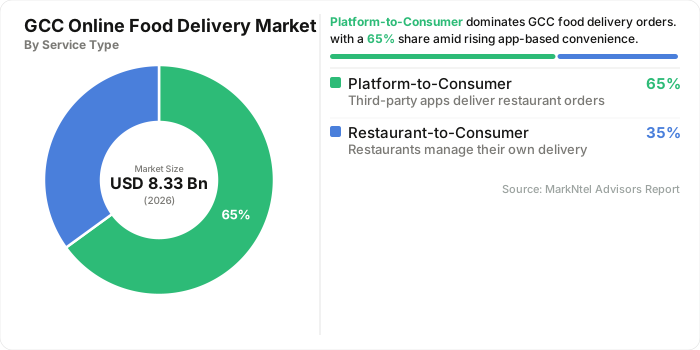
Platform-to-Consumer (P2C) platforms account for approximately 65% of the GCC online food delivery industry, making it the largest service segment in the region. Their dominance is primarily driven by the strong presence of leading aggregators such as Talabat, Deliveroo, Careem, and Jahez, which provide large restaurant networks, seamless app-based ordering, and efficient last-mile logistics.
The segment’s growth is supported by high smartphone penetration, widespread internet connectivity, and a strong preference for convenience among urban consumers in cities such as Dubai, Riyadh, and Doha. Additionally, aggressive promotional strategies, subscription-based discounts, and loyalty programs encourage frequent usage and high order volumes. The availability of real-time tracking, multiple payment options, and AI-driven food recommendations further enhances user experience.
Moreover, P2C platforms benefit from scalability, as they onboard thousands of restaurants without requiring heavy infrastructure investment. This asset-light model enables rapid expansion across GCC markets. As a result, P2C continues to dominate the ecosystem, reshaping food consumption patterns toward digital, on-demand services. Based on service type, the scope has been segmented into
- Platform-to-Consumer
- Restaurant-to-Consumer
Digital Payments Emerge as the Leading Payment Type
Digital Payments represent the largest application segment in the GCC online food delivery industry, accounting for approximately 75% of total transaction value. The segment’s dominance is supported by strong fintech adoption, high smartphone penetration, and government-led initiatives promoting cashless economies across countries such as the UAE and Saudi Arabia. National strategies like Saudi Vision 2030 and the UAE’s digital transformation programs have accelerated the use of electronic payments in daily consumer activities, including food delivery.
The widespread availability of secure payment solutions such as cards, mobile wallets, and instant payment platforms has further strengthened adoption. For example, digital wallets integrated within platforms like Talabat, Careem, and Deliveroo enhance convenience through one-click checkout, cashback offers, and subscription benefits.
Additionally, services like STC Pay have significantly improved trust in cashless transactions. As a result, consumers increasingly prefer faster, safer, and contactless payment methods, making digital payments the dominant and fastest-growing segment in the GCC food delivery ecosystem. Based on payment, the scope has been classified into
- Cash on Delivery
- Digital Payments
GCC Online Food Delivery Market Geographical Outlook
Saudi Arabia accounts for approximately 36% of GCC online food delivery demand, making it the largest market in the region. This leadership is strongly driven by the dominance of key platforms such as HungerStation and Jahez, which together hold a substantial share of orders and shape urban consumption patterns across major cities.
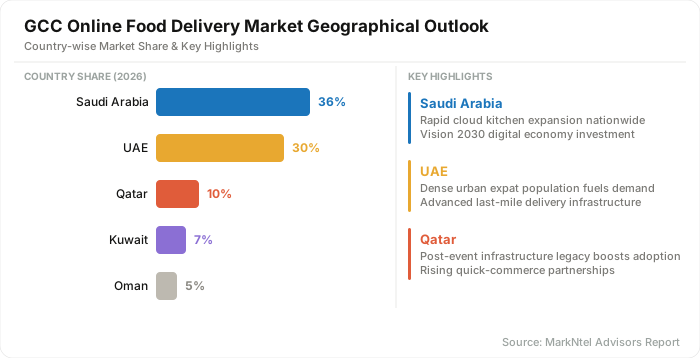
HungerStation plays a central role in this ecosystem, operating across 80+ cities and partnering with more than 55,000 restaurants, ensuring deep coverage in both large metropolitan and secondary urban areas. This extensive network allows customers in cities like Riyadh and Jeddah to access a wide range of restaurants through a single platform.
Geographically, demand is highly concentrated in Riyadh, Jeddah, and Dammam, which consistently emerge as the primary hubs for food delivery activity due to dense population clusters, commercial districts, and strong lifestyle-driven ordering behaviour. These cities together form the backbone of Saudi Arabia’s delivery ecosystem, reinforcing its dominant position in the GCC market.
GCC Online Food Delivery Market Competitive Analysis
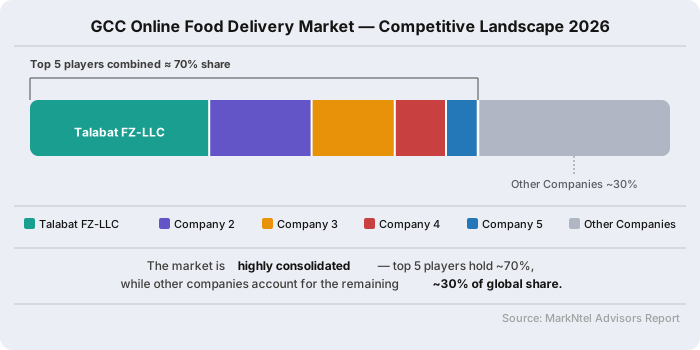
The GCC online food delivery industry is moderately consolidated, with the top five players accounting for approximately 70% of the market share. The leading companies include talabat.com FZ-LLC (Talabat), HungerStation Co. Ltd., Deliveroo Holdings plc, Careem Networks FZ-LLC, and Jahez International Company for Information System Technology.
Key Players in the GCC Online Food Delivery Market
- Talabat FZ-LLC (Talabat)
- HungerStation Co. Ltd.
- Deliveroo Holdings plc
- Careem Networks FZ-LLC
- Jahez International Company for Information System Technology
- Noon E-Commerce Solutions FZ-LLC (Noon Food)
- Mrsool Co.
- Snoonu Corporation W.L.L.
- Uber Technologies, Inc. (Uber Eats)
- Carriage Services FZ-LLC
- Eateasy W.L.L.
- ToYou
- Others
GCC Online Food Delivery Industry News and Recent Developments
March 2025: Keeta enters Saudi Arabia and disrupts GCC delivery market
Keeta, the international food delivery platform backed by Meituan, officially expanded into Saudi Arabia in 2025. The launch triggered aggressive pricing competition and forced incumbents like HungerStation and Jahez to strengthen discounts and logistics efficiency. The entry intensified the already competitive GCC delivery landscape, especially in Riyadh and Jeddah, where order density is highest. It also accelerated market consolidation discussions across the region.
Impact Analysis: Keeta’s entry significantly intensified price-based competition in Saudi Arabia’s food delivery market. Its aggressive discounting strategy forced established players like HungerStation and Jahez to increase promotions and optimize logistics costs. This led to margin compression across the sector while accelerating delivery speed innovations. The entry also heightened market consolidation expectations as smaller players struggled to sustain profitability under rising competitive pressure.
-
Jahez and noon Form Strategic Ecosystem Integration in Saudi Arabia
Jahez and noon entered a strategic partnership in 2025, enabling cross-platform access between food delivery and quick commerce services. Users can now order restaurants via noon and access noon Minutes through Jahez. This integration strengthens GCC platform convergence, improves customer reach, and enhances ecosystem efficiency across Saudi Arabia’s rapidly growing digital delivery market.
Impact Analysis: The Jahez–noon partnership strengthened ecosystem convergence by linking food delivery with quick-commerce services across Saudi Arabia. This integration improved customer retention through cross-platform convenience and expanded order volumes for both firms. It also enhanced operational efficiency by sharing logistics infrastructure. However, it increased competitive pressure on standalone platforms, pushing the GCC market toward super-app models and integrated digital delivery ecosystems.
Frequently Asked Questions
- Market Segmentation
- Introduction
- Product Definition
- Research Process
- Assumptions
- Executive Summary
- GCC Online Food Delivery Market Policies, Regulations, and Product Standards
- GCC Online Food Delivery Market Trends & Developments
- GCC Online Food Delivery Market Dynamics
- Growth Factors
- Challenges
- GCC Online Food Delivery Market Hotspot & Opportunities
- GCC Online Food Delivery Market Outlook, 2022-2032F
- Market Size & Outlook
- By Revenues (USD Million)
- Market Share & Outlook
- By Service Type- Market Size & Forecast 2022-2032, USD Million
- Platform-to-Consumer
- Restaurant-to-Consumer
- By Cuisine- Market Size & Forecast 2022-2032, USD Million
- Local Arabic Cuisine
- Indian Food
- Continental
- Others
- By Product Type- Market Size & Forecast 2022-2032, USD Million
- Grocery Delivery
- Meal Delivery
- By Business Model- Market Size & Forecast 2022-2032, USD Million
- Logistics-Based
- Full Service
- By Food Type- Market Size & Forecast 2022-2032, USD Million
- Vegetarian
- Non-Vegetarian
- Others
- By Food Buyer Nationality- Market Size & Forecast 2022-2032, USD Million
- Arabic
- Indian
- Pakistani
- South East Asian
- European
- African
- Others
- By Size of the Order- Market Size & Forecast 2022-2032, USD Million
- Upto USD 30
- USD31 to USD 50
- Above USD 50
- By Consumer Age Group- Market Size & Forecast 2022-2032, USD Million
- Upto 25 Years
- 26 to 35 Years
- 36 to 50 Years
- Above 50 Years
- By Platform- Market Size & Forecast 2022-2032, USD Million
- Mobile Applications
- Web-Based Platform
- By Payment- Market Size & Forecast 2022-2032, USD Million
- Cash on Delivery
- Digital Payments
- By Country
- The UAE
- Saudi Arabia
- Qatar
- Oman
- Kuwait
- Bahrain
- By Company
- Competition Characteristics
- Market Share & Analysis
- By Service Type- Market Size & Forecast 2022-2032, USD Million
- Market Size & Outlook
- The UAE Online Food Delivery Market Outlook, 2022-2032F
- Market Size & Outlook
- By Revenues (USD Million)
- Market Share & Outlook
- By Service Type- Market Size & Forecast 2022-2032, USD Million
- By Cuisine- Market Size & Forecast 2022-2032, USD Million
- By Product Type- Market Size & Forecast 2022-2032, USD Million
- By Business Model- Market Size & Forecast 2022-2032, USD Million
- By Food Type- Market Size & Forecast 2022-2032, USD Million
- By Food Buyer Nationality- Market Size & Forecast 2022-2032, USD Million
- By Size of the Order- Market Size & Forecast 2022-2032, USD Million
- By Consumer Age Group- Market Size & Forecast 2022-2032, USD Million
- By Platform- Market Size & Forecast 2022-2032, USD Million
- By Payment- Market Size & Forecast 2022-2032, USD Million
- Market Size & Outlook
- Saudi Arabia Online Food Delivery Market Outlook, 2022-2032F
- Market Size & Outlook
- By Revenues (USD Million)
- Market Share & Outlook
- By Service Type- Market Size & Forecast 2022-2032, USD Million
- By Cuisine- Market Size & Forecast 2022-2032, USD Million
- By Product Type- Market Size & Forecast 2022-2032, USD Million
- By Business Model- Market Size & Forecast 2022-2032, USD Million
- By Food Type- Market Size & Forecast 2022-2032, USD Million
- By Food Buyer Nationality- Market Size & Forecast 2022-2032, USD Million
- By Size of the Order- Market Size & Forecast 2022-2032, USD Million
- By Consumer Age Group- Market Size & Forecast 2022-2032, USD Million
- By Platform- Market Size & Forecast 2022-2032, USD Million
- By Payment- Market Size & Forecast 2022-2032, USD Million
- Market Size & Outlook
- Qatar Online Food Delivery Market Outlook, 2022-2032F
- Market Size & Outlook
- By Revenues (USD Million)
- Market Share & Outlook
- By Service Type- Market Size & Forecast 2022-2032, USD Million
- By Cuisine- Market Size & Forecast 2022-2032, USD Million
- By Product Type- Market Size & Forecast 2022-2032, USD Million
- By Business Model- Market Size & Forecast 2022-2032, USD Million
- By Food Type- Market Size & Forecast 2022-2032, USD Million
- By Food Buyer Nationality- Market Size & Forecast 2022-2032, USD Million
- By Size of the Order- Market Size & Forecast 2022-2032, USD Million
- By Consumer Age Group- Market Size & Forecast 2022-2032, USD Million
- By Platform- Market Size & Forecast 2022-2032, USD Million
- By Payment- Market Size & Forecast 2022-2032, USD Million
- Market Size & Outlook
- Oman Online Food Delivery Market Outlook, 2022-2032F
- Market Size & Outlook
- By Revenues (USD Million)
- Market Share & Outlook
- By Service Type- Market Size & Forecast 2022-2032, USD Million
- By Cuisine- Market Size & Forecast 2022-2032, USD Million
- By Product Type- Market Size & Forecast 2022-2032, USD Million
- By Business Model- Market Size & Forecast 2022-2032, USD Million
- By Food Type- Market Size & Forecast 2022-2032, USD Million
- By Food Buyer Nationality- Market Size & Forecast 2022-2032, USD Million
- By Size of the Order- Market Size & Forecast 2022-2032, USD Million
- By Consumer Age Group- Market Size & Forecast 2022-2032, USD Million
- By Platform- Market Size & Forecast 2022-2032, USD Million
- By Payment- Market Size & Forecast 2022-2032, USD Million
- Market Size & Outlook
- Kuwait Online Food Delivery Market Outlook, 2022-2032F
- Market Size & Outlook
- By Revenues (USD Million)
- Market Share & Outlook
- By Service Type- Market Size & Forecast 2022-2032, USD Million
- By Cuisine- Market Size & Forecast 2022-2032, USD Million
- By Product Type- Market Size & Forecast 2022-2032, USD Million
- By Business Model- Market Size & Forecast 2022-2032, USD Million
- By Food Type- Market Size & Forecast 2022-2032, USD Million
- By Food Buyer Nationality- Market Size & Forecast 2022-2032, USD Million
- By Size of the Order- Market Size & Forecast 2022-2032, USD Million
- By Consumer Age Group- Market Size & Forecast 2022-2032, USD Million
- By Platform- Market Size & Forecast 2022-2032, USD Million
- By Payment- Market Size & Forecast 2022-2032, USD Million
- Market Size & Outlook
- GCC Online Food Delivery Market Key Strategic Imperatives for Success & Growth
- Competitive Outlook
- Company Profiles
- talabat.com FZ-LLC (Talabat)
- Business Description
- Product Portfolio
- Collaborations & Alliances
- Recent Developments
- Financial Details
- Others
- HungerStation Co. Ltd.
- Business Description
- Product Portfolio
- Collaborations & Alliances
- Recent Developments
- Financial Details
- Others
- Deliveroo Holdings plc
- Business Description
- Product Portfolio
- Collaborations & Alliances
- Recent Developments
- Financial Details
- Others
- Careem Networks FZ-LLC
- Business Description
- Product Portfolio
- Collaborations & Alliances
- Recent Developments
- Financial Details
- Others
- Jahez International Company for Information System Technology
- Business Description
- Product Portfolio
- Collaborations & Alliances
- Recent Developments
- Financial Details
- Others
- Noon E-Commerce Solutions FZ-LLC (Noon Food)
- Business Description
- Product Portfolio
- Collaborations & Alliances
- Recent Developments
- Financial Details
- Others
- Mrsool Co.
- Business Description
- Product Portfolio
- Collaborations & Alliances
- Recent Developments
- Financial Details
- Others
- Snoonu Corporation W.L.L.
- Business Description
- Product Portfolio
- Collaborations & Alliances
- Recent Developments
- Financial Details
- Others
- Uber Technologies, Inc. (Uber Eats)
- Business Description
- Product Portfolio
- Collaborations & Alliances
- Recent Developments
- Financial Details
- Others
- Carriage Services FZ-LLC
- Business Description
- Product Portfolio
- Collaborations & Alliances
- Recent Developments
- Financial Details
- Others
- Eateasy W.L.L.
- Business Description
- Product Portfolio
- Collaborations & Alliances
- Recent Developments
- Financial Details
- Others
- ToYou
- Business Description
- Product Portfolio
- Collaborations & Alliances
- Recent Developments
- Financial Details
- Others
- talabat.com FZ-LLC (Talabat)
- Company Profiles
- Disclaimer
MarkNtel Advisors follows a robust and iterative research methodology designed to ensure maximum accuracy and minimize deviation in market estimates and forecasts. Our approach combines both bottom-up and top-down techniques to effectively segment and quantify various aspects of the market. A consistent feature across all our research reports is data triangulation, which examines the market from three distinct perspectives to validate findings. Key components of our research process include:
1. Scope & Research Design At the outset, MarkNtel Advisors define the research objectives and formulate pertinent questions. This phase involves determining the type of research—qualitative or quantitative—and designing a methodology that outlines data collection methods, target demographics, and analytical tools. They also establish timelines and budgets to ensure the research aligns with client goals.
2. Sample Selection and Data Collection In this stage, the firm identifies the target audience and determines the appropriate sample size to ensure representativeness. They employ various sampling methods, such as random or stratified sampling, based on the research objectives. Data collection is carried out using tools like surveys, interviews, and observations, ensuring the gathered data is reliable and relevant.
3. Data Analysis and Validation Once data is collected, MarkNtel Advisors undertake a rigorous analysis process. This includes cleaning the data to remove inconsistencies, employing statistical software for quantitative analysis, and thematic analysis for qualitative data. Validation steps are taken to ensure the accuracy and reliability of the findings, minimizing biases and errors.

4. Data Forecast and FinalizationThe final phase involves forecasting future market trends based on the analyzed data. MarkNtel Advisors utilize predictive modeling and time series analysis to anticipate market behaviors. The insights are then compiled into comprehensive reports, featuring visual aids like charts and graphs, and include strategic recommendations to inform client decision-making
We offer flexible licensing options to cater to varying organizational needs. Choose the pricing pack that best suits your requirements:
Buy Now Inquire Before Buying
 Request Customization
 Talk to our Consultant







