

France Healthcare Market Research Report: Size, Share, Trends & Forecast (2026-2032)
By Healthcare Expenditure Type (Public Healthcare Expenditure, Private Healthcare Expenditure, Out-of-Pocket Expenditure), By Pharmaceutical Segment (Prescription Drugs, Over-the-C ... ounter (OTC) Drugs, Generic Drugs, Branded Drugs, Biologics & Biosimilars), By Therapeutic Area (Cardiovascular Diseases, Oncology, Diabetes, Respiratory Diseases, Neurology, Infectious Diseases, Others), By Medical Device Type (Diagnostic Imaging Devices, Patient Monitoring Devices, Surgical Equipment, In-vitro Diagnostics, Orthopedic Devices, Cardiovascular Devices, Others), By Technology Type (Artificial Intelligence in Healthcare, Telemedicine & Remote Monitoring, Electronic Health Records (EHR), Healthcare Analytics, Robotic Surgery, Wearables & Health Apps), By Healthcare Workforce (Physicians, Nurses, Dentists, Allied Health Professionals), By Insurance Type (Public Health Insurance, Private Health Insurance), By Disease Category (Chronic Diseases, Infectious Diseases, Mental Health Disorders), By End User (Hospitals, Clinics, Diagnostic Centers / Laboratories, Ambulatory Surgical Centers, Home Healthcare, Research Institutes, Pharmacies, Others) Read more
- Healthcare
- Mar 2026
- Pages 155
- Report Format: PDF, Excel, PPT
France Healthcare Market
Projected 10.0% CAGR from 2026 to 2032
Study Period
2026-2032
Market Size (2026)
USD 412.83 Billion
Market Size (2032)
USD 731.5 Billion
Base Year
2025
Projected CAGR
10.0%
Leading Segments
By Therapeutic Area: Cardiovascular Diseases
France Healthcare Market Report Key Takeaways:
- The France Healthcare Market size was valued at USD 375.3 billion in 2025 and is projected to grow from USD 412.83 billion in 2026 to USD 731.5 billion by 2032, exhibiting a CAGR of 10.0% during the forecast period.
- About 20% of patients in France healthcare system in 2026 are affected by cardiovascular diseases, highlighting its significant prevalence.
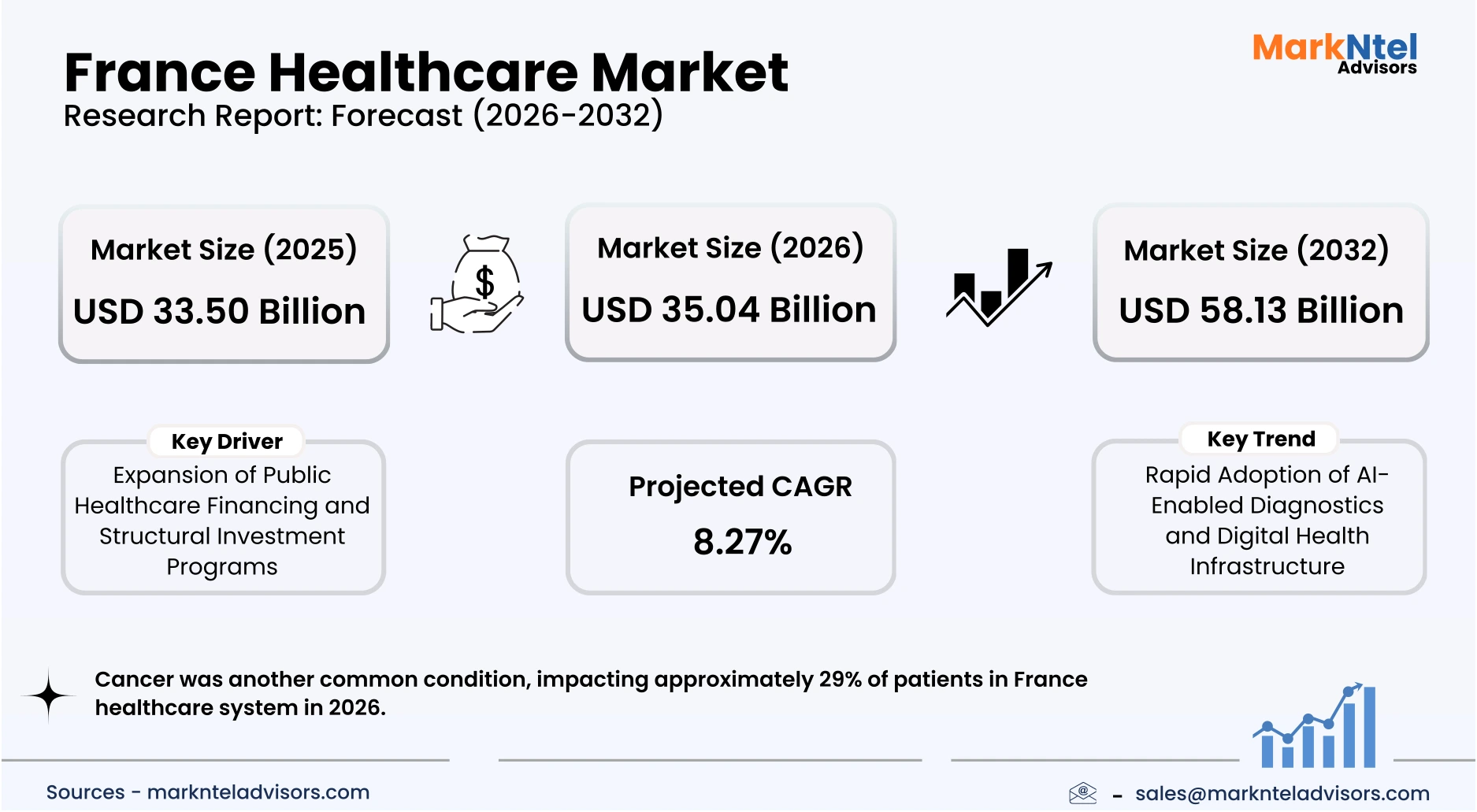
- Cancer was another common condition, impacting approximately 29% of patients in France healthcare system in 2026.
- France’s healthcare system is supported by 2,694 healthcare establishments, comprising 35% public, 39% private, and 26% private non-profit institutions, including specialized centers such as Comprehensive Cancer Centers.
Market Insights & Analysis: France Healthcare Market (2026-32):
The France Healthcare Market size was valued at USD 375.3 billion in 2025 and is projected to grow from USD 412.83 billion in 2026 to USD 731.5 billion by 2032, exhibiting a CAGR of 10.0% during the forecast period. i.e., 2026-32.
France’s healthcare sector demonstrates sustained expansion supported by strong public financing structures and universal coverage mechanisms administered through the national health insurance system. The OECD dataset notes health spending of about USD 7,367 per capita, indicating substantial investment in hospitals, physicians, and medical infrastructure . This funding stability has historically ensured broad access to hospitals, specialist services, and pharmaceuticals, strengthening the institutional healthcare segment. Continued fiscal commitments under the national social security financing framework for 2025 are expected to preserve system capacity while improving care delivery efficiency.
Demographic dynamics remain a central force shaping healthcare demand, particularly the country’s rapidly ageing population. According to INSEE, 22% of France’s population was aged 65 or older in 2026, highlighting significant demographic ageing that increases demand for long-term care, chronic disease management, and healthcare services and geriatric medical infrastructure . This shift has expanded the role of institutional end-users such as nursing homes, rehabilitation centers, and specialized clinics within the broader healthcare ecosystem. Total hospitalizations exceed 13 million admissions per year across the country’s healthcare facilities. Cancer remains one of the largest and fastest-growing disease burdens in France, driven mainly by population ageing and lifestyle risk factors . Major pharmaceutical hubs Lyonbiopôle (Auvergne-Rhône-Alpes region), a biopharmaceutical cluster with companies such as Sanofi and bioMérieux, and numerous research institutes. France has established national reference centers for rare diseases to improve diagnosis and care pathways for genetic disorders. The country implements national rare-disease strategies (PNMR) to coordinate specialized treatment networks and research infrastructure. France launched a national strategy for artificial intelligence and health data to integrate AI into healthcare services, research, and clinical decision-making. The strategy focuses on: improving care quality, supporting clinicians through AI tools, and optimizing healthcare system efficiency.
Programs implemented under the France 2030 Investment Plan allocate substantial public funding to biotechnology innovation, digital health infrastructure, and advanced medical manufacturing capacity. In parallel, the digital transformation initiative known as Segur du Numerique en Sante promotes nationwide interoperability of hospital information systems and electronic health records. These reforms encourage hospitals, diagnostic laboratories, and outpatient clinics to upgrade equipment and digital platforms, thereby expanding demand for healthcare technologies and data-driven clinical services.
Industry participation from major pharmaceutical and medical technology companies further reinforces market growth prospects. For example, Sanofi announced expanded investments in domestic vaccine and biologics manufacturing facilities to strengthen pharmaceutical supply resilience within Europe. Private sector initiatives such as localised production, clinical research collaborations, and advanced therapy development are strengthening France’s position as a biomedical innovation hub. Supported by regulatory stability, growing healthcare infrastructure, and sustained public investment, the French healthcare sector is expected to maintain steady expansion through the coming decade.
France Healthcare Market Scope:
| Category | Segments |
|---|---|
| By Healthcare Expenditure Type | (Public Healthcare Expenditure, Private Healthcare Expenditure, Out-of-Pocket Expenditure), |
| By Pharmaceutical Segment | (Prescription Drugs, Over-the-Counter (OTC) Drugs, Generic Drugs, Branded Drugs, Biologics & Biosimilars), |
| By Therapeutic Area | (Cardiovascular Diseases, Oncology, Diabetes, Respiratory Diseases, Neurology, Infectious Diseases, Others), |
| By Medical Device Type | (Diagnostic Imaging Devices, Patient Monitoring Devices, Surgical Equipment, In-vitro Diagnostics, Orthopedic Devices, Cardiovascular Devices, Others), |
| By Technology Type | (Artificial Intelligence in Healthcare, Telemedicine & Remote Monitoring, Electronic Health Records (EHR), Healthcare Analytics, Robotic Surgery, Wearables & Health Apps), |
| By Healthcare Workforce | (Physicians, Nurses, Dentists, Allied Health Professionals), |
| By Insurance Type | (Public Health Insurance, Private Health Insurance), |
| By Disease Category | (Chronic Diseases, Infectious Diseases, Mental Health Disorders), |
| By End User | (Hospitals, Clinics, Diagnostic Centers / Laboratories, Ambulatory Surgical Centers, Home Healthcare, Research Institutes, Pharmacies, Others) |
France Healthcare Market Driver:
Rising Prevalence of Chronic Diseases Driving Long-Term Healthcare Service Demand
The accelerating burden of chronic diseases has emerged as the most influential structural driver expanding healthcare demand across France. According to the OECD State of Health in the EU – France Country Health Profile 2025, around 20% of the French population had a chronic illness recognized under the long-term illness scheme (ALD) recently, and the number of cases has been increasing by about 2.8% annually since the early years, largely due to population ageing. This epidemiological transition has intensified over recent years due to lifestyle changes, ageing demographics, and urban health patterns. As chronic conditions require continuous monitoring, diagnostics, and therapeutic interventions, they generate sustained demand for hospital care, pharmaceutical treatments, and specialized medical services.
Recent national health assessments further demonstrate how chronic disease prevalence is materially expanding healthcare utilization. The French Ministry of Health reports that more than 20 million residents currently live with at least one long-term medical condition requiring structured treatment pathways under the national health insurance system. These patients rely on institutional healthcare providers such as hospitals, specialty clinics, and long-term care facilities, significantly increasing service volumes. Chronic diseases also necessitate repeated physician consultations, laboratory diagnostics, and advanced therapeutics, which collectively expand the scale of healthcare infrastructure and medical service delivery.
Government policy responses introduced in recent years reinforce the demand expansion generated by this epidemiological shift. Through the national prevention strategy implemented by the French Ministry of Health, authorities have strengthened screening programs for cardiovascular disease, diabetes, and cancer while increasing funding for preventive healthcare services. Expanded diagnostic screening, early detection programs, and chronic disease management initiatives have increased patient engagement with healthcare systems. In 2026, France announced plans to introduce nationwide lung cancer screening, initially targeting more than 20,000 people, to scale the program nationally by 2030 as part of the country’s long-term health strategy focused on prevention and early detection. As these programs broaden treatment coverage and detection rates, they are expected to sustain rising healthcare utilization and continue driving long-term growth in France’s healthcare sector.
France Healthcare Market Trend:
Accelerating Adoption of Digital Health and Telemedicine Platforms
Digital health adoption has emerged as a defining trend transforming healthcare delivery across France, driven by regulatory support and technological integration. The national digital health program implemented through the French Ministry of Health has accelerated the deployment of interoperable electronic medical records, teleconsultation platforms, and digital prescription systems across hospitals and outpatient facilities. According to the Organisation for Economic Co-operation and Development, teleconsultations expanded significantly in recent years as healthcare providers integrated remote care solutions into routine clinical practice. This shift reflects the healthcare system’s transition toward technology-enabled care models designed to improve accessibility and operational efficiency.
Government policies have played a crucial role in institutionalizing digital healthcare services across the national system. The Segur du Numerique en Sante investment program finances the modernization of hospital information systems and supports nationwide interoperability of health data platforms. Through these initiatives, healthcare providers are upgrading digital infrastructure, enabling secure data exchange among hospitals, laboratories, and physicians. As a result, diagnostic laboratories, telemedicine providers, and software developers have become integral participants in the healthcare value chain, expanding the role of technology companies in clinical service delivery.
The trend is expected to persist as digital platforms improve patient access and healthcare system productivity. The expansion of the national digital health record platform known as Mon espace sante enables citizens to store medical data, prescriptions, and diagnostic reports within a centralized system accessible by authorized healthcare professionals. By 2025, over 97% of insured residents had access to the platform, with more than 17 million people actively using the service and hundreds of millions of medical documents stored in the system. Increased adoption of such platforms is facilitating data-driven treatment decisions and remote monitoring services. As hospitals and physicians continue integrating digital technologies into routine care pathways, digital health infrastructure is expected to remain a central pillar of healthcare modernization in France.
France Healthcare Market Opportunity:
Growing Investment in Biologics and Expansion of the OTC Self-Care Market
Growing research and development investments are increasingly directing the pharmaceutical sector toward advanced biologics, monoclonal antibodies, and emerging gene-based therapies. Pharmaceutical companies and biotechnology firms are prioritizing complex biologic medicines due to their effectiveness in treating chronic and rare diseases, while biosimilars are gaining traction as cost-efficient alternatives following patent expirations. These developments are gradually reshaping treatment approaches and expanding therapeutic options across oncology, immunology, and rare disease segments.
The market for generic medicines and over-the-counter (OTC) drugs continues to expand as healthcare systems encourage cost-effective treatment solutions and consumers increasingly adopt self-care practices. Generics provide affordable alternatives to branded drugs, supporting broader patient access to essential treatments. At the same time, rising awareness of preventive healthcare and minor illness management is contributing to stronger demand for OTC products such as pain relievers, vitamins, and cold and flu medications, particularly through retail pharmacies and digital pharmacy platforms.
France Healthcare Market Challenge:
Shortage of Healthcare Professionals and the Rise of Medical Deserts
France is experiencing a shortage of doctors and medical staff, particularly general practitioners and some specialists. While the country has a well-developed healthcare infrastructure overall, many professionals are concentrated in major cities such as Paris, Lyon, and Marseille. According to the Organisation for Economic Co-operation and Development, rural and semi-urban regions have significantly fewer doctors per population, creating what are commonly called “medical deserts.”
A medical desert refers to areas where people have limited or delayed access to healthcare services because there are too few doctors, clinics, or hospitals nearby. In such regions, patients may need to travel long distances for consultations or face long waiting periods for appointments. This imbalance between healthcare supply and patient demand affects both primary care and specialized treatments.
These workforce shortages also put pressure on hospitals and healthcare systems. When there are fewer doctors available, hospitals must manage higher patient loads with limited staff, which can reduce service capacity and delay treatments. As France’s population continues to age and chronic diseases increase, the demand for healthcare services grows. Without sufficient healthcare professionals, the system faces challenges in expanding services and maintaining efficient care delivery across the country.
France Healthcare Market Epidemiology Profile:
Cardiovascular Diseases:
Cardiovascular diseases remain the most dominant chronic disease burden in France, primarily due to their high prevalence and mortality among older populations. In France, cardiovascular diseases such as ischemic heart disease affect about 5.6% of adults (approximately 2.98 million people), and recorded 31,391 deaths by recent estimations, representing a substantial public health burden. The prevalence has increased gradually as population ageing and lifestyle-related risk factors continue to intensify. High blood pressure, tobacco consumption, obesity, and sedentary behavior remain major contributors to rising incidence levels, particularly among adults above 60 years.
The healthcare and economic burden associated with cardiovascular diseases is substantial because patients typically require long-term treatment and repeated hospital interventions. Data from the Organisation for Economic Co-operation and Development indicates that cardiovascular care constitutes a significant share of hospital admissions and healthcare expenditure in France. Public health programs focusing on prevention and early diagnosis have expanded screening initiatives for hypertension and cholesterol disorders. These programs increase patient identification rates, thereby sustaining demand for cardiology services, diagnostic testing, and pharmaceutical therapies.
France has also strengthened its infrastructure and treatment capacity to manage the growing cardiovascular burden. National prevention initiatives coordinated by the French Ministry of Health support cardiovascular risk monitoring, lifestyle interventions, and specialized cardiac care units across hospitals. France has an established network of cardiac rehabilitation (CR) centers that support patients after heart attacks or cardiac surgery. Approximately 140 dedicated rehabilitation centers provide inpatient and outpatient services. These programs include exercise therapy, lifestyle counselling, and patient education to reduce the recurrence of car diovascular events. Rehabilitation programs are regulated and certified by regional health authorities.
The treatment landscape includes advanced cardiac imaging, interventional cardiology procedures, and long-term pharmacological therapies such as anticoagulants and statins. Continuous investments in hospital cardiology departments and rehabilitation programs ensure sustained demand for cardiovascular treatment services, reinforcing the segment’s dominance within the country’s epidemiological disease profile.
Cancer:
Cancer represents one of the most significant disease burdens in France, characterized by high incidence and substantial healthcare demand across multiple therapeutic areas. According to the International Agency for Research on Cancer, more than 430,000 new cancer cases are diagnosed annually in the country, making it one of the leading causes of morbidity and mortality. Common cancers include breast, prostate, lung, and colorectal cancer, with prevalence increasing as life expectancy rises. Risk factors such as tobacco use, ageing, environmental exposure, and lifestyle patterns continue to contribute to growing incidence rates.
The economic and healthcare burden associated with cancer is considerable because treatment often requires complex and long-term clinical management. Data from the French National Cancer Institute highlights that oncology care involves extensive hospital services, advanced diagnostics, surgery, chemotherapy, and radiotherapy. As a result, cancer care represents a significant portion of national healthcare expenditure. Government-led screening programs for breast, colorectal, and cervical cancer have expanded early detection rates, which further increases demand for diagnostic imaging, pathology testing, and specialized oncology services.
France has strengthened its oncology infrastructure through national cancer control strategies designed to improve prevention, treatment access, and research capacity. The ten-year national cancer strategy implemented by the French Ministry of Health focuses on innovation in precision medicine, immunotherapy, and personalized treatment approaches. The treatment landscape now includes targeted therapies, immunotherapies, and advanced surgical techniques supported by specialized cancer centers. France has invested heavily in oncology research and infrastructure through national initiatives and specialized cancer centers. The country operates 18 comprehensive cancer centers (CLCCs) that support advanced oncology care, clinical trials, and research programs. Oncology represents a major share of clinical research activity, with around 40% of clinical trials in France focused on cancer treatments. Continuous investments in oncology research and hospital infrastructure sustain the dominance of cancer as a major epidemiological segment within the country’s healthcare system.
Gain a Competitive Edge with Our France Healthcare Market Report:
- The France Healthcare Market Report by MarkNtel Advisors provides a detailed & thorough analysis of market size & share, growth rate, competitive landscape, and key players. This comprehensive analysis helps businesses gain a holistic understanding of the market dynamics & make informed decisions.
- This report also highlights current market trends & future projections, allowing businesses to identify emerging opportunities & potential challenges. By understanding market forecasts, companies can align their strategies & stay ahead of the competition.
- The France Healthcare Market Report aids in assessing & mitigating risks associated with entering or operating in the market. By understanding market dynamics, regulatory frameworks, and potential challenges, businesses can develop strategies to minimize risks & optimize their operations.
*Reports Delivery Format - Market research studies from MarkNtel Advisors are offered in PDF, Excel and PowerPoint formats. Within 24 hours of the payment being successfully received, the report will be sent to your email address.
Frequently Asked Questions
- Introduction
- Executive Summary
- Key Insights
- Key Findings (2020–2024)
- Market Outlook Snapshot (2025–2032F)
- Strategic Imperatives
- Macro Environment Analysis
- France at a Glance
- Geographic Overview
- Political Structure
- Trade & Regional Alliances
- Others
- Demographic Profile (2020–2032F)
- Population Trends
- Age Structure
- Urban vs Rural Distribution
- Fertility Rate Trends
- Migration Trends
- Ethnic Composition
- Economic Profile (2020–2032F)
- GDP (Current & Constant USD)
- GDP by Sector
- Working Population & Labor Participation
- Per Capita Income & Purchasing Power
- Unemployment & Underemployment
- Inflation Rate & Healthcare Cost Impact
- Foreign Direct Investment Trends
- Country PESTLE Analysis
- France at a Glance
- France Healthcare Sector Analysis, 2026
- Healthcare System Overview
- Structure of Healthcare System
- Public vs Private Healthcare
- Governance & Regulatory Authorities
- Others
- Healthcare Ecosystem & Infrastructure (2020–2026)
- Healthcare Expenditure
- Healthcare Expenditure as % of GDP
- Per Capita Healthcare Expenditure
- Healthcare Facilities
- Number of Hospitals
- Number of Clinics
- Number of Pharmacies
- Number of Diagnostic Centres
- Public vs Private Distribution
- Bed Availability & Utilization
- Beds per 1,000 Population
- Beds Specialty
- Regional Disparities
- Healthcare Workforce
- Physicians per 1,000 Population
- Physicians by Specialty
- Nurses
- Dentists
- Allied Health Professionals
- Healthcare Expenditure
- Healthcare System Overview
- Health Outcomes & Public Health Indicators (2020–2026)
- Life Expectancy (Male vs Female)
- Infant Mortality Rate
- Maternal Mortality Ratio
- Immunization Coverage Rates (Measles, DPT, HPV, COVID-19)
- Overall Disease Burden Trends
- Healthcare Reforms & Large-Scale Projects (2020-2026)
- Government Reforms
- Public-Private Partnerships
- Infrastructure Expansion Projects
- Private Sector Investments
- Others
- Insurance Framework
- Public Health Insurance Programs
- Private Health Insurance Market
- Insurance Penetration & Coverage Gaps
- Payer Landscape
- Reimbursement Models (FFS, Bundled, Value-Based Care)
- Claims Management & Transparency Issues
- Out-of-Pocket Expenditure Trends (2020-2026)
- Regulatory Environment (Healthcare Sector)
- Market Authorisation for Pharmaceuticals
- Market Authorisation for Medical Devices
- Licensing for Manufacturing, Import & Export
- Clinical Trial Regulations
- Intellectual Property & Patent Protection
- Advertising, Labeling & Packaging Regulations
- Pharmacy & Hospital Licensing Rules
- Others
- Market Dynamics & Technology
- Healthcare Market Dynamics
- Growth Drivers
- Challenges & Barriers
- Emerging Opportunities
- Value Chain Analysis
- Healthcare Technology Trends
- Digital Health Maturity
- Telemedicine & Remote Monitoring
- Artificial Intelligence & Machine Learning
- Health Apps & Wearables
- Robotic Surgery
- EHR, Data Interoperability & Cybersecurity
- Others
- Healthcare Market Dynamics
- Epidemiology Profile (By Age & By Gender) (2020–2032F)
- Chronic Diseases
- Cardiovascular Diseases
- Prevalence
- Incidence
- Mortality Rate
- Risk Factors
- Healthcare & Economic Burden
- Infrastructure Challenges
- Treatment Landscape
- Others
- Diabetes
- Prevalence
- Incidence
- Mortality Rate
- Risk Factors
- Healthcare & Economic Burden
- Infrastructure Challenges
- Treatment Landscape
- Others
- Cancer
- Prevalence
- Incidence
- Mortality Rate
- Risk Factors
- Healthcare & Economic Burden
- Infrastructure Challenges
- Treatment Landscape
- Others
- Chronic Respiratory Diseases
- Prevalence
- Incidence
- Mortality Rate
- Risk Factors
- Healthcare & Economic Burden
- Infrastructure Challenges
- Treatment Landscape
- Others
- Chronic Kidney Disease
- Prevalence
- Incidence
- Mortality Rate
- Risk Factors
- Healthcare & Economic Burden
- Infrastructure Challenges
- Treatment Landscape
- Others
- Cardiovascular Diseases
- Infectious Diseases
- Tuberculosis
- Prevalence
- Incidence
- Mortality Rate
- Risk Factors
- Healthcare & Economic Burden
- Infrastructure Challenges
- Treatment Landscape
- Others
- HIV
- Prevalence
- Incidence
- Mortality Rate
- Risk Factors
- Healthcare & Economic Burden
- Infrastructure Challenges
- Treatment Landscape
- Others
- Hepatitis
- Prevalence
- Incidence
- Mortality Rate
- Risk Factors
- Healthcare & Economic Burden
- Infrastructure Challenges
- Treatment Landscape
- Others
- Others
- Tuberculosis
- Mental Health
- Prevalence of Mental Health Disorders
- Suicide Rates & Trends
- Urban-Rural & Gender Disparities
- Infrastructure Gaps
- Economic & Social Burden
- Chronic Diseases
- France Healthcare System Stakeholders Analysis, 2026
- France Pharmaceutical Market Outlook (2020–2030F)
- Market Size & Growth
- Market Size (USD Million), 2020-2030F
- Market by Key Segments
- Prescription vs OTC
- Generics vs Branded
- Therapeutic Category Distribution
- Manufacturing Landscape
- Distribution & Supply Chain
- Major Distributors
- Major Suppliers
- Major Local and Multinational Players
- Pharmaceutical sector (Top 5–10 companies, % market share)
- Imports & Exports (Value in USD Million) (2020-2026)
- Key Pharmaceutical Clusters (if there)
- Investments and R&D (2020-2026)
- Others
- Market Size & Growth
- France Medical Devices Market Outlook (2020–2030F)
- Market Size & Growth
- Market Size (USD Million), 2020-2030F
- Market by Key Segments
- By Device Type
- By Risk Class
- By End-User
- Manufacturing Landscape
- Distribution & Supply Chain
- Distributors
- Supply Chain
- Major Local and Multinational Players
- Medical Devices Sector (Top 5–10 companies, % market share)
- Imports & Exports (Value in USD Million) (2020-2026)
- Key Medical Device Clusters (if there)
- Investments and R&D (2020-2026)
- Others
- Market Size & Growth
- France Pharmaceutical Market Outlook (2020–2030F)
- France Strategic & Investments in Healthcare Outlook (2025-2032F)
- High-Growth Segments
- Foreign Investment Opportunities
- Government Incentives & Ease of Doing Business
- Risk Assessment & Mitigation
- Trade Associations & Industry Bodies
- Pharmaceutical Associations
- Medical Device Associations
- Healthcare Provider Associations
- Regulatory & Standards Bodies
- Healthcare Trade Fairs & Conferences (2024–2026)
- National Healthcare Exhibitions
- Medical Technology Events
- Pharmaceutical Conferences
- Regional Latin America Events Relevant to France
- Impact of Global Health Events
- COVID-19 Impact (2020–2022)
- Post-Pandemic Recovery
- Emergency Preparedness Evolution
- Strategic Recommendations
- Market Entry Strategy
- Partnership Models
- Pricing Strategy
- Regulatory Navigation
- Disclaimer
MarkNtel Advisors follows a robust and iterative research methodology designed to ensure maximum accuracy and minimize deviation in market estimates and forecasts. Our approach combines both bottom-up and top-down techniques to effectively segment and quantify various aspects of the market. A consistent feature across all our research reports is data triangulation, which examines the market from three distinct perspectives to validate findings. Key components of our research process include:
1. Scope & Research Design At the outset, MarkNtel Advisors define the research objectives and formulate pertinent questions. This phase involves determining the type of research—qualitative or quantitative—and designing a methodology that outlines data collection methods, target demographics, and analytical tools. They also establish timelines and budgets to ensure the research aligns with client goals.
2. Sample Selection and Data Collection In this stage, the firm identifies the target audience and determines the appropriate sample size to ensure representativeness. They employ various sampling methods, such as random or stratified sampling, based on the research objectives. Data collection is carried out using tools like surveys, interviews, and observations, ensuring the gathered data is reliable and relevant.
3. Data Analysis and Validation Once data is collected, MarkNtel Advisors undertake a rigorous analysis process. This includes cleaning the data to remove inconsistencies, employing statistical software for quantitative analysis, and thematic analysis for qualitative data. Validation steps are taken to ensure the accuracy and reliability of the findings, minimizing biases and errors.

4. Data Forecast and FinalizationThe final phase involves forecasting future market trends based on the analyzed data. MarkNtel Advisors utilize predictive modeling and time series analysis to anticipate market behaviors. The insights are then compiled into comprehensive reports, featuring visual aids like charts and graphs, and include strategic recommendations to inform client decision-making
We offer flexible licensing options to cater to varying organizational needs. Choose the pricing pack that best suits your requirements:
Buy Now Inquire Before Buying
 Request Customization
 Talk to our Consultant







