

Europe Ultrafast Charging Market Research Report: Trends, Forecast & Opportunities (2026-2032)
By Charger Power Output (150–249 kW, 250–349 kW, 350–499 kW, 500 kW and Above), By Connector Type (Combined Charging System (CCS2), CHAdeMO, North American Charging Standard (NACS/ ... Tesla), Megawatt Charging System (MCS), Others), By Vehicle Type (Passenger Cars, Light Commercial Vehicles, Medium & Heavy Commercial Vehicles, Electric Buses), By Charging Site Type (Highway / Corridor Charging, Urban Public Charging, Destination Charging, Fleet Depot Charging), By Component (Hardware, Software, Services), and others Read more
- Automotive
- Jun 2026
- Pages 250
- Report Format: PDF, Excel, PPT
Europe Ultrafast Charging Market
Projected 14.19% CAGR from 2026 to 2032
Study Period
2026-2032
Market Size (2026)
USD 443 Million
Market Size (2032)
USD 982 Million
Base Year
2025
Projected CAGR
14.19%
Leading Segments
By Component: Hardware
Europe Ultrafast Charging Market Key Takeaways
- The Europe Ultrafast Charging Market was valued at approximately USD 362 million in 2025 and is projected to reach USD 443 million in 2026, further expanding to nearly USD 982 million by 2032.
- The industry is projected to witness steady growth at a CAGR of around 14.19% during the forecast period.
- Germany emerged as the leading country, contributing approximately 18% share in 2026.
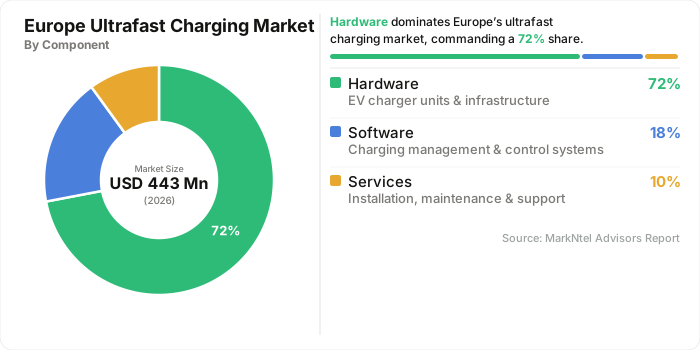
- By Component, Hardware held around 72% market share in 2026.
- By Vehicle Type, Passenger Cars contributed approximately 65% share in 2026.
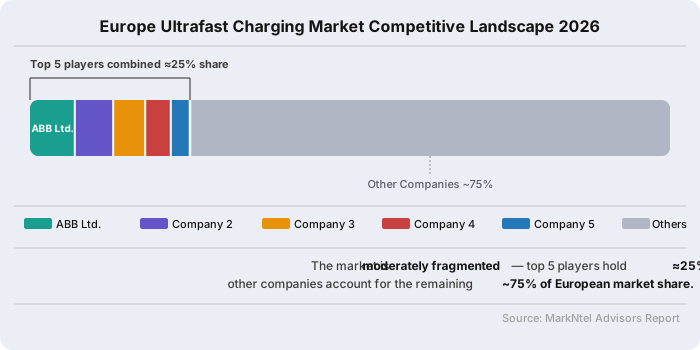
- The industry is moderately fragmented, with the top five leading players accounting for approximately 25% of the total market share.
Europe Ultrafast Charging Market Size and Outlook
Market revenue is expected to grow from USD 443 million in 2026 to approximately USD 982 million by 2032, expanding at a CAGR of 14.19%, following a valuation of USD 362 million in 2025.
Strong adoption of electric vehicles is reshaping Europe’s transportation landscape and creating sustained demand for high-power charging solutions. According to the International Energy Agency (IEA), electric car sales in Europe increased by more than 30% in 2025, reaching approximately 4.2 million units and accounting for 28% of all new vehicle sales. As EV ownership expands across major economies, demand for ultrafast charging infrastructure continues to grow, particularly among consumers seeking shorter charging times and greater convenience for long-distance travel. This trend is reinforcing the expansion of charging networks across the region.
Building on this growth, policymakers have introduced measures to accelerate infrastructure deployment and improve charging accessibility. The European Union’s Alternative Fuels Infrastructure Regulation (AFIR) requires charging stations of at least 150 kW to be installed every 60 kilometers along the Trans-European Transport Network (TEN-T) from 2025 onward. By establishing minimum charging coverage requirements, the regulation is encouraging investments in high-power charging networks while facilitating cross-border EV mobility. National funding programs and incentives are further supporting deployment across highways, urban centers, and key transportation corridors.
Alongside private vehicle owners, commercial users are becoming an increasingly important source of demand. Passenger cars remain the largest contributor to charging activity, while logistics providers, fleet operators, and public transportation agencies continue expanding their electric vehicle fleets. As businesses seek to reduce emissions and improve operational efficiency, the need for ultrafast charging solutions and fleet depot infrastructure is steadily increasing across Europe.
This supportive policy and investment landscape is expected to sustain market expansion as Europe advances its broader transportation electrification goals. Investments in highway charging corridors, urban charging hubs, and heavy-duty vehicle charging facilities are improving network coverage and reliability. Combined with advancements in smart charging technologies and energy management systems, these developments are strengthening charging efficiency and supporting the long-term growth of the Europe Ultrafast Charging Market.
Europe Ultrafast Charging Market Key Indicators
- According to the European Automobile Manufacturers' Association (ACEA), battery-electric vehicles accounted for 17.4% of new passenger car registrations in the European Union in 2025. Rising electric vehicle adoption is increasing demand for ultrafast charging infrastructure across public and highway networks.
- Heavy-duty vehicles account for more than 25% of greenhouse gas emissions from road transport in the European Union, highlighting their significant environmental impact. As fleet electrification accelerates, demand for ultrafast and megawatt charging infrastructure is increasing across commercial transportation networks.
- France, Finland, and Germany expanded their ultrafast charger stock by approximately 70–95% in 2024, while Denmark more than doubled its deployment. The rapid expansion of high-power charging infrastructure is improving charging accessibility and supporting continued EV adoption across Europe.
Europe Ultrafast Charging Market Scope
| Category | Segments |
|---|---|
| By Charger Power Output | 150–249 kW, 250–349 kW, 350–499 kW, 500 kW and Above |
| By Connector Type | Combined Charging System (CCS2), CHAdeMO, North American Charging Standard (NACS/Tesla), Megawatt Charging System (MCS), Others |
| By Vehicle Type | Passenger Cars, Light Commercial Vehicles, Medium & Heavy Commercial Vehicles, Electric Buses |
| By Charging Site Type | Highway / Corridor Charging, Urban Public Charging, Destination Charging, Fleet Depot Charging |
| By Component | Hardware, Software, Services |
Europe Ultrafast Charging Market Growth Drivers
European Decarbonization Targets and EV Adoption Accelerating Demand for Ultrafast Charging Infrastructure
Europe’s commitment to reducing transport-related carbon emissions is creating favorable conditions for the expansion of ultrafast charging infrastructure. Governments across the region are reinforcing transport decarbonization through stricter CO₂ emission standards, incentives, and long-term climate policies aimed at accelerating electric vehicle adoption. Under the European Union’s vehicle emissions framework, new cars and vans are required to achieve a 15% reduction in CO₂ emissions from 2025 compared with 2021 levels. These measures are supporting the transition toward electric mobility and strengthening investments in electric mobility infrastructure.
As electric vehicle adoption continues to advance, demand for faster and more accessible charging solutions is becoming increasingly important. Data published by the European Automobile Manufacturers’ Association (ACEA) shows that battery-electric vehicles accounted for 19.4% of total EU passenger car registrations in the first quarter of 2026. Alongside rising consumer adoption, fleet operators, logistics providers, and public transportation agencies are expanding investments in electric vehicles, increasing demand for ultrafast charging solutions that enhance convenience and operational efficiency.
Complementing this shift, policy-led efforts to improve charging network availability and interoperability are supporting infrastructure deployment across the region. Charging network operators and infrastructure developers continue investing in charging hubs and network upgrades to improve accessibility. Supported by favorable regulations and rising vehicle electrification, Europe’s broader transportation electrification agenda is expected to sustain long-term demand for ultrafast charging infrastructure and support continued market growth.
Recent Trends
Rising Adoption of Megawatt Charging Systems for Heavy-Duty Transport
Commercial fleet electrification is reshaping charging infrastructure requirements across Europe, creating greater demand for heavy-duty vehicle charging systems designed for high-utilization and long-distance applications. Unlike passenger vehicles, electric trucks require substantially higher charging capacities to support larger battery packs and reduce downtime. As a result, industry participants are increasingly focusing on Megawatt Charging System (MCS) technologies tailored to the operational needs of commercial freight transportation.
Reflecting this shift, Milence, the joint venture of Daimler Truck, TRATON Group, and Volvo Group, deployed its first Megawatt Charging System charger at the Port of Antwerp-Bruges in February 2025, marking an important step toward establishing dedicated charging infrastructure for electric trucks. The development highlights the industry's growing focus on advanced EV charging technologies capable of supporting large-scale freight electrification and long-distance commercial transport.
This trend is further reinforced by substantial infrastructure investments across the region. Milence secured more than USD 127 million in EU funding to deploy 548 high-power charging points, including 284 MCS chargers, across 71 locations by 2027. Additionally, the E.ON, Voltix, and GreenWay consortium announced plans to install approximately 330 MCS charging points across Europe. As commercial vehicle electrification advances, expanding megawatt charging infrastructure is expected to support long-distance electric freight operations and create new growth opportunities for the Europe Ultrafast Charging Market.
Europe Ultrafast Charging Market Opportunities and Challenges
Long Charging Times Creating Opportunities for Ultra-Fast Flash Charging Infrastructure
Long charging durations remain a key challenge for wider electric vehicle adoption, particularly among drivers undertaking long-distance travel and commercial fleet operators seeking to maximize vehicle utilization. As vehicle battery capacities continue to increase and EV adoption rises, consumers and businesses are placing greater emphasis on rapid charging infrastructure that can minimize downtime and improve convenience. This challenge is becoming increasingly important as Europe advances its electric mobility goals and seeks to support broader adoption of battery-electric vehicles across passenger and commercial transportation segments.
The need to reduce charging times is creating significant opportunities for the development of ultra-fast flash charging infrastructure and next-generation EV charging technologies. Industry participants are increasingly investing in higher-capacity charging systems capable of delivering substantially greater power output than conventional chargers. Reflecting this trend, BYD announced plans in 2026 to invest approximately USD 2.3 billion in a European flash-charging network and deploy around 3,000 charging stations by 2027. By significantly reducing charging durations, these advancements are enhancing the convenience of electric mobility and supporting broader adoption of EVs across Europe, creating new avenues for market expansion.
Segmentation Insights
High Equipment Intensity of Ultrafast Charging Infrastructure Sustains Hardware Segment Leadership
The capital-intensive nature of ultrafast charging deployment concentrated a significant portion of market value within hardware, allowing the segment to capture nearly 72% of total revenue. Each ultrafast charging site requires substantial investments in ultrafast charging equipment, including power conversion units, DC dispensers, liquid-cooled cables, connectors, transformers, and thermal management systems. As a result, a considerable share of project expenditure remains focused on physical infrastructure. The transition toward 350 kW and megawatt-class charging systems is further increasing hardware requirements, as higher power levels demand more advanced power electronics and cooling technologies.
This hardware intensity is becoming even more pronounced as deployment of high-power charging infrastructure accelerates across Europe. According to the International Energy Agency (IEA), public fast and ultrafast charging points expanded more rapidly than slow chargers across the European Union in 2025, supporting continued demand for EV charging hardware solutions. While software and services are gaining importance through charging management platforms, payment systems, and predictive maintenance solutions, ongoing corridor expansion and megawatt charging deployments are expected to keep hardware as the largest revenue-generating component throughout the forecast period. Based on component, the market has been segmented into:
- Hardware
- Software
- Services
Surging Battery-Electric Vehicle Adoption Anchors Passenger Cars as the Leading Vehicle Segment
Passenger cars accounted for nearly 65% of the Europe ultrafast charging market, supported by strong battery-electric vehicle adoption and a significantly larger electric vehicle population than commercial fleets. Private vehicle owners frequently rely on ultrafast charging stations for long-distance and intercity travel, where faster charging improves convenience and helps alleviate range concerns. The broad availability of battery-electric passenger car models across European markets further contributes to a significant share of charging activity on public charging networks.
The dominance of passenger cars is further reinforced by rising public EV charging demand and the continued expansion of highway charging infrastructure across Europe. Passenger vehicles account for the majority of charging sessions on public networks, supported by growing EV ownership and increasing long-distance travel. Supported by rising EV ownership and increasing long-distance travel demand, passenger cars are expected to remain the largest users of ultrafast charging infrastructure across Europe. Based on vehicle type, the market is categorized into:
- Passenger Cars
- Light Commercial Vehicles
- Medium & Heavy Commercial Vehicles
- Electric Buses
Europe Ultrafast Charging Market Geographical Outlook
Germany dominates the Europe Ultrafast Charging Market, accounting for approximately 18% of regional demand, supported by its large electric vehicle population and well-developed charging infrastructure. The country remains one of Europe’s leading EV markets, generating substantial demand for public charging services. Supported by strong automotive manufacturing capabilities and growing EV adoption, Germany has continued expanding high-power charging stations across highways and major transportation corridors, strengthening its position within the regional market.
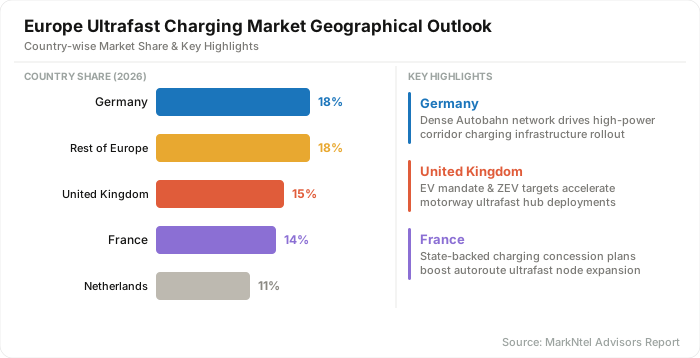
This leadership is further reinforced by ongoing infrastructure investments and Germany’s role as a major transportation hub in Europe. Extensive highway networks and high volumes of domestic and cross-border travel contribute to strong utilization of ultrafast charging stations. In addition, continuous deployment of 350 kW and higher-capacity charging systems by charging network operators and automotive companies has enhanced charging accessibility. Together, these factors continue to position Germany ahead of other European countries in the ultrafast charging market.
Europe Ultrafast Charging Market Competitive Analysis
The Europe Ultrafast Charging Market exhibits a moderately fragmented competitive structure, with the top five manufacturers collectively holding approximately 25% of the organized market. Industry leaders such as ABB Ltd., Siemens AG, Alpitronic GmbH, Kempower Oyj, and Schneider Electric SE have strengthened their positions through broad charging portfolios, advanced high-power charging solutions, and strategic collaborations with utilities, charging network operators, and automotive companies.
Key Players of Ultrafast Charging in Europe
- ABB Ltd.
- Siemens AG
- Alpitronic GmbH
- Kempower Oyj
- Schneider Electric SE
- Ekoenergetyka-Polska S.A.
- Circontrol S.A.
- Tritium DCFC Limited
- Delta Electronics, Inc.
- ChargePoint Holdings, Inc.
- Wallbox N.V.
- EVBox Group B.V.
- Others
Europe Ultrafast Charging Industry News and Recent Developments
April 2025: IONITY to Deploy Alpitronic HYC1000 Megawatt Charging System Across Europe
IONITY announced plans to become the first charging network in Europe to deploy Alpitronic’s HYC1000 charging platform. The new system supports charging capacities of up to 600 kW per vehicle and is designed to significantly reduce charging times for next-generation electric vehicles, supporting the expansion of high-power charging infrastructure across key European transport corridors.
Impact Analysis: The deployment highlights the industry's transition toward higher-capacity charging technologies capable of supporting increasing battery sizes and faster charging requirements. It is expected to enhance charging convenience, strengthen corridor charging networks, and accelerate adoption of ultrafast charging infrastructure across Europe.
December 2024: Kempower Begins Pilot Deliveries of Megawatt Charging System (MCS)
Kempower initiated pilot deliveries of its Megawatt Charging System (MCS), designed to support charging capacities of up to 1.2 MW for heavy-duty electric vehicles. The technology is intended to reduce charging downtime for electric trucks and support the growing electrification of freight transportation across Europe.
Impact Analysis: The development reflects increasing investment in megawatt-class charging solutions tailored for commercial vehicle applications. It is expected to support long-haul electric trucking operations, facilitate commercial fleet electrification, and strengthen the expansion of high-power charging infrastructure across the European market.
Frequently Asked Questions
- Market Segmentation
- Introduction
- Product Definition
- Research Process
- Assumptions
- Executive Summary
- Europe Ultrafast Charging Market Policies, Regulations, and Product Standards
- Europe Ultrafast Charging Market Trends & Developments
- Europe Ultrafast Charging Market Dynamics
- Growth Factors
- Challenges
- Europe Ultrafast Charging Market Hotspot & Opportunities
- Europe Ultrafast Charging Market Outlook, 2022-2032F
- Market Size & Outlook
- By Revenues (USD Million)
- Market Share & Analysis
- By Charger Power Output- Market Size & Forecast 2022-2032, USD Million
- 150–249 kW
- 250–349 kW
- 350–499 kW
- 500 kW and Above
- By Connector Type- Market Size & Forecast 2022-2032, USD Million
- Combined Charging System (CCS2)
- CHAdeMO
- North American Charging Standard (NACS/Tesla)
- Megawatt Charging System (MCS)
- Others
- By Vehicle Type- Market Size & Forecast 2022-2032, USD Million
- Passenger Cars
- Light Commercial Vehicles
- Medium & Heavy Commercial Vehicles
- Electric Buses
- By Charging Site Type- Market Size & Forecast 2022-2032, USD Million
- Highway / Corridor Charging
- Urban Public Charging
- Destination Charging
- Fleet Depot Charging
- By Component
- Hardware
- Software
- Services
- By Country
- Germany
- UK
- France
- Italy
- Spain
- Poland
- Benelux
- Rest of Europe
- By Charger Power Output- Market Size & Forecast 2022-2032, USD Million
- Market Size & Outlook
- Germany Ultrafast Charging Market Outlook, 2022-2032F
- Market Size & Outlook
- By Revenues (USD Million)
- Market Share & Analysis
- By Charger Power Output- Market Size & Forecast 2022-2032, USD Million
- By Connector Type- Market Size & Forecast 2022-2032, USD Million
- By Vehicle Type- Market Size & Forecast 2022-2032, USD Million
- By Charging Site Type- Market Size & Forecast 2022-2032, USD Million
- By Component- Market Size & Forecast 2022-2032, USD Million
- Market Size & Outlook
- The UK Ultrafast Charging Market Outlook, 2022-2032F
- Market Size & Outlook
- By Revenues (USD Million)
- Market Share & Analysis
- By Charger Power Output- Market Size & Forecast 2022-2032, USD Million
- By Connector Type- Market Size & Forecast 2022-2032, USD Million
- By Vehicle Type- Market Size & Forecast 2022-2032, USD Million
- By Charging Site Type- Market Size & Forecast 2022-2032, USD Million
- By Component- Market Size & Forecast 2022-2032, USD Million
- Market Size & Outlook
- France Ultrafast Charging Market Outlook, 2022-2032F
- Market Size & Outlook
- By Revenues (USD Million)
- Market Share & Analysis
- By Charger Power Output- Market Size & Forecast 2022-2032, USD Million
- By Connector Type- Market Size & Forecast 2022-2032, USD Million
- By Vehicle Type- Market Size & Forecast 2022-2032, USD Million
- By Charging Site Type- Market Size & Forecast 2022-2032, USD Million
- By Component- Market Size & Forecast 2022-2032, USD Million
- Market Size & Outlook
- Italy Ultrafast Charging Market Outlook, 2022-2032F
- Market Size & Outlook
- By Revenues (USD Million)
- Market Share & Analysis
- By Charger Power Output- Market Size & Forecast 2022-2032, USD Million
- By Connector Type- Market Size & Forecast 2022-2032, USD Million
- By Vehicle Type- Market Size & Forecast 2022-2032, USD Million
- By Charging Site Type- Market Size & Forecast 2022-2032, USD Million
- By Component- Market Size & Forecast 2022-2032, USD Million
- Market Size & Outlook
- Spain Ultrafast Charging Market Outlook, 2022-2032F
- Market Size & Outlook
- By Revenues (USD Million)
- Market Share & Analysis
- By Charger Power Output- Market Size & Forecast 2022-2032, USD Million
- By Connector Type- Market Size & Forecast 2022-2032, USD Million
- By Vehicle Type- Market Size & Forecast 2022-2032, USD Million
- By Charging Site Type- Market Size & Forecast 2022-2032, USD Million
- By Component- Market Size & Forecast 2022-2032, USD Million
- Market Size & Outlook
- Poland Ultrafast Charging Market Outlook, 2022-2032F
- Market Size & Outlook
- By Revenues (USD Million)
- Market Share & Analysis
- By Charger Power Output- Market Size & Forecast 2022-2032, USD Million
- By Connector Type- Market Size & Forecast 2022-2032, USD Million
- By Vehicle Type- Market Size & Forecast 2022-2032, USD Million
- By Charging Site Type- Market Size & Forecast 2022-2032, USD Million
- By Component- Market Size & Forecast 2022-2032, USD Million
- Market Size & Outlook
- Benelux Ultrafast Charging Market Outlook, 2022-2032F
- Market Size & Outlook
- By Revenues (USD Million)
- Market Share & Analysis
- By Charger Power Output- Market Size & Forecast 2022-2032, USD Million
- By Connector Type- Market Size & Forecast 2022-2032, USD Million
- By Vehicle Type- Market Size & Forecast 2022-2032, USD Million
- By Charging Site Type- Market Size & Forecast 2022-2032, USD Million
- By Component- Market Size & Forecast 2022-2032, USD Million
- Market Size & Outlook
- Europe Ultrafast Charging Market Key Strategic Imperatives for Success & Growth
- Competitive Outlook
- Company Profiles
- ABB Ltd.
- Business Description
- Product Portfolio
- Collaborations & Alliances
- Recent Developments
- Financial Details
- Others
- Siemens AG
- Business Description
- Product Portfolio
- Collaborations & Alliances
- Recent Developments
- Financial Details
- Others
- Alpitronic GmbH
- Business Description
- Product Portfolio
- Collaborations & Alliances
- Recent Developments
- Financial Details
- Others
- Kempower Oyj
- Business Description
- Product Portfolio
- Collaborations & Alliances
- Recent Developments
- Financial Details
- Others
- Schneider Electric SE
- Business Description
- Product Portfolio
- Collaborations & Alliances
- Recent Developments
- Financial Details
- Others
- Ekoenergetyka-Polska S.A.
- Business Description
- Product Portfolio
- Collaborations & Alliances
- Recent Developments
- Financial Details
- Others
- Circontrol S.A.
- Business Description
- Product Portfolio
- Collaborations & Alliances
- Recent Developments
- Financial Details
- Others
- Tritium DCFC Limited
- Business Description
- Product Portfolio
- Collaborations & Alliances
- Recent Developments
- Financial Details
- Others
- Delta Electronics, Inc.
- Business Description
- Product Portfolio
- Collaborations & Alliances
- Recent Developments
- Financial Details
- Others
- ChargePoint Holdings, Inc.
- Business Description
- Product Portfolio
- Collaborations & Alliances
- Recent Developments
- Financial Details
- Others
- Wallbox N.V.
- Business Description
- Product Portfolio
- Collaborations & Alliances
- Recent Developments
- Financial Details
- Others
- EVBox Group B.V.
- Business Description
- Product Portfolio
- Collaborations & Alliances
- Recent Developments
- Financial Details
- Others
- ABB Ltd.
- Company Profiles
- Disclaimer
MarkNtel Advisors follows a robust and iterative research methodology designed to ensure maximum accuracy and minimize deviation in market estimates and forecasts. Our approach combines both bottom-up and top-down techniques to effectively segment and quantify various aspects of the market. A consistent feature across all our research reports is data triangulation, which examines the market from three distinct perspectives to validate findings. Key components of our research process include:
1. Scope & Research Design At the outset, MarkNtel Advisors define the research objectives and formulate pertinent questions. This phase involves determining the type of research—qualitative or quantitative—and designing a methodology that outlines data collection methods, target demographics, and analytical tools. They also establish timelines and budgets to ensure the research aligns with client goals.
2. Sample Selection and Data Collection In this stage, the firm identifies the target audience and determines the appropriate sample size to ensure representativeness. They employ various sampling methods, such as random or stratified sampling, based on the research objectives. Data collection is carried out using tools like surveys, interviews, and observations, ensuring the gathered data is reliable and relevant.
3. Data Analysis and Validation Once data is collected, MarkNtel Advisors undertake a rigorous analysis process. This includes cleaning the data to remove inconsistencies, employing statistical software for quantitative analysis, and thematic analysis for qualitative data. Validation steps are taken to ensure the accuracy and reliability of the findings, minimizing biases and errors.

4. Data Forecast and FinalizationThe final phase involves forecasting future market trends based on the analyzed data. MarkNtel Advisors utilize predictive modeling and time series analysis to anticipate market behaviors. The insights are then compiled into comprehensive reports, featuring visual aids like charts and graphs, and include strategic recommendations to inform client decision-making
We offer flexible licensing options to cater to varying organizational needs. Choose the pricing pack that best suits your requirements:
Buy Now Inquire Before Buying
 Request Customization
 Talk to our Consultant







