

Europe Cards and Payments Market Research Report: Forecast (2026-2032)
By Type of Cards (Debit Cards, Fleet/Fuel Cards, ATM Cards, Prepaid Cards, Credit Cards), By Type of Payment Instrument (Cards, Mobile Wallets, Credit Transfers, Cash, Debit Cards, ... Checks), By Type of Payments (B2B, B2C, C2C, C2B (E-Commerce Payments, Payments at POS Terminals)), By Transaction Type (Domestic, Foreign), By Application (Food & Groceries, Health & Pharmacies, Travel & Tourism, Hospitality, Others (Media & Entertainment, etc.)), By Institution Type (Financial, Non-Financial), and others Read more
- FinTech
- Jul 2026
- Pages 245
- Report Format: PDF, Excel, PPT
Europe Cards and Payments Market
Projected 4.42% CAGR from 2026 to 2032
Study Period
2026-2032
Market Size (2026)
USD 6.11 Trillion
Market Size (2032)
USD 7.92 Trillion
Base Year
2025
Projected CAGR
4.42%
Leading Segments
By Card Type: Debit Cards
Europe Cards and Payments Market Key Takeaways
- The Europe cards and payments market was valued at USD 5.98 trillion in 2025 and is projected to reach USD 6.11 trillion in 2026, further expanding to USD 7.92 trillion by 2032.
- The industry is projected to witness steady growth at a CAGR of 4.42% during 2026–2032.
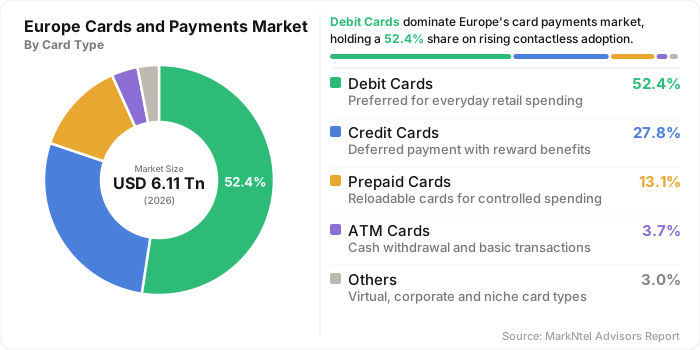
- Debit cards dominate the market with an estimated 52.4% share in 2026.
- By payment instrument, the cards segment leads with around a 43.8% share.
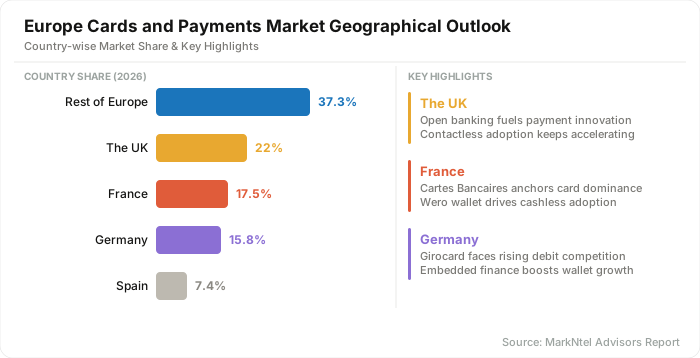
- The United Kingdom leads the industry with an estimated 22.0% share in 2026.
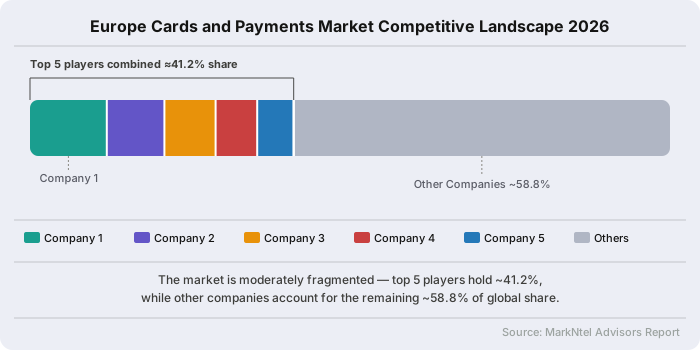
- The market is moderately consolidated, with the top 5 players accounting for approximately 41.2% share in 2026.
Europe Cards and Payments Market Size and Outlook
The Europe cards and payments market was valued at USD 5.98 trillion in 2025 and is projected to reach USD 6.11 trillion in 2026, further expanding to USD 7.92 trillion by 2032, registering a CAGR of 4.42% during the forecast period.
Growth is supported by increasing digital commerce, expanding cross-border transactions, and continued modernization of Europe's payment infrastructure. Regulatory initiatives, including the Instant Payments Regulation and PSD3, continue to accelerate digital payment infrastructure while fostering secure, interoperable, and efficient payment ecosystems.
According to the European Central Bank (ECB, 2025), consumers across the European area maintain an average of 2.5 payment cards per inhabitant, reflecting one of the world's most mature card ownership ecosystems. High card penetration, coupled with broad merchant acceptance and increasing integration of payment credentials into mobile wallets, continues to strengthen card payment solutions and supports sustained transaction growth across retail, transport, hospitality, and digital commerce.
The market is further reinforced by long-term investments in financial and digital infrastructure. The European Investment Bank (EIB) approved more than USD 95 billion in financing during 2024, supporting digital innovation, SME competitiveness, cybersecurity, and financial infrastructure projects across Europe. Simultaneously, the Committee on Payments and Market Infrastructures (CPMI) continues advancing interoperable fast payment systems, strengthening electronic payment systems and enabling more efficient domestic and cross-border payment flows.
Europe's payments ecosystem also benefits from continuous regulatory collaboration aimed at improving security and financial resilience. During 2024, the Financial Stability Board (FSB) progressed its cross-border payments roadmap to reduce settlement friction and improve interoperability, while the Financial Action Task Force further advanced global standards for secure digital identity and payment verification. These initiatives continue to stimulate payment technology innovation, supporting the region's transition toward a more resilient and digitally connected payments landscape.
Europe Cards and Payments Market Key Indicators
- According to the European Central Bank (ECB) approximately 879.3 million payment cards are in circulation across the euro area as of the first half of 2025. This extensive card penetration reflects the maturity of Europe's retail payments ecosystem and continues to support strong demand for card issuance, merchant acquiring, contactless acceptance infrastructure, and value-added payment services across consumer and commercial segments.
- Latest payment statistics published by the European Central Bank (ECB) show that around 29.6 billion contactless card payment transactions were executed during the first half of 2025. The continued expansion of contactless payments encourages further investment in NFC-enabled POS infrastructure and accelerates the transition toward seamless digital payment experiences across Europe.
- Recent payment system data from the European Central Bank (ECB) indicates that euro area retail payment systems process approximately 55.7 billion transactions with a combined value of nearly USD 30.8 trillion during the first half of 2025. The enormous scale of retail payment clearing reinforces the need for resilient payment infrastructure, real-time settlement capabilities, and cross-border interoperability across the European payments landscape.
- ECB payment statistics indicate that card payments account for 57% of all non-cash payment transactions in the euro area during the first half of 2025, maintaining their position as the dominant payment instrument ahead of credit transfers, direct debits, and electronic money. The sustained leadership of card-based transactions continues to drive investment in payment gateways, card issuance, tokenization technologies, merchant acquiring services, and omnichannel payment acceptance across Europe
Europe Cards and Payments Market Scope
| Category | Segments |
|---|---|
| By Type of Cards | Debit Cards, Fleet/Fuel Cards, ATM Cards, Prepaid Cards, Credit Cards |
| By Type of Payment Instrument | Cards, Mobile Wallets, Credit Transfers, Cash, Debit Cards, Checks |
| By Type of Payments | B2B, B2C, C2C, C2B (E-Commerce Payments, Payments at POS Terminals |
| By Transaction Type | Domestic, Foreign |
| By Application | Food & Groceries, Health & Pharmacies, Travel & Tourism, Hospitality, Others (Media & Entertainment, etc. |
| By Institution Type | Financial, Non-Financial |
Europe Cards and Payments Market Growth Drivers
Regulatory Reforms Accelerate the Evolution of Digital Payment Infrastructure
The European Union's regulatory agenda continues to reshape the Europe cards and payments industry by strengthening the foundation for open banking solutions and real-time payment infrastructure. In 2024, the European Parliament and the Council formally adopted the Instant Payments Regulation (EU) 2024/886, requiring euro area payment service providers to offer instant credit transfers at charges no higher than standard transfers while enhancing payment verification through the mandatory Verification of Payee (VoP) framework. These measures foster greater competition, improve payment efficiency, and accelerate innovation across Europe's digital payments ecosystem.
Simultaneously, the European Commission advances negotiations on the PSD3 and Payment Services Regulation (PSR) legislative package to reinforce consumer protection, expand open finance capabilities, and strengthen fraud prevention across electronic payments. Complementing these reforms, the European Banking Authority develops technical standards to support consistent implementation across member states, creating a more interoperable regulatory environment. The evolving framework encourages financial institutions, fintech firms, and merchants to invest in real-time payment infrastructure and next-generation payment services, supporting sustained expansion of the European payments industry.
Recent Trends
Digital Wallets and Tokenization Accelerate Payment Transformation
The growing use of digital wallets is becoming a defining trend in the Europe cards and payments industry, supported by rapid expansion in digital commerce and mobile-based payments. The European Central Bank reports that electronic money (e-money) payment transactions reached approximately 8.8 billion during the first half of 2025, representing a 20.7% year-on-year increase, making e-money the fastest-growing non-cash payment instrument in the euro area. This acceleration reflects increasing consumer preference for mobile wallets and app-based payment solutions, driving greater demand for digital payment infrastructure across Europe.
The transition is further reinforced by the widespread adoption of payment tokenization to secure digital transactions. The European Commission confirmed that the revised eIDAS Regulation (EU) 2024/1183 entered into force in 2024, requiring every EU Member State to make at least one European Digital Identity (EUDI) Wallet available by 2026. The integration of digital identity with tokenized payment credentials is expected to strengthen authentication, reduce payment fraud, and enhance interoperability across financial services. As banks, fintech providers, and merchants expand tokenized wallet capabilities, the region continues to advance toward a more secure and interoperable digital payment ecosystem.
Europe Cards and Payments Market Opportunities and Challenges
Interchange Complexity Creates Payment Orchestration Opportunities
The fragmented payment landscape continues to challenge the Europe cards and payments industry despite regulatory harmonization. The European Commission confirms that the Interchange Fee Regulation (IFR) caps interchange fees at 0.2% for consumer debit cards and 0.3% for consumer credit cards, while commercial cards remain largely exempt, resulting in higher merchant acceptance costs. Meanwhile, the European Central Bank highlights the continued coexistence of multiple domestic card schemes across Europe, increasing integration complexity, limiting interoperability, and raising processing costs for merchants engaged in cross-border payment solutions.
These market inefficiencies are creating strong opportunities for payment orchestration platforms that simplify payment acceptance across multiple markets. In October 2024, Worldline introduced One Commerce Hub, allowing merchants to unify acquiring, orchestration, fraud management, and local payment methods through a single integration. Complementing this trend, the European Investment Bank committed approximately USD 540 million under the European Tech Champions Initiative in 2024 to strengthen Europe's digital technology ecosystem, supporting continued innovation in merchant payment infrastructure and interoperable payment solutions.
Segmentations Insights
Debit Cards Maintain Leadership Through Strong Consumer Preference for Everyday Payments
The segment holds the largest share under card type, accounting for approximately 52.4% of the Europe cards and payments industry, as debit cards remain the preferred payment instrument for routine consumer spending. According to the European Central Bank's (ECB) 2024 Study on the Payment Attitudes of Consumers in the Euro Area (SPACE), 55% of euro area consumers prefer cards and other cashless payment methods when paying in shops, while 93% of consumers hold a payment account, providing a strong foundation for debit card usage across Europe. These factors continue to support the widespread adoption of debit card payments for supermarkets, fuel stations, public transport, and other everyday retail purchases.
The segment continues to benefit from Europe's mature banking ecosystem and high merchant acceptance. The ECB's 2024 SPACE survey further shows that at least 68% of consumers who prefer cashless payments choose debit or credit cards over other electronic payment methods in every euro area country, highlighting the enduring importance of payment cards despite the growth of digital wallets. Banks are further strengthening retail payment solutions through virtual debit cards, tokenization, and mobile wallet integration, enabling debit cards to remain the primary payment choice for daily transactions across the European market. Based on card type, the industry has been segmented into:
- Debit Cards
- Fleet/Fuel Cards
- ATM Cards
- Prepaid Cards
- Credit Cards
Cards Anchor Europe's Digital Payment Ecosystem
The cards segment continues to dominate the Europe cards and payments market, accounting for an estimated 43.8% share, driven by extensive merchant acceptance, high consumer trust, and widespread usage across retail and online commerce. According to the European Central Bank (ECB) SPACE 2024 survey, 56% of the total value of point-of-sale (POS) transactions in the euro area is paid using cards, making them the leading payment instrument for in-store purchases. Additionally, Eurostat (2024) reports that 77% of EU internet users aged 16–74 purchased goods or services online during 2024, highlighting the expanding role of cards in supporting Europe's growing e-commerce ecosystem and reinforcing demand for card payment solutions across digital channels.
The segment's leadership is further strengthened by continuous investments in payment security and digital infrastructure. Financial institutions and payment networks are expanding tokenized card credentials, virtual card issuance, and mobile wallet integration to enhance transaction security and customer convenience across both physical and online channels. Meanwhile, the European Banking Authority (EBA) continues to reinforce secure electronic payments through Strong Customer Authentication (SCA), supporting higher confidence in card-based transactions. These advancements continue to strengthen e-commerce payment solutions and electronic payment systems, ensuring cards remain the backbone of Europe's evolving payment ecosystem. By the payment instrument type the industry is segmented into:
- Cards
- Mobile Wallets
- Credit Transfers
- Cash
- Debit Cards
- Checks
Europe Cards and Payments Market Geographical Outlook
The United Kingdom holds the largest share of the Europe cards and payments industry, accounting for an estimated 22.0% of regional revenue, supported by its mature financial services sector, advanced payment infrastructure, and high consumer adoption of electronic payments. According to UK Finance's Payment Markets Report 2025, Contactless cards and devices made up around 62% of all card payments in 2024, totalling USD 18.9 billion in transactions, reflecting one of Europe's most developed digital payment ecosystems. The country's strong adoption of digital payment solutions across retail and online commerce continues to reinforce its leadership within the regional market.
The UK's dominance is further strengthened by its thriving e-commerce sector and supportive regulatory environment. Eurostat (2024) reports that the United Kingdom records one of the highest online shopping participation rates in Europe, with the vast majority of internet users purchasing goods and services online. In parallel, the Financial Conduct Authority (FCA) and the Payment Systems Regulator (PSR) continue advancing Open Banking and payment competition initiatives, encouraging innovation, improving consumer choice, and accelerating investment in payment processing technologies across the financial ecosystem.
The market also benefits from the UK's position as Europe's leading fintech hub. According to Innovate Finance's FinTech Investment Landscape 2024, the United Kingdom attracted approximately USD 3.6 billion in fintech investment during 2024, the highest level in Europe despite a challenging global funding environment. Leading financial institutions and fintech companies continue expanding AI-powered fraud prevention, embedded finance, and real-time payment capabilities, strengthening fintech payment services while reinforcing the UK's long-term leadership in the European cards and payments industry.
Europe Cards and Payments Market Competitive Analysis
The Europe cards and payments market remains moderately fragmented, with the top five companies accounting for approximately 41.2% of the market share in 2026. Leading players, including Visa, Mastercard, Worldline, Adyen, and Nexi, strengthen their positions through payment platform modernization, strategic partnerships, embedded payment capabilities, AI-driven fraud prevention, and expansion of merchant acquiring services.
Top Companies in the Europe Cards and Payments Industry:
- Visa Inc.
- Mastercard Incorporated
- Worldline SA
- Nexi S.p.A.
- Adyen N.V.
- PayPal Holdings, Inc.
- American Express Company
- HSBC Holdings plc
- Banco Santander, S.A.
- BNP Paribas S.A.
- Barclays PLC
- Deutsche Bank AG
- ING Groep N.V.
- CaixaBank, S.A.
- Société Générale S.A.
Europe Cards and Payments Industry News and Recent Developments
March 2025 Mastercard Expands Open Banking Capabilities Across Europe
Mastercard Incorporated expanded its European Open Banking ecosystem by strengthening account-to-account payment capabilities and enhancing merchant payment acceptance through new partnerships with financial institutions and fintech providers. The initiative enables faster bank-based payments, improves payment authentication, and supports the growing demand for real-time digital payment solutions across European retail and e-commerce markets.
Impact Analysis: The expansion strengthens Mastercard's position beyond traditional card payments by integrating Open Banking services into its payment ecosystem. It also supports merchants seeking lower-cost payment alternatives while improving transaction speed and customer experience. The development is expected to accelerate competition between card networks and account-to-account payment providers, fostering greater innovation across the European payments industry.
January 2025 Worldline Launches SoftPOS Solutions to Expand Tap-to-Pay Acceptance
Worldline SA expanded its SoftPOS (Tap-on-Mobile) payment solution across several European markets, enabling merchants to accept contactless card and mobile wallet payments directly through NFC-enabled Android smartphones without requiring dedicated payment terminals. The rollout primarily targets small businesses and micro-merchants seeking cost-effective digital payment acceptance solutions.
Impact Analysis: The initiative lowers merchant onboarding costs while accelerating digital payment acceptance among SMEs across Europe. Expanding software-based acceptance infrastructure is expected to increase electronic payment penetration, strengthen merchant acquiring services, and support wider adoption of contactless transactions, particularly among small retailers that previously faced hardware investment barriers.
Frequently Asked Questions
- Market Segmentation
- Introduction
- Product Definition
- Research Process
- Assumptions
- Executive Summary
- Europe Cards & Payments Market Customer Survey
- By Type of Transaction
- By Banking Experience
- By Frequency of Transactions from Card
- By Purpose of Transaction
- Key Benefits of Using Card to the Customer
- Europe Financial Cards & Payments Market Outlook
- Key Issuers of Cards
- Penetration of Cards
- Digital Development
- ATM Expansion
- POS Terminals
- Alternate Payments Solutions
- Europe Cards and Payments Market Regulations, Policies & Industry Standards
- Europe Cards and Payments Market Trends & Developments
- Europe Cards and Payments Market Dynamics
- Growth Drivers
- Challenges
- Europe Cards and Payments Market Hotspots & Opportunities
- Europe Cards and Payments Market Outlook, 2022-2032F
- Market Size & Outlook
- By Transactions Value (USD Million)
- By Total Number of Cards (Thousand Units)
- Number of Transactions (Units)
- Market Segmentation & Outlook
- By Type of Cards
- Debit Cards
- Fleet/Fuel Cards
- ATM Cards
- Prepaid Cards
- Credit Cards
- By Type of Payment Instrument
- Cards
- Mobile Wallets
- Credit Transfers
- Cash
- Debit Cards
- Checks
- By Type of Payments
- B2B
- B2C
- C2C
- C2B
- E-Commerce Payments
- Payments at POS Terminals
- By Transaction Type
- Domestic
- Foreign
- By Application
- Food & Groceries
- Health & Pharmacies
- Travel & Tourism
- Hospitality
- Others (Media & Entertainment, etc.)
- By Institution Type
- Financial
- Non-Financial
- By Region
- Germany
- The UK
- France
- Italy
- Spain
- The Netherlands
- Rest of Europe
- By Company
- Competition Characteristics
- Market Share & Analysis
- By Type of Cards
- Market Size & Outlook
- Germany Cards and Payments Market Outlook, 2022-2032F
- Market Size & Outlook
- By Transactions Value (USD Million)
- By Total Number of Cards (Thousand Units)
- Number of Transactions (Units)
- Market Segmentation & Outlook
- By Card Type- Market Size & Forecast 2022-2032, USD
- By Card Network- Market Size & Forecast 2022-2032, USD
- By End User- Market Size & Forecast 2022-2032, USD
- By Transaction Type- Market Size & Forecast 2022-2032, USD
- Market Size & Outlook
- The UK Cards and Payments Market Outlook, 2022-2032F
- Market Size & Outlook
- By Transactions Value (USD Million)
- By Total Number of Cards (Thousand Units)
- Number of Transactions (Units)
- Market Segmentation & Outlook
- By Card Type- Market Size & Forecast 2022-2032, USD
- By Card Network- Market Size & Forecast 2022-2032, USD
- By End User- Market Size & Forecast 2022-2032, USD
- By Transaction Type- Market Size & Forecast 2022-2032, USD
- Market Size & Outlook
- France Cards and Payments Market Outlook, 2022-2032F
- Market Size & Outlook
- By Transactions Value (USD Million)
- By Total Number of Cards (Thousand Units)
- Number of Transactions (Units)
- Market Segmentation & Outlook
- By Card Type- Market Size & Forecast 2022-2032, USD
- By Card Network- Market Size & Forecast 2022-2032, USD
- By End User- Market Size & Forecast 2022-2032, USD
- By Transaction Type- Market Size & Forecast 2022-2032, USD
- Market Size & Outlook
- Italy Cards and Payments Market Outlook, 2022-2032F
- Market Size & Outlook
- By Transactions Value (USD Million)
- By Total Number of Cards (Thousand Units)
- Number of Transactions (Units)
- Market Segmentation & Outlook
- By Card Type- Market Size & Forecast 2022-2032, USD
- By Card Network- Market Size & Forecast 2022-2032, USD
- By End User- Market Size & Forecast 2022-2032, USD
- By Transaction Type- Market Size & Forecast 2022-2032, USD
- Market Size & Outlook
- Spain Cards and Payments Market Outlook, 2022-2032F
- Market Size & Outlook
- By Transactions Value (USD Million)
- By Total Number of Cards (Thousand Units)
- Number of Transactions (Units)
- Market Segmentation & Outlook
- By Card Type- Market Size & Forecast 2022-2032, USD
- By Card Network- Market Size & Forecast 2022-2032, USD
- By End User- Market Size & Forecast 2022-2032, USD
- By Transaction Type- Market Size & Forecast 2022-2032, USD
- Market Size & Outlook
- The Netherlands Cards and Payments Market Outlook, 2022-2032F
- Market Size & Outlook
- By Transactions Value (USD Million)
- By Total Number of Cards (Thousand Units)
- Number of Transactions (Units)
- Market Segmentation & Outlook
- By Card Type- Market Size & Forecast 2022-2032, USD
- By Card Network- Market Size & Forecast 2022-2032, USD
- By End User- Market Size & Forecast 2022-2032, USD
- By Transaction Type- Market Size & Forecast 2022-2032, USD
- Market Size & Outlook
- Europe Cards and Payments Market Key Strategic Imperatives for Success & Growth
- Competitive Outlook
- Company Profiles
- Visa Inc.
- Business Description
- Product Portfolio
- Strategic Alliances or Partnerships
- Recent Developments
- Financial Details
- Others
- Mastercard Incorporated
- Business Description
- Product Portfolio
- Strategic Alliances or Partnerships
- Recent Developments
- Financial Details
- Others
- Worldline SA
- Business Description
- Product Portfolio
- Strategic Alliances or Partnerships
- Recent Developments
- Financial Details
- Others
- Nexi S.p.A.
- Business Description
- Product Portfolio
- Strategic Alliances or Partnerships
- Recent Developments
- Financial Details
- Others
- Adyen N.V.
- Business Description
- Product Portfolio
- Strategic Alliances or Partnerships
- Recent Developments
- Financial Details
- Others
- PayPal Holdings, Inc.
- Business Description
- Product Portfolio
- Strategic Alliances or Partnerships
- Recent Developments
- Financial Details
- Others
- American Express Company
- Business Description
- Product Portfolio
- Strategic Alliances or Partnerships
- Recent Developments
- Financial Details
- Others
- HSBC Holdings plc
- Business Description
- Product Portfolio
- Strategic Alliances or Partnerships
- Recent Developments
- Financial Details
- Others
- Banco Santander, S.A.
- Business Description
- Product Portfolio
- Strategic Alliances or Partnerships
- Recent Developments
- Financial Details
- Others
- BNP Paribas S.A.
- Business Description
- Product Portfolio
- Strategic Alliances or Partnerships
- Recent Developments
- Financial Details
- Others
- Barclays PLC
- Business Description
- Product Portfolio
- Strategic Alliances or Partnerships
- Recent Developments
- Financial Details
- Others
- Deutsche Bank AG
- Business Description
- Product Portfolio
- Strategic Alliances or Partnerships
- Recent Developments
- Financial Details
- Others
- ING Groep N.V.
- Business Description
- Product Portfolio
- Strategic Alliances or Partnerships
- Recent Developments
- Financial Details
- Others
- CaixaBank, S.A.
- Business Description
- Product Portfolio
- Strategic Alliances or Partnerships
- Recent Developments
- Financial Details
- Others
- Société Générale S.A.
- Business Description
- Product Portfolio
- Strategic Alliances or Partnerships
- Recent Developments
- Financial Details
- Others
- Others
- Visa Inc.
- Company Profiles
- Disclaimer
MarkNtel Advisors follows a robust and iterative research methodology designed to ensure maximum accuracy and minimize deviation in market estimates and forecasts. Our approach combines both bottom-up and top-down techniques to effectively segment and quantify various aspects of the market. A consistent feature across all our research reports is data triangulation, which examines the market from three distinct perspectives to validate findings. Key components of our research process include:
1. Scope & Research Design At the outset, MarkNtel Advisors define the research objectives and formulate pertinent questions. This phase involves determining the type of research—qualitative or quantitative—and designing a methodology that outlines data collection methods, target demographics, and analytical tools. They also establish timelines and budgets to ensure the research aligns with client goals.
2. Sample Selection and Data Collection In this stage, the firm identifies the target audience and determines the appropriate sample size to ensure representativeness. They employ various sampling methods, such as random or stratified sampling, based on the research objectives. Data collection is carried out using tools like surveys, interviews, and observations, ensuring the gathered data is reliable and relevant.
3. Data Analysis and Validation Once data is collected, MarkNtel Advisors undertake a rigorous analysis process. This includes cleaning the data to remove inconsistencies, employing statistical software for quantitative analysis, and thematic analysis for qualitative data. Validation steps are taken to ensure the accuracy and reliability of the findings, minimizing biases and errors.

4. Data Forecast and FinalizationThe final phase involves forecasting future market trends based on the analyzed data. MarkNtel Advisors utilize predictive modeling and time series analysis to anticipate market behaviors. The insights are then compiled into comprehensive reports, featuring visual aids like charts and graphs, and include strategic recommendations to inform client decision-making
We offer flexible licensing options to cater to varying organizational needs. Choose the pricing pack that best suits your requirements:
Buy Now Inquire Before Buying
 Request Customization
 Talk to our Consultant







