

Ethiopia Two Wheeler Tire Market Research Report Forecast: (2026-2032)
By Vehicle Type (Scooter & Moped, Motorcycle), By Propulsion (ICE, Electric), By Demand Type (OEM, Replacement), By Sales Channel (Direct Sales, Exclusive Outlets, Multi Brand Stor ... es, Online), By Tire Type (Radial, Bias), By Tire Size (Tire Size 1, Tire Size 2, Tire Size 3, Tire Size 4, Tire Size 5), By Price Category (Budget, Economy, Premium), and others Read more
- Tire
- Jun 2026
- Pages 140
- Report Format: PDF, Excel, PPT
Ethiopia Two Wheeler Tire Market
Projected 3.70% CAGR from 2026 to 2032
Study Period
2026-2032
Market Size (2026)
USD 693 Million
Market Size (2032)
USD 862 Million
Base Year
2025
Projected CAGR
3.70%
Leading Segments
By Vehicle Type: Motorcycle
Ethiopia Two-wheeler Tire Market Key Takeaways
- Ethiopia Two-wheeler Tire Market size was valued at USD 665 million in 2025 and is projected to grow from USD 693 million in 2026 to USD 862 million by 2032.
- The market is projected to register a CAGR of 3.70% during 2026-2032.
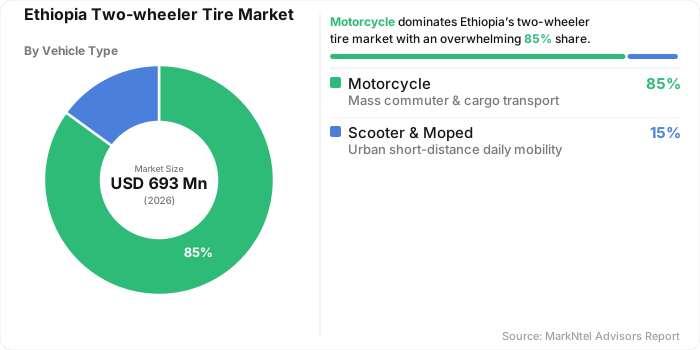
- By vehicle type, the motorcycle holds a significant share of about 85% in 2026.
- By propulsion, the ICE segment seized a significant share of about 95% in 2026.
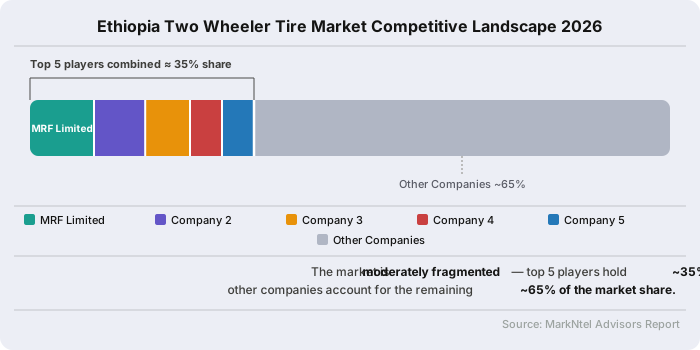
- The industry is moderately fragmented. However, the top five players collectively account for nearly 35% share.
Ethiopia Two-wheeler Tire Market Size and Outlook
The Ethiopia Two-wheeler Tire Market size was valued at USD 665 million in 2025 and is projected to grow from USD 693 million in 2026 to USD 862 million by 2032. Along with this, the market is estimated to grow at a CAGR of around 3.70% during the forecast period, i.e., 2026-32.
The industry is strongly influenced by limited rural road accessibility and dependence on motorcycles for essential mobility. According to World Bank estimates cited by Helvetas, around 67 million Ethiopians live more than one mile away from an all-weather road, making motorcycles a critical transport solution for reaching markets, schools, and healthcare facilities. This high reliance results in intensive vehicle usage on rough terrain, significantly increasing tire wear and strengthening recurring replacement demand across rural regions.
At the same time, Ethiopia transition toward electric mobility remains uneven, particularly outside urban centers. Weak electricity access, limited charging infrastructure, and affordability barriers continue to slow electric vehicle adoption in rural areas despite strong national electrification ambitions. These structural constraints are limiting the shift away from internal combustion vehicles, ensuring continued dependence on conventional motorcycles for mobility needs. This sustained reliance supports steady demand for both OEM and aftermarket two-wheeler tires.
Overall, rural accessibility gaps combined with slow EV penetration are maintaining strong dependence on motorcycles in Ethiopia. This ensures continuous tire replacement cycles and reinforces long-term growth stability for the two-wheeler tire market.
Ethiopia Two-wheeler Tire Market Key Indicators
- The rapid growth of last-mile logistics in Ethiopia is increasing motorcycle utilization and accelerating tire wear, particularly in urban centers such as Addis Ababa. Ethiopian startup Abetwedet, operating as the country’s first electric motorcycle delivery platform, has completed over 1,245 deliveries using a fully electric motorcycle fleet. The expansion of such fleet-based delivery models reflects rising demand for fast, efficient urban logistics services, which significantly increases vehicle operating intensity and contributes to higher replacement tire consumption in the two-wheeler market.
- Ethiopia's National E-Mobility Strategy targets 100% electrification of new two- and three-wheelers by 2030, positioning the country as a leading African e-mobility market. The expanding electric motorcycle fleet is expected to increase tire replacement demand, aftermarket service requirements, and opportunities for specialized EV-compatible two-wheeler tire products.
- Ethiopia urban population reached over 31.2 million in 2024, growing steadily as rural-to-urban migration increases and cities expand outward into peri-urban zones. Addis Ababa alone is projected to exceed 6.7 million residents in 2025, reflecting continuous concentration of economic activities and transport needs in urban centers.
- Ethiopia road infrastructure expansion is significantly improving two-wheeler accessibility and usage across urban and rural regions. The country all-weather road network reached 170,000 km in 2025, reflecting an increase of 44,000 km over the past six years. The government constructed 535 km of new roads, rehabilitated 339 km, and maintained over 11,831 km, strengthening national connectivity and enabling higher motorcycle penetration in previously underserved areas. This improved mobility network is expected to support sustained growth in both OEM and replacement tire demand.
Ethiopia Two-wheeler Tire Market Scope
| Category | Segments |
|---|---|
| By Vehicle Type | Scooter & Moped, Motorcycle |
| By Propulsion | ICE, Electric |
| By Demand Type | OEM, Replacement |
| By Sales Channel | Direct Sales, Exclusive Outlets, Multi Brand Stores, Online |
| By Tire Type | Radial, Bias |
| By Tire Size | Tire Size 1, Tire Size 2, Tire Size 3, Tire Size 4, Tire Size 5 |
| By Price Category | Budget, Economy, Premium |
Ethiopia Two-wheeler Tire Market Growth Drivers
Expanding Motorcycle and Scooter Markets
The expansion of motorcycle and scooter usage in Ethiopia’s urban centers is emerging as a key driver of the two-wheeler tire market. Rapid population concentration in cities such as Addis Ababa has significantly increased reliance on motorcycles for short-distance mobility, delivery services, and informal transport. Ethiopia motorcycle imports under HS 871120 were valued at approximately USD 8 million in 2024, indicating steady growth in the active two-wheeler fleet supporting urban transportation needs.
Urban mobility demand is further strengthened by government-backed infrastructure development, including road expansion, housing projects, and industrial corridor growth in Addis Ababa and surrounding regions. These developments are increasing motorcycle penetration as a cost-effective and flexible transport solution in congested urban environments. Rising usage intensity in delivery and passenger transport applications is directly increasing tire wear cycles and boosting replacement demand across the market.
Looking beyond 2025, Ethiopia continued urban development strategy, expansion of logistics networks, and mobility-focused infrastructure investments are expected to further increase motorcycle adoption in cities. This will create sustained demand for both OEM and replacement tires, particularly in high-density urban corridors.
Moreover, the expanding urban motorcycle and scooter market is structurally increasing vehicle usage intensity in Ethiopia. This is accelerating tire replacement cycles and supporting long-term growth in both OEM and aftermarket segments of the two-wheeler tire industry.
Ethiopia Two-wheeler Tire Market Trends
Strong Dominance of Replacement Motorcycle Tires
The Ethiopian two-wheeler tire market is strongly characterized by the dominance of replacement tire demand, driven by high motorcycle utilization, challenging road conditions, and increasing reliance on motorcycles for urban mobility and commercial transport. Motorcycles operating in cities such as Addis Ababa are extensively used for passenger services, courier activities, and last-mile deliveries, resulting in high daily mileage and accelerated tire wear. This operational intensity makes replacement tires a recurring necessity, positioning the aftermarket as the primary consumption channel in the market.
A strong example is the growing use of motorcycles in urban delivery operations, where logistics providers deploy two-wheelers for continuous food, parcel, and service deliveries across congested city routes. These vehicles operate for long hours under stop-and-go traffic conditions, significantly increasing tire degradation and shortening replacement cycles, thereby strengthening aftermarket tire demand.
As motorcycle penetration continues to rise in urban and semi-urban regions, tire replacement frequency is increasing proportionally. Limited road quality and intensive vehicle usage further amplify wear rates, ensuring sustained and recurring demand for replacement tires across Ethiopia’s two-wheeler tire market.
Furthermore, the dominance of replacement motorcycle tires is structurally strengthening Ethiopia aftermarket segment, making it the key revenue driver of the two-wheeler tire industry through continuous and recurring demand cycles.
Ethiopia Two-wheeler Tire Industry Opportunities and Challenges
Environmental Sustainability Concerns Accelerating Electric Two-Wheeler Adoption
Environmental concerns associated with rising gasoline-powered motorcycle usage are emerging as a challenge for the Ethiopia two-wheeler tire industry. Growing dependence on conventional two-wheelers contributes to urban air pollution, carbon emissions, and fuel consumption, particularly in rapidly expanding cities such as Addis Ababa. As motorcycle ownership increases, concerns regarding sustainable transportation and environmental impact are becoming more significant for policymakers. Ethiopia’s broader climate and energy transition goals are creating pressure to reduce reliance on fossil-fuel-based mobility solutions and encourage cleaner transportation alternatives.
However, this environmental challenge is simultaneously creating opportunities for electric two-wheelers and EV-compatible tire demand. A recent example is the collaboration between Musashi Seimitsu Industry Co., Ltd., Dodai Manufacturing PLC, and the Ethiopian Investment Holdings (EIH) announced in 2025 to promote electric two-wheelers across Ethiopia. The initiative focuses on expanding e-mobility infrastructure, supporting local EV adoption, and accelerating sustainable transportation development. Growing deployment of electric motorcycles is expected to generate future demand for specialized low rolling-resistance tires, lightweight tire technologies, and localized EV tire distribution networks, creating a new growth avenue for the country’s two-wheeler tire industry.
Segmentation Insights
Motorcycle is Lead the Industry with Potential Market Share
The motorcycle segment dominates Ethiopia’s two-wheeler tire market with an estimated 85% share, primarily driven by its widespread use in passenger transport, small business logistics, and rural mobility. Motorcycles are preferred over scooters and mopeds due to their higher durability, better load-carrying capacity, and suitability for uneven and unpaved road conditions. This strong utility profile makes motorcycles the backbone of informal transportation networks, especially in urban centers like Addis Ababa and semi-urban regions where public transport access remains limited.
The dominance is further reinforced by continuous motorcycle imports from major supplying countries such as China, Japan, and Kenya, which expand the active vehicle base in Ethiopia. As motorcycles operate under high daily usage conditions, they generate consistent demand for tires across their lifecycle. This structural reliance on motorcycles ensures sustained growth of both OEM and aftermarket tire consumption, making it the leading vehicle type segment in the Ethiopian two-wheeler tire market. Based on vehicle type, the scope has been segmented into
- Scooter & Moped
- Motorcycle
High Consumer Demand Positions ICE as the Market Leader
The ICE segment holds a dominant 95% share in Ethiopia’s two-wheeler tire market, primarily due to the limited penetration of electric two-wheelers and the strong dependence on fuel-powered motorcycles. ICE vehicles remain the most practical option for users because of their lower upfront cost, established fuel infrastructure, and suitability for long-distance and high-load operations in both urban and rural areas.
Despite growing interest in electric mobility, ICE motorcycles continue to dominate due to affordability and widespread service availability. The existing road infrastructure and repair ecosystem are also heavily aligned with ICE vehicles, ensuring consistent usage across commercial and personal transport applications. This entrenched ecosystem results in high tire consumption levels, as ICE motorcycles operate extensively under demanding conditions, reinforcing their dominant share in both OEM and replacement tire demand within Ethiopia. The key propulsion mapped in the study involve
- ICE
- Electric
Ethiopia Two-wheeler Tire Industry Competitive Analysis
The Ethiopia Two-Wheeler Tire Market is moderately fragmented, with a mix of global tire manufacturers and regional distributors competing across the OEM and replacement segments. The top five companies, including MRF, CEAT, Bridgestone Corporation, Michelin, and Apollo Tyres Ltd., collectively account for approximately 35% of the total market share, reflecting a competitive landscape driven by extensive distribution networks, strong replacement tire demand, affordable product offerings, and the dominance of durable bias tires suited to Ethiopia varied road conditions.
Key Companies in Two-wheeler Tire
- Bridgestone Corporation
- MRF
- Maxxis International
- CEAT
- Michelin
- Continental AG
- Pirelli Tyre S.p.A
- Goodyear Tire & Rubber Company
- Sumitomo Rubber Industries Ltd.
- Apollo Tyres Ltd.
- Others
Ethiopia Two-wheeler Tire Industry News and Recent Developments
May 2026: Dodai Secures USD 13 Million Series A to Expand Electric Motorcycle Battery-Swapping Network in Ethiopia
Ethiopian electric mobility startup Dodai has raised USD 13 million in Series A funding to scale its electric motorcycle ecosystem across Addis Ababa. The funding will support expansion of locally assembled electric bikes and battery-swapping infrastructure, enabling faster deployment for delivery and urban transport users. The round includes equity and debt financing backed by international investors, including British International Investment and Japanese partners.
Impact Analysis: The funding accelerates Ethiopia transition toward electric two-wheelers, strengthening urban mobility infrastructure and reducing dependency on fuel-based transport. It supports expansion of battery-swapping stations, improving operational efficiency for delivery riders and logistics operators. This development is expected to increase utilization of two-wheelers in commercial applications, indirectly boosting tire demand through higher fleet activity and mileage intensity. It also signals growing investor confidence in Ethiopia’s clean mobility ecosystem and long-term transport modernization.
Frequently Asked Questions
- Market Segmentation
- Introduction
- Product Definition
- Research Process
- Assumptions
- Executive Summary
- Ethiopia Two-wheeler Tire Pricing Analysis
- Ethiopia Two-wheeler Tire Market Trends & Developments
- Ethiopia Two-wheeler Tire Market Production (Thousand Units) Trend 2022-2032
- Ethiopia Two-wheeler Tire Market Production (Thousand Units) Trend by Type of tire
- Radial
- Bias
- Company Wise Production Plants and Statistics
- Installed Production Capacity
- Actual Production
- Planned Production Target
- Ethiopia Two-wheeler Tire Market Production (Thousand Units) Trend by Type of tire
- Ethiopia Two-wheeler Tire Market Dynamics
- Growth Drivers
- Challenges
- Ethiopia Two-wheeler Tire Import & Export Analysis
- Ethiopia Two-wheeler Tire Market Value Chain Analysis
- Ethiopia Two-wheeler Tire Market Regulations, Policies and Standards
- Ethiopia Two-wheeler Tire Hotspot and Opportunities
- Ethiopia Two-wheeler Tire Market Outlook, 2022-2032F
- Market Size & Analysis
- By Revenues (USD Million)
- By Unit Sold (Thousand)
- Market Size & Analysis
- By Vehicle Type- (Thousand Units)
- Scooter & Moped
- Motorcycle
- By Propulsion- (Thousand Units)
- ICE
- Electric
- By Demand Type- (Thousand Units)
- OEM
- Replacement
- By Sales Channel- (Thousand Units)
- Direct Sales
- Exclusive Outlets
- Multi Brand Stores
- Online
- By Tire Type- (Thousand Units)
- Radial
- Bias
- By Tire Size- (Thousand Units)
- Tire Size 1
- Tire Size 2
- Tire Size 3
- Tire Size 4
- Tire Size 5
- By Price Category- (Thousand Units)
- Budget
- Economy
- Premium
- By Competition
- Competition Characteristics
- Market Share Analysis
- By Vehicle Type- (Thousand Units)
- Market Size & Analysis
- Ethiopia Scooter & Moped Tire Market Outlook, 2022-2032F
- Market Size & Analysis
- By Revenues (USD Million)
- By Unit Sold (Thousand)
- Market Size & Analysis
- By Propulsion- (Thousand Units)
- By Demand Type- (Thousand Units)
- By Sales Channel- (Thousand Units)
- By Tire Type- (Thousand Units)
- By Tire Size- (Thousand Units)
- By Price Category- (Thousand Units)
- Market Size & Analysis
- Ethiopia Motorcycle Tire Market Outlook, 2022-2032F
- Market Size & Analysis
- By Revenues (USD Million)
- By Unit Sold (Thousand)
- Market Size & Analysis
- By Propulsion- (Thousand Units)
- By Demand Type- (Thousand Units)
- By Sales Channel- (Thousand Units)
- By Tire Type- (Thousand Units)
- By Tire Size- (Thousand Units)
- By Price Category- (Thousand Units)
- Market Size & Analysis
- Ethiopia Two-wheeler Tire Market Key Strategic Imperatives for Growth & Success
- Competitive Outlook
- Company Profiles
- Bridgestone Corporation
- Business Description
- Product Portfolio
- Strategic Alliances or Partnerships
- Recent Developments
- Financial Details
- Others
- MRF
- Business Description
- Product Portfolio
- Strategic Alliances or Partnerships
- Recent Developments
- Financial Details
- Others
- Maxxis International
- Business Description
- Product Portfolio
- Strategic Alliances or Partnerships
- Recent Developments
- Financial Details
- Others
- CEAT
- Business Description
- Product Portfolio
- Strategic Alliances or Partnerships
- Recent Developments
- Financial Details
- Others
- Michelin
- Business Description
- Product Portfolio
- Strategic Alliances or Partnerships
- Recent Developments
- Financial Details
- Others
- Continental AG
- Business Description
- Product Portfolio
- Strategic Alliances or Partnerships
- Recent Developments
- Financial Details
- Others
- Pirelli Tyre S.p.A
- Business Description
- Product Portfolio
- Strategic Alliances or Partnerships
- Recent Developments
- Financial Details
- Others
- Goodyear Tire & Rubber Company
- Business Description
- Product Portfolio
- Strategic Alliances or Partnerships
- Recent Developments
- Financial Details
- Others.
- Sumitomo Rubber Industries Ltd.
- Business Description
- Product Portfolio
- Strategic Alliances or Partnerships
- Recent Developments
- Financial Details
- Others
- Apollo
- Business Description
- Product Portfolio
- Strategic Alliances or Partnerships
- Recent Developments
- Financial Details
- Others
- Others
- Bridgestone Corporation
- Company Profiles
- Disclaimer
MarkNtel Advisors follows a robust and iterative research methodology designed to ensure maximum accuracy and minimize deviation in market estimates and forecasts. Our approach combines both bottom-up and top-down techniques to effectively segment and quantify various aspects of the market. A consistent feature across all our research reports is data triangulation, which examines the market from three distinct perspectives to validate findings. Key components of our research process include:
1. Scope & Research Design At the outset, MarkNtel Advisors define the research objectives and formulate pertinent questions. This phase involves determining the type of research—qualitative or quantitative—and designing a methodology that outlines data collection methods, target demographics, and analytical tools. They also establish timelines and budgets to ensure the research aligns with client goals.
2. Sample Selection and Data Collection In this stage, the firm identifies the target audience and determines the appropriate sample size to ensure representativeness. They employ various sampling methods, such as random or stratified sampling, based on the research objectives. Data collection is carried out using tools like surveys, interviews, and observations, ensuring the gathered data is reliable and relevant.
3. Data Analysis and Validation Once data is collected, MarkNtel Advisors undertake a rigorous analysis process. This includes cleaning the data to remove inconsistencies, employing statistical software for quantitative analysis, and thematic analysis for qualitative data. Validation steps are taken to ensure the accuracy and reliability of the findings, minimizing biases and errors.

4. Data Forecast and FinalizationThe final phase involves forecasting future market trends based on the analyzed data. MarkNtel Advisors utilize predictive modeling and time series analysis to anticipate market behaviors. The insights are then compiled into comprehensive reports, featuring visual aids like charts and graphs, and include strategic recommendations to inform client decision-making
We offer flexible licensing options to cater to varying organizational needs. Choose the pricing pack that best suits your requirements:
Buy Now Inquire Before Buying
 Request Customization
 Talk to our Consultant







