

Egypt Passenger Car Tire Market Research Report: Forecast (2026-2032)
By Vehicle Type (Sedan, SUV, Hatchback), By Demand Type (OEM, Aftermarket/Replacement), By Sales Channel (Direct Sales, Multi Brand Stores & Exclusive Outlets, Online), By Tire Typ ... e (Radial, Bias), By Tire Size (Tire Size 1, Tire Size 2, Tire Size 3, Tire Size 4, Tire Size 5), By Price Category (Budget, Economy, Premium), By Season (Summer, Winter, All-Season), and others Read more
- Tire
- Jun 2026
- Pages 132
- Report Format: PDF, Excel, PPT
Egypt Passenger Car Tire Market
Projected 5.67% CAGR from 2026 to 2032
Study Period
2026-2032
Market Size (2026)
USD 0.783 Billion
Market Size (2032)
USD 1.102 Billion
Base Year
2025
Projected CAGR
5.67%
Leading Segments
By Vehicle Type: SUV
Egypt Passenger Car Tire Market Key Takeaways
- The Egypt passenger car tire market is valued at USD 0.750 billion in 2025, increases to USD 0.783 billion in 2026, and is projected to reach USD 1.102 billion by 2032.
- The market is forecast to grow at 5.67% CAGR during 2026–2032, reflecting steady replacement-led demand and vehicle parc expansion.
- Replacement tires dominate with a 70% share, making the aftermarket the market’s core volume engine.
- SUVs lead vehicle demand with a 52% market share, supported by stronger adoption across urban and intercity mobility.
- The Egypt passenger car tire market is moderately consolidated with the top five companies account for around 50% of the total market, while the rest is fragmented across mid-tier and budget import brands.
Egypt Passenger Car Tire Market Size and Outlook
The Egypt passenger car tire market is valued at USD 0.750 billion in 2025, increases to USD 0.783 billion in 2026, and is projected to reach USD 1.102 billion by 2032. The market is forecast to grow at 5.67% CAGR during 2026–2032, reflecting steady replacement-led demand and vehicle parc expansion.
The industry is supported by a gradually recovering automotive production base alongside sustained vehicle fleet usage. OICA indicate domestic production rising from 55,300 units in 2024 to 89,570 units in 2025, reflecting improving industrial activity, though volumes remain limited. Meanwhile, Egypt’s large and continuously operating passenger vehicle fleet, concentrated in urban centres such as Cairo and Alexandria, drives steady mobility requirements. Together, modest production growth and extensive fleet utilisation create stable structural demand conditions in the passenger car tire market.
Government-backed transport infrastructure expansion is further strengthening long-term passenger car tire consumption across Egypt. CAPMAS reported continued expansion and monitoring activities across national roads and bridge infrastructure during 2024 and 2025, supporting higher passenger vehicle movement across urban and regional transport corridors. Improved road connectivity and increasing intercity mobility are contributing to higher tire wear rates, particularly under Egypt’s high-temperature operating conditions. Rising road utilization is therefore strengthening replacement demand across both economy and premium radial passenger tire categories.
The market is also witnessing stronger adoption of radial passenger car tires due to their longer tread life, better fuel efficiency, and improved driving stability. Consumers increasingly prefer durable tire solutions with lower lifecycle operating costs as fuel prices and maintenance expenses continue rising. In addition, organized tire retail networks and expanding distribution partnerships are improving product availability across urban and regional markets. Supported by growing vehicle parc, infrastructure modernization, and replacement-led consumption patterns, the egypt passenger car tire industry is expected to maintain steady long-term growth through 2032.
Egypt Passenger Car Tire Market Key Indicators
- Egypt imported USD 1.05 billion of rubber and articles in 2024, reflecting the strong scale of upstream material flows that feed directly into passenger car tire production. These rubber inputs are essential for manufacturing key tire components such as treads, sidewalls, and compounds, supporting both local assembly and the wider tire distribution ecosystem in Egypt.
- According to CAPMAS, Egypt’s licensed vehicle fleet exceeded 10.4 million units in 2024, including nearly 5.7 million passenger cars, accounting for more than 55% of total registered vehicles, reinforcing strong replacement demand and long-term consumption growth across passenger car tire categories in the country.
- Egypt’s EV ecosystem is expanding under the National Automotive Strategy (2024–2030), which targets 400,000–500,000 vehicles annually and positions the country as a regional automotive hub, driving future demand for EV-compatible radial passenger car tires with higher durability and lower rolling resistance.
- Egypt’s transport infrastructure expansion continues supporting passenger vehicle movement, with CAPMAS reporting that the country’s total road network reached 174.8 thousand kilometers in 2024, including 144.3 thousand kilometers of paved roads, reinforcing long-term passenger car utilization and replacement tire demand across urban and intercity mobility corridors.
Egypt Passenger Car Tire Market Scope
| Category | Segments |
|---|---|
| By Vehicle Type | Sedan, SUV, Hatchback |
| By Demand Type | OEM, Aftermarket/Replacement |
| By Sales Channel | Direct Sales, Multi Brand Stores & Exclusive Outlets, Online |
| By Tire Type | Radial, Bias |
| By Tire Size | Tire Size 1, Tire Size 2, Tire Size 3, Tire Size 4, Tire Size 5 |
| By Price Category | Budget, Economy, Premium |
| By Season | Summer, Winter, All-Season |
Egypt Passenger Car Tire Market Growth Driver
Rising Passenger Vehicle Ownership
Rising passenger vehicle ownership is strengthening long-term demand for passenger car tires across Egypt’s urban mobility ecosystem. According to the Automotive Marketing Information Council (AMIC), passenger car sales in Egypt increased by nearly 64% year-on-year in 2025, reaching 133,973 units compared with 81,475 units in 2024. Strong recovery in passenger vehicle sales is expanding the country’s installed vehicle parc, particularly across Cairo, Alexandria, and Giza, where private mobility demand continues increasing alongside urban population growth.
The growing passenger vehicle fleet is directly supporting replacement tire consumption across sedan, hatchback, and SUV categories due to rising daily utilization and longer operational vehicle cycles. AMIC further reported that Egypt’s total automotive sales increased by nearly 70% in 2025, reflecting improving market activity and stronger private transportation demand. Higher road usage and increasing commuting activity are accelerating tire wear rates under Egypt’s high-temperature operating conditions, reinforcing sustained demand for radial passenger car tires across both budget and premium replacement segments.
Recent Trends
Growing Adoption of Electric and Hybrid Passenger Car
Egypt is witnessing a gradual rise in electric and hybrid passenger vehicle adoption as the government strengthens its long-term sustainable mobility strategy and transport decarbonisation initiatives. According to the International Energy Agency (IEA), Egypt’s transport-related carbon emissions continue increasing alongside rising urban mobility and passenger vehicle usage, encouraging a stronger policy focus on cleaner transportation alternatives. To support this transition, the government continues implementing the National Climate Change Strategy 2050, which promotes sustainable mobility solutions, cleaner transportation infrastructure, and reduced dependence on conventional fuel-based passenger vehicles.
The government is also encouraging domestic electric vehicle manufacturing and automotive investment partnerships to strengthen local vehicle production capabilities. In May 2024, Egypt-based GV Investments partnered with China’s FAW Group to locally manufacture affordable electric vehicles for the domestic market, supporting Egypt’s long-term electric mobility ecosystem and automotive supply chain development. In parallel, Egypt’s Automotive Industry Development Program (AIDP) continues encouraging foreign automotive manufacturers through localization incentives and industrial support policies, which are expected to create future growth opportunities for premium passenger car tire manufacturers across both OEM and replacement channels.
Egypt Passenger Car Tire Market Opportunities and Challenges
Import Dependency and Currency Fluctuations Creating Localization Opportunities
Egypt’s passenger car tire market remains highly dependent on imported tire products, exposing distributors and consumers to foreign exchange fluctuations and supply chain disruptions. According to WITS trade data, Egypt imported new pneumatic rubber tires worth more than USD 331 million in 2024, with China supplying nearly USD 140.6 million. Geopolitical disruptions, including the Russia–Ukraine conflict, have further increased freight and procurement costs. Consequently, pricing pressure remains high across budget and economy tire segments, where consumers are particularly price sensitive.
At the same time, rising dependence on imported tires is accelerating opportunities for domestic manufacturing expansion and regional supply chain localization across Egypt’s automotive ecosystem. Egypt Government is actively supporting automotive and tire industry localization through investment incentives, industrial development programs, and supply chain infrastructure expansion. The government has allocated EGP 1 billion under its Automotive Industry Localization Strategy and aims to increase local manufacturing content to 60–80% by the end of the decade, creating strong opportunities for domestic tire production, warehousing, and organized distribution network expansion across the country
Egypt Passenger Car Tire Market Segmentation
SUV Segment Holds the Largest Market Share
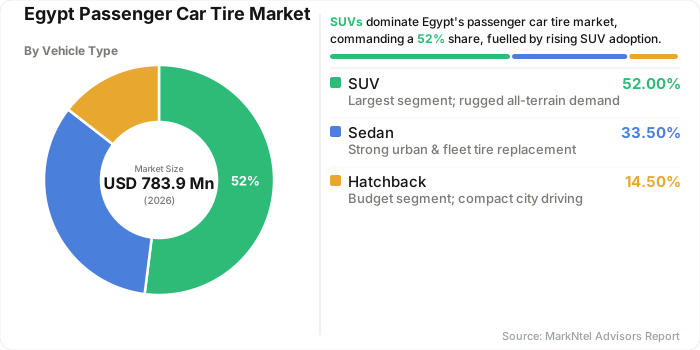
SUV tires hold the leading share in the Egypt passenger car tire market, accounting for nearly 52% of total demand. Primarily driven by the growing consumer preference for larger passenger vehicles offering higher seating capacity, spacious interiors, and improved comfort for family travel. Consumers in Egypt increasingly prefer SUVs due to their higher ground clearance and stronger driving stability, which make them more suitable for uneven road surfaces, potholes, cracks, and rough driving conditions commonly experienced across the country.
In addition, strong family-oriented purchasing behaviour in Egypt is encouraging demand for SUVs that can accommodate larger families with seating capacities of approximately seven to eight passengers. The rising adoption of SUVs is consequently increasing demand for tires specifically designed for SUV applications, supporting segment growth across the market.
The segment is further supported by the increasing launch of new and hybrid SUV models equipped with advanced safety and performance technologies such as anti-lock braking systems (ABS), lane departure warning systems, and enhanced driving assistance features. These technological advancements are improving consumer confidence and vehicle preference toward SUVs, particularly among urban and long-distance travelers.
As a result, growing SUV penetration is expected to continue driving demand for durable, high-load-bearing radial tires designed to support heavier passenger vehicles under Egypt’s high-temperature and varied road driving conditions. Based on vehicle type, the market has been segmented into
- SUV
- Sedan
- Hatchback
Aftermarket Leads the Demand Type Market Share
The aftermarket segment dominates the Egypt passenger car tire market, accounting for nearly 70% of total market demand. The segment’s leadership is primarily driven by Egypt’s replacement-focused vehicle ecosystem, where tire consumption depends more on existing vehicle usage than new vehicle production. According to the World Bank, Egypt’s urban population represented nearly 43% of the total population in 2024, increasing daily commuting activity and passenger vehicle utilization across major cities such as Cairo and Alexandria. Frequent urban driving and intercity travel continue accelerating tire wear and replacement demand across sedan, hatchback, and SUV categories.
Replacement demand remains structurally strong because passenger vehicles operating under standard road conditions typically require tire replacement after covering nearly 40,000 to 50,000 kilometers to maintain driving efficiency and passenger safety. The segment is further supported by government-led vehicle safety regulations and inspection requirements that encourage timely tire replacement across passenger vehicles.
Consumers also prioritize affordable replacement options, immediate product availability, and fitment support through multi-brand retailers and local service centers operating across Egypt’s organized aftermarket ecosystem. These factors collectively continue strengthening the long-term growth potential of the aftermarket segment across Egypt’s passenger car tire industry. Based on demand type, the market has been segmented into
- Aftermarket
- OEM
Egypt Passenger Car Tire Market Competitive Analysis
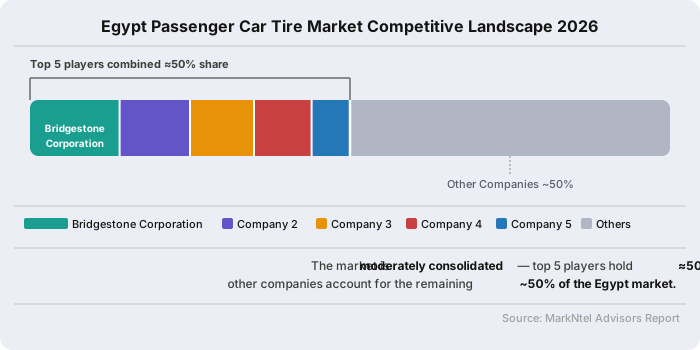
The Egypt passenger car tire market is moderately consolidated, with the presence of global tire manufacturers, regional distributors, and import-driven aftermarket suppliers operating across budget, economy, and premium tire categories. The top five companies, including Bridgestone Corporation, Michelin, Continental AG, Pirelli & C. S.p.A., and Goodyear Tire & Rubber Company, collectively account for nearly 50% of the market share.
Major Egypt passenger car Tire Companies in Egypt
- Bridgestone Corporation
- Michelin
- Continental AG
- Pirelli Tyre S.p.A
- Trenco Transport and Engineering Co.
- Goodyear Tire and Rubber Company
- Falken Tyres
- Lassa Tyres
- Maxxis Tire
- Yokohama Rubber Company Limited
- Others
Egypt Passenger Car Tire Industry News and Recent Developments
September 2025: Sailun Group Initiated Construction of USD 1 Billion Tire Manufacturing Facility in Egypt
Sailun Group began construction of its large-scale tire manufacturing facility within Egypt’s Suez Canal Economic Zone (SCZone). The project is designed to strengthen domestic production capacity for passenger and commercial vehicle radial tires while supporting Egypt’s automotive localization strategy and regional export capabilities across the Middle East and Africa.
Impact Analysis: The investment is expected to reduce Egypt’s dependence on imported passenger car tires and improve long-term supply chain stability within the replacement-driven aftermarket ecosystem. Localized tire manufacturing is likely to improve product availability, reduce logistics costs, and strengthen price competitiveness across budget and premium tire categories. The project also supports industrial localization goals, encourages automotive supplier expansion, and enhances Egypt’s position as a regional manufacturing and distribution hub for passenger vehicle tire products.
May 2024: GV Investments Partnered with FAW Group for Local EV Manufacturing in Egypt
Egypt-based GV Investments partnered with China’s FAW Group to manufacture affordable electric vehicles for the domestic market under Egypt’s automotive localization and sustainable mobility initiatives. The collaboration aims to strengthen Egypt’s electric mobility ecosystem and support local automotive production capabilities through industrial investment and technology partnerships.
Impact Analysis: The partnership is expected to accelerate long-term demand for advanced radial passenger car tires designed for electric vehicle applications, including lower rolling resistance and higher durability performance. The project also supports the development of Egypt’s localized automotive supply chain and creates future opportunities for premium tire manufacturers targeting EV-compatible passenger vehicle segments. Expanding EV production capabilities may further encourage investments in smart tire technologies and organized aftermarket service infrastructure across the country.
Frequently Asked Questions
- Market Segmentation
- Introduction
- Product Definition
- Research Process
- Assumptions
- Executive Summary
- Egypt Passenger Car Tire Market Regulations, Policies and Standards
- Egypt Passenger Car Tire Market Trends & Developments
- Egypt Passenger Car Tire Market Dynamics
- Growth Factors
- Challenges
- Egypt Passenger Car Tire Hotspot and Opportunities
- Egypt Passenger Car Tire Market Outlook, 2022-2032F
- Market Size & Outlook
- By Revenues (USD Million)
- Unit Sold (Thousand)
- Market Share & Outlook
- By Vehicle Type
- Sedan- Market Size & Forecast 2022-2032, Units Sold (Thousand Units)
- SUV- Market Size & Forecast 2022-2032, Units Sold (Thousand Units)
- Hatchback-Market Size & Forecast 2022-2032, Units Sold (Thousand Units)
- By Demand Type
- OEM - Market Size & Forecast 2022-2032, Units Sold (Thousand Units)
- Aftermarket/Replacement - Market Size & Forecast 2022-2032, Units Sold (Thousand Units)
- By Sales Channel
- Direct Sales- Market Size & Forecast 2022-2032, Units Sold (Thousand Units)
- Multi Brand Stores & Exclusive Outlets- Market Size & Forecast 2022-2032, Units Sold (Thousand Units)
- Online- Market Size & Forecast 2022-2032, Units Sold (Thousand Units)
- By Tire Type
- Radial- Market Size & Forecast 2022-2032, Units Sold (Thousand Units)
- Bias- Market Size & Forecast 2022-2032, Units Sold (Thousand Units)
- By Tire Size
- Tire Size 1- Market Size & Forecast 2022-2032, Units Sold (Thousand Units)
- Tire Size 2- Market Size & Forecast 2022-2032, Units Sold (Thousand Units)
- Tire Size 3-Market Size & Forecast 2022-2032, Units Sold (Thousand Units)
- Tire Size 4-Market Size & Forecast 2022-2032, Units Sold (Thousand Units)
- Tire Size 5-Market Size & Forecast 2022-2032, Units Sold (Thousand Units)
- By Price Category
- Budget- Market Size & Forecast 2022-2032, Units Sold (Thousand Units)
- Economy- Market Size & Forecast 2022-2032, Units Sold (Thousand Units)
- Premium- Market Size & Forecast 2022-2032, Units Sold (Thousand Units)
- By Season
- Summer- Market Size & Forecast 2022-2032, Units Sold (Thousand Units)
- Winter- Market Size & Forecast 2022-2032, Units Sold (Thousand Units)
- All-Season- Market Size & Forecast 2022-2032, Units Sold (Thousand Units)
- By Region
- East
- West
- By Competition
- Competition Characteristics
- Market Share Analysis
- By Vehicle Type
- Market Size & Outlook
- Egypt Sedan Tire Market Outlook, 2022-2032F
- Market Size & Outlook
- By Revenues (USD Million)
- Unit Sold (Thousand)
- Market Share & Outlook
- By Demand Type - Market Size & Forecast 2022-2032, Units Sold (Thousand Units)
- By Sales Channel- Market Size & Forecast 2022-2032, Units Sold (Thousand Units)
- By Tire Type- Market Size & Forecast 2022-2032, Units Sold (Thousand Units)
- By Tire Size- Market Size & Forecast 2022-2032, Units Sold (Thousand Units)
- By Price Category- Market Size & Forecast 2022-2032, Units Sold (Thousand Units)
- By Season- Market Size & Forecast 2022-2032, Units Sold (Thousand Units)
- By Region - Market Size & Forecast 2022-2032, Units Sold (Thousand Units)
- Market Size & Outlook
- Egypt SUV Tire Market Outlook, 2022-2032F
- Market Size & Outlook
- By Revenues (USD Million)
- Unit Sold (Thousand)
- Market Share & Outlook
- By Demand Type - Market Size & Forecast 2022-2032, Units Sold (Thousand Units)
- By Sales Channel- Market Size & Forecast 2022-2032, Units Sold (Thousand Units)
- By Tire Type- Market Size & Forecast 2022-2032, Units Sold (Thousand Units)
- By Tire Size- Market Size & Forecast 2022-2032, Units Sold (Thousand Units)
- By Price Category- Market Size & Forecast 2022-2032, Units Sold (Thousand Units)
- By Season- Market Size & Forecast 2022-2032, Units Sold (Thousand Units)
- By Region - Market Size & Forecast 2022-2032, Units Sold (Thousand Units)
- Market Size & Outlook
- Egypt Hatchback Tire Market Outlook, 2022-2032F
- Market Size & Outlook
- By Revenues (USD Million)
- Unit Sold (Thousand)
- Market Share & Outlook
- By Demand Type - Market Size & Forecast 2022-2032, Units Sold (Thousand Units)
- By Sales Channel- Market Size & Forecast 2022-2032, Units Sold (Thousand Units)
- By Tire Type- Market Size & Forecast 2022-2032, Units Sold (Thousand Units)
- By Tire Size- Market Size & Forecast 2022-2032, Units Sold (Thousand Units)
- By Price Category- Market Size & Forecast 2022-2032, Units Sold (Thousand Units)
- By Season- Market Size & Forecast 2022-2032, Units Sold (Thousand Units)
- By Region - Market Size & Forecast 2022-2032, Units Sold (Thousand Units)
- Market Size & Outlook
- Competitive Outlook
- Company Profiles
- Bridgestone Corporation
- Business Description
- Product Portfolio
- Strategic Alliances or Partnerships
- Recent Developments
- Financial Details
- Others
- Michelin
- Business Description
- Product Portfolio
- Strategic Alliances or Partnerships
- Recent Developments
- Financial Details
- Others
- Continental AG
- Business Description
- Product Portfolio
- Strategic Alliances or Partnerships
- Recent Developments
- Financial Details
- Others
- Pirelli Tyre S.p.A
- Business Description
- Product Portfolio
- Strategic Alliances or Partnerships
- Recent Developments
- Financial Details
- Others
- Trenco Transport and Engineering Co.
- Business Description
- Product Portfolio
- Strategic Alliances or Partnerships
- Recent Developments
- Financial Details
- Others.
- Goodyear Tire and Rubber Company
- Business Description
- Product Portfolio
- Strategic Alliances or Partnerships
- Recent Developments
- Financial Details
- Others
- Falken Tyres
- Business Description
- Product Portfolio
- Strategic Alliances or Partnerships
- Recent Developments
- Financial Details
- Others
- Lassa Tyres
- Business Description
- Product Portfolio
- Strategic Alliances or Partnerships
- Recent Developments
- Financial Details
- Others
- Maxxis Tire
- Business Description
- Product Portfolio
- Strategic Alliances or Partnerships
- Recent Developments
- Financial Details
- Others
- Yokohama Rubber Company Limited
- Business Description
- Product Portfolio
- Strategic Alliances or Partnerships
- Recent Developments
- Financial Details
- Others
- Others
- Bridgestone Corporation
- Company Profiles
- Disclaimer
MarkNtel Advisors follows a robust and iterative research methodology designed to ensure maximum accuracy and minimize deviation in market estimates and forecasts. Our approach combines both bottom-up and top-down techniques to effectively segment and quantify various aspects of the market. A consistent feature across all our research reports is data triangulation, which examines the market from three distinct perspectives to validate findings. Key components of our research process include:
1. Scope & Research Design At the outset, MarkNtel Advisors define the research objectives and formulate pertinent questions. This phase involves determining the type of research—qualitative or quantitative—and designing a methodology that outlines data collection methods, target demographics, and analytical tools. They also establish timelines and budgets to ensure the research aligns with client goals.
2. Sample Selection and Data Collection In this stage, the firm identifies the target audience and determines the appropriate sample size to ensure representativeness. They employ various sampling methods, such as random or stratified sampling, based on the research objectives. Data collection is carried out using tools like surveys, interviews, and observations, ensuring the gathered data is reliable and relevant.
3. Data Analysis and Validation Once data is collected, MarkNtel Advisors undertake a rigorous analysis process. This includes cleaning the data to remove inconsistencies, employing statistical software for quantitative analysis, and thematic analysis for qualitative data. Validation steps are taken to ensure the accuracy and reliability of the findings, minimizing biases and errors.

4. Data Forecast and FinalizationThe final phase involves forecasting future market trends based on the analyzed data. MarkNtel Advisors utilize predictive modeling and time series analysis to anticipate market behaviors. The insights are then compiled into comprehensive reports, featuring visual aids like charts and graphs, and include strategic recommendations to inform client decision-making
We offer flexible licensing options to cater to varying organizational needs. Choose the pricing pack that best suits your requirements:
Buy Now Inquire Before Buying
 Request Customization
 Talk to our Consultant







