

Counter Unmanned Aerial System (UAS) Market Research Report Forecast (2026-2032)
By Product Type (Detection Systems, Mitigation & Neutralization Systems, Command & Control (C2) Systems), By Component (Hardware, Software, Services), By Range (Short Range, Medium ... Range, Long Range), By Deployment Type (Ground-Based Fixed, Mobile / Vehicle-Mounted, Handheld / Portable, Naval / Shipboard, Airborne), By End User (Military & Defense, Airports & Aviation Authorities, Government & Law Enforcement, Critical Infrastructure, Maritime & Port Authorities, Others), and others Read more
- Aerospace & Defense
- Aug 2026
- Pages 340
- Report Format: PDF, Excel, PPT
Counter Unmanned Aerial System (UAS) Market
Projected 21.9% CAGR from 2026 to 2032
Study Period
2026-2032
Market Size (2026)
USD 8.5 Billion
Market Size (2032)
USD 27.98 Billion
Largest Region
North America
Projected CAGR
21.9%
Leading Segments
By End User: Military & Defense
Counter Unmanned Aerial System Market Key Takeaways
- The global counter unmanned aerial system market was valued at USD 5.12 billion in 2025 and is projected to reach USD 27.98 billion by 2032, growing at a 21.9% CAGR during 2026-2032.
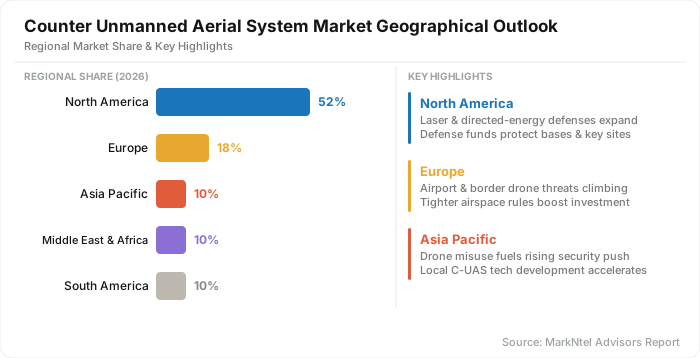
- North America is projected to dominate the industry, accounting for approximately 52% of the total market share in 2026.
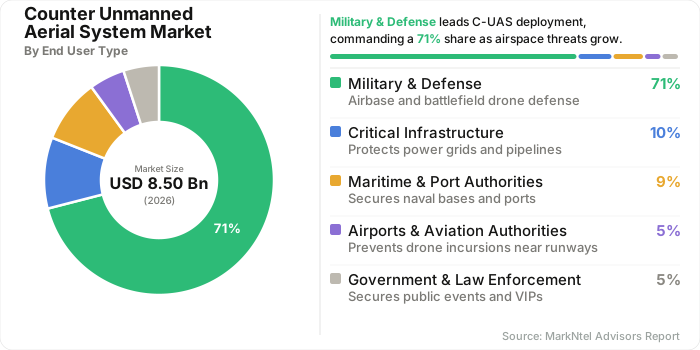
- By end user, the military & defense segment is expected to capture approximately 71% of the industry in 2026.
- By component, the hardware segment is anticipated to account for nearly 68% of the market in 2026.
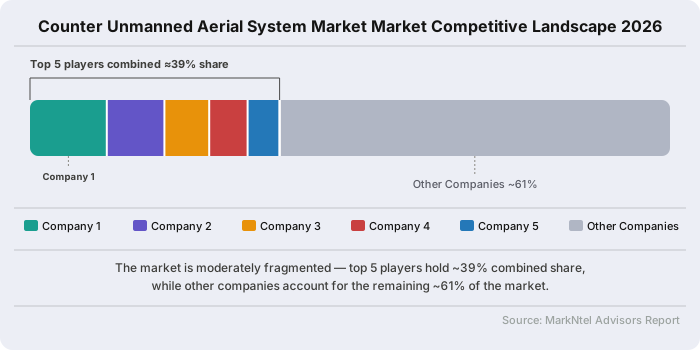
- The industry is highly fragmented, with the top five companies collectively accounting for approximately 39% of the global market in 2026.
Counter Unmanned Aerial System Market Size and Outlook
The counter unmanned aerial system market size was valued at USD 5.12 billion in 2025 and is projected to grow from USD 8.5 billion in 2026 to USD 27.98 billion by 2032. Along with this, the market is estimated to grow at a CAGR of around 21.9% during the forecast period, i.e., 2026-32.
The market outlook remains highly favorable as governments worldwide transition from ad hoc counter-drone deployments to long-term, budget-backed modernization programs. Rising security concerns surrounding military drones, loitering munitions, and unauthorized UAV incursions are prompting defense agencies to integrate layered counter-UAS capabilities into national air defense strategies. This shift is creating sustained demand for advanced radar systems, radio frequency detection, electronic warfare solutions, and kinetic as well as non-kinetic interception technologies.
The United Kingdom exemplifies this transition through its 2026 Defense Investment Plan, which allocates approximately USD 6.74 billion within a USD 401.7 billion four-year defense program to accelerate drone transformation across the Armed Forces. The investment includes next-generation radar capabilities, expanded counter-drone systems, and the establishment of an Integrated Air, Space and Missile Defense Operations Centre. Earlier, in December 2025, UK Defense Innovation announced a GBP 142 million rapid capability package, including GBP 30 million dedicated to homeland counter-drone systems, reinforcing the country's commitment to strengthening protection against evolving aerial threats.
A similar procurement-driven trend is evident in India. In July 2026, the Defense Acquisition Council approved capital acquisition proposals valued at approximately USD 5.46 billion, including the Akash Tarang anti-UAV electronic warfare system and Very Short Range Air Defense Systems (VSHORADS) designed to counter increasingly sophisticated drone threats. Supported by a 15.19% year-on-year increase in the country's 2026–27 defense budget, these approvals highlight India's strategic focus on establishing indigenous and scalable counter-drone capabilities through structured procurement rather than emergency acquisitions.
As defense budgets continue to prioritize airspace security, the counter unmanned aerial system market is expected to benefit from sustained multi-year investments across developed and emerging economies. Increasing adoption of integrated detection, electronic warfare, command-and-control, and interceptor technologies is expected to reinforce long-term market growth, with procurement programs becoming a primary driver of industry expansion throughout the forecast period.
Counter Unmanned Aerial System Market Key Indicators
- In March 2025, the European Commission introduced the ReArm Europe Plan / Readiness 2030, aiming to mobilize up to approximately USD 864 billion to strengthen European defense capabilities and accelerate procurement of critical systems, including air and missile defense, drones, and related technologies. Higher defense investment is accelerating procurement of integrated Counter-UAS platforms across Europe.
- During the 2025 NATO Summit in The Hague, Allied nations agreed to work toward investing 5% of GDP annually in defense and defense-related expenditure to strengthen collective security and military readiness. Increased defense budgets are expected to expand investments in Counter-UAS detection, electronic warfare, and interceptor technologies.
- The S. Department of Defense FY2026 Budget Request prioritizes autonomous systems, advanced air defense, and force protection capabilities, including continued investment in counter-drone technologies and integrated air defense modernizationRising procurement of autonomous defense systems directly supports demand for advanced Counter-UAS platforms.
- NATO's 2025 Annual Report highlights continued expansion of Integrated Air and Missile Defense (IAMD), emphasizing improved surveillance, interoperability, and protection against emerging aerial threats, including unmanned aircraft. Expansion of integrated air defense networks increases procurement opportunities for Counter-UAS detection and interception systems.
- In May 2025, the European Union approved the SAFE (Security Action for Europe) instrument, providing approximately USD 162 billion in loans to support joint procurement of defense equipment among Member States. Joint defense procurement is expected to accelerate adoption of interoperable Counter-UAS systems across European armed forces.
Counter Unmanned Aerial System Market Scope
| Category | Segments |
|---|---|
| By Product Type | Detection Systems, Mitigation & Neutralization Systems, Command & Control (C2) Systems |
| By Component | Hardware, Software, Services |
| By Range | Short Range, Medium Range, Long Range |
| By Deployment Type | Ground-Based Fixed, Mobile / Vehicle-Mounted, Handheld / Portable, Naval / Shipboard, Airborne |
| By End User | Military & Defense, Airports & Aviation Authorities, Government & Law Enforcement, Critical Infrastructure, Maritime & Port Authorities, Others |
Counter Unmanned Aerial System Market Growth Drivers
Rising Cross-Border Security Requirements and Indigenous Counter-Drone Programs Accelerate Market Growth
The increasing frequency of unauthorized drone activities across military borders, critical infrastructure, and strategic assets is driving sustained investment in advanced Counter Unmanned Aerial System (C-UAS) capabilities. Governments are expanding domestic production and accelerating procurement of interoperable counter-drone technologies to strengthen national security while reducing dependence on imported defense equipment. At the same time, multinational defense collaborations are encouraging the co-development of AI-enabled counter-drone platforms, creating new opportunities for technology transfer, localized manufacturing, and faster deployment of next-generation C-UAS solutions across allied nations.
Supporting this momentum, Mahindra Group and Anduril Industries announced a strategic partnership in February 2025 to co-develop and manufacture AI-enabled Counter-UAS technologies, autonomous maritime systems, and advanced command-and-control software for regional defense requirements. The collaboration focuses on building indigenous counter-drone capabilities through sensor fusion, open-architecture systems, and software-defined technologies, reflecting the growing emphasis on sovereign defense manufacturing and long-term modernization programs. Such initiatives are expected to accelerate innovation, expand production capacity, and strengthen the commercialization of advanced C-UAS platforms worldwide.
Recent Trends
Transition Toward Integrated, Multi-Layer Counter-Drone Platforms Reshapes the Industry Growth
The counter-unmanned aerial system (C-UAS) industry is increasingly shifting from standalone drone detection products to integrated multi-layer counter-drone platforms that combine radar, radio-frequency sensing, electro-optical/infrared cameras, electronic warfare, and command-and-control software within a unified architecture. This transition is driven by the growing complexity of drone threats, including autonomous swarms and low-observable UAVs that require multiple sensing technologies for reliable detection and engagement. Defense agencies are also prioritizing scalable and modular C-UAS solutions, enabling operators to upgrade sensors and effectors without replacing the entire system, thereby reducing lifecycle costs and improving operational flexibility.
Supporting this trend, Rheinmetall AG introduced the Skynex Air Defense System with integrated Counter-UAS capabilities at IDEX 2025, demonstrating a layered architecture capable of combining advanced radar, electro-optical tracking, programmable ammunition, and command-and-control to defeat a wide spectrum of unmanned aerial threats. The launch reflects growing industry demand for interoperable, modular, and highly integrated counter-drone solutions capable of protecting military installations and critical infrastructure against evolving aerial threats.
Counter Unmanned Aerial System Market Opportunities and Challenges
Escalating Drone Threats Are Reshaping Counter-Unmanned Aerial System Deployment Across Critical Infrastructure
The rapid proliferation of commercial and dual-use unmanned aerial vehicles (UAVs) is widening the gap between evolving aerial threats and counter-unmanned aerial system (C-UAS) deployment. Affordable drones with autonomous navigation, extended flight endurance, and payload customization have increased risks to airports, energy facilities, border infrastructure, and public venues. According to the International Civil Aviation Organization (ICAO), more than 80 countries have established national drone regulatory frameworks. However, fragmented mitigation regulations, high deployment costs, and lengthy procurement processes continue to limit large-scale adoption of C-UAS technologies beyond military applications.
Governments are responding through regulatory reforms and increased investments, creating strong growth momentum for the global counter-unmanned aerial system market. In the United States, the SAFER SKIES Act, effective July 2026, expanded counter-UAS authority to eligible state, local, tribal, and territorial agencies, while FEMA's USD 500 million Counter-UAS Grant Program through fiscal year 2027 supports technology procurement. Similar initiatives across Europe, the Middle East, and Asia-Pacific are accelerating adoption of AI-enabled radar, RF detection, electro-optical sensors, and non-kinetic mitigation systems, expanding the commercial addressable market for C-UAS solution providers.
Segmentation Insights
With Approximately 71% Market Share, Military & Defense Dominates the Market Through Rising Defense Procurement and Modernization
The military & defense segment is dominating the global counter-unmanned aerial system (C-UAS) market, supported by sustained investments in force protection, battlefield surveillance, and layered air defense modernization. The rapid proliferation of low-cost unmanned aerial systems across conventional and asymmetric conflicts has significantly increased demand for integrated counter-drone solutions capable of detecting, identifying, tracking, and neutralizing hostile aerial threats in real time. Modern military procurement increasingly emphasizes multi-layered architectures that combine radar, radio-frequency sensing, electro-optical and infrared imaging, electronic warfare, and centralized command-and-control systems to ensure comprehensive airspace protection. As defense organizations strengthen operational readiness against evolving drone threats, C-UAS capabilities have become a strategic priority within national defense modernization programs.
This dominance is further reinforced by growing global defense expenditure and the accelerated deployment of advanced counter-drone technologies across military installations, border security operations, and expeditionary forces. According to the Stockholm International Peace Research Institute (SIPRI), global military expenditure reached USD 2.72 trillion in 2024, reflecting continued investment in next-generation defense capabilities that support procurement of sophisticated C-UAS platforms. Demonstrating this trend, Elbit Systems Ltd. announced in August 2025 that it secured a USD 60 million contract from a NATO European country to supply its ReDrone Counter-UAS system. The integrated solution combines radar, electronic warfare, electro-optics, and command-and-control capabilities, highlighting increasing demand for comprehensive military counter-drone systems capable of addressing increasingly complex aerial threats. Based on the end user type, the market is further segmented into:
- Military & Defense
- Airports & Aviation Authorities
- Government & Law Enforcement
- Critical Infrastructure
- Maritime & Port Authorities
- Others
With Approximately 68% Market Share, Hardware Leads the Market, Owing to High-Value Procurement of Detection and Mitigation Systems
The hardware segment is projected to capture approximately 68% of the global counter-unmanned aerial system market, primarily due to the high capital expenditure associated with advanced detection, tracking, and neutralization equipment. Counter-drone deployments require sophisticated hardware, including surveillance radars, RF detection systems, electro-optical and infrared sensors, acoustic sensors, interceptor launchers, high-energy laser systems, high-power microwave technologies, and integrated command hardware. Compared with software and support services, these physical assets represent the largest share of procurement budgets because they form the operational backbone of layered C-UAS architectures. Continuous technological upgrades, extended operational lifecycles, and increasing performance requirements further reinforce hardware's dominant contribution to market revenue.
Government agencies and defense organizations continue prioritizing investments in advanced sensor networks and kinetic as well as non-kinetic interception technologies to address the growing sophistication of unmanned aerial threats. Supporting this trend, RTX Corporation announced in May 2025 the successful operational demonstration of its Ku-band Radio Frequency Sensor (KuRFS) integrated with the Coyote Block 2 interceptor during U.S. Army evaluations. The demonstration validated the effectiveness of combining advanced radar technology with precision interception capabilities to defeat hostile drones under realistic operational conditions. Such developments illustrate how continuous innovation in hardware platforms is driving procurement decisions and sustaining the segment's leading position within the global C-UAS market. Based on the component type, the market is further segmented into:
- Hardware
- Software
- Services
Counter-Unmanned Aerial System Industry Regional Analysis
North America is projected to account for approximately 52% of the global counter-unmanned aerial system (C-UAS) market in 2026, driven by sustained investments in homeland security, border surveillance, and critical infrastructure protection. The region benefits from the presence of leading defense contractors, rapid adoption of AI-enabled air defense technologies, and continuous modernization of integrated airspace security systems. The United States also maintains one of the world's largest defense budgets, with USD 961.6 billion allocated in 2025, according to the Stockholm International Peace Research Institute (SIPRI), supporting long-term procurement of advanced counter-drone capabilities across military and homeland security agencies.
Canada is further strengthening the regional market through increased defense modernization and surveillance investments. Under its renewed defense policy, "Our North, Strong and Free," the Canadian government committed USD 51.92 billion in additional defense spending over the next 20 years to enhance continental defense, Arctic surveillance, and next-generation military technologies. Simultaneously, growing protection requirements around airports, government facilities, and cross-border infrastructure are encouraging wider deployment of radar, radio-frequency detection, electro-optical sensors, and AI-enabled command-and-control platforms. These developments continue to reinforce North America's leadership in the global C-UAS market.
Counter Unmanned Aerial System Market Competitive Landscape
The counter unmanned aerial system market is moderately fragmented, with the top five companies RTX Corporation, Northrop Grumman Corporation, Lockheed Martin Corporation, Thales Group, and Israel Aerospace Industries (IAI) collectively accounting for an estimated 39% of the market. Competition is driven by multi-layered detection technologies, AI-enabled command-and-control platforms, directed-energy capabilities, electronic warfare expertise, and long-term defense procurement programs.
Key Companies in the Counter Unmanned Aerial System Market
- Northrop Grumman Corporation
- RTX Corporation
- Lockheed Martin Corporation
- Thales Group
- Leonardo S.p.A.
- BAE Systems plc
- Elbit Systems Ltd.
- Israel Aerospace Industries Ltd. (IAI)
- RAFAEL Advanced Defense Systems Ltd.
- Rheinmetall AG
- Saab AB
- Anduril Industries, Inc.
- DroneShield Limited
- BlueHalo
- Diehl Defence GmbH & Co. KG
- QinetiQ Group plc
- HENSOLDT AG
- ASELSAN A.Ş.
- SRC, Inc.
- Epirus, Inc.
- Others
Counter Unmanned Aerial System Industry News and Recent Developments
January 2026: Axon Vision Receives Leonardo DRS Order for AI-Driven Counter-UAS Systems
Axon Vision announced that it received an order from Leonardo DRS worth approximately USD 350,000 to supply its AI-powered Counter-UAS system. The solution provides end-to-end detection, classification, tracking, and interception of aerial threats using advanced artificial intelligence. The initial deployment supports operational evaluations and is designed for integration across multiple manned and unmanned defense platforms, strengthening force protection and real-time situational awareness.
Impact Analysis: The order demonstrates the growing integration of AI into counter-drone operations, enabling faster threat identification and autonomous decision-making. It also reflects increasing defense investment in modular, software-defined C-UAS solutions that can be rapidly deployed across diverse military missions.
April 2026: Leonardo DRS Launches Maritime Counter-UAS Capability for Naval Operations
Leonardo DRS introduced a new maritime Counter-UAS capability by integrating its Maritime Mission Equipment Package (M-MEP) onto an autonomous unmanned surface vessel. The solution is designed to detect, identify, track, and defeat hostile drones threatening ships, ports, coastal infrastructure, and expeditionary forces while supporting rapid deployment on both crewed and autonomous maritime platforms.
Impact Analysis: The launch highlights the expanding adoption of Counter-UAS technologies beyond land-based defense into naval environments. Growing protection requirements for ports, warships, and coastal assets are accelerating demand for integrated maritime counter-drone systems with multi-domain operational capabilities.
May 2026: Axon Vision Successfully Completes Operational Evaluation of EDGE ClearSky Drone Detection System
Axon Vision announced the successful completion of operational evaluations for its EDGE ClearSky AI-enabled drone detection system. The platform demonstrated advanced autonomous detection, identification, and tracking of aerial threats in realistic operational environments, supporting military and homeland security applications requiring rapid and accurate counter-drone responses.
Impact Analysis: Successful operational validation strengthens confidence in AI-driven Counter-UAS technologies and is expected to accelerate procurement by defense and homeland security agencies. The development also reflects the industry's transition toward intelligent sensor fusion and autonomous threat management.
October 2025: Leonardo DRS Wins U.S. Department of Defense Counter-UAS Competition
Leonardo DRS secured first place in a U.S. Department of Defense Counter-UAS competition after demonstrating its advanced Ring C-UxS electronic warfare system. The solution employs sophisticated radio-frequency electronic warfare capabilities to detect, identify, and neutralize hostile drones operating across land, sea, and air environments, reinforcing the company's leadership in layered air defense technologies.
Impact Analysis: The successful demonstration validates the operational effectiveness of electronic warfare-based counter-drone technologies and is expected to encourage broader military procurement of scalable, rapidly deployable C-UAS platforms capable of addressing evolving unmanned aerial threats.
December 2025: Axon Vision and Leonardo DRS Form Strategic Partnership for U.S. Counter-UAS Programs
Axon Vision and Leonardo DRS entered into a strategic cooperation agreement to jointly pursue U.S. defense opportunities focused on AI-enhanced Counter-UAS systems. The collaboration combines Leonardo DRS' expertise in advanced sensing and systems integration with Axon Vision's AI-based perception and autonomy technologies to deliver scalable solutions for force protection, situational awareness, and platform survivability.
Impact Analysis: The partnership illustrates the industry's growing emphasis on collaborative technology development to accelerate deployment of next-generation Counter-UAS capabilities. It also supports the increasing adoption of AI-enabled, interoperable defense systems capable of addressing increasingly sophisticated drone threats.
Frequently Asked Questions
- Market Segmentation
- Introduction
- Product Definition
- Research Process
- Assumptions
- Executive Summary
- Counter Unmanned Aerial System Production (USD Million) Trend 2022-2032
- Counter Unmanned Aerial System Production (USD Million) Trend by Type of Product
- Detection Systems
- Radar Sensors
- RF Detection Systems
- EO/IR Sensors
- Acoustic Sensors
- Multi-Sensor Detection Systems
- Company-Wise Production Plants and Statistics
- Installed Production Capacity
- Actual Production
- Planned Production Target
- Counter Unmanned Aerial System Production (USD Million) Trend by Type of Product
- Counter Unmanned Aerial System Pricing Analysis 2022-2032
- Counter Unmanned Aerial System Pricing Trend (USD) 2022-2032
- Counter Unmanned Aerial System Pricing Trend (USD) By Regions 2022-2032
- North America
- South America
- Europe
- Middle East & Africa
- Asia Pacific
- Counter Unmanned Aerial System Pricing Trend (USD) Type of Product 2022-2032
- Detection Systems
- Radar Sensors
- RF Detection Systems
- EO/IR Sensors
- Acoustic Sensors
- Multi-Sensor Detection Systems
- Counter Unmanned Aerial System Market Supply Chain Analysis 2022-2032
- Counter Unmanned Aerial System Market Import & Export Analysis 2022-2032
- Counter Unmanned Aerial System Market Policies, Regulations, and Product Standards
- Counter Unmanned Aerial System Market Trends & Developments
- Counter Unmanned Aerial System Market Dynamics
- Growth Factors
- Challenges
- Counter Unmanned Aerial System Market Hotspot & Opportunities
- Counter Unmanned Aerial System Market Outlook, 2022-2032
- Market Size & Outlook
- By Revenues (USD Million)
- Market Segmentation & Outlook
- By Product Type- Market Size & Forecast 2022-2032, USD Million
- Detection Systems
- Radar Sensors
- RF Detection Systems
- EO/IR Sensors
- Acoustic Sensors
- Multi-Sensor Detection Systems
- Mitigation & Neutralization Systems
- RF Jamming
- GNSS/GPS Spoofing
- High-Energy Lasers
- High-Power Microwave Systems
- Kinetic Interceptors
- Net Capture Systems
- Command & Control (C2) Systems
- Detection Systems
- By Component - Market Size & Forecast 2022-2032, USD Million
- Hardware
- Software
- Services
- By Range - Market Size & Forecast 2022-2032, USD Million
- Short Range
- Medium Range
- Long Range
- By Deployment Type - Market Size & Forecast 2022-2032, USD Million
- Ground-Based Fixed
- Mobile / Vehicle-Mounted
- Handheld / Portable
- Naval / Shipboard
- Airborne
- By End User - Market Size & Forecast 2022-2032, USD Million
- Military & Defense
- Airports & Aviation Authorities
- Government & Law Enforcement
- Critical Infrastructure
- Maritime & Port Authorities
- Others
- By Region
- North America
- South America
- Europe
- Middle East & Africa
- Asia-Pacific
- By Company
- Competition Characteristics
- Market Share & Analysis
- By Product Type- Market Size & Forecast 2022-2032, USD Million
- Market Size & Outlook
- North America Counter Unmanned Aerial System Market Outlook, 2022-2032
- Market Size & Outlook
- By Revenues (USD Million)
- Market Segmentation & Outlook
- By Product Type- Market Size & Forecast 2022-2032, USD Million
- By Component - Market Size & Forecast 2022-2032, USD Million
- By Range - Market Size & Forecast 2022-2032, USD Million
- By Deployment Type - Market Size & Forecast 2022-2032, USD Million
- By End User - Market Size & Forecast 2022-2032, USD Million
- By Country
- The US
- Canada
- Mexico
- The US Counter Unmanned Aerial System Market Outlook, 2022-2032
- Market Size & Outlook
- By Revenues (USD Million)
- Market Segmentation & Outlook
- By Product Type- Market Size & Forecast 2022-2032, USD Million
- By Component - Market Size & Forecast 2022-2032, USD Million
- By Range - Market Size & Forecast 2022-2032, USD Million
- By Deployment Type - Market Size & Forecast 2022-2032, USD Million
- By End User - Market Size & Forecast 2022-2032, USD Million
- Market Size & Outlook
- Canada Counter Unmanned Aerial System Market Outlook, 2022-2032
- Market Size & Outlook
- By Revenues (USD Million)
- Market Segmentation & Outlook
- By Product Type- Market Size & Forecast 2022-2032, USD Million
- By Component - Market Size & Forecast 2022-2032, USD Million
- By Range - Market Size & Forecast 2022-2032, USD Million
- By Deployment Type - Market Size & Forecast 2022-2032, USD Million
- By End User - Market Size & Forecast 2022-2032, USD Million
- Market Size & Outlook
- Mexico Counter Unmanned Aerial System Market Outlook, 2022-2032
- Market Size & Outlook
- By Revenues (USD Million)
- Market Segmentation & Outlook
- By Product Type- Market Size & Forecast 2022-2032, USD Million
- By Component - Market Size & Forecast 2022-2032, USD Million
- By Range - Market Size & Forecast 2022-2032, USD Million
- By Deployment Type - Market Size & Forecast 2022-2032, USD Million
- By End User - Market Size & Forecast 2022-2032, USD Million
- Market Size & Outlook
- Market Size & Outlook
- South America Counter Unmanned Aerial System Market Outlook, 2022-2032
- Market Size & Outlook
- By Revenues (USD Million)
- Market Segmentation & Outlook
- By Product Type- Market Size & Forecast 2022-2032, USD Million
- By Component - Market Size & Forecast 2022-2032, USD Million
- By Range - Market Size & Forecast 2022-2032, USD Million
- By Deployment Type - Market Size & Forecast 2022-2032, USD Million
- By End User - Market Size & Forecast 2022-2032, USD Million
- By Country
- Brazil
- Argentina
- Chile
- Colombia
- Peru
- Ecuador
- Rest of South America
- Brazil Counter Unmanned Aerial System Market Outlook, 2022-2032
- Market Size & Outlook
- By Revenues (USD Million)
- Market Segmentation & Outlook
- By Product Type- Market Size & Forecast 2022-2032, USD Million
- By Component - Market Size & Forecast 2022-2032, USD Million
- By Range - Market Size & Forecast 2022-2032, USD Million
- By Deployment Type - Market Size & Forecast 2022-2032, USD Million
- By End User - Market Size & Forecast 2022-2032, USD Million
- Market Size & Outlook
- Argentina Counter Unmanned Aerial System Market Outlook, 2022-2032
- Market Size & Outlook
- By Revenues (USD Million)
- Market Segmentation & Outlook
- By Product Type- Market Size & Forecast 2022-2032, USD Million
- By Component - Market Size & Forecast 2022-2032, USD Million
- By Range - Market Size & Forecast 2022-2032, USD Million
- By Deployment Type - Market Size & Forecast 2022-2032, USD Million
- By End User - Market Size & Forecast 2022-2032, USD Million
- Market Size & Outlook
- Chile Counter Unmanned Aerial System Market Outlook, 2022-2032
- Market Size & Outlook
- By Revenues (USD Million)
- Market Segmentation & Outlook
- By Product Type- Market Size & Forecast 2022-2032, USD Million
- By Component - Market Size & Forecast 2022-2032, USD Million
- By Range - Market Size & Forecast 2022-2032, USD Million
- By Deployment Type - Market Size & Forecast 2022-2032, USD Million
- By End User - Market Size & Forecast 2022-2032, USD Million
- Market Size & Outlook
- Colombia Counter Unmanned Aerial System Market Outlook, 2022-2032
- Market Size & Outlook
- By Revenues (USD Million)
- Market Segmentation & Outlook
- By Product Type- Market Size & Forecast 2022-2032, USD Million
- By Component - Market Size & Forecast 2022-2032, USD Million
- By Range - Market Size & Forecast 2022-2032, USD Million
- By Deployment Type - Market Size & Forecast 2022-2032, USD Million
- By End User - Market Size & Forecast 2022-2032, USD Million
- Market Size & Outlook
- Peru Counter Unmanned Aerial System Market Outlook, 2022-2032
- Market Size & Outlook
- By Revenues (USD Million)
- Market Segmentation & Outlook
- By Product Type- Market Size & Forecast 2022-2032, USD Million
- By Component - Market Size & Forecast 2022-2032, USD Million
- By Range - Market Size & Forecast 2022-2032, USD Million
- By Deployment Type - Market Size & Forecast 2022-2032, USD Million
- By End User - Market Size & Forecast 2022-2032, USD Million
- Market Size & Outlook
- Ecuador Counter Unmanned Aerial System Market Outlook, 2022-2032
- Market Size & Outlook
- By Revenues (USD Million)
- Market Segmentation & Outlook
- By Product Type- Market Size & Forecast 2022-2032, USD Million
- By Component - Market Size & Forecast 2022-2032, USD Million
- By Range - Market Size & Forecast 2022-2032, USD Million
- By Deployment Type - Market Size & Forecast 2022-2032, USD Million
- By End User - Market Size & Forecast 2022-2032, USD Million
- Market Size & Outlook
- Market Size & Outlook
- Europe Counter Unmanned Aerial System Market Outlook, 2022-2032
- Market Size & Outlook
- By Revenues (USD Million)
- Market Segmentation & Outlook
- By Product Type- Market Size & Forecast 2022-2032, USD Million
- By Component - Market Size & Forecast 2022-2032, USD Million
- By Range - Market Size & Forecast 2022-2032, USD Million
- By Deployment Type - Market Size & Forecast 2022-2032, USD Million
- By End User - Market Size & Forecast 2022-2032, USD Million
- By Country
- The UK
- Germany
- France
- Italy
- Spain
- Nordic
- Benelux
- Rest of Europe
- The UK Counter Unmanned Aerial System Market Outlook, 2022-2032
- Market Size & Outlook
- By Revenues (USD Million)
- Market Segmentation & Outlook
- By Product Type- Market Size & Forecast 2022-2032, USD Million
- By Component - Market Size & Forecast 2022-2032, USD Million
- By Range - Market Size & Forecast 2022-2032, USD Million
- By Deployment Type - Market Size & Forecast 2022-2032, USD Million
- By End User - Market Size & Forecast 2022-2032, USD Million
- Market Size & Outlook
- Germany Counter Unmanned Aerial System Market Outlook, 2022-2032
- Market Size & Outlook
- By Revenues (USD Million)
- Market Segmentation & Outlook
- By Product Type- Market Size & Forecast 2022-2032, USD Million
- By Component - Market Size & Forecast 2022-2032, USD Million
- By Range - Market Size & Forecast 2022-2032, USD Million
- By Deployment Type - Market Size & Forecast 2022-2032, USD Million
- By End User - Market Size & Forecast 2022-2032, USD Million
- Market Size & Outlook
- France Counter Unmanned Aerial System Market Outlook, 2022-2032
- Market Size & Outlook
- By Revenues (USD Million)
- Market Segmentation & Outlook
- By Product Type- Market Size & Forecast 2022-2032, USD Million
- By Component - Market Size & Forecast 2022-2032, USD Million
- By Range - Market Size & Forecast 2022-2032, USD Million
- By Deployment Type - Market Size & Forecast 2022-2032, USD Million
- By End User - Market Size & Forecast 2022-2032, USD Million
- Market Size & Outlook
- Italy Counter Unmanned Aerial System Market Outlook, 2022-2032
- Market Size & Outlook
- By Revenues (USD Million)
- Market Segmentation & Outlook
- By Product Type- Market Size & Forecast 2022-2032, USD Million
- By Component - Market Size & Forecast 2022-2032, USD Million
- By Range - Market Size & Forecast 2022-2032, USD Million
- By Deployment Type - Market Size & Forecast 2022-2032, USD Million
- By End User - Market Size & Forecast 2022-2032, USD Million
- Market Size & Outlook
- Spain Counter Unmanned Aerial System Market Outlook, 2022-2032
- Market Size & Outlook
- By Revenues (USD Million)
- Market Segmentation & Outlook
- By Product Type- Market Size & Forecast 2022-2032, USD Million
- By Component - Market Size & Forecast 2022-2032, USD Million
- By Range - Market Size & Forecast 2022-2032, USD Million
- By Deployment Type - Market Size & Forecast 2022-2032, USD Million
- By End User - Market Size & Forecast 2022-2032, USD Million
- Market Size & Outlook
- Nordic Counter Unmanned Aerial System Market Outlook, 2022-2032
- Market Size & Outlook
- By Revenues (USD Million)
- Market Segmentation & Outlook
- By Product Type- Market Size & Forecast 2022-2032, USD Million
- By Component - Market Size & Forecast 2022-2032, USD Million
- By Range - Market Size & Forecast 2022-2032, USD Million
- By Deployment Type - Market Size & Forecast 2022-2032, USD Million
- By End User - Market Size & Forecast 2022-2032, USD Million
- Market Size & Outlook
- Benelux Counter Unmanned Aerial System Market Outlook, 2022-2032
- Market Size & Outlook
- By Revenues (USD Million)
- Market Segmentation & Outlook
- By Product Type- Market Size & Forecast 2022-2032, USD Million
- By Component - Market Size & Forecast 2022-2032, USD Million
- By Range - Market Size & Forecast 2022-2032, USD Million
- By Deployment Type - Market Size & Forecast 2022-2032, USD Million
- By End User - Market Size & Forecast 2022-2032, USD Million
- Market Size & Outlook
- Market Size & Outlook
- Middle East & Africa Counter Unmanned Aerial System Market Outlook, 2022-2032
- Market Size & Outlook
- By Revenues (USD Million)
- Market Segmentation & Outlook
- By Product Type- Market Size & Forecast 2022-2032, USD Million
- By Component - Market Size & Forecast 2022-2032, USD Million
- By Range - Market Size & Forecast 2022-2032, USD Million
- By Deployment Type - Market Size & Forecast 2022-2032, USD Million
- By End User - Market Size & Forecast 2022-2032, USD Million
- By Country
- Saudi Arabia
- The UAE
- South Africa
- Egypt
- Qatar
- Kuwait
- Oman
- Nigeria
- Saudi Arabia Counter Unmanned Aerial System Market Outlook, 2022-2032
- Market Size & Outlook
- By Revenues (USD Million)
- Market Segmentation & Outlook
- By Product Type- Market Size & Forecast 2022-2032, USD Million
- By Component - Market Size & Forecast 2022-2032, USD Million
- By Range - Market Size & Forecast 2022-2032, USD Million
- By Deployment Type - Market Size & Forecast 2022-2032, USD Million
- By End User - Market Size & Forecast 2022-2032, USD Million
- Market Size & Outlook
- The UAE Counter Unmanned Aerial System Market Outlook, 2022-2032
- Market Size & Outlook
- By Revenues (USD Million)
- Market Segmentation & Outlook
- By Product Type- Market Size & Forecast 2022-2032, USD Million
- By Component - Market Size & Forecast 2022-2032, USD Million
- By Range - Market Size & Forecast 2022-2032, USD Million
- By Deployment Type - Market Size & Forecast 2022-2032, USD Million
- By End User - Market Size & Forecast 2022-2032, USD Million
- Market Size & Outlook
- South Africa Counter Unmanned Aerial System Market Outlook, 2022-2032
- Market Size & Outlook
- By Revenues (USD Million)
- Market Segmentation & Outlook
- By Product Type- Market Size & Forecast 2022-2032, USD Million
- By Component - Market Size & Forecast 2022-2032, USD Million
- By Range - Market Size & Forecast 2022-2032, USD Million
- By Deployment Type - Market Size & Forecast 2022-2032, USD Million
- By End User - Market Size & Forecast 2022-2032, USD Million
- Market Size & Outlook
- Egypt Counter Unmanned Aerial System Market Outlook, 2022-2032
- Market Size & Outlook
- By Revenues (USD Million)
- Market Segmentation & Outlook
- By Product Type- Market Size & Forecast 2022-2032, USD Million
- By Component - Market Size & Forecast 2022-2032, USD Million
- By Range - Market Size & Forecast 2022-2032, USD Million
- By Deployment Type - Market Size & Forecast 2022-2032, USD Million
- By End User - Market Size & Forecast 2022-2032, USD Million
- Market Size & Outlook
- Qatar Counter Unmanned Aerial System Market Outlook, 2022-2032
- Market Size & Outlook
- By Revenues (USD Million)
- Market Segmentation & Outlook
- By Product Type- Market Size & Forecast 2022-2032, USD Million
- By Component - Market Size & Forecast 2022-2032, USD Million
- By Range - Market Size & Forecast 2022-2032, USD Million
- By Deployment Type - Market Size & Forecast 2022-2032, USD Million
- By End User - Market Size & Forecast 2022-2032, USD Million
- Market Size & Outlook
- Kuwait Counter Unmanned Aerial System Market Outlook, 2022-2032
- Market Size & Outlook
- By Revenues (USD Million)
- Market Segmentation & Outlook
- By Product Type- Market Size & Forecast 2022-2032, USD Million
- By Component - Market Size & Forecast 2022-2032, USD Million
- By Range - Market Size & Forecast 2022-2032, USD Million
- By Deployment Type - Market Size & Forecast 2022-2032, USD Million
- By End User - Market Size & Forecast 2022-2032, USD Million
- Market Size & Outlook
- Oman Counter Unmanned Aerial System Market Outlook, 2022-2032
- Market Size & Outlook
- By Revenues (USD Million)
- Market Segmentation & Outlook
- By Product Type- Market Size & Forecast 2022-2032, USD Million
- By Component - Market Size & Forecast 2022-2032, USD Million
- By Range - Market Size & Forecast 2022-2032, USD Million
- By Deployment Type - Market Size & Forecast 2022-2032, USD Million
- By End User - Market Size & Forecast 2022-2032, USD Million
- Market Size & Outlook
- Nigeria Counter Unmanned Aerial System Market Outlook, 2022-2032
- Market Size & Outlook
- By Revenues (USD Million)
- Market Segmentation & Outlook
- By Product Type- Market Size & Forecast 2022-2032, USD Million
- By Component - Market Size & Forecast 2022-2032, USD Million
- By Range - Market Size & Forecast 2022-2032, USD Million
- By Deployment Type - Market Size & Forecast 2022-2032, USD Million
- By End User - Market Size & Forecast 2022-2032, USD Million
- Market Size & Outlook
- Market Size & Outlook
- Asia-Pacific Counter Unmanned Aerial System Market Outlook, 2022-2032
- Market Size & Outlook
- By Revenues (USD Million)
- Market Segmentation & Outlook
- By Product Type- Market Size & Forecast 2022-2032, USD Million
- By Component - Market Size & Forecast 2022-2032, USD Million
- By Range - Market Size & Forecast 2022-2032, USD Million
- By Deployment Type - Market Size & Forecast 2022-2032, USD Million
- By End User - Market Size & Forecast 2022-2032, USD Million
- By Country
- China
- Japan
- India
- South Korea
- Australia
- Indonesia
- Thailand
- Vietnam
- New Zealand
- Rest of Asia-Pacific
- China Counter Unmanned Aerial System Market Outlook, 2022-2032
- Market Size & Outlook
- By Revenues (USD Million)
- Market Segmentation & Outlook
- By Product Type- Market Size & Forecast 2022-2032, USD Million
- By Component - Market Size & Forecast 2022-2032, USD Million
- By Range - Market Size & Forecast 2022-2032, USD Million
- By Deployment Type - Market Size & Forecast 2022-2032, USD Million
- By End User - Market Size & Forecast 2022-2032, USD Million
- Market Size & Outlook
- Japan Counter Unmanned Aerial System Market Outlook, 2022-2032
- Market Size & Outlook
- By Revenues (USD Million)
- Market Segmentation & Outlook
- By Product Type- Market Size & Forecast 2022-2032, USD Million
- By Component - Market Size & Forecast 2022-2032, USD Million
- By Range - Market Size & Forecast 2022-2032, USD Million
- By Deployment Type - Market Size & Forecast 2022-2032, USD Million
- By End User - Market Size & Forecast 2022-2032, USD Million
- Market Size & Outlook
- India Counter Unmanned Aerial System Market Outlook, 2022-2032
- Market Size & Outlook
- By Revenues (USD Million)
- Market Segmentation & Outlook
- By Product Type- Market Size & Forecast 2022-2032, USD Million
- By Component - Market Size & Forecast 2022-2032, USD Million
- By Range - Market Size & Forecast 2022-2032, USD Million
- By Deployment Type - Market Size & Forecast 2022-2032, USD Million
- By End User - Market Size & Forecast 2022-2032, USD Million
- Market Size & Outlook
- South Korea Counter Unmanned Aerial System Market Outlook, 2022-2032
- Market Size & Outlook
- By Revenues (USD Million)
- Market Segmentation & Outlook
- By Product Type- Market Size & Forecast 2022-2032, USD Million
- By Component - Market Size & Forecast 2022-2032, USD Million
- By Range - Market Size & Forecast 2022-2032, USD Million
- By Deployment Type - Market Size & Forecast 2022-2032, USD Million
- By End User - Market Size & Forecast 2022-2032, USD Million
- Market Size & Outlook
- Australia Counter Unmanned Aerial System Market Outlook, 2022-2032
- Market Size & Outlook
- By Revenues (USD Million)
- Market Segmentation & Outlook
- By Product Type- Market Size & Forecast 2022-2032, USD Million
- By Component - Market Size & Forecast 2022-2032, USD Million
- By Range - Market Size & Forecast 2022-2032, USD Million
- By Deployment Type - Market Size & Forecast 2022-2032, USD Million
- By End User - Market Size & Forecast 2022-2032, USD Million
- Market Size & Outlook
- Indonesia Counter Unmanned Aerial System Market Outlook, 2022-2032
- Market Size & Outlook
- By Revenues (USD Million)
- Market Segmentation & Outlook
- By Product Type- Market Size & Forecast 2022-2032, USD Million
- By Component - Market Size & Forecast 2022-2032, USD Million
- By Range - Market Size & Forecast 2022-2032, USD Million
- By Deployment Type - Market Size & Forecast 2022-2032, USD Million
- By End User - Market Size & Forecast 2022-2032, USD Million
- Market Size & Outlook
- Thailand Counter Unmanned Aerial System Market Outlook, 2022-2032
- Market Size & Outlook
- By Revenues (USD Million)
- Market Segmentation & Outlook
- By Product Type- Market Size & Forecast 2022-2032, USD Million
- By Component - Market Size & Forecast 2022-2032, USD Million
- By Range - Market Size & Forecast 2022-2032, USD Million
- By Deployment Type - Market Size & Forecast 2022-2032, USD Million
- By End User - Market Size & Forecast 2022-2032, USD Million
- Market Size & Outlook
- Vietnam Counter Unmanned Aerial System Market Outlook, 2022-2032
- Market Size & Outlook
- By Revenues (USD Million)
- Market Segmentation & Outlook
- By Product Type- Market Size & Forecast 2022-2032, USD Million
- By Component - Market Size & Forecast 2022-2032, USD Million
- By Range - Market Size & Forecast 2022-2032, USD Million
- By Deployment Type - Market Size & Forecast 2022-2032, USD Million
- By End User - Market Size & Forecast 2022-2032, USD Million
- Market Size & Outlook
- New Zealand Counter Unmanned Aerial System Market Outlook, 2022-2032
- Market Size & Outlook
- By Revenues (USD Million)
- Market Segmentation & Outlook
- By Product Type- Market Size & Forecast 2022-2032, USD Million
- By Component - Market Size & Forecast 2022-2032, USD Million
- By Range - Market Size & Forecast 2022-2032, USD Million
- By Deployment Type - Market Size & Forecast 2022-2032, USD Million
- By End User - Market Size & Forecast 2022-2032, USD Million
- Market Size & Outlook
- Market Size & Outlook
- Counter Unmanned Aerial System Market Key Strategic Imperatives for Success & Growth
- Competitive Outlook
- Company Profiles
- Northrop Grumman Corporation
- Business Description
- Product Portfolio
- Collaborations & Alliances
- Recent Developments
- Financial Details
- Others
- RTX Corporation
- Business Description
- Product Portfolio
- Collaborations & Alliances
- Recent Developments
- Financial Details
- Others
- Lockheed Martin Corporation
- Business Description
- Product Portfolio
- Collaborations & Alliances
- Recent Developments
- Financial Details
- Others
- Thales Group
- Business Description
- Product Portfolio
- Collaborations & Alliances
- Recent Developments
- Financial Details
- Others
- Leonardo S.p.A.
- Business Description
- Product Portfolio
- Collaborations & Alliances
- Recent Developments
- Financial Details
- Others
- BAE Systems plc
- Business Description
- Product Portfolio
- Collaborations & Alliances
- Recent Developments
- Financial Details
- Others
- Israel Aerospace Industries Ltd. (IAI)
- Business Description
- Product Portfolio
- Collaborations & Alliances
- Recent Developments
- Financial Details
- Others
- RAFAEL Advanced Defense Systems Ltd.
- Business Description
- Product Portfolio
- Collaborations & Alliances
- Recent Developments
- Financial Details
- Others
- Elbit Systems Ltd.
- Business Description
- Product Portfolio
- Collaborations & Alliances
- Recent Developments
- Financial Details
- Others
- Saab AB
- Business Description
- Product Portfolio
- Collaborations & Alliances
- Recent Developments
- Financial Details
- Others
- Rheinmetall AG
- Business Description
- Product Portfolio
- Collaborations & Alliances
- Recent Developments
- Financial Details
- Others
- Diehl Defence GmbH & Co. KG
- Business Description
- Product Portfolio
- Collaborations & Alliances
- Recent Developments
- Financial Details
- Others
- Anduril Industries, Inc.
- Business Description
- Product Portfolio
- Collaborations & Alliances
- Recent Developments
- Financial Details
- Others
- BlueHalo
- Business Description
- Product Portfolio
- Collaborations & Alliances
- Recent Developments
- Financial Details
- Others
- DroneShield Limited
- Business Description
- Product Portfolio
- Collaborations & Alliances
- Recent Developments
- Financial Details
- Others
- QinetiQ Group plc
- Business Description
- Product Portfolio
- Collaborations & Alliances
- Recent Developments
- Financial Details
- Others
- SRC, Inc.
- Business Description
- Product Portfolio
- Collaborations & Alliances
- Recent Developments
- Financial Details
- Others
- Epirus, Inc.
- Business Description
- Product Portfolio
- Collaborations & Alliances
- Recent Developments
- Financial Details
- Others
- HENSOLDT AG
- Business Description
- Product Portfolio
- Collaborations & Alliances
- Recent Developments
- Financial Details
- Others
- ASELSAN A.Ş
- Business Description
- Product Portfolio
- Collaborations & Alliances
- Recent Developments
- Financial Details
- Others
- Others
- Northrop Grumman Corporation
- Company Profiles
- Disclaimer
MarkNtel Advisors follows a robust and iterative research methodology designed to ensure maximum accuracy and minimize deviation in market estimates and forecasts. Our approach combines both bottom-up and top-down techniques to effectively segment and quantify various aspects of the market. A consistent feature across all our research reports is data triangulation, which examines the market from three distinct perspectives to validate findings. Key components of our research process include:
1. Scope & Research Design At the outset, MarkNtel Advisors define the research objectives and formulate pertinent questions. This phase involves determining the type of research—qualitative or quantitative—and designing a methodology that outlines data collection methods, target demographics, and analytical tools. They also establish timelines and budgets to ensure the research aligns with client goals.
2. Sample Selection and Data Collection In this stage, the firm identifies the target audience and determines the appropriate sample size to ensure representativeness. They employ various sampling methods, such as random or stratified sampling, based on the research objectives. Data collection is carried out using tools like surveys, interviews, and observations, ensuring the gathered data is reliable and relevant.
3. Data Analysis and Validation Once data is collected, MarkNtel Advisors undertake a rigorous analysis process. This includes cleaning the data to remove inconsistencies, employing statistical software for quantitative analysis, and thematic analysis for qualitative data. Validation steps are taken to ensure the accuracy and reliability of the findings, minimizing biases and errors.

4. Data Forecast and FinalizationThe final phase involves forecasting future market trends based on the analyzed data. MarkNtel Advisors utilize predictive modeling and time series analysis to anticipate market behaviors. The insights are then compiled into comprehensive reports, featuring visual aids like charts and graphs, and include strategic recommendations to inform client decision-making
We offer flexible licensing options to cater to varying organizational needs. Choose the pricing pack that best suits your requirements:
Buy Now Inquire Before Buying
 Request Customization
 Talk to our Consultant







