

China Molded Fiber Packaging Market Research Report: Forecast (2026–2032)
By Molded Fiber Type (Thick Wall, Transfer Molded, Thermoformed Fiber, Processed Fiber), By Raw Material (Recycled Paper Pulp, Virgin Wood Pulp, Non-Wood Fiber), By Product Type (T ... rays, Clamshell Containers, Cups & Bowls, Plates, End Caps, Cup Carriers / Drink Carriers, Others), By End User (Packaged Food & Beverage, Foodservice, Consumer Electronics, Healthcare & Medical, Personal Care & Cosmetics, Industrial & Automotive, E-commerce & Logistics, Others), and others Read more
- FMCG
- Oct 2025
- Pages 130
- Report Format: PDF, Excel, PPT
China Molded Fiber Packaging Market
Projected 6.88% CAGR from 2026 to 2032
Study Period
2026-2032
Market Size (2026)
USD 752 Million
Market Size (2032)
USD 1121 Million
Base Year
2025
Projected CAGR
6.88%
Leading Segments
By Molded Fiber Type: Thick Wall
China Molded Fiber Packaging Market Key Takeaways
- China molded fiber packaging market reached USD 719 million in 2025, rising to USD 752 million in 2026 and USD 1121 million by 2032, at 6.88% CAGR.
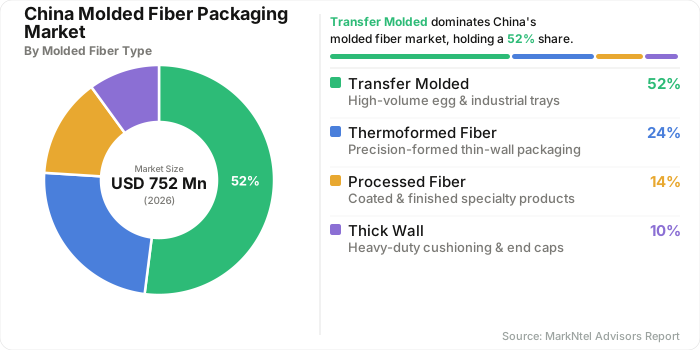
- In 2026, transfer-molded fiber dominates type segmentation, contributing approximately 52% share.
- Foodservice emerges as the leading end-use segment, capturing nearly 39% share in 2026.
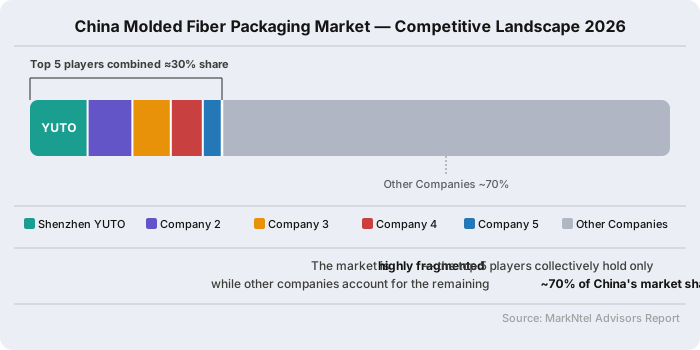
- The industry structure remains moderately fragmented, with the top five players collectively holding around 30% share.
China Molded Fiber Packaging Market Size and Outlook
The molded fiber packaging market size in China is projected to witness steady growth at a steady CAGR of 6.88% during 2026-32, supported by rising demand across logistics and consumer-driven sectors. Increasing parcel volumes, driven by e-commerce packaging, are creating sustained demand for scalable and protective packaging formats across domestic and cross-regional delivery networks nationwide.
According to the State Post Bureau, China’s express parcel volume reached 175.08 billion pieces in 2024, marking a 21.5% increase, and surpassed 180 billion pieces by late 2025. This rapid expansion is significantly supporting demand for molded fiber transist inserts across the e-commerce and logistics segment, particularly as longer delivery distances and higher shipment volumes require reliable and protective packaging solutions.
China’s total retail sales of consumer goods reached approximately USD 6.7 trillion in 2024, growing 3.5% year-on-year . This large and expanding consumption base is creating sustained demand conditions for paper-based packaging formats, particularly across fast-moving consumer goods, electronics, and packaged food categories that require scalable and cost-efficient packaging solutions.
In parallel, sustainability initiatives by global manufacturers are influencing packaging material preferences across supply chains. Samsung Electronics reported that its Galaxy S25 series packaging utilizes 100% recycled paper, eliminating single-use plastics. This transition is expected to encourage suppliers in China to expand investments in thermoformed molded fiber and premium fiber-based cushioning solutions, particularly within electronics packaging applications.
Emerging opportunities are centered on advanced material innovation and expanding application scope across industries. Investments in high-performance coatings, premium fiber formats, and recyclable solutions are enabling penetration into moisture-sensitive segments. Reflecting these favorable trends, the China molded fiber packaging market is valued at USD 752 million in 2026 and is projected to reach USD 1,121 million by 2032. In conclusion, logistics growth, consumption expansion, and sustainability mandates will continue to strengthen market fundamentals, positioning the industry for stable, long-term growth across evolving packaging ecosystems.
China Molded Fiber Packaging Market Key Indicators
- China’s catering ecosystem continues to scale rapidly, with over 15.568 million active enterprises and 406,000 new registrations in 2025, reflecting strong consumption momentum. This expansion directly fuels demand for disposable and sustainable formats, particularly food delivery packaging, as operators increasingly shift toward fiber-based trays and containers to comply with environmental expectations and reduce plastic dependency across urban consumption channels.
- With mobile phone production reaching 1.67 billion units in 2024, including 1.25 billion smartphones, China’s electronics sector remains a critical demand pillar . This scale accelerates adoption of precision-engineered pulp solutions, especially fiber packaging of electronics, where molded fiber trays are replacing plastic blisters to ensure product protection while aligning with sustainability mandates in high-volume manufacturing ecosystems.
- China’s automotive sector recorded production and sales of over 31 million units in 2024, alongside exports of 5.859 million vehicles, rising 19.3% year-on-year . This growth strengthens demand for protective transit solutions, particularly industrial cushioning fiber, as automakers and suppliers increasingly adopt molded fiber components to safeguard parts during logistics while reducing reliance on conventional plastic-based packaging systems.
- The country’s paper and paperboard output surpassed 158.469 million tonnes in 2024, marking an 8.6% increase and ensuring abundant raw material availability. This strong upstream supply chain supports cost efficiency and scalability for molded fiber production, reinforcing recycled fiber packaging as a reliable and economically viable solution for manufacturers targeting sustainable packaging transitions across multiple end-use industries.
- China’s cosmetics retail sales reached approximately USD 59.44 billion in 2024, highlighting strong personal care consumption. This expansion is driving demand for aesthetically refined and sustainable packaging formats, particularly premium fiber packaging, where thermoformed molded fiber inserts are increasingly used to replace plastic trays, offering both protective functionality and enhanced brand appeal in high-value consumer segments.
China Molded Fiber Packaging Market
| Category | Segments |
|---|---|
| By Molded Fiber Type | Thick Wall, Transfer Molded, Thermoformed Fiber, Processed Fiber |
| By Raw Material | Recycled Paper Pulp, Virgin Wood Pulp, Non-Wood Fiber |
| By Product Type | Trays, Clamshell Containers, Cups & Bowls, Plates, End Caps, Cup Carriers / Drink Carriers, Others |
| By End User | Packaged Food & Beverage, Foodservice, Consumer Electronics, Healthcare & Medical, Personal Care & Cosmetics, Industrial & Automotive, E-commerce & Logistics, Others |
China Molded Fiber Packaging Market Growth Drivers
Rapid Growth of E-commerce and Logistics
China’s rapidly expanding logistics ecosystem is a primary catalyst for the China molded fiber packaging market, driven by rising parcel volumes and evolving delivery networks. During the first eleven months of 2025, express deliveries reached 180.74 billion parcels, growing 14.9%, while cross-regional shipments increased 16.3%, strengthening demand for protective fiber packaging across long-distance transportation routes.
At the same time, the continued expansion of digital commerce is reshaping packaging demand patterns nationwide. Major retail events such as Singles’ Day generated nearly USD 198 billion in 2024 sales, creating intense order surges . This growth significantly boosts reliance on e-commerce packaging, where scalable, cost-efficient materials are essential for managing fluctuating shipment volumes efficiently.
Beyond volume growth, environmental priorities are accelerating material substitution across packaging formats. Increasing regulatory pressure and corporate sustainability commitments are driving adoption of plastic-free packaging alternatives. Businesses are transitioning toward molded fiber solutions to meet compliance standards while enhancing brand perception, particularly across consumer goods, electronics, and household product segments requiring sustainable yet protective packaging formats.
The logistics expansion, e-commerce acceleration, and sustainability mandates are reshaping packaging demand fundamentals. These combined forces are strengthening long-term adoption of fiber-based solutions across industries, positioning the China molded fiber packaging industry as a critical enabler of efficient, scalable, and environmentally aligned packaging systems supporting modern supply chains nationwide.
Recent Trends
Replacement of Plastic Packaging with Molded Fiber Solutions
The transition from plastic to fiber-based materials is emerging as a defining trend within the China molded fiber packaging market, supported by tightening environmental regulations and evolving packaging standards. Government-led plastic control policies are accelerating adoption of biodegradable packaging, particularly across high-consumption sectors such as e-commerce, food service, and electronics requiring scalable sustainable solutions.
Simultaneously, global brands are advancing packaging transformation initiatives aligned with sustainability targets. In 2026, Apple reported achieving near-complete fiber-based packaging, with plastic reduced to below 0.4% of its total packaging footprint in fiscal 2025. As China remains a core manufacturing hub, this transition is significantly boosting demand for thermoformed fiber across device packaging applications.
In parallel, advancements in material engineering are expanding the functional capabilities of molded fiber solutions. Innovations in coating tech fiber are enhancing moisture resistance, structural integrity, and surface finish, enabling broader application across sensitive and premium product categories. These improvements are strengthening competitiveness against plastic packaging in electronics, cosmetics, and high-value consumer goods segments.
The regulatory enforcement, corporate sustainability commitments, and technological innovation are accelerating the structural shift toward fiber-based packaging. These converging trends are reinforcing long-term demand expansion, positioning the China molded fiber packaging industry as a key contributor to sustainable packaging transformation across domestic manufacturing ecosystems and globally integrated supply chains.
China Molded Fiber Packaging Market Opportunities and Challenges
Barrier Performance Limitations Driving the Advanced Fiber Coating Technologies
Despite growing adoption, performance limitations remain a critical barrier within the China molded fiber packaging market. Research from Chinese institutions highlights that achieving barrier properties comparable to plastics remains challenging, particularly in moisture-sensitive applications. Limitations related to moisture resistance and gas permeability continue to constrain usage in various sectors during storage and transportation conditions.
These performance gaps are especially evident in industries such as food, pharmaceuticals, and electronics, where packaging must ensure stability under varying environmental conditions. Compared with conventional materials, molded fiber solutions still face durability issues fiber, particularly when exposed to humidity and mechanical stress, limiting their ability to fully replace plastic packaging applications across industries.
However, ongoing advancements in material science are creating significant opportunities to address these constraints. Innovations in coating tech packaging, including PVA–montmorillonite composite coatings, are enhancing barrier performance by improving resistance. These developments are accelerating the emergence of water-resistant fiber solutions suitable for more demanding and moisture-sensitive packaging environments across applications .
The current limitations present short-term challenges, continuous innovation is unlocking new growth pathways. As advanced coatings and material technologies mature, the China molded fiber packaging industry is expected to expand into high-value segments, enabling broader substitution of plastics and strengthening its role in sustainable, performance-driven packaging ecosystems globally.
Segmentation Insights
Transfer Molded Fiber Dominates High-Volume Packaging Applications
Transfer molded fiber accounts for approximately 52% of total revenue, reflecting strong cost-performance advantages across high-volume applications. Within the China molded fiber packaging industry, manufacturers prioritize transfer molded packaging for scalability and structural reliability, particularly in industrial goods and consumer electronics packaging where functional performance outweighs aesthetic requirements.
China-based manufacturers supplying global electronics brands extensively use molded pulp trays and inserts for cushioning and stabilization. Production clusters in Guangdong and Shandong support large-scale manufacturing, enabled by integrated supply chains and advanced pulp molding machines, ensuring consistent quality, operational efficiency, and cost-effective output for high-volume packaging applications across multiple sectors.
The segment’s expansion is driven by its ability to replace conventional materials such as expanded polystyrene. These solutions act as effective EPS foam replacement, offering recyclability and adequate shock absorption. Their structural strength supports safe transportation of fragile components while maintaining lower costs compared to premium molded fiber formats used in specialized packaging
The cost efficiency, manufacturing scale, and functional reliability continue to reinforce segment dominance across applications. As sustainability demand increases, transfer molded solutions are expected to maintain strong adoption across electronics, appliances, and industrial packaging sectors, supporting wider use of fiber-based materials in scalable and environmentally aligned packaging systems. By molded fiber type, the market is divided into the following segments:
- Thick Wall
- Transfer Molded
- Thermoformed Fiber
- Processed Fiber
Foodservice Drives the Highest Demand Across Applications
The foodservice segment accounts for approximately 39% of total revenue, establishing it as the leading end-use category within the China molded fiber packaging industry. Rising consumption patterns and expansion of organized dining formats are driving demand for food packaging pulp solutions. These materials are widely adopted due to their cost efficiency, disposability, and alignment with sustainability requirements.
The rapid expansion of restaurant chains further reinforces this dominance. Yum China, the operator of KFC and Pizza Hut, reported USD 11.3 billion in revenue in 2024, with 16,395 stores nationwide after opening 1,751 net new outlets . Such scale highlights the growing need for food delivery packaging formats, used in takeaway, quick service, and delivery-based consumption models across urban and semi-urban markets.
Within this segment, demand is diversified across multiple subcategories, including packaged food and beverage, fresh produce, egg packaging, and ready-to-eat meals. Increasing adoption of bagasse packaging is also notable, as operators seek biodegradable alternatives for trays, clamshells, and beverage carriers. This shift is supported by regulatory pressure and consumer preference for environmentally responsible packaging materials across foodservice channels.
The strong network expansion, evolving consumption habits, and sustainability priorities continue to drive foodservice dominance. As demand for convenient and eco-friendly solutions grows, this segment is expected to maintain leadership, supporting widespread adoption of molded fiber packaging across restaurants, delivery platforms, and food retail ecosystems. The study identifies the following key end-use segments:
- Packaged Food & Beverage
- Fresh Produce Packaging
- Egg Packaging
- Ready-to-Eat / Processed Food
- Beverage Carriers
- Foodservice
- Quick Service Restaurants (QSRs)
- Full-Service Restaurants (FSRs)
- Food Delivery / Takeaway Platforms
- Cafés & Beverage Chains
- Consumer Electronics
- Healthcare & Medical
- Personal Care & Cosmetics
- Industrial & Automotive
- E-commerce & Logistics
- Others
China Molded Fiber Packaging Market Competitive Analysis
The competitive landscape is led by key players such as Huhtamaki Oyj, Hartmann Packaging A/S, PulPac AB, Shenzhen YUTO Packaging Technology Co., Ltd., and PAPACKS Sales GmbH, which together hold an estimated 30% share of the overall market. This indicates a fragmented industry structure, characterized by the presence of numerous regional and mid-sized manufacturers alongside established global firms. International players maintain a competitive edge in advanced technologies and premium product offerings, while domestic companies dominate high-volume, cost-sensitive segments.
Leading Companies in China Molded Fiber Packaging Market
- Shenzhen YUTO Packaging Technology Co., Ltd.
- Dongguan KBD Pack Pulp Mould Products Co., Ltd.
- Jiangyin Pton Molded Fiber Products Co., Ltd.
- Qingdao Xinya Molded Pulp Packaging Products Co., Ltd.
- Guangdong Be Green Packaging Co., Ltd.
- Huhtamaki Oyj
- Hartmann Packaging A/S
- PulPac AB
- PAPACKS Sales GmbH
- MFT-CKF Inc.
- Others
Frequently Asked Questions
- Market Segmentation
- Introduction
- Product Definition
- Research Process
- Assumptions
- Executive Summary
- China Molded Fiber Packaging Market Policies, Regulations, and Product Standards
- China Molded Fiber Packaging Value Chain Analysis
- Raw Material Suppliers
- Molded Fiber Manufacturers
- Distributors & Converters
- End-User Industries
- Margin Analysis Across Value Chain
- China Molded Fiber Packaging Import & Export Analysis
- China Molded Fiber Packaging Production Trend 2022-2032
- China Molded Fiber Packaging Trend by Type of Molded Fiber Type
-
- Thick Wall
- Transfer Molded
- Thermoformed Fiber
- Processed Fiber
-
- Company Wise Production Plants and Statistics
- Installed Production Capacity
- Actual Production
- Planned Production Target
- China Molded Fiber Packaging Trend by Type of Molded Fiber Type
- China Molded Fiber Packaging Pricing Analysis 2022-2032
- China Molded Fiber Packaging Pricing Trend 2022-2032
- China Molded Fiber Packaging Pricing Trend by Molded Fiber Type 2022-2032
-
- Thick Wall
- Transfer Molded
- Thermoformed Fiber
- Processed Fiber
-
- China Molded Fiber Packaging Market Dynamics
- Growth Factors
- Challenges
- China Molded Fiber Packaging Market Hotspot & Opportunities
- China Molded Fiber Packaging Market Outlook, 2022-2032F
- Market Size & Outlook
- By Revenues (USD Million)
- By Units Sold (Thousand Tons)
- Market Share & Outlook
- By Molded Fiber Type- Market Size & Forecast 2022-2032, USD Million & Thousand Tons & Thousand Tons
- Thick Wall
- Transfer Molded
- Thermoformed Fiber
- Processed Fiber
- By Raw Material- Market Size & Forecast 2022-2032, USD Million & Thousand Tons
- Recycled Paper Pulp
- Virgin Wood Pulp
- Non-Wood Fiber
- Bagasse
- Bamboo Fiber
- Wheat Straw
- Other Agricultural Residues
- By Product Type- Market Size & Forecast 2022-2032, USD Million & Thousand Tons
- Trays
- Clamshell Containers
- Cups & Bowls
- Plates
- End Caps
- Cup Carriers / Drink Carriers
- Others
- By End User- Market Size & Forecast 2022-2032, USD Million & Thousand Tons
- Packaged Food & Beverage
- Fresh Produce Packaging
- Egg Packaging
- Ready-to-Eat / Processed Food
- Beverage Carriers
- Foodservice
- Quick Service Restaurants (QSRs)
- Full-Service Restaurants (FSRs)
- Food Delivery / Takeaway Platforms
- Cafés & Beverage Chains
- Consumer Electronics
- Healthcare & Medical
- Personal Care & Cosmetics
- Industrial & Automotive
- E-commerce & Logistics
- Others
- Packaged Food & Beverage
- By Region - Market Size & Forecast 2022-2032, USD Million & Thousand Tons
- East China
- North China
- South China
- Central China
- Southwest China
- Northwest China
- Northeast China
- By Company
- Competition Characteristics
- Market Share & Analysis
- By Molded Fiber Type- Market Size & Forecast 2022-2032, USD Million & Thousand Tons & Thousand Tons
- Market Size & Outlook
- China Thick Wall Molded Fiber Packaging Market Outlook, 2022-2032
- Market Size & Outlook
- By Revenues (USD Million)
- By Units Sold (Thousand Tons)
- Market Share & Outlook
- By Raw Material- Market Size & Forecast 2022-2032, USD Million & Thousand Tons
- By Product Type- Market Size & Forecast 2022-2032, USD Million & Thousand Tons
- By End User- Market Size & Forecast 2022-2032, USD Million & Thousand Tons
- By Region - Market Size & Forecast 2022-2032, USD Million & Thousand Tons
- Market Size & Outlook
- China Transfer Molded Fiber Packaging Market Outlook, 2022-2032
- Market Size & Outlook
- By Revenues (USD Million)
- By Units Sold (Thousand Tons)
- Market Share & Outlook
- By Raw Material- Market Size & Forecast 2022-2032, USD Million & Thousand Tons
- By Product Type- Market Size & Forecast 2022-2032, USD Million & Thousand Tons
- By End User- Market Size & Forecast 2022-2032, USD Million & Thousand Tons
- By Region - Market Size & Forecast 2022-2032, USD Million & Thousand Tons
- Market Size & Outlook
- China Thermoformed Molded Fiber Packaging Market Outlook, 2022-2032
- Market Size & Outlook
- By Revenues (USD Million)
- By Units Sold (Thousand Tons)
- Market Share & Outlook
- By Raw Material- Market Size & Forecast 2022-2032, USD Million & Thousand Tons
- By Product Type- Market Size & Forecast 2022-2032, USD Million & Thousand Tons
- By End User- Market Size & Forecast 2022-2032, USD Million & Thousand Tons
- By Region - Market Size & Forecast 2022-2032, USD Million & Thousand Tons
- Market Size & Outlook
- China Processed Molded Fiber Packaging Market Outlook, 2022-2032
- Market Size & Outlook
- By Revenues (USD Million)
- By Units Sold (Thousand Tons)
- Market Share & Outlook
- By Raw Material- Market Size & Forecast 2022-2032, USD Million & Thousand Tons
- By Product Type- Market Size & Forecast 2022-2032, USD Million & Thousand Tons
- By End User- Market Size & Forecast 2022-2032, USD Million & Thousand Tons
- By Region - Market Size & Forecast 2022-2032, USD Million & Thousand Tons
- Market Size & Outlook
- China Molded Fiber Packaging Market Key Strategic Imperatives for Success & Growth
- Competitive Outlook
- Company Profiles
- Shenzhen YUTO Packaging Technology Co., Ltd.
- Business Description
- Product Portfolio
- Collaborations & Alliances
- Recent Developments
- Financial Details
- Others
- Dongguan KBD Pack Pulp Mould Products Co., Ltd.
- Business Description
- Product Portfolio
- Collaborations & Alliances
- Recent Developments
- Financial Details
- Others
- Jiangyin Pton Molded Fiber Products Co., Ltd.
- Business Description
- Product Portfolio
- Collaborations & Alliances
- Recent Developments
- Financial Details
- Others
- Qingdao Xinya Molded Pulp Packaging Products Co., Ltd.
- Business Description
- Product Portfolio
- Collaborations & Alliances
- Recent Developments
- Financial Details
- Others
- Guangdong Be Green Packaging Co., Ltd.
- Business Description
- Product Portfolio
- Collaborations & Alliances
- Recent Developments
- Financial Details
- Others
- Huhtamaki Oyj
- Business Description
- Product Portfolio
- Collaborations & Alliances
- Recent Developments
- Financial Details
- Others
- Hartmann Packaging A/S
- Business Description
- Product Portfolio
- Collaborations & Alliances
- Recent Developments
- Financial Details
- Others
- PulPac AB
- Business Description
- Product Portfolio
- Collaborations & Alliances
- Recent Developments
- Financial Details
- Others
- PAPACKS Sales GmbH
- Business Description
- Product Portfolio
- Collaborations & Alliances
- Recent Developments
- Financial Details
- Others
- MFT-CKF Inc.
- Business Description
- Product Portfolio
- Collaborations & Alliances
- Recent Developments
- Financial Details
- Others
- Others
- Shenzhen YUTO Packaging Technology Co., Ltd.
- Company Profiles
- Disclaimer
MarkNtel Advisors follows a robust and iterative research methodology designed to ensure maximum accuracy and minimize deviation in market estimates and forecasts. Our approach combines both bottom-up and top-down techniques to effectively segment and quantify various aspects of the market. A consistent feature across all our research reports is data triangulation, which examines the market from three distinct perspectives to validate findings. Key components of our research process include:
1. Scope & Research Design At the outset, MarkNtel Advisors define the research objectives and formulate pertinent questions. This phase involves determining the type of research—qualitative or quantitative—and designing a methodology that outlines data collection methods, target demographics, and analytical tools. They also establish timelines and budgets to ensure the research aligns with client goals.
2. Sample Selection and Data Collection In this stage, the firm identifies the target audience and determines the appropriate sample size to ensure representativeness. They employ various sampling methods, such as random or stratified sampling, based on the research objectives. Data collection is carried out using tools like surveys, interviews, and observations, ensuring the gathered data is reliable and relevant.
3. Data Analysis and Validation Once data is collected, MarkNtel Advisors undertake a rigorous analysis process. This includes cleaning the data to remove inconsistencies, employing statistical software for quantitative analysis, and thematic analysis for qualitative data. Validation steps are taken to ensure the accuracy and reliability of the findings, minimizing biases and errors.

4. Data Forecast and FinalizationThe final phase involves forecasting future market trends based on the analyzed data. MarkNtel Advisors utilize predictive modeling and time series analysis to anticipate market behaviors. The insights are then compiled into comprehensive reports, featuring visual aids like charts and graphs, and include strategic recommendations to inform client decision-making
We offer flexible licensing options to cater to varying organizational needs. Choose the pricing pack that best suits your requirements:
Buy Now Inquire Before Buying
 Request Customization
 Talk to our Consultant







